What Does Rubenesque Mean?

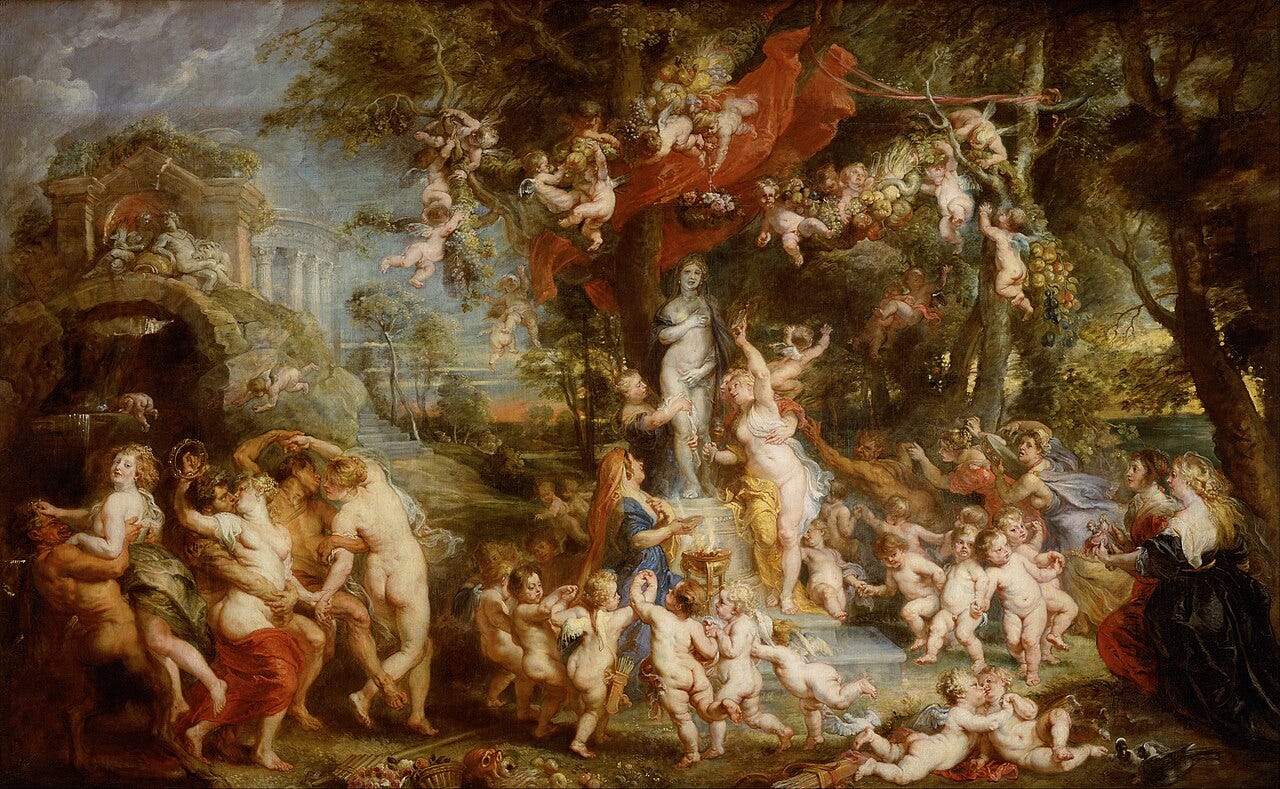
Rubens Feast of Venus mythological scene
The Feast of Venus, Peter Paul Rubens. His nudes are soft and full figured.

Rubenesque describes a full figured, soft and curvaceous female body, named after the women Peter Paul Rubens painted. It was never an insult. In the 1600s a fuller body signaled health, wealth and beauty, and Rubens made it the heart of his art.

The word gets used loosely today. Here is what it really means, and why Rubens painted bodies the way he did.


Hooked on Rubens? Get more art secrets and stories in your inbox, free.


Where the word comes from

Rubenesque is simply the adjective made from the painter's name, the way we say Kafkaesque or Botticellian. It points to one thing above all: the rounded, generous female figures that fill his canvases. Discover the man behind it in the full Rubens story.

Why Rubens painted women this way

In Baroque Europe, thinness suggested poverty and illness. Softness and fullness suggested the opposite: good food, good health, status. Rubens was painting the beauty ideal of his own time, not ours. His handling of the nude turned flesh into something warm and alive, lit from within.

Het Pelsken, his wife wrapped in fur

Rubens portrait of a young woman
Rubens painted the women of his circle with the same generous, rounded forms.

One of his most intimate works shows his young second wife, Helena Fourment, stepping out of a bath with only a fur around her shoulders. She modeled for many of his late goddesses, and her figure shaped the Rubenesque ideal as much as any theory did.

The Three Graces and the Rubens body

In The Three Graces, three nude women stand close in a soft circle, skin against skin. It is the clearest statement of his idea of beauty: abundance, movement and warmth, with not a straight line in sight.

Quick questions about Rubenesque

  • Is Rubenesque a compliment? It is descriptive, and in art history it is admiring. It celebrates a full, healthy figure.

  • Who modeled for him? Often his second wife, Helena Fourment, among others.

  • What is the painting of his wife in a fur? It is known as Het Pelsken, meaning the little fur.

One detail says how personal this was. Rubens kept The Three Graces in his own house until the day he died in 1640, and only then did it pass to the King of Spain. For the whole life behind the body type, read the complete Rubens story.


One email a week. Real stories about the paintings behind the art.