
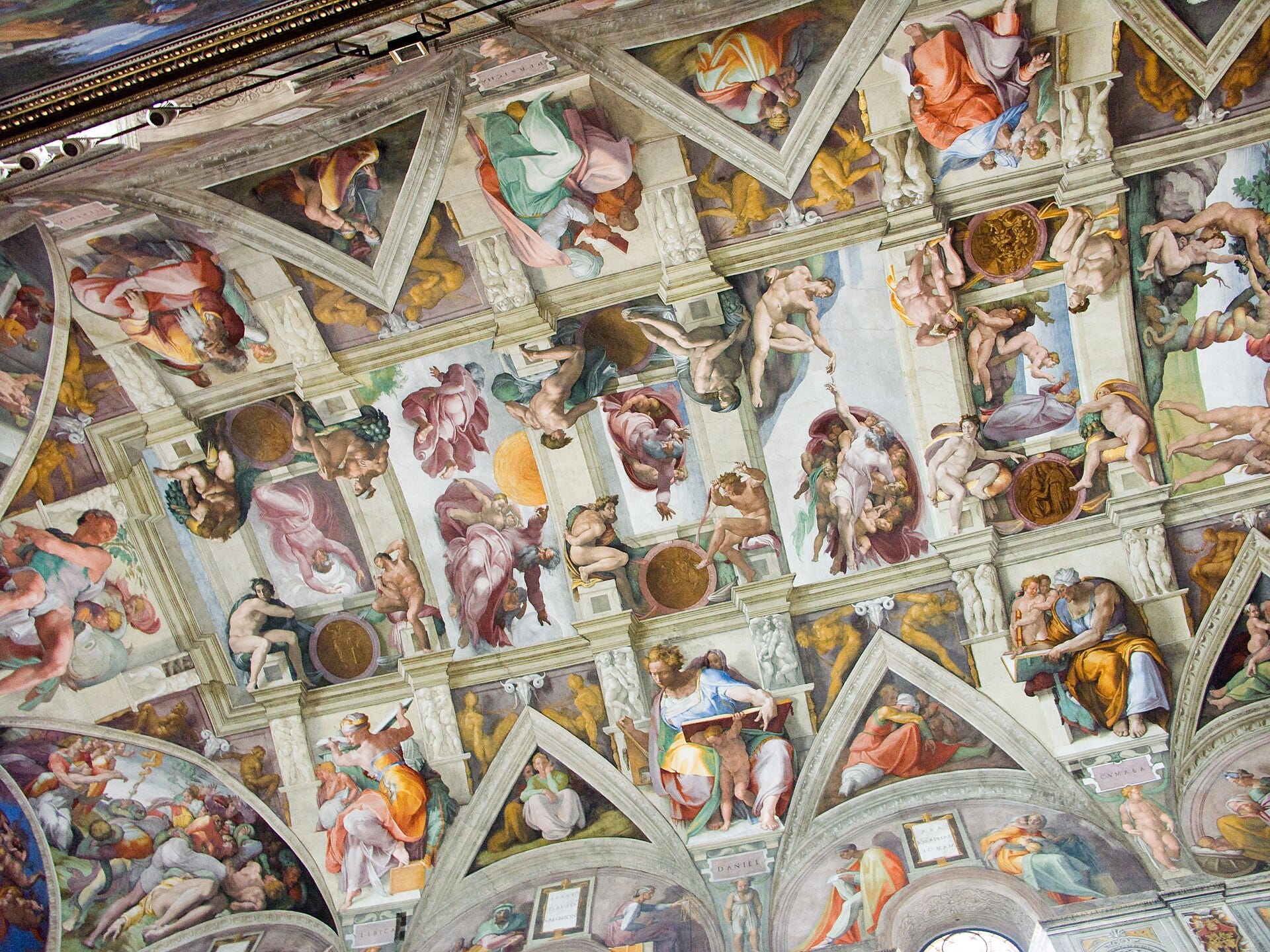
The ban is usually traced to a deal made in the 1980s. A Japanese television company paid for the restoration of Michelangelo's frescoes and received exclusive rights to photograph and film the result.
The cleaning began in 1980. Nippon Television Network paid about $4.2 million, and its own photographer recorded every stage of the work.
Cool Stories About Art is a newsletter to learn art the fun way.
Join 200,000+ readers and get:
10 new art stories / month
The entire archive of content (1,000+ articles)
Comment, ask questions, and chat with other readers
On the Vatican Museums' own visitor page, though, the television deal appears nowhere. Photographs and films are forbidden in the chapel. Flash is forbidden everywhere in the museums. Staff may make a visitor delete what was shot, on the spot.
Only one rule comes with a reason. Silence is requested "with respect for and in view of the sanctity of the location." The photo ban has no explanation at all.
A contract binds the company that signed it. The Vatican's page names no company, no contract and no year. It names only the rule, as if the rule had always been there and needed no defense.
Nippon's rights are long gone. The ban stayed.
What You'll Discover
Who stood beside the restorers.
Why its pictures stayed out of sight.
Why the rule outlived the deal.
What six million visitors do to frescoes.
Who still gets to take photographs.