
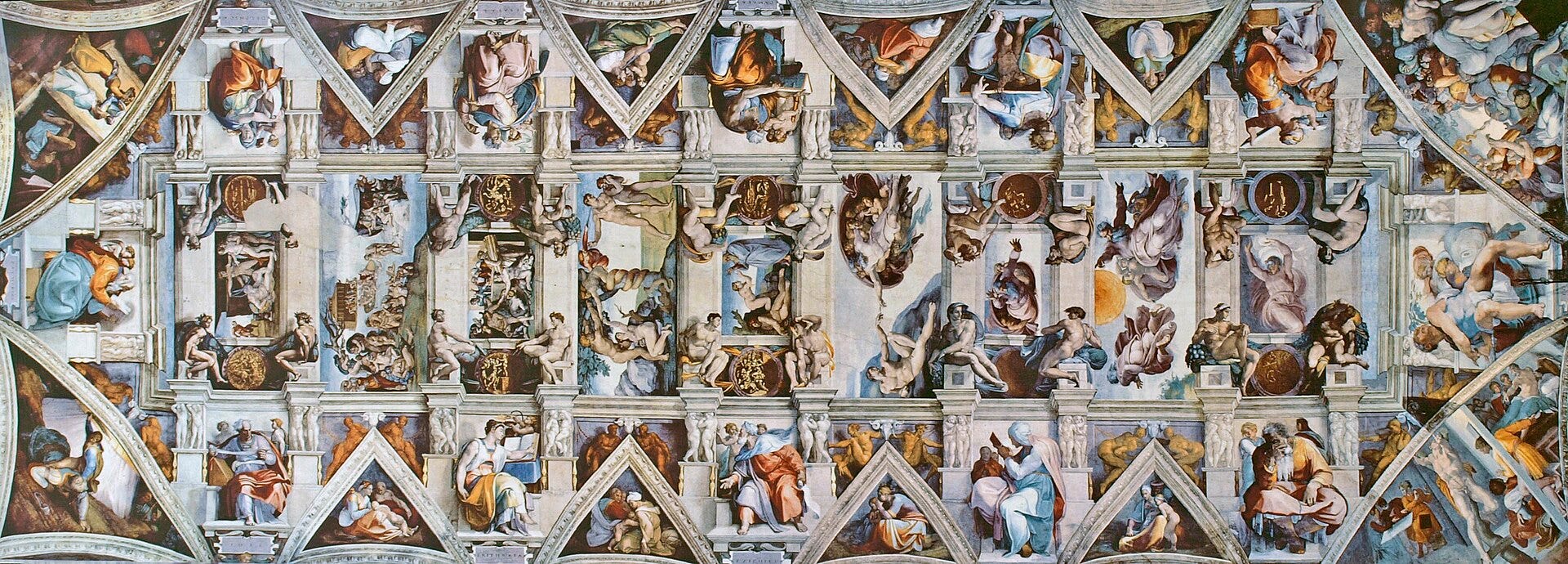
Michelangelo painted the Sistine Chapel ceiling because Pope Julius II ordered him to, in May 1508, and he did not want the job. He was a sculptor, and he had come to Rome to carve the pope's tomb.
The ceiling took him four years, from 1508 to 1512. He had learned to paint as a boy in a Florentine workshop, but it was in marble that he had made his name, and the pope who gave him the order had just put his marble tomb on hold.
Cool Stories About Art is a newsletter to learn art the fun way.
Join 200,000+ readers and get:
10 new art stories / month
The entire archive of content (1,000+ articles)
Comment, ask questions, and chat with other readers
Everyone knows who to blame. Donato Bramante, the pope's architect, is said to have resented the sculptor and talked Julius into handing him a ceiling, hoping he would fail at fresco and crawl back to his chisels. Giorgio Vasari, who published his Lives of the artists in 1550, wrote that Bramante and other rivals saw a way to draw Michelangelo away from sculpture.
The plot is told from Michelangelo's side. In October 1542, in a letter about his long fight over the tomb, he declared that Bramante and Raphael, both dead for decades, had caused all his troubles. In 1553 his pupil Ascanio Condivi printed a Life that Michelangelo had followed closely, and it treats the tomb as a tragedy. I do not trust a villain named by the man he supposedly ruined.
The story also skips a plainer question. The chapel was twenty-five years old, built by the pope's own uncle. Why was a pope repainting it at all?
What You'll Discover
Why the old ceiling was replaced.
How Michelangelo lost his tomb.
What Bramante actually did.
What he won by complaining.