170 000+ readers. Learn art the fun way.
This is a preview. Paid subscribers get the full story.
You’ll also get:
10 new stories every month
The full archive (130+ Art stories)
Your personal art guide. Comment, ask questions, DM me anytime
iPhone user? Subscribe at coolstoriesabout.art, not via the app. Apple adds 30% to the price.
Copenhagen, June 1885. A rented apartment, too small for seven people, still cold for the season.
A man of 37 is closing a trunk in the hallway.
Three years earlier, he was a stockbroker in Paris. Tailored suits, good money, paintings on his walls like a collector who had made it.
In the next room, his wife. Mette Sophie Gad, Danish, 35. Their five children circle around her. The oldest is 11. The youngest just turned 2.
He leaves for Paris. He takes only one of the children.
No scene. No date of return. He walks down the stairs.
It is the last time this family lives under the same roof.
And this is not the last person he will abandon like this, overnight, without a word too many.
His name is Paul Gauguin.
The Man Who Wanted to Be a Savage
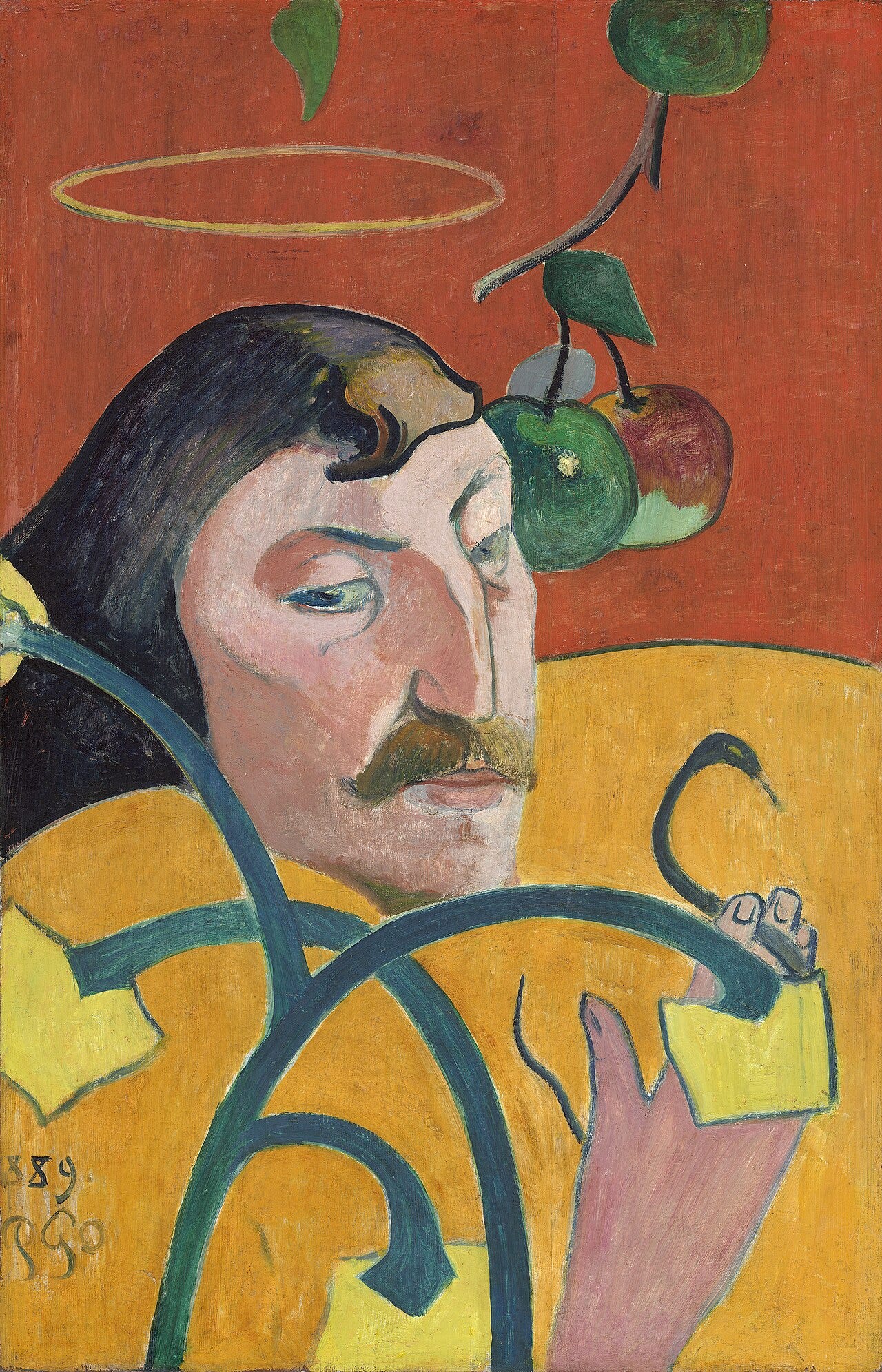
To understand that departure, you have to listen to the story he told himself about himself.
Gauguin did not see himself as a bourgeois, even less as a Sunday painter. He saw himself as a savage. The word is his, he claimed it.
The legend had something to stand on. Peruvian blood on his mother's side, an early childhood in Lima, a writer and activist grandmother, Flora Tristan.
He liked to repeat that he had Inca in his veins, that Western civilization made people sick, that money and comfort were chains fit for the mediocre.
The awkward detail is that he had lived eleven years off that very civilization. Eleven years selling securities on the stock exchange, stacking up commissions, buying himself paintings with his salary.
His contempt for money came to him once he no longer had any.
In January 1882, the crash of the Union Générale bank tears through the Paris market. Commissions collapse, the job turns uncertain. That is the moment Gauguin picks to drop everything and live from his painting alone.
His disgust for money had a sharp limit, though. He scorned money when it had to be earned to feed his own family. He demanded it endlessly when it came to funding his own freedom.
That freedom, someone was going to pay for it. It would never be him.
Mette
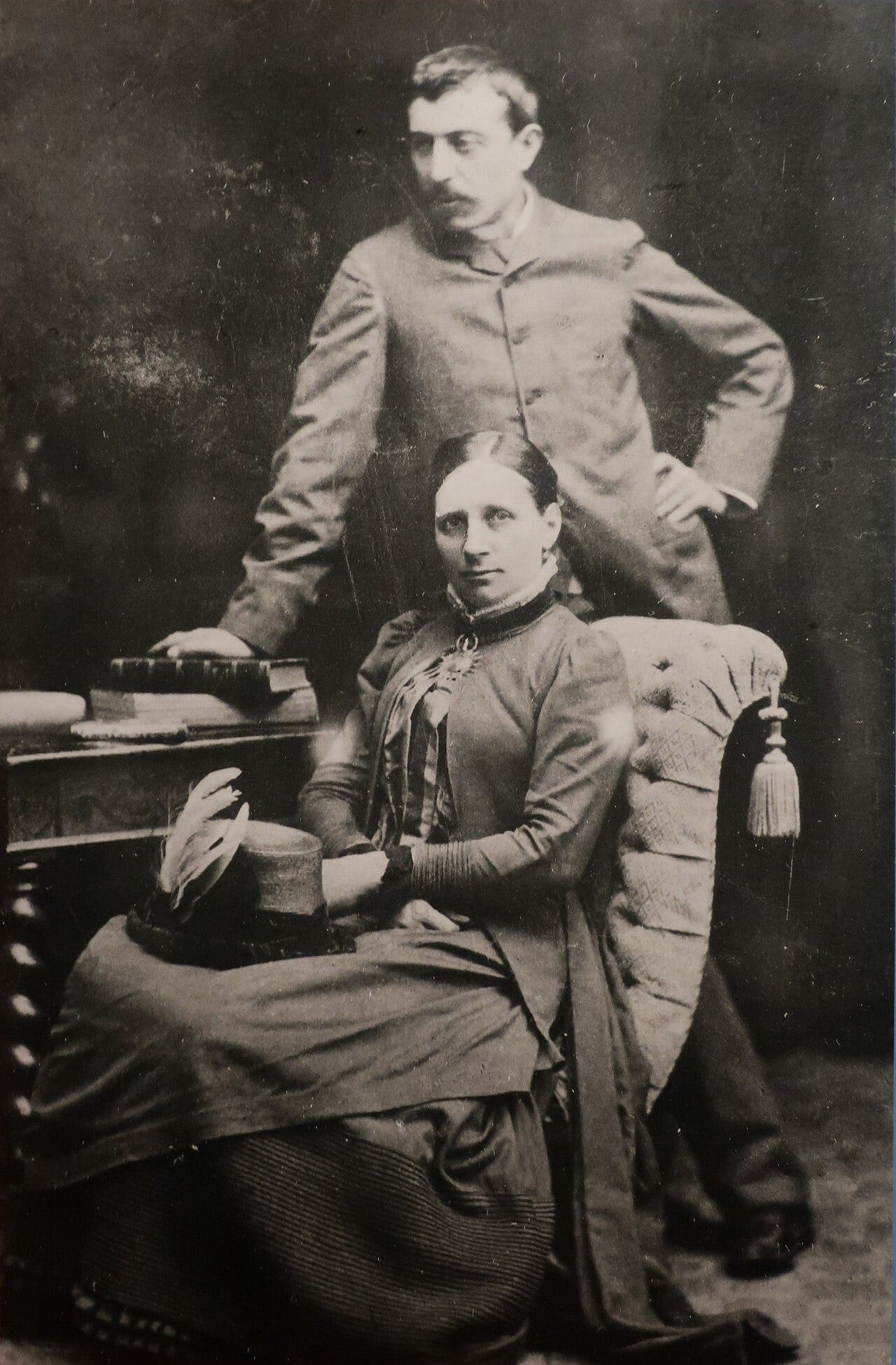
Mette did not go under. She did the opposite.
She stayed in Copenhagen, her hometown. She gives French lessons to the children of the Danish bourgeoisie. She translates books.
She raises four children alone, then five, the day Gauguin ships Clovis back to her, the son he had taken along and can no longer feed in his Paris studio.
Their letters are almost only about money now. She asks for enough to get by. He sends little, often nothing, and always with a lesson. An artist cannot let himself be chained. His duty is the work.
To make the months add up, Mette sells the canvases he left her. She even organizes shows of her husband's work in Copenhagen. Not out of tenderness. To bring a little money into a home he has deserted.
Far away, Gauguin takes up his pen to a friend back in France. About this family he left behind, he has these few words.
I slipped away without warning. Let my family fend for itself... Oh yes, I am a great criminal, so what.
He will never divorce. Staying Mette's legal husband costs him nothing and spares him any accounting. Later, on the other side of the world, he will take other women, far younger, never troubled by being already married.
Discover my new newsletter !

Keep learning art the fun way


The Friends Who Carried Him
The family was only the first circle.
Gauguin had a particular talent. He absorbed everything he needed from people, then left them dry.
First there is Camille Pissarro.
In the early 1880s, Pissarro is an established master, generous, at the heart of the Impressionist group. He takes this young stockbroker under his wing, teaches him the craft, brings him out to paint in the countryside, pushes him into the group's shows. Without Pissarro, Gauguin would have stayed a gifted amateur.
The day he had drawn from the old master everything he could, Gauguin turns away from him. Pissarro sees it clearly. In April 1891, he writes to his son Lucien that Gauguin "is not a visionary, he is a schemer."
Schuffenecker, for his part, had outright fed him.
A former colleague from the stock exchange turned painter, nicknamed good old Schuff, he is the devoted friend by definition. When Gauguin comes back from Martinique without a cent, in 1887, it is Schuffenecker who houses him, feeds him, buys his canvases to keep him afloat.
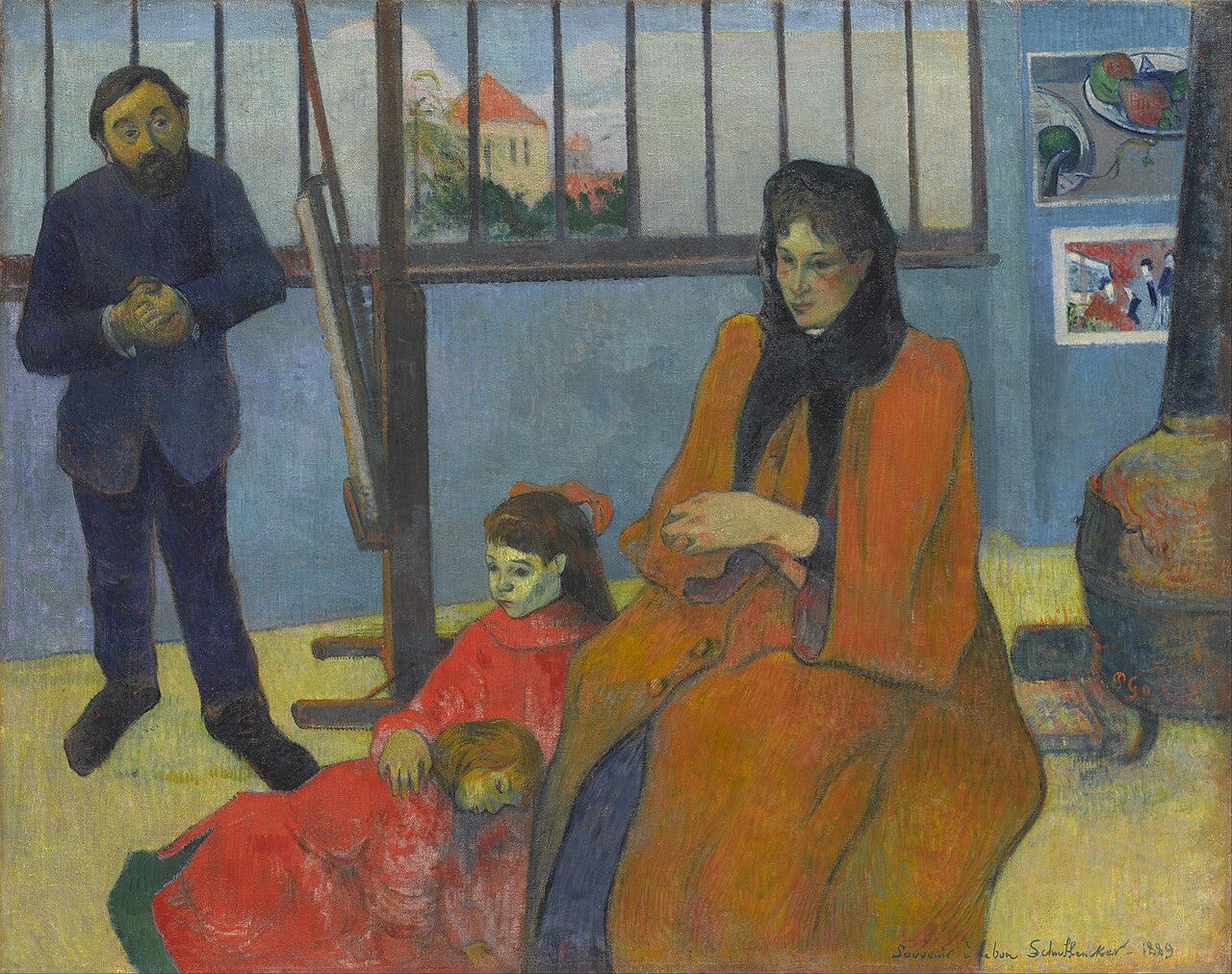
Two years later, Gauguin thanks him with a painting. He paints the Schuffenecker family in their studio.
At the center, the wife and the children. Off to the side, pushed into a corner of his own home, good old Schuff, tiny in his big slippers, hands clasped, without even a brush.
The man who had saved him from poverty, reduced to a meek husband stripped of his trade.
The youngest, Émile Bernard, paid the highest price.
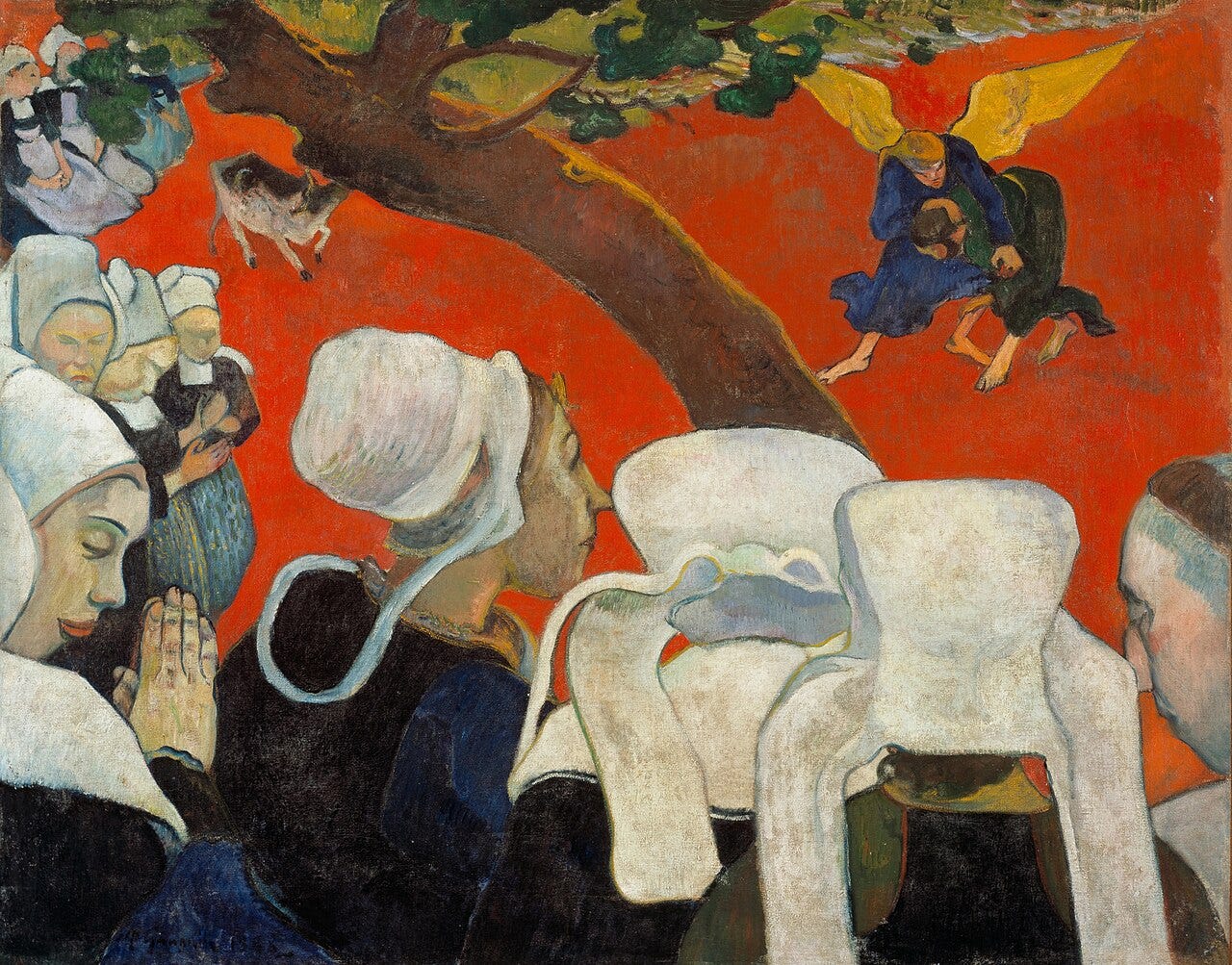
Bernard is twenty, gifted, with boundless admiration for his elder. In Pont Aven, the two men work out together a new way of painting, in broad flat areas outlined in dark.
It is even Bernard who, in 1891, pushes the critic Albert Aurier to write, in the magazine Mercure de France, the article meant to make Gauguin known.
The article appears. It crowns Gauguin the leader of a new school. It does not mention Bernard once. Gauguin takes the movement, the name, the glory, and leaves the kid who had handed him the opening out in the cold. They will never speak again.
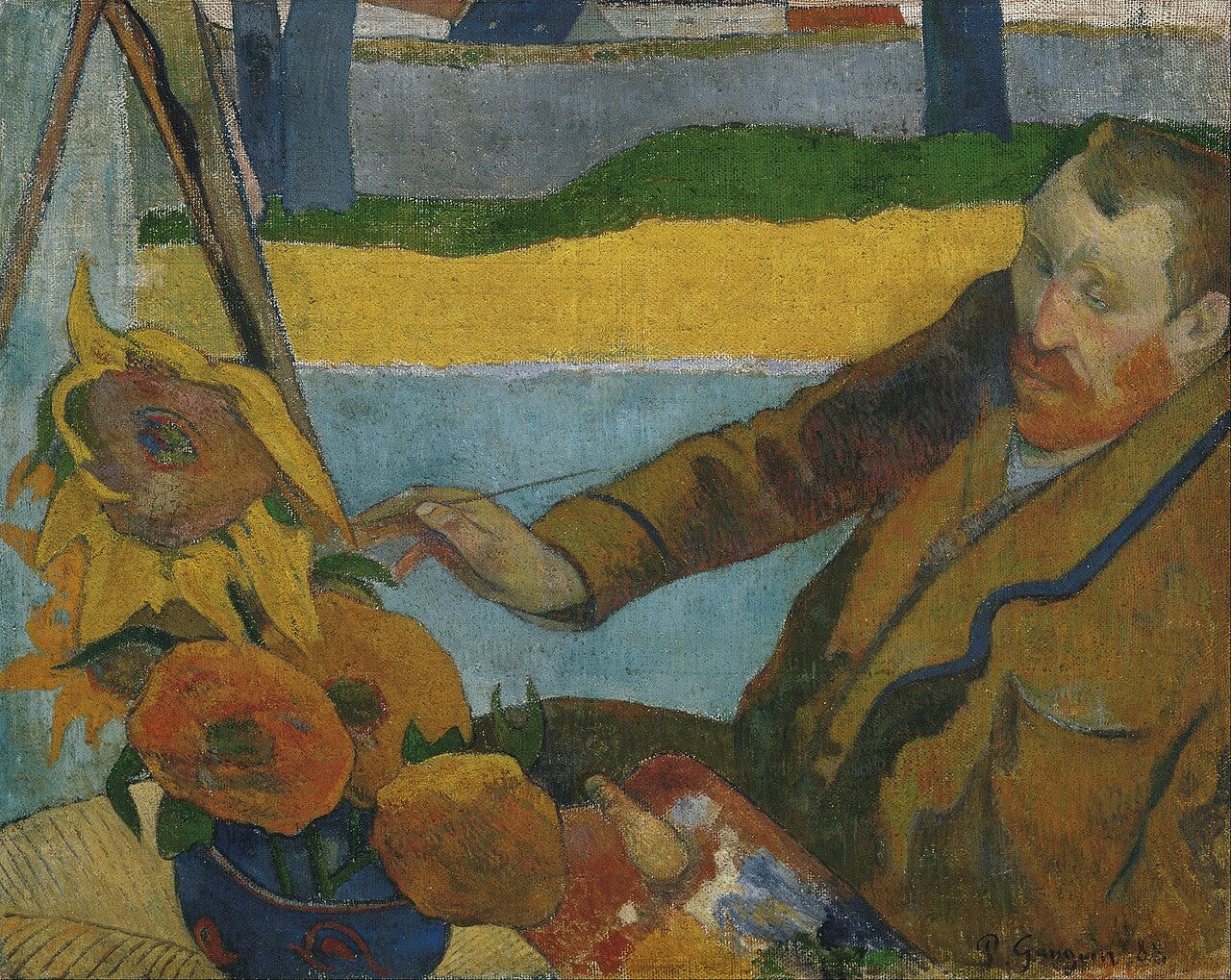
Even Vincent van Gogh went through it. In 1888, he had begged Gauguin to come and found a painters' studio in Arles. Nine weeks later, Van Gogh was cutting off his ear, and Gauguin was catching the first train back to Paris.
Pissarro had taught him everything. Schuffenecker had fed him. Bernard had invented at his side. None of them stayed his friend.
By the early 1890s, Gauguin had run through it all. He had taken what Europe could give him and worn out everyone who loved him.
Now he needs a place where no one will hold him to account. A new world, faces that will know nothing about him, no one to say no.
He will go looking for it eighteen thousand kilometers from Copenhagen.
And that is where he will do his worst..