

170 000+ readers. Learn art the fun way.
This is a preview. Paid subscribers get the full story.
You’ll also get:
10 new stories every month
The full archive (130+ Art stories)
Your personal art guide. Comment, ask questions, DM me anytime
iPhone user? Subscribe at coolstoriesabout.art, not via the app. Apple adds 30% to the price.
1. Paolo Veronese, The Wedding at Cana (1563)
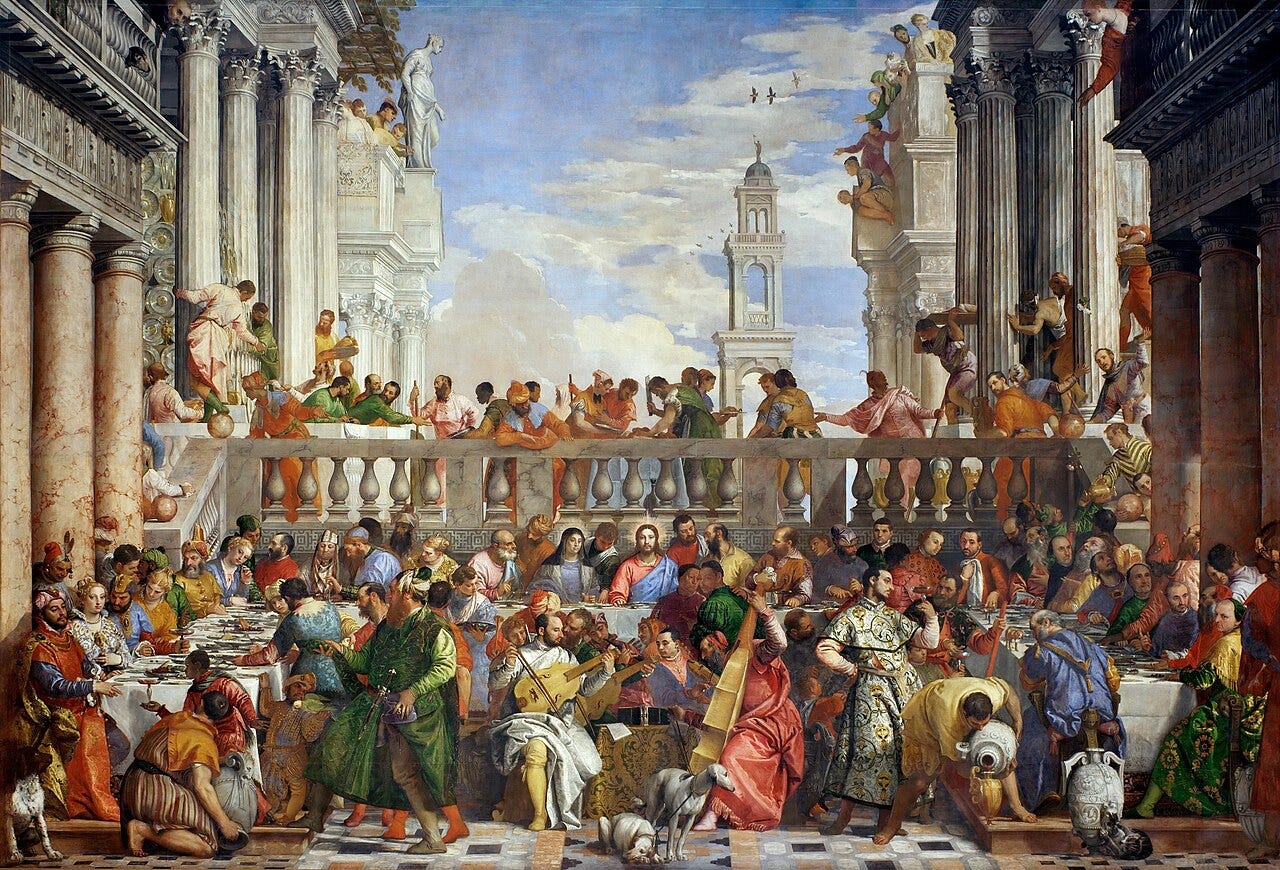
A vast Venetian banquet, marble columns, nearly 130 guests. This is the first miracle of Christ, at Cana: water turned into wine during a wedding. Veronese painted it for the refectory of a monastery in Venice.
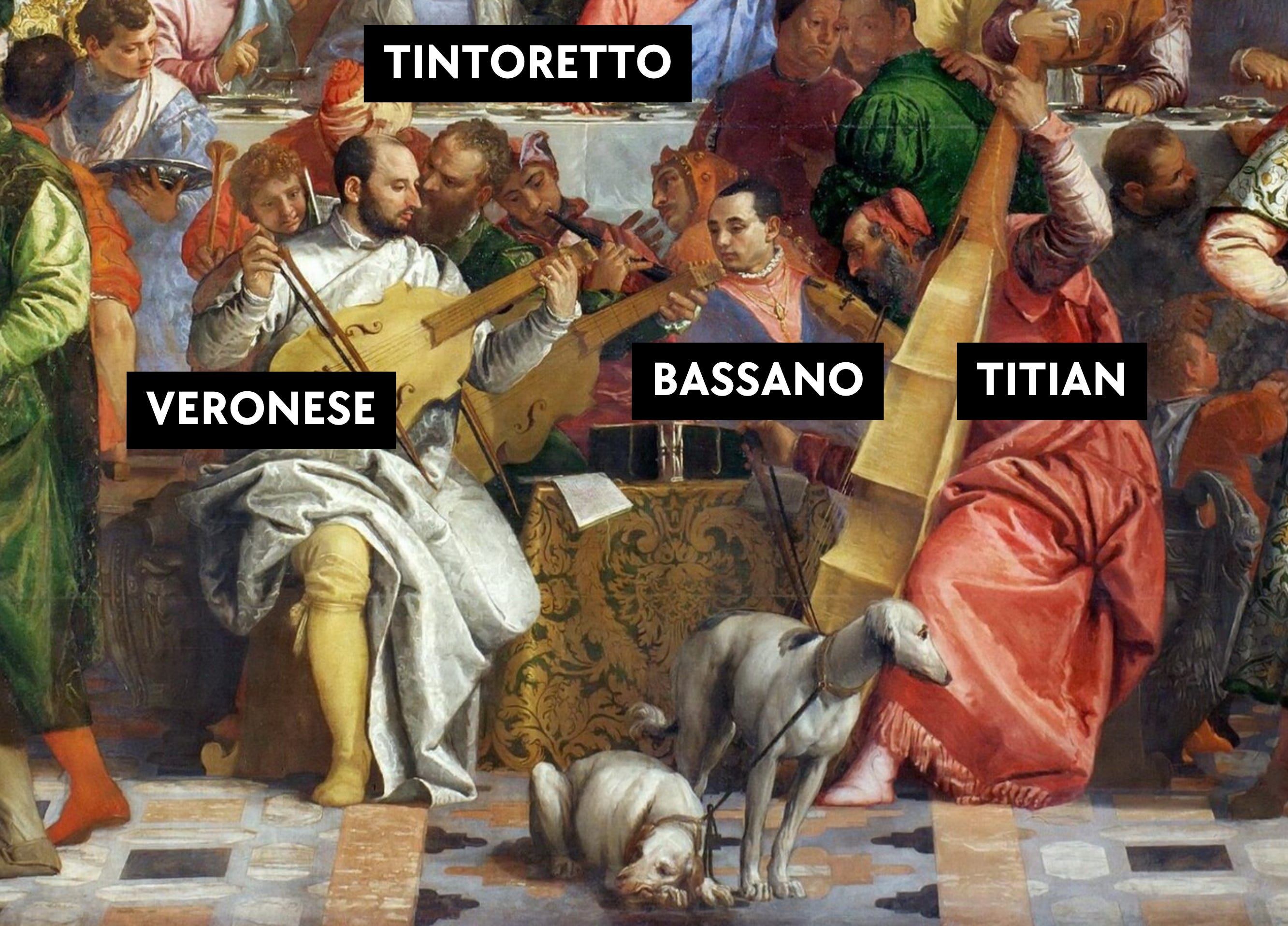
In the foreground, four musicians play in front of the table.
They are not extras. Tradition recognizes in them the greatest painters of Venice: Veronese in white on the viol, Titian in red on the bass, Tintoretto and Bassano beside them. Rival masters from the same city, gathered into a small orchestra, right below Christ.
2. Pieter Bruegel the Elder, The Massacre of the Innocents (around 1565)
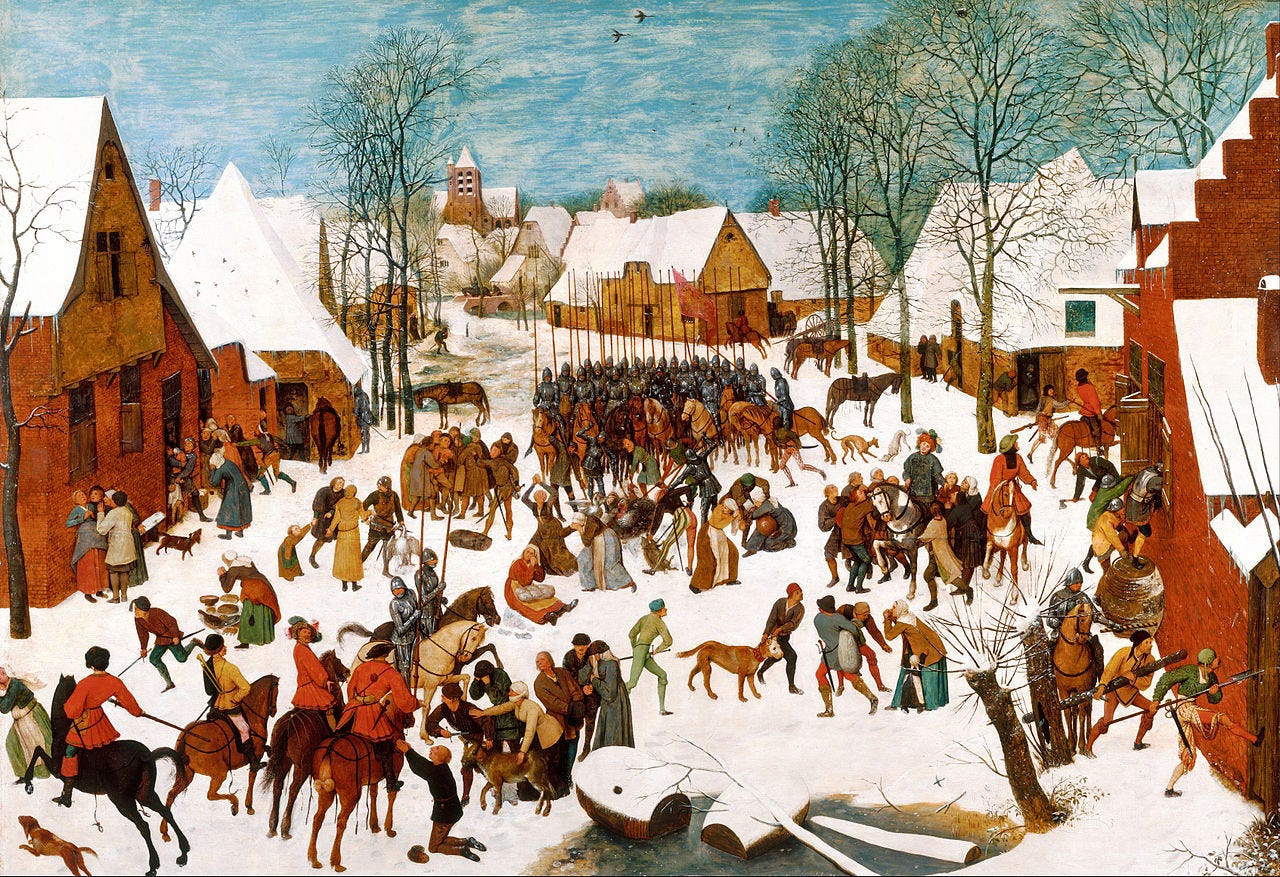
A Flemish village under the snow. Soldiers in armor surround the houses, peasants on their knees beg, cling, weep. Bundles are torn from them, food, a goose, a calf.
A scene of pillage, so it seems. Except that these bundles were not always bundles.
Originally, Bruegel had painted what the title says: the massacre of the children ordered by Herod. Dozens of small bodies slaughtered in the snow, under the lances of soldiers who bore the two headed eagle of the Habsburgs.
The painting belonged to the Emperor Rudolf II. He could not bear the carnage, nor the sight of his family's arms on the killers. He had every dead child painted over into an object: a baby becomes a bundle, another a fowl, another a cheese.
Restoration has brought the ghost bodies back up beneath the paint. And one detail remains that the censorship could not erase. Look at the faces of the parents, on their knees, screaming. No one screams like that over a stolen goose.


Discover my new newsletter !

The letter that goes with this


3. Gustav Klimt, The Sunflower (1907)
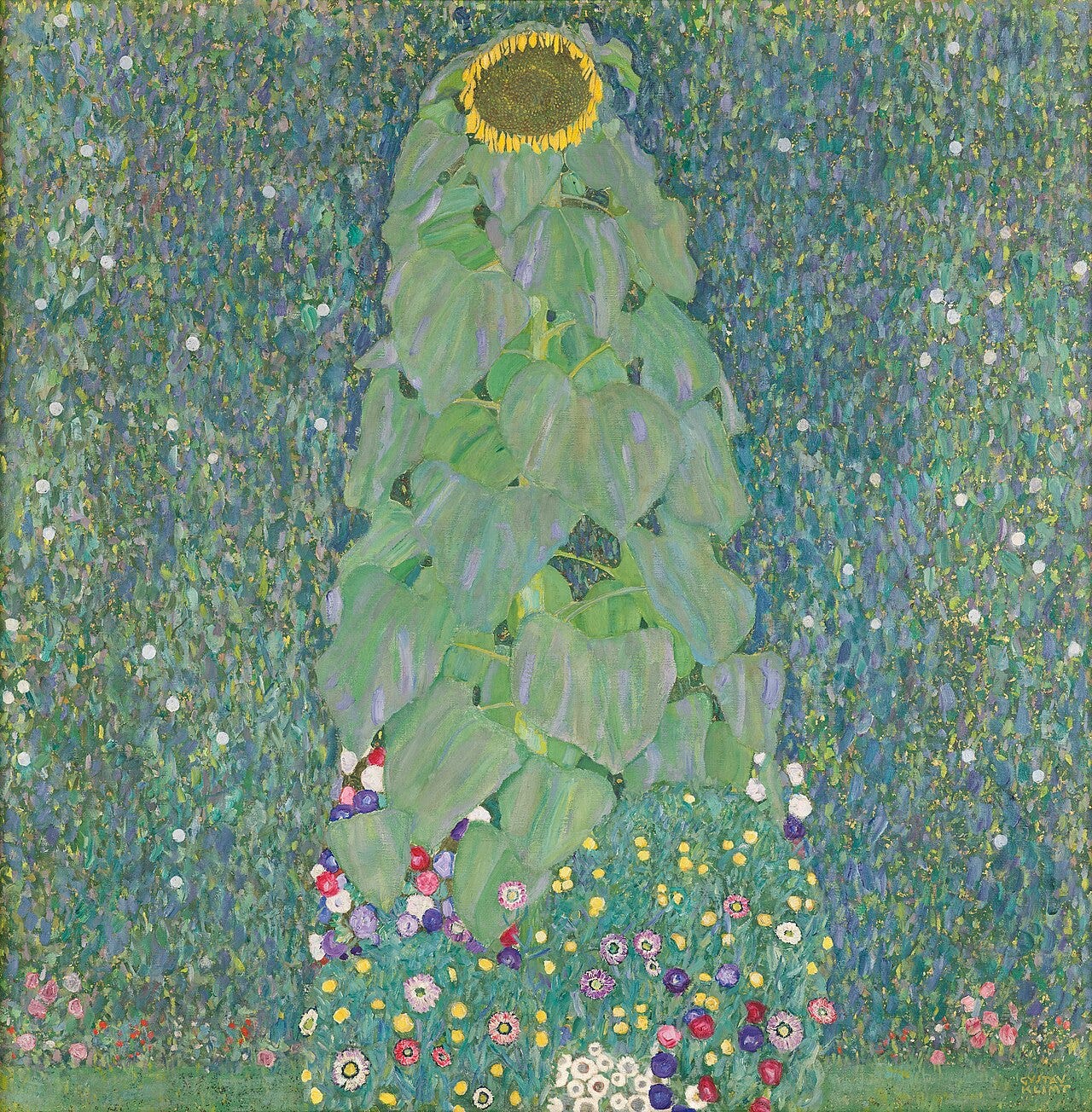
One of Klimt’s garden paintings, made in summer by Lake Attersee. Dense, golden, and at its center a tall sunflower that dominates everything, its heavy head bowed, wrapped in leaves.
You think you are looking at a flower.
You are not. And what Klimt slipped into this sunflower comes down to a love story of 27 years that he never dared to name…