
Alfred Sisley was the most devoted Impressionist of them all and the unluckiest. He painted almost nothing but landscapes, rivers, snowy roads, wide changing skies, and stayed loyal to painting outdoors when others drifted away.
He also stayed poor his whole life, unlike his wealthier Impressionist peer Gustave Caillebotte, who helped fund the group's exhibitions, and recognition for Sisley arrived only after he died. His Floods at Port Marly, painted as the Seine drowned a village in 1876, are now counted among the finest Impressionist landscapes ever made.
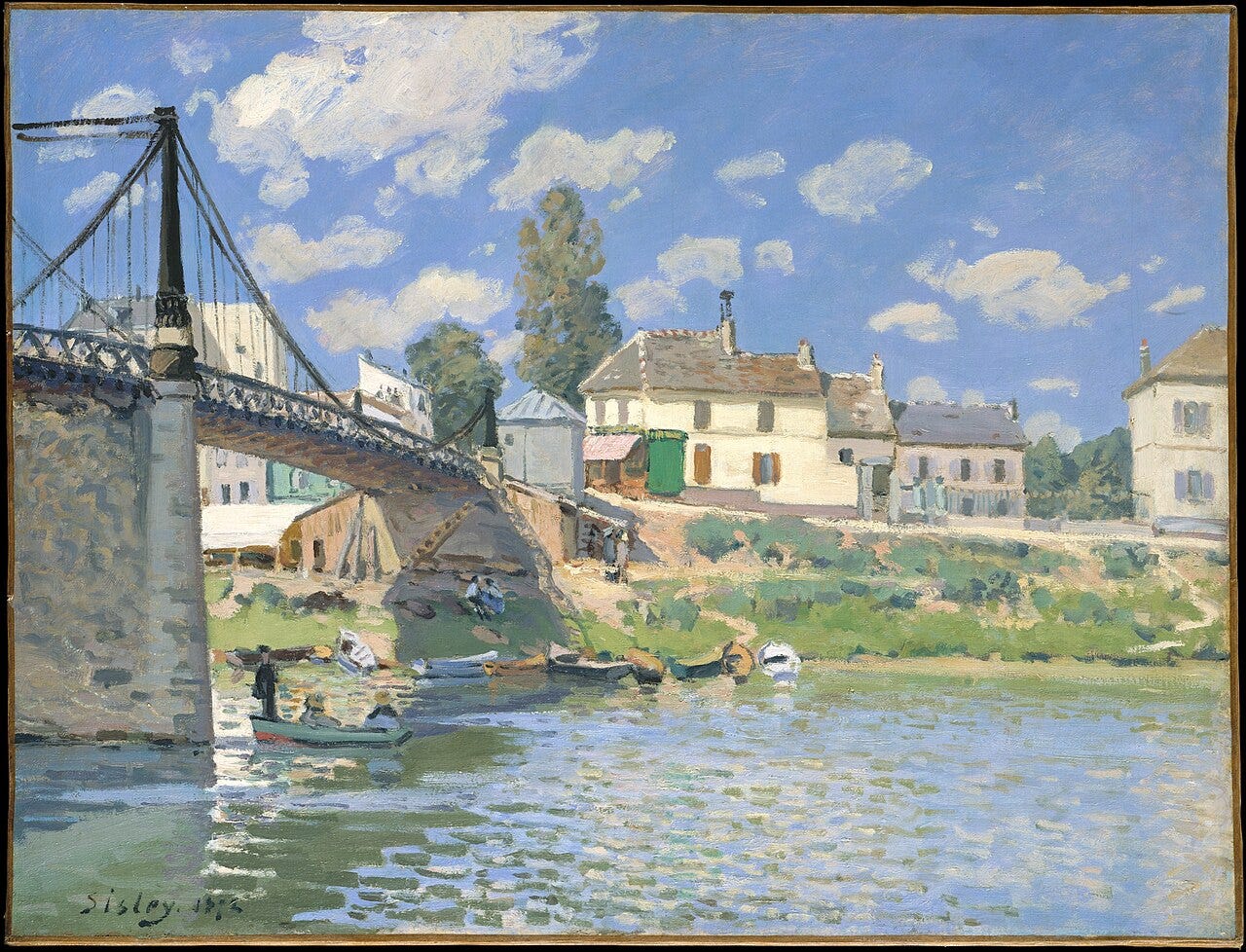
Within months of his death in poverty, his pictures started selling for small fortunes.
Born: Paris, 1839, to British parents
Known for: pure Impressionist landscapes, skies, the Floods at Port Marly
Died: Moret sur Loing, France, 1899, of throat cancer
More incredible painter stories
If Alfred Sisley pulled you in, you will love these too:


Alfred Sisley at a glance
1839. Born in Paris to British parents. He kept British nationality all his life.
1862. Met Monet, Renoir, and Bazille in Gleyre’s Paris studio.
1870. The war ruined his father’s business, ending the allowance and beginning a lifetime of poverty.
1880. Settled near Moret-sur-Loing, his subject for the rest of his life.
1899. Died at Moret. Prices for his work jumped within a year of his death.
The painter of the sky
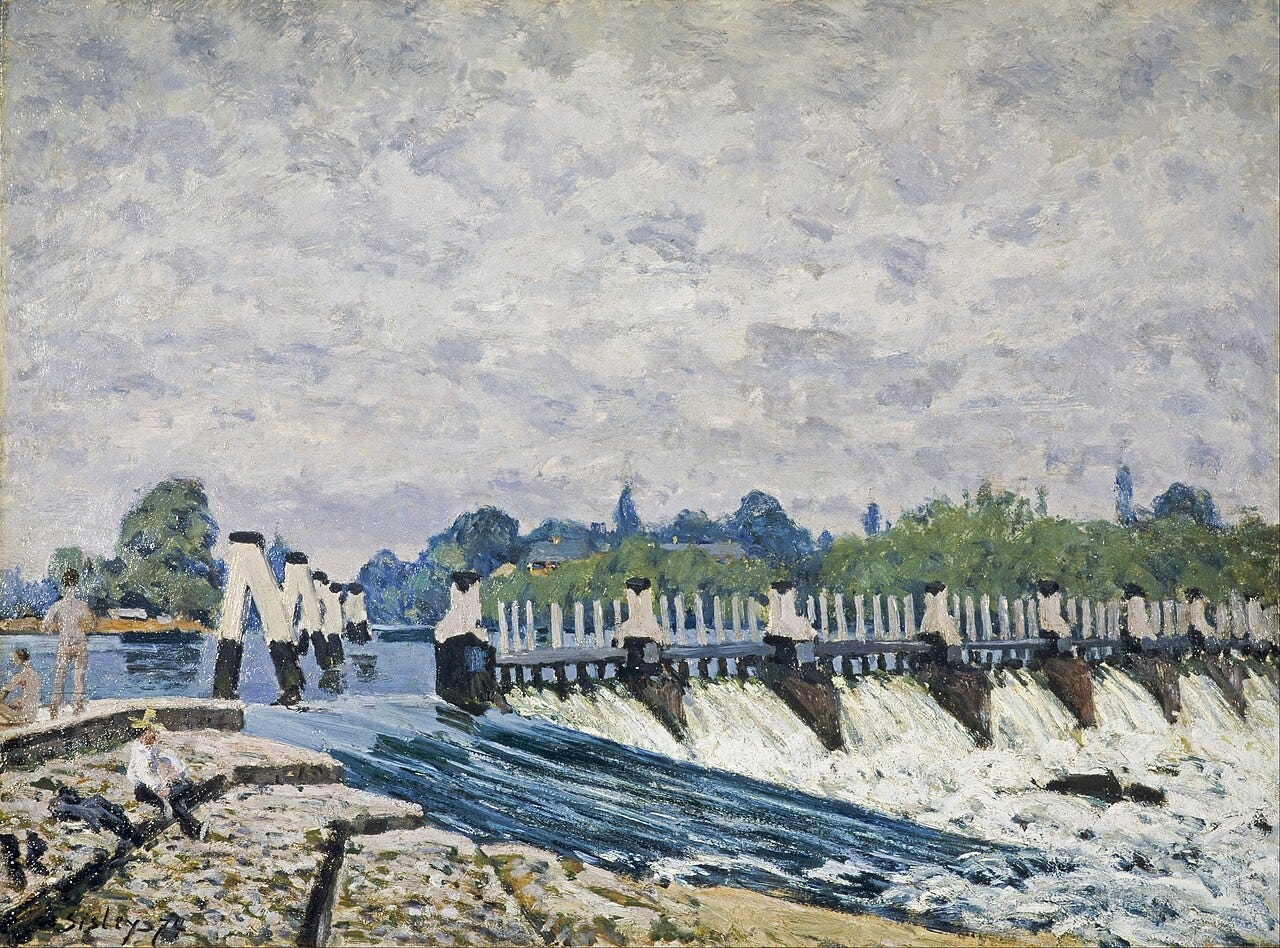
Sisley said the sky was the keynote of a landscape, never just a backdrop. His clouds move, his light shifts, and the weather is the real subject. See what is impressionism.
He worked outdoors, fast, catching a specific hour on a specific day, the core Impressionist discipline he never abandoned. See what is en plein air.
Disaster turned into beauty
In 1876 the river Seine burst its banks at Port Marly, and Sisley painted the flooded town again and again. Calm water laps at shop fronts under a soft sky, catastrophe rendered as something strangely peaceful.
These Floods at Port Marly are now seen as among the finest Impressionist paintings ever made. See what is landscape painting.
I cover both flood campaigns, and where the paintings ended up, in Flood at Port Marly.
A rich English boy born in Paris
Alfred Sisley was born in Paris on 30 October 1839. His parents were British, part of a prosperous expatriate community in the city.
His father ran a successful business in luxury goods, and money was never a worry in the Sisley home. Young Alfred grew up comfortable and bilingual, English by passport even though Paris was the only home he really knew.
That double identity, French by upbringing and British on paper, would follow him for the rest of his life. For now it simply meant options. Nobody expected the boy to become a painter, least of all a poor one.
Sent to London to learn business, hooked by Turner instead
Around the age of seventeen, Alfred was shipped across the Channel to London. The plan was practical. He spent roughly four years there preparing for a commercial career in the family trade.
The business lessons did not stick. By the accepted account, he spent his real energy in London's galleries, where the landscapes of John Constable and JMW Turner stopped him cold.
Here were skies, rivers and weather treated as the main event, not a backdrop. The idea that a patch of sky could be the whole subject stayed with him. He came back to Paris with no taste for commerce and a growing wish to paint.
The studio where Impressionism quietly began
In 1862 Sisley enrolled in the Paris studio of Charles Gleyre, a respected teacher of the old school. The lessons mattered less than the classmates.
In that room he met Claude Monet, Pierre Auguste Renoir and Frederic Bazille. The four young men clicked, and within about five months they had drifted away from Gleyre's academic drills and started painting together.
It was one of those small rooms where a whole movement began without anyone noticing. None of them knew yet that they were early Impressionists. For Sisley, these were the people who would shape his art, and later, the only ones who stood by him.
Learning to chase weather in the Fontainebleau woods
Sisley and his new friends headed for the countryside south of Paris, especially the Forest of Fontainebleau. This was already sacred ground for landscape painters, worked for years by Corot and the Barbizon group.
Sisley set up his easel outdoors, a practice known as plein air painting, and chased the exact color of a road, a wall or a bank of trees under changing light.
Early on his palette leaned on the soft silvery tones he had absorbed from Corot. He was never loud. He watched, and he recorded weather. Snow, mist, floodwater and pale winter sun became his favorite conditions.
The year a war turned him poor for life
Everything changed with the Franco Prussian War of 1870. The fighting and the chaos that followed wrecked his father's business. The family fortune that had let Alfred paint without worry simply evaporated, and his father died soon after, ruined.
From about 1871, Sisley had no cushion left. He was a painter with a family to feed and almost no market for his work.
The rest of his life became a long, quiet fight against debt. He moved from village to village partly for the views and partly for cheaper rent. The comfortable rich boy from Paris spent nearly thirty years poor, and never climbed out.
The man who left the people out
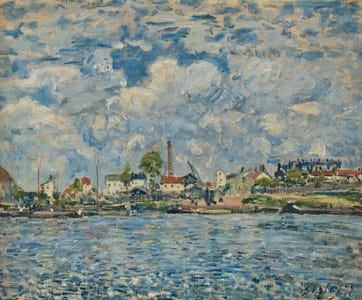
Sisley made one firm choice and kept it. He painted landscapes, almost nothing else. While Renoir filled canvases with faces and Degas with dancers, Sisley gave himself to skies, rivers, roads, snow and village rooftops.
Figures do appear, but usually tiny. A washerwoman on a bank, a walker on a path, dropped in for scale rather than drama. This narrow focus is exactly why some call him the most complete landscape painter of the group. It also cost him.
Portraits and lively city scenes sold. Quiet views of the Seine in winter did not. He knew the risk and painted the water anyway.
Moret sur Loing, and a church series that stayed poor
Around 1880 Sisley settled at Moret sur Loing, a small medieval town southeast of Paris where the river Loing meets the Seine country.
He stayed for the rest of his life and painted the place obsessively. Its old bridge, its poplars, its river, and above all its Gothic church.
Between 1893 and 1894 he painted the church of Moret perhaps a dozen times, at dawn, at dusk, in frost and in sun. The idea openly echoed Claude Monet, who was then painting Rouen cathedral over and over in shifting light.
The difference was money. Monet's cathedral series made him rich and famous. Sisley's church series, just as devoted, sold slowly and kept him poor.
British to the last day
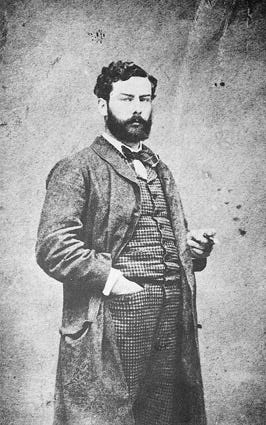
Here is the fact that surprises people. Alfred Sisley, the Impressionist most rooted in the French countryside, was never French.
He was born in Paris to British parents and stayed a British citizen his whole life. He barely knew England as an adult, yet the passport never changed.
Late in life he tried to fix it. In 1898 he applied for French naturalisation. The paperwork moved slowly, a police report was gathered, and then illness overtook him before it was settled. He died a British subject in a French town.
One loyal dealer, and the cruel jump after his death
Through the lean years, one dealer kept faith. Paul Durand Ruel, the merchant who backed the whole Impressionist circle, bought Sisley's canvases, showed them and helped him survive. It was never enough to make him comfortable.
In 1897 Sisley married his lifelong partner, Eugenie Lescouezec, during a stay on the Welsh coast near Cardiff. Both were already ill.
Eugenie died of cancer in October 1898, and Sisley, sick with throat cancer, followed her on 29 January 1899, aged 59, still poor and still little known.
Then came the cruel twist. Within months of his death his reputation climbed and prices for his work rose sharply. Paintings he could barely sell while alive became prized once he was gone.
The Alfred Sisley questions that keep coming up
What is Alfred Sisley famous for?
Pure Impressionist landscapes, especially his skies and the Floods at Port Marly.
Was he French?
He lived and worked in France all his life but kept British nationality and never naturalised.
Why was he poor?
His family fortune collapsed and his landscapes did not sell well during his lifetime.
When did he die?
On 29 January 1899, at Moret sur Loing, of throat cancer, just as appreciation was about to arrive.
More secrets to unlock


Why the purest Impressionist still matters
Sisley never had Monet's fame or Renoir's charm, but he may be the purest Impressionist of the circle, the one who simply kept painting light on water until the end. The market that ignored him now pays millions.
One last detail. He spent his final years around the town of Moret sur Loing, painting its church and bridge over and over, a small place he turned into his own private series, much as Monet did with his haystacks.