
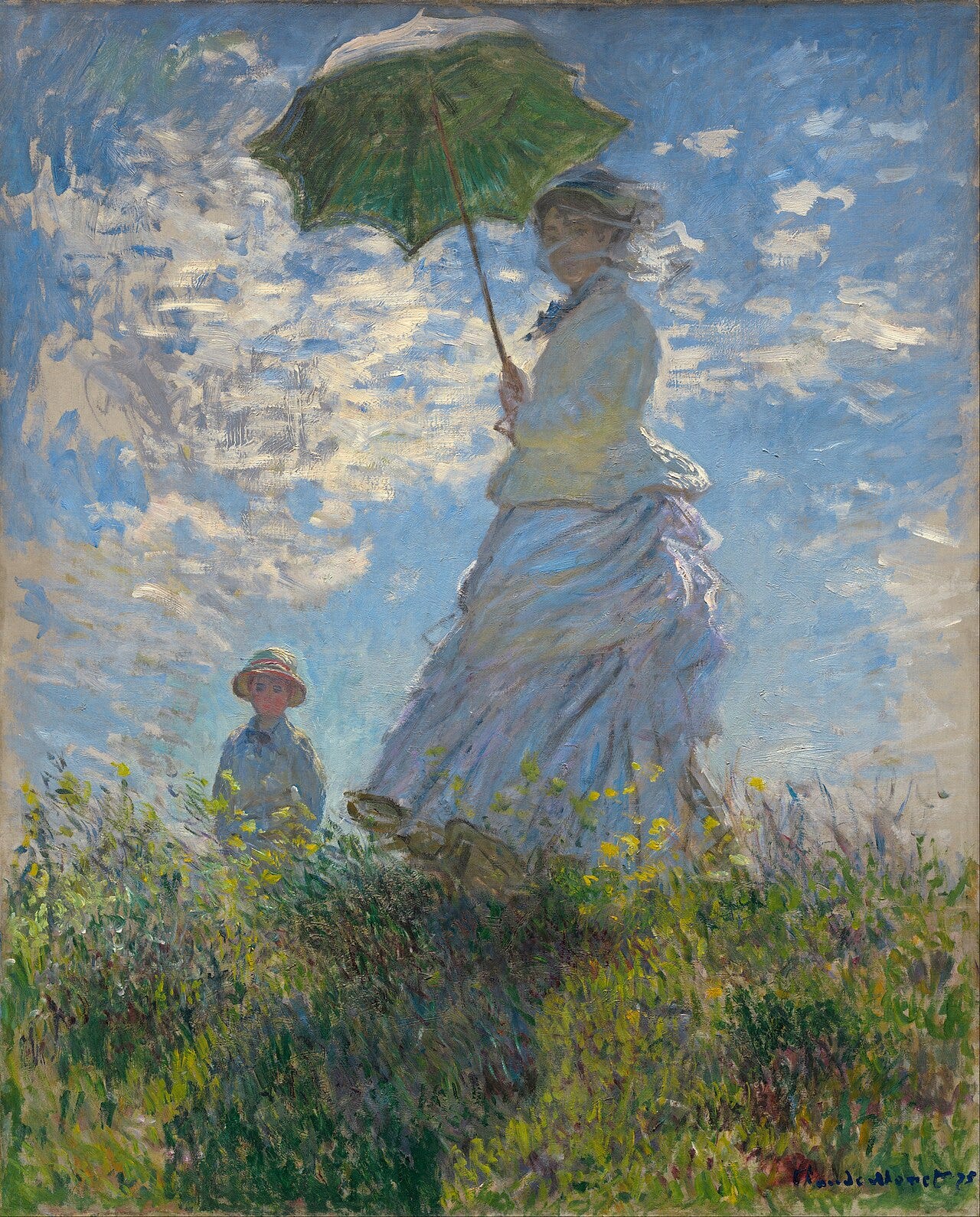
En plein air is a French phrase, meaning in the open air, for painting outdoors on the spot rather than from sketches back in the studio.
The goal is to catch the real light, color and weather of a place in the moment, before the sun moves and the scene changes.
Painting outdoors, on the spot, with the real subject in front of you and the light changing by the minute.
More than a method, en plein air is a race against the light.
One thing worth settling first: it is pronounced on plen air, three soft syllables, not en plane air.
En plein air in sixty seconds
What it is: painting outdoors, in front of the subject.
The aim: to catch real light and atmosphere as they actually are.
The enemy: time, the sun moves and the whole scene shifts.
The breakthrough: ready made paint in tubes, around 1841.
The champions: the Impressionists, above all Monet.
Keep learning art the fun way


Why the open air changes everything
Light indoors is steady. Light outdoors is alive.
Working outside, a painter sees colors the studio never shows: blue shadows on snow, pink light at dusk, the way green leaves turn silver in wind.
But the clock is brutal. The sun moves, clouds pass, and the exact effect you started painting is gone within hours. Plein air painting is a race against your own subject.
That pressure is the point. To me it is also why these paintings feel alive in a way studio work rarely does: the gust of wind, the fatigue, the rushed corner are all still in there.
A tube of paint set them free
What changed everything was a container.
For centuries, painters ground their own colors, which dried fast and were a nightmare to carry. Then around 1841 an American painter, John Goffe Rand, patented the collapsible metal paint tube.
Suddenly color was portable, sealed and ready. Add a folding easel and a pochade box, the small hinged case whose lid doubles as an easel, and a painter could carry a whole studio into a field.
Renoir said it plainly: without the tube of paint, there would have been no Impressionism.
Not actually their invention
Here the usual story needs a correction, and it is one I enjoy making.
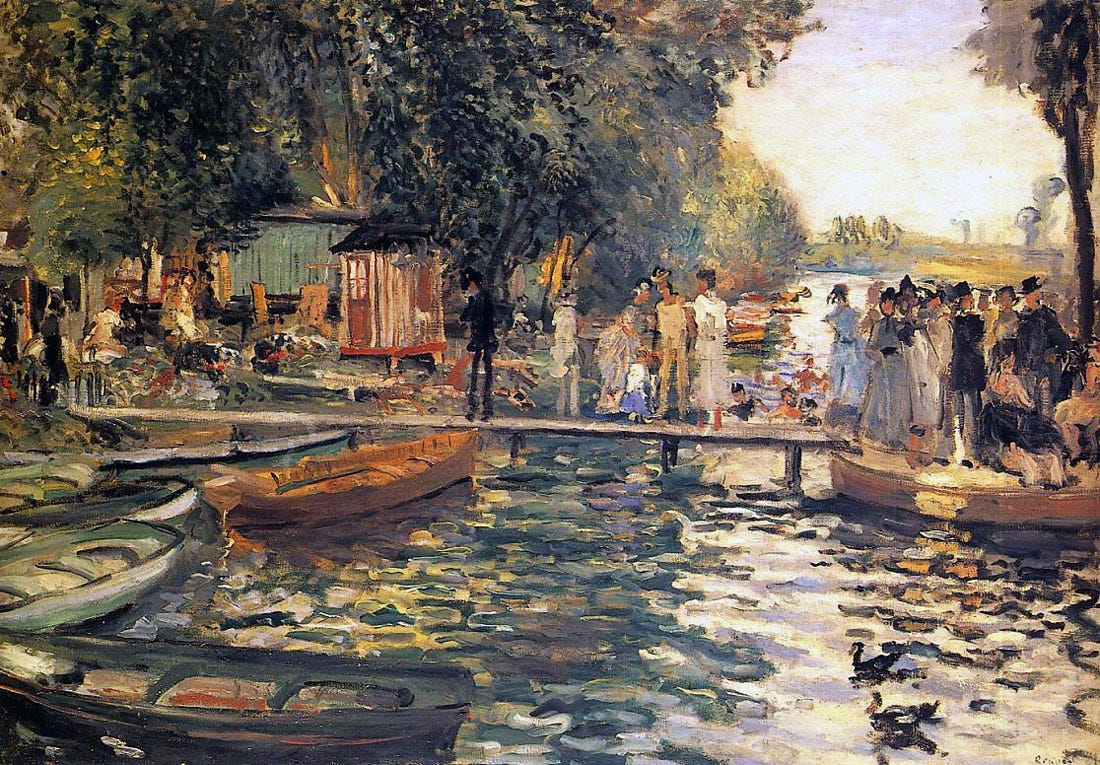
The Impressionists are remembered as the inventors of outdoor painting, but they were really its great popularizers. Painters had been making quick oil sketches outdoors for decades before them.
In England, John Constable studied clouds and fields directly from nature. In Rome, painters like Valenciennes sketched the light outdoors, then composed the finished picture inside.
The real bridge was the Barbizon School near Paris. Corot, Rousseau and Charles Daubigny went to the forest of Fontainebleau to paint from nature, and Daubigny even fitted out a studio boat, Le Botin, to work along the rivers.
The Impressionists changed one radical thing: they let the outdoor painting stand as the finished work itself, where earlier painters had treated it only as a study for something else.
Monet and the chase
No one took it further than Monet.
He painted the same haystack, the same cathedral, the same lily pond again and again at different hours, working on several canvases at once and switching as the light shifted.
He even built a floating studio boat to paint the river from the water, an idea he took straight from Daubigny. For him the subject was never really the object.
It was the light falling on it. The rest of Monet's story grows straight out of this obsession, and out of Impressionism itself.
He was not painting a haystack. He was painting a particular ten minutes.
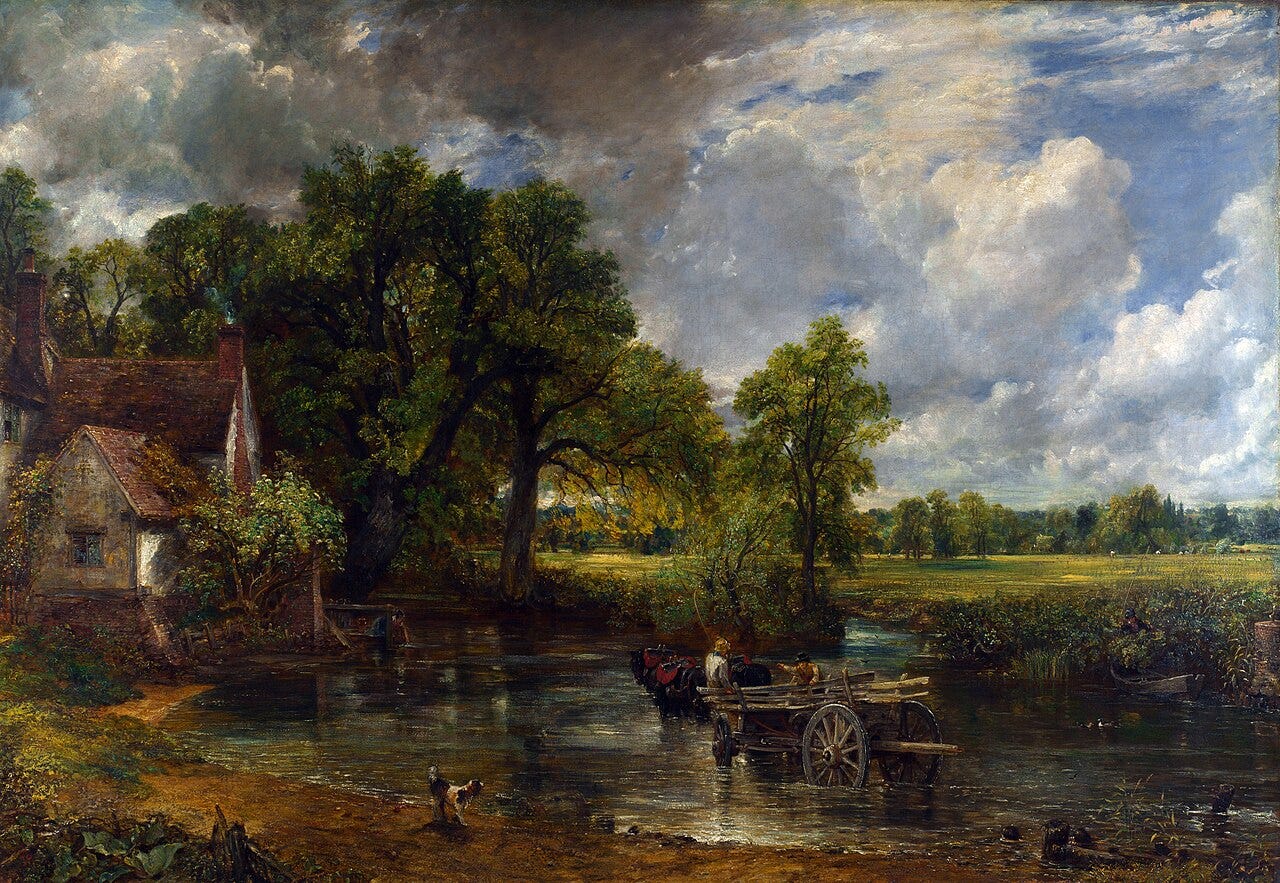
You can stand in front of the proof. Monet’s Poppy Field is in the Musee d’Orsay, and Constable’s Hay Wain is in the National Gallery in London.
That outdoor instinct sits at the heart of the story of who painted the first Impressionist picture.
En plein air, your common questions
What does en plein air mean? It is French for in the open air, and means painting outdoors on the spot, in front of the subject.
How do you pronounce en plein air? Roughly on plen air, three soft syllables, with a silent final consonant.
Why paint outdoors? To capture real light, color and weather that the studio cannot reproduce.
What made en plein air possible? The collapsible metal paint tube, patented around 1841, plus portable easels and the pochade box.
Did the Impressionists invent it? No. They popularized it and made the outdoor painting itself the finished work, after the Barbizon painters led the way.
Who is most associated with it? Claude Monet, who chased changing light across whole series of paintings.
Is en plein air still practiced today? Very much. Festivals and competitions run worldwide, now in watercolor and acrylic as well as oil.
More secrets to unlock


The art form with a deadline
Most painting can wait until tomorrow. Plein air cannot: the exact light you came for lasts an hour, maybe two, then the planet turns and it is gone for good.
Every honest outdoor painting is the record of a few minutes that no longer exist, made by someone working as fast as the sky would allow.
