
Watercolor is paint made of pigment suspended in water and bound with gum arabic, applied in thin, transparent washes. Its defining trick is that the white of the paper does the work of white paint, so light seems to shine up through the color from beneath. Gerda Wegener chose exactly this medium for her Jazz Age Paris portraits, whose story is told in full in her complete story.
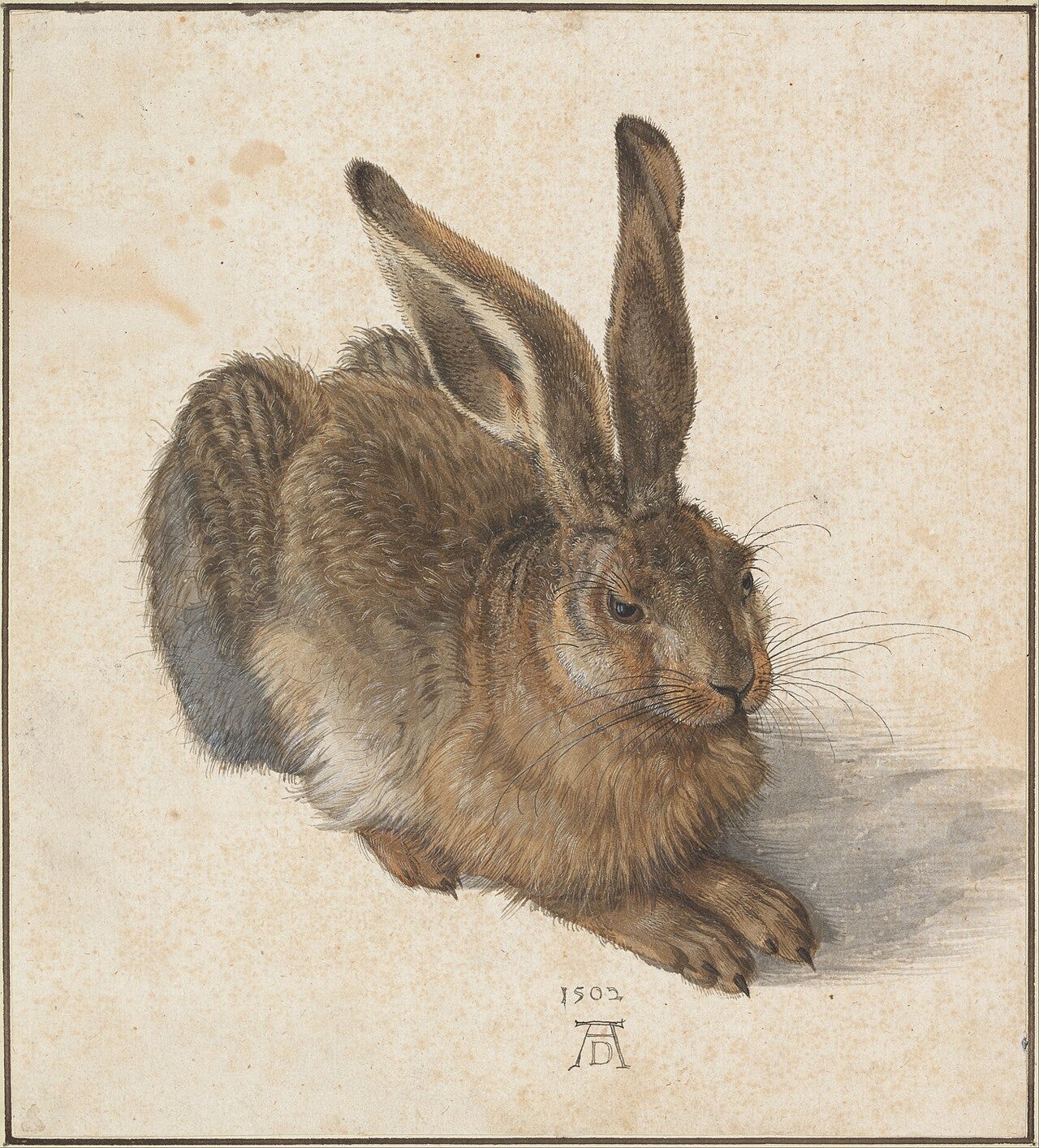
Dürer painted a life sized hare in watercolor in 1502, every whisker exact.
Because the washes are so thin and the paper so exposed, finished watercolors fade in daylight, which is why museums keep them dim and show them only in rotation.
What watercolor really is
What it is: pigment in water, painted in transparent layers.
The secret: the white paper, not white paint, supplies the light.
The feel: fresh, luminous, fluid, fast.
The catch: it is very hard to correct.
The masters: Dürer, Turner and Winslow Homer.
Keep learning art the fun way


The paper is the light
The whole logic of watercolor runs backwards from oil.
In oil you add light by adding white paint. In watercolor you make light by leaving the paper bare. The paint is transparent, so wherever you want brightness, you simply do not paint, letting the white sheet glow through the washes.
A watercolorist plans in reverse, protecting the highlights from the start.
Lose the white of the paper and you lose the light for good.
Fast, fluid, and unforgiving
I have always thought watercolor is loved and feared for the same reason: it will not be controlled.
Wet color spreads, blooms and runs in ways no brush fully commands, which gives it that loose, living freshness.
But it is also brutally hard to fix. You cannot easily cover a dark mistake with a light one, because the paint is see through.
Every wash has to be more or less right the first time. That mix of fluidity and finality is the whole challenge.
It rewards confidence and punishes fuss.
The cousin that hides the paper
Watercolor has a close relative that breaks its one rule.
Gouache is watercolor made opaque, with white added so it covers rather than glows. Where watercolor depends on the paper showing through, gouache hides it.
Many painters keep both at hand, using transparent watercolor for luminous washes and gouache for solid, covering touches.
One trusts the paper. The other paints over it.
The painter's travel kit
Watercolor became the great portable medium.
It is light, dries fast and needs only water, which made it perfect for working outdoors and on the move, the natural partner of en plein air painting and the landscape tradition.
Turner carried watercolors across Europe to catch storms and sunsets on the spot. A whole box of color could fit in a coat pocket.
The medium that fit in a bag captured half the skies in art.
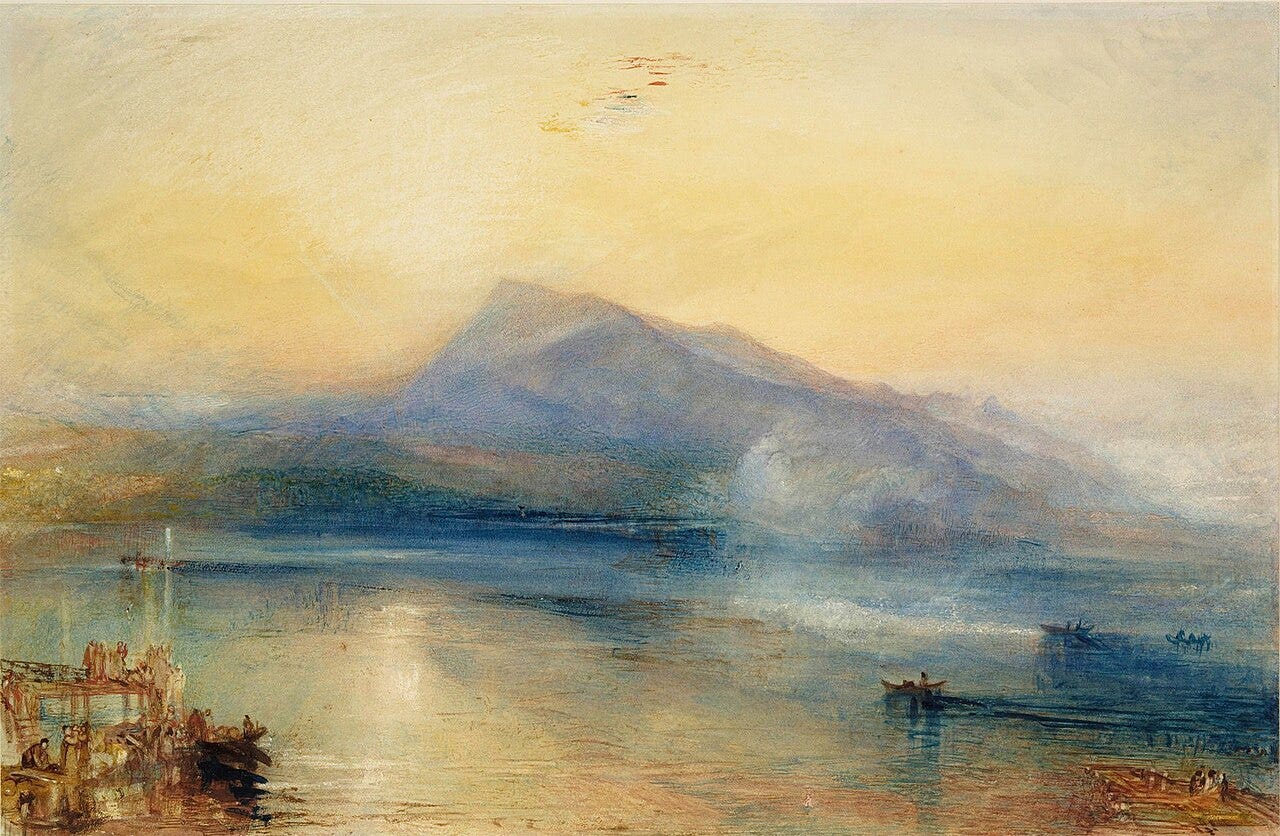
Two of the greatest hang in public collections. Turner’s Blue Rigi is at Tate in London, and the Met holds Winslow Homer’s watercolor A Wall, Nassau.
The medium that mapped the world
Before photography, watercolor was the eye of science and empire. Naturalists carried it on long voyages to record birds, plants and coastlines on the spot, because it was light, fast and needed only water.
Maria Sibylla Merian painted the insects of Surinam in watercolor in 1699. British military topographers were trained in it to map terrain.
The same portability that let Turner chase a sunrise let explorers and botanists bring back the look of places no camera had yet reached.
Turner’s late explosions
Turner pushed watercolor further than anyone thought it could go, and this is the part I love. In his late Swiss views of the 1840s, the Rigi seen across Lake Lucerne, he let the washes dissolve almost into pure light and weather, the mountain a blue ghost at dawn.
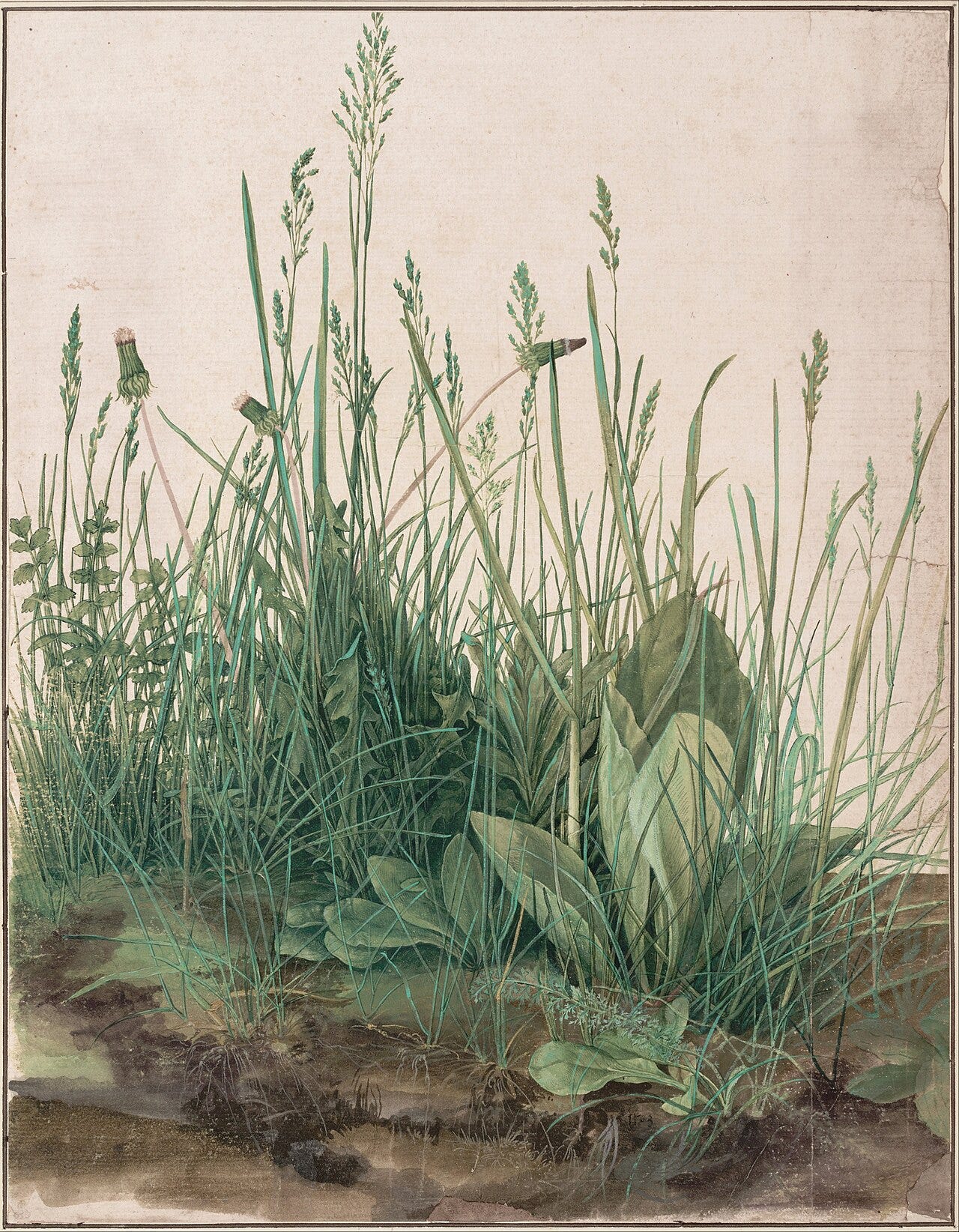
He worked wet on wet, lifted color out with rags, and left the bare paper doing huge amounts of the work. These sheets are now counted among the greatest watercolors ever made, and they look astonishingly close to abstraction, painted decades before abstraction had a name. That Rigi sheet keeps good company: twelve watercolors worth seeing side by side, a run that also covers Durer's studies of turf and grass and Kandinsky's first abstract sheet.
Watercolor, the questions that flow
What is watercolor? Paint made of pigment in water, applied in transparent washes on paper.
Why is the paper so important? Watercolor is transparent, so the white paper provides the light and the highlights.
Why is it hard to correct? Because the paint is see through, you cannot easily cover a mistake with a lighter color.
How is it different from gouache? Gouache is opaque watercolor. It covers the paper instead of letting it glow through.
Who are famous watercolorists? Albrecht Dürer, J. M. W. Turner and Winslow Homer.
More secrets to unlock


The bravest paint in the box
To my eye, watercolor looks gentle, all soft washes and pale skies, and it is one of the hardest mediums to master.
There is nowhere to hide and no way back: the paper remembers every stroke, the color will not lift clean, and the light must be saved before it is lost.
When it works it has a freshness no other medium can fake, because it really was caught on the first try. That fragility carries a price: Turner's Blue Rigi sold for 5.8 million pounds in 2006, then was saved for the Tate by a public appeal.
