

170 000+ readers. Learn art the fun way.
This is a preview. Paid subscribers get the full story.
You’ll also get:
10 new stories every month
The full archive (120+ Art stories)
Your personal art guide. Comment, ask questions, DM me anytime
iPhone user? Subscribe at coolstoriesabout.art, not via the app. Apple adds 30% to the price.
New York, 1914.
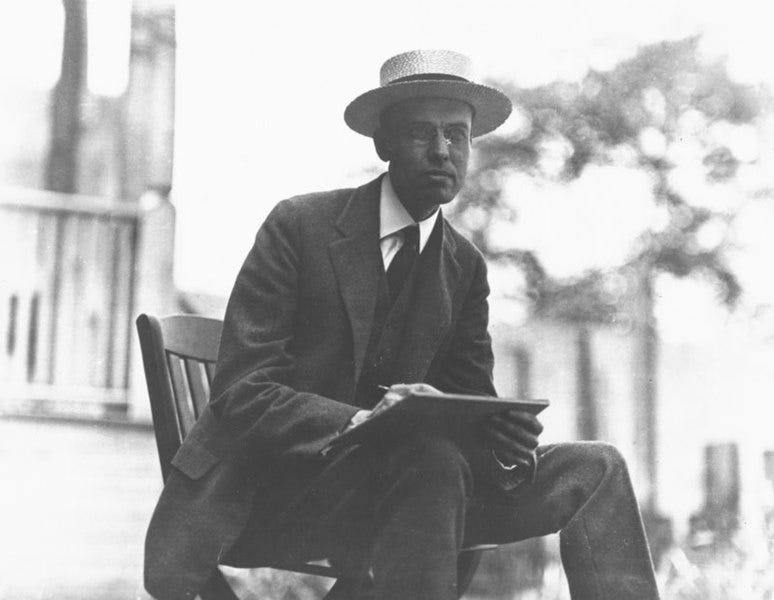
On the top floor of a building on Washington Square, a 32 year old man is painting on a canvas nearly six feet wide.
He is six foot five. To get home, he climbs 74 steps. He heats the studio with coal, bucket after bucket, carried up one by one.
On the canvas, there is no New York.
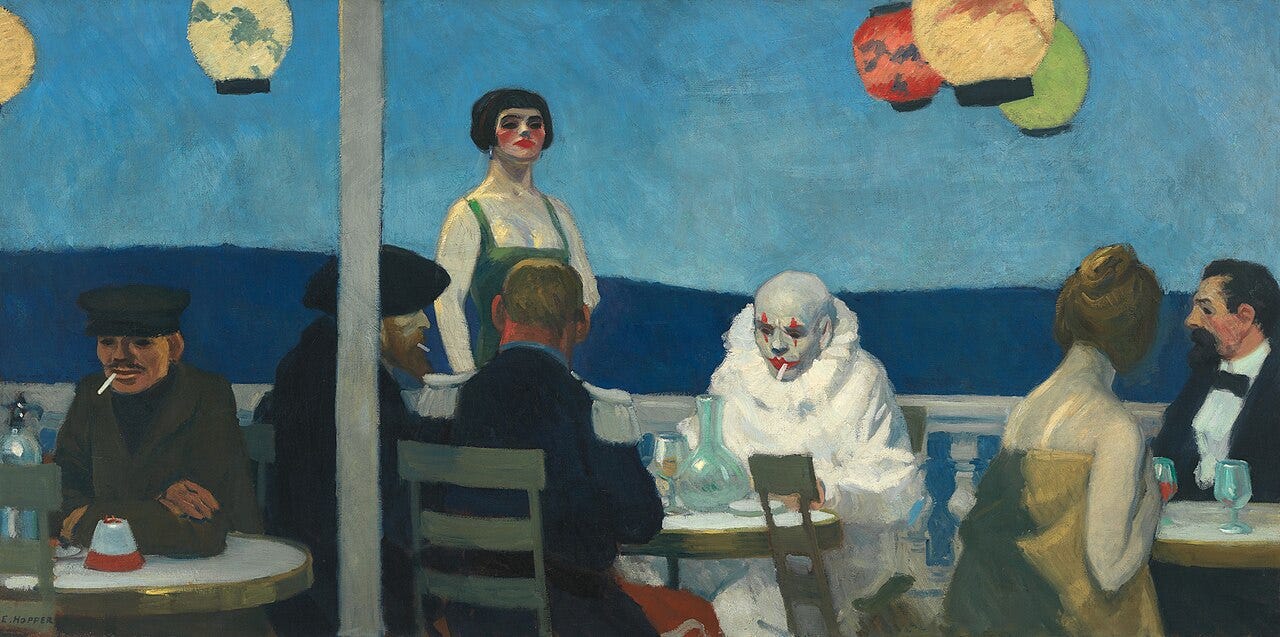
There is a Paris cafe terrace, at night. Round tables. Lanterns. Figures under a blue sky darkening toward black.
He is painting the scene from memory. It has been four years since he last set foot in Paris.
By day, he earns his living another way. He draws advertisements for magazines. Work he hates.
At night, in the studio, he goes back to Paris.
He does not even translate the title. He writes it in French. Soir Bleu.
His name is Edward Hopper.
Paris
In Paris, he had felt like a painter. A real one.
Three stays, between 1906 and 1910. A room at 48 rue de Lille, a boarding house run by Baptists, found for him by his mother. He lived there alone.
In the morning, he set up his easel on the banks of the Seine. He painted the bridges, the staircases, the gray stone, the light sliding across it. The Louvre was steps away. He went often.
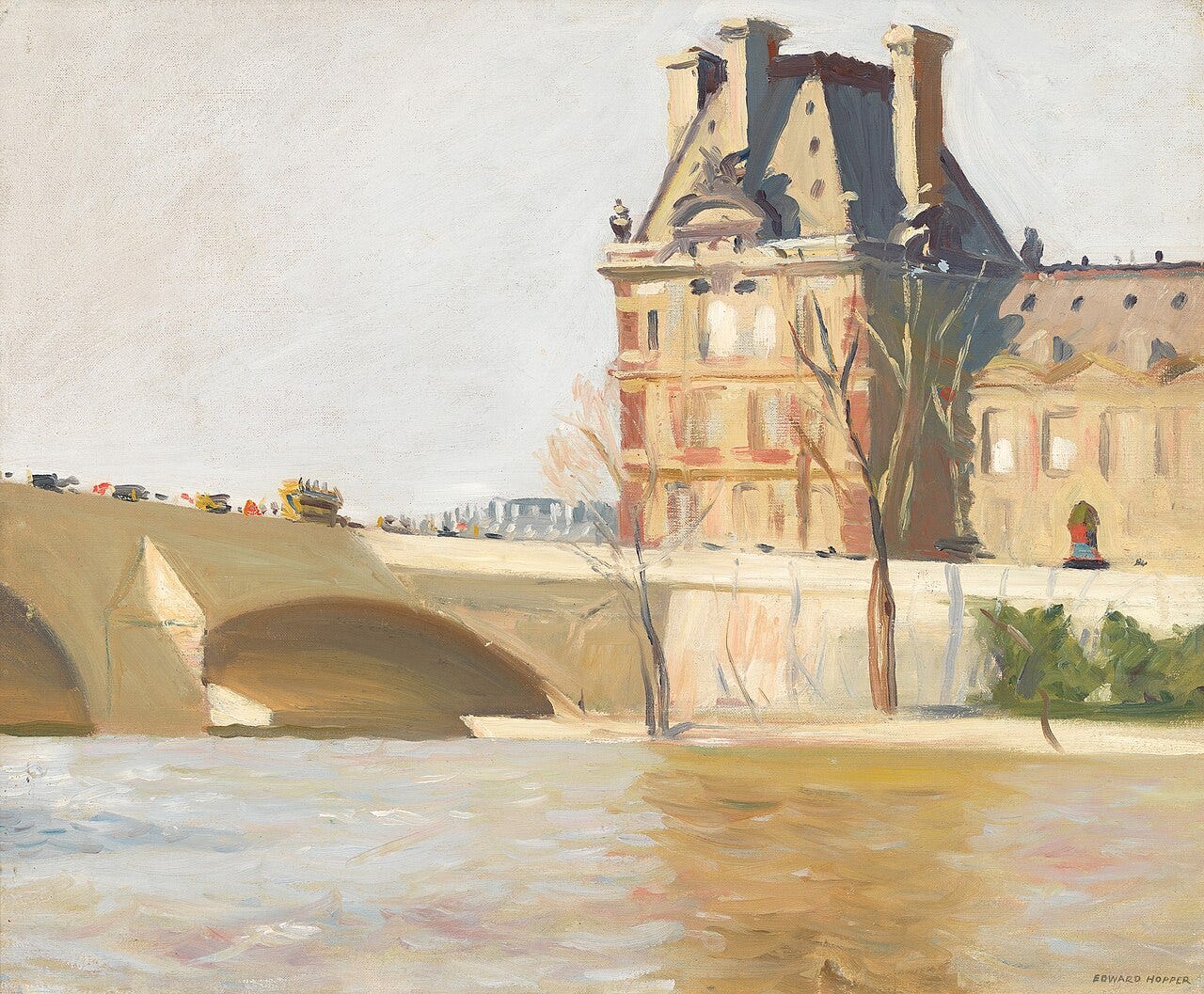


He loved Manet, Degas. Their cafes, their theaters, their city scenes.
But Paris, in those years, was looking elsewhere.
Across the Seine, in Montmartre, Picasso was about to blow painting wide open. Matisse was covering his canvases with colors that caused a scandal. At Gertrude Stein's, the avant garde gathered every week.
Hopper did not go.
I'd heard of Gertrude Stein, but I don't remember ever hearing about Picasso.
From Paris, two faces follow him back to New York.
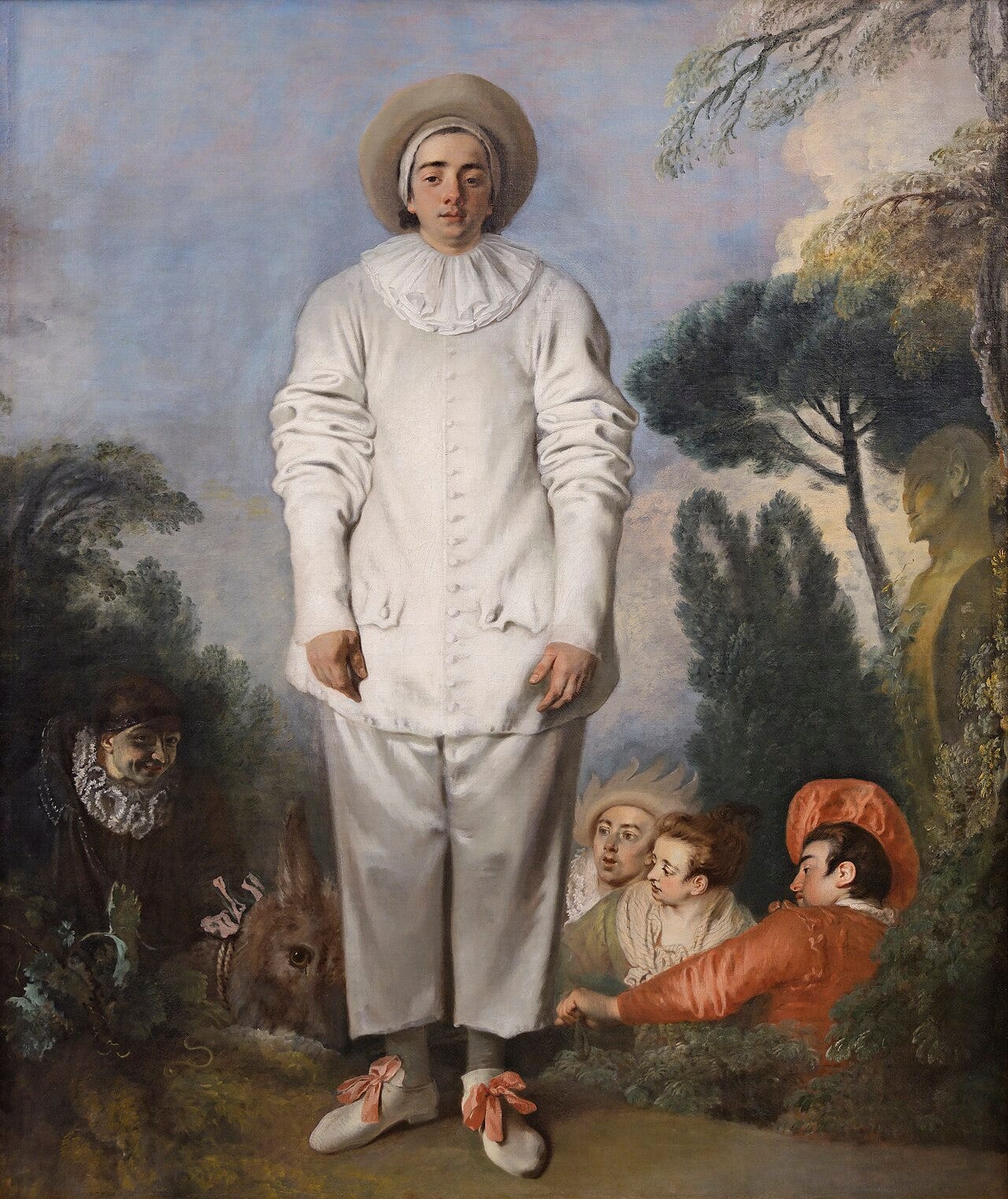
The first was in the Louvre. A large white clown painted by Watteau. Alone, standing, facing the viewer, arms at his sides. A stage performer abandoned in the middle of the canvas.
The second, he passed one day during the mid Lent carnival, on the Grands Boulevards. A clown with a big nose, his face painted a deathly white, lost in the crowd.
He had always been drawn to people of the stage. Actors, clowns, theater figures. The ones applauded under the lights, then left alone the moment the curtain falls.
Discover my new newsletter !

The First Sale
Late in 1910, he comes home to New York for good.
Three years pass. No one takes any interest in his painting.
Then, in February 1913, a huge exhibition opens in New York. For the first time, the city discovers European modern art. They call it the Armory Show.
The crowds pour in. People push to see Duchamp, Picasso, Matisse. They cry scandal, they marvel.
Hopper hangs a small seascape there. A sailboat, the sea. No one stops in front of it.
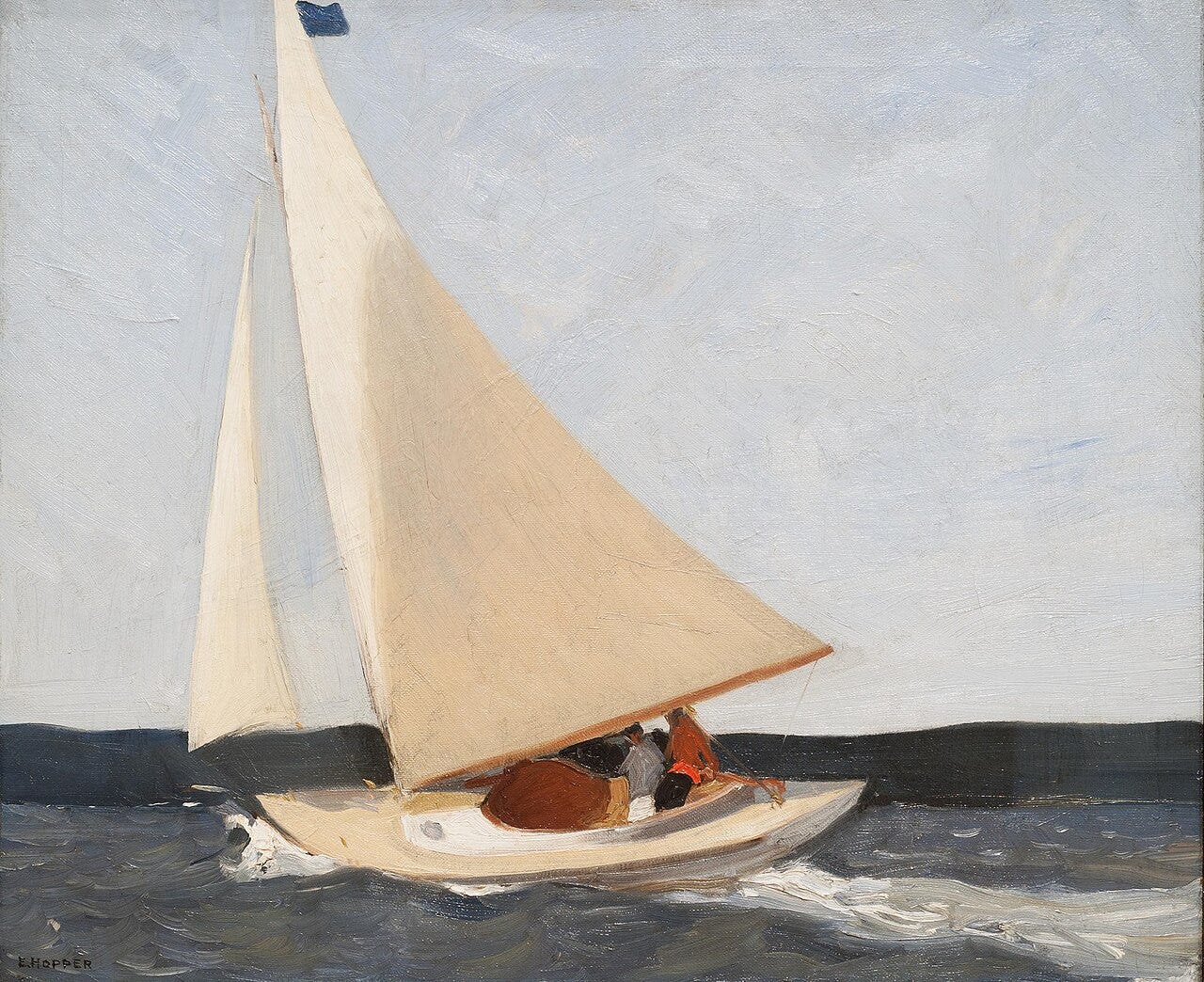
It sells all the same. 250 dollars, to a collector.
It is his first sale. He is 30.
It will be his last for ten years.
Keep learning art the fun way


The Terrace
A year after the Armory Show, Hopper takes on the most ambitious canvas of his life: Soir Bleu.
He lays in the sky first. A deep end of day blue, the one that gives the painting its title.
Then the cafe. A vertical post cuts the terrace in two, like a theater curtain. Lanterns hang from it.
Then the people. Seven figures around the tables.
A heavily made up woman, in a low cut dress, stands there. A little further off, a hard faced man watches the terrace. A pimp.
An officer with epaulettes struts, chin high. To the right, a well dressed couple talks in low voices. A bohemian in a beret poses, a cigarette at his lips.
People drink, laugh, talk. The night belongs to the party.
Everyone wants to be seen. To be noticed, desired, applauded.
Everyone but one.
At the exact center of the canvas, a white clown sits. The Pierrot costume, the ruff at his neck, the face painted white. He does not perform. He does not strut. He smokes, alone.
He is the one Hopper placed at the heart of the painting.
One question remains. Who is he?