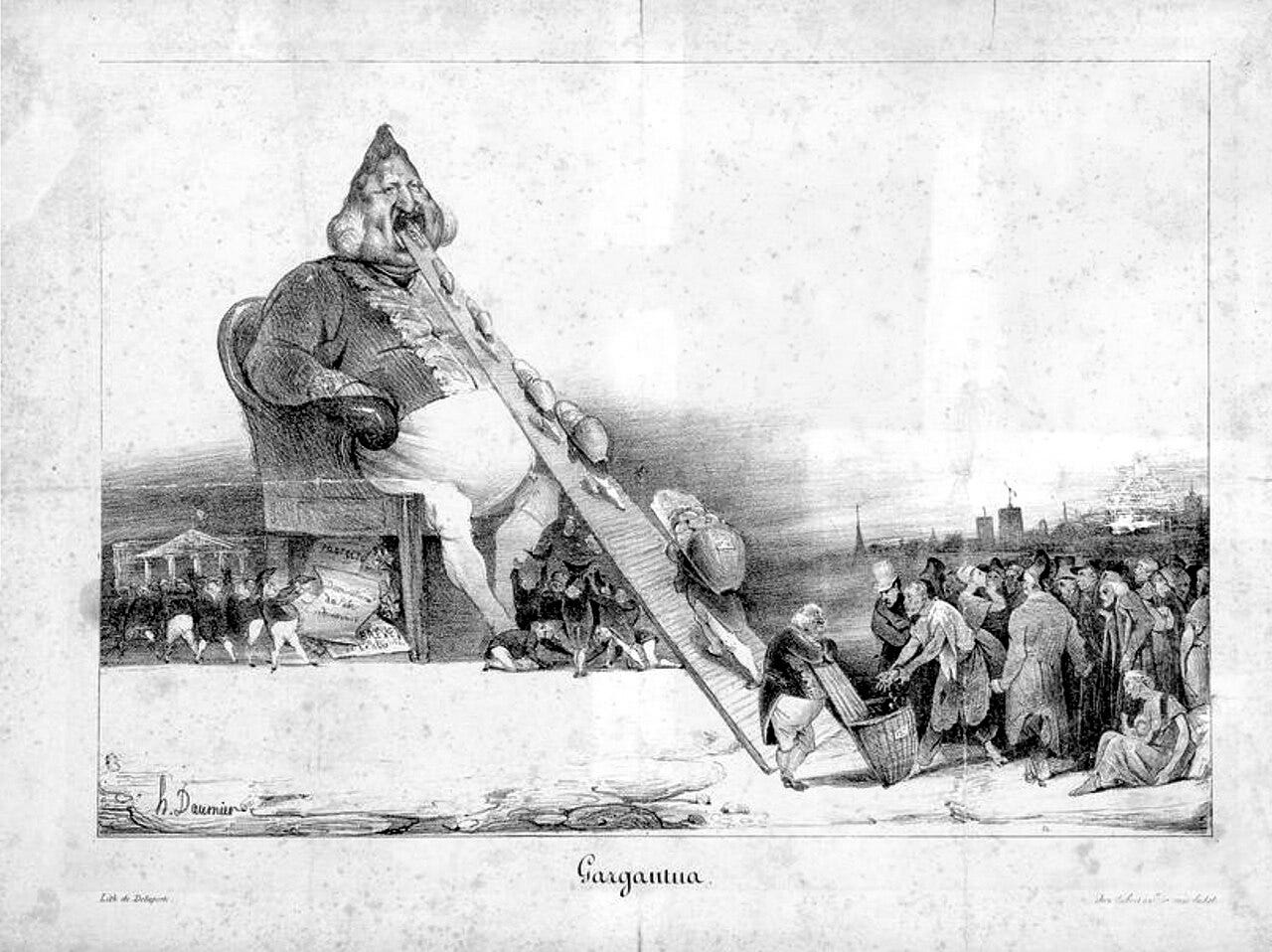
Honore Daumier went to prison for drawing the king as a giant swallowing the people's money, produced about 4,000 lithographs, and died nearly blind and broke in a house Corot quietly bought for him. France discovered he was also a painter one year before his death.
The most feared pencil of the nineteenth century belonged to a man his friends described as gentle. Here is both halves of the story.
Honoré Daumier at a glance:
1808: born in Marseille, son of a glazier with poetic ambitions who moves the family to Paris.
1832: six months in prison at 24 for drawing the king as Gargantua swallowing the nation's coins.
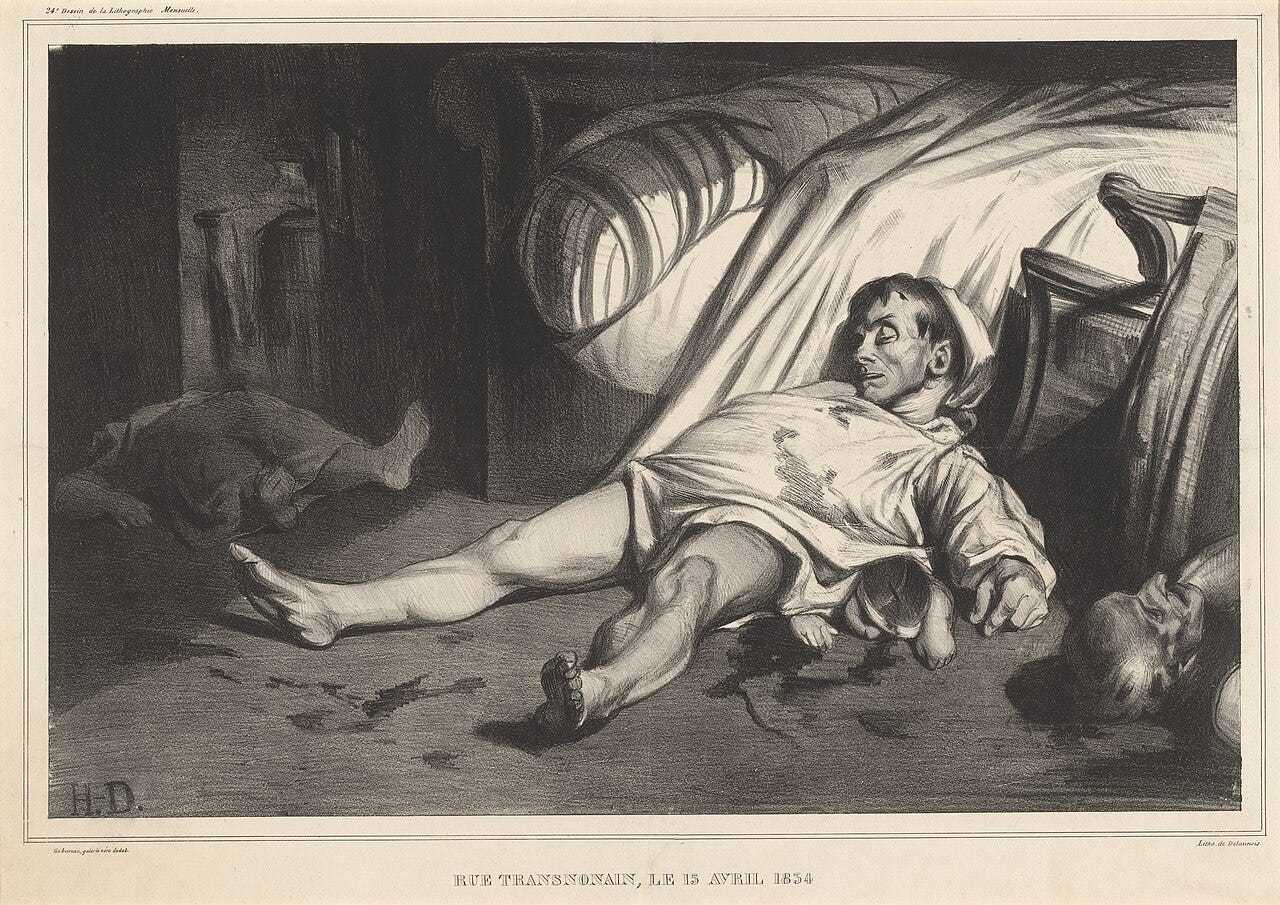
1834: Rue Transnonain, a massacre drawn as plain reportage; the government destroys every impression it can seize.
1860 to 1863: fired by Le Charivari for being unfashionable, rehired when readers complain.
1879: dies nearly blind at Valmondois, in a house quietly bought for him by Corot.
Marseille to the print shops
Daumier was born in Marseille on February 26, 1808, son of a glazier with poetic ambitions who dragged the family to Paris in 1816. The boy ran errands for bailiffs and booksellers, learned lithography as a trade, and by 1830 was drawing for the opposition press just as the July Monarchy handed satire its perfect target.
Six months in prison for Gargantua
In December 1831 the weekly La Caricature published his Gargantua, King Louis-Philippe as a bloated giant fed by baskets of coins carried up from the poor. Daumier was tried and, in 1832, served six months at Sainte-Pelagie.
Released, he went straight back to work. His Rue Transnonain of 1834, a massacred family in a bedroom after a police raid, is the ancestor of every piece of graphic photojournalism.
More incredible painter stories
If Honoré Daumier pulled you in, you will love these too:


4,000 stones for Le Charivari
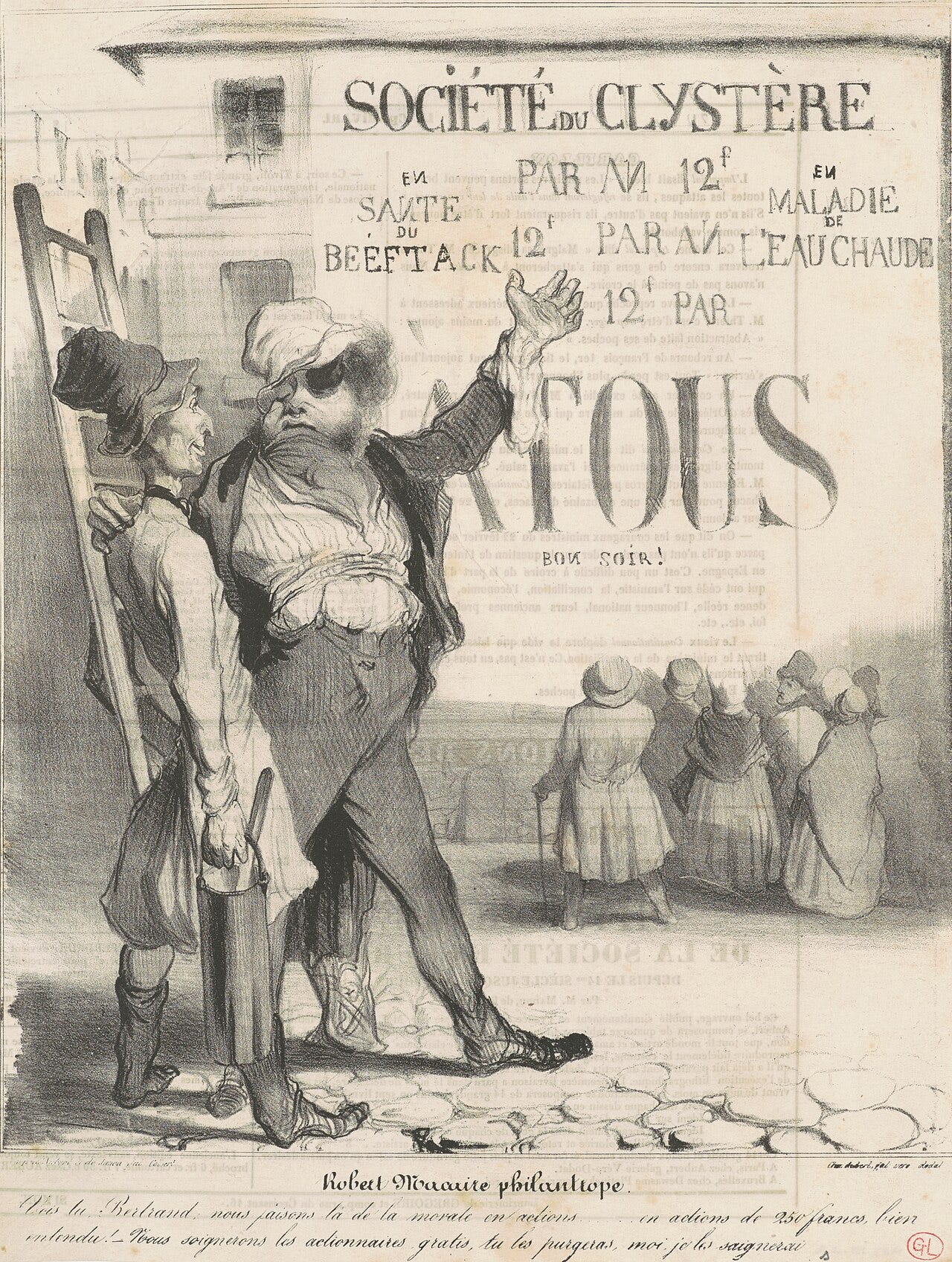
When censorship strangled political caricature in 1835, Daumier turned to daily life in Le Charivari: lawyers, landlords, art collectors, married couples, and the immortal swindler Robert Macaire. Over four decades he drew about 4,000 lithographs on deadline, a stone every few days, and complained to the end that the treadmill kept him from painting.
The myth: just a caricaturist
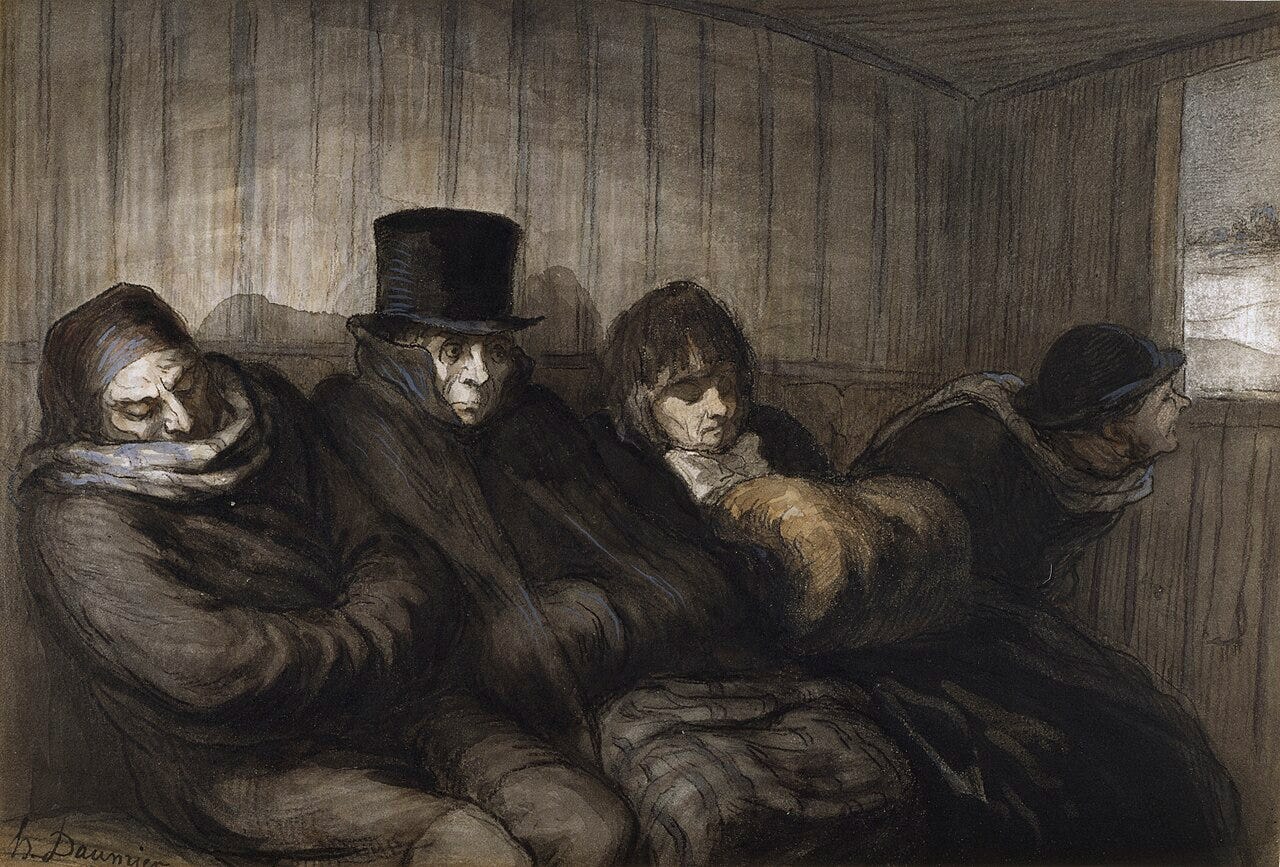
The painting he did in secret is the reason museums fight over him now. The Third-Class Carriage at the Met, the Don Quixote series, washerwomen on the quays: broad, dark, and decades ahead of their time.
Balzac saw it early, remarking that the man had Michelangelo under his skin. The public got its first real look at the paintings in 1878, at a show organized by his friends. He died months later, in February 1879.
Corot's gift, and where to see him
By the 1870s Daumier was almost blind, refusing the Legion of Honor and unable to pay rent on his cottage in Valmondois. Corot bought the house and gave it to him, the most delicate rescue in art history.
The Musee d'Orsay, the Met, the Phillips Collection in Washington, and the print rooms of Paris hold the essentials.
The clay parliament
Before drawing the deputies he sculpted them: three dozen small clay busts, caricature in three dimensions, kept unbaked in the studio as his reference cast.
The clay parliament survives at Orsay, jowls and pomposity fingerprinted at speed.
Later came Ratapoil, the swaggering Bonapartist agent modeled in the round, considered dangerous enough that the figure was hidden from police searches.
Don Quixote, painted for no one
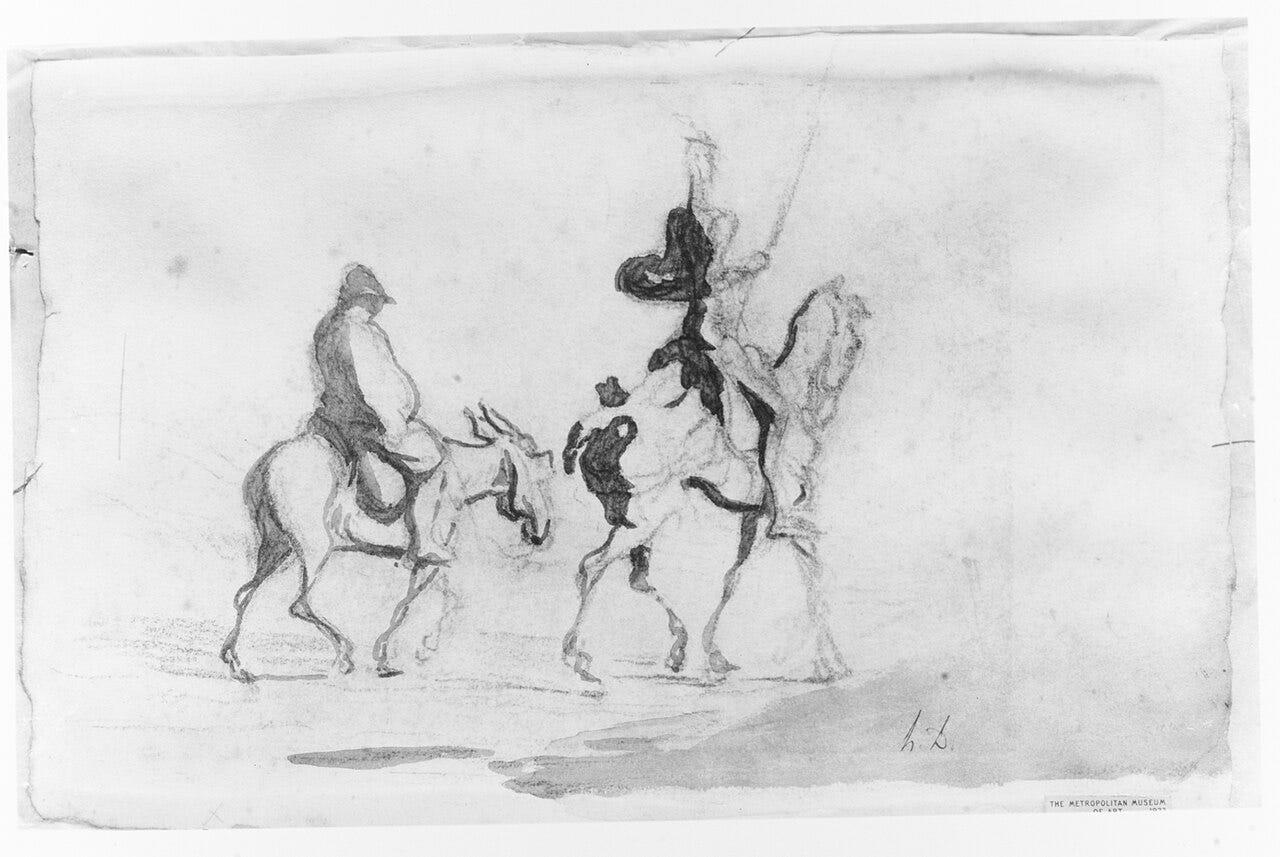
The paintings he made for nobody are the ones museums fight over now: some thirty Don Quixotes, the knight and Sancho crossing empty ochre hills.
No client ordered them and few sold. Some are barely more than a silhouette against light, closer to Goya, and to painting sixty years ahead of schedule.
The man who cataloged every Parisian type spent his private hours on a Spaniard who mistook the world. Either a joke or a confession.
The third-class carriage
The Third-Class Carriage puts a bench of tired strangers at museum scale, decades before anyone else considered commuters a subject.
Laundresses on the quays, print collectors bent over boxes, faces lit by a train window: his painted Paris is working Paris.
Many canvases stayed unfinished, because lithography paid and painting waited. History sometimes pays the patient in style.
The Honoré Daumier questions that keep coming up
Why did Daumier go to prison? For Gargantua, his 1831 lithograph of Louis-Philippe devouring the people's money. He served six months at Sainte-Pelagie in 1832.
How many works did Daumier make? About 4,000 lithographs, plus roughly 300 paintings, hundreds of drawings, and small clay busts of parliamentarians he modeled from memory.
Was Daumier recognized as a painter? Barely in his lifetime. His only painting exhibition opened at Durand-Ruel in 1878, one year before his death, and sold almost nothing.
Where can I see Daumier? The Musee d'Orsay in Paris, the Third-Class Carriage at the Met in New York, and the Phillips Collection in Washington for The Uprising.
How much does a Daumier cost? Paintings are scarce and reach seven figures; fine impressions of the famous lithographs can still be had for a few hundred dollars, one of collecting's best entry points.
What is Rue Transnonain? His 1834 print of a massacre, a worker's family dead in a bedroom, drawn as reportage rather than allegory. Seized and destroyed by the government; surviving impressions are museum treasures.
More secrets to unlock


Nothing but his work
The state that jailed Daumier at 24 offered him the Legion of Honor at 62. He turned it down without ceremony, saying he had done nothing but his work.