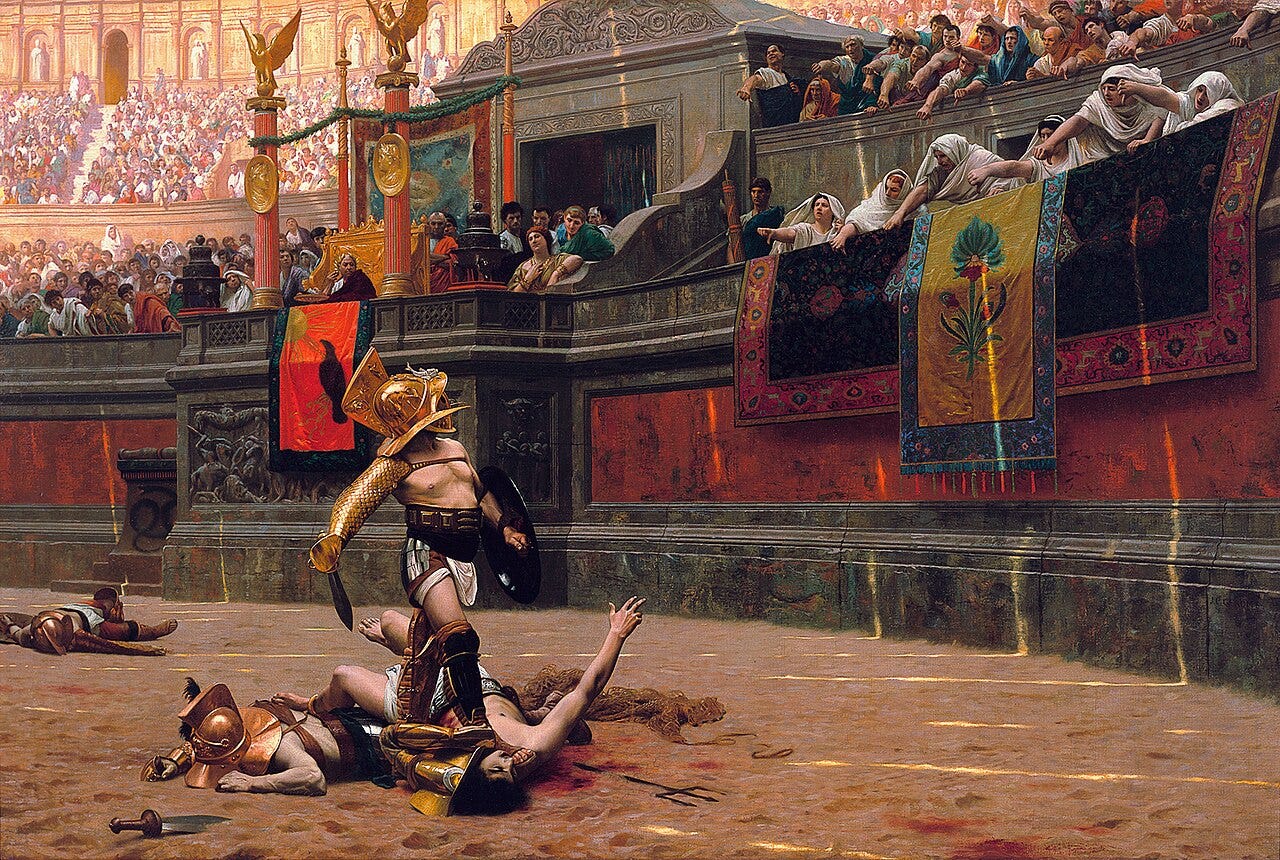
Jean-Léon Gérôme invented the most famous gesture in Roman history. The thumbs-down of the arena comes from his easel, not from any ancient text.
In 1880 he was probably the most seen painter alive. His images sold on every continent, decades before cinema.
Then modernism won, and his name became an insult for fifty years.
This is the whole arc: the prodigy, the empire of prints, the war he lost against the Impressionists, and the strange revenge his pictures are taking now.
Gérôme at a glance:
Born in Vesoul in 1824, a goldsmith's son. Salon star at 22.
Painted Pollice Verso in 1872, the canvas that convinced Ridley Scott to make Gladiator.
Taught more than 2,000 students over 40 years, including Thomas Eakins.
His Snake Charmer became the cover of Edward Said's Orientalism.
Died in his Paris studio in January 1904, still fighting the modern world.
More incredible painter stories
If Jean-Léon Gérôme pulled you in, you will love these too:


A goldsmith's son who kept failing the big prize
Gérôme reached Paris at 16, into the studio of Paul Delaroche, the most famous history painter in France.
When a hazing scandal closed the atelier in 1843, master and pupil left for Rome together. A year of ruins and museums did more for him than any diploma.
Back in Paris he kept failing the Prix de Rome. The jury found his figure drawing weak.
His answer was The Cock Fight: two Greek teenagers, two roosters, painted at 22. The Salon of 1846 made him famous overnight, and the critic Théophile Gautier crowned the new néo-grec style. The painting is in the Musée d'Orsay.
The Orient, shipped home in crates
From 1856 Gérôme traveled: Egypt first, then Sinai, Palestine, Turkey, again and again.
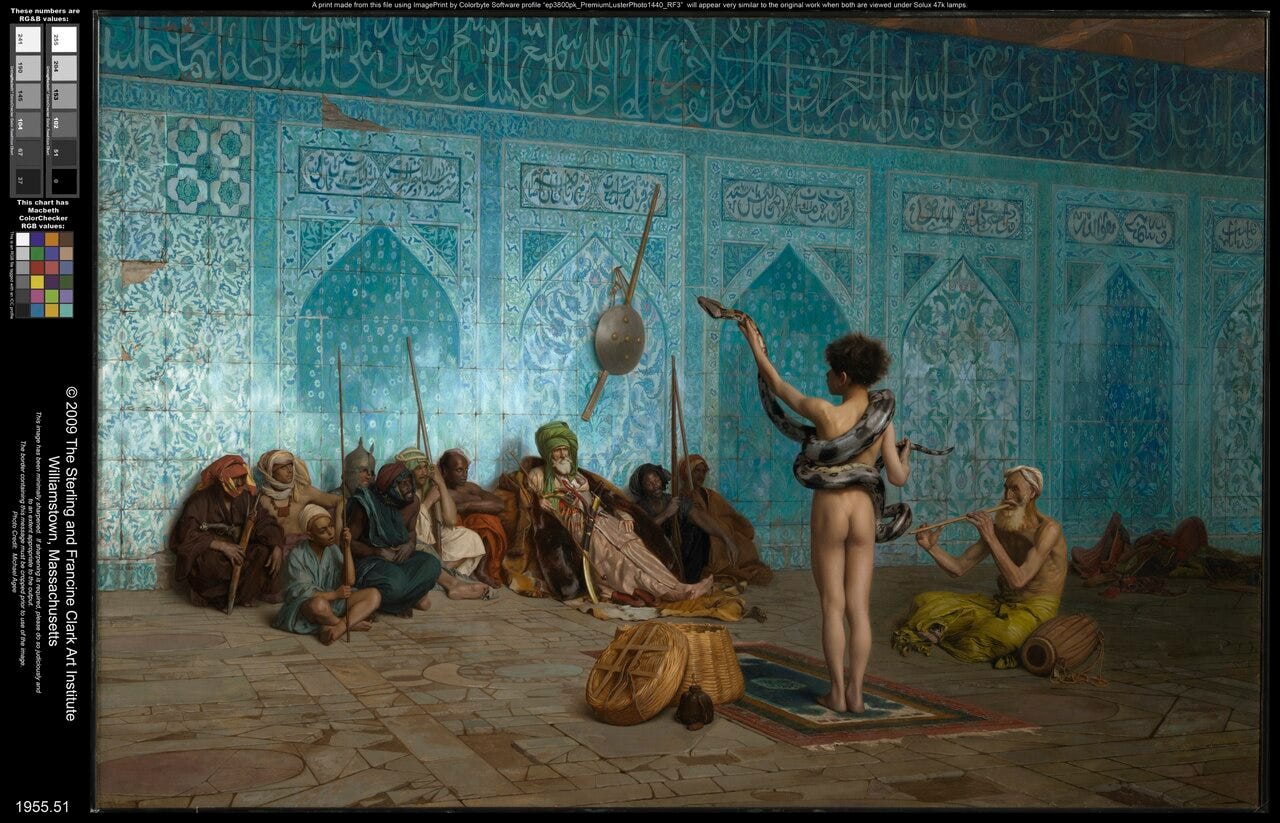
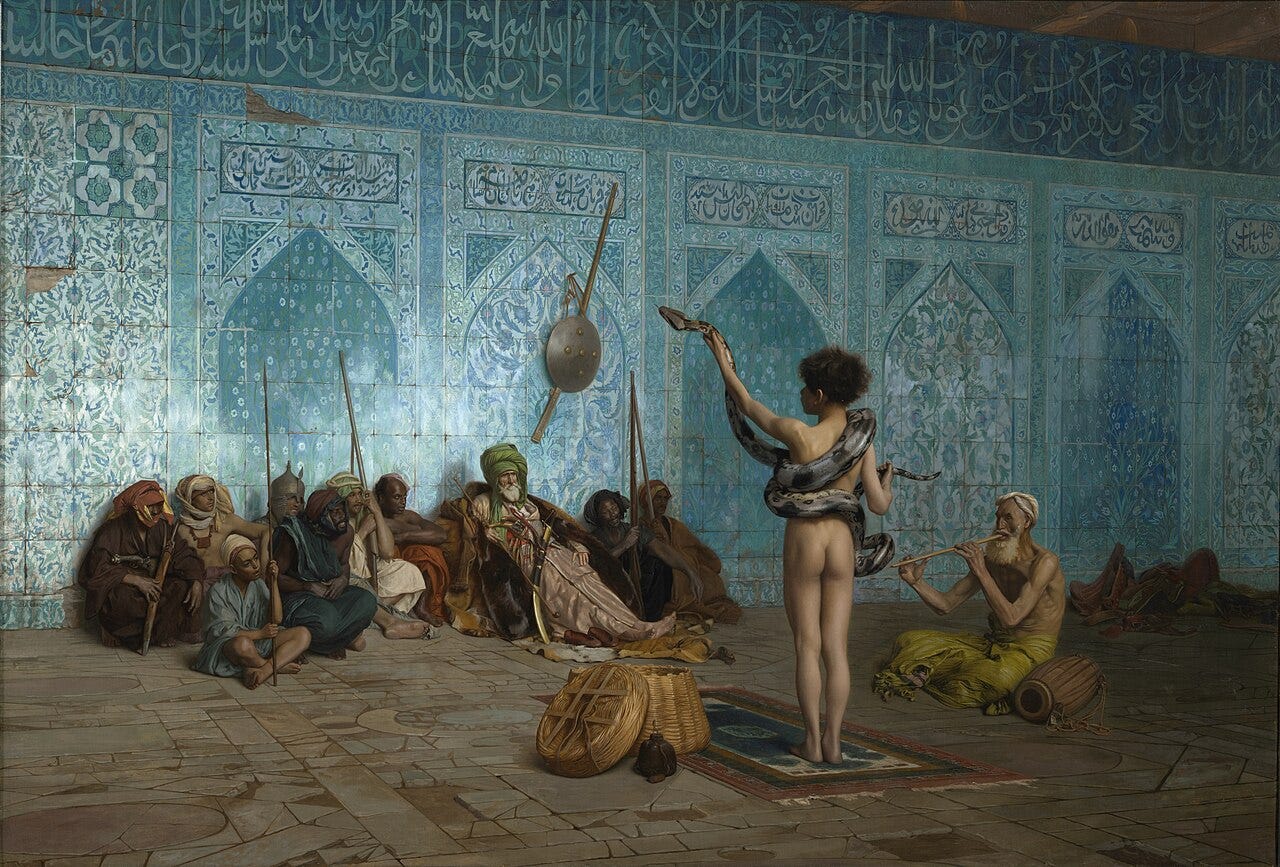
He came back with photographs, tiles, costumes, and weapons, and turned his studio into a props warehouse. The paintings built from it, prayer scenes, carpet markets, The Snake Charmer, were sold as documents and consumed as dreams.
That ambiguity caught up with him. In 1978 The Snake Charmer, now at the Clark Art Institute, became the cover of Edward Said's Orientalism, the book that put the whole genre on trial.
Look at it today and both readings hold at once: dazzling craft, and a West inventing the East it wanted.
The thumbs that conquered Hollywood
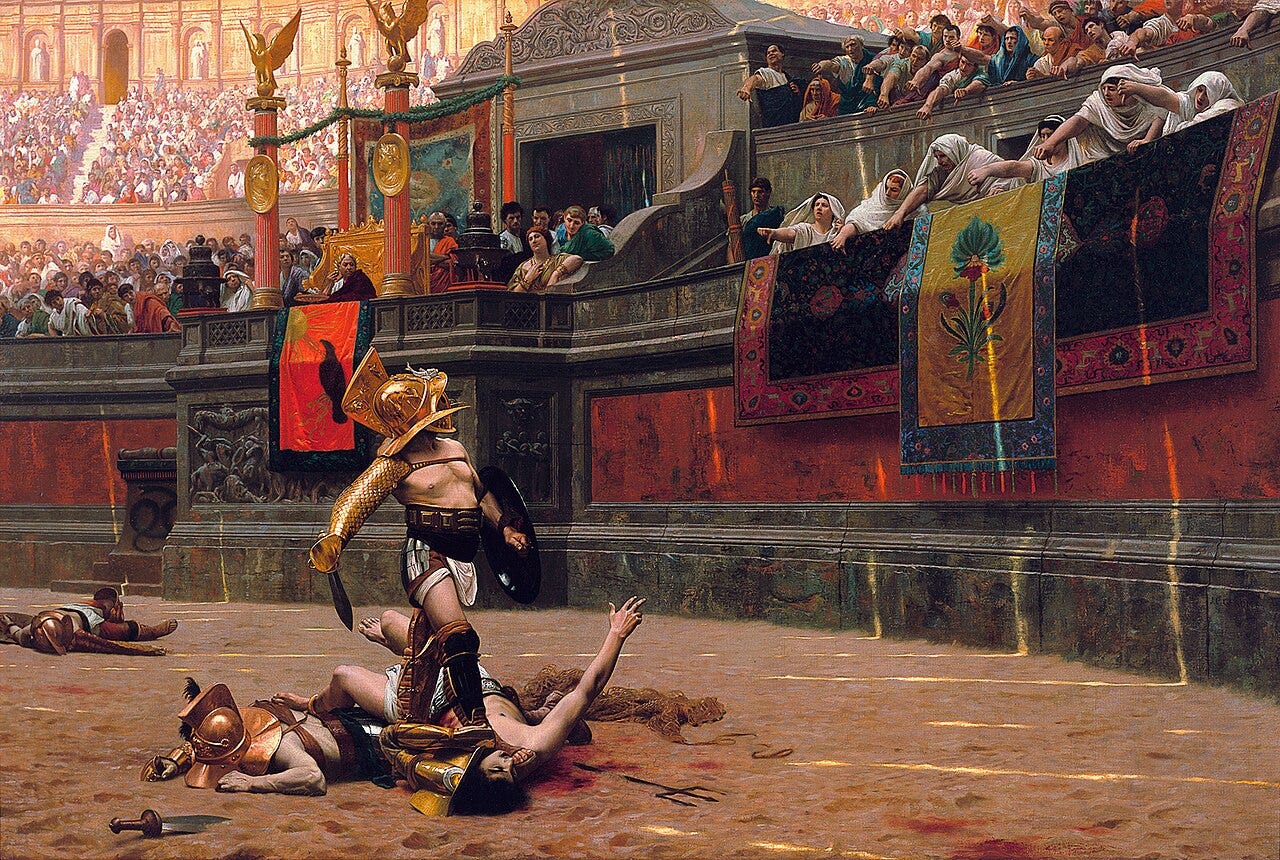
Pollice Verso, 1872. A victorious gladiator looks up. The crowd votes with its thumbs, turned down.
No ancient source securely describes the vote that way. Gérôme's guess was dressed as archaeology, and it beat the scholarship: every arena scene since descends from this one canvas.
In 1999, producers put the painting in front of Ridley Scott. He said the image told him everything about Rome, and signed on to direct Gladiator.
The canvas hangs in the Phoenix Art Museum. The gesture hangs in your thumb.
Two thousand students and a printing empire
From 1864 to his death, Gérôme taught at the École des Beaux-Arts. More than 2,000 students passed through, from three continents.
The greatest was Thomas Eakins, who carried the method to Philadelphia. The unhappiest was the young Odilon Redon, who fled toward his own darkness.
In 1863 Gérôme married Marie Goupil, daughter of the print dealer Adolphe Goupil. The alliance plugged his art into a global machine: photogravures of his paintings sold from New York to Cairo.
Before film existed, Gérôme was what mass visual culture looked like.
Marble that blushes
Late in life he turned sculptor, tinting his marbles in defiance of white antiquity.
Tanagra, 1890, sits in the Musée d'Orsay. At the Met, his Pygmalion and Galatea shows a statue kissing her sculptor as she turns to flesh, the painter painting his own sculpture coming alive.
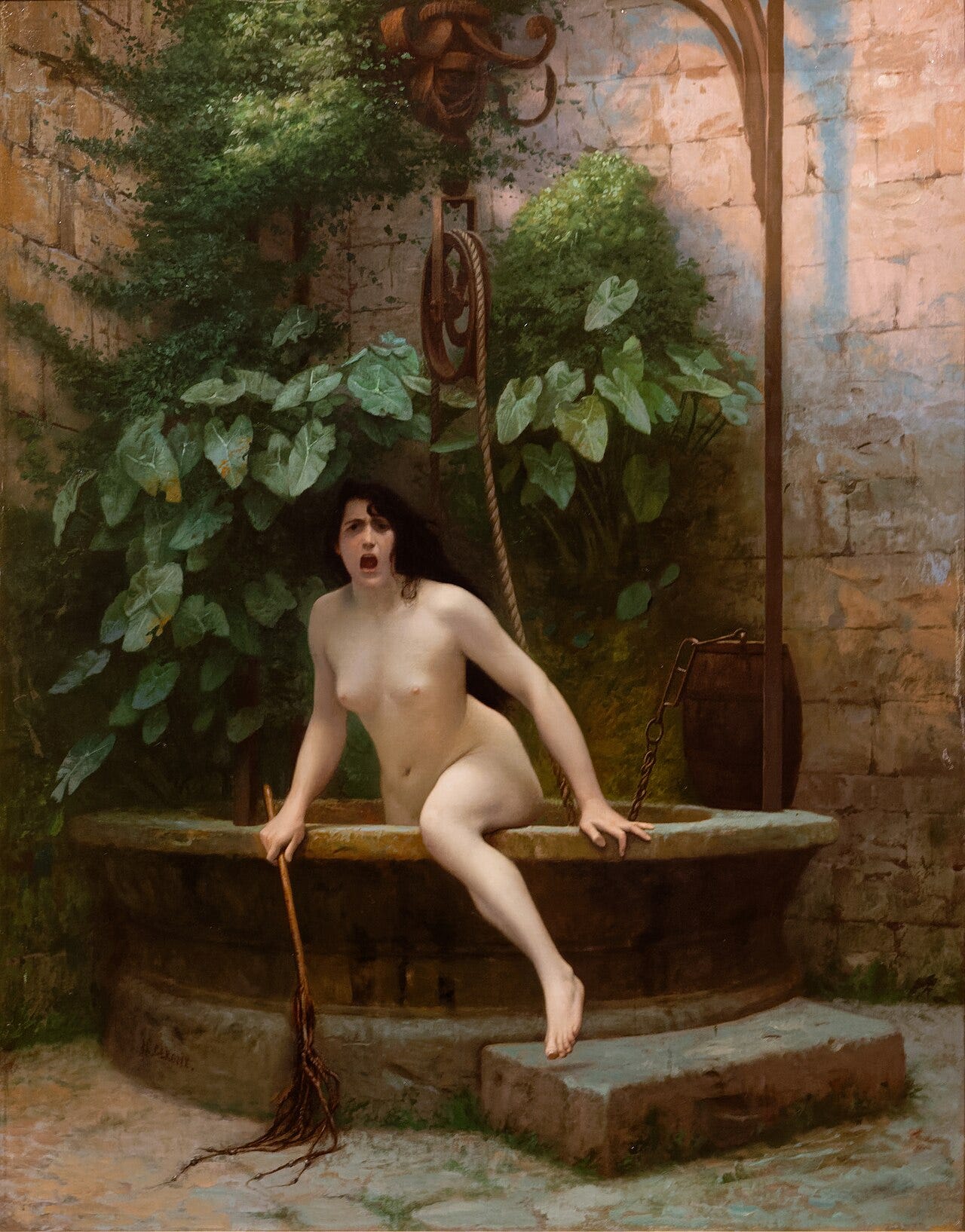
And in 1896 he painted Truth Coming Out of Her Well, naked, furious, whip in hand. The internet found it a century later and made it the meme of every scandal since.
The war he could not win
Gérôme fought the new painting with everything he had.
He called the Impressionists a dishonor, tried to block the state from accepting the Caillebotte bequest in 1894, and, legend says, planted himself at the door of the 1900 Exposition to warn the President of the Republic away from the moderns.
He died in his studio on January 10, 1904. Modernism wrote the obituaries, and they were merciless.
The strange revenge
Then the pictures out-lived the verdict.
Cinema inherited his framing, his lighting, his archaeological sets. His students had seeded academies worldwide. The Musée d'Orsay and the Getty rebuilt his case in a joint 2010 retrospective, the same institutions now reassessing his fellow Salon star William Adolphe Bouguereau.
You do not have to forgive the politics to see it: half of Hollywood's antiquity, and one very modern meme, came off this one man's easel.
Three Gérômes to begin with
Pollice Verso, 1872. The thumbs-down itself, at the Phoenix Art Museum.
The Snake Charmer, around 1879. Seduction and problem in one frame, at the Clark.
Truth Coming Out of Her Well, 1896. The angriest allegory of his century, at Moulins.
See them in person
The Musée d'Orsay in Paris holds The Cock Fight and Tanagra. The Walters in Baltimore and the Met carry the great American holdings, the Getty the late works, Phoenix the gladiators, and Moulins the Truth.
The Jean-Léon Gérôme questions that keep coming up
Is the thumbs-down real Roman history? No ancient text confirms it. Gérôme's 1872 staging invented the certainty, and the movies adopted it.
Why is Gérôme called an Orientalist? His Middle East scenes defined the genre, and The Snake Charmer became the cover of Said's Orientalism in 1978.
Who was his most famous student? Thomas Eakins, who brought the method to America. Over 2,000 others followed.
Did he really fight Impressionism? Fiercely: public insults and an attempt to block the Caillebotte bequest of 1894.
What is his most shared work today? Truth Coming Out of Her Well, 1896, the internet's favorite allegory of inconvenient facts.
How did Gérôme die? In his Paris studio on January 10, 1904, at 79, working to the end.
More secrets to unlock


He invented a gesture, and the movies believed him
A hundred and fifty years of arena scenes rest on one painter's educated guess.
Gérôme lost his argument with the century. He is winning the one with ours, one thumbs-down at a time.