
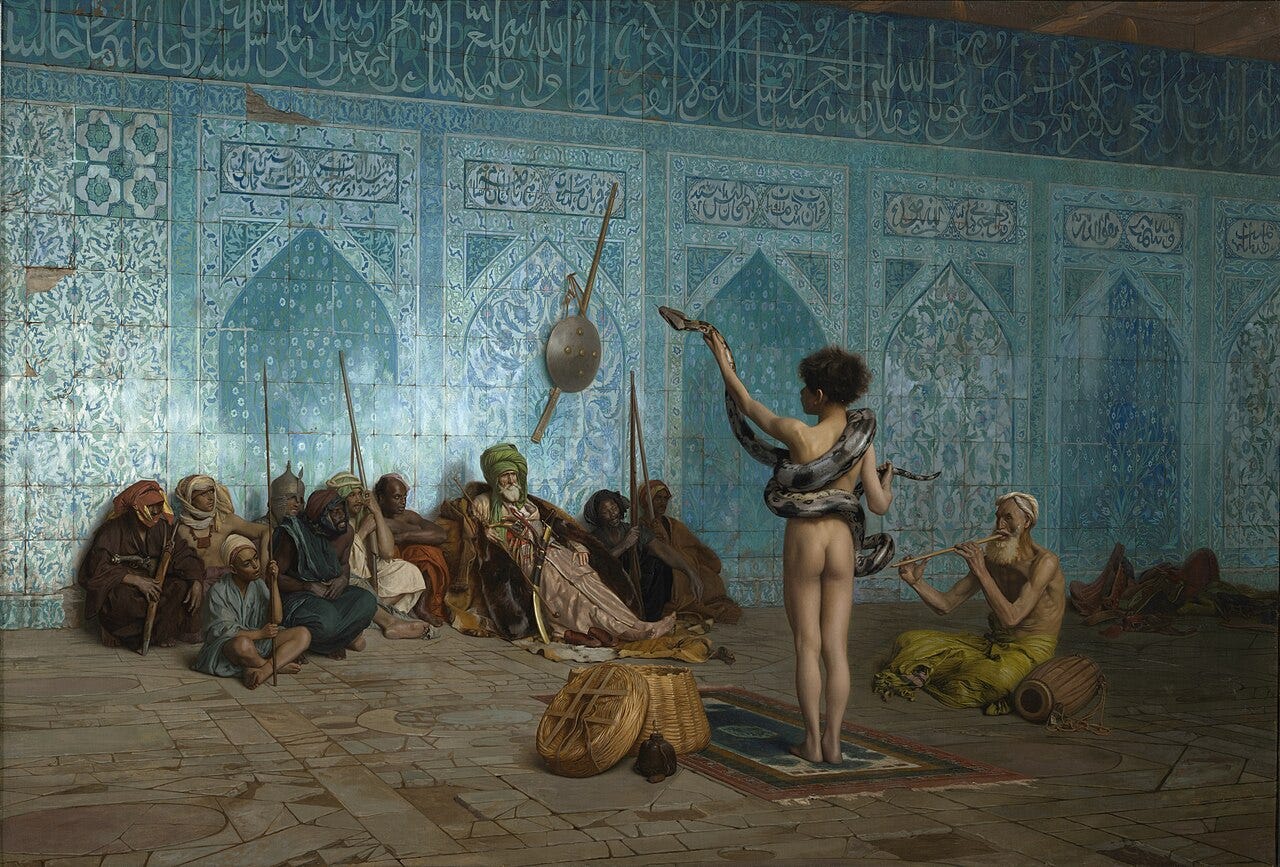
Orientalism in art is the Western fashion, mostly in the 1800s, for painting an exotic, imagined East: harems, bazaars, deserts and golden light. The pictures are gorgeously detailed, and almost always a fantasy built for European eyes.
Harems, bazaars, deserts and snake charmers, painted in fine detail by Western artists who mostly never saw them.
The word covers North Africa, the Ottoman world and the Middle East as Europe imagined them, rarely as they truly were.
Orientalism, the essentials
What it is: Western paintings of an exotic, imagined East.
The era: above all the 1800s.
The subjects: harems, markets, deserts, mosques, slave markets.
The look: brilliant color, minute detail, theatrical light.
The catch: it is a projection, not a documentary record.
A free letter, twice a week


A dream dressed as a document
Orientalist painting sells itself as truth and delivers fantasy.
The pictures are packed with convincing detail, tiles, costumes, weapons, light, which makes them feel like eyewitness reports.
But they were largely staged, painted in Paris studios from props, photographs and imagination, arranged to satisfy European appetites for the exotic, the sensual and the violent.
Even artists who did travel shaped what they saw to fit the fantasy.
The realism is the trick. It makes the daydream look like a fact.
Painted from photographs, not from life
Many of these scenes never had a sitter in a real bazaar. Gerome collected photographs of Egypt and the Ottoman world, then posed paid models in his Paris studio among imported tiles, weapons and costumes.
The camera gave the surfaces their documentary sheen. A picture could look like reportage while it was assembled prop by prop, thousands of miles from the place it claimed to show.
The harem fantasy
At the genre's hot center sits one recurring fantasy.
The imagined harem let European painters show reclining nudes and languid sensuality under the cover of foreign custom, a subject no respectable Paris drawing room would otherwise allow.
The reclining odalisque is the most famous figure of this fantasy.
Almost no Western man had ever entered a real harem. The scenes were invented, then sold as glimpses behind a forbidden curtain.
The harem on the canvas was a European fantasy with an Eastern address.
How to spot the fantasy
A few tells give an Orientalist scene away:
The place is vague, a generic East rather than a named, datable city.
The women are available and the men are armed or idle, never simply ordinary.
The detail is lavish, yet the real source is a studio and not the street.
Two ways of painting the East
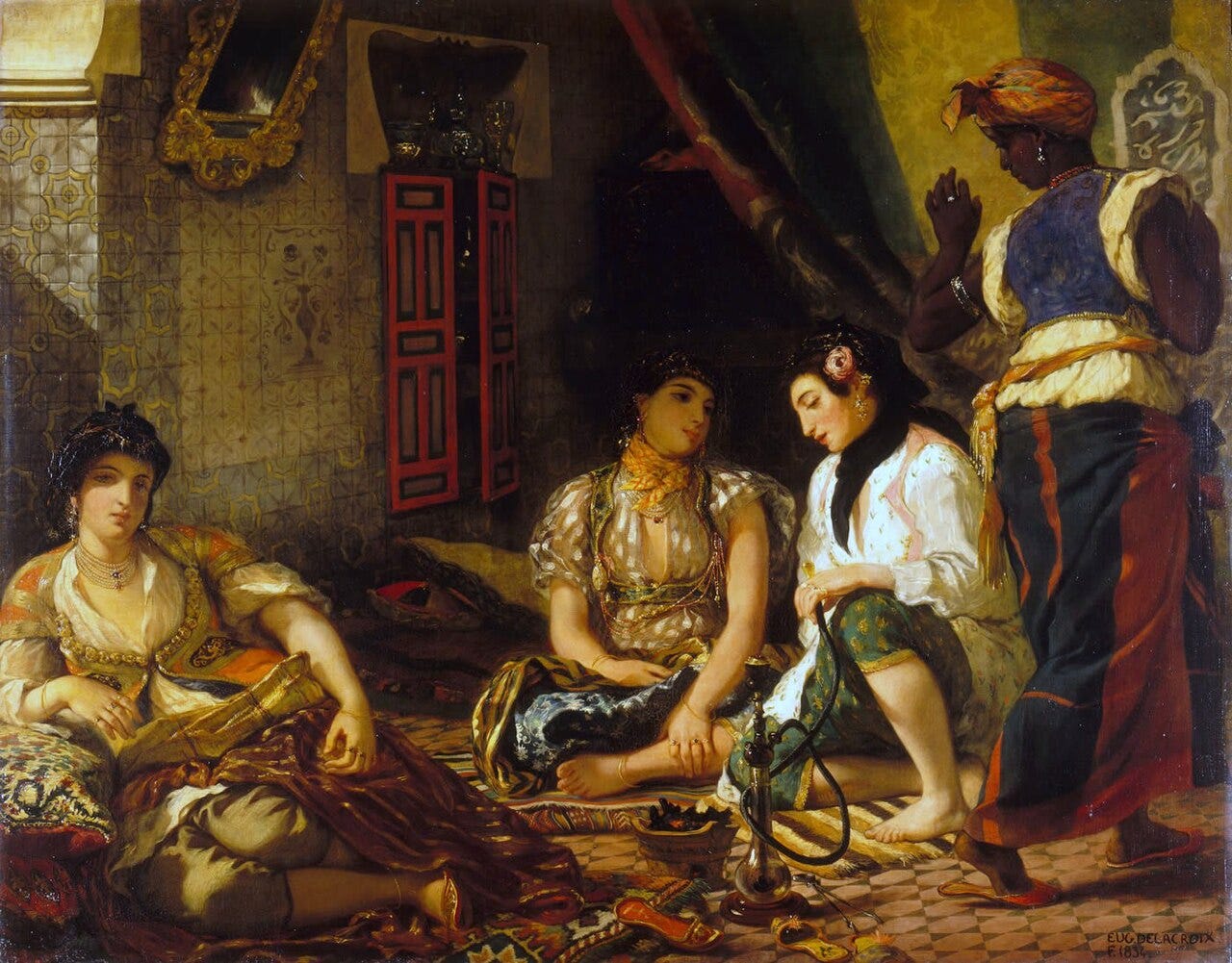
The movement had two great temperatures, and for me they are best caught by two artists.
Delacroix, who actually travelled to North Africa in 1832, painted it with hot, loose, romantic color, alive to the light and movement he saw.
Jean Leon Gerome, an academic master, painted it cold and polished, every surface licked to a photographic finish, in the manner of academic art.
Both belong to the grand tradition of history painting, aimed at exotic subjects.
One painter dreamed in color. The other dreamed in glassy precision.
The trouble with the genre
Orientalism is now as famous for its problems as its beauty.
The scholar Edward Said gave the word its modern critical charge in 1978, arguing that this imagined East served Western power, casting other cultures as exotic, backward and available.
Today these paintings are admired for their craft and studied for their bias at the same time.
They are spectacular, and they are a record of how empire looked at the world it wanted to rule.
What unsettles me is how well the beauty still works. The finer the painting, the more convincing the fantasy.
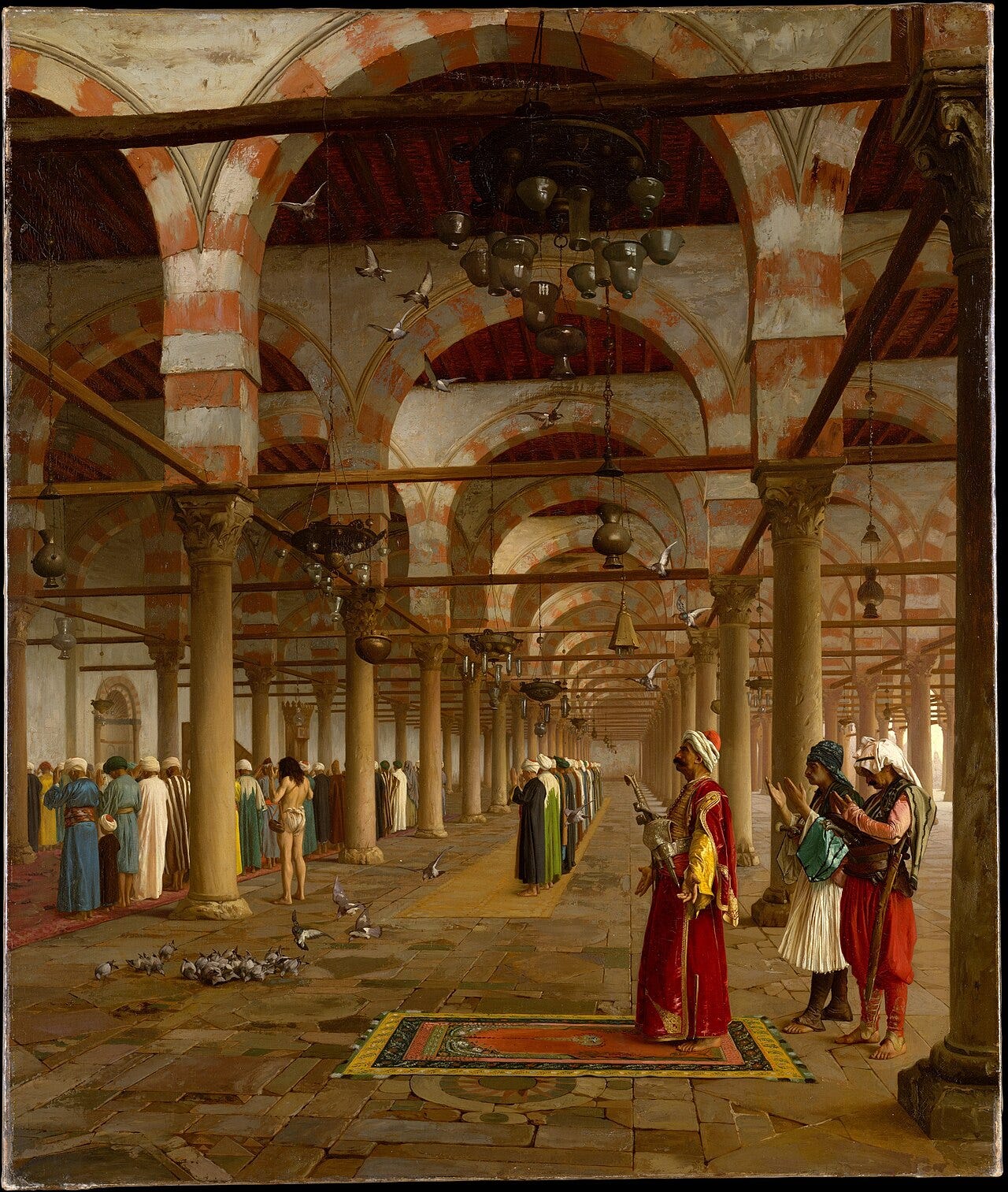
You can see both temperatures in person. Delacroix’s Women of Algiers is in the Louvre, and Gérôme’s Prayer in the Mosque is at the Met.
Key questions about Orientalism
What is Orientalism in art? A Western fashion for painting an exotic, imagined East, mostly in the 1800s.
Was it accurate? Mostly no. Even travelled artists staged and idealized their scenes.
What subjects did it favor? Harems, bazaars, deserts, mosques and slave markets.
Who are famous Orientalist painters? Eugène Delacroix and Jean Léon Gérôme.
Why is it controversial? It projected Western fantasies onto other cultures and served the outlook of empire.
Another layer under the paint


The most beautiful misunderstanding in art
Orientalism is built on a gap, the distance between a real place and the West's idea of it, and that gap is exactly why the paintings are so seductive and so unreliable.
It is no accident that Gerome's Snake Charmer became the cover of Said's Orientalism in 1978: a culture painting its own fantasy and selling it as the truth about someone else.
