
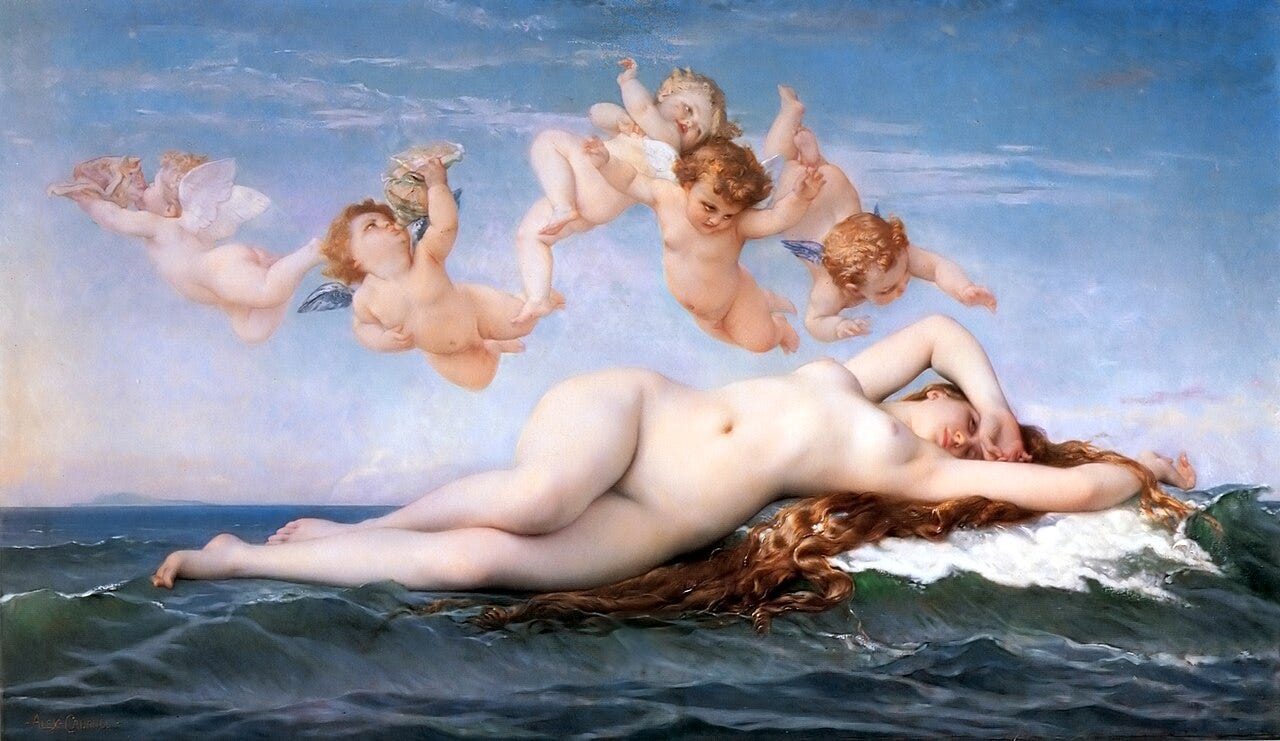
Academic art is the polished, rule bound art promoted by the official academies of Europe, above all in France, from the 1600s into the 1800s.
It prized careful drawing, smooth finish, idealized figures and noble subjects, and it crowned history painting as the highest goal. For a long time, it simply was the establishment. Careful drawing was exactly the bar that failed Adolf Hitler at the Vienna Academy's entrance exam in 1907.
Flawless drawing, a finish so smooth the brush vanishes, noble subjects, ideal bodies.
Academic art was the polished establishment style of the 1800s, the very thing modern art was built by knocking down.
Academic art up close
What it is: the official, rule governed style of the art academies.
The center: the French Academy, its school, and the Salon in Paris.
The values: fine drawing, smooth finish, ideal beauty, noble subjects.
The hierarchy: history painting at the top, still life at the bottom.
The fate: overthrown by Realism and Impressionism, then long mocked.
Keep learning art the fun way


Art by the rules of the academy
Academic art was not a movement. It was a system.
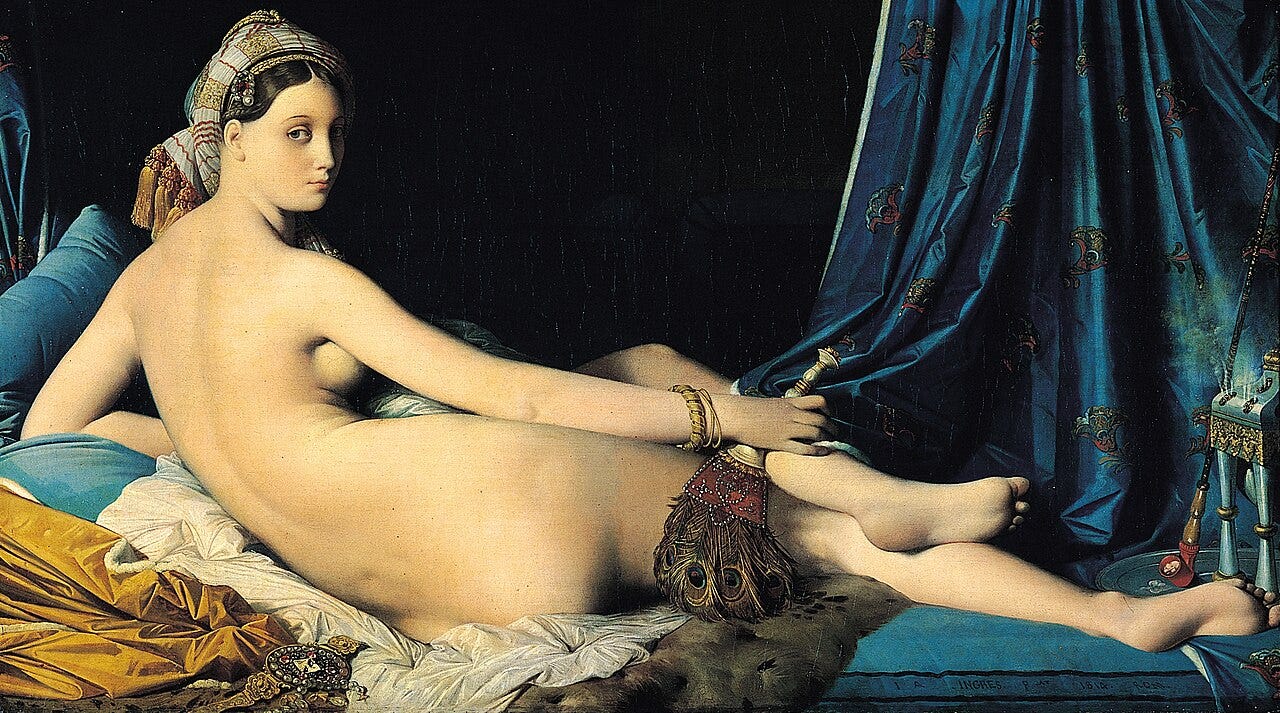
The academies trained painters in a strict order: first drawing from casts, then from life, then composing grand scenes. They taught a clear set of values, anatomy, perspective, idealized form, a flawless finish with no visible brushwork, and they ranked subjects in a hierarchy with history painting on top.
Do it all correctly and you made beautiful, learned, highly finished pictures. The rules were the point.
The Salon ran everything
In France, one event decided an artist's fate: the Salon.
The Salon was the official exhibition, juried by the academy. Getting accepted meant sales, commissions and a career. Getting rejected could mean ruin.
For most of the 1800s, success as a painter in France ran straight through that one crowded show.
Control the Salon and you controlled what counted as art.
The stars of the system
Academic art had its superstars, famous and rich in their day.
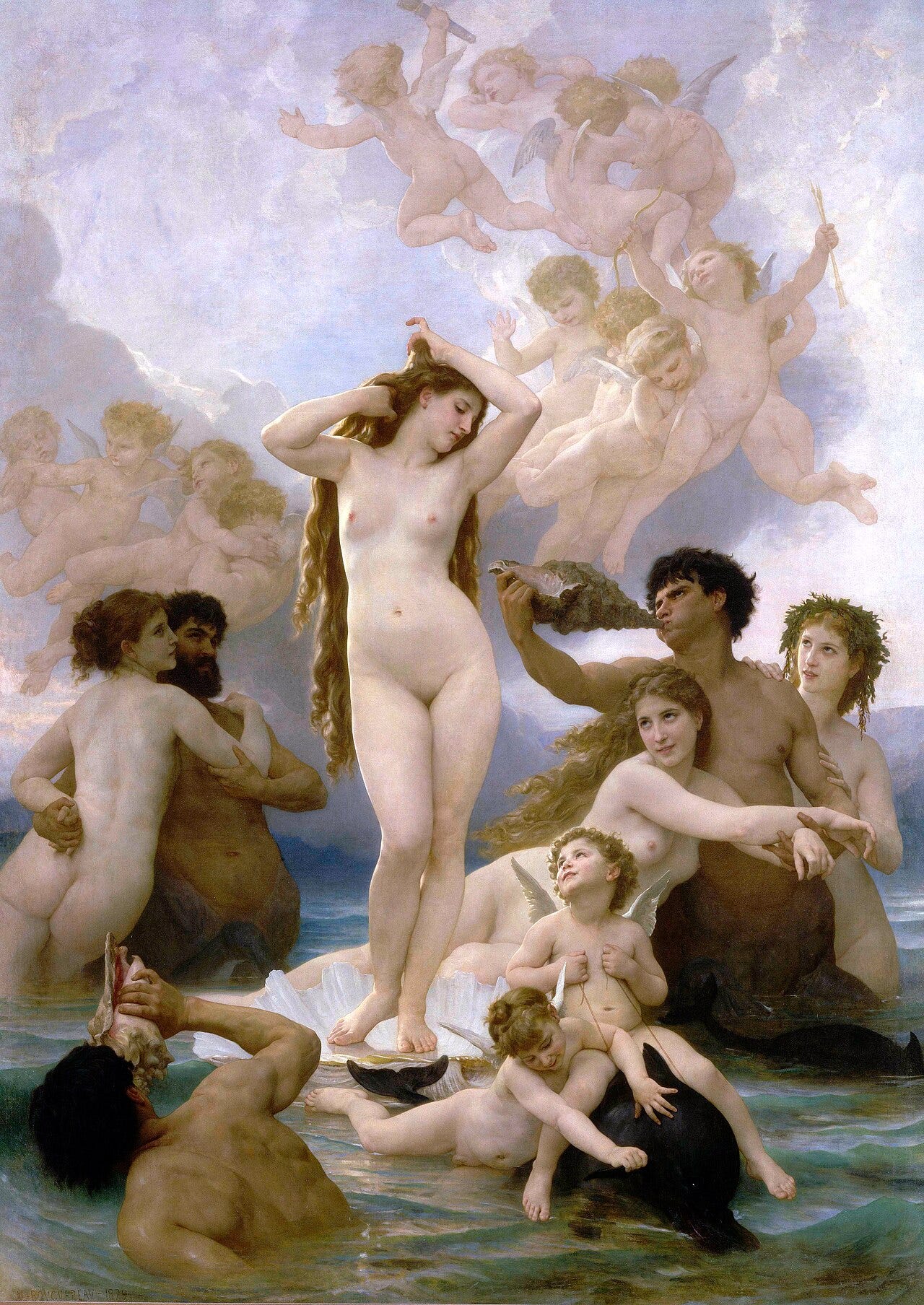
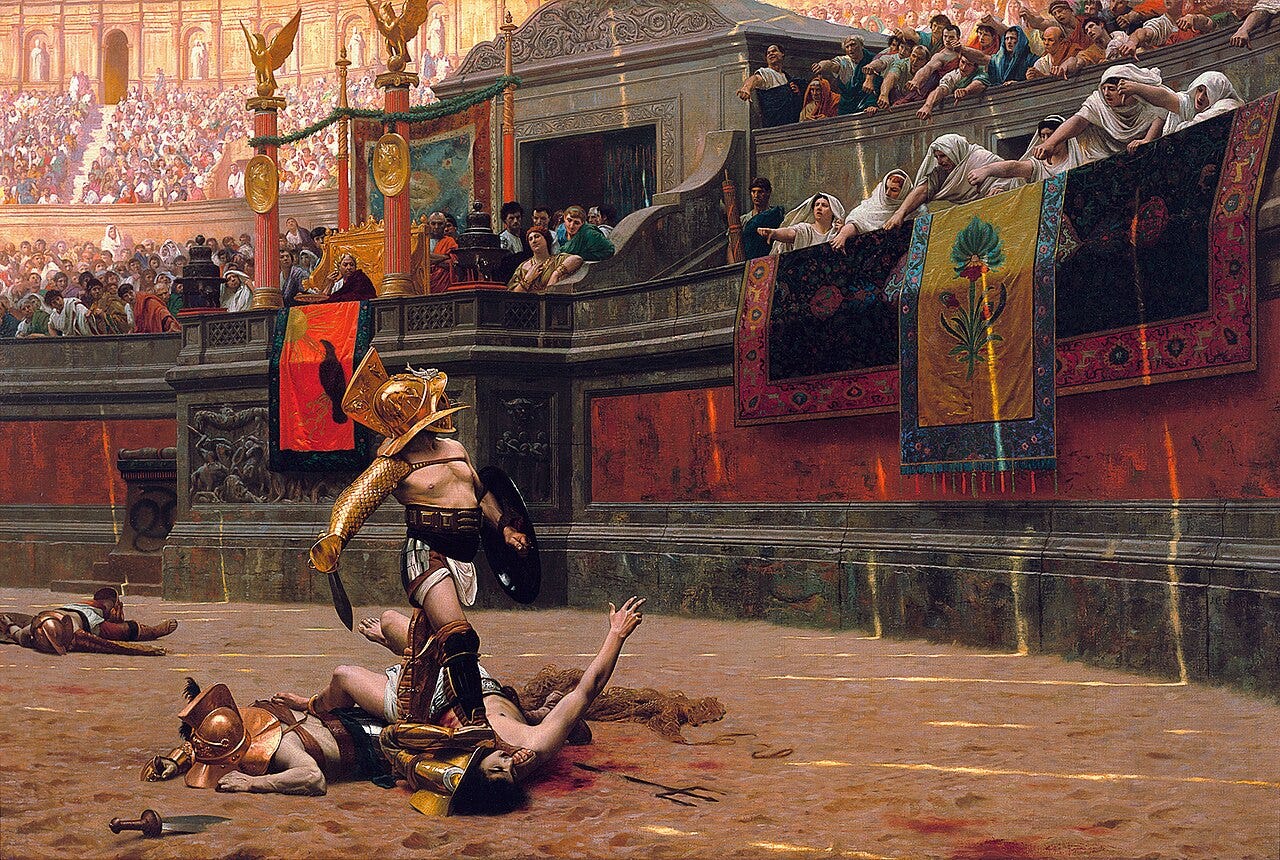
William Adolphe Bouguereau painted flawless mythological nudes with skin like polished marble. Alexandre Cabanel gave the Emperor a dreamy Venus. Jean Leon Gerome staged the ancient world like a film set.
Their surfaces are so smooth the brush vanishes, every hair and fold in perfect order.
To their admirers this was the summit of skill. To their enemies it was cold, airless and fake.
The manner traveled well beyond Paris. In India, Raja Ravi Varma trained in this same academic style of oil painting and turned it on Hindu epics and deities, work still reprinted on calendars and posters across the country today.
The revolt that buried it
Then a younger generation turned on the whole system.
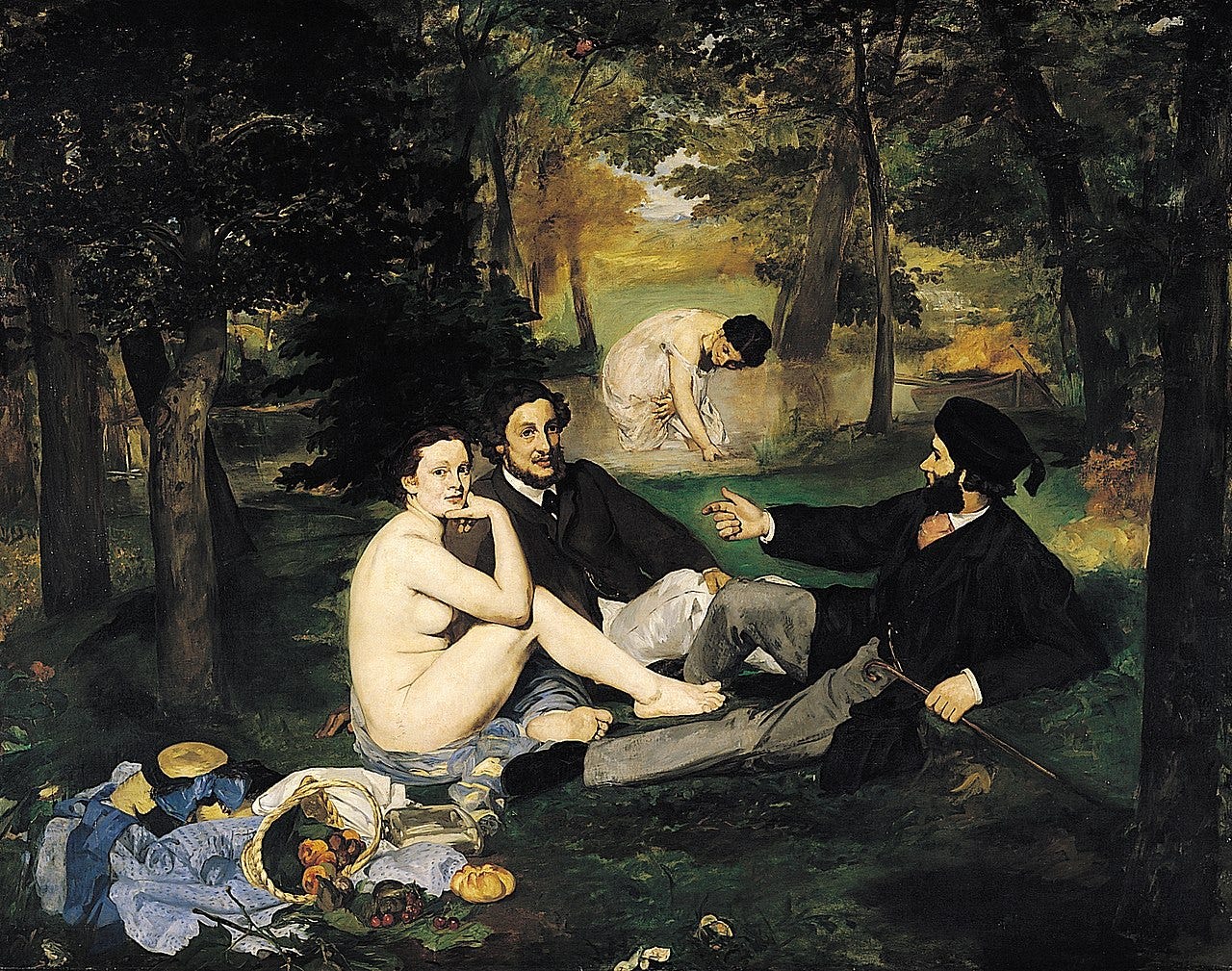
In 1863 so many painters were rejected by the Salon that the Emperor allowed a Salon des Refuses, a show of the refused. There Manet exhibited his Dejeuner sur l'herbe, a naked woman picnicking with clothed men, painted in flat, modern strokes.
It scandalized everyone, and it pointed the way out.
Within twenty years the Realists and then Impressionism, painting landscape and modern life in loose, visible brushwork, had made academic polish look dated. The French even had a mocking word for the grandiose old style: pompier.
A second look
The story is usually told as heroes versus villains. To me it is not that simple.
For decades academic art was treated as a joke, the stuff modernism had rightly swept away. Lately the verdict has softened. Museums have rehung Bouguereau and Gerome, collectors pay millions, and people admit that, like it or not, the craft is staggering. Bouguereau's own arc from adored master to mocked relic and back again is told in full in his complete story.
You can find it cold. You cannot call it unskilled.
For the academic manner at full theatrical pitch, see Delaroche’s Execution of Lady Jane Grey at the National Gallery.
Academic art, your main questions
What is academic art? The official, rule based style taught by the art academies and shown at the Salon, from the 1600s to the 1800s.
What did it value? Careful drawing, smooth finish, ideal beauty and noble subjects, with history painting ranked highest.
What was the Salon? The official juried exhibition in Paris that could make or break an artist.
Who are famous academic artists? Bouguereau, Cabanel and Gerome.
Why did it decline? Realism and Impressionism rejected its rules and finish, and it came to seem dated.
More secrets to unlock


What I take from academic art
I used to side automatically with the rebels. Now I think the honest view is that academic art was the language every modern painter first had to learn, then chose to break.
Manet trained on it. Degas trained on it. You cannot rebel against a rulebook you never studied.
