Alexandre Cabanel: The Complete Story
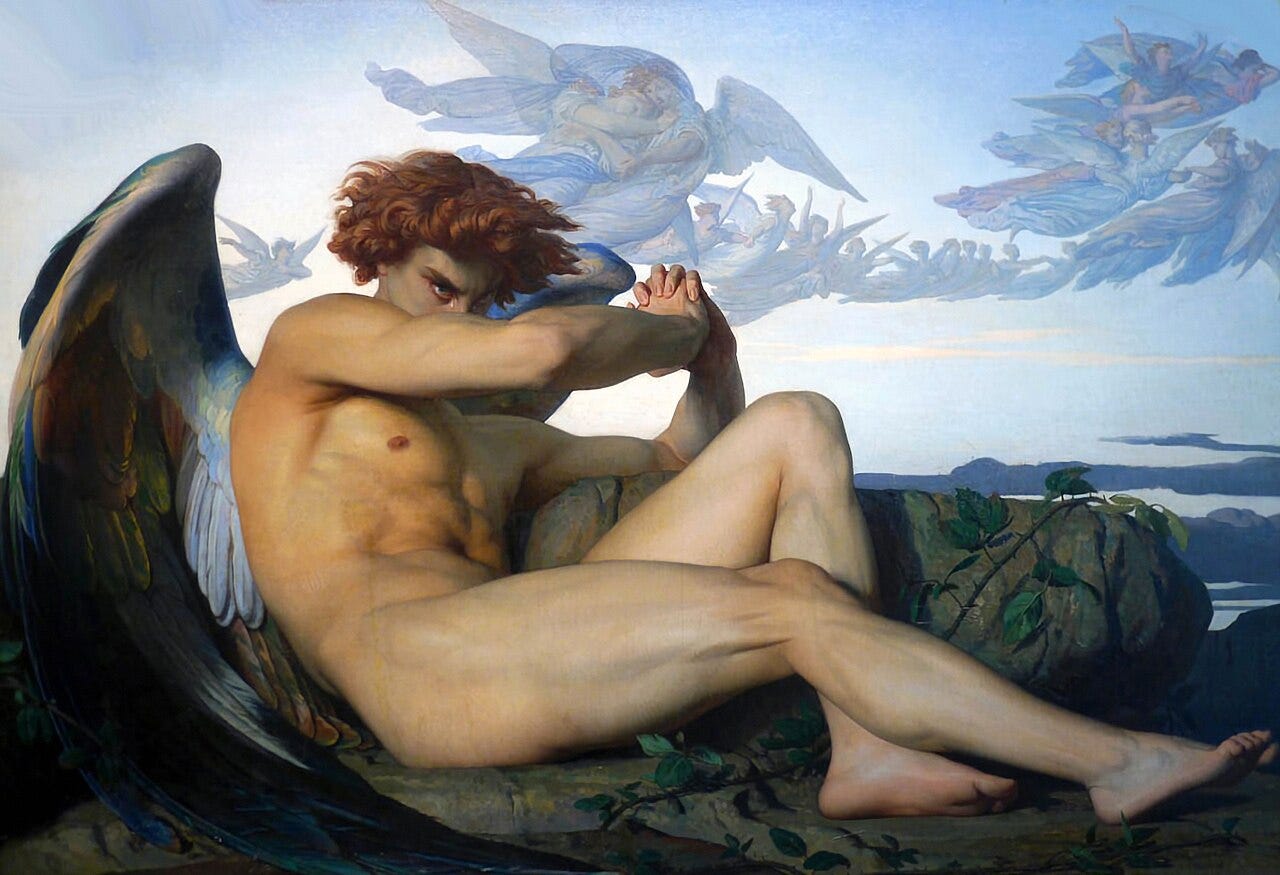
Alexandre Cabanel was the most powerful academic painter of his day, the polished establishment star the young Impressionists fought to escape. Napoleon the Third bought his Birth of Venus straight off the Salon wall, his jury kept the rebels out for years, and history later cast him as the villain of modern art. Today his Fallen Angel, glaring over one arm, has made him a star all over again online.
His story is the strange case of a man who won everything in his own time and lost the history books, then came back from the dead as a meme.
The king of the Salon
Cabanel won the Prix de Rome, taught at the Ecole des Beaux Arts, and sat on the all powerful jury that decided which paintings the public got to see. His surfaces were flawless, his subjects safely mythological, his career gilded. He was rich, decorated and adored by the official art world.
The Venus that beat the future
At the 1863 Salon his Birth of Venus, a smooth reclining nude floating on the waves, was the hit of the year, and Napoleon the Third bought it on the spot. The very same year, the rejected painters were shown apart at the Salon des Refuses, where Manet's Dejeuner sur l'herbe caused a riot. A goddess nude was fine. A real naked woman at a picnic was a scandal. That contrast is the whole story of academic art against the modern.
The man who blocked the rebels
From his seat on the jury, Cabanel helped keep out the young painters who would become Monet, Renoir and their circle. For a generation he was the gatekeeper of French art. So the rebels went around him, staging their own shows, and Impressionism was born in part as a revolt against everything he stood for. You can read their side in the story of Claude Monet.
The Fallen Angel and his life online
Long before all that, in 1847, the young Cabanel painted a Fallen Angel: Lucifer cast down, lying on his side, glaring over his folded arm with one tear and a face full of fury. For a century it was a footnote. Then the internet found those eyes. Today the Fallen Angel is everywhere as an image of beautiful rage, and it has handed a forgotten academic a brand new audience.
How history flipped on him
In life he had it all. After his death in 1889 taste swung hard toward the Impressionists he had fought, and the name Cabanel became shorthand for everything stiff and old fashioned. Only recently have museums and a younger crowd online taken a fresh look at his polish and his drama, and a history painter once written off is being read again.
The works to know
A few paintings carry his fame: The Birth of Venus, the haunting Fallen Angel, Phaedra, Cleopatra Testing Poisons on Condemned Prisoners, and Echo. Each one is pure theatre, and each rewards a slow look.
Quick answers about Alexandre Cabanel
Who was Alexandre Cabanel? The leading French academic painter of the mid 1800s.
When was he born? In Montpellier, in 1823.
How did he die? In Paris, in 1889.
What is he famous for? The Birth of Venus and the Fallen Angel.
What is the Fallen Angel? His 1847 painting of a defiant Lucifer glaring over his arm, now a viral image.
What movement did he belong to? Academic art, the official style the Impressionists rebelled against.
Where can I see his work? The Musee d'Orsay in Paris and the Musee Fabre in Montpellier.
Napoleon the Third bought The Birth of Venus straight off the 1863 Salon wall. It hangs today in the Musee d'Orsay, a few rooms from the Impressionists his jury had tried so hard to keep out.