
Snow Paintings: 12 Famous Winter Works to Know
The most famous snow paintings turn a hard season into pure atmosphere. Bruegel invented the modern winter scene with a line of tired hunters, Monet proved white is never just white, and Avercamp filled the frozen Dutch canals with a whole town at play. Here are twelve to know, and where to see them.
Snow is a trap for painters. It flattens the world, drains the colour and dares you to make plain white interesting. The artists below rose to it, finding blue, pink and gold in the drifts, and using winter to say something about how small and warm we are against the cold.
Use this as a quick tour:
The founders: Bruegel and Avercamp, who invented the winter scene.
The Impressionists: Monet, Sisley and Caillebotte, who found colour in the snow.
The far north and east: Hiroshige and Savrasov, snow across the world.
Where to see them: a museum list at the end, grouped by city.
Pieter Bruegel the Elder, The Hunters in the Snow
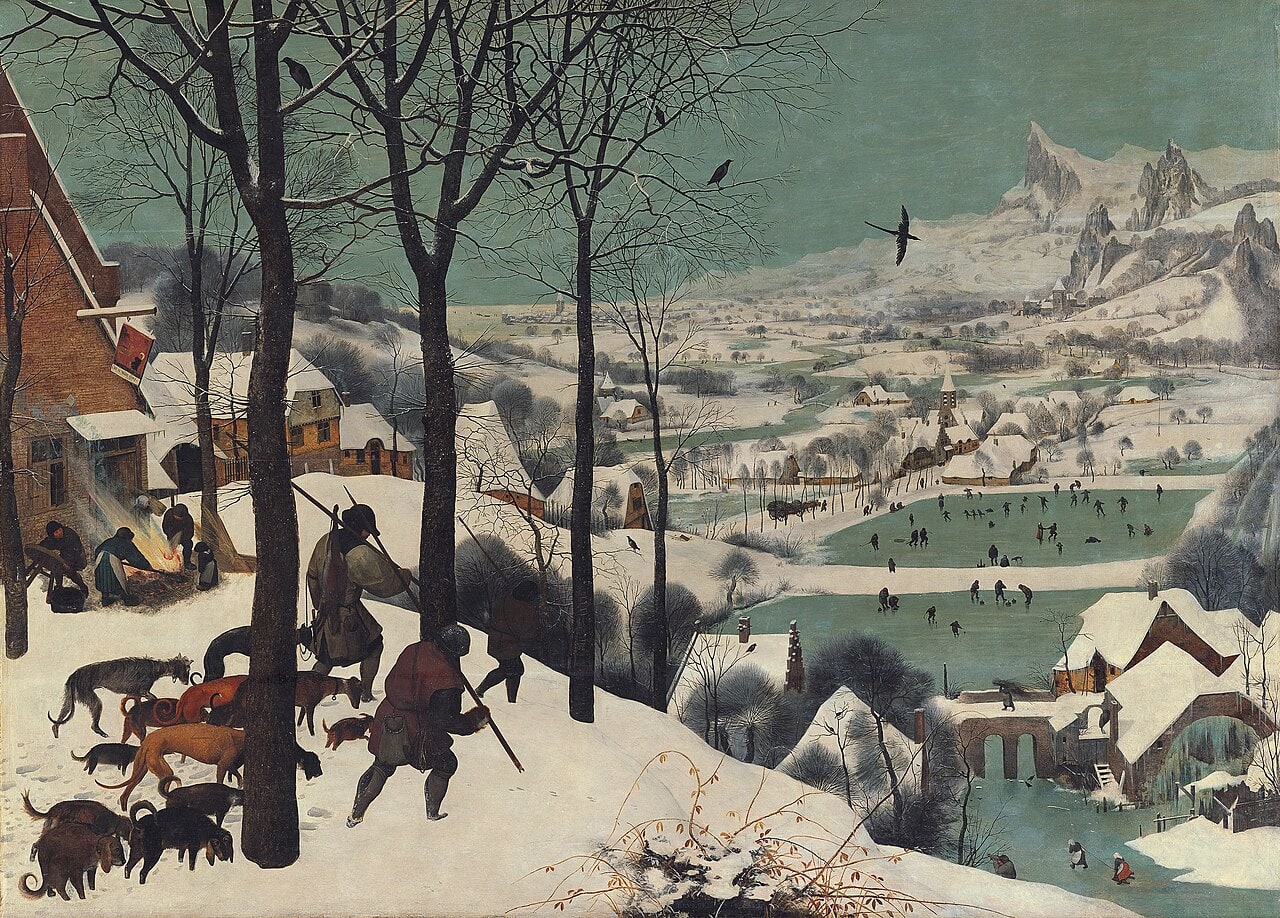
Pieter Bruegel painted The Hunters in the Snow in 1565, three weary hunters and their dogs trudging home downhill over a rise, looking down on a frozen village where tiny figures skate on the ponds.
This is often called the first true winter landscape, snow as the whole subject rather than a background. It was part of a series showing the seasons, and it defined how we picture winter to this day.
It hangs at the Kunsthistorisches Museum in Vienna. From the tired dogs to the distant skaters, it holds a whole cold world in one glance.
Claude Monet, The Magpie
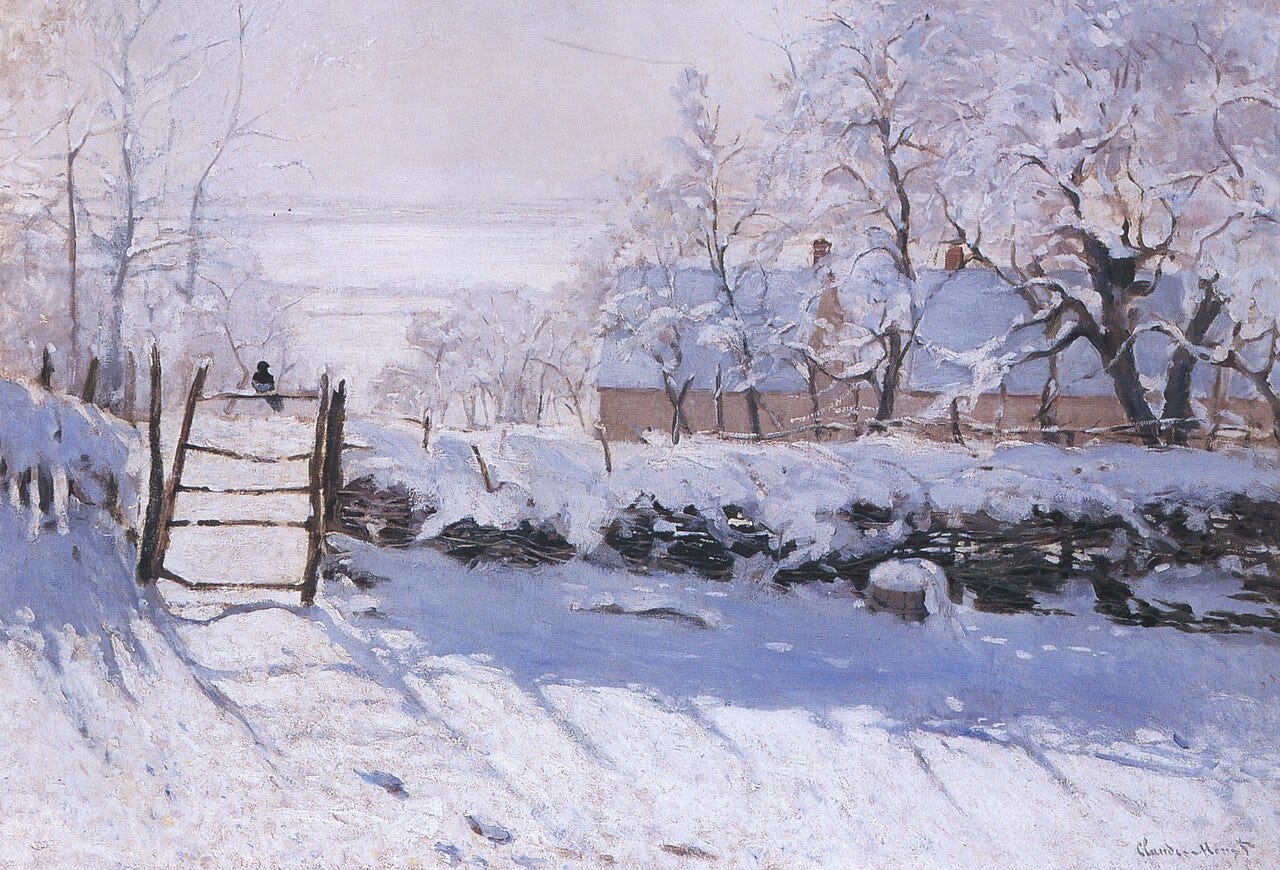
Claude Monet painted The Magpie around 1869, a single black bird perched on a gate in a wide field of snow. It is almost all white, warmed by sun and cut by pale blue shadows.
Monet made the shadows on the snow blue and violet, not grey, one of the first painters to see that white is full of colour. The Impressionist jury rejected it for being too radical.
It hangs at the Musee d’Orsay in Paris and is one of its best loved paintings. The lone magpie is the only dark note in a shimmer of snow light.
Hendrick Avercamp, Winter Landscape with Ice Skaters
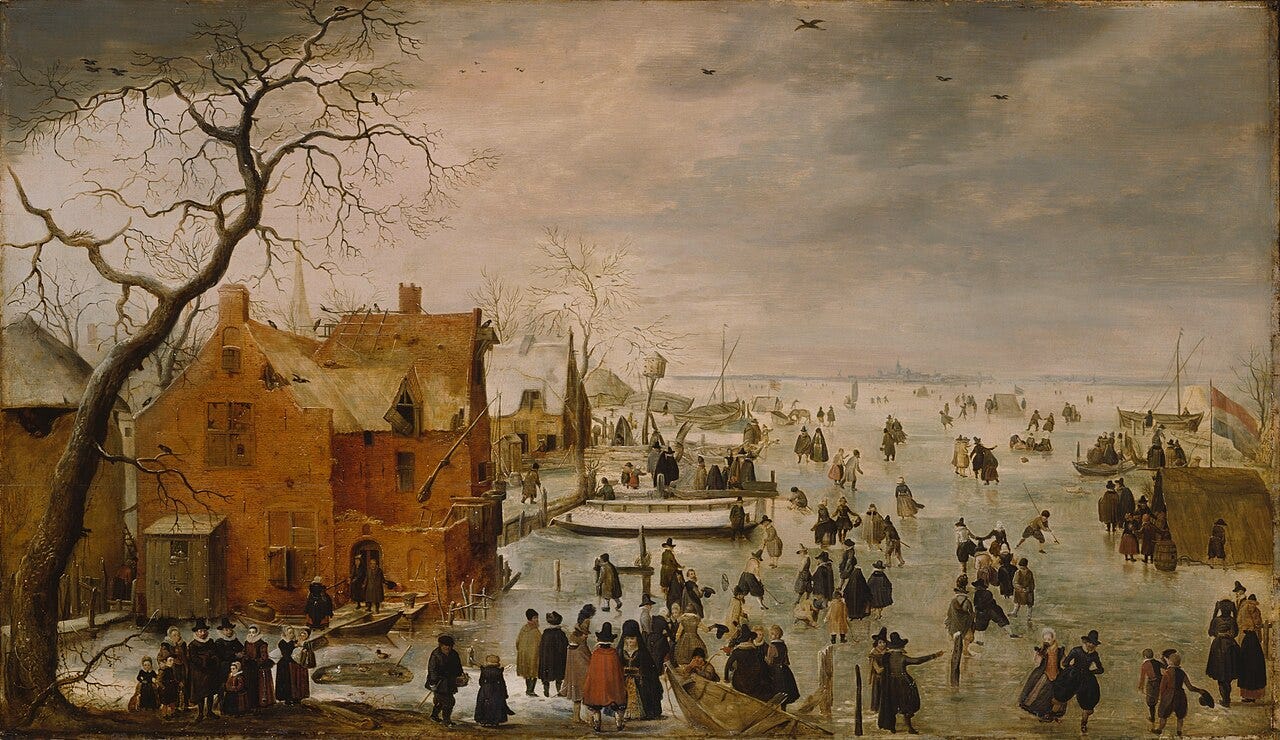
Hendrick Avercamp painted crowded frozen Dutch canals around 1608, filling the ice with hundreds of skaters, sledges, players and townsfolk under a pale grey sky.
Avercamp was deaf and mute, and known as the mute of Kampen. He specialised in these lively winter scenes during a spell of unusually harsh cold now called the Little Ice Age.
His skating scenes hang in the Rijksmuseum in Amsterdam and beyond. Look closely and every tiny figure has its own small story on the ice.
Caspar David Friedrich, Winter Landscape
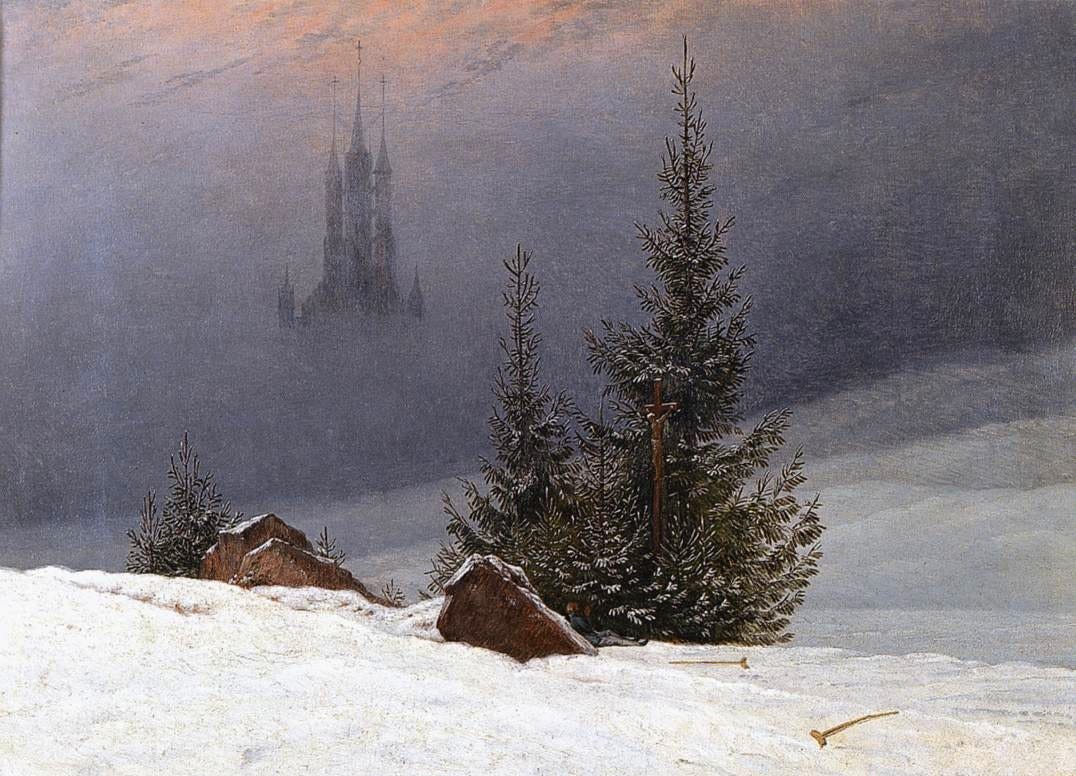
Caspar David Friedrich painted Winter Landscape in 1811, a lone traveller who has thrown away his crutches to lean against a rock and pray before a crucifix, deep in snow, a church rising in the misty distance.
For Friedrich the frozen scene is really about faith and death. The snow is a wilderness, the crucifix and church a promise of shelter and salvation beyond it.
It hangs at the National Gallery in London. Bleak and hopeful at once, it turns a snowfield into a whole spiritual journey.
Alfred Sisley, Snow at Louveciennes
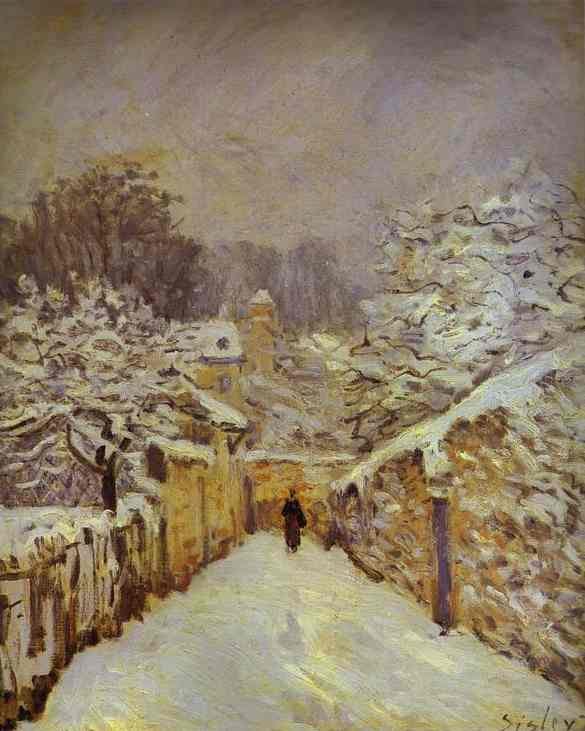
Alfred Sisley painted Snow at Louveciennes in 1878, a quiet village lane thick with fresh snow, a single figure under an umbrella walking away between garden walls and bare trees.
Sisley loved snow more than almost any Impressionist and painted it again and again. He caught the exact hush of a lane after a heavy fall, soft and silent.
It hangs at the Musee d’Orsay in Paris. Nobody painted the quiet of a snowed in village street more tenderly than Sisley.
Utagawa Hiroshige, Evening Snow at Kanbara
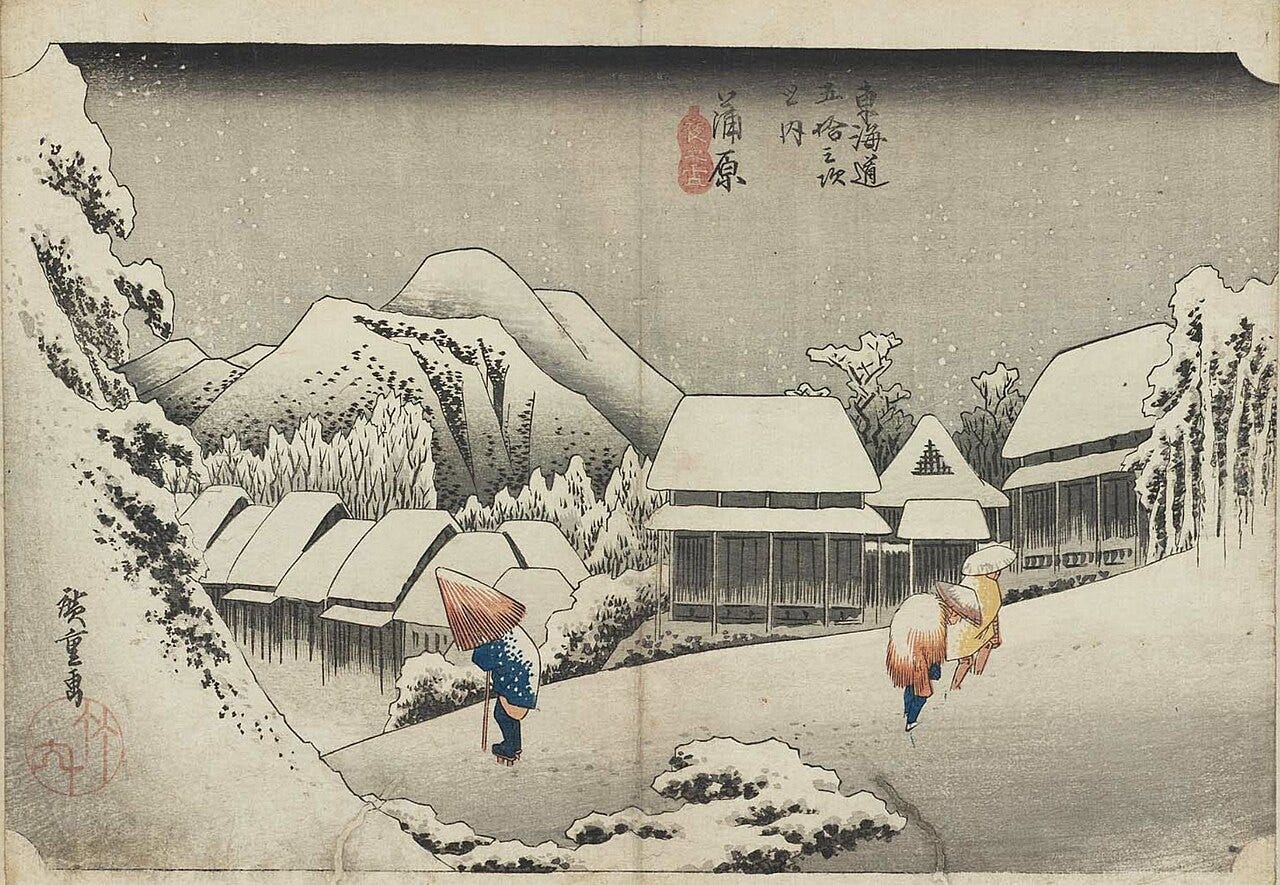
Utagawa Hiroshige made this print around 1833, villagers bent under thick falling snow as they climb a steep street in a mountain town at dusk. It is one of the most famous snow scenes in Japanese woodblock art.
Hiroshige left the snow as bare white paper, the sky graded from grey to black, so the whole print feels muffled and cold. Ironically the real Kanbara rarely saw much snow at all.
Impressions hang in the Metropolitan Museum and beyond. Its stillness and its bent little figures influenced Van Gogh and the whole Western taste for Japanese design.
Gustave Caillebotte, Rooftops in the Snow
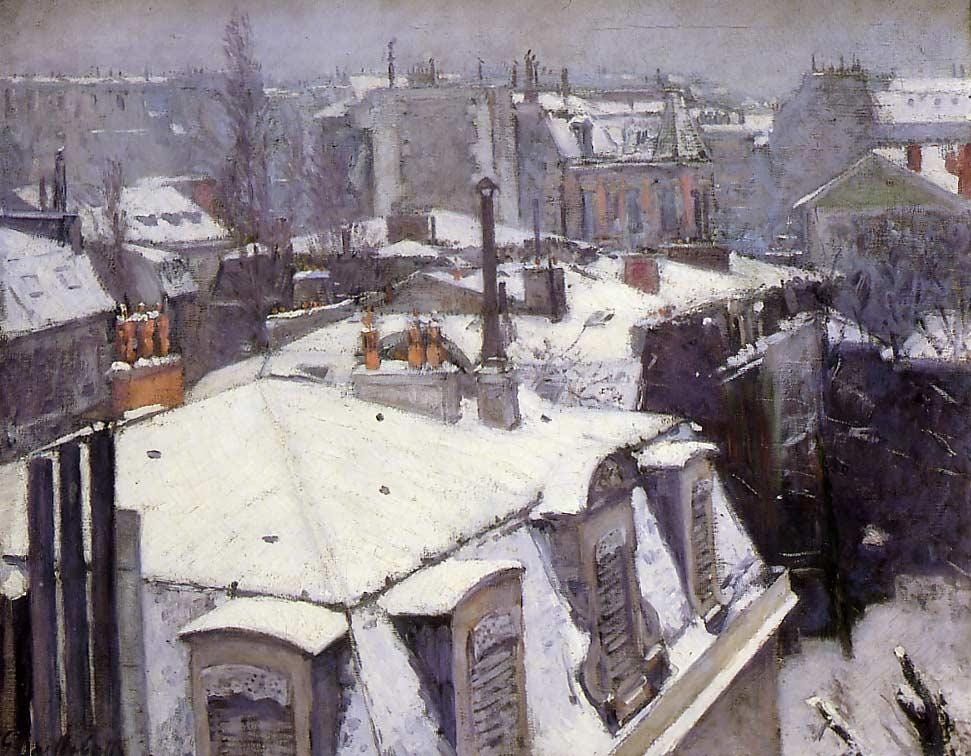
Gustave Caillebotte painted Rooftops in the Snow in 1878, looking out over the grey roofs and chimneys of Paris blanketed in fresh snow under a heavy sky. There is not a person in sight.
Caillebotte turned the ordinary view from his window into a study of pattern, the snow simplifying the rooftops into soft blocks. It feels startlingly modern, almost abstract. It is a quiet Impressionist cityscape.
It hangs at the Musee d’Orsay in Paris. The empty, snow muffled rooftops make one of the loneliest and most beautiful city scenes of the century.
Pieter Bruegel the Elder, The Census at Bethlehem
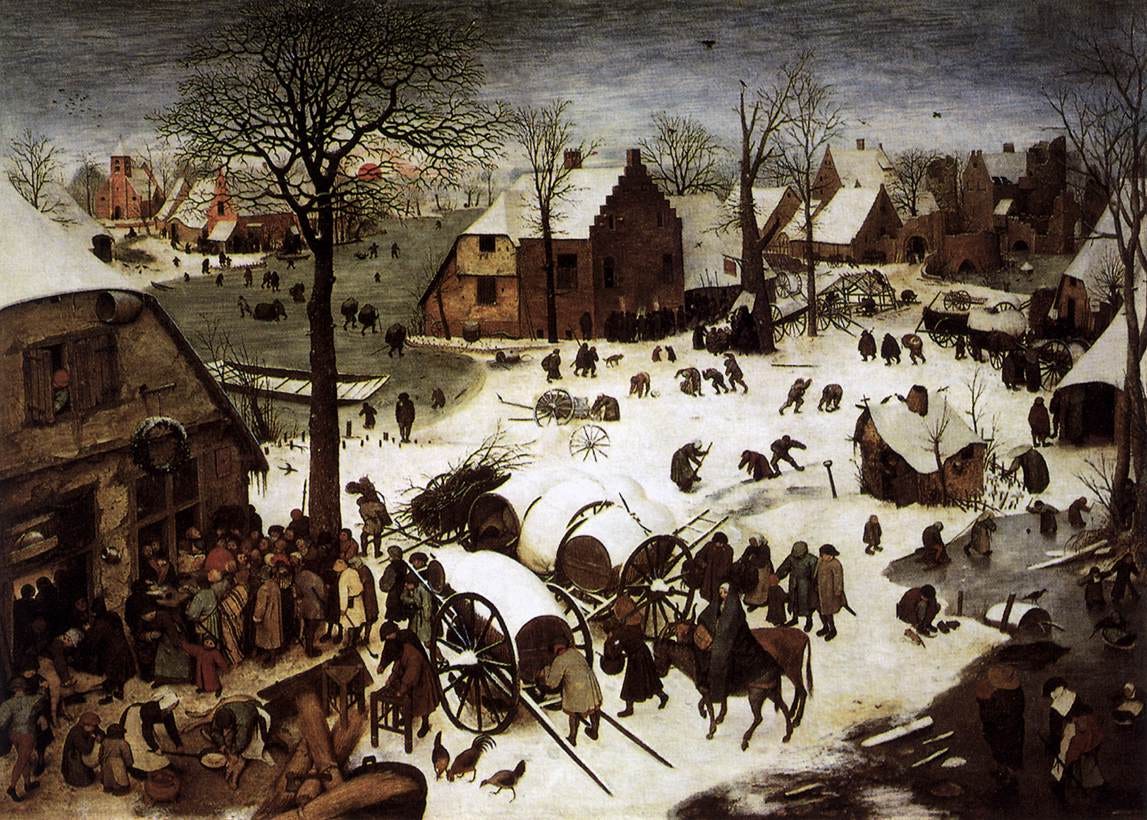
Pieter Bruegel painted The Census at Bethlehem in 1566, setting the Bible story in a snowy Flemish village crowded with peasants, skaters and traders going about their day.
Mary and Joseph are down in the corner, almost lost in the crowd, arriving unnoticed. Bruegel moves the holy story into his own frozen world, so the sacred hides inside the everyday.
It hangs at the Royal Museums of Fine Arts in Brussels. You have to search the snowy crowd to find the couple who will change history.
Aleksey Savrasov, The Rooks Have Come Back
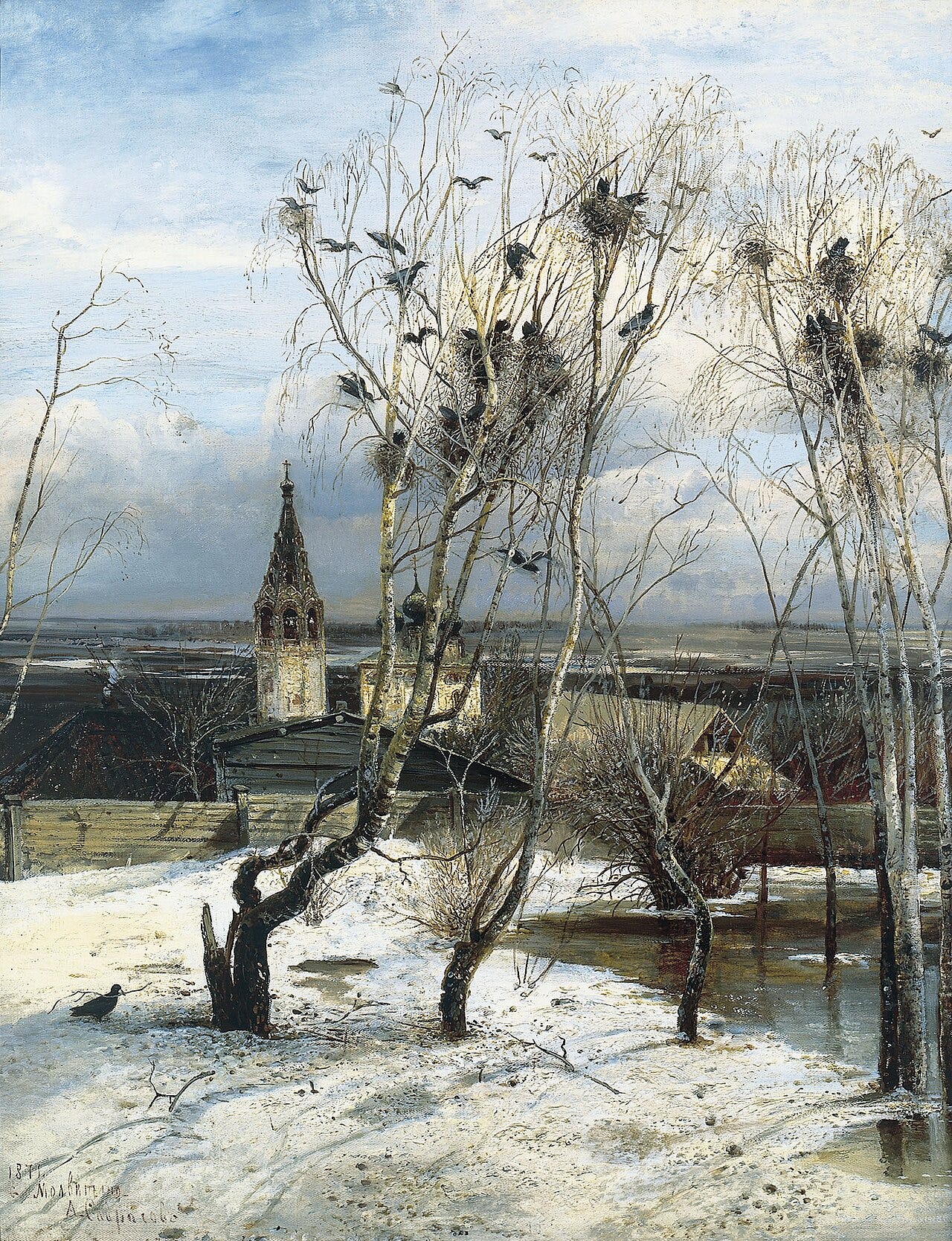
Aleksey Savrasov painted The Rooks Have Come Back in 1871, bare birch trees full of returning rooks over patchy melting snow, an old wooden church behind. It is the most loved landscape in Russia.
The snow here is thawing, and the birds are the first sign of spring. Savrasov caught the exact damp, hopeful moment when the long Russian winter finally begins to break.
It hangs at the Tretyakov Gallery in Moscow. For Russians it is winter ending, painted so truly that everyone recognises the feeling.
Alfred Sisley, Winter Road
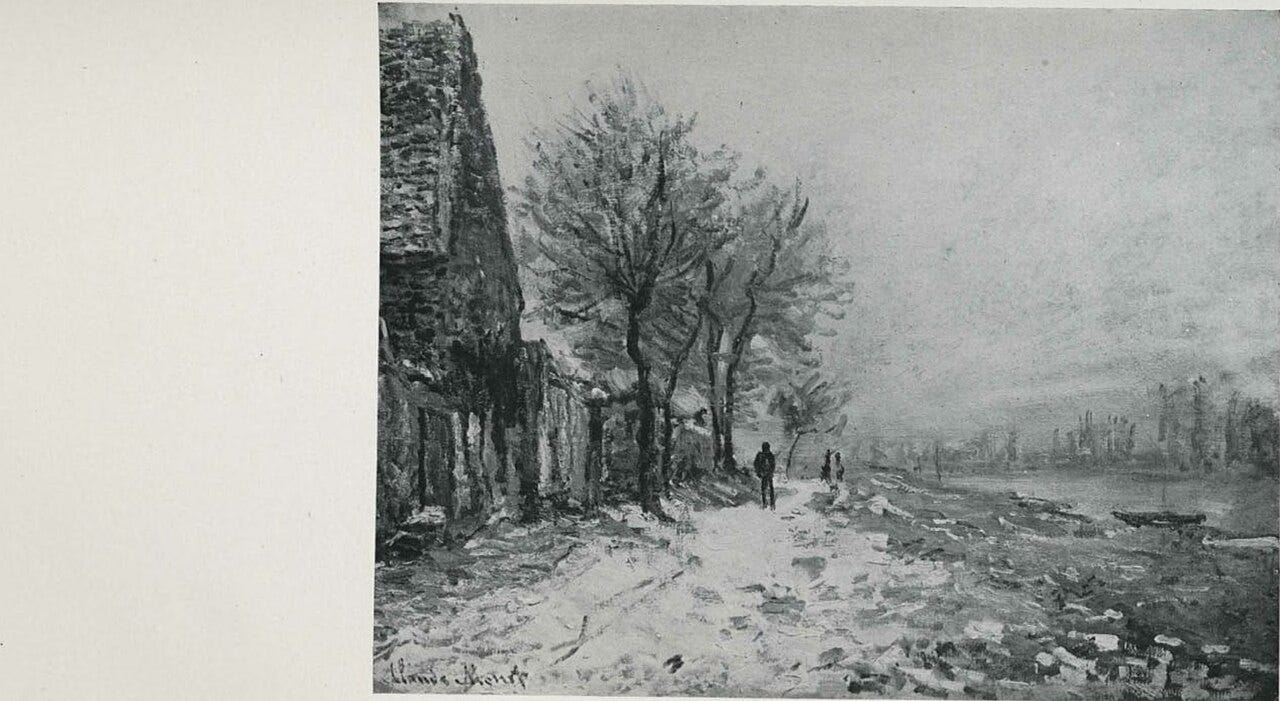
Alfred Sisley returns with another quiet snow scene, a country road under fresh white, footprints and cart tracks pressed into the drifts under a soft sky. He painted these all through the 1870s.
Sisley worked outdoors in the cold, catching the way snow takes on the colour of the light above it, faint blue in shadow, warm where the sun touches. Nothing dramatic happens, and that is the point.
His snow scenes hang across the world’s museums. Sisley remained the purest landscape painter of the Impressionists, and winter was his favourite silence.
Claude Monet, Snow at Argenteuil
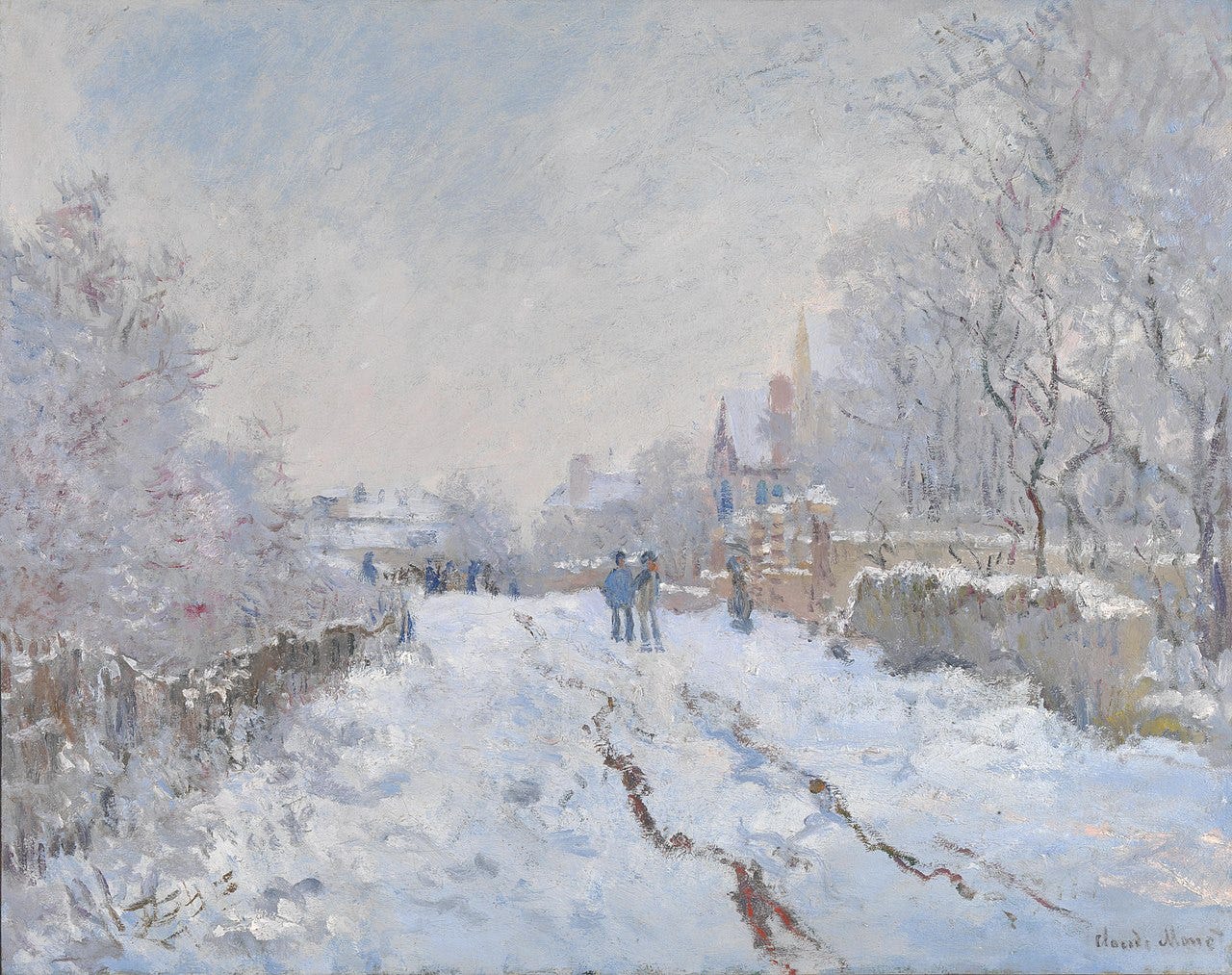
Claude Monet returns with Snow at Argenteuil, painted around 1875, a suburban street where figures hurry under umbrellas while snow keeps falling from a soft grey sky.
Monet painted around a hundred snow scenes in his life, fascinated by how falling snow blurs and unifies everything. Here the flakes themselves dissolve the whole street into a haze.
It hangs at the Museum of Fine Arts in Boston. It shows Monet doing what he did best, painting not the street but the weather passing over it.
Pieter Bruegel the Elder, The Adoration of the Kings in the Snow
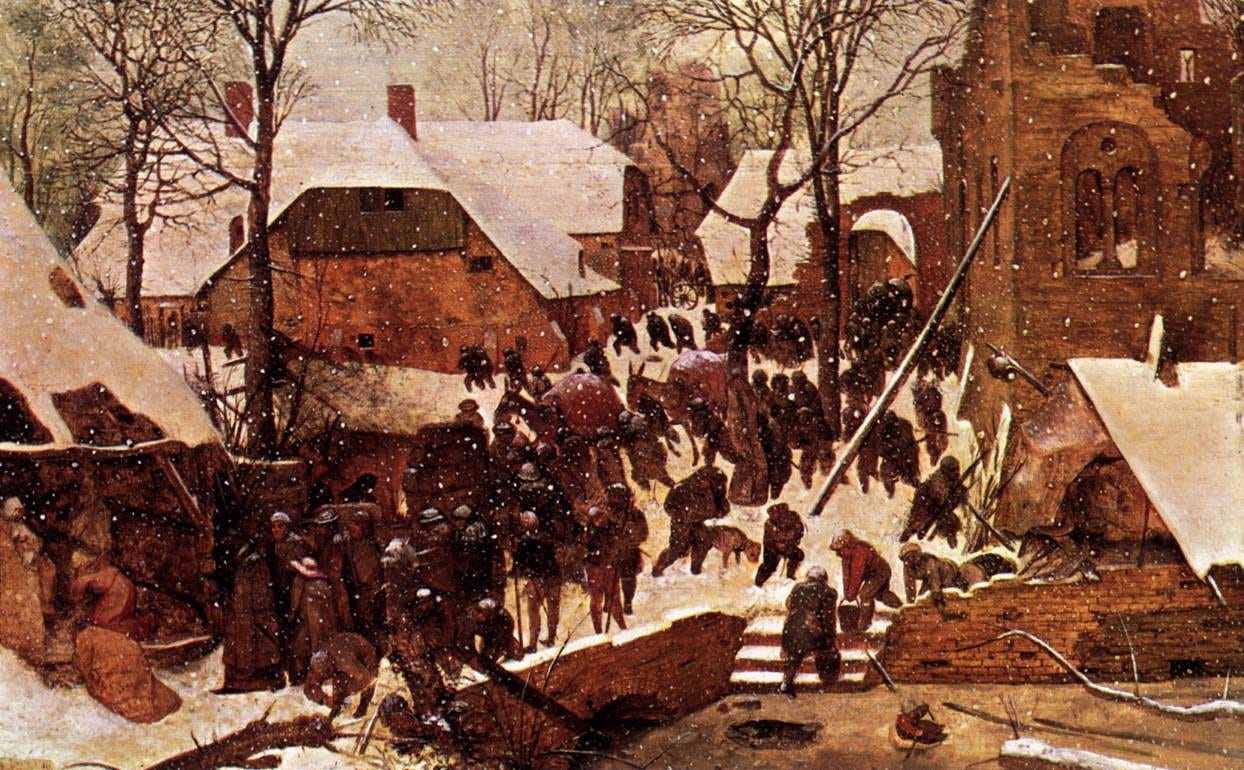
Pieter Bruegel painted The Adoration of the Kings in the Snow in 1563, the visit of the three kings almost buried in a Flemish village during a heavy snowfall. It may be the first painting ever to show snow actually falling.
Bruegel dotted the whole surface with white flecks to make the air thick with snow, half hiding the holy scene. Again the sacred story is folded quietly into ordinary winter life.
It hangs at the Oskar Reinhart Collection in Winterthur, Switzerland. Small and grey, it is a landmark, the moment a painter first made you feel snow coming down.
Questions people ask about snow paintings
What is the most famous snow painting? Pieter Bruegel The Hunters in the Snow of 1565 is the most famous, often called the first true winter landscape, with Monet The Magpie close behind.
Why are the shadows in Monet snow scenes blue? Because Monet saw that white snow reflects the colours around it. He painted the shadows blue and violet rather than grey, which shocked the jury of his day.
Who invented the winter landscape? Pieter Bruegel the Elder made snow the whole subject in the 1560s, and Hendrick Avercamp turned frozen Dutch canals into a speciality soon after.
Which painting first showed snow falling? Bruegel The Adoration of the Kings in the Snow of 1563 is thought to be the first to show actual falling snow, flecked in white across the whole scene.
Why did painters suddenly paint so much snow? Partly a real climate shift called the Little Ice Age brought harsh winters to Europe, filling the canals with ice and the studios with snow scenes.
Where to see them
Kunsthistorisches Museum, Vienna: Bruegel The Hunters in the Snow.
Musee d’Orsay, Paris: Monet The Magpie, Sisley Snow at Louveciennes and Caillebotte Rooftops in the Snow.
Rijksmuseum, Amsterdam: Avercamp Winter Landscape with Ice Skaters.
National Gallery, London: Friedrich Winter Landscape.
Tretyakov Gallery, Moscow: Savrasov The Rooks Have Come Back.
Keep exploring
If the snow pulled you in, three more paths from here. Walk through the whole life of the great snow painter in Monet, the complete story, learn to read the hidden clues in famous canvases in seven secrets hidden in famous paintings, or start with the basics of landscape painting.
One last thing. Snow gives a painter almost nothing, no colour, no detail, just white. Which is why the ones who conquer it feel like magicians, finding a whole world of blue and gold in a plain cold field. These twelve did.