
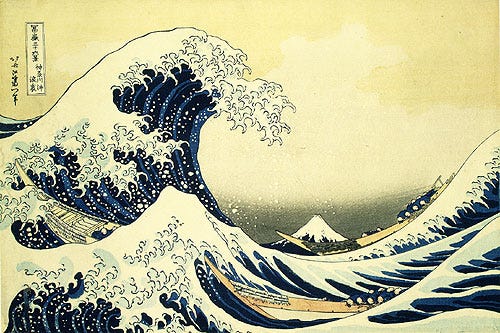
A woodcut is a print made from a carved block of wood. The artist cuts away everything that should stay white, inks the raised surface that is left, and presses it onto paper. One block can print hundreds of copies.
The woodcut is the oldest way to print a picture, and the first art that could be turned out by the thousand.
Woodcut, the short version
What it is: a print taken from a carved wooden block.
The method: cut away the white, ink the raised lines, press to paper.
The power: one block makes many copies.
The European peak: Albrecht Durer, around 1500.
The Japanese peak: Hokusai and the color woodblock print.
Keep learning art the fun way


Carving away to print
To me, the logic of a woodcut runs backwards from drawing.
Instead of adding marks, the artist removes wood. Everything cut away prints white. Everything left standing catches the ink and prints black. So the picture is built by carving the gaps, thinking in reverse.
It rewards a stark, clear design: strong black lines, flat shapes, no soft shading. The block decides the style.
The first mass medium
Before printing, every image was one of a kind, painted or drawn by hand, slow and costly.
The woodcut broke that. Cut one block and you could pull hundreds of identical prints, cheap enough for ordinary people. When the printed book arrived in the 1400s, woodcut illustrations went straight in alongside the type, both printed from raised surfaces on the same press.
For the first time, the same picture could hang in a thousand homes. That, to my mind, is what makes the woodcut matter: mass media before the phrase existed.
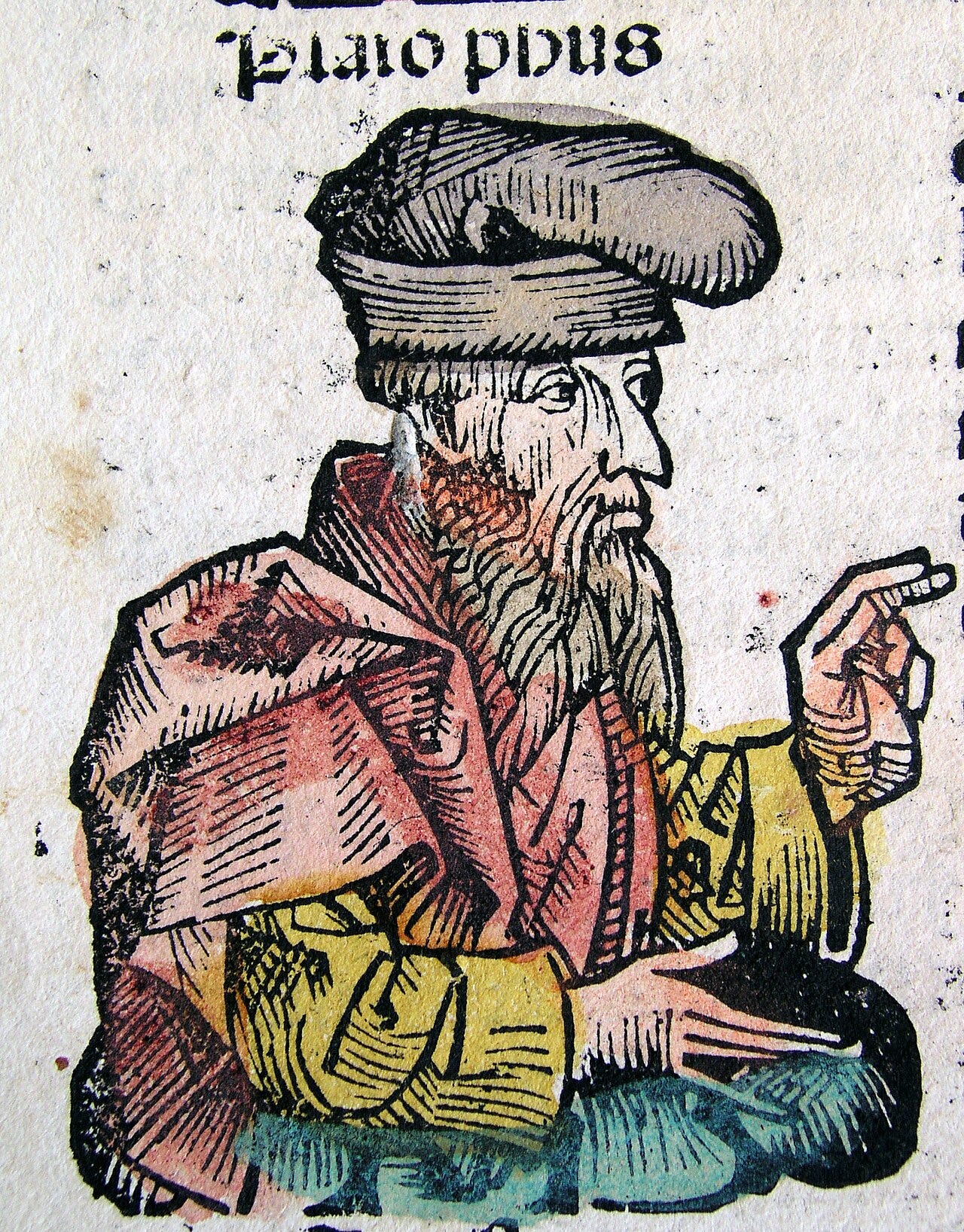
Durer made it high art
A woodcut could be cheap and crude. Albrecht Durer proved it could also be great art.
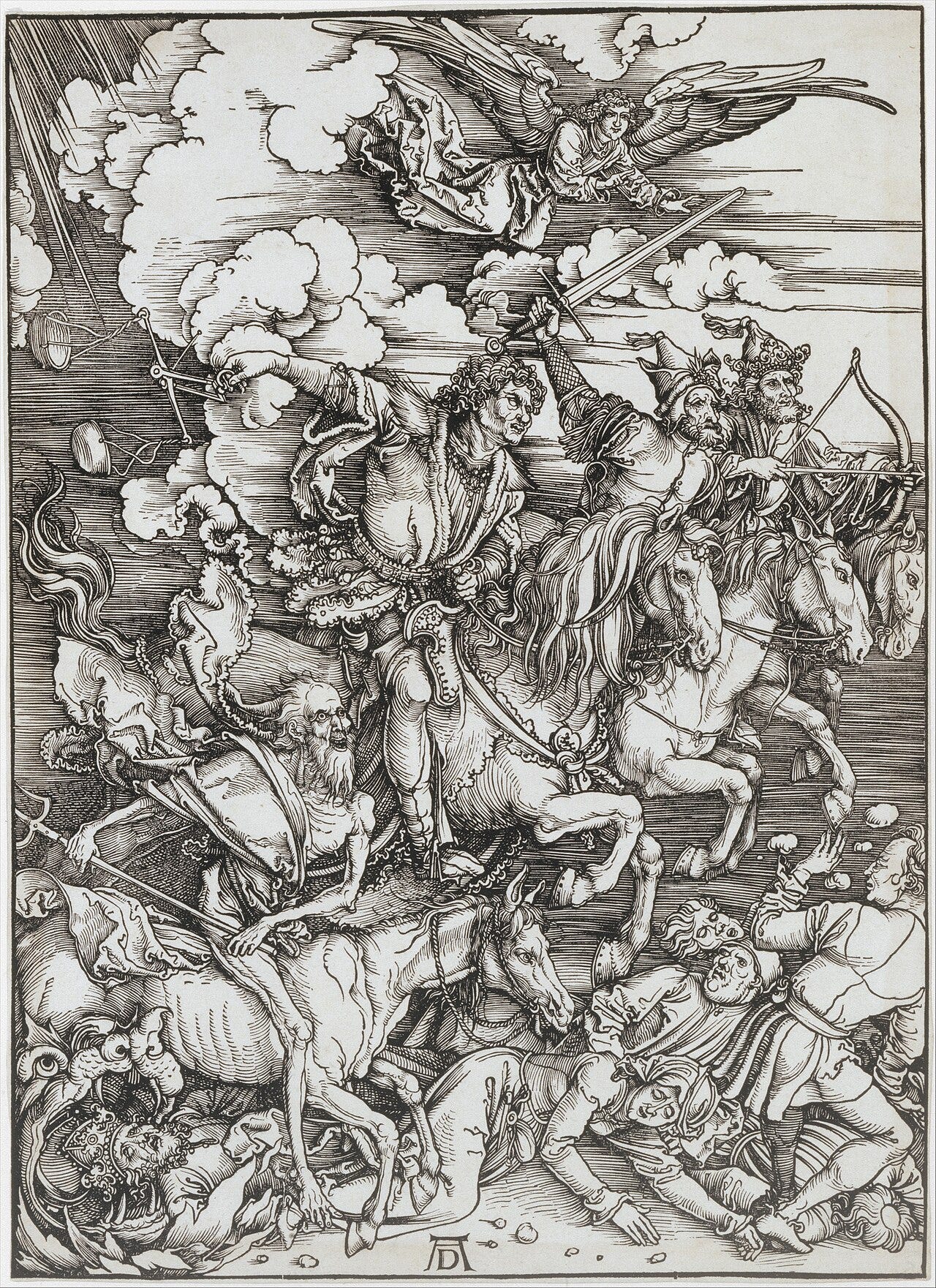
Around 1498 he published the Apocalypse, a series of woodcuts so detailed and ferocious that they raised the whole medium to the level of painting. His Four Horsemen still feels like the end of the world in black and white.
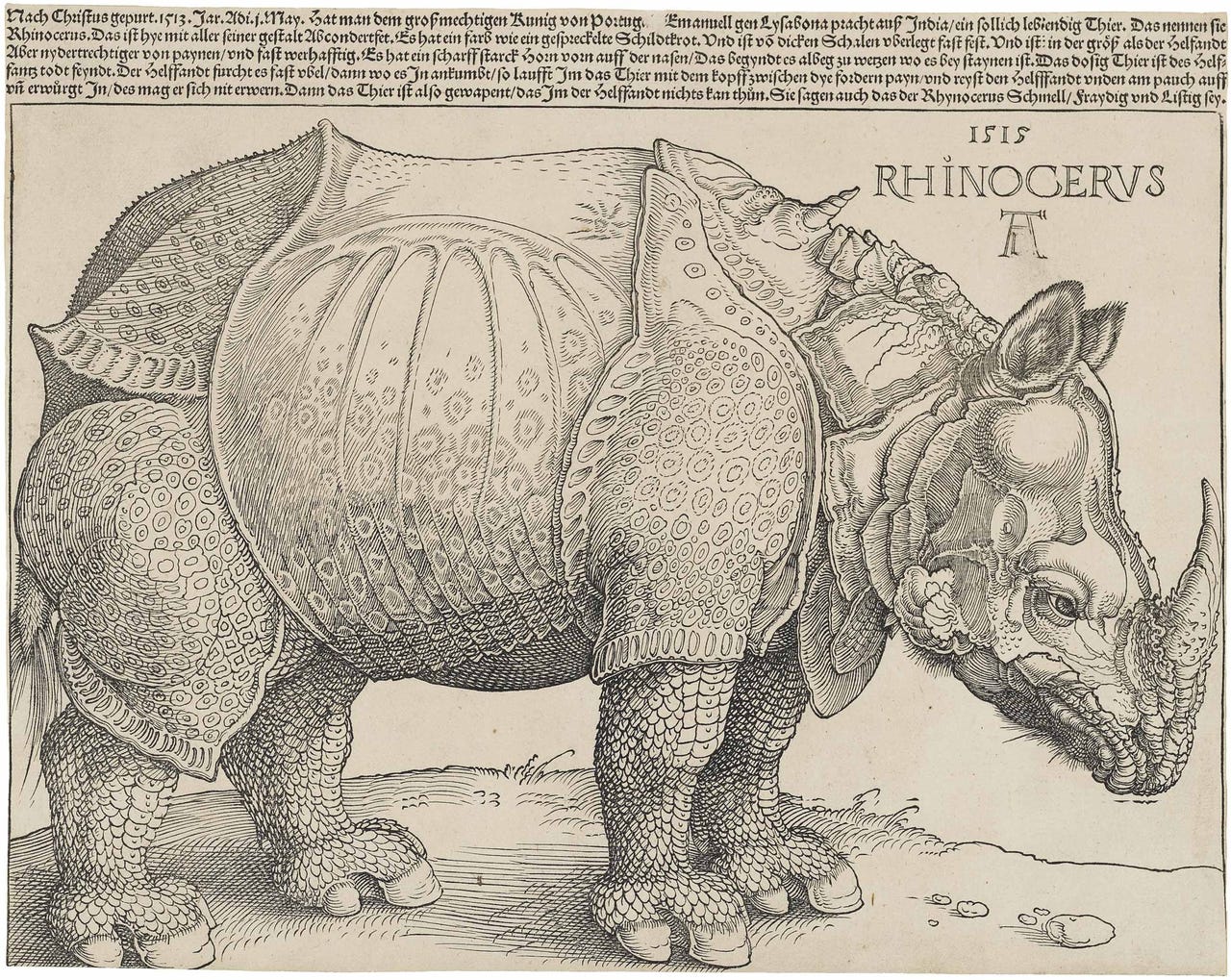
In 1515 he cut a Rhinoceros he had never seen, working only from a written description and a sketch. It was wrong in the details and unforgettable anyway, copied for centuries as what a rhino looked like.
Japan and the floating world
The other summit of the woodcut is on the far side of the world, and it is my favorite chapter.
In Japan, artists made color prints by carving a separate block for each color and printing them one over another in careful register.
These pictures of everyday life, actors and landscapes flooded the cities, cheap and brilliant. Hokusai’s Great Wave off Kanagawa is one of them.
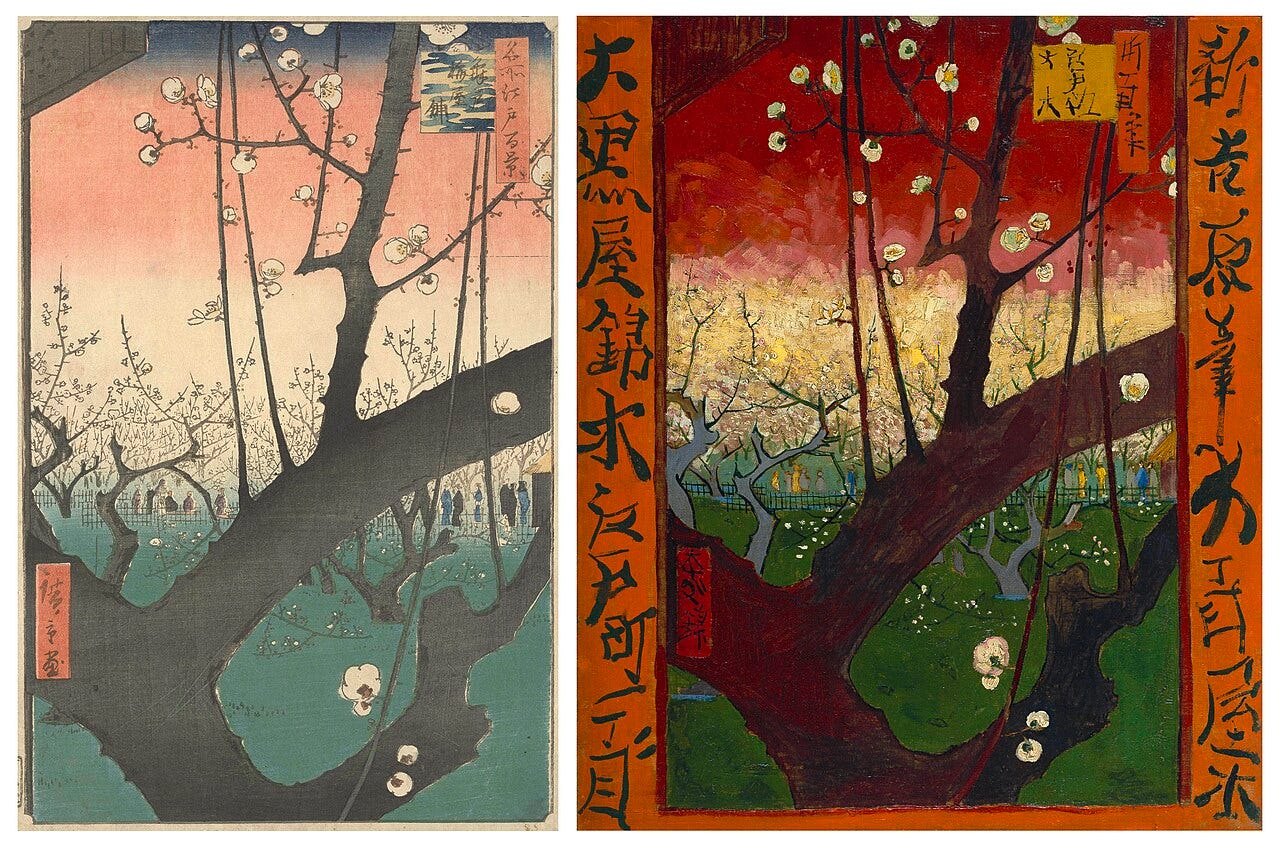
When these prints reached Europe in the 1800s, their flat color and abrupt framing stunned painters. They reshaped Post Impressionism, and Vincent van Gogh collected and copied them outright.
Woodcut versus engraving
People lump all old prints together, but there are two opposite families.
A woodcut is relief: you print from the raised parts and cut away the rest. An engraving or an etching is intaglio: you cut lines into a metal plate and the ink sits down in the grooves.
Relief gives stark blacks and flat shapes. Intaglio gives fine, scratchy detail.
Same goal, copies of an image, opposite method.
The same relief idea drives the modern linocut, while lithography prints from a flat stone instead of a carved one.
The most famous woodcut of all gets its own deep dive: the true story behind Hokusai's Great Wave.
Woodcuts, the questions in relief
What is a woodcut? A print made by carving a wooden block, inking the raised surface and pressing it to paper.
How is it different from engraving? A woodcut prints from raised lines, relief. An engraving prints from cut grooves, intaglio.
Why were woodcuts important? They were the first way to mass produce an image, cheaply and in large numbers.
Who are the most famous woodcut artists? Albrecht Durer in Europe and Hokusai and Hiroshige in Japan.
Is the Great Wave a painting? No. It is a color woodblock print, made in thousands of copies.
More secrets to unlock


The first images everyone could own
Because one block could print hundreds of sheets, the woodcut put pictures into ordinary hands for the first time: cheap saints, playing cards, broadsheets.
Around 1500 Durer raised it to high art with prints so fine they look drawn. I keep coming back to that double life: the technology that made images common also produced one of its greatest printmakers.
