
Vincent van Gogh turned his own suffering into the most loved art on earth, in barely ten years of work, while selling almost nothing and dying unknown at 37.
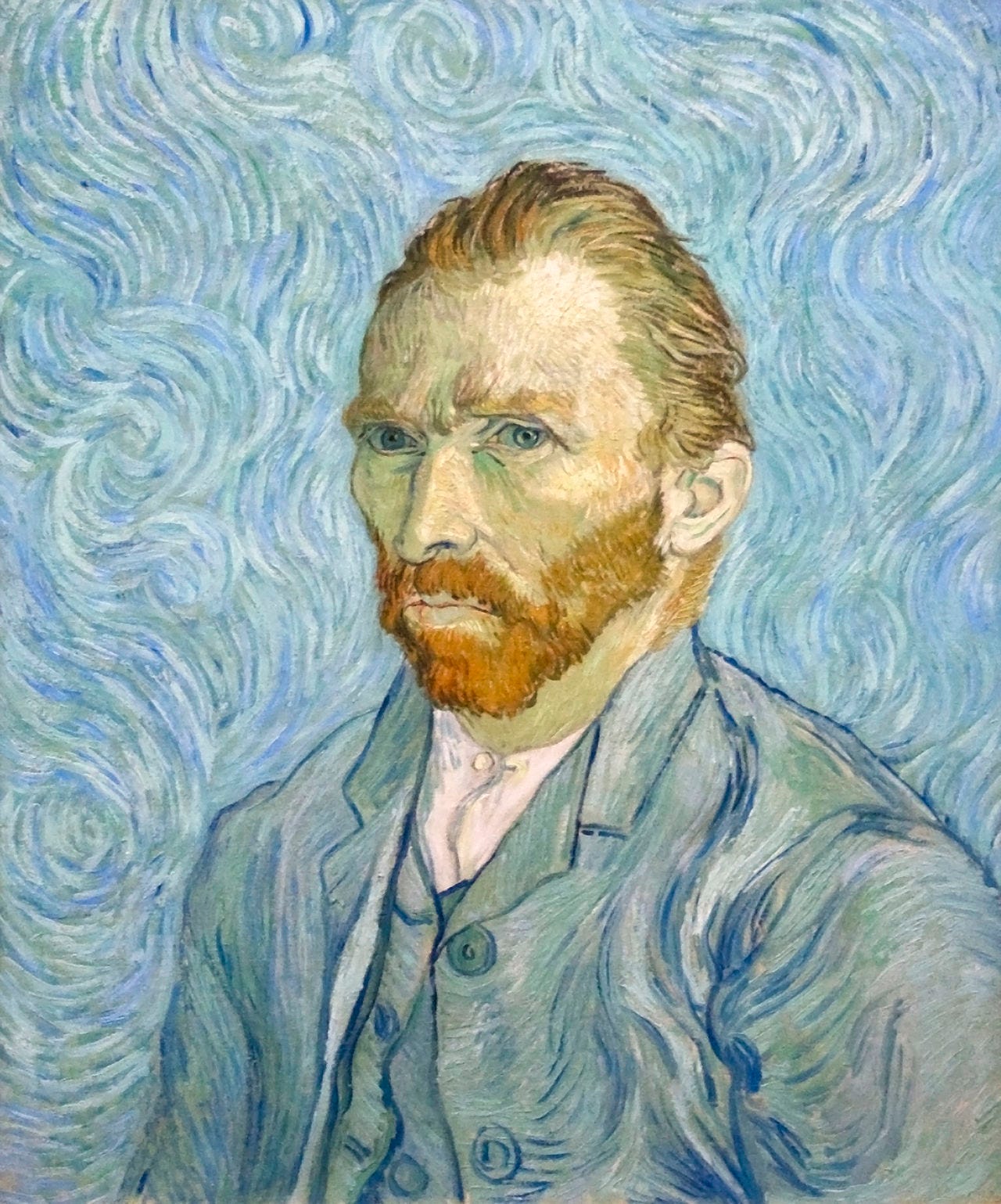
That gap, between the man nobody bought and the painter who now sets auction records, is what this guide unpacks. Exactly which paintings turned that neglect into today's auction records is a question his twelve greatest works answers one canvas at a time.
What the legend skips is the better story. He also turned the mirror on himself more than thirty times, a habit explored across twelve painters and their self portraits.
The myth flattens him into a sad madman who got lucky. The record says otherwise. He read color theory, copied Millet and Delacroix like a student, and made around 2,100 works in a decade.
He also wrote 820 letters explaining what he was doing and why. And he was seriously ill. Both things are true at the same time.
Van Gogh in one minute:
The life: born 1853 in the Netherlands, dead 1890 in France, age 37.
The output: about 2,100 works in 10 years, most of it in the last 4.
The movement: Post Impressionism, and a founding source of Expressionism.
The money: one documented sale in his lifetime, world famous within 20 years.
The look: paint so thick it stands off the canvas. That is impasto.
More incredible painter stories
If Vincent van Gogh pulled you in, you will love these too:


In this guide I walk through three parts: the life, how to read his work and where he fits, and where to start.
Vincent van Gogh at a glance
1853. Born in Zundert, a pastor’s son.
1886. Two Paris years among the Impressionists changed his palette for good.
1888. The move to Arles, the yellow house, and the December night the ear was cut.
1889. The Starry Night, painted from the asylum at Saint-Rémy.
1890. Died at Auvers at 37, having sold almost nothing. Ten years of work now fills a museum.
Ten years, and that was all
The preacher who gave away his bed
Before the paint, there was the coal.
In 1879 Vincent was a lay preacher in the Borinage, a poor Belgian mining region. He took the gospel literally. He gave away his salary, his clothes and his bed, and slept on straw to live as poorly as the miners he served.
The church fired him for an “excess of zeal.”
The man who would later squeeze a whole tube of yellow onto one canvas never had a moderate setting. When he picked up a pencil at nearly 28, he attacked drawing with the same total intensity he had brought to God.
From the dark years to the color
His Dutch work is brown on brown on brown.
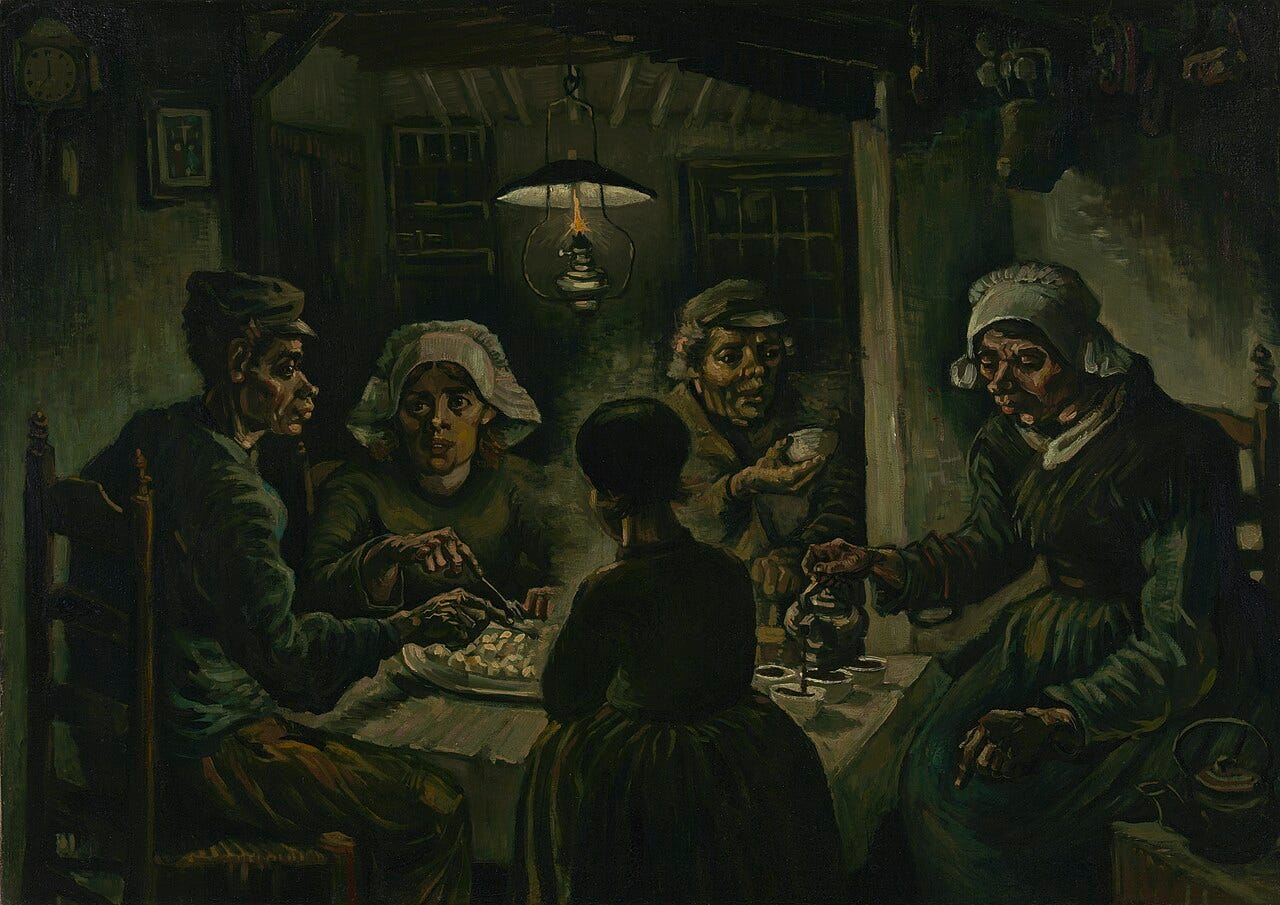
The Potato Eaters, 1885, is the proof: five peasants under one weak lamp, eating in the gloom. He wanted their hands, reaching for the food, to be the same hands that had dug the earth all day.
His friend van Rappard told him it was not good enough, and the insult ended their friendship.
What he was actually trying to say with those raw, weathered hands is unpacked in The Potato Eaters: meaning and why it still matters.
Then, in 1886, he moved to Paris to live with his brother Theo, and the brown fell off his palette.
He met Toulouse Lautrec, Bernard, Pissarro and Signac. He found Japanese woodblock prints and copied their flat planes and clean outlines. He could not afford models, so he painted himself around two dozen times in two years.
Line those Paris self portraits up in order and you can watch the change happen canvas by canvas. The browns drop out. The blues, greens and oranges move in.
Arles, the yellow house, and Gauguin
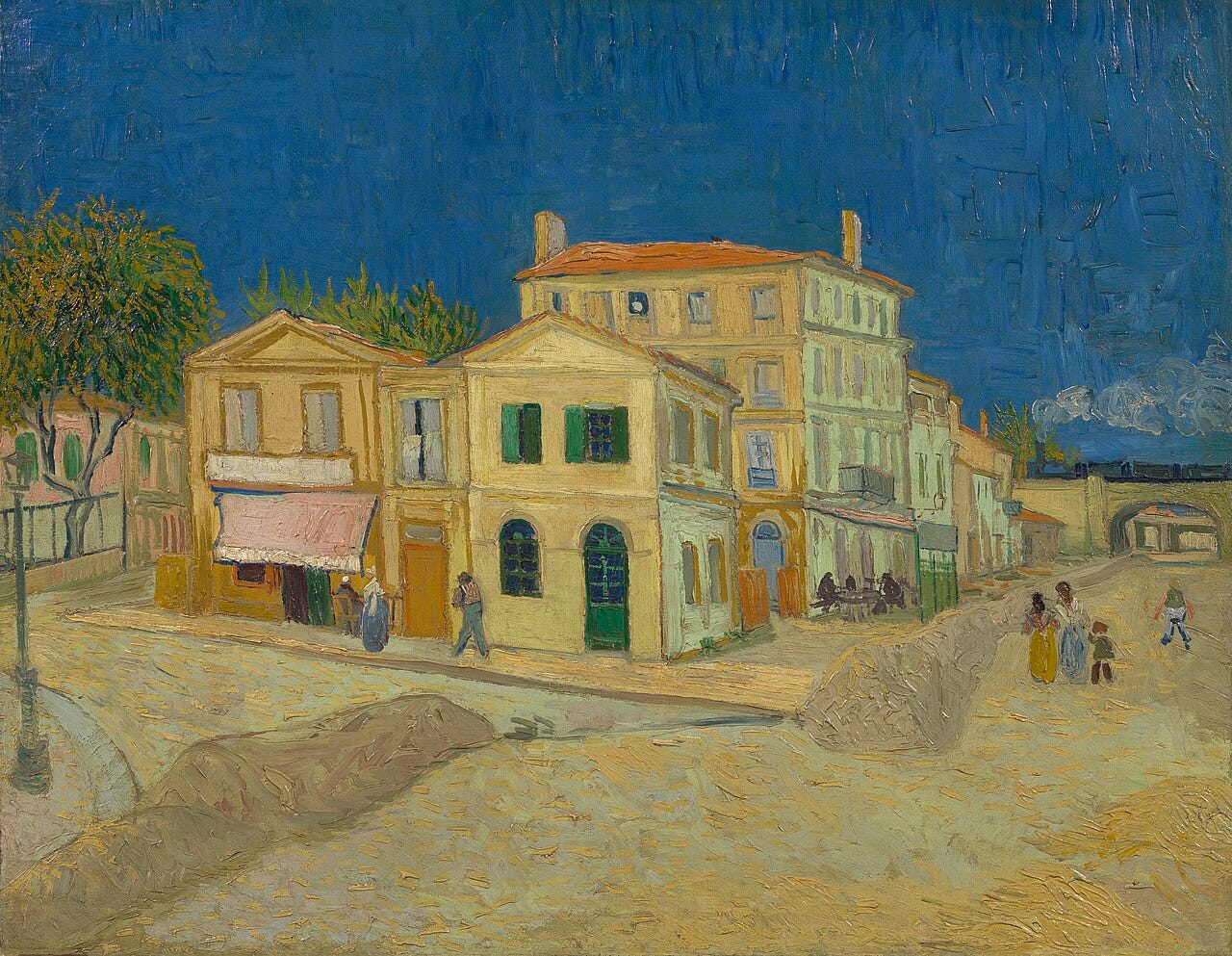
In February 1888 he stepped off a train at Arles into snow, chasing the strong southern light. He rented a small yellow house and started painting at a furious pace.
This is where most of the work you love was made. And he did not want to make it alone. He dreamed of a “studio of the south,” a group of artists living and working together, and he convinced Paul Gauguin to join him.
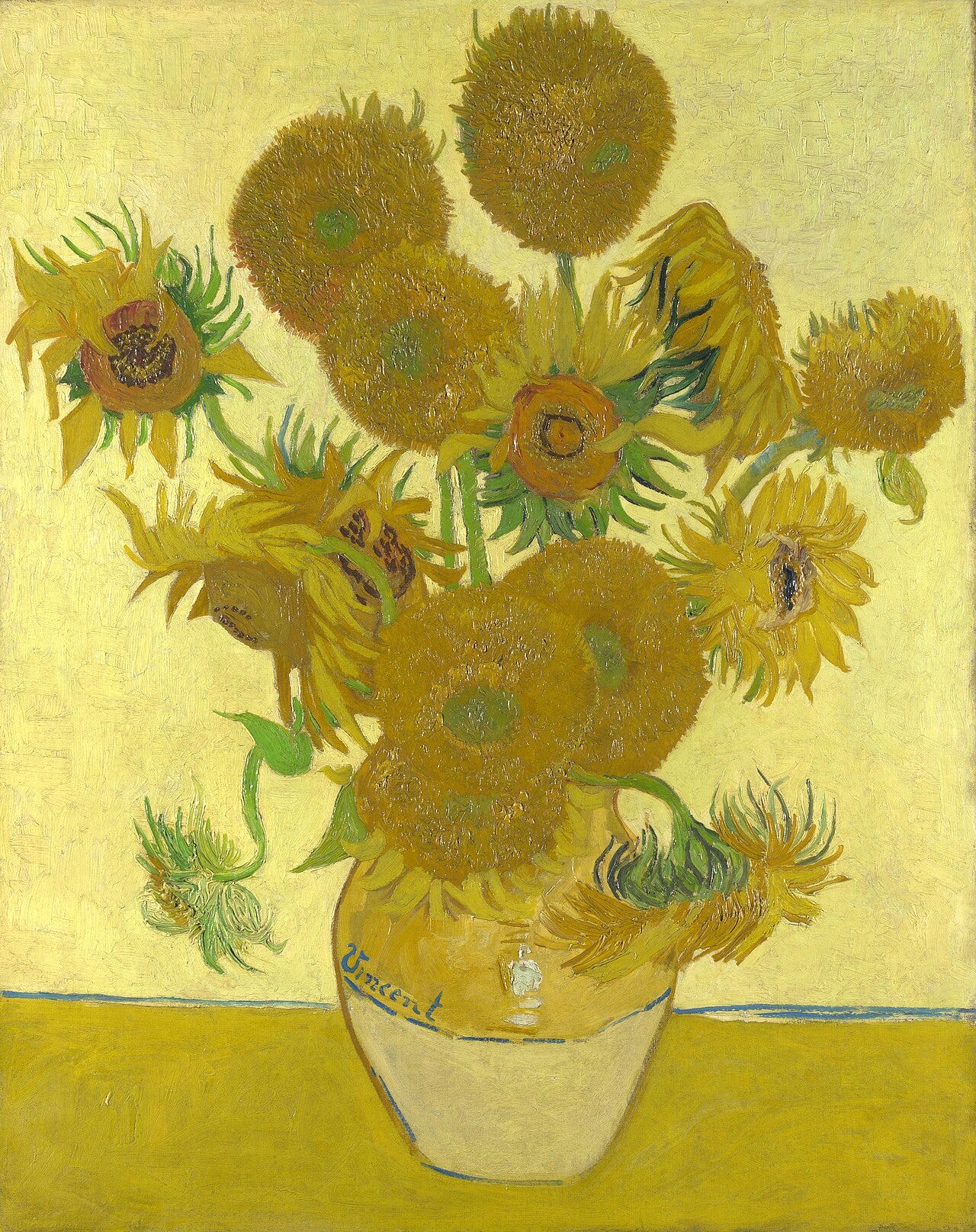
The Sunflowers were painted for this dream, to decorate Gauguin's bedroom before he arrived. The sunflower is mine, Vincent wrote.
The Sunflowers series sits inside our list of yellow paintings across art history, the color Van Gogh pushed further than any other painter.
I tell why he dared to paint yellow on yellow, and why there are several versions, in Why Did Van Gogh Paint Sunflowers.
For nine weeks the two men painted side by side and argued like brothers. Gauguin painted from imagination. Vincent needed the real thing in front of him.
The argument ran hot, and it ended on the night of 23 December 1888, with a razor and Vincent’s ear.
What was actually said and done between the two men that week is covered in full in Van Gogh and Gauguin: What Happened.
The few who stood by him
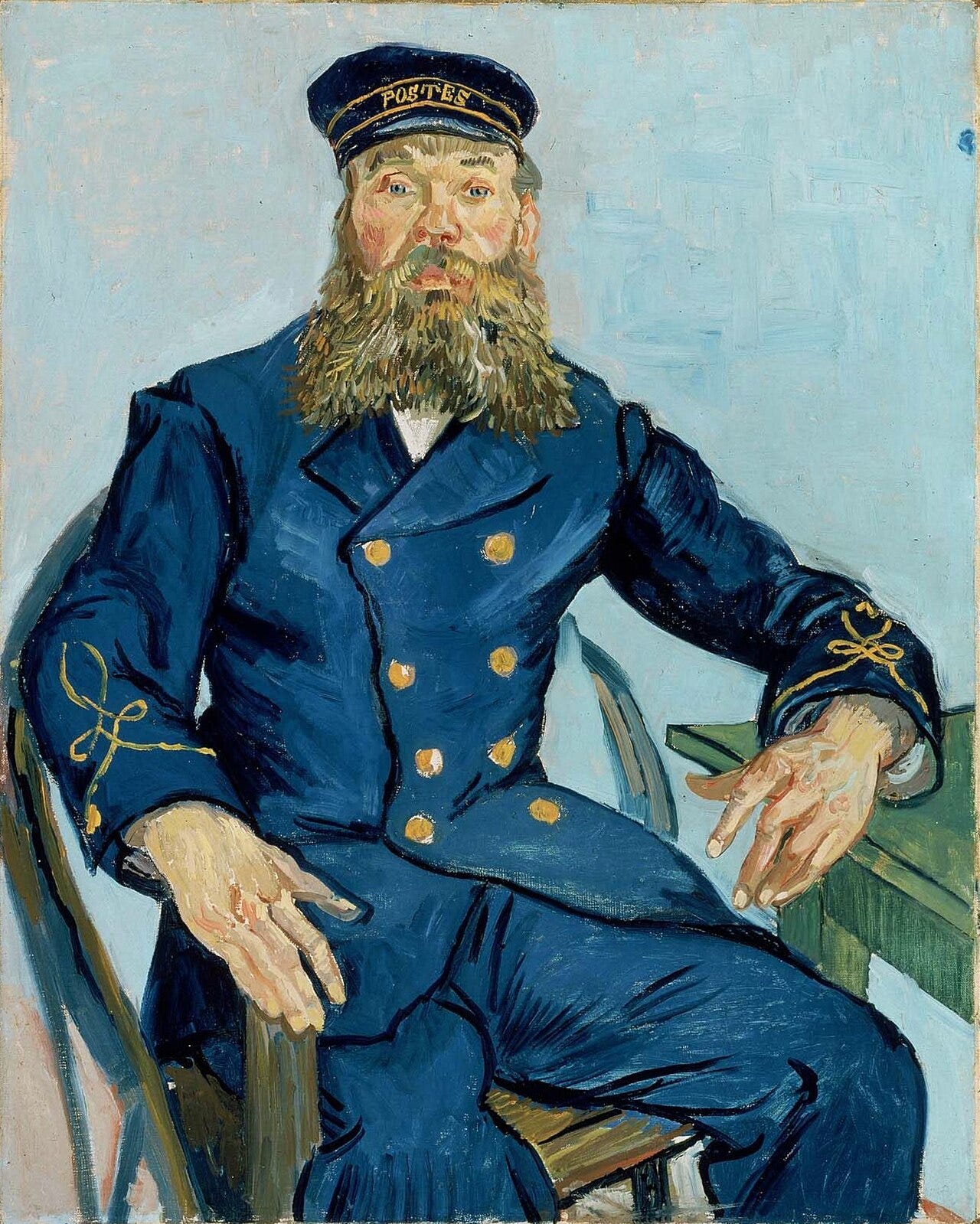
Van Gogh is painted as a loner. He was not. A small circle carried him.
Theo, his brother. An art dealer in Paris who paid for everything, paint, rent, food, for years. The 650 letters between them are the spine of the whole story.
Paul Gauguin. Friend, rival, and the other half of the Arles disaster. The most important artistic relationship of his life.
Émile Bernard. A younger painter and close correspondent. Many of Vincent’s best letters about art were written to him.
Joseph Roulin. The postman at Arles. Vincent painted him and his whole family, and called him a friend when he had almost none.
Doctor Paul Gachet. The art loving doctor who cared for him at Auvers, and the subject of his most expensive painting.
The ear
Everyone knows he cut off his ear. Almost everyone has the details wrong.
It came at the end of a full mental collapse, not a tantrum. There is real debate about whether it was the whole ear or the lower part.
And a serious theory, built on Gauguin’s contradictions and his skill with a blade, asks whether Gauguin held the weapon at all.
I dig into the full investigation in Why Did Van Gogh Cut Off His Ear.
The asylum and The Starry Night
After the breakdown, Vincent committed himself to an asylum at Saint Remy.
From a barred window, before dawn, working partly from memory, he painted the most famous night sky in art. The sky is all turbulence; the village below is quiet, ordered, invented. I unpack it in Why Did Van Gogh Paint The Starry Night.
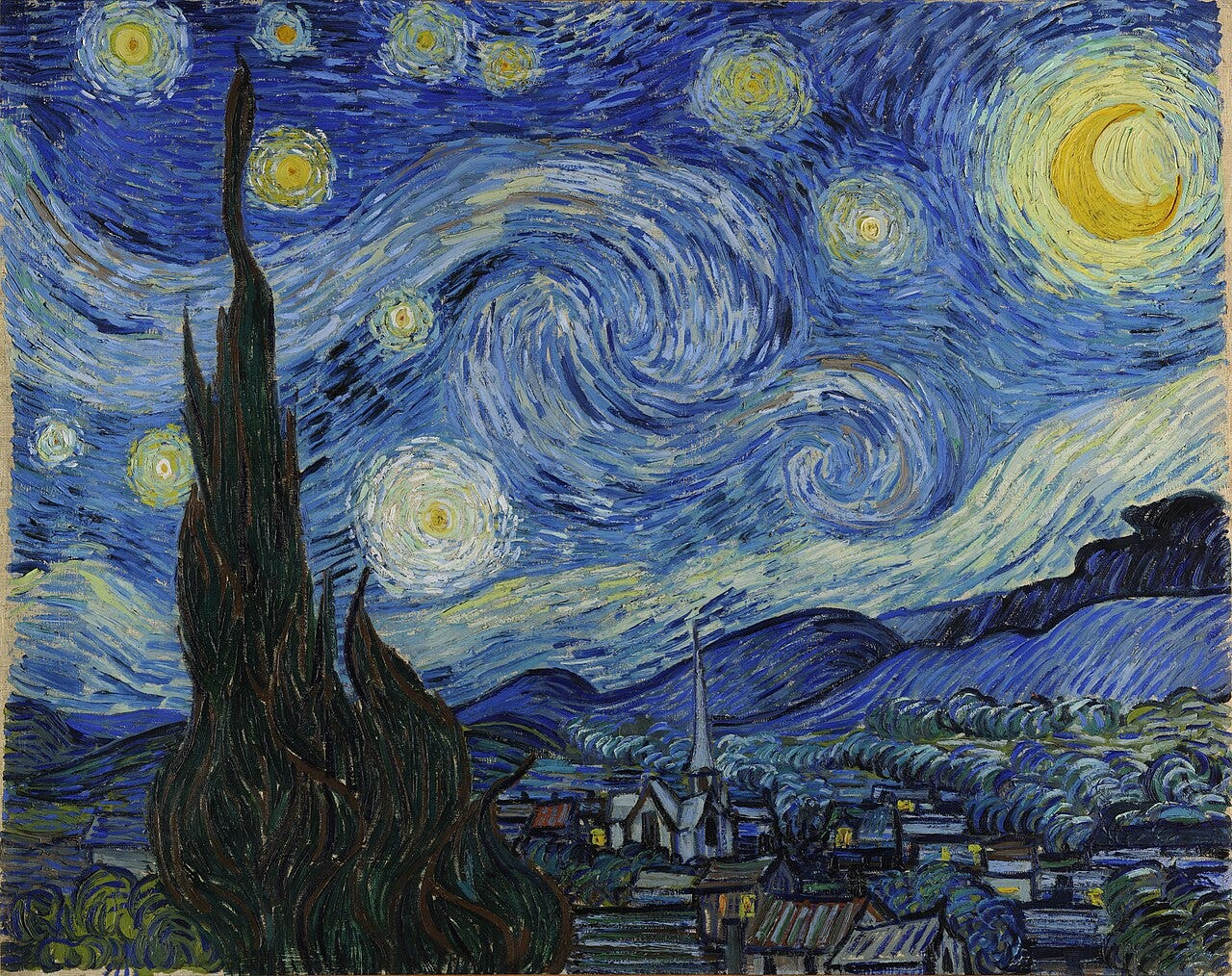
Auvers, the last 70 days
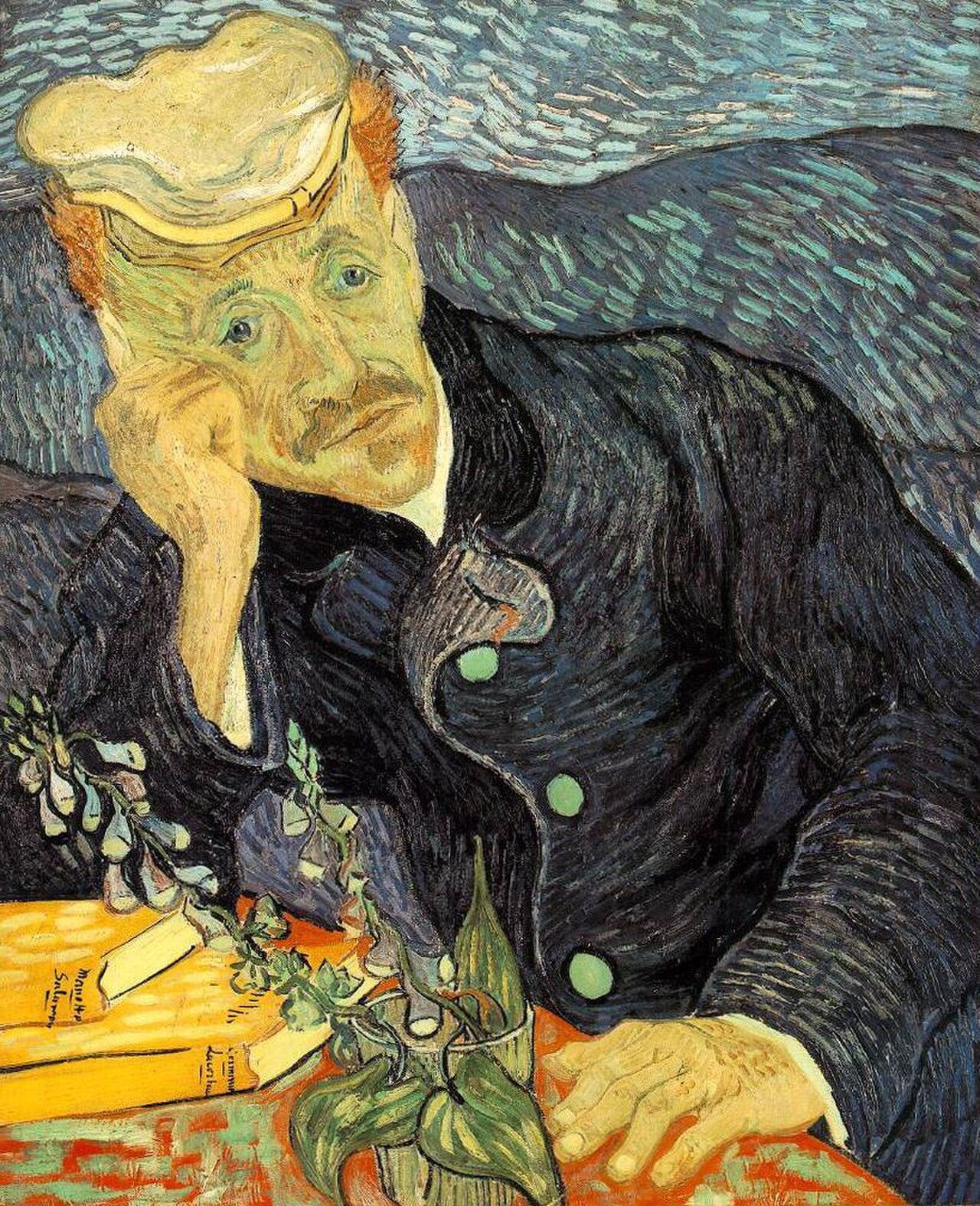
In May 1890 he moved to Auvers, north of Paris, under the care of Doctor Gachet. What he did there is hard to believe.
In roughly 70 days he made about 75 paintings. More than one a day. The church at Auvers, the wheatfields, the portrait of Gachet, the crows over the gold. It was the most productive stretch of his whole life.
It ended in a wheatfield with a gunshot to the chest. He walked back to the inn and died two days later, on 29 July 1890, with Theo at his bedside.
For a century the verdict was suicide. Recent research has made even that uncertain. The full day, hour by hour: The Last Day of Vincent Van Gogh.
The one painting he sold
Here is the fact that breaks people’s hearts, corrected to the truth.
In his lifetime there is one well documented sale: The Red Vineyard, bought by the Belgian painter Anna Boch for 400 francs in 1890.
He traded and gave away others, and the critic Albert Aurier had just published the first real praise of his work. So the famous line, that he only ever sold one painting, is almost true. The recognition arrived a few months too late.
The woman who made him immortal
When Theo died six months after Vincent, his young widow, Johanna van Gogh Bonger, was left with a baby and hundreds of canvases nobody wanted.
She could have sold them as a job lot. Instead she spent the rest of her life placing the right paintings in the right shows and translating the letters that turned a dead painter into a legend.
The story we all share is, in large part, one widow’s work. Her full story: The Woman Who Made Vincent van Gogh.
Tracing him town by town
His whole life fits in a short list of places, and the work changes with each one.
Groot Zundert, Netherlands (1853). Born here, son of a pastor.
London (1873). Working for an art dealer. A first heartbreak turns him toward religion.
The Borinage, Belgium (1879). The failed preacher years. Art begins here.
Nuenen, Netherlands (1883 to 1885). The dark peasant paintings. The Potato Eaters.
Antwerp (1885 to 1886). Discovers Rubens and Japanese prints, enrolls at the academy.
Paris (1886 to 1888). Color explodes. Two years that change everything.
Arles (1888 to 1889). The yellow house, the sunflowers, Gauguin, the ear.
Saint Remy (1889 to 1890). The asylum. The Starry Night.
Auvers sur Oise (1890). 75 paintings in 70 days, then his death.
How to actually look at a Van Gogh
His color was a system
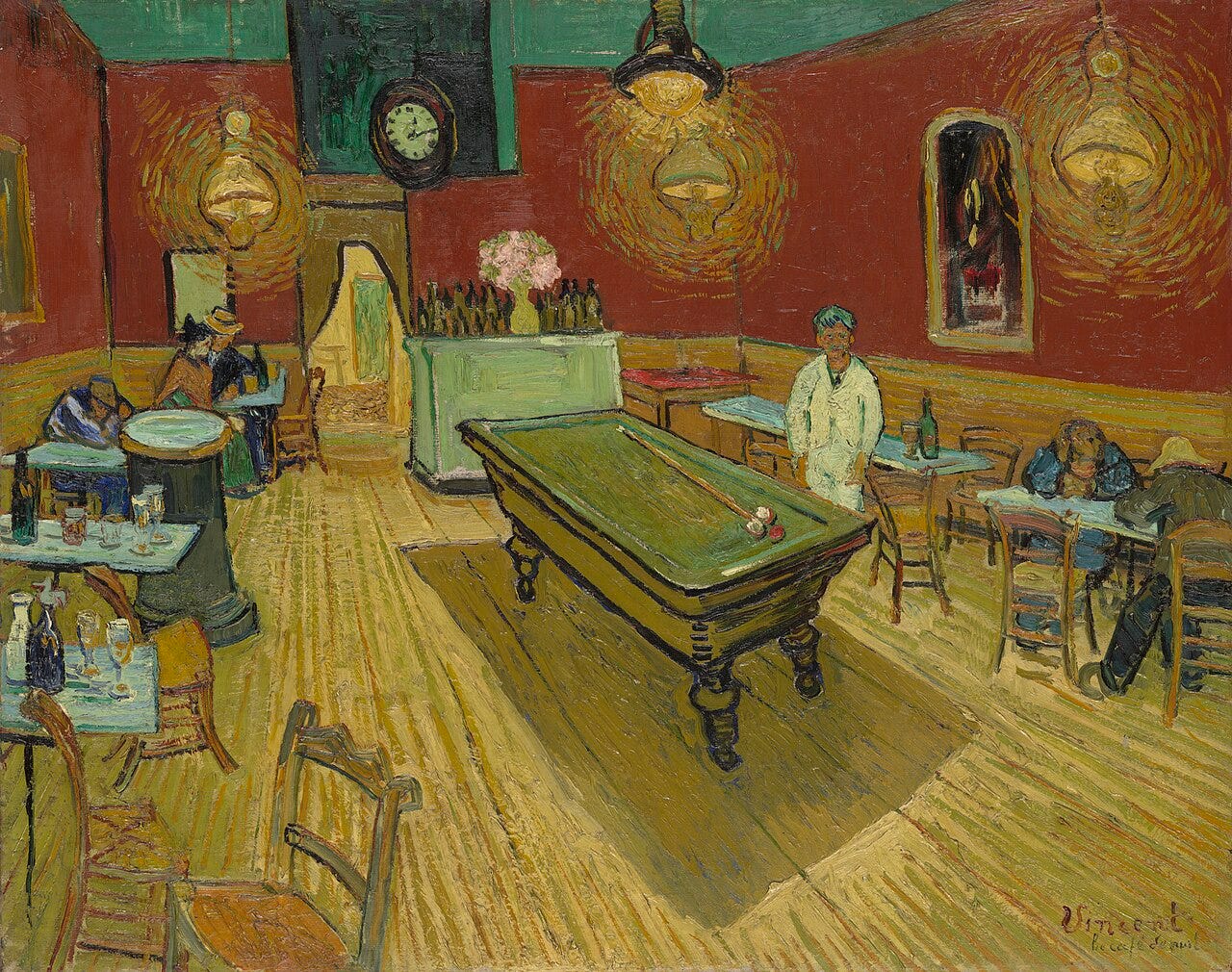
Van Gogh did not pick colors to look pretty. He used a system.
He placed complementary colors side by side, yellow against blue, red against green, because they intensify each other in the eye.
Of the Night Cafe, with its blood red walls and acid green ceiling, he wrote that he had tried to express the terrible passions of humanity by means of red and green. The color does the emotional work, not just describing the room.
Paint you can touch
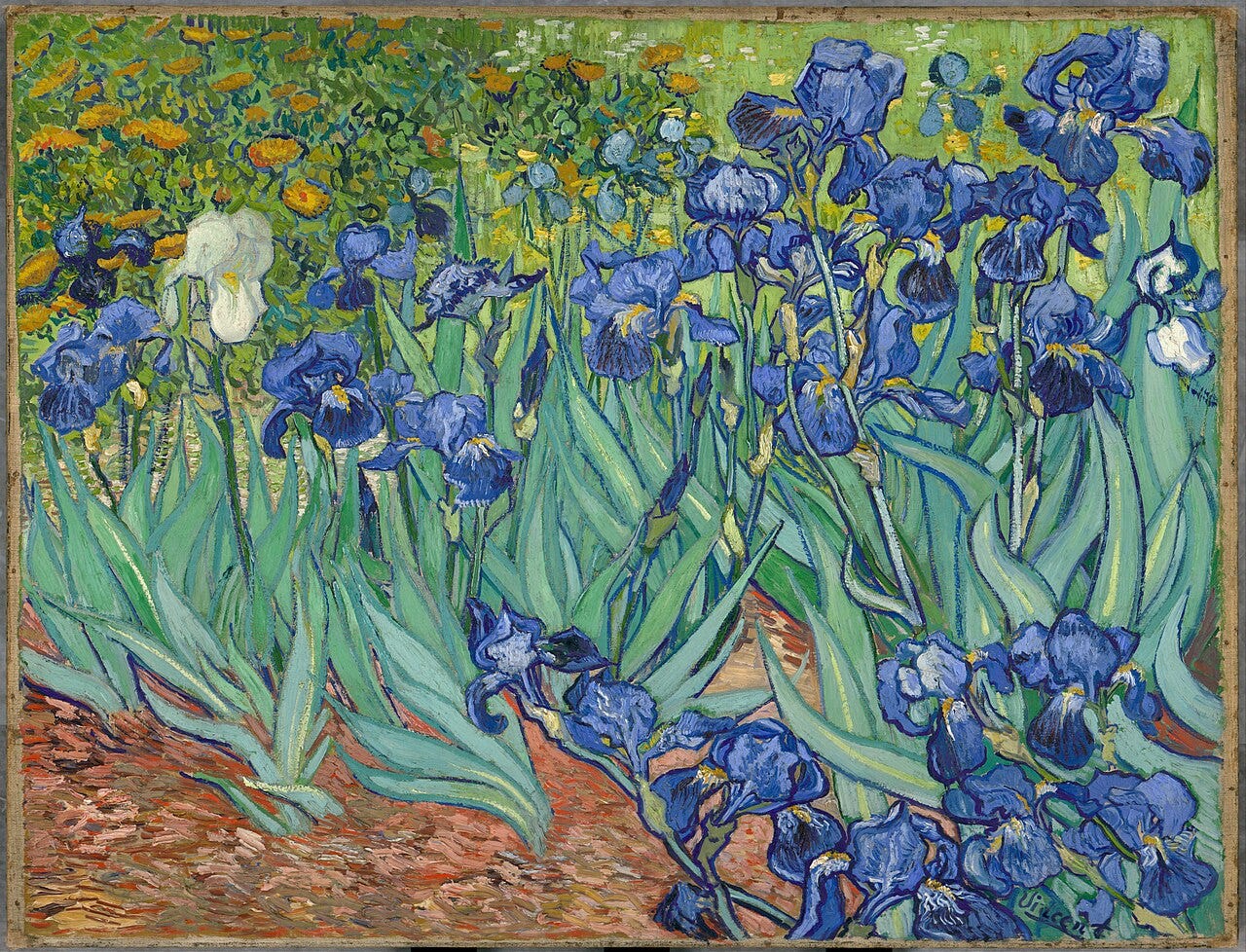
The first shock in front of a real Van Gogh is not the color. It is the relief of the paint.
He loaded it on so thick it stands off the canvas in ridges, often straight from the tube, pushed with a brush handle or a thumb.
The surface catches the gallery light and shifts as you move. A screen flattens the one thing that makes it alive. The technique has a name, impasto.
So what do we call him
The short answer: Post Impressionism.
The longer answer is more useful. The Impressionists had just freed painting to chase light and the passing moment. The Post Impressionists came right after and each pushed past them in a different direction.
Cezanne went toward structure. Seurat went toward science, in Pointillism Van Gogh and Gauguin went toward emotion and symbol.
That is why he sits on a hinge. He is the emotional wing of Post Impressionism, and the direct source of what came next.
Who taught his eye
He was a copyist before he was a master. These five built his eye.
Jean Francois Millet. The painter of peasants he copied his whole life, even from the asylum. The full link: Van Gogh and Millet.
Eugene Delacroix. Where he learned that complementary colors fight and sing.
Adolphe Monticelli. A Marseille painter of thick, jeweled paint. Vincent saw himself as continuing his work.
Hiroshige and the Japanese printmakers. He copied Hiroshige in oil and stole their flat color and steep framing.
Rembrandt and Frans Hals. The Dutch masters who gave him his first grounding in faces and dark light.
Who he handed the torch to
He sold almost nothing, yet he reset the course of modern art.
The painters who came next took his permission to bend color and brushwork to feeling rather than to accuracy. That idea is the whole program of Expressionism.
Edvard Munch. The other great pioneer of painting raw emotion. The Scream is a cousin of Van Gogh’s skies.
Henri Matisse and Andre Derain. The Fauves, who took his liberated color and turned it up.
Ernst Ludwig Kirchner and the German Expressionists. Who built a whole movement on his distortion and intensity.
Francis Bacon. Painted a full series after Van Gogh in 1957, proof the line runs all the way to modern art.
Your way in
If he got under your skin
Use him as a door into the rest of the room.
Paul Gauguin, his Arles partner, for the same emotion turned toward myth and the South Seas.
Edvard Munch, for the same raw feeling pushed into Expressionism.
Paul Cezanne, the other giant of Post Impressionism, the structural opposite of Van Gogh.
Henri de Toulouse Lautrec, his Paris friend, for the nightlife Vincent left behind.
Three canvases to begin with
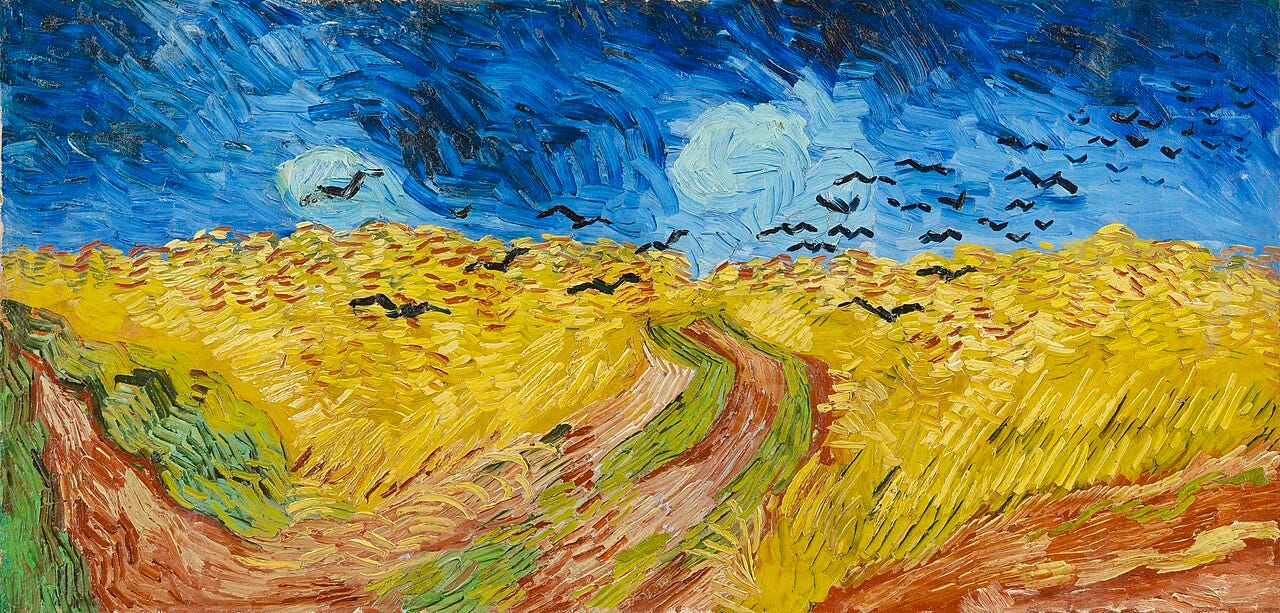
1. The Starry Night, 1889. The asylum sky, a storm hidden inside a calm night.
2. Sunflowers, 1888. Hope in yellow, painted for a friend who would break his heart.
3. Wheatfield with Crows, 1890. Long called his last painting, though that label is a guess, not a fact.
Where his paintings hang today
The impasto only exists in person.
The Van Gogh Museum, Amsterdam. The largest collection on earth, plus the letters.
The Musee d'Orsay, Paris. The self portrait, the bedroom, the church at Auvers.
MoMA, New York. The Starry Night.
The Kroller Muller Museum, Netherlands. The second great collection.
The Vincent van Gogh questions that keep coming up
How many paintings did Van Gogh sell while alive? One well documented sale, The Red Vineyard, for 400 francs in 1890.
What movement is Van Gogh? Post Impressionism, and a founding source of Expressionism.
Why is Van Gogh so famous? A recognizable style, a dramatic life, and his sister in law Johanna, who promoted the work for decades after his death.
Did Van Gogh cut off his whole ear? Most accounts say the lower part. A serious theory even points to Gauguin. It is still debated.
What is Van Gogh's most famous painting? The Starry Night, painted from an asylum window in 1889.
How did Van Gogh die? A gunshot to the chest at 37, in Auvers, July 1890. Long called suicide, now less certain.
When was Van Gogh born? On 30 March 1853, in Groot Zundert in the Netherlands.
How many works did Van Gogh make? Around 2,100 in a decade, of which roughly 860 are paintings, the rest drawings.
What did he do before painting? He worked as an art dealer, a teacher and a lay preacher.
More secrets to unlock


A last detail worth keeping
The tragic genius label hides how methodical he was. The preacher who gave away his bed, the painter who finished 75 canvases in 70 days, the letter writer who set out his color theory in detail: that is a working professional, not a victim waiting to be found.
It also makes the numbers land. The man who got 400 francs for one painting now hangs in the museums that ignored him. In 1990 his Portrait of Doctor Gachet sold for 82.5 million dollars, the most expensive painting in the world at the time.
Stand close enough to a real one to see the ridges of paint, and that gap, from 400 francs to 82.5 million, stops being a statistic.
Van Gogh copied more than twenty compositions from Jean Francois Millet, working only from black and white reproductions.
Only one of Van Gogh's paintings is known to have sold while he was alive, a fact that only deepens his posthumous fame.
