
Expressionism is the movement that deliberately distorts reality, twisting color, shape and line, in order to express raw inner emotion rather than how things actually look. It paints feelings, not facts.
It exploded in Germany in the early 1900s, and it changed what a painting could be about. See that shift play out across twelve canvases gathered under famous Expressionist paintings.
The fastest way I know to get Expressionism is to set it against its own twin: Impressionism.
Expressionism is the exact opposite of Impressionism, and the names tell you why.
Impressionism captured the outer world, the fleeting light on a pond, exactly as the eye sees it. Expressionism flipped the camera around. It did not care how the world looked.
It cared how the world felt, anxious, ecstatic, lonely, afraid, and it bent reality until the picture matched that inner storm. A sky could be blood red, a face could be green, if that is what the emotion demanded.
Expressionism in one minute:
The idea: distort reality to express inner emotion and feeling.
The time: early 1900s, born mainly in Germany.
The look: intense non natural color, distorted forms, raw heavy brushwork.
The mood: anxiety, alienation, passion, spiritual longing.
The roots: the emotional paintings of Van Gogh and Edvard Munch.
Keep learning art the fun way


What does Expressionism mean?
The name is the whole philosophy.
Where other art tried to impress reality onto the canvas, Expressionism pushed the artist's inner state outward, onto the world: an image of reality distorted to make it expressive of inner feeling.
So a “wrong” color or a “twisted” body is not a mistake or a lack of skill. It is the entire point. The distortion is the emotion, made visible.
Where did it come from?
It did not appear from nowhere. It had powerful ancestors.
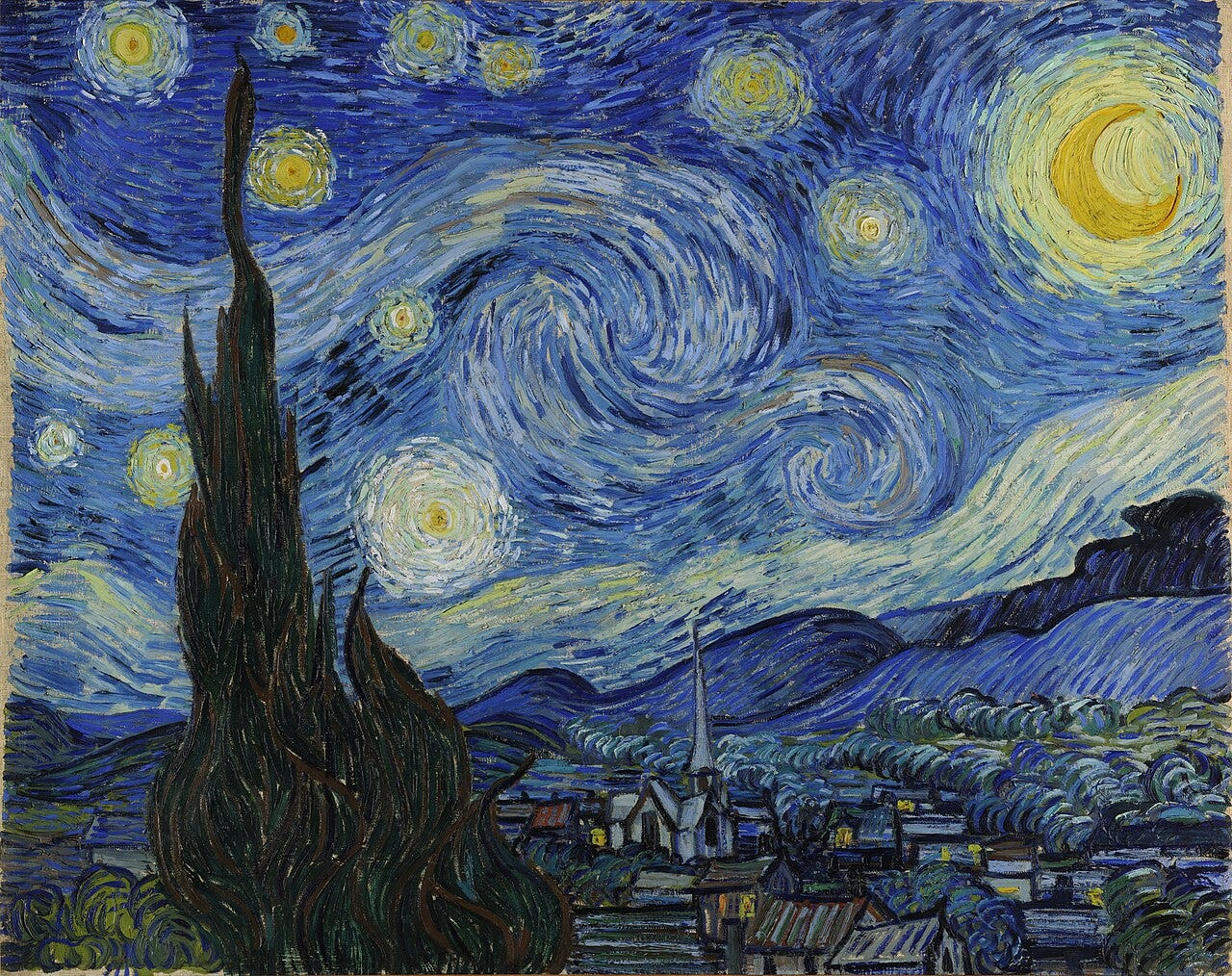
Two painters lit the fuse. Vincent van Gogh poured raw feeling into swirling brushstrokes and burning color.
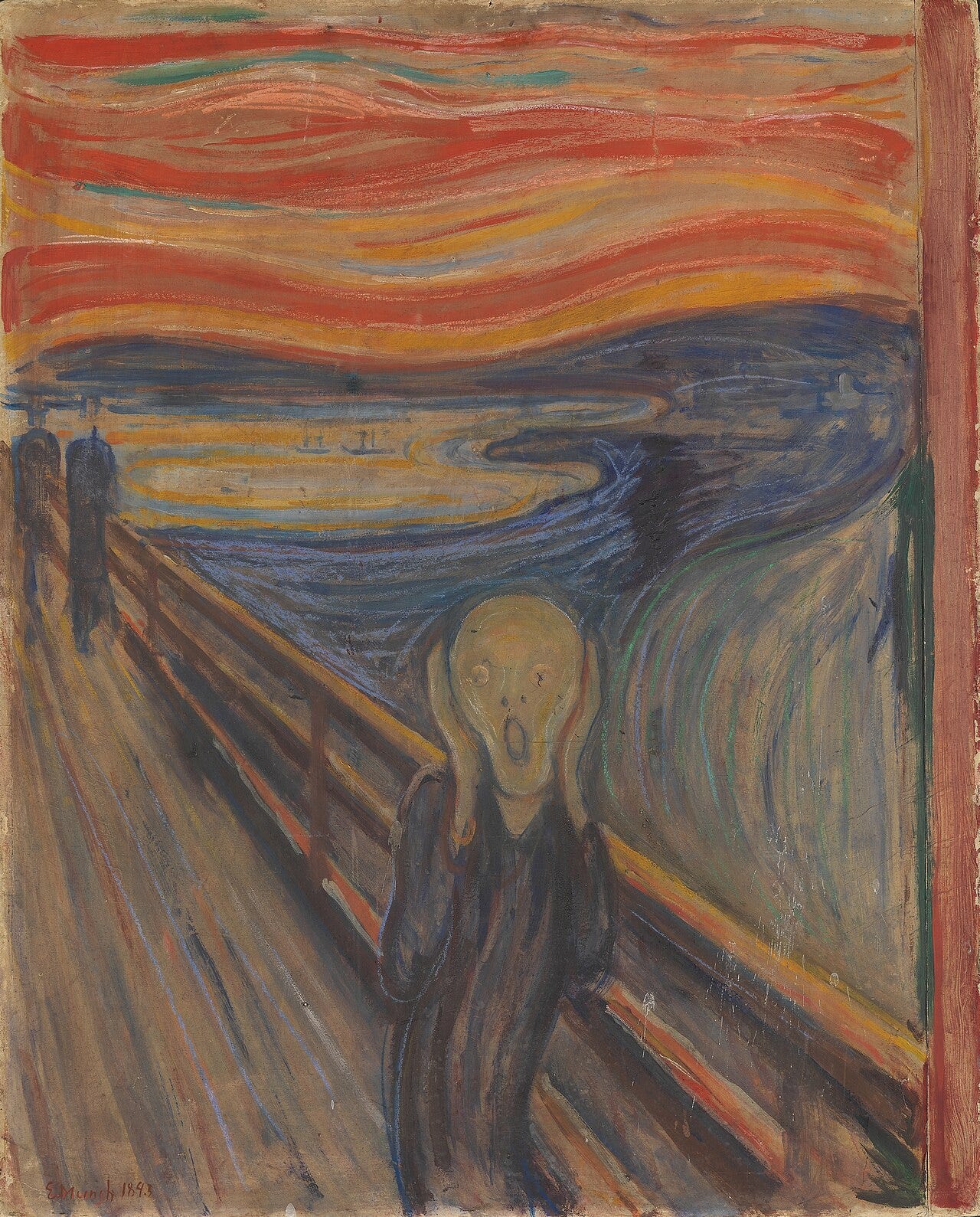
And Edvard Munch, in The Scream, painted pure anxiety instead of a real scene, a figure dissolving under a sky like a wound. Neither was technically an Expressionist, yet they showed the way: paint the feeling.
A generation of young German artists took that permission and ran.
The two great groups
German Expressionism organized itself into two famous circles. Knowing them sorts the whole movement.
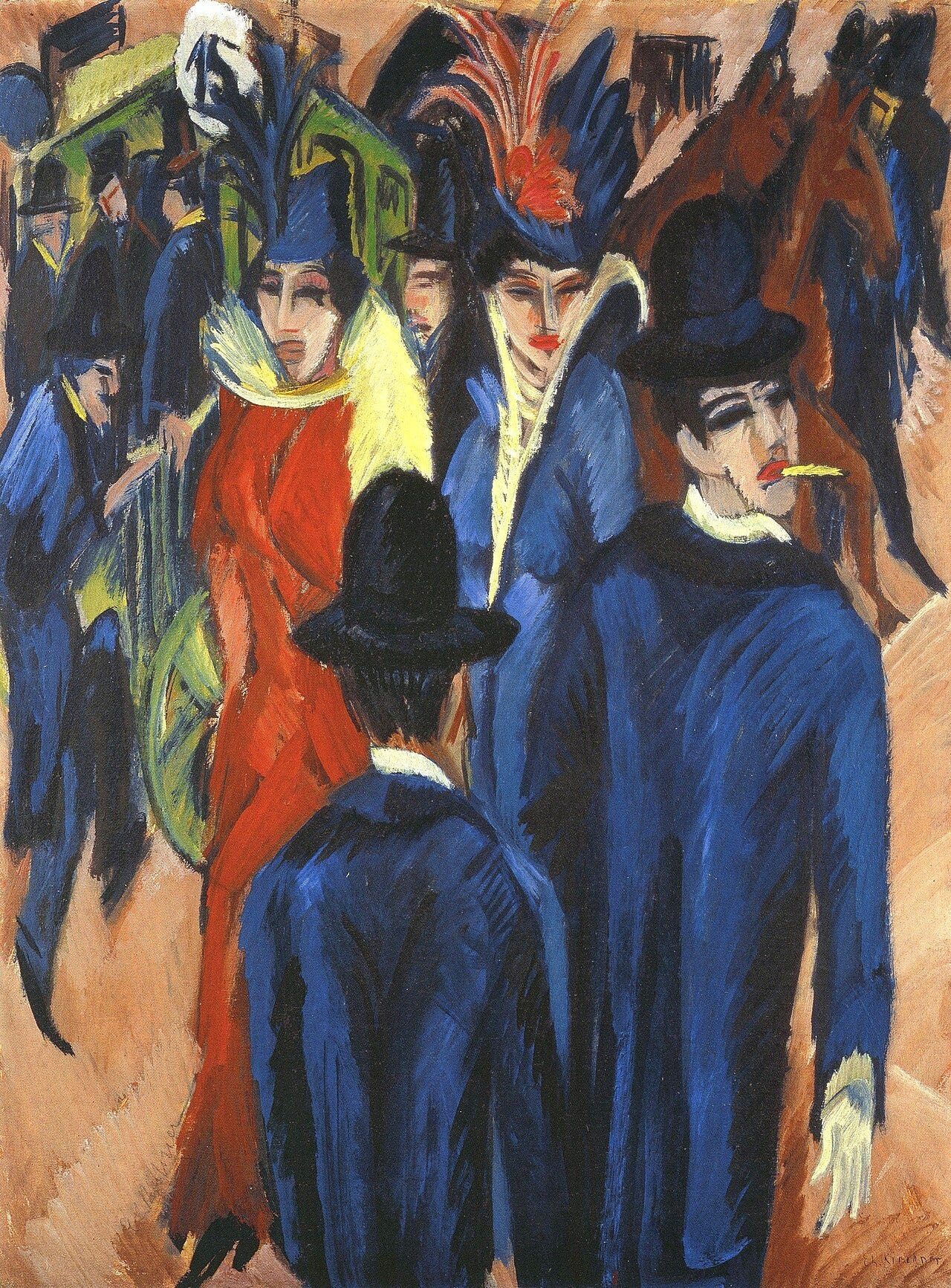
Die Brücke (The Bridge), Dresden 1905. Raw, urban, jagged. Artists like Ernst Ludwig Kirchner painted the anxiety and energy of the modern city in harsh, clashing color, reaching for a bridge to a new, more emotional art.
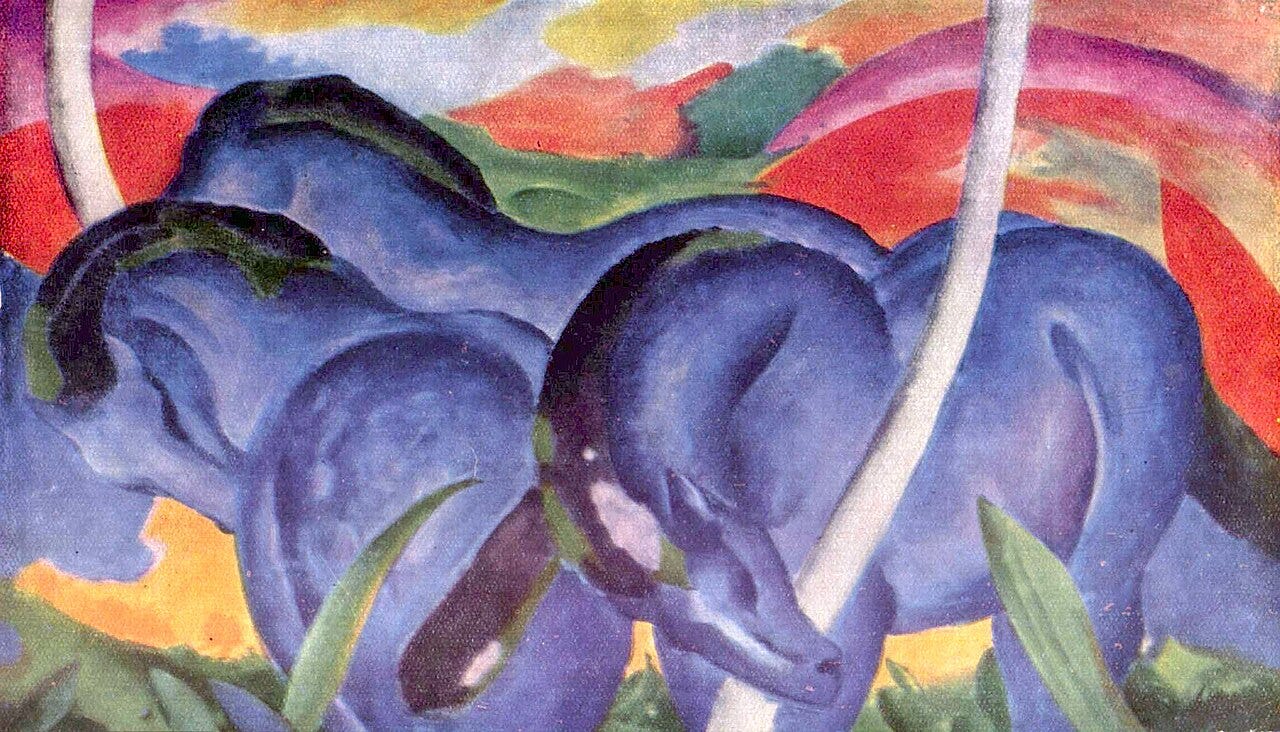
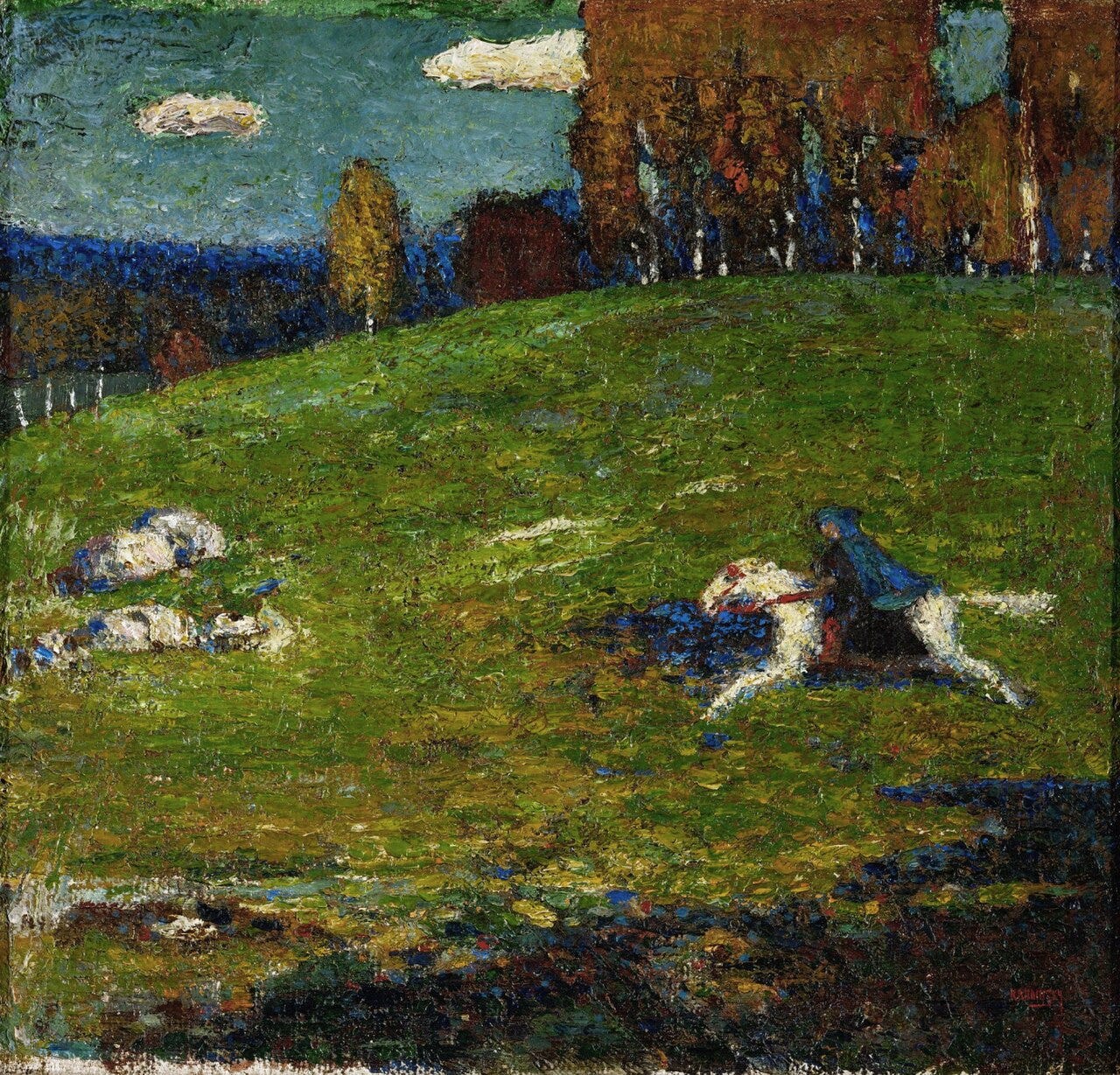
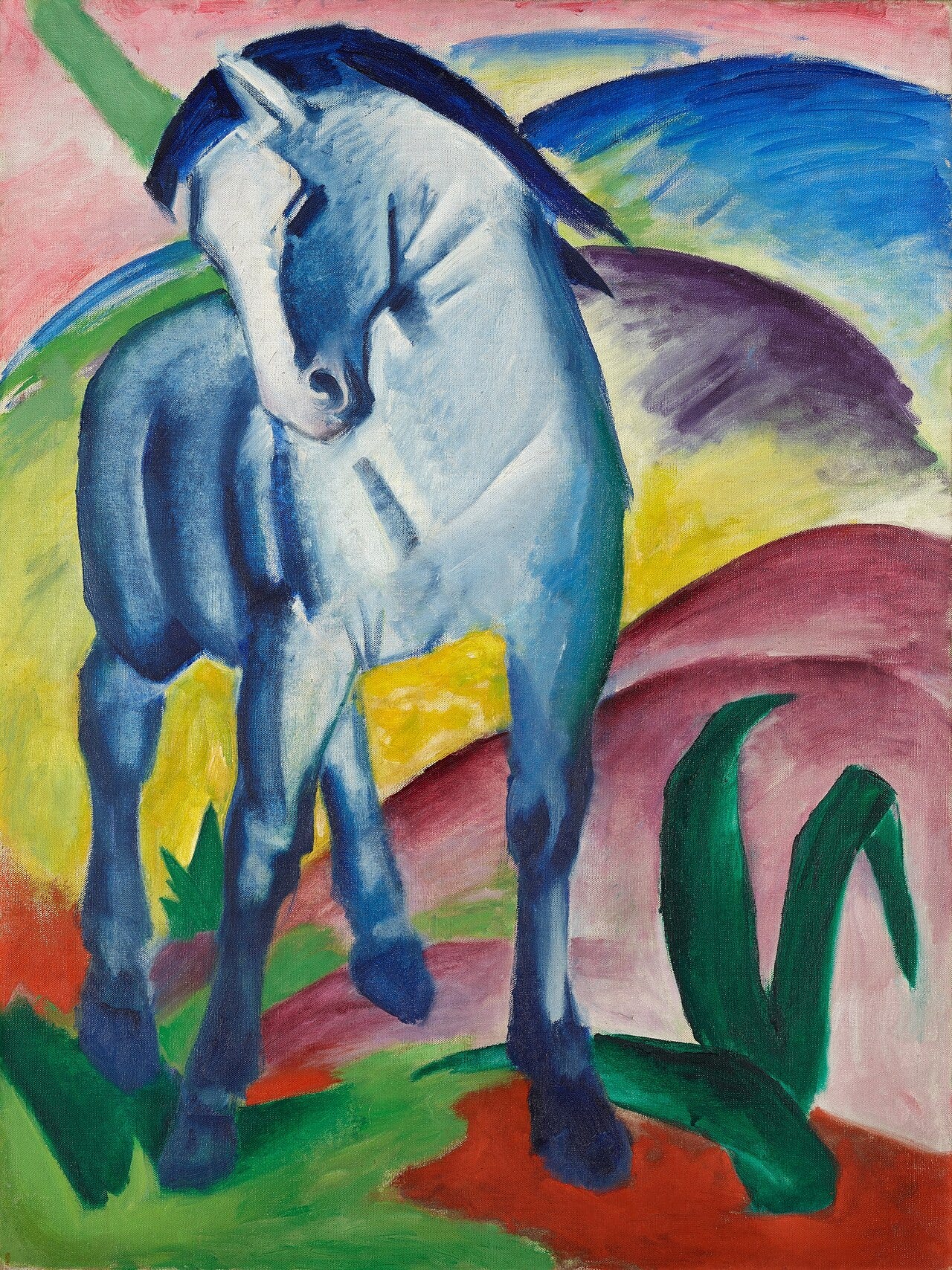
Der Blaue Reiter (The Blue Rider), Munich 1911. Spiritual, lyrical, reaching toward abstraction. Wassily Kandinsky and Franz Marc used color almost like music, chasing the soul behind the visible world.
The sentence to keep: Die Brücke screamed at the city, Der Blaue Reiter listened for the spirit.
How to spot an Expressionist painting
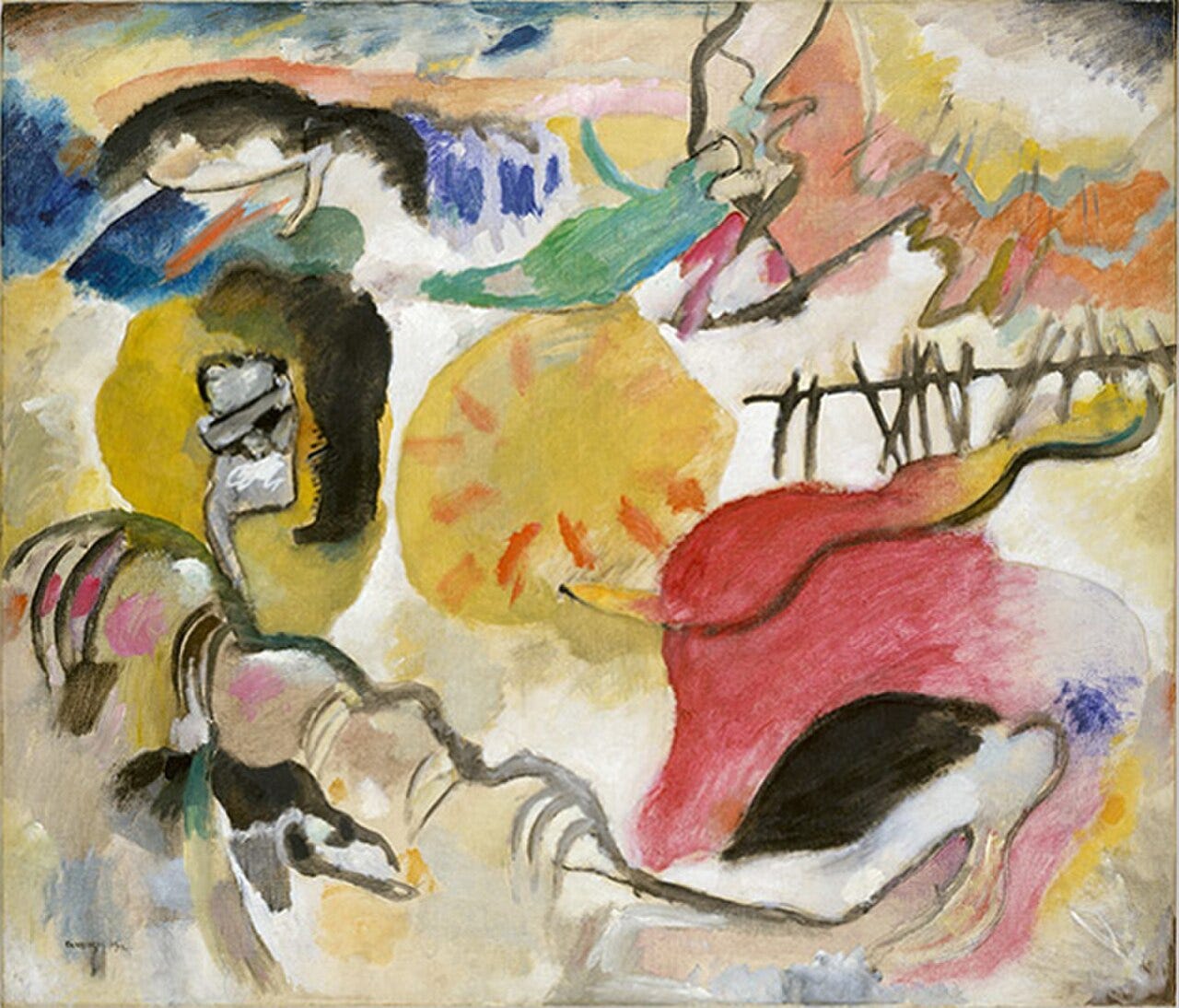
Once you know the markers, it jumps out. Look for:
Non natural color. Skies, faces and bodies in colors reality never had.
Distorted forms. Stretched, twisted, jagged shapes that feel emotionally charged.
Heavy, visible brushwork. Thick, fast, almost violent paint.
Charged mood. Anxiety, isolation, passion, never neutral.
Subject as feeling. A street, a portrait or a landscape turned into a state of mind.
Expressionism vs Fauvism
Both unleashed wild color around the same time, so Fauvism and Expressionism get confused. Here is the split.
Fauvism used wild color for joy, harmony and decorative pleasure.
Expressionism used wild color for anxiety, intensity and inner turmoil.
Put it simply: Fauvism's color sings, Expressionism's color aches. Same freedom, opposite emotional temperature.
3 figures to know
Three figures carry it. Here are my picks, and why.
1. Edvard Munch. The forefather.
To me The Scream is the single most famous image of pure human anxiety ever painted, the emotional blueprint for everything that followed.
2. Ernst Ludwig Kirchner. The voice of Die Brücke.
His electric, angular Berlin street scenes capture the alienation and nervous energy of the modern city like nothing before.
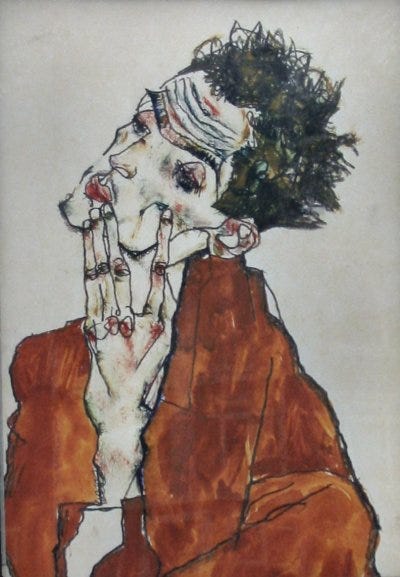
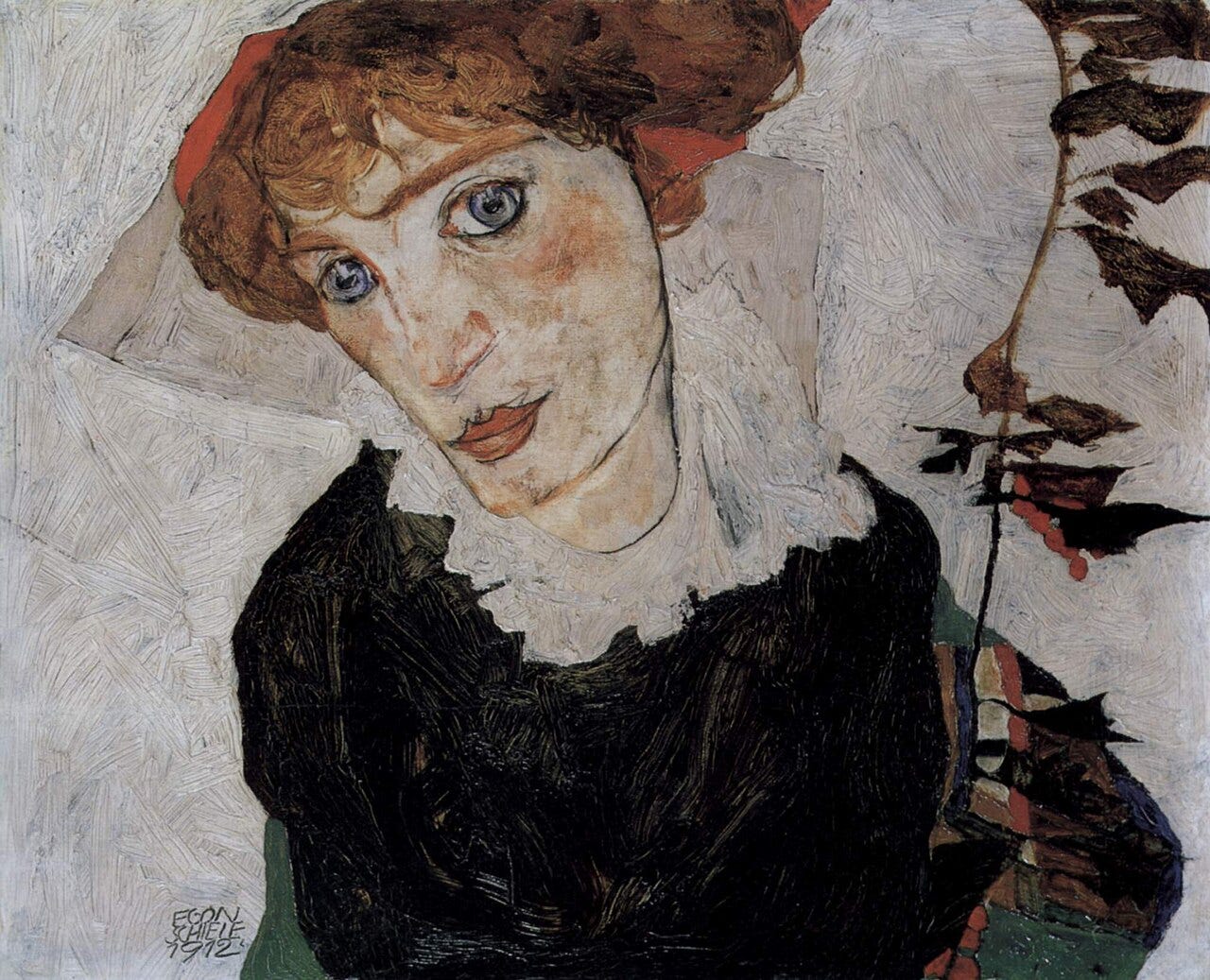
3. Egon Schiele. The raw nerve.
In Austria, his twisted, gaunt, unflinching bodies pushed Expressionist honesty about anxiety and desire to an almost painful extreme.
A movement the Nazis tried to erase
There is a dark chapter to this story.
Expressionism’s emotional, distorted, deeply personal art was exactly what the Nazi regime hated. In 1937 they staged the notorious Degenerate Art exhibition, pulling thousands of modern works from museums and mocking them in public.
Many Expressionists were banned, forced into exile or silenced.
That persecution is, in a grim way, proof of the movement’s power. A style that merely decorated would never have frightened a dictatorship.
Expressionism frightened them because it insisted on individual feeling, freedom and truth, the very things authoritarian power cannot allow.
How Expressionism still shapes film
The Expressionist instinct still runs through modern visual culture.
Film. From early German cinema to modern psychological thrillers, distorted sets, shadow and color used to externalize a character’s mind are pure Expressionism.
Abstract Expressionism. The huge emotional canvases of postwar America, and later abstract art, grew directly out of it.
Tattoos, album covers, comics. Whenever fierce distortion and raw color are used to hit you in the gut, the Expressionist logic is at work.
So the movement that bent the world to match a feeling taught modern culture how to show emotion on a surface.
That instinct did not stay locked in the 1900s. In the early 1980s a new generation, including Jean Michel Basquiat, revived the same raw, distorted mark making under the label Neo Expressionism.
Where to go feel it
Go feel it in person.
The National Museum, Oslo. Munch’s The Scream.
The Brücke Museum, Berlin. Devoted to the Die Brücke group.
The Lenbachhaus, Munich. The greatest collection of Der Blaue Reiter.
The Neue Galerie, New York. Kirchner, Schiele and German and Austrian Expressionism.
If you want the fast way in, I break the movement down in understand expressionism in one minute.
If you want the movement fast, I unpacked the whole idea in understand expressionism in one minute.
Expressionism, the feeling questions
What is Expressionism in simple terms? Art that distorts color, shape and form to express the artist’s inner emotions rather than to show reality accurately.
Where did Expressionism start? Mainly in Germany in the early 1900s, with groups like Die Brücke and Der Blaue Reiter, building on Van Gogh and Edvard Munch.
What is the difference between Expressionism and Impressionism? Impressionism captures the outer world and its light. Expressionism distorts the world to capture inner feeling.
What is the most famous Expressionist painting? Edvard Munch’s The Scream, the defining image of modern anxiety, alongside the work of Kirchner and the Blue Rider group.
Where did Expressionism begin? Mainly in Germany in the early 1900s, through two groups: Die Brucke in Dresden from 1905 and Der Blaue Reiter in Munich from 1911.
More secrets to unlock


Permission to paint the inside
For centuries, painting tried to be a window: look through it and see the world accurately, the light, the bodies, the space.
Expressionism made a startling claim instead. The most important reality, it said, is not the one outside the window at all. It is the one inside the mind, the fear, the loneliness, the ecstasy, the dread, that has no fixed shape or color.
So if you want to paint that truthfully, you have to abandon accuracy. You have to let the sky turn red and the face turn green, because that is how the moment actually felt.
It was a permission slip that modern art never gave back. After Expressionism, a painting no longer had to show how things look. It could show how it feels to be alive.
The gamble paid off. In 2012 a pastel of Munch's The Scream sold for close to 120 million dollars, and the style invented to paint raw feeling now hangs at the center of modern museums everywhere.
