
Fauvism is the short, explosive movement that set color free, using wild, unnatural colors and fierce brushwork to express feeling instead of copying reality. Green skies, red faces, paint straight from the tube.
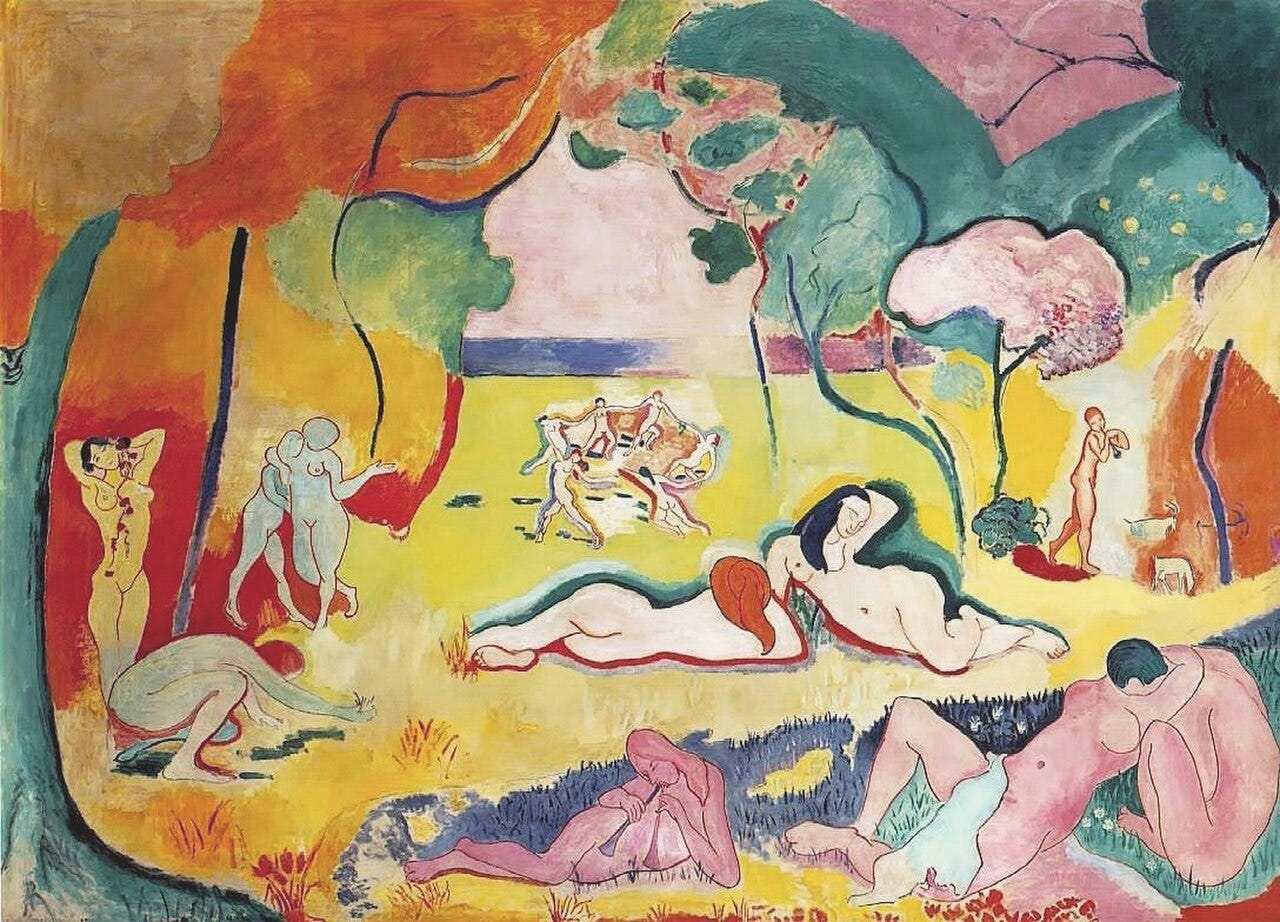
It lasted barely five years, from about 1905 to 1910, and it kicked open the door to modern art.
Fauvism was an insult before it was a movement.
When Henri Matisse and his friends showed these violent, clashing colors in Paris in 1905, a shocked critic called them les fauves, “the wild beasts.” It was meant as mockery. The artists kept the name like a badge of honor.
That is the whole spirit of Fauvism, and the reason I love it: color let off the leash, and proud of it.
Fauvism in one minute:
The idea: color used for emotion and impact, not to match reality.
The look: intense, clashing, non naturalistic color and loose, fierce brushwork.
The name: les fauves, “the wild beasts,” coined as an insult in 1905.
The leaders: Henri Matisse and Andre Derain.
It grew straight out of the color experiments of pointillism and Van Gogh.
Keep learning art the fun way


What does Fauvism actually mean?
The name says everything: wild beasts.
Strictly, it is the painting of Matisse, Derain and their circle from about 1905 to 1910, all strong color and fierce brushwork.
The story of the name is the story of the movement. At the Salon d’Automne in Paris in 1905, the critic Louis Vauxcelles saw a room of these blazing canvases surrounding a traditional sculpture and reportedly scoffed that it was like a Donatello “among wild beasts.
”
The label stuck. And it was perfect. These painters had let color turn feral.
What made Fauvism so shocking?
One simple, radical move: they cut the link between color and reality.
For centuries, a tree was painted green and a face was painted in flesh tones, because that is how they look. The Fauves threw that out.
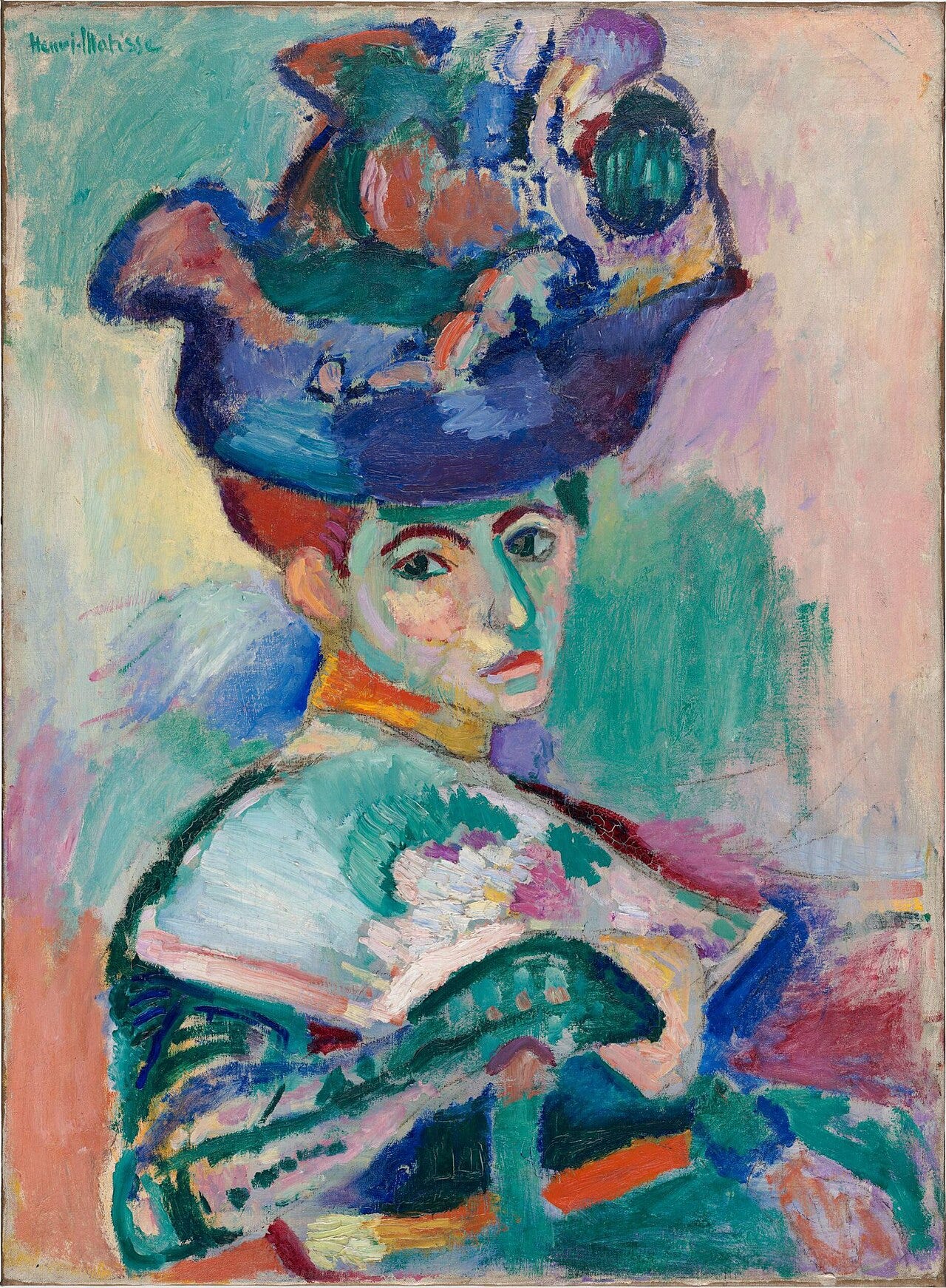
If a red sky felt more alive, they painted a red sky. Matisse famously ran a green stripe straight down his wife’s face, not because her face was green, but because the color worked. Paint went on thick, bright and often straight from the tube.
The point was no longer to show what the world looks like. It was to show what color can make you feel.
Where did Fauvism come from?
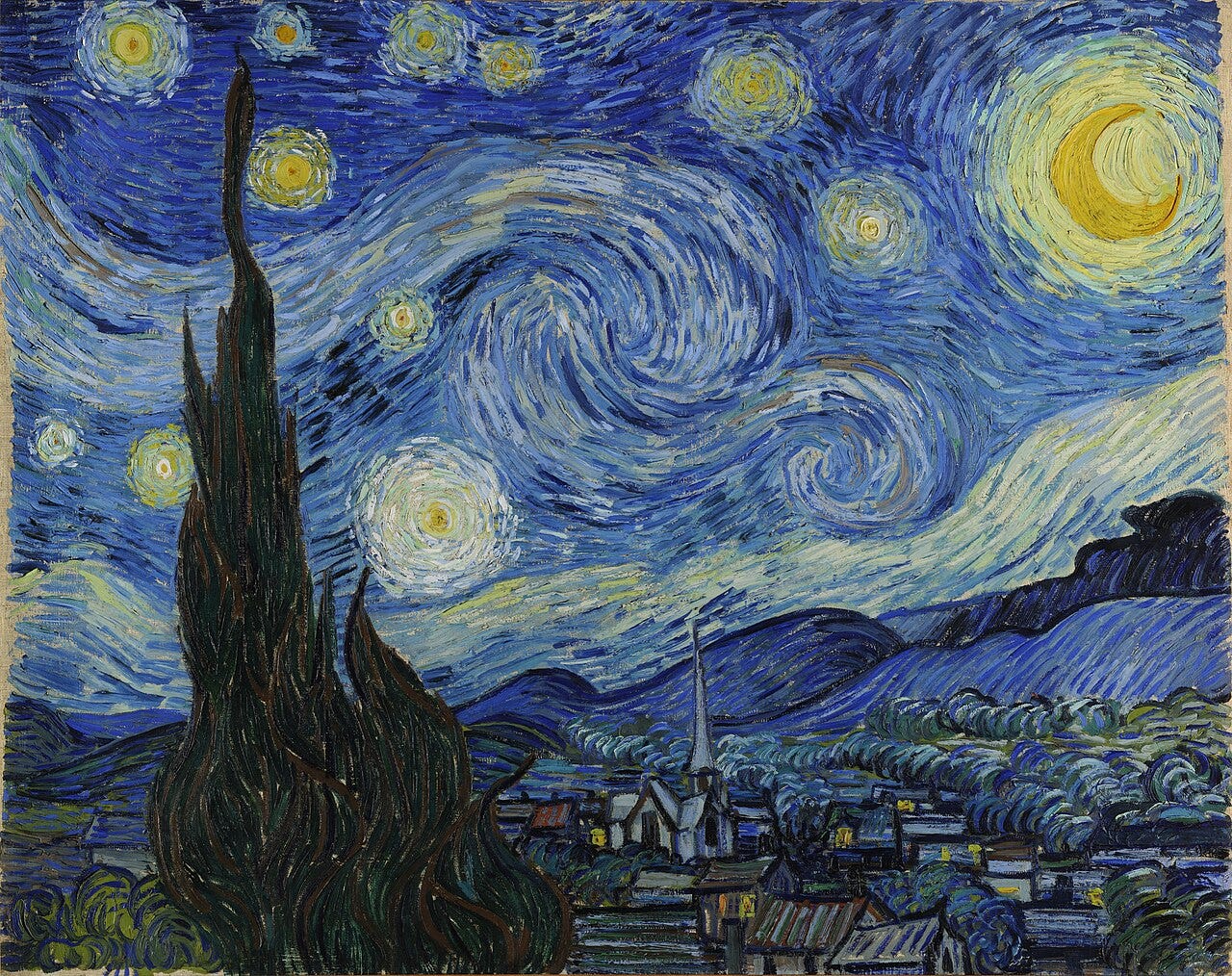
Fauvism was the explosion at the end of a long fuse.
The Fauves took the loaded, emotional color of Van Gogh and the scientific color theory of the pointillists, especially complementary colors placed side by side, and pushed both to the limit. I pulled apart that dot by dot science in pointillism.
Where the first Impressionists had loosened the brushstroke and Van Gogh had charged color with emotion, the Fauves finished the job and made color the main event.
Why Fauvism burned out so fast
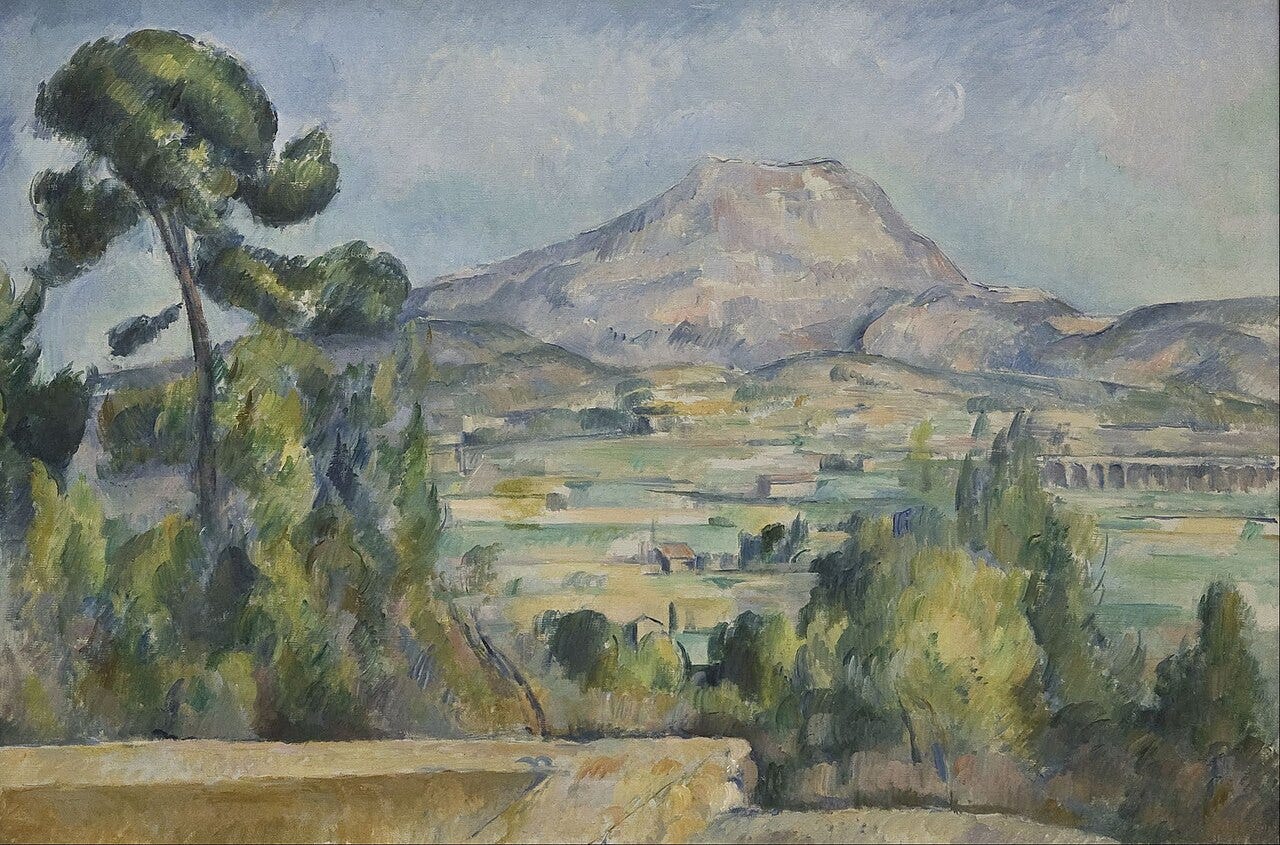
Fauvism barely lasted five years, and that brevity is part of its importance.
By 1908, most of the group had already moved on. It was less a destination than a doorway.
One Fauve, Georges Braque, went off to invent Cubism with Picasso. Andre Derain drifted back toward tradition. Only Henri Matisse carried the Fauve love of pure, joyful color through the rest of his long career, all the way to his late paper cut outs.
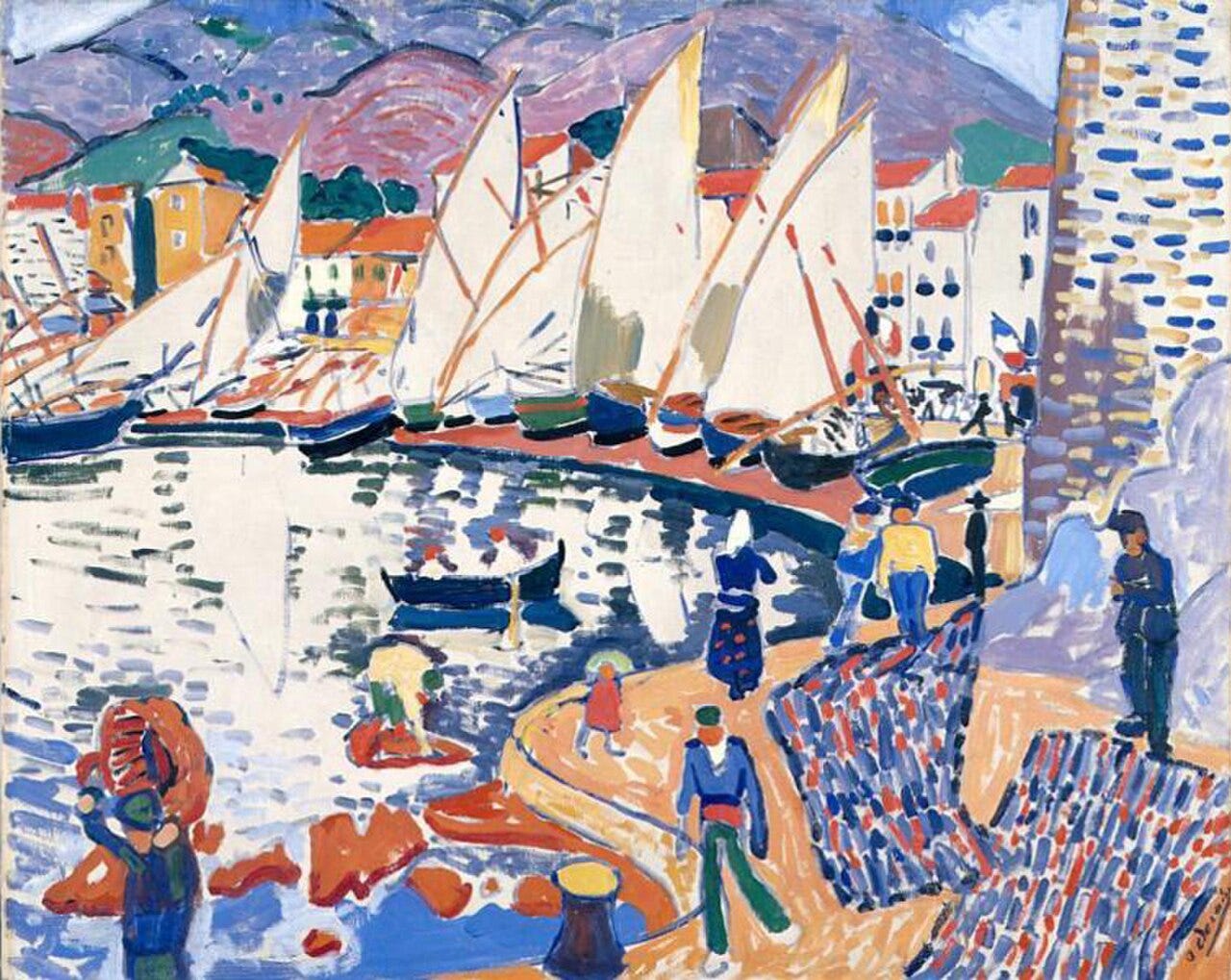
So Fauvism was a brief, bright fire. But it was the first avant garde movement of the twentieth century, and it gave every later artist permission to use color however they liked.
Its emotional cousin, Expressionism, pushed color toward raw feeling at almost the same moment.
3 artists who were the wild beasts
The roster runs long. Here are the three I would keep, and why.
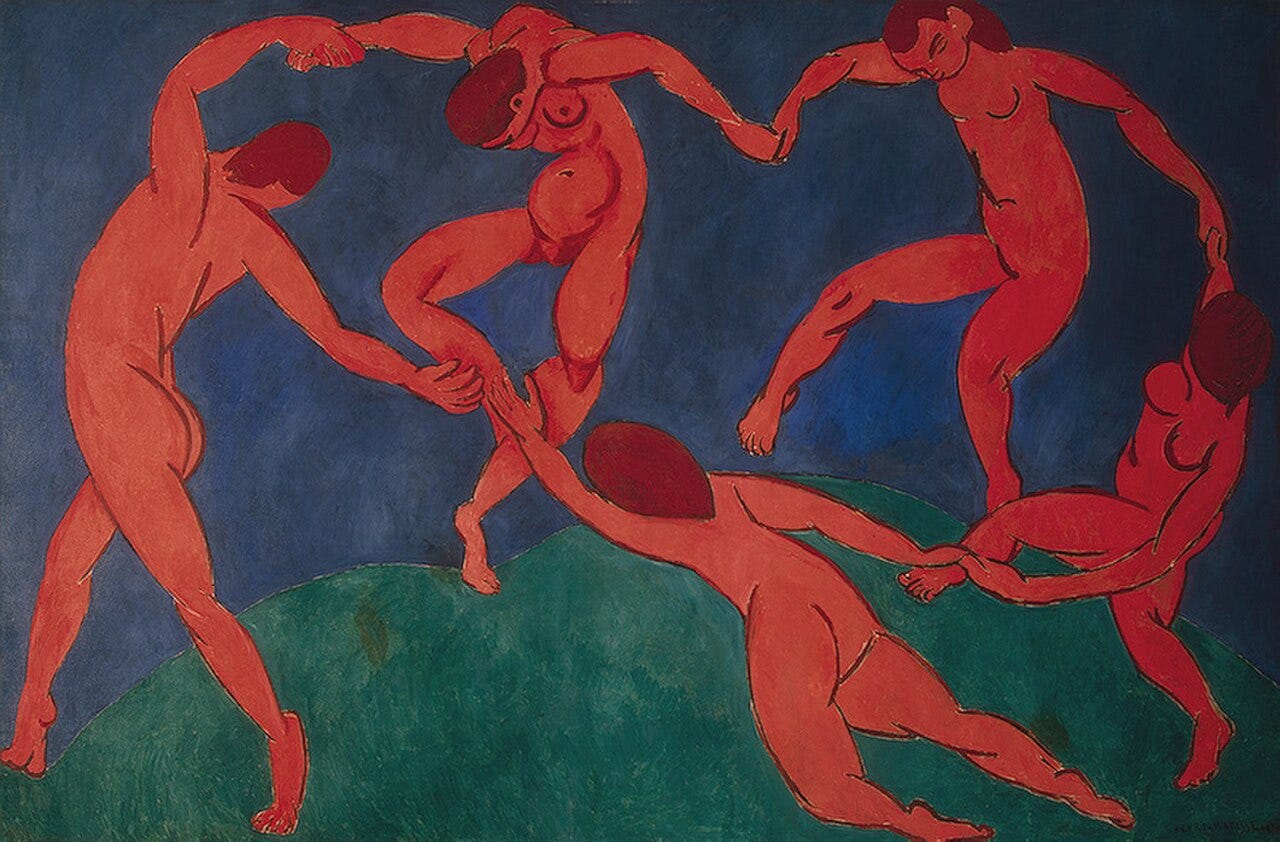
1. Henri Matisse. The leader and the only true believer.
He treated color as pure joy and never let it go.
Matisse alone made Fauvism a life's work, the only one of them who never let that pure color go.
2. Andre Derain. The other half of the spark.
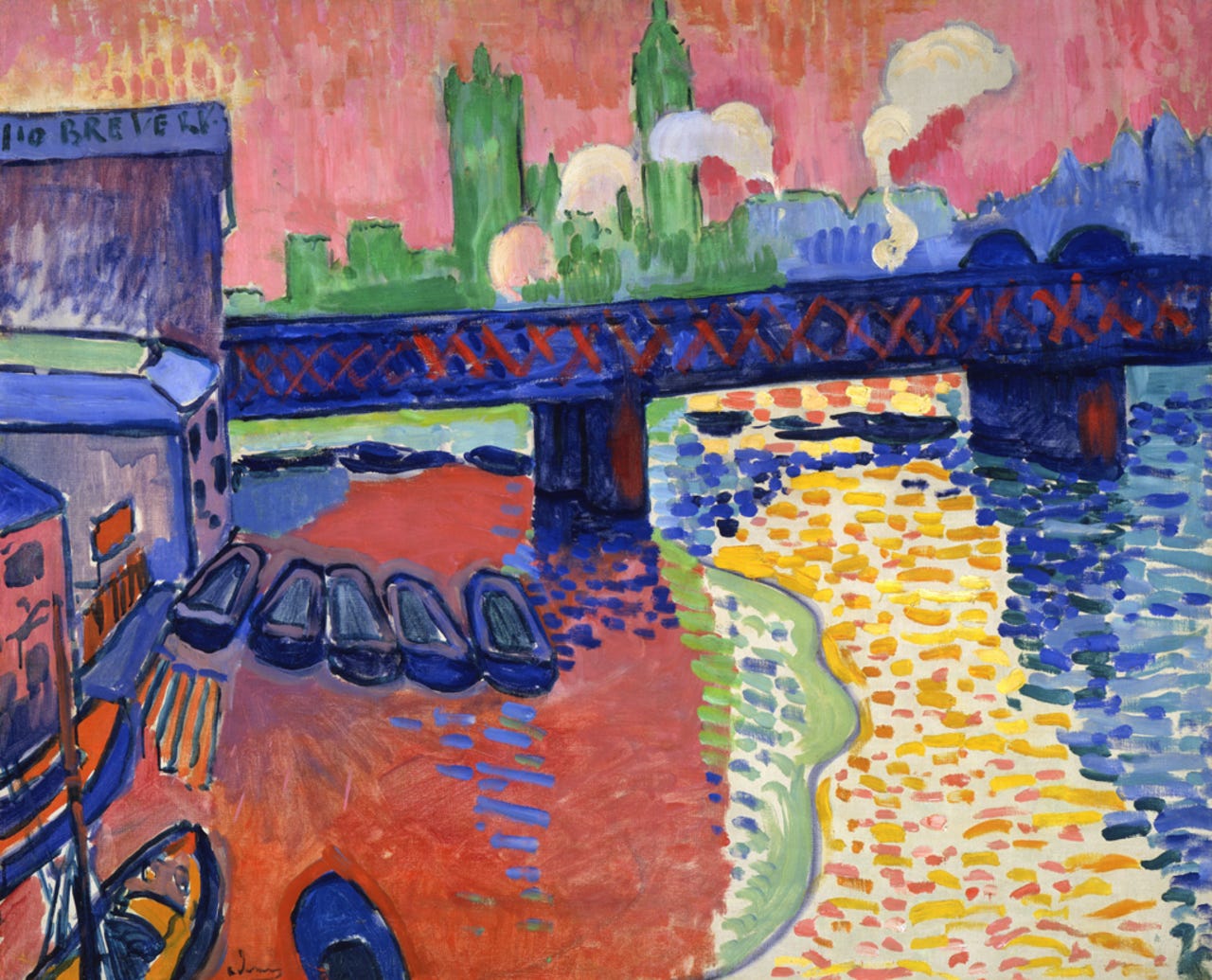
His blazing views of London, all orange rivers and pink skies, are Fauvism at its most exhilarating.
Then he turned back toward the classical, as if frightened by his own wildness.
3. Maurice de Vlaminck. The most aggressive colorist of the group.
He boasted that he wanted to paint with pure color squeezed straight from the tube, and that he never wanted to enter an art school. The most “wild beast” of them all.
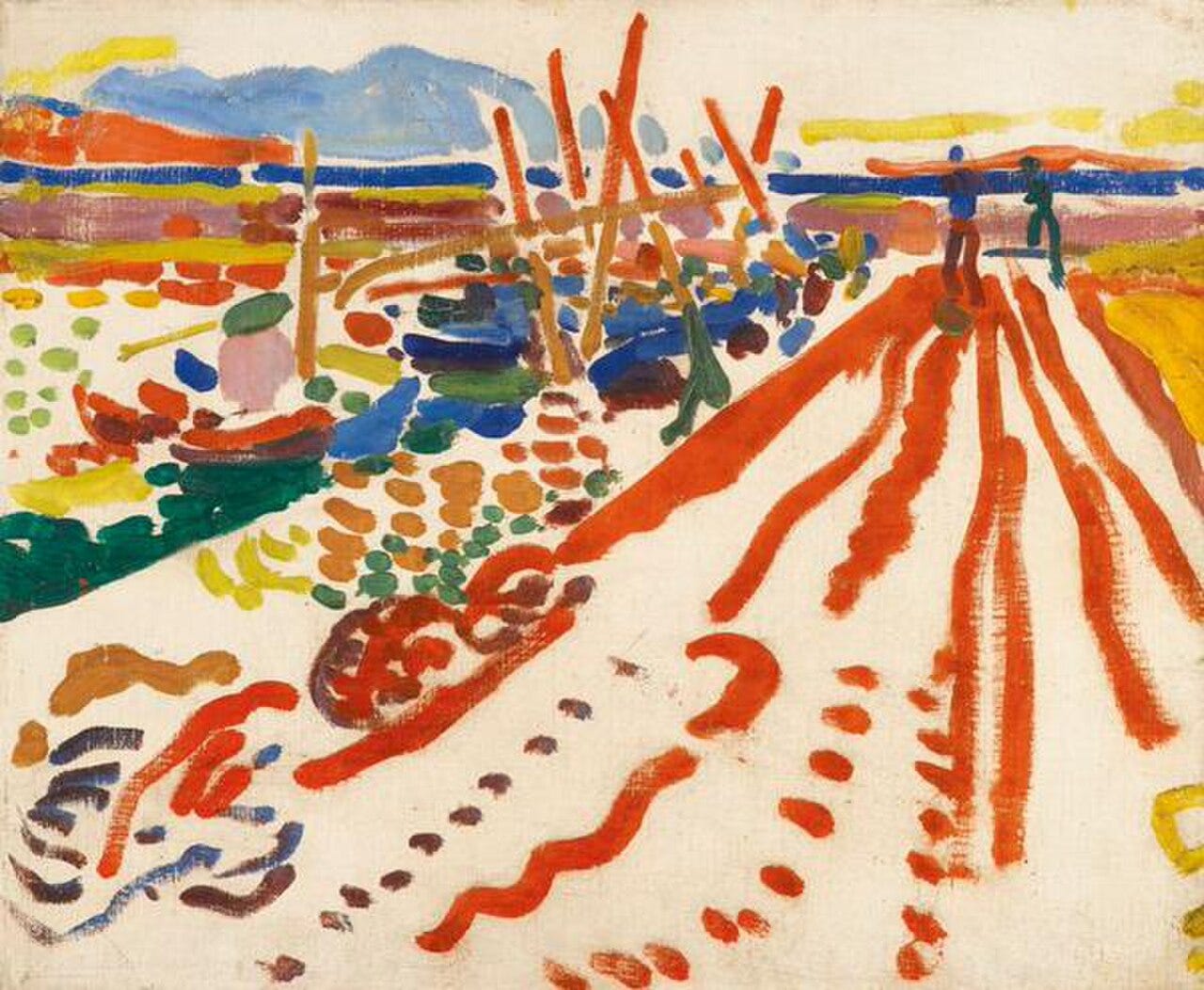
The wider circle at that 1905 Salon d'Automne included Raoul Dufy too, who showed alongside them before moving toward his own brighter, more decorative style of quick brushwork and bold black outlines.
Why your photo filters are Fauvist
Fauvism quietly won the argument about color.
Every time color is used for pure feeling and impact rather than realism, that is the Fauve instinct.
Graphic design and branding. Searing, clashing, non realistic color built to grab emotion. Pure Fauvism.
Animation and posters. Purple skies, orange shadows, color chosen for mood, not accuracy.
Phone filters and photo editing. Cranking saturation to make an image feel more alive is exactly what Matisse did by hand.
So when people say a green sky looks wrong, tell them Matisse got there first, and on purpose.
Fauvism, the color questions
What is Fauvism in simple terms? An early 1900s movement that used wild, unnatural colors and slashing brushwork to express emotion rather than copy reality.
Why is it called Fauvism? From les fauves, French for “the wild beasts,” an insult thrown by a critic in 1905 that the artists adopted.
Who were the main Fauvist artists? Henri Matisse and Andre Derain led the movement, with Maurice de Vlaminck and others.
How long did Fauvism last? Only about five years, from 1905 to around 1910, before most artists moved on to other styles.
Why were they called the Fauves? A critic at the 1905 Salon called them les fauves, the wild beasts, shocked by their raw, unnatural color. The insult became the name.
More secrets to unlock


Color set free
For centuries, color obeyed reality. The sky was blue because the sky is blue. Color was a servant of accuracy.
The Fauves freed it. They proved that color does not have to describe the world. It can simply make you feel something, all on its own.
A red that means joy. A clashing orange that means heat. Color as pure emotion, answering to nothing but the eye and the heart.
It was a brief fire, but to me it is the one that lit modern color. Every fearless, emotional use of color since owes something to a few wild beasts in 1905.
Woman with a Hat, the canvas that drew the loudest jeers in 1905, was bought by the American collectors Leo and Gertrude Stein and now hangs in the San Francisco Museum of Modern Art.
