
Pointillism is a painting technique that builds an entire image out of thousands of tiny, separate dots of pure color, which your eye blends from a distance. The mixing happens in your brain, not on the canvas.
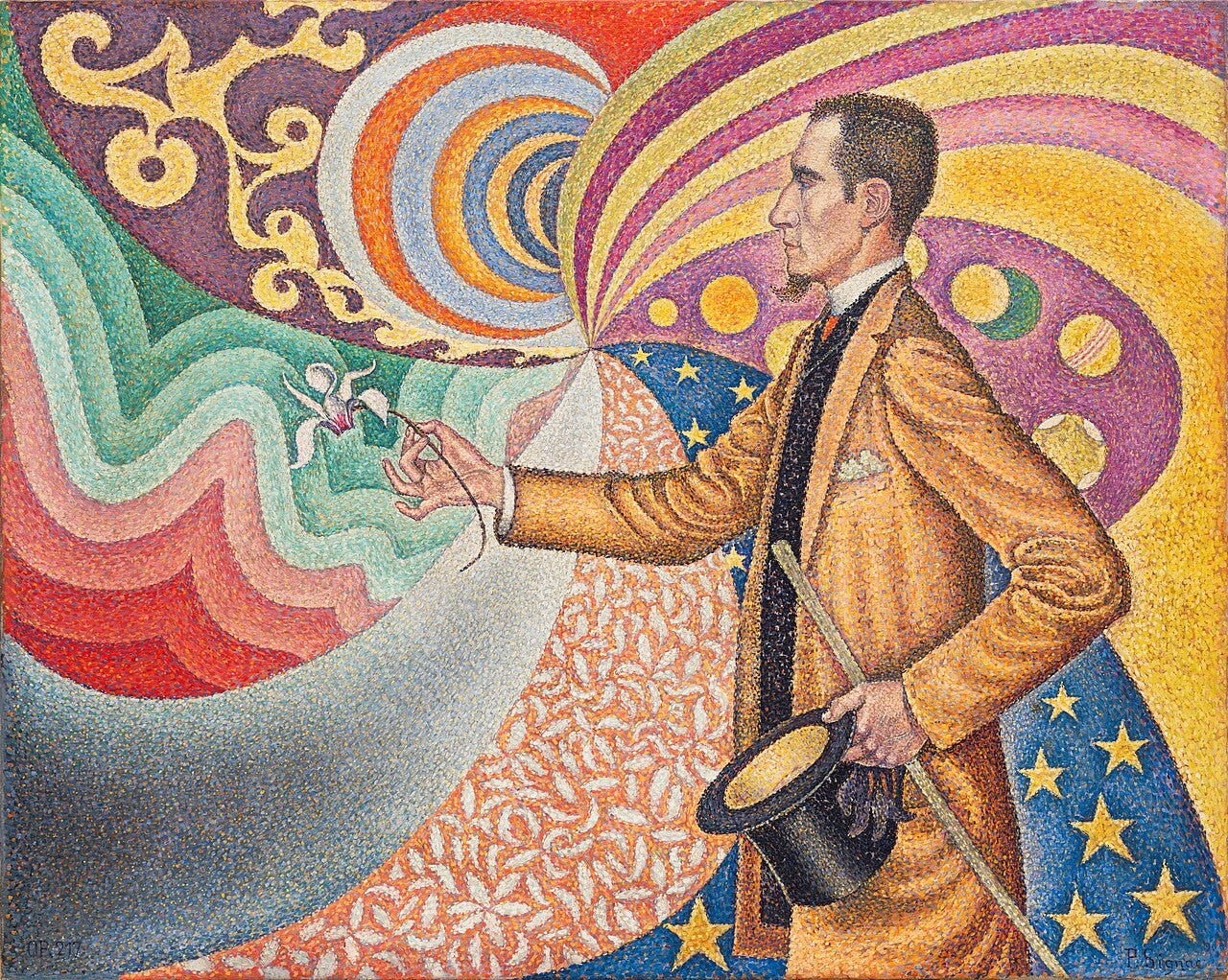
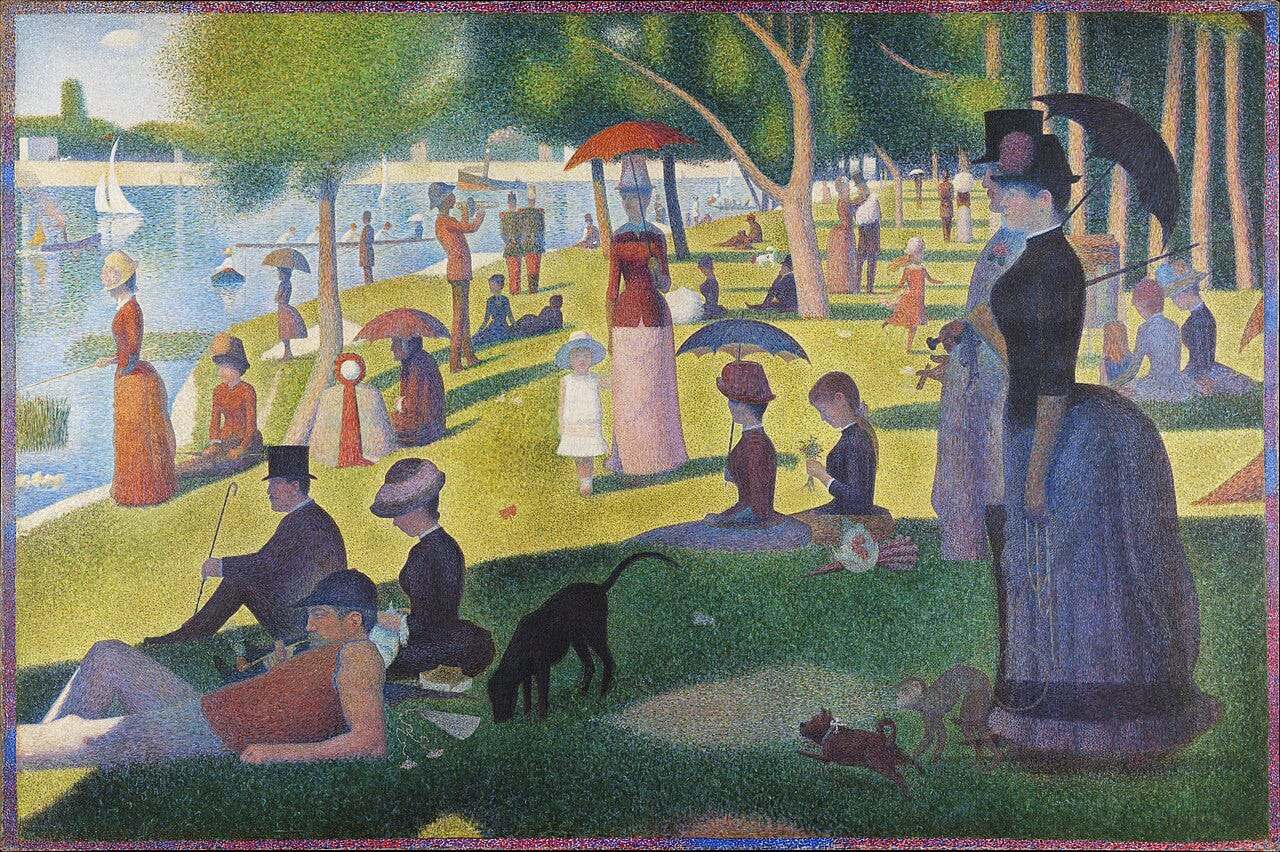
It was invented by Georges Seurat in the 1880s, and it was as much science as art. His best known example, A Sunday Afternoon on the Island of La Grande Jatte, still hangs in Chicago and remains the artwork most people have in mind when they hear the word pointillism.
The thing that genuinely surprised me: in a pointillist painting, the colors are never actually mixed.
Seurat placed a dot of pure blue beside a dot of pure yellow and let your eye fuse them into green. The result looks brighter and more alive than mixed paint, because the colors stay pure.
Half the work of making the picture happens in your own eye.
Pointillism in one minute:
The method: countless small dots of pure, unmixed color placed side by side.
The trick: your eye blends the dots optically, so the mixing happens in your vision.
The inventor: Georges Seurat, in Paris, in the mid 1880s.
The science: it is built on color theory and the power of complementary colors.
It is a branch of Post Impressionism, the generation that came right after the Impressionists.
Keep learning art the fun way


How does pointillism actually work?
This is where art turns into optics.
Built on 1800s color theory, pointillism places countless tiny dots of pure color close together, and from a distance the eye fuses them into solid, glowing areas.
Here is why Seurat bothered.
When you mix two colors of paint on a palette, they get darker and a little muddy. But when you place two pure colors side by side and let the eye mix them, the result stays bright and luminous. It is called optical mixing.
So a pointillist green stays bright: pure blue and pure yellow, glowing, assembled in your own eye. The painting only fully exists when you step back.
Pointillism vs Impressionism: the clean difference
People lump these together. They are close cousins with opposite temperaments.
Impressionism is loose, fast and spontaneous. Quick, visible brushstrokes, painted outdoors, chasing a fleeting moment of light.
Pointillism is the opposite temperament: slow, controlled and scientific. Every dot is placed with intention, often over months in the studio.
The sentence to keep: Impressionism captures a moment, pointillism engineers it.
Seurat looked at the freedom of Impressionism and decided to give it rules. He kept the bright color and modern subjects, then replaced the spontaneity with method, making pointillism the most systematic style of Post Impressionism.
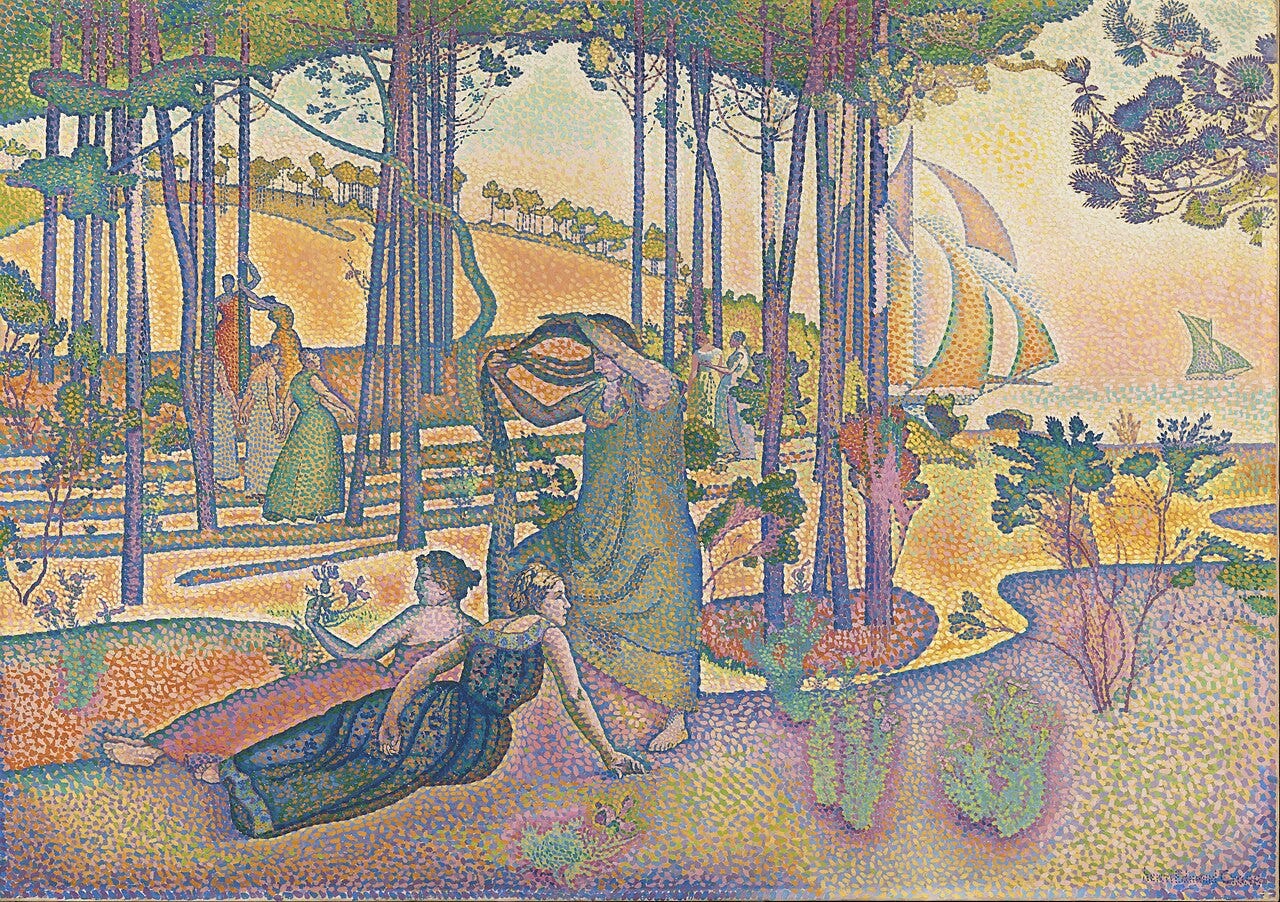
Contemporaries actually preferred a broader term for the theory behind it, Divisionism, a label that also covers painters such as Signac who separated color into patches rather than strict dots.
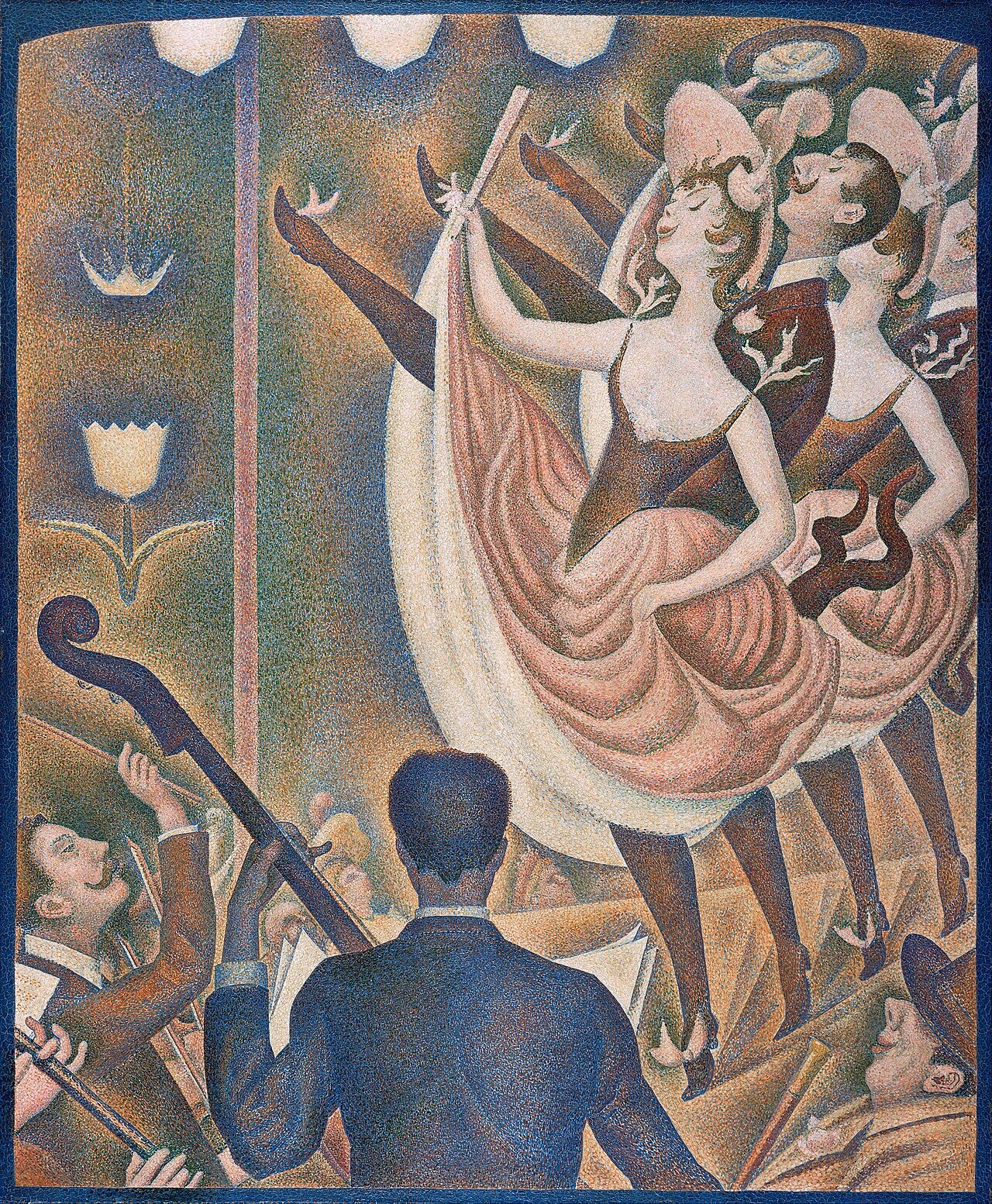
Pointillism grew straight out of the Impressionist world. If it pulls you in, meet 10 underrated Impressionists worth knowing.
Who invented pointillism?
Georges Seurat. One young man with an almost scientific mind, and one of my favorite obsessives in all of art.
In the mid 1880s, in Paris, Seurat studied the color theories of writers like Michel Eugène Chevreul, who had shown how colors placed side by side affect each other. Seurat turned that theory into a painting method.
His huge canvas A Sunday on La Grande Jatte, finished in 1886, was the manifesto: ordinary Parisians relaxing by the river, built entirely from millions of dots, frozen into a strange, still, eternal calm. It remains the best known entry on any list of famous pointillist paintings.
He did not call it pointillism. He preferred “Divisionism.” The word “pointillism” was actually coined by critics, and at first it was a bit of a mockery. The name that stuck was an insult that lost its sting.
Seurat died suddenly in 1891, only 31 years old. His friend Paul Signac carried the technique forward.
Why your screen is a Seurat
You are reading pointillism right now.
Seurat’s core idea, that a full image can be built from countless tiny dots of pure color blended by the eye, is the exact principle behind modern screens and printing.
Your phone and TV screen make every image from millions of tiny red, green and blue dots. Your eye blends them. That is optical mixing, exactly Seurat’s idea.
Color printing (look very closely at a magazine photo) is made of tiny dots of a few pure inks. Same trick.
Pixels are literally dots of color you fuse into a picture from a distance.
So Seurat did not just make a pretty painting style. He discovered, by hand, the principle every digital image on earth now runs on.
He was building screens 100 years before screens existed.
Where to stand close, then far
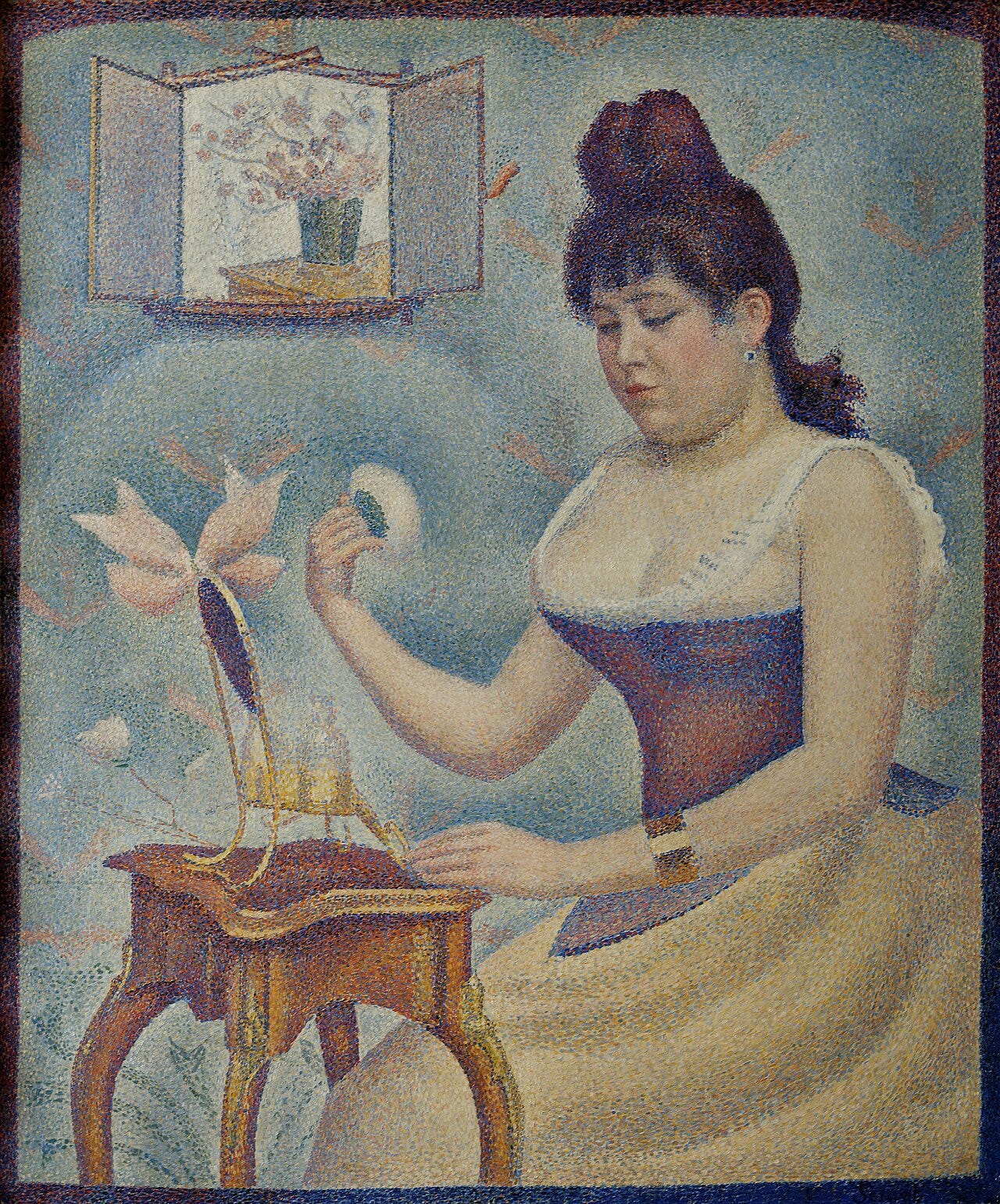
This is the one style I beg people to see in person. Step close, then far.
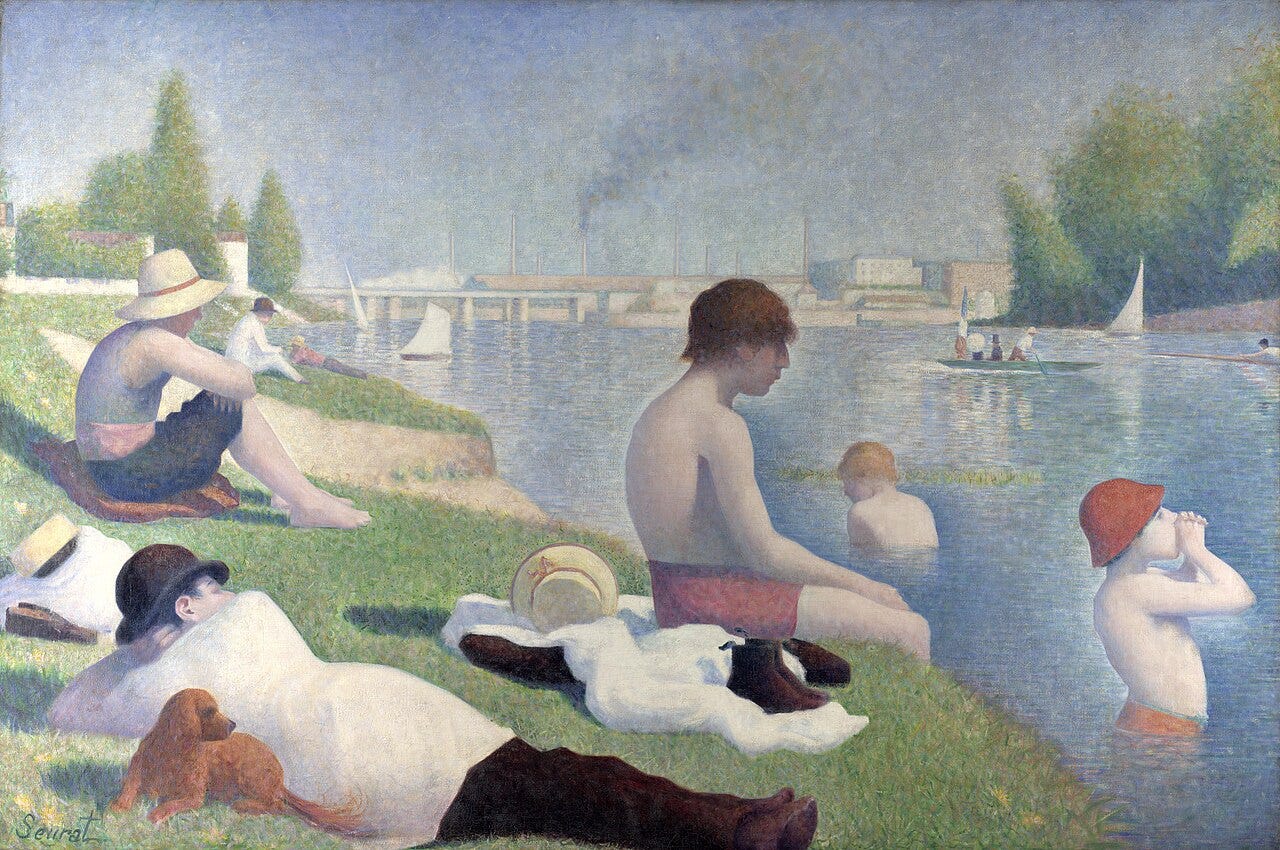
The Art Institute of Chicago. A Sunday on La Grande Jatte, the big one. Walk toward it and watch the figures dissolve into dots.
The National Gallery, London. Seurat's Bathers at Asnières, his other monumental statement.
The Musee d'Orsay, Paris. Seurat, Signac and the heart of Neo Impressionism.
The Museum of Modern Art, New York. Strong holdings of Signac and the pointillists who followed.
Pointillism, dot by dot questions
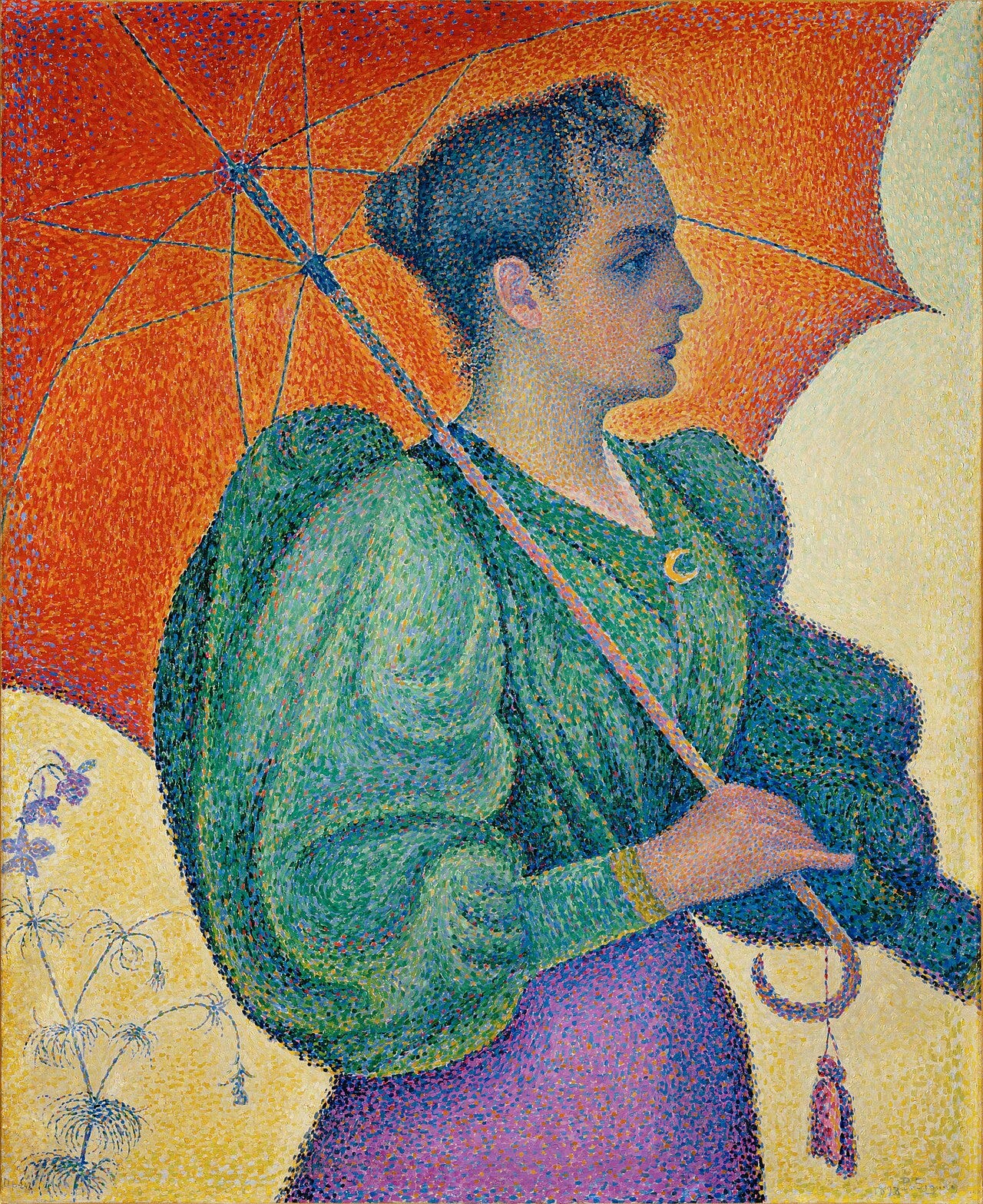
What is pointillism in simple terms? A technique that builds a picture from many small dots of pure color, which your eye blends together when you step back.
Who invented pointillism? Georges Seurat, in Paris, in the mid 1880s, with his friend Paul Signac developing it further.
What is the most famous pointillist painting? Seurat’s A Sunday on La Grande Jatte, finished in 1886.
What is the difference between pointillism and Impressionism? Impressionism is fast, loose and spontaneous. Pointillism is slow, controlled and based on the science of color.
What is the difference between Pointillism and Divisionism? They describe the same technique. Divisionism is the color theory of separating hues. Pointillism is the popular name for the dots that carry it out.
More secrets to unlock


What your eye finishes
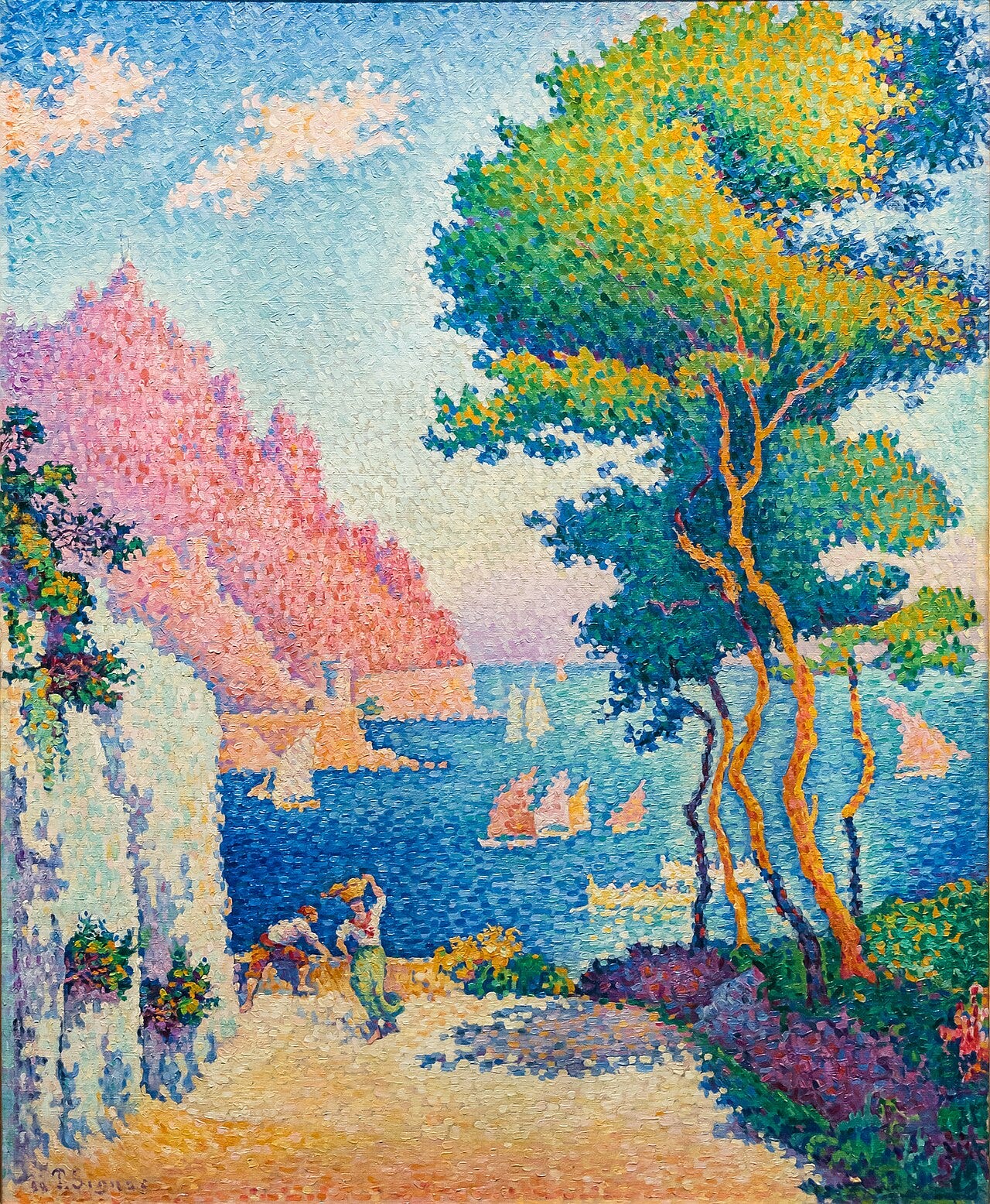
Here the cliche is literal: you have to walk away from a Seurat to see it.
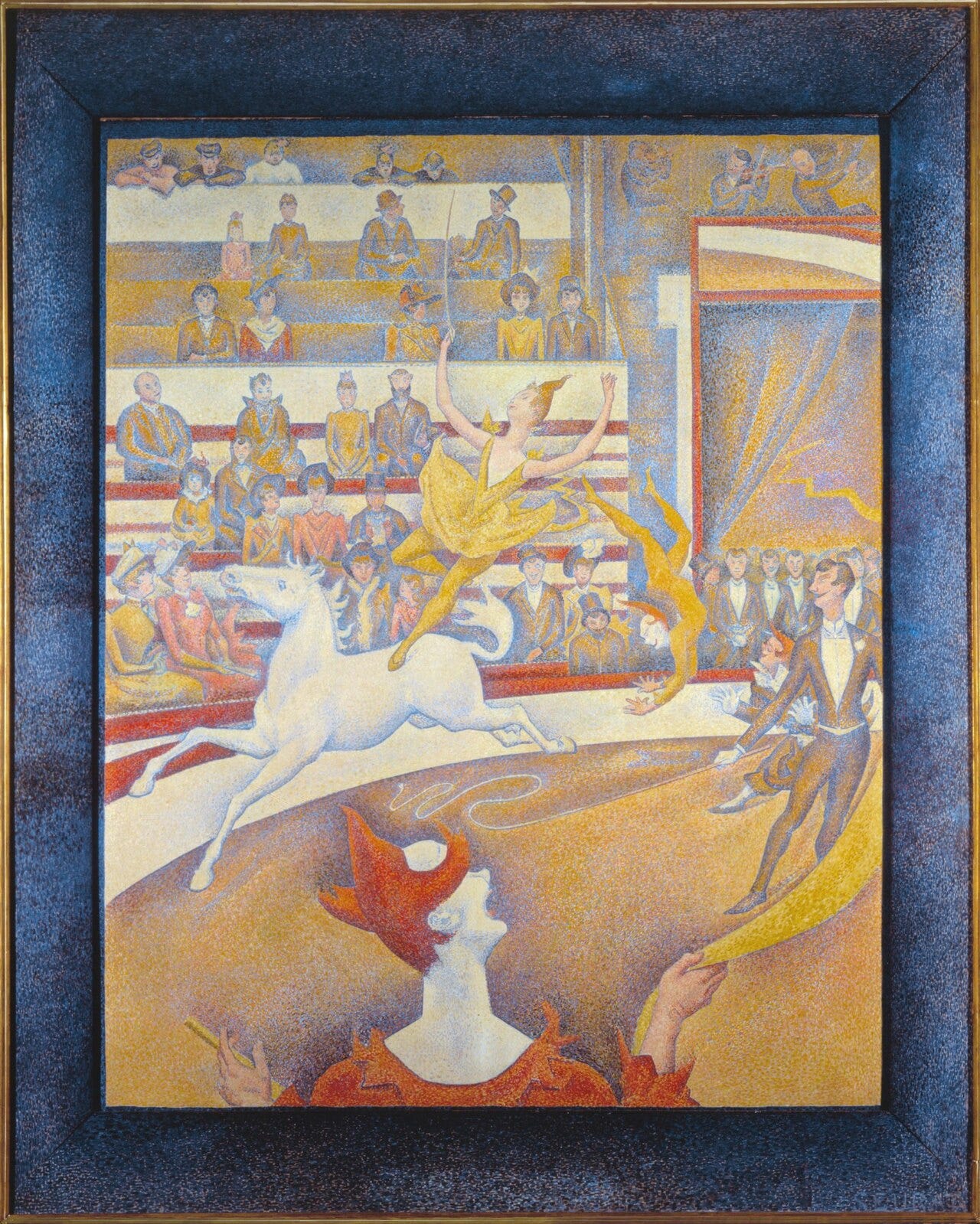
Up close, a Seurat is chaos: thousands of unconnected specks, meaning nothing. It looks like a mistake.
Then you step back, and the chaos snaps into a calm summer afternoon. The picture was never on the canvas. It was waiting in the gap between the dots and your eye.
He left only a handful of major canvases. Yet the principle he worked out by hand, dots of pure color fused in the eye, is exactly how the screen in front of you builds this sentence.
