
Post Impressionism is the wave of painting that came right after Impressionism, roughly 1886 to 1905, when artists kept its bright color but pushed past its fleeting surface toward structure, feeling and symbol.
It is less one style than four separate breaks by four different men.
The payoff once you see it: you stop reading these paintings as pretty scenes and start reading them as arguments about what painting is for.
Here is the fast version, then the real one.
Post Impressionism in one minute:
When: about 1886 to 1905, mostly in France.
The core four: Cézanne, Van Gogh, Gauguin, Seurat. Add Toulouse Lautrec for the Paris nights.
The link: they all started from Impressionism, then walked away from it in different directions.
The point: Impressionism caught the passing moment. These four wanted weight, order and meaning to stay on the canvas.
The legacy: this is the launch pad for Fauvism, Cubism and Expressionism. Modern art starts here.
Keep learning art the fun way


The name nobody chose
Here is the surprise I always lead with: not one of these painters ever called himself a Post Impressionist.
The label was stuck on them later, by a British critic named Roger Fry, for a London show in 1910 called Manet and the Post Impressionists. By then Van Gogh, Gauguin, Seurat and Cézanne were all dead.
So the movement is a label invented after the fact, for a single exhibition, to group artists who never worked as a team. That matters, because it explains why there is no single Post Impressionist look. One painter working in Paris during those very same years never made the group at all: Henri Rousseau, a self taught customs officer who painted jungles he had never actually seen.
The name describes a moment in time, not a shared recipe.
What they kept, what they threw out
To see Post Impressionism, hold an Impressionist painting next to it in your mind.
Impressionism chased light and the passing instant. Soft edges, casual framing, a scene caught on the run. The four kept the loaded brush and the strong color that came with it.
Then they threw out the rest.
They wanted what Impressionism had given up: solid form, deliberate composition, emotion and symbol. Where Monet asked how the light looked at this exact minute, Cézanne asked how a mountain is actually built.
They started from the same paint and went looking for something that would last.
Cézanne, Van Gogh, Gauguin, Seurat, Lautrec
There is no shared style, so the easiest way in is the people. Here is the cast, with my verdict on each.
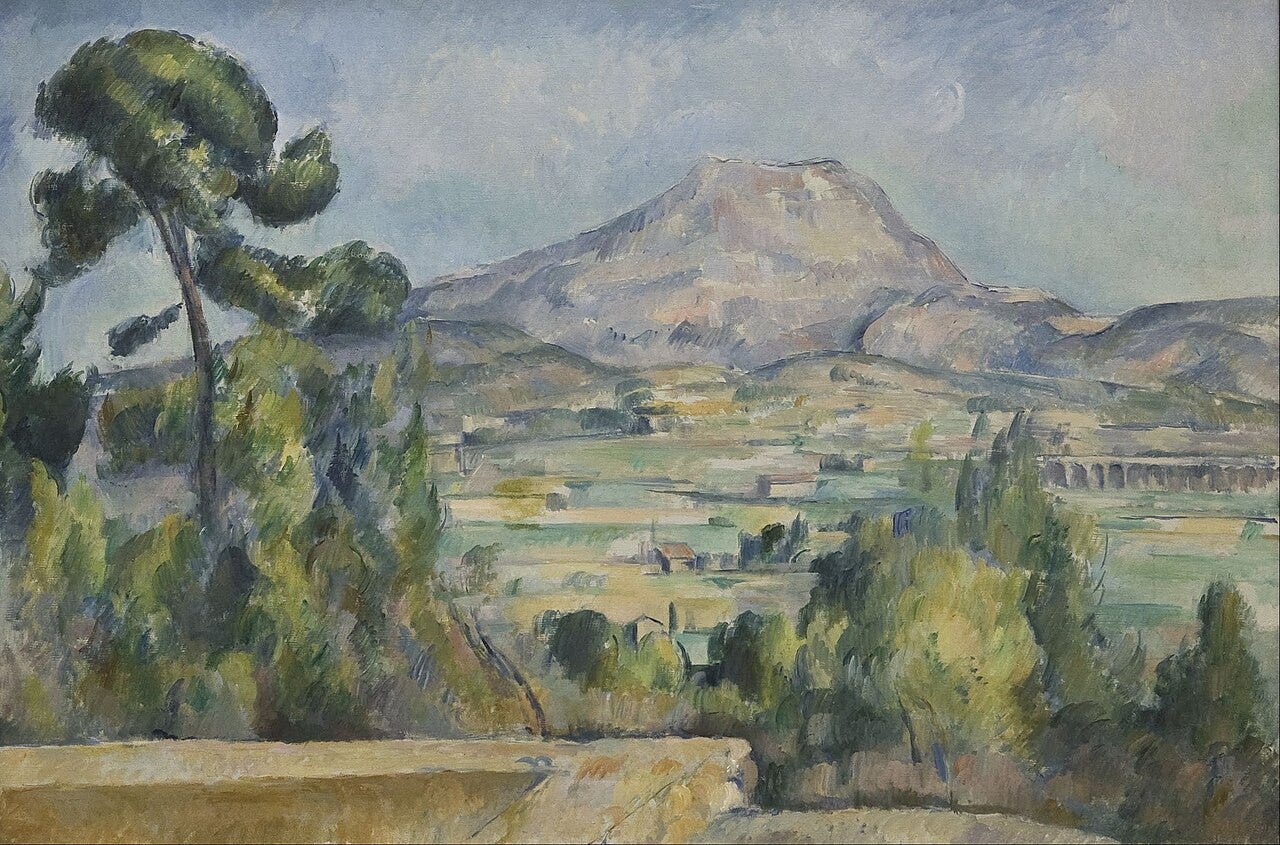
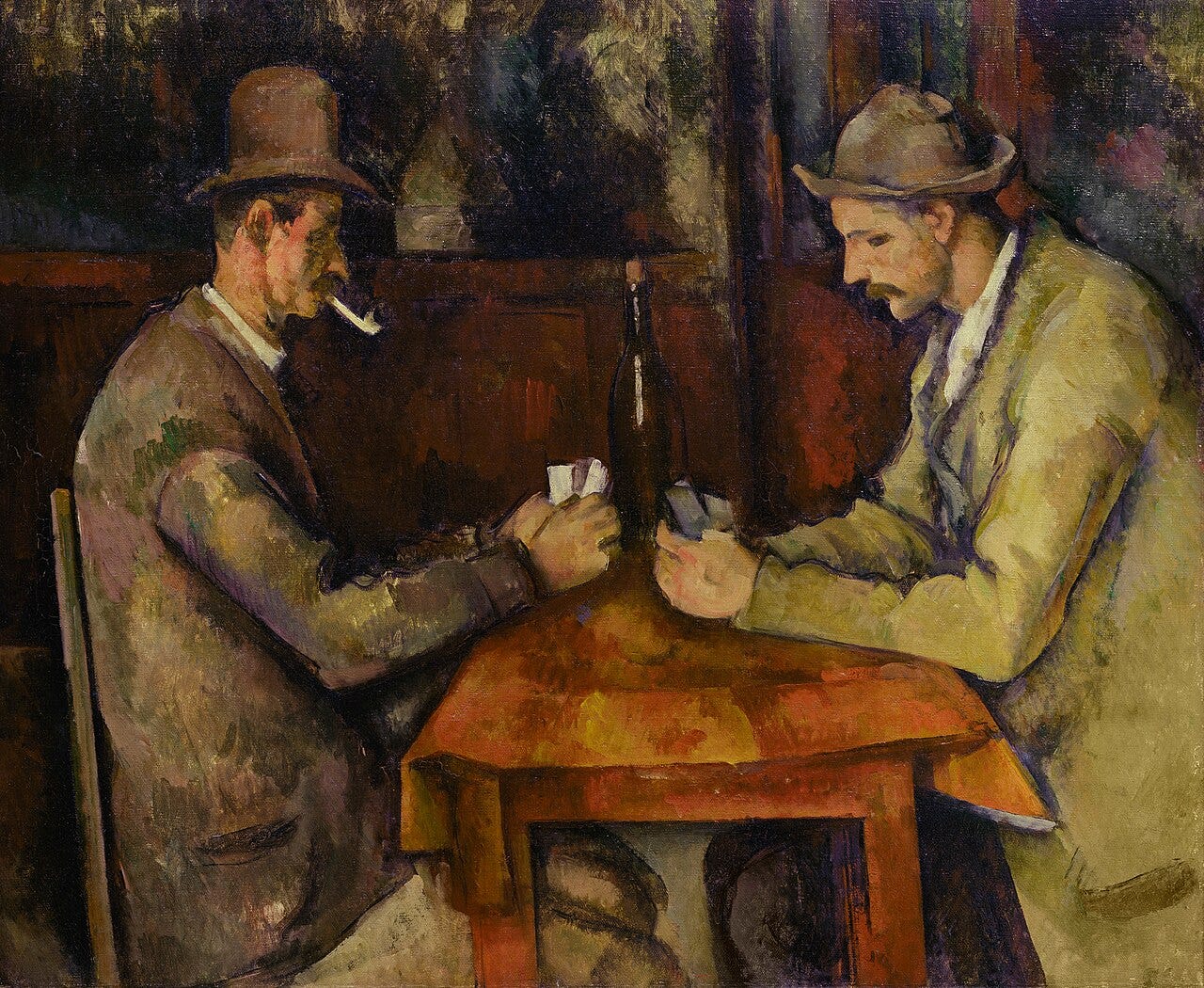
Paul Cézanne. The most important of all. He built his canvases out of small planes of color, treating an apple or a mountain like architecture. Picasso and Matisse both called him the father of modern art, and they meant it.
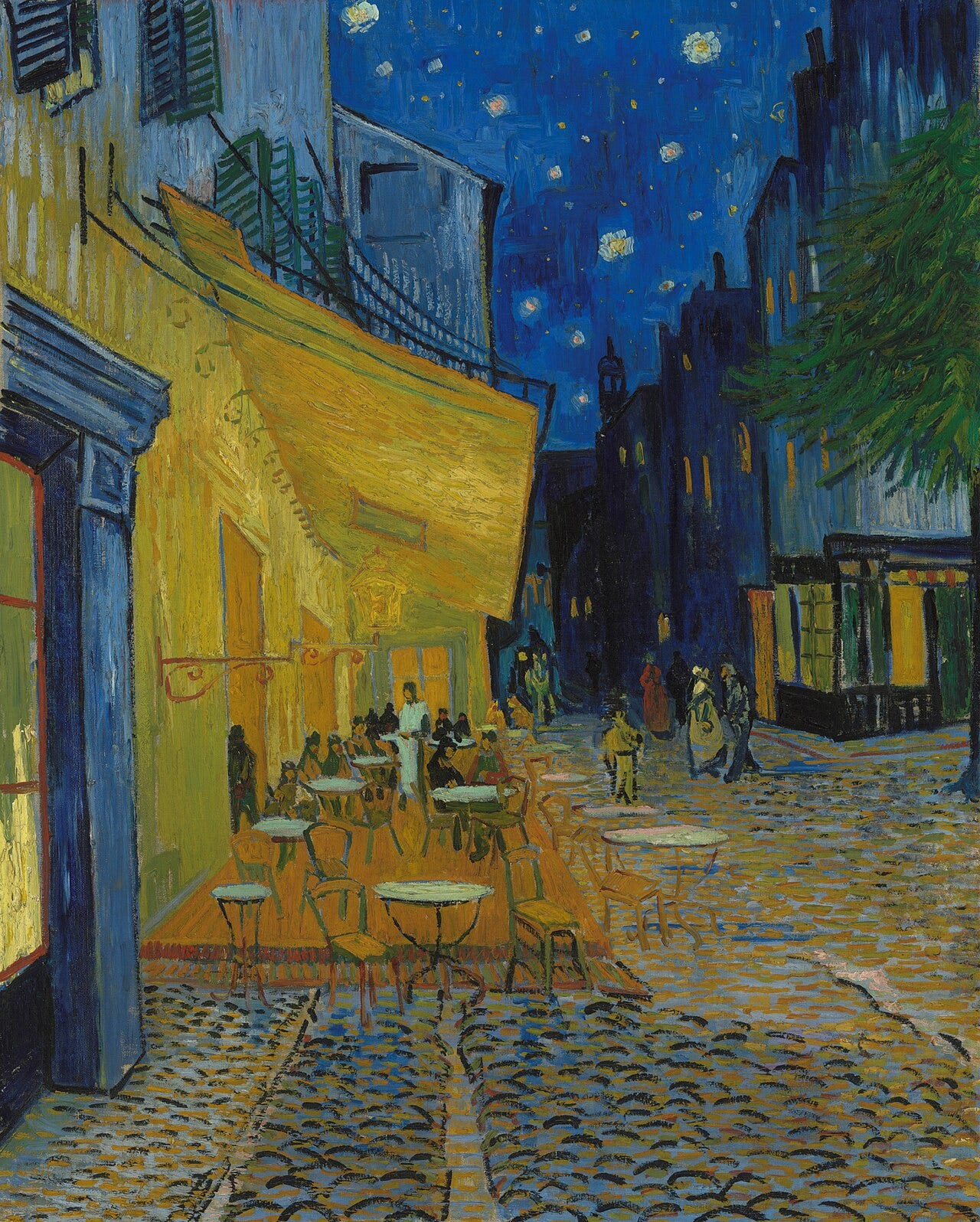
Vincent van Gogh. Color and thick paint as raw feeling. He made the surface itself carry the emotion.
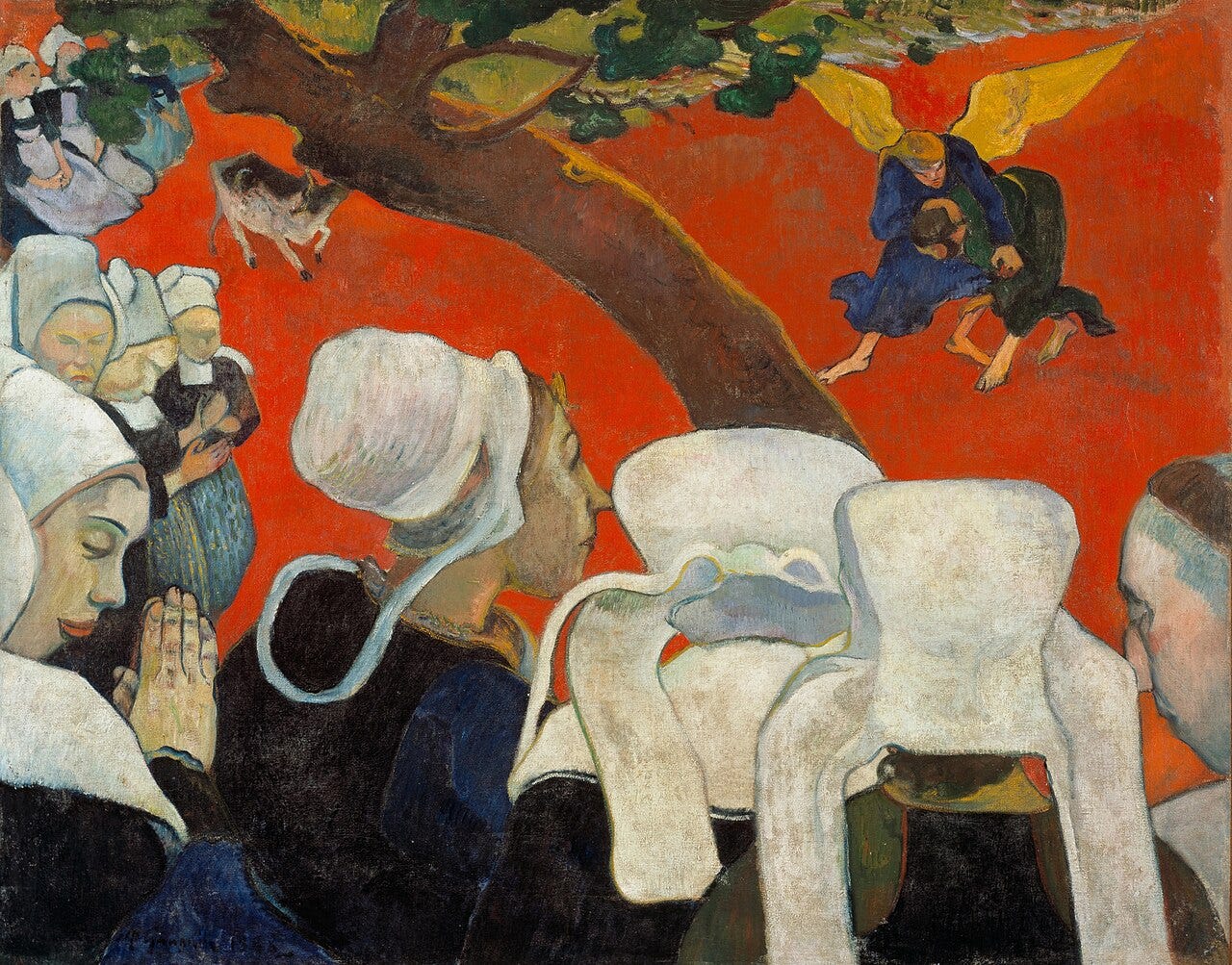
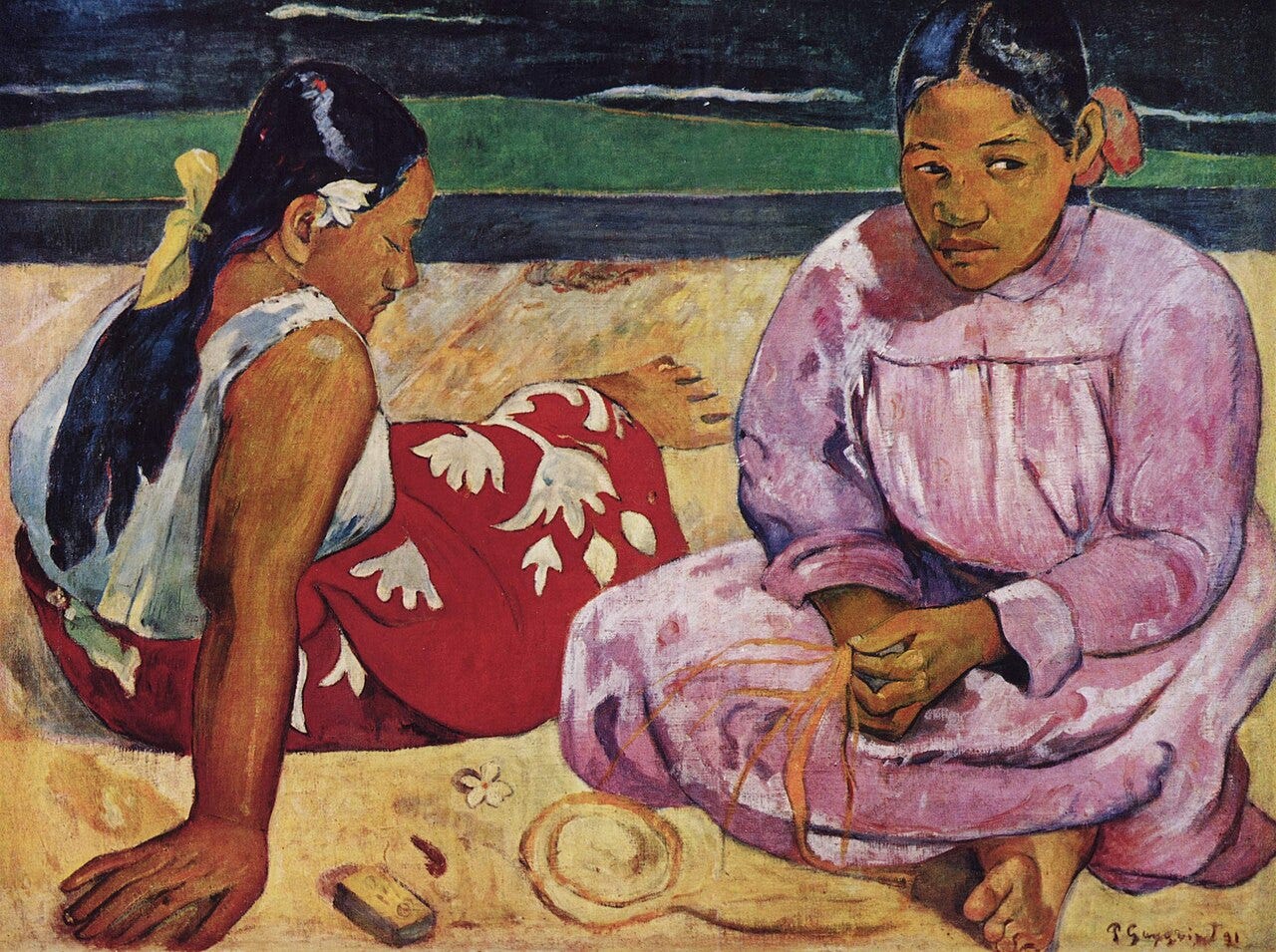
Paul Gauguin. Flat zones of unreal color, edged like stained glass, loaded with symbol. He fled France for the Pacific to chase it.
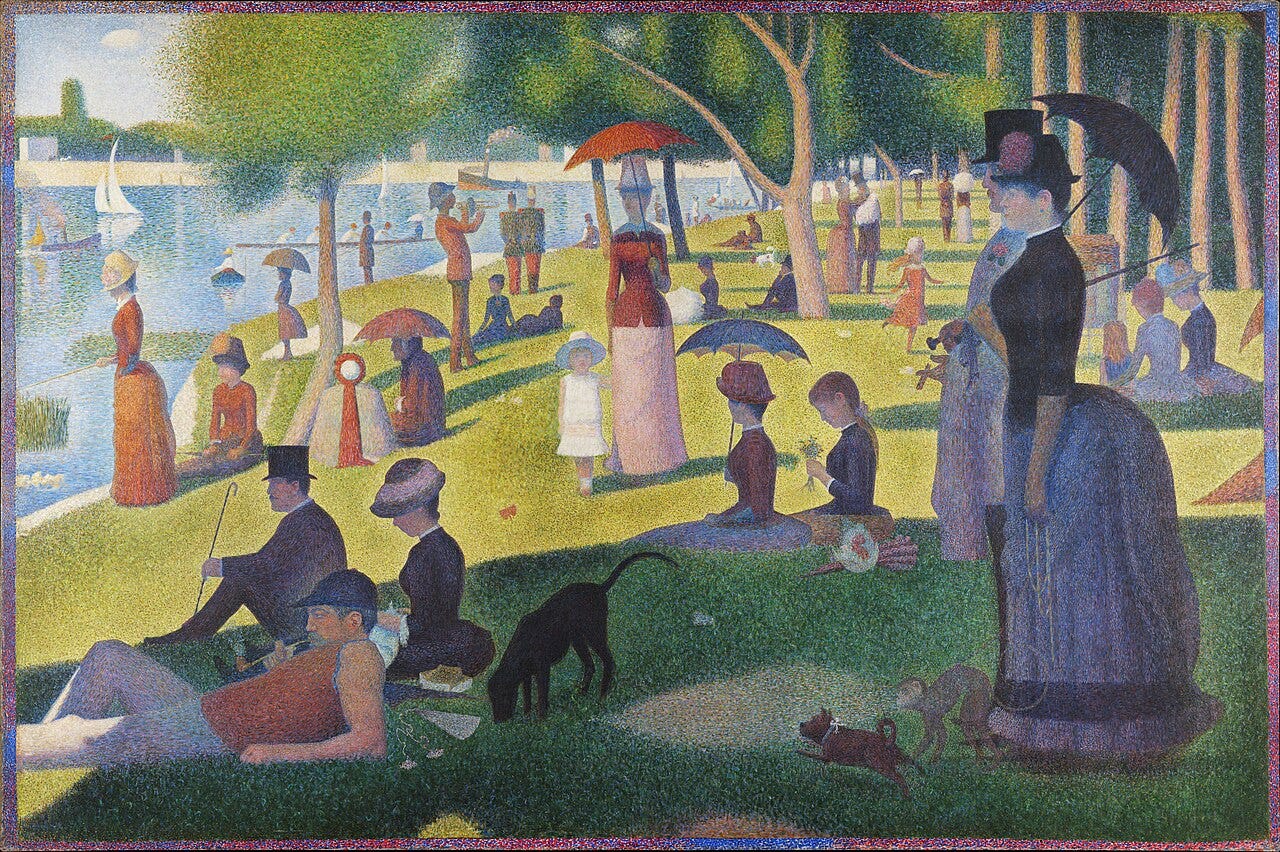
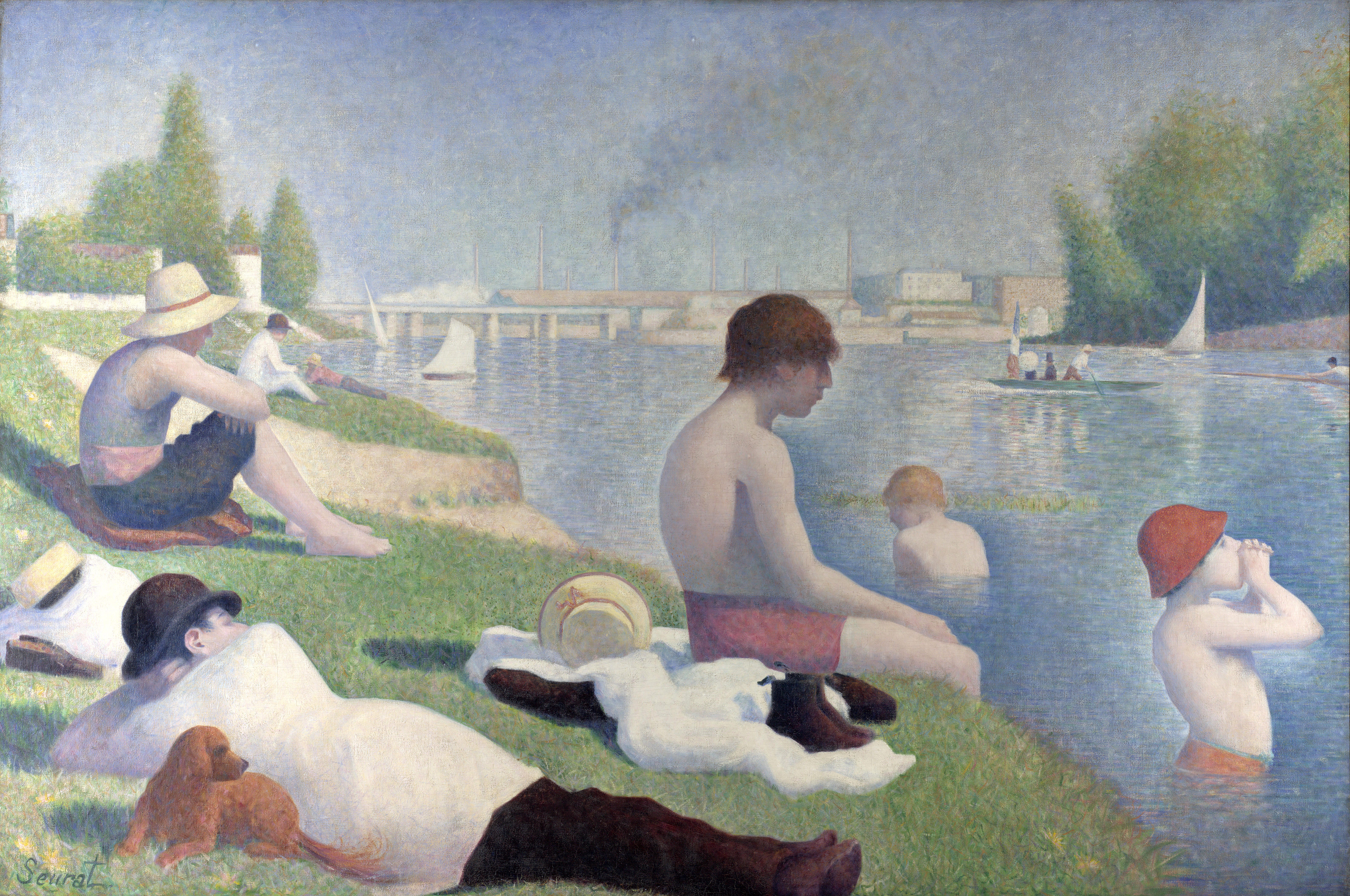
Georges Seurat. The scientist. He built whole scenes from tiny separate dots of pure color, a method called pointillism.
Henri de Toulouse Lautrec. The reporter of Paris nightlife, the cabarets and dance halls, in posters that still define the look of the era.
Cézanne, the hinge of modern art
If you only remember one name here, make it Cézanne. He is, to me, the hinge the whole modern world turns on.
He worked in near isolation near Aix en Provence, sold very little in his lifetime, and painted the same mountain, Mont Sainte Victoire, dozens of times. He was not chasing a view. He was trying to find the structure under it.
His advice to a younger painter became the seed of a whole century: look for the cylinder, the sphere and the cone inside what you see. A few years after his death, that idea grew straight into Cubism.
Whether Cézanne truly is the greatest painter of all time is a fair fight, and one worth having.
Van Gogh, color as feeling
Van Gogh took Impressionist color and turned the heat all the way up.
He laid the paint on thick enough to stand off the canvas, and he chose colors for how they made him feel, not for how the scene really looked. A night cafe could be blood red because the mood was, not because the walls were.
His full life, the dark years, the ear, the death and the woman who made him famous, fills the complete Van Gogh story.
Gauguin, flat color and symbol
Gauguin went the other way from Cézanne’s careful structure.
He flattened space, dropped shadow, and filled large areas with color that had nothing to do with real life. Red dogs, pink sand, a yellow sky. The edges are hard, almost like stained glass, a style his circle called cloisonnism.
In 1891 he left France for Tahiti, looking for a life and a subject far from the modern city. The paintings he sent back, full of myth and unreal color, pointed the next generation toward pure invention.
Seurat, painting by the dot
Seurat treated color like a laboratory.
He had read the science of how the eye mixes color, and he built his pictures from thousands of tiny dots of pure pigment placed side by side.
Step back, and your eye blends them into glowing, solid form. The method is pointillism, and his huge park scene, A Sunday on La Grande Jatte, is its monument.
Each dot is pure pigment your eye fuses from a distance, the full mechanics of pointillism laid out on their own.
Where it all led
Post Impressionism is the bridge between the painting your grandparents recognize and the painting that confused them.
Pull the threads forward and you get the whole next century. Van Gogh and Gauguin's free color lit the fuse for Fauvism and German Expressionism. Cezanne's planes became Cubism. Seurat's discipline fed abstraction.
All of this grew straight out of Impressionism itself.
Where to see Post Impressionism
The color and the thick paint only really exist in person.
The single best room on earth is the Musée d’Orsay in Paris, which holds the richest collection of Impressionist and Post Impressionist painting anywhere.
For the United States, the Metropolitan Museum of Art in New York has deep holdings of Cézanne and Van Gogh.
Van Gogh owed more than you might expect to a quiet predecessor, the peasant painter Jean Francois Millet, whose example shaped his whole vision.
Post Impressionism, the questions after Monet
What is Post Impressionism in simple terms? Painting made just after Impressionism, from about 1886 to 1905, that kept the bright color but added structure, emotion and symbol.
Who are the main Post Impressionist artists? Cézanne, Van Gogh, Gauguin and Seurat, with Toulouse Lautrec close behind.
What is the difference between Impressionism and Post Impressionism? Impressionism captured a fleeting moment of light. Post Impressionism used the same color to build lasting form, feeling and meaning.
Why is it called Post Impressionism? The critic Roger Fry coined the term in 1910 for a London exhibition, long after the artists had worked.
What movements came from it? Fauvism, Cubism and Expressionism all grew directly out of it.
More secrets to unlock


An accident with four directions
The four giants never met as a group, never signed a manifesto, and got their shared name from a critic two decades late.
Yet a child today can tell a Van Gogh from a Cézanne from a Gauguin across a gallery. That is the strange proof of how far each one pushed. The label is an accident. The four directions are not.
The term was invented in 1910 by a critic, and the whole story is here.
