
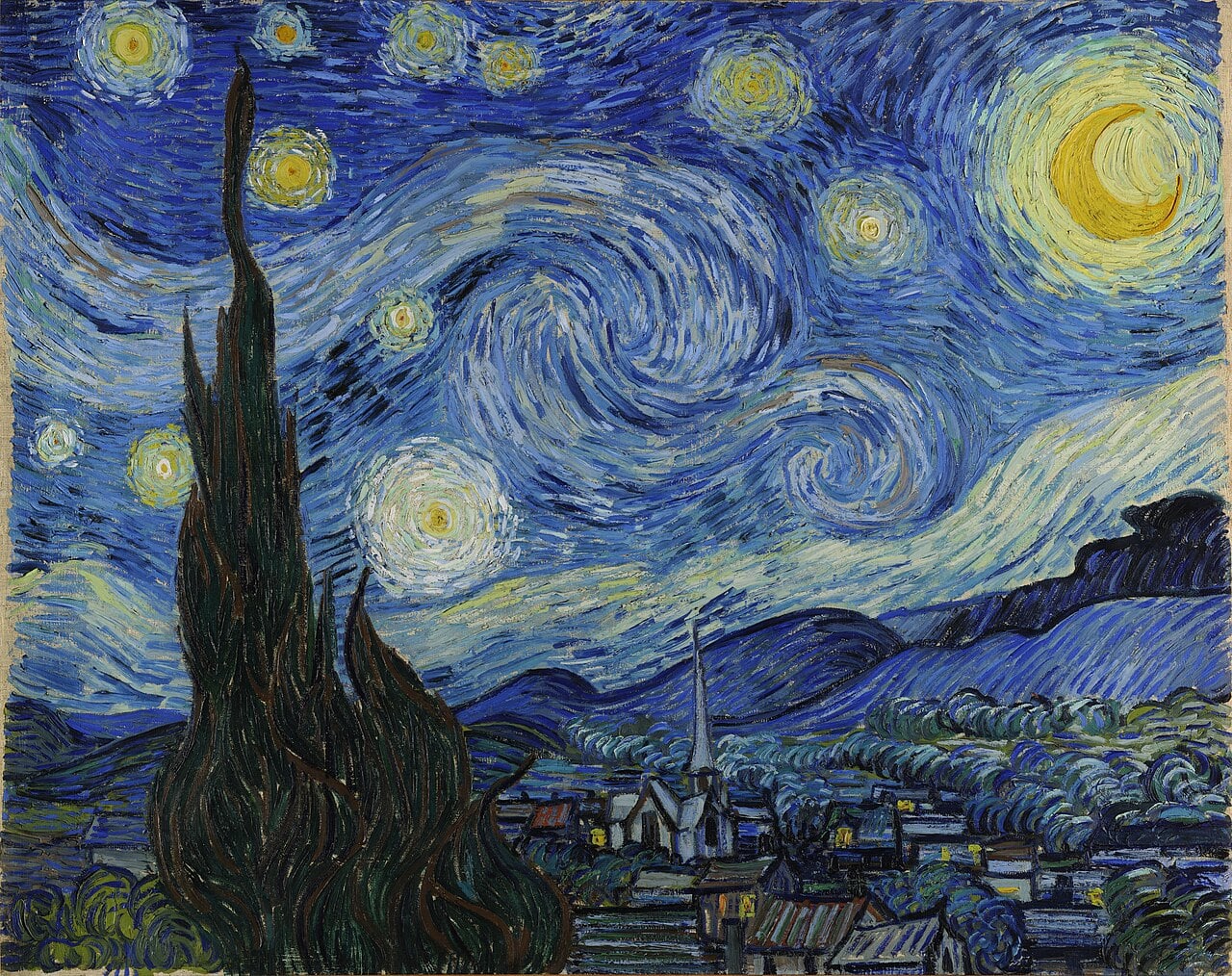
Van Gogh painted The Starry Night in June 1889 from his room in an asylum at Saint Remy, where he had committed himself after the breakdown that cost him his ear. He worked in daylight, from memory and from the view through his barred window.
He wanted to paint the night as something alive and moving.
The strange part: he thought the result was a failure.
Here is the real story behind the most famous night sky in art.
The room with the barred window
In May 1889, worn down by repeated attacks, Vincent checked himself into the Saint Paul asylum near Saint Remy, in the south of France.
The director let him use a second small room as a studio. Its window, fitted with iron bars, looked east over a walled wheatfield and the hills beyond.
He wrote to his brother Theo about what he saw there. This morning I saw the countryside from my window a long time before sunrise, with nothing but the morning star, which looked very big.
That sentence is the seed of the painting.
He painted it during the day, from memory
Here is the first myth to drop. The Starry Night was not painted outdoors, at night, under the stars.
Van Gogh made it inside, during daytime sessions, from memory and from that remembered pre dawn view. The night is reconstructed, not copied.
That is why it carries more feeling than fact.
The big star is a planet
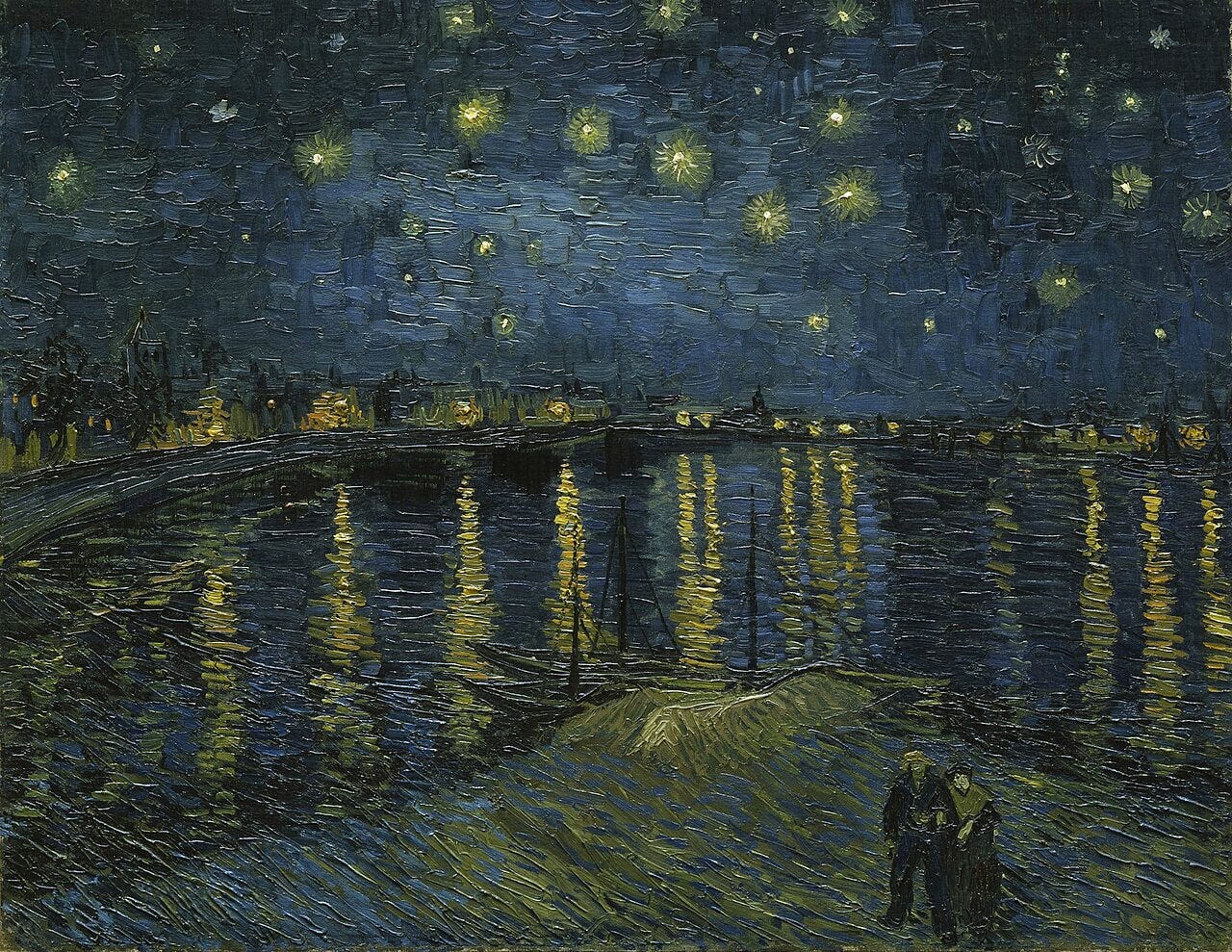
Look at the largest, brightest point of light in the sky. Most people read it as a star.
It is Venus, the morning star, the same one he described to Theo. It was genuinely visible in the dawn sky over Provence that spring.
So one of the few things in the painting taken straight from life is the planet, not a star at all.
The village that does not exist
Now look at the quiet town below the hills, with its tall church spire.
It is invented. No such village could be seen from his window, and the steeple is a narrow Dutch one, the kind from his childhood, not a Provencal church. He built the town from memory and need.
The sky is the storm in his head. The village is the calm he no longer had. He composed the contrast on purpose.
The cypress in the front
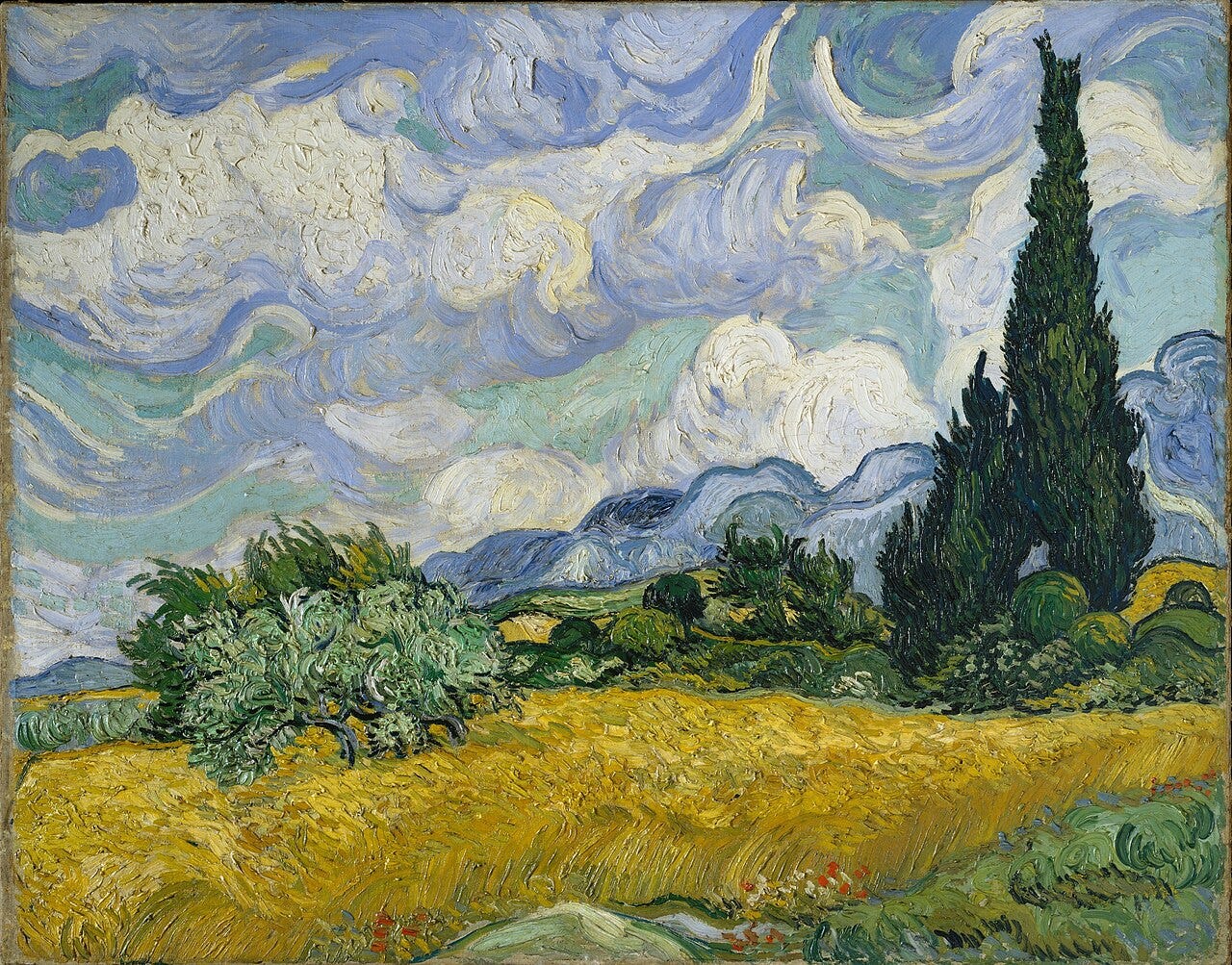
That dark, flame shaped tree in the foreground is a cypress, and he was fixed on them all that year.
Cypresses grow in graveyards across the Mediterranean. They were trees of mourning. Here, one rises from the earth all the way into the turning sky, the one thing that touches both.
Why he called it a failure
This is the part that surprises people most.
Van Gogh did not think he had made anything great. In his letters he was uneasy about it. He felt he had pushed too far into abstraction and imagination, away from the real nature studies he trusted more.
He rated his daytime fields and cypresses higher than his most famous picture. The painting the whole world now loves is one he half apologized for, and to me that gap is the most human thing about him.
The four things people misremember
Myth: painted outdoors at night. Fact: made indoors, in daylight, from memory.
Myth: the big light is a star. Fact: it is the planet Venus.
Myth: it shows a real Provencal village. Fact: the town is invented, with a Dutch style spire.
Surprise: he considered it a near failure, too abstract for his own taste.
He painted The Starry Night in June 1889 from the window of his room at the Saint Paul asylum in Saint Remy de Provence, one entry among the dozen skies gathered in The Night Sky and Stars in Art: 12 Paintings and the Real Sky.
Keep learning art the fun way


More secrets to unlock


The Starry Night questions that keep coming up
Where did Van Gogh paint The Starry Night? From his room in the Saint Paul asylum at Saint Remy, in June 1889.
Was Van Gogh in an asylum when he painted it? Yes, he had committed himself there voluntarily after the loss of his ear.
What is the bright star in The Starry Night? The planet Venus, the morning star.
Is the village real? No, it is invented. The church spire looks Dutch, not French.
Where is The Starry Night now? At the Museum of Modern Art in New York.
From an asylum wall to MoMA
The painting he doubted left the asylum, crossed the Atlantic, and landed at the Museum of Modern Art in New York, which bought it in 1941.
Today a crowd stands in front of it every single day it is open.
He never saw it hang in a museum, and he was not even sure it worked. It is now one of the most reproduced images ever made.
I trace the whole arc, the friendships, the death, and the painters he changed, in Vincent van Gogh: The Complete Story. And the night that broke him is in Why Did Van Gogh Cut Off His Ear?. The twelve paintings that built his reputation are gathered separately in Famous Van Gogh Paintings: His 12 Greatest Works.
The story of how the world ever saw it is in the woman who made Vincent van Gogh.
