
Leon Spilliaert, 1881 to 1946, was a Belgian Symbolist who turned sleepless nights into art. Working alone on paper, never in oil, he made stark self portraits and empty seafronts that feel like the inside of a restless mind.
Championed only in Belgium for decades, he broke through to a wider public after the 2020 retrospectives at the Royal Academy in London and the Musee d’Orsay in Paris.
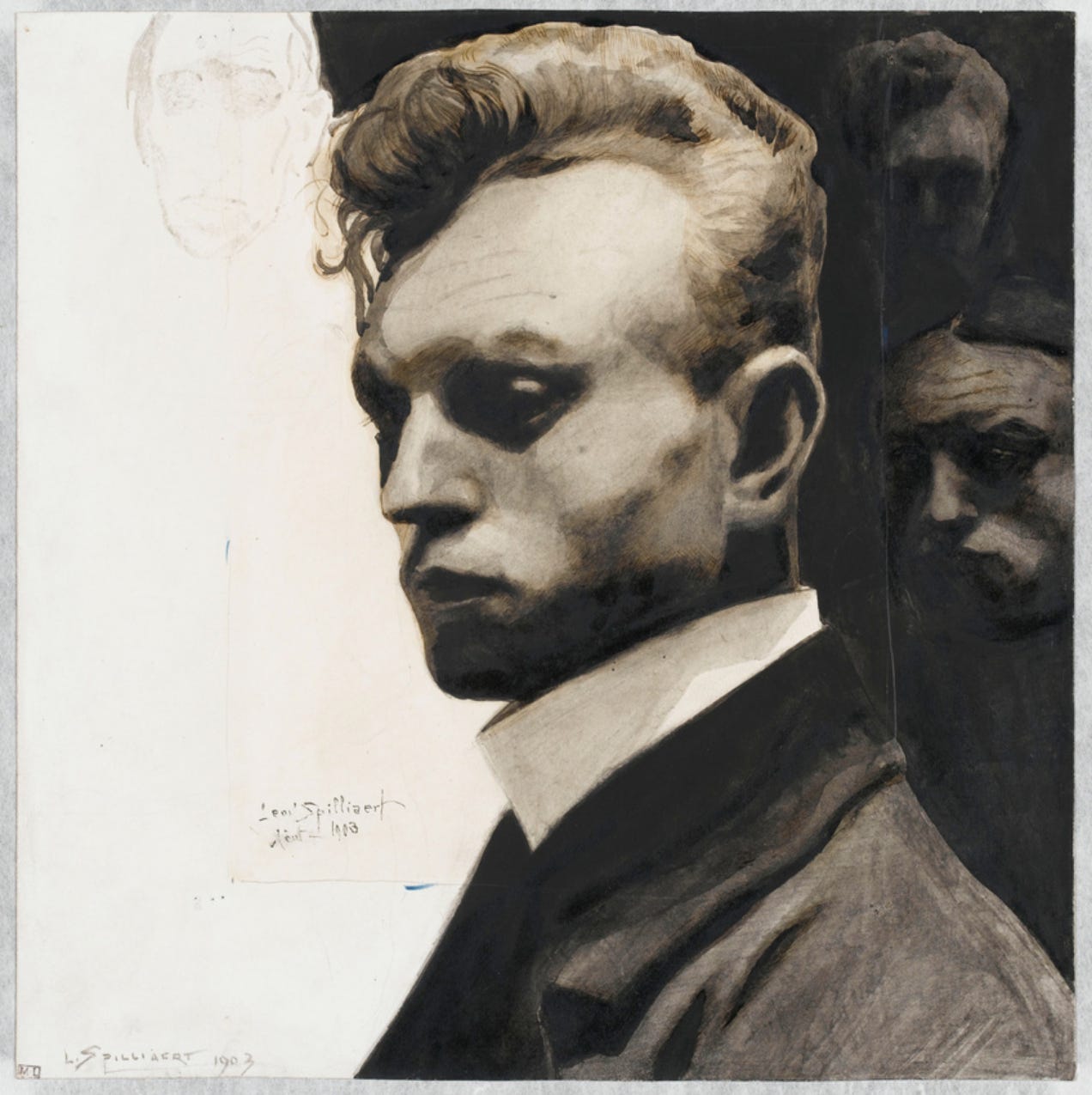
He is one of the great loners of modern art, long known only in Belgium. The wider world is finally catching up. Here is why.
More incredible painter stories
If Léon Spilliaert pulled you in, you will love these too:


Léon Spilliaert at a glance
1881. Born in Ostend, a perfumer’s son.
1902. Worked for the Brussels publisher Edmond Deman, close to the Symbolist writers.
1908. The great year of the nocturnal self portraits.
1916. Married Rachel Vergison in wartime Ostend.
1946. Died in Brussels, his late tree drawings still on the table.
The painter who worked at night, on paper
Spilliaert was self taught and plagued by insomnia and a bad stomach. Unable to sleep, he wandered and worked in the small hours.
He rarely touched oil. Instead he used ink wash, watercolor, gouache and pastel on paper, building deep blacks and cold light that suit the night he lived in.
Ostend, his lonely stage
He grew up in Ostend, the Belgian seaside resort, son of a perfumer. Out of season the town empties, and that emptiness became his great subject.
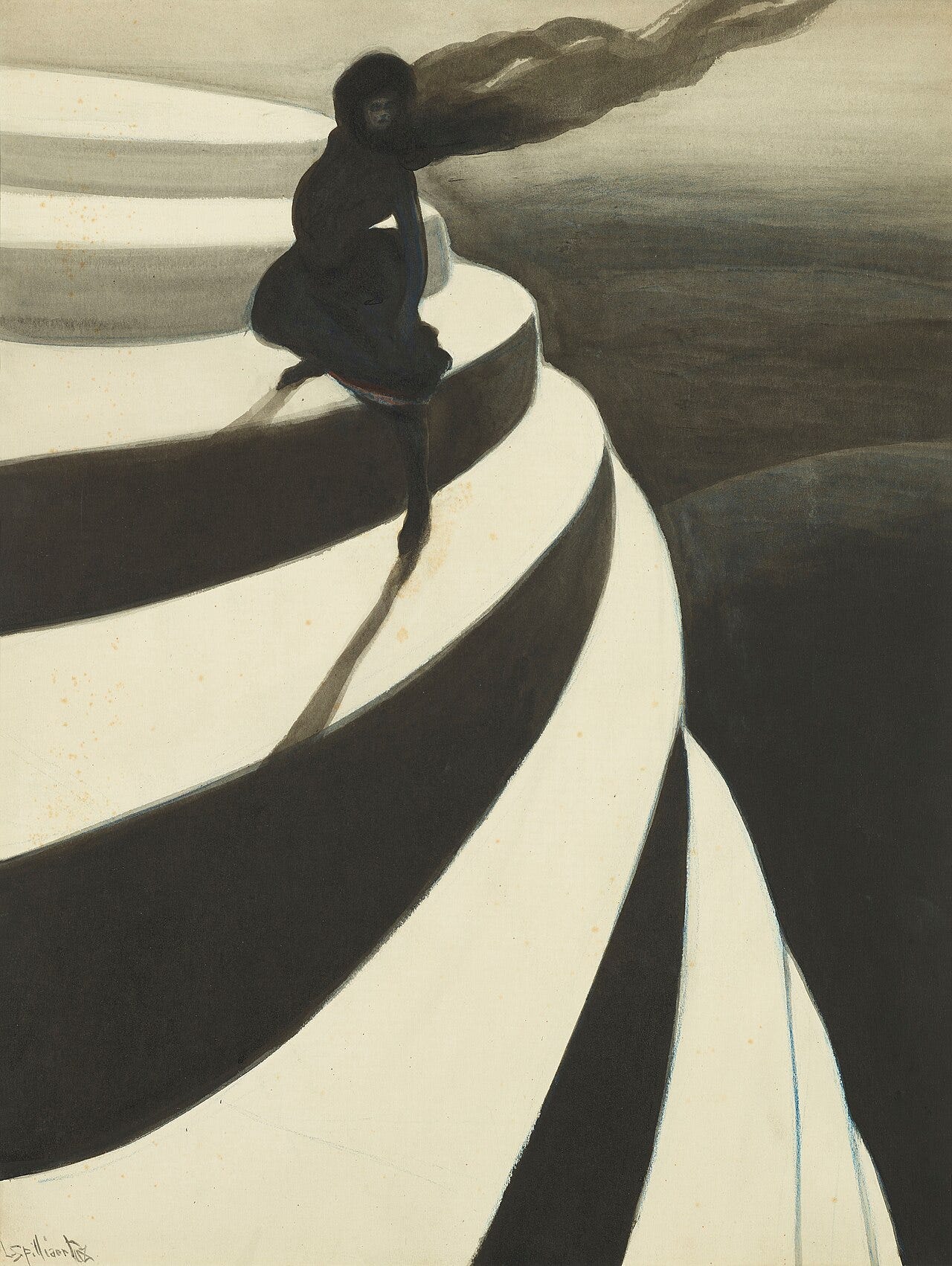
He painted long deserted promenades, sea walls and staircases in steep, tilting perspective, so the viewer feels off balance and alone.
The self portraits that stare back
Again and again Spilliaert painted himself at night, lit by a lamp, reflected in mirrors. The face is gaunt, the eyes huge and wary.
These self portraits are some of the most haunting of the 20th century, closer to a confession than a likeness.
The tilt that turns calm into dread
His work sits in Symbolism, full of mood, solitude and dread, but its raw feeling also points ahead to Expressionism and even Surrealism.
Watch the perspective. He tilts floors and horizons until a calm scene turns uneasy. Emptiness does the work that drama does for other artists.
A language built on paper
With no academy behind him, Spilliaert taught himself in part by illustrating Symbolist writers like Maurice Maeterlinck and Emile Verhaeren. Their moody words trained his feel for shadow.
He returned again and again to a few motifs: the sea wall, the empty stair, his own face in a mirror. Recognition and prices have climbed sharply in the last decade.
Three works that capture his night
First, his nocturnal self portraits, the staring faces in lamplight.
Second, the Dike at Night and the empty Ostend promenades, all sky, sea wall and silence.
Third, his early illustrations for Symbolist writers, which trained his feel for shadow and suggestion.
The myth of the minor illustrator
For decades Spilliaert was filed as a regional Belgian curiosity who worked only on paper.
That has flipped, and the museums that once ignored him now compete for the fragile works on paper.
Where his nights survive
The Mu.ZEE in Ostend holds the largest collection. The Musee d'Orsay in Paris has shown and collected him.
Born in Ostend in 1881, a perfumer's son
Leon Spilliaert was born in Ostend on 28 July 1881. His father, Leonard, ran a perfume business in the seaside town, and the family workshop stood close to the North Sea.
One of Leon's oldest dated watercolours, from 1899, shows that perfume laboratory. He grew up around bottles, flasks and presentation boxes, and those shapes kept turning up in his pictures for the rest of his life.
He even made a small advertising drawing for one of his father's scents.
Leon was never going to take over the shop. He preferred books to business. Reading, drawing and the empty seafront pulled at him far more than the counter ever did. Ostend, its light and its wind, stayed the center of his world.
The academy he left after a few months
In October 1899, Spilliaert enrolled at the Academy of Fine Arts in Bruges. In the register, he listed his job as hairdresser.
The formal schooling did not last. In January 1900, he withdrew because of illness, and he never went back to any academy. From then on, he taught himself. He later wrote that anything to do with school, teachers or academies filled him with horror.
So his training came from looking and reading instead. He copied no master in a studio. He drew the philosopher Friedrich Nietzsche several times from a print, and he filled early sheets with poetic titles like Solitude.
For a self taught man with no workshop pedigree, that independence became the whole point of his art.
The illness that kept him walking at night
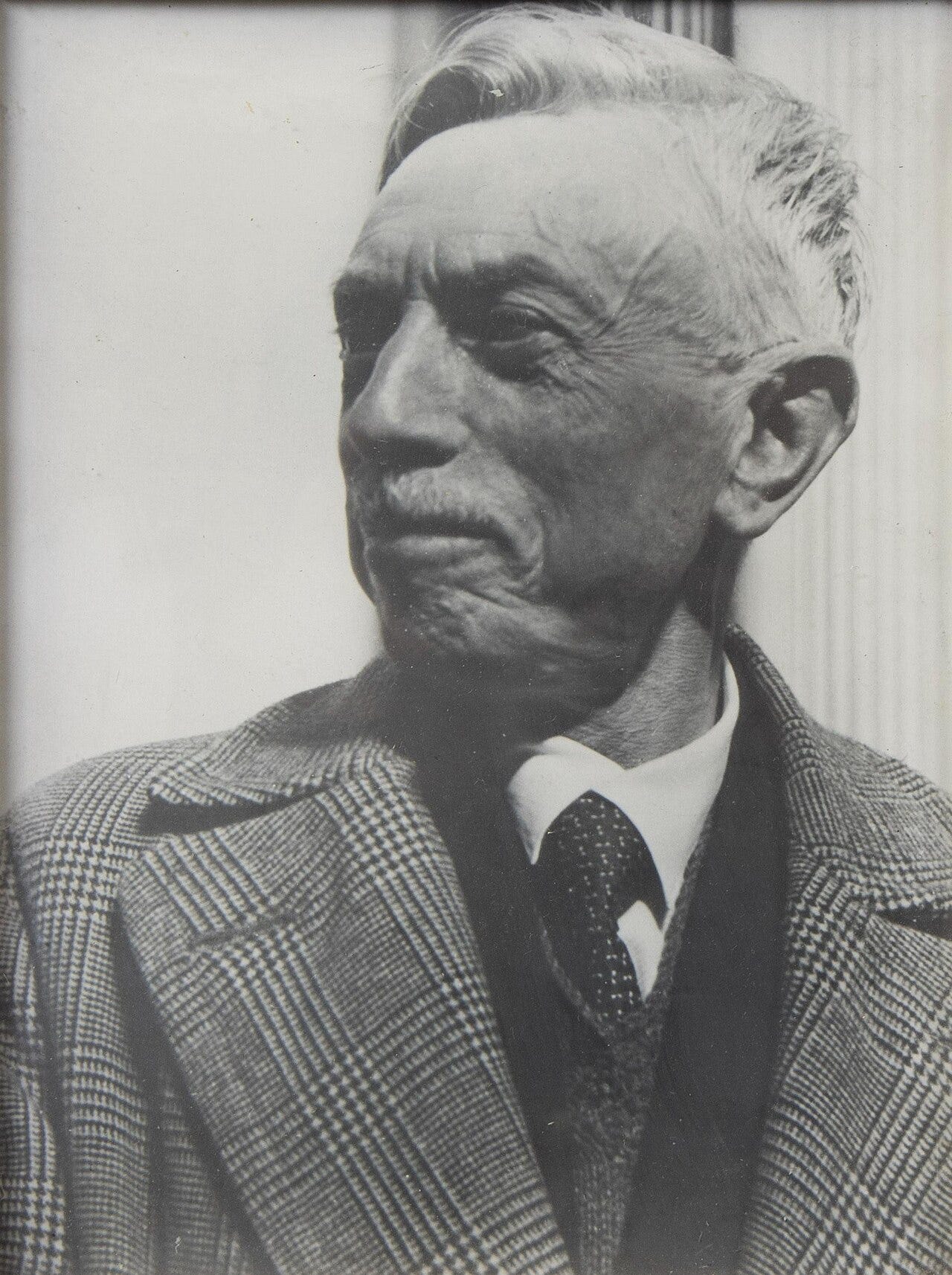
Spilliaert's health was fragile from youth. A stomach condition left him in real pain and often unable to sleep.
To cope, he walked. He paced the empty streets of Ostend after dark and moved along the seafront for hours at a time. Those solitary nights became a habit, then a need.
Walking was where he wrestled with the large questions his reading kept raising, and it was also where he stored the images he would later put on paper.
The same poor health shaped his life in other ways. In late 1903, he hoped to work in the Congo Free State, with a recommendation from his Brussels employer.
He was turned down because he was judged not strong enough. His body set the limits, and his art grew inside them.
The Brussels bookshop that opened his world
In 1902, aged 21, Spilliaert went to work in Brussels for the publisher Edmond Deman. Deman printed the leading Symbolist writers, and his shop was a door into a new world.
There Spilliaert discovered Maurice Maeterlinck, Emile Verhaeren and Stephane Mallarme, along with artists like Fernand Khnopff and Odilon Redon.
He did more than shelve books. He illustrated them. His largest effort was Maeterlinck's three volume Theatre, for which he made around 348 ink drawings.
The job also gave him people. Verhaeren became a close friend. Through that circle, in 1904, Spilliaert showed drawings at Clovis Sagot's Paris gallery beside a young Pablo Picasso.
A Symbolist who edged toward Expressionism
Spilliaert belonged, at first, to Belgian Symbolism. He read its poets, worked for its publisher, and shared its taste for mystery, solitude and the inner life.
The Musee d'Orsay describes his art as a symbolism of inner darkness that left a real mark on Belgian painting.
Yet he never sat still inside one label. His wide eyed faces lean toward Expressionism, and his bare coastlines drift toward something almost abstract.
In the early 1920s, he was briefly taken up by the Brussels gallery Selection, which promoted the Flemish Expressionists Constant Permeke, Gustave De Smet and Frits Van den Berghe.
He was never quite one of them, and that refusal to fit is part of why writers still call his work hard to classify.
The artists behind his eye
Spilliaert taught himself, but he did not work in a vacuum. Three names come up again and again.
The first is James Ensor, a fellow Ostend artist a generation older, whose strange, masked vision of the same seaside town hung over any young painter there.
The second is Edvard Munch, whose world of dread and solitude sits close to Spilliaert's anxious self portraits and lonely figures in wide, empty spaces.
The third is James McNeill Whistler. Whistler's Nocturnes, those hushed studies of water and dark, echo through Spilliaert's night views of the Ostend dyke, with their soft grades of grey.
He mixed these lessons with his reading of Edgar Allan Poe and Nietzsche. The result still looks like no one but Spilliaert.
Marriage, war, and the move inland
By late 1916, a happier chapter seemed to open. Spilliaert married Rachel Vergison just before Christmas that year.
But the timing was hard. His close friend Verhaeren had died weeks earlier, in a train accident, and Belgium was under German occupation.
The couple tried to flee to neutral Switzerland to join pacifist friends. They ran short of money and got only as far as the Brussels area, settling in the district of Sint Jans Molenbeek.
In November 1917, their only child was born, a daughter named Madeleine. Brussels, not Ostend, now framed his daily life for long stretches. The sea did not vanish from his art, but softer, more domestic scenes began to appear alongside it.
The forest years and a name found late
Living in and around Brussels, Spilliaert found a new subject close to home. He walked among the old beech and oak of the Sonian Forest, and trees slowly took over from the sea.
His late work turned calmer and more still, and a watercolour like Nuns in the Forest, from 1936, shows that quieter mood.
He settled in the Ixelles district of Brussels in his final years and died there on 23 November 1946, aged 65.
For decades he stayed little known outside Belgium. That changed in 2020, when the Royal Academy in London and the Musee d'Orsay in Paris both gave him major shows of around 80 works on paper, and finally set his nights before a wide audience.
More secrets to unlock


The Léon Spilliaert questions that keep coming up
When was Leon Spilliaert born? In 1881 in Ostend, Belgium. He died in Brussels in 1946.
What is he famous for? Haunting night self portraits and empty Ostend seascapes, all on paper.
Did he paint in oil? Almost never. He used ink, watercolor, gouache and pastel.
What movement was he part of? Symbolism, with a feel that points toward Expressionism and Surrealism.
Where can I see his work? Mu.ZEE in Ostend and the Musee d'Orsay in Paris.
Was Leon Spilliaert self taught? Mostly, yes. He enrolled at the Academy of Fine Arts in Bruges in October 1899 but withdrew in January 1900 because of illness, after only a few months. He never returned to formal schooling and learned instead by reading widely and drawing on his own.
When did the Royal Academy show Spilliaert's work? The Royal Academy of Arts in London held its Spilliaert exhibition in 2020, the first solo show of his work in the United Kingdom. It brought together about 80 works on paper and was organised together with the Musee d'Orsay in Paris.