
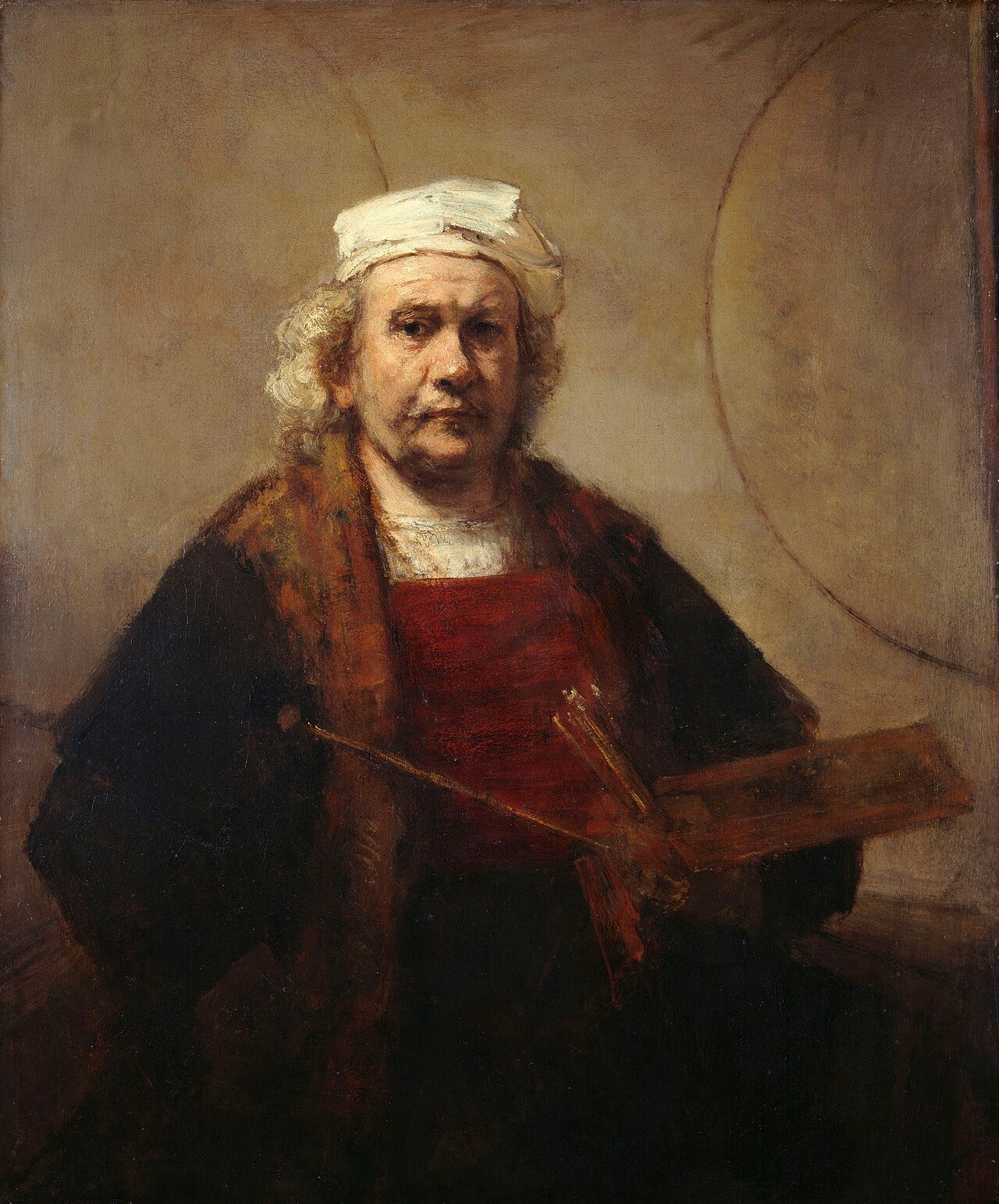
A self portrait is a work in which an artist depicts themselves, usually by looking in a mirror. It is the one portrait where the painter is both the person studying and the person being studied, which makes it part likeness, part experiment and a quiet confession.
The one painting where the model and the maker are the same person, studied in a mirror.
It is the oldest form of the selfie, and for centuries the cheapest way for a painter to keep practicing.
The selfie before cameras
What it is: an artist's portrait of themselves.
The tool: almost always a mirror.
The uses: practice, advertisement, experiment and confession.
The quirk: most are mirror images, so the face is reversed.
The masters: Dürer, Rembrandt and Van Gogh.
Keep learning art the fun way
The model who never leaves
There is a simple, practical reason artists paint themselves: they are always available.
A self portrait needs no fee, no appointment, no patience but the painter's own.
So it became the natural place to practice, to test a new technique, an unusual light, a strange expression, on a model who would sit as long as the artist liked.
Much of the riskiest experiment in portrait painting happened on the artist's own face first.
The cheapest model in the studio was also the most honest.
The face in the mirror
The mirror leaves its fingerprints on the genre.
Because most artists work from a mirror, the finished self portrait is usually reversed: the left hand becomes the right, the part in the hair flips.
That is also why so many self portraits seem to gaze straight out at you. The artist was really staring at their own reflection.
It is also why painters so often appear to hold the brush in the wrong hand.
A life told in faces
Some artists turned the self portrait into a lifelong diary.
Rembrandt left roughly forty painted self portraits, plus many etchings, over forty years, from a cocky young man to a battered, bankrupt old master.
It is an unflinching record of a face aging in real time, and there is far more in the full Rembrandt story.
Van Gogh painted more than thirty self portraits in barely four or five years, partly because he could not afford other models. They form a raw chronicle of his life.
Watch the self portraits in order and you watch a whole life pass. I never tire of it.
Zinaida Serebriakova painted herself many times over her career, and her complete story is told in full.
More than a likeness
To me, a self portrait is rarely just a record of a face.
It is a statement: of pride, of status, of suffering, of how the artist wants to be seen, or refuses to flatter.
Caravaggio painted his own face onto the severed head of Goliath. Gustave Courbet stared out wild eyed as The Desperate Man around 1845.
Others pose at the easel, brush in hand, asserting their craft. The choices, the clothes, the gaze, are all messages.
The subject is a face, but the real subject is an identity.
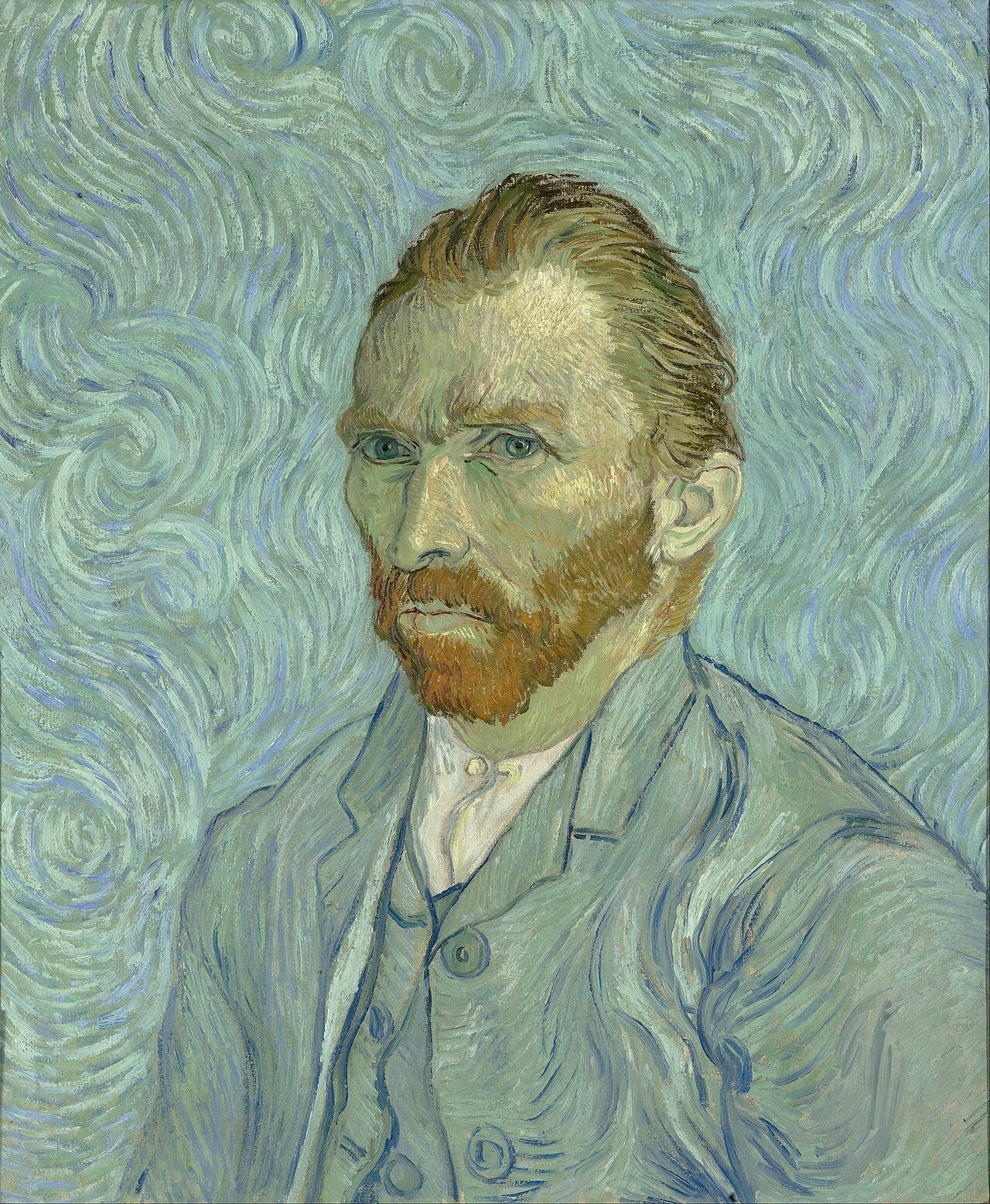
Two of the greatest watch you back. The Rijksmuseum holds Rembrandt’s self portrait, and the Musee d Orsay Van Gogh’s last self portrait of 1889.
One myth worth clearing up: in his bandaged ear self portrait, Van Gogh shows the dressing on the wrong side. The mirror reversed him, so it covers the right ear in the picture, though he had cut the left.
Dürer’s mirror
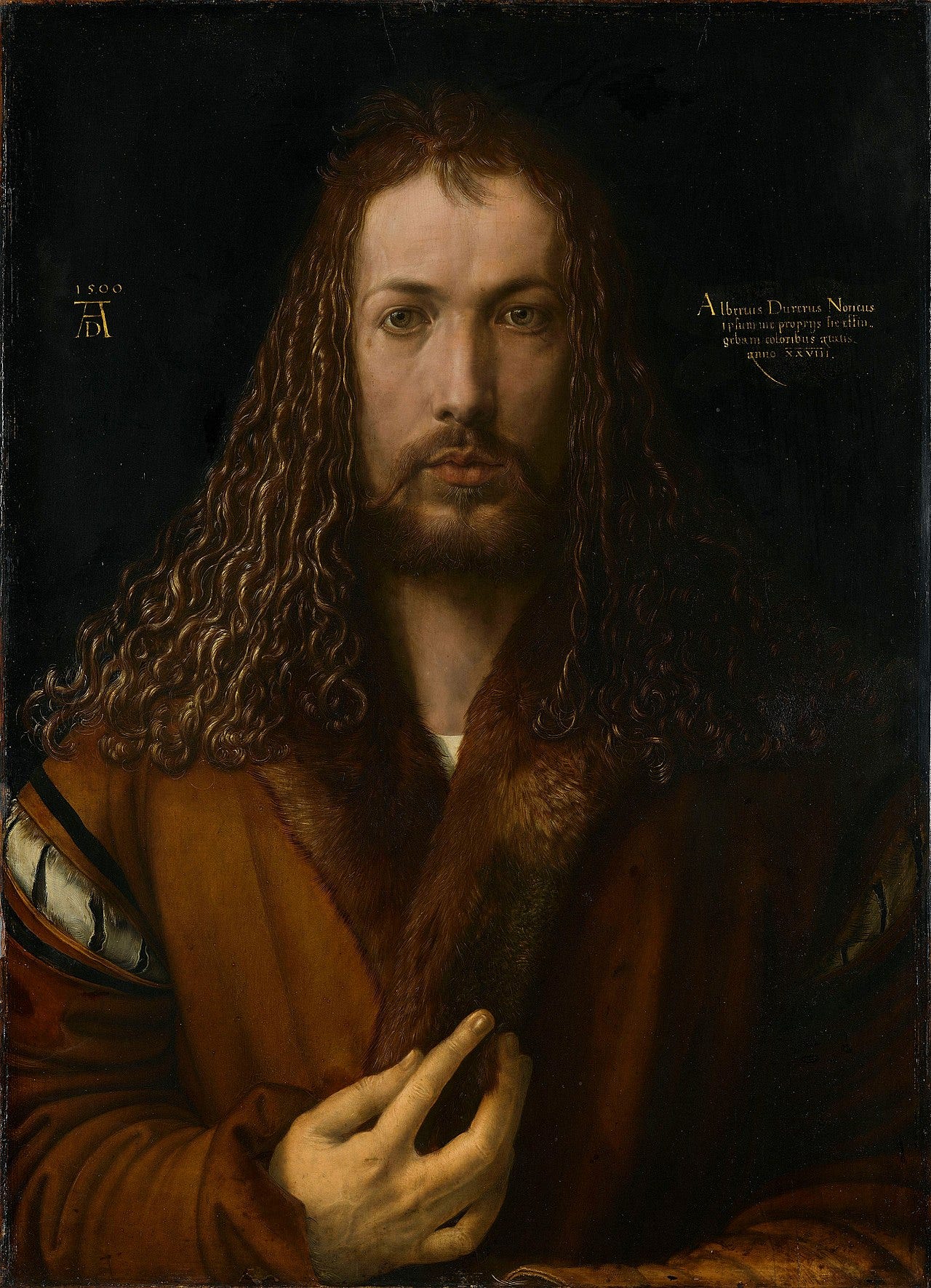
The most extreme claim in the genre is a single panel from 1500. Albrecht Durer painted himself face on, rigidly symmetrical, with long flowing hair, in a pose Western art reserved for Christ.
For a painter to borrow that format for his own face was close to scandalous, a statement that the maker was a kind of creator too.
Durer placed his monogram and the date like a formal inscription.
It is the moment the artist stops being an anonymous craftsman and steps, on purpose, into the frame as a figure worth contemplating.
The calling card
A self portrait was also an advertisement. A painter who could pin down their own face could pin down a client one, so the genre doubled as proof of skill, sent ahead to win commissions.
It also gave outsiders a way in.
Sofonisba Anguissola painted herself again and again in the 1500s to be taken seriously in a trade closed to women. Artemisia Gentileschi painted herself as the very figure of Painting, brush raised, around 1638.
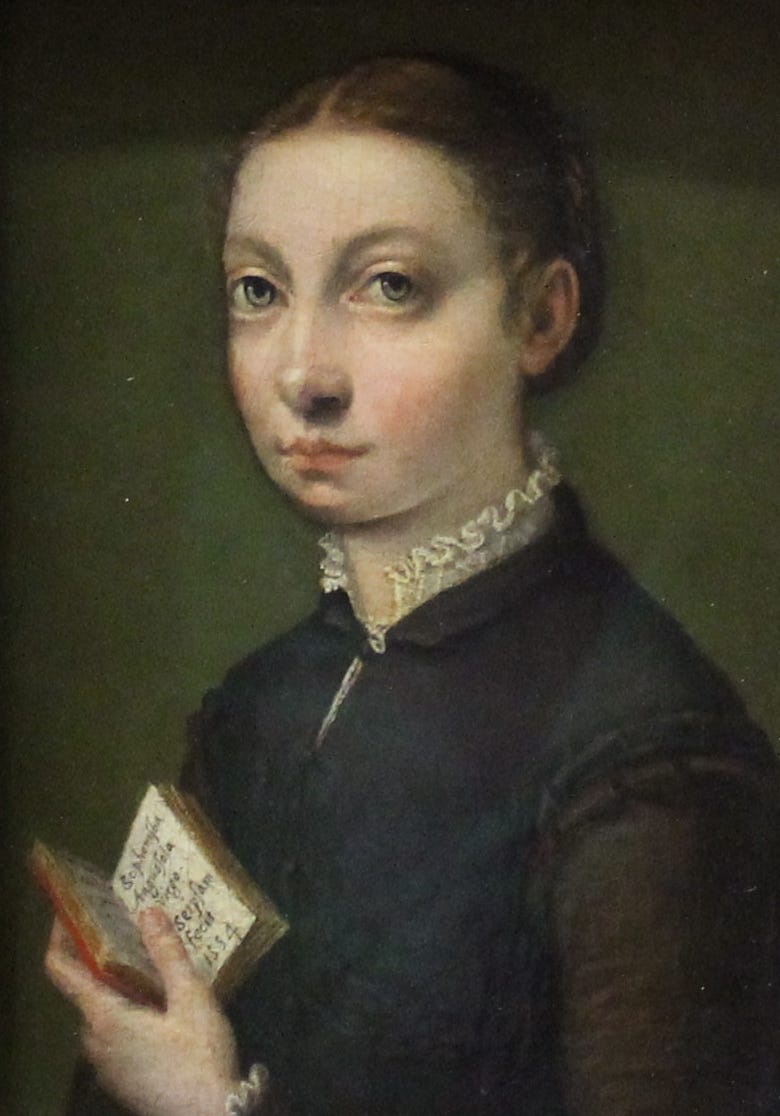
Elisabeth Vigee Le Brun built a court career on portraits, her own among them. For anyone shut out of the usual training, the mirror was the one model always within reach.
Self portraits, the questions in the mirror
What is a self portrait? A work in which an artist depicts themselves, usually using a mirror.
Why do artists paint themselves? Because they are always available as a model, and to experiment and express identity.
Why are self portraits often reversed? Because the artist works from a mirror, which flips the image.
Who painted the most self portraits? Rembrandt and Van Gogh are famous for returning to their own faces again and again.
Is a self portrait just a likeness? No. It is usually also a statement about status, feeling or identity.
More secrets to unlock
The most honest room in art
A commissioned portrait must flatter its sitter. A self portrait answers to no one but the person in the mirror.
That is why, for me, the genre holds some of the truest images in all of art: an old Rembrandt refusing to hide his ruin, a feverish Van Gogh staring back from the edge.
Rembrandt painted his last self portrait in 1669, the year he died, still studying the same face in the glass.
Durer and Parmigianino pushed that same mirror into stranger territory still; twelve of these self examinations are lined up side by side in Famous Self Portraits.
