
Etching is an intaglio printmaking method that uses acid instead of brute force. The artist coats a metal plate with an acid resistant layer, draws through it with a fine needle, then dips the plate in acid, which bites lines into the exposed metal.
Those lines hold the ink and print onto paper.
The trick came from armor. Around 1500 the Augsburg craftsman Daniel Hopfer, who etched decoration into steel armor, was among the first to turn that acid trick to printing on paper.
Etching set the printmaker’s hand free, and no one used that freedom like Rembrandt.
Etching, the essentials
What it is: a print where acid bites the lines into a metal plate.
The method: draw through a waxy ground, then let acid do the cutting.
The feel: loose and spontaneous, like a pen drawing.
The master: Rembrandt, the greatest etcher of all.
The family: intaglio, the same family as engraving, unlike relief methods such as linocut.
Keep learning art the fun way


Letting acid do the cutting
The process sounds like chemistry, and it is.
The plate is covered with a thin waxy ground that acid cannot eat through. The artist draws into that ground with a needle, which is easy, barely scratching the surface.
Wherever the needle exposes the metal, the acid will bite. A bath in acid eats grooves into those exposed lines, deeper the longer it sits.
Then the ground is cleaned off, ink is worked into the bitten lines, the surface is wiped, and the plate is printed under pressure, just like an engraving.
Why the line feels free
This is the whole point of etching, and what sets it apart.
In engraving you force a hard burin through metal, which fights you and gives a stiff, deliberate line.
In etching you simply draw, lightly, through soft wax. Your hand moves as freely as it would with a pen. The acid, not your muscle, does the cutting.
To my eye it is the most spontaneous of the old print methods, far from the carved discipline of the woodcut.
Rembrandt, the master
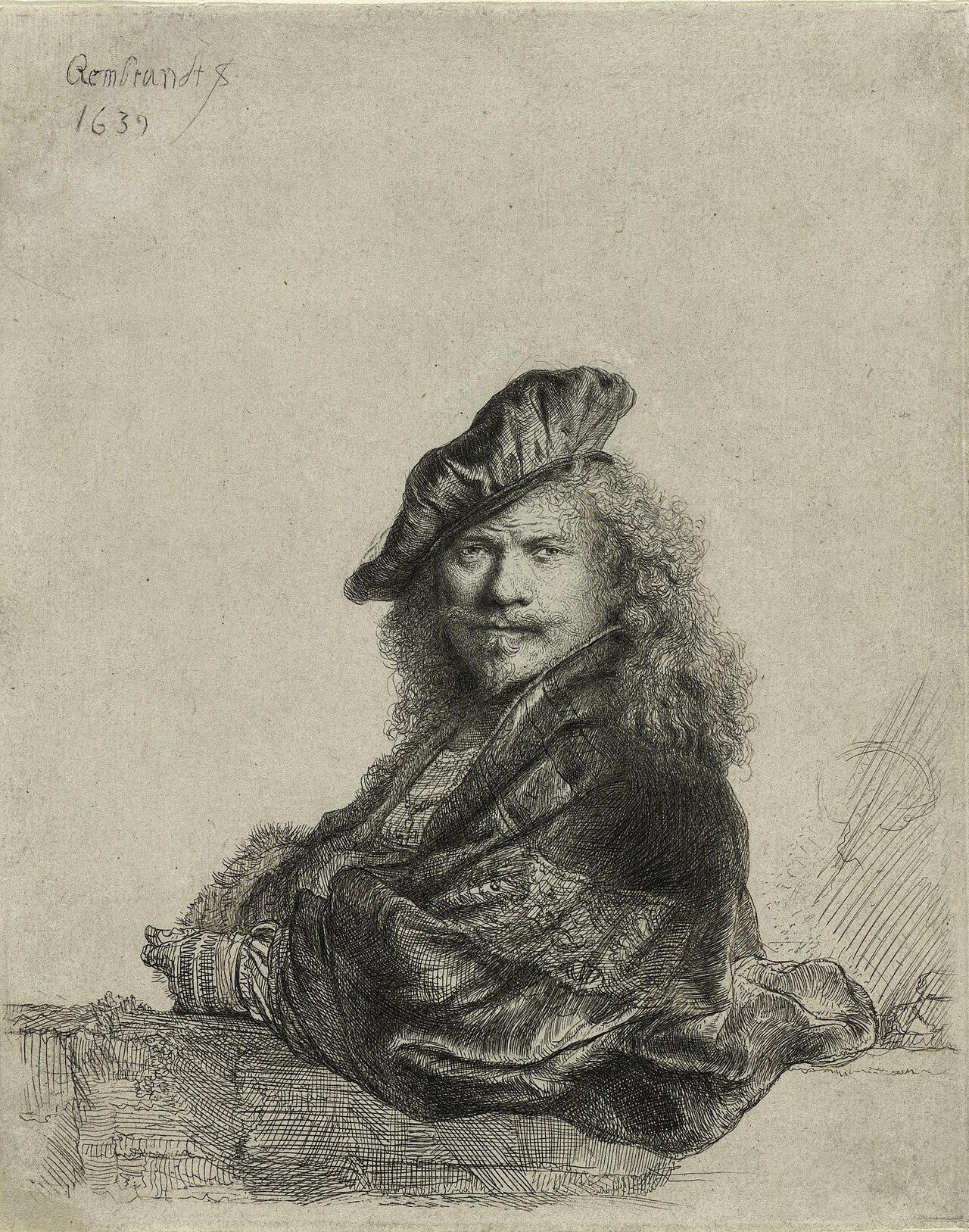
No one understood etching like Rembrandt, and for me he is the reason the medium matters at all.
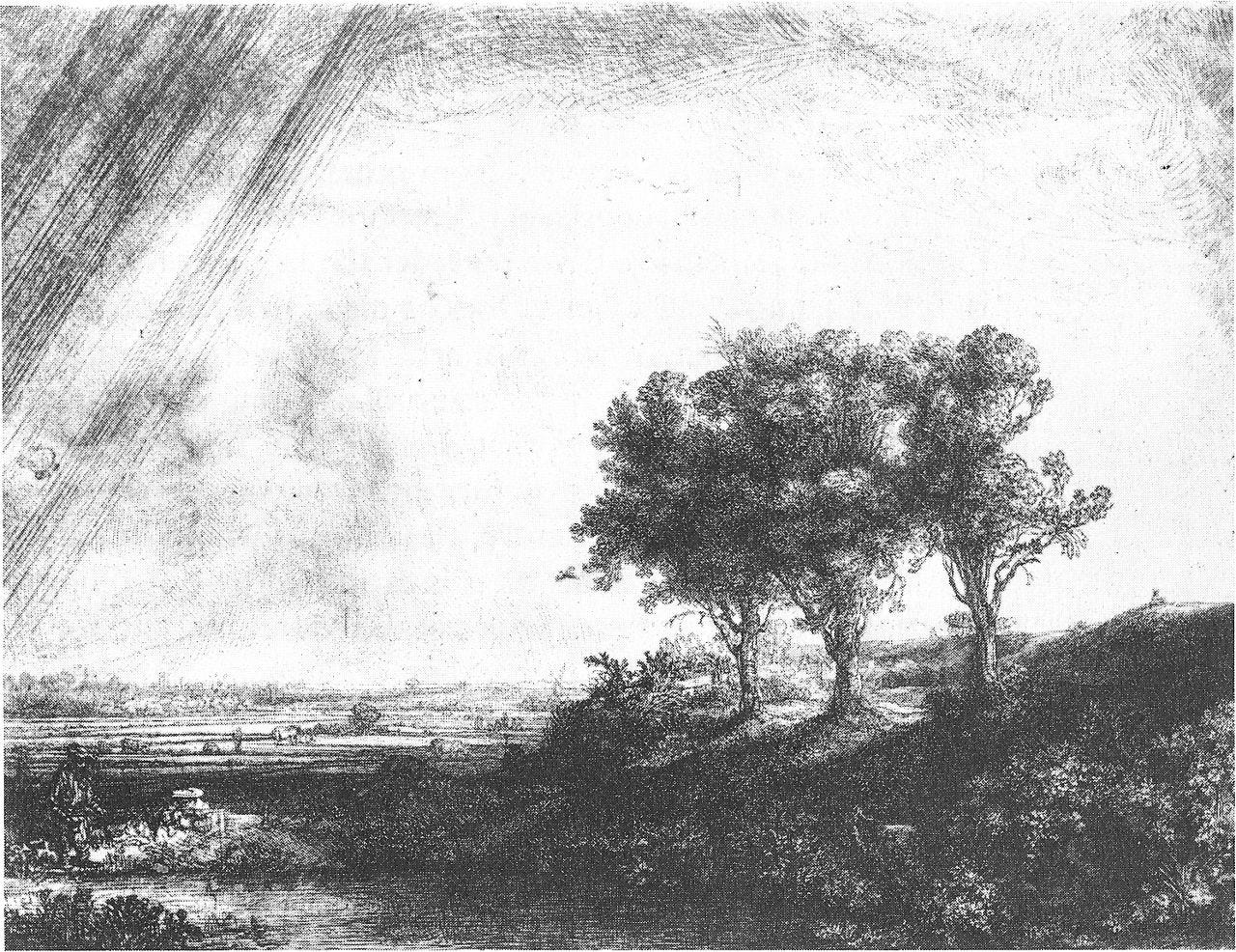
He made around three hundred etchings and treated them as a major art, not as cheap copies of his paintings. He scratched, bit, wiped and reworked his plates obsessively, pulling trial prints, changing them, printing again.
Collectors call these versions states, and chase the rare early ones. He even pulled the same plate on warm Japanese paper and on vellum to shift the color of the ink, treating the printing itself as part of the art.
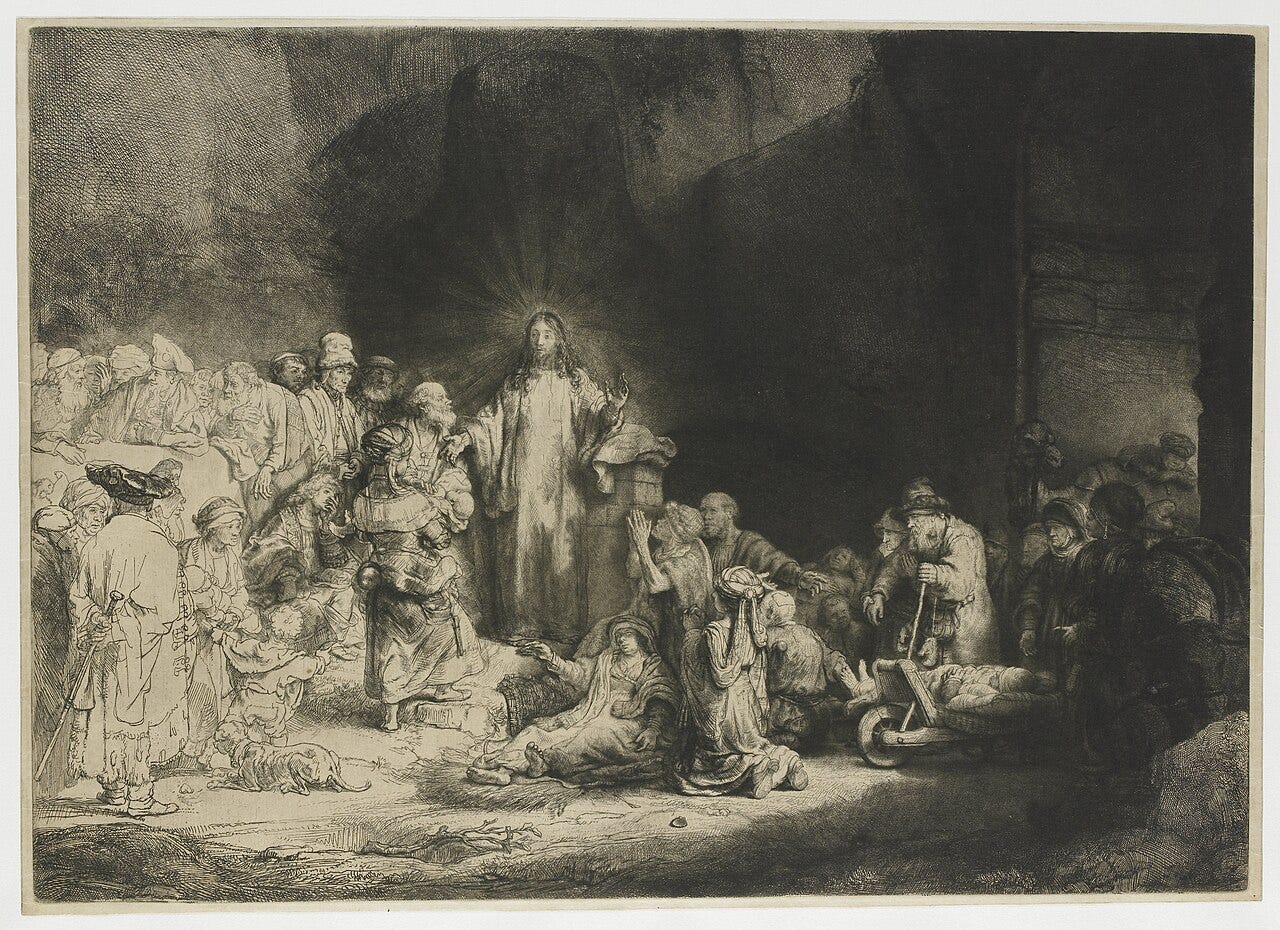
His most famous print is known as the Hundred Guilder Print, named for the high price it fetched even in his lifetime. The man behind it is worth the full story: Rembrandt.
Goya and the dark
A century later, etching turned to nightmare.
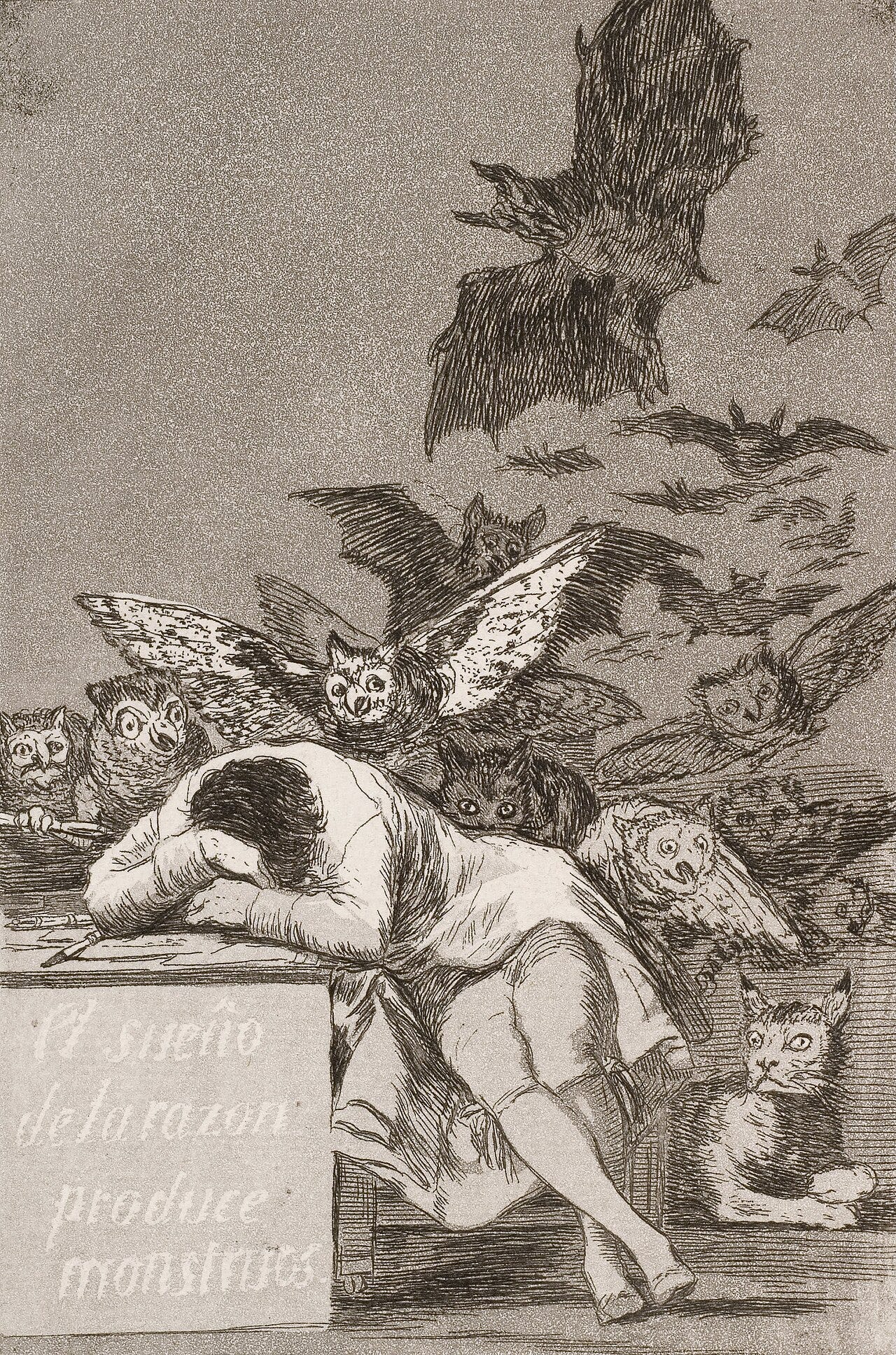
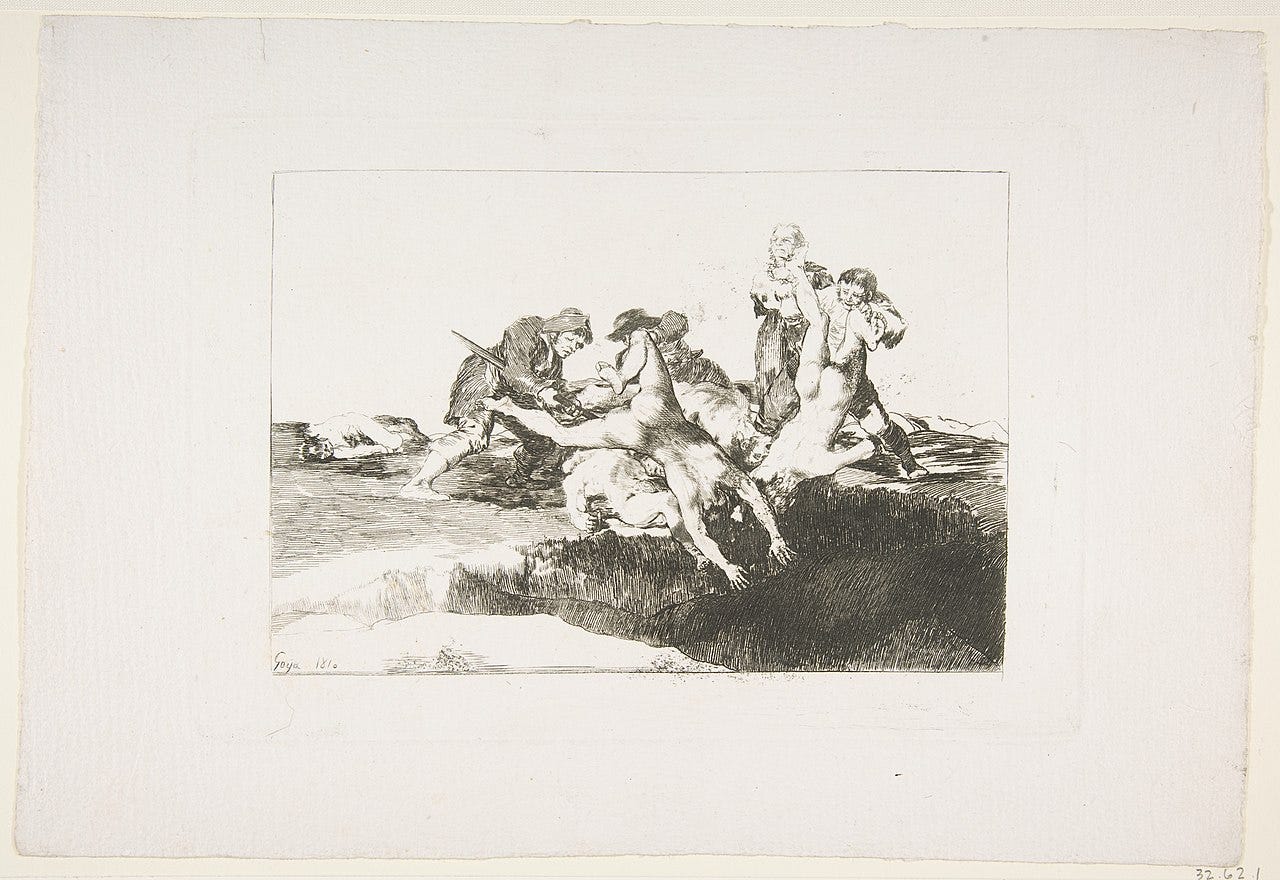
Francisco Goya used etching, deepened with tonal aquatint, for his great print series. The Caprichos mocked the follies of his age.
The Disasters of War recorded atrocity with a coldness that still chills. One plate, The Sleep of Reason Produces Monsters, shows a man slumped asleep as owls and bats swarm out of the dark behind him.
Etching let Goya be private and ferocious, printing for a small audience what he could never have hung in a palace.
It is often combined with drypoint, and shares the print world with the flat stone of lithography.
Etching, the questions that come up
What is etching? A print made by drawing through a protective ground on a metal plate, then biting the lines with acid.
How is it different from engraving? Engraving cuts lines by force with a burin. Etching draws lightly and lets acid do the cutting, so the line is freer.
What is a state? A version of a print pulled after the artist reworked the plate. Early states are rare and prized.
Who is the most famous etcher? Rembrandt, who made around three hundred etchings.
What is aquatint? A way of adding tone to an etching, using powdered resin, often combined with etched line.
More secrets to unlock


The print that drew like a pen
What I love about etching is that it hides its difficulty. The acid does the cutting, so the line keeps the looseness of a sketch and you can feel the artist thinking.
Hold a Rembrandt etching and you are not looking at a reproduction. You are looking at him drawing.
