
Engraving is a printmaking technique where the artist cuts lines into a metal plate, fills the grooves with ink, wipes the surface clean, and presses paper hard onto the plate to pull the ink out of the lines.
The result is a crisp, detailed print that can be repeated hundreds of times.
Push a hard steel tool through a copper plate and you carve a clean groove that will hold ink.
That is engraving, the most exacting of the old print methods, where every line is cut by sheer force of hand.
Engraving in brief
What it is: a print pulled from lines cut into a metal plate.
The tool: a burin, a sharp steel rod pushed through copper.
The family: intaglio, where the ink sits in the grooves, not on the surface.
The master: Albrecht Durer, around 1500.
The hidden job: copying famous paintings, long before photography.
A softer relief printing method followed in the early 1900s, cutting into linoleum instead of wood or metal, a technique the Expressionist Die Brücke group favored and which gets its own page in What Is Linocut?.
Keep learning art the fun way


Cutting lines into metal
Engraving is slow, exacting work.
The artist pushes a tool called a burin through a copper plate, carving clean V shaped grooves. There is no erasing. A slip ruins the plate.
The line can swell and taper as the burin digs deeper or lifts, which is how an engraver builds light and shade out of pure line.
Ink is rubbed into the grooves and the flat surface wiped clean. Under the press, damp paper is forced into the lines and lifts the ink out. The image is held in the cuts.
Intaglio, the opposite of the woodcut
Engraving belongs to the opposite family from the woodcut.
A woodcut is relief: you cut away the white and print from the raised parts. An engraving is intaglio, from the Italian for cut in: you carve the lines themselves and print from the grooves.
Relief work gives heavy blacks and solid shapes. Intaglio gives fine, silvery detail and dense networks of hatching.
One prints from what is left standing. The other prints from what is cut away.
Durer and the master engravings
No one made engraving sing like Albrecht Durer.
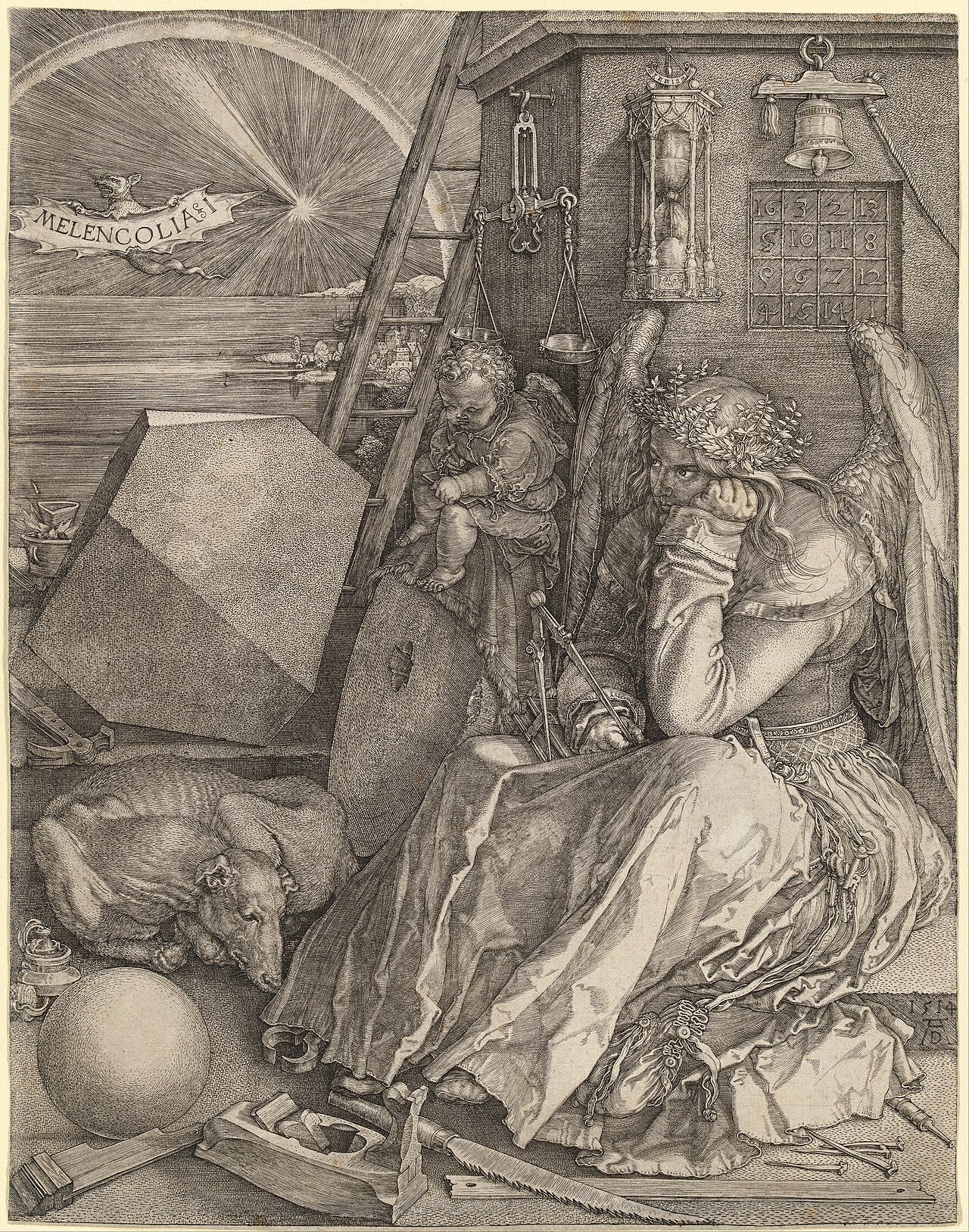
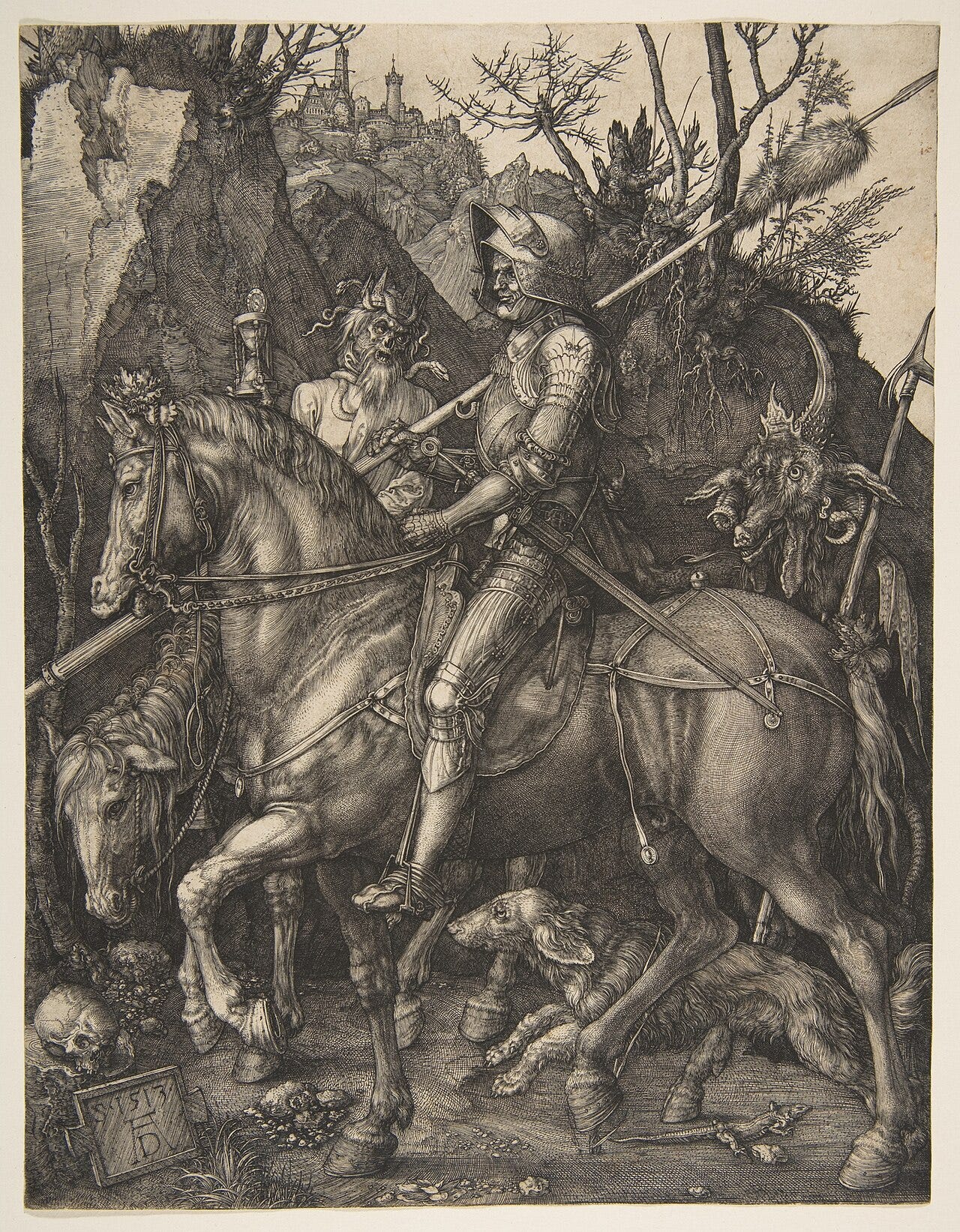
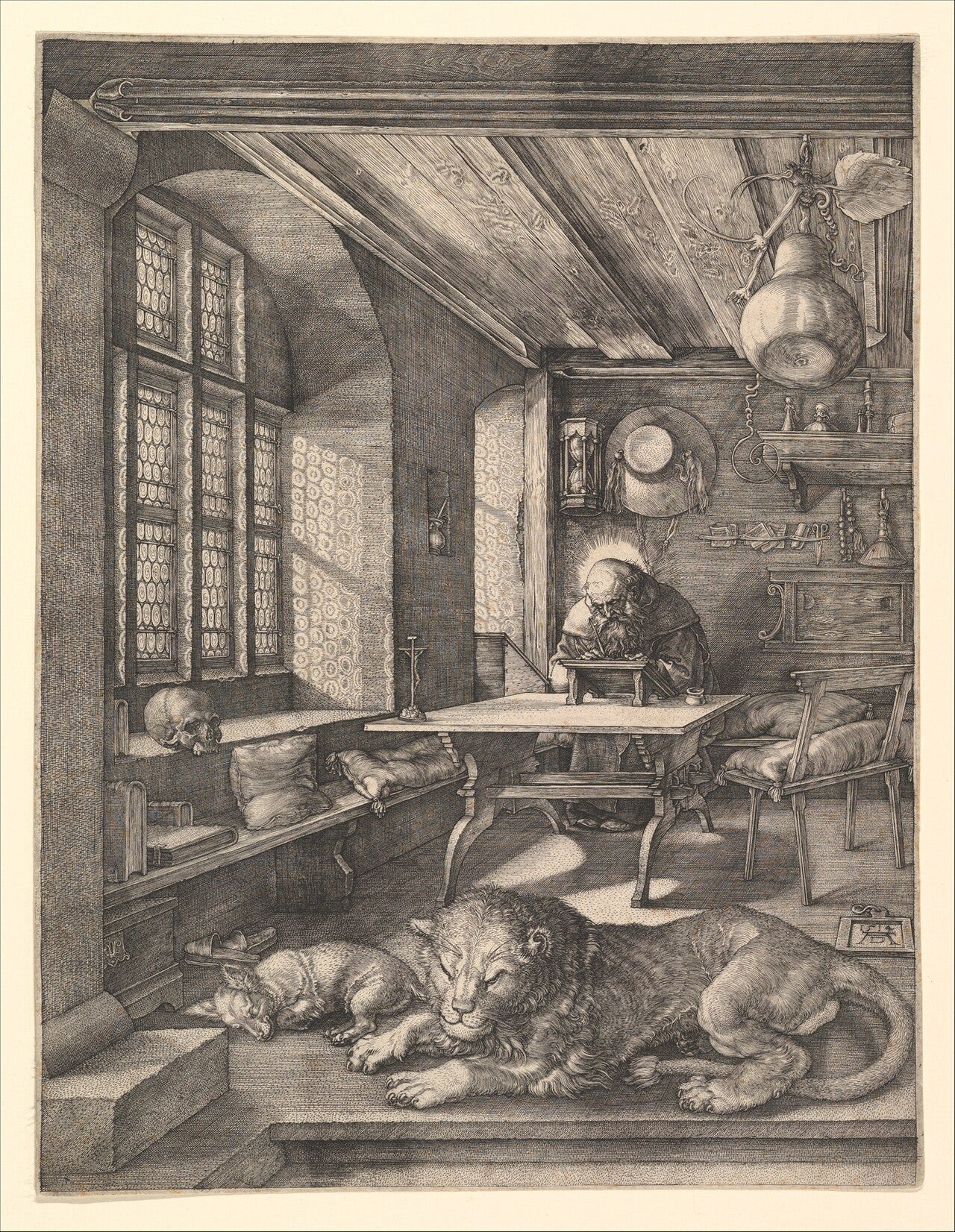
Between 1513 and 1514 he produced three works so dense and so strange they are simply called the Master Engravings: Knight, Death and the Devil, Saint Jerome in His Study, and Melencolia I. They pack a lifetime of skill into sheets you could hold in one hand.
Durer's fame spread across Europe not through his paintings, which stayed in one place, but through these portable prints, sold and copied everywhere. He understood that a print could travel where a panel never could.
How the world saw art
Here is engraving's quiet, enormous role: for centuries it was the only way to reproduce a picture.
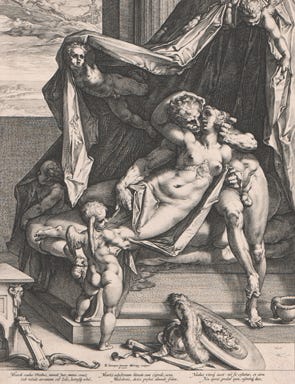
Before photography, if you wanted to know what a famous painting in Rome looked like, you bought an engraving of it. Printmakers like Marcantonio Raimondi spread Raphael's designs across Europe in cut copper.
A painter's reputation could rise or fall on how widely his work was engraved.
The engraving was the screenshot of its age, the way an image escaped its wall and went everywhere.
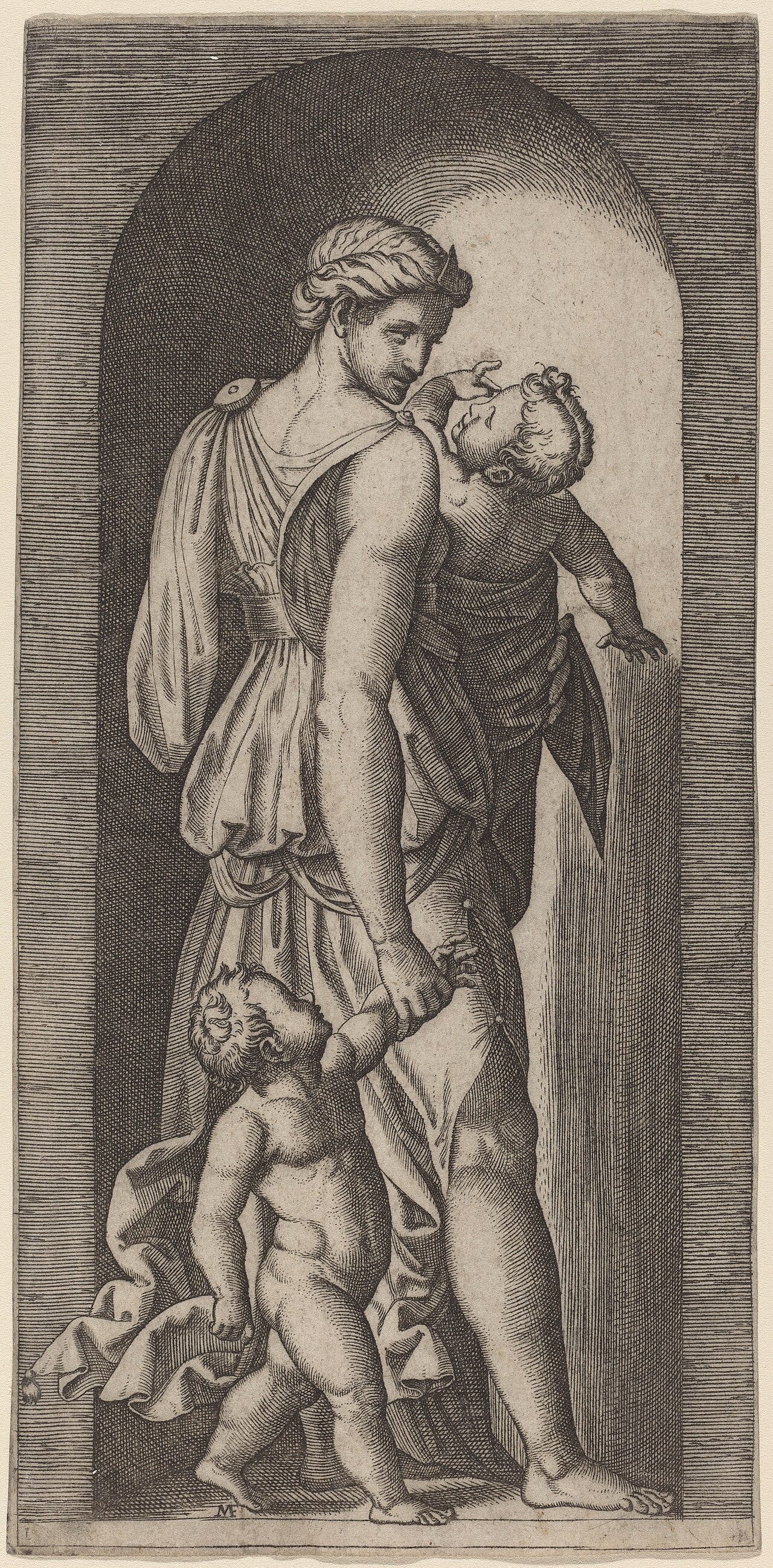
Other intaglio methods build on the same kind of plate. The acid bitten etching lets the line move freely, the tonal mezzotint works in velvety darks, and drypoint leaves a soft scratched burr.
People often mix up engraving and etching, yet engraving cuts the line by hand while etching lets acid do the cutting.
Engraving, the questions readers ask
What is engraving? A print made from lines cut into a metal plate, inked in the grooves and pressed onto paper.
What tool is used? A burin, a sharp steel rod pushed through copper to carve the lines.
How is it different from a woodcut? A woodcut prints from raised areas, relief. An engraving prints from cut grooves, intaglio.
Who is the most famous engraver? Albrecht Durer, whose Master Engravings set the standard.
Why was engraving important? Before photography, it was the main way to copy and spread images of art.
More secrets to unlock


Lines cut by sheer strength
Engraving allows none of the wobble of a pen. Each line is ploughed into the metal with the whole arm, and one slip ruins the plate. That severity is the point.
A finished copper plate could still print thousands of sheets, which is why a careful engraving from the early 1500s can look as sharp today as the day it left the press.
