
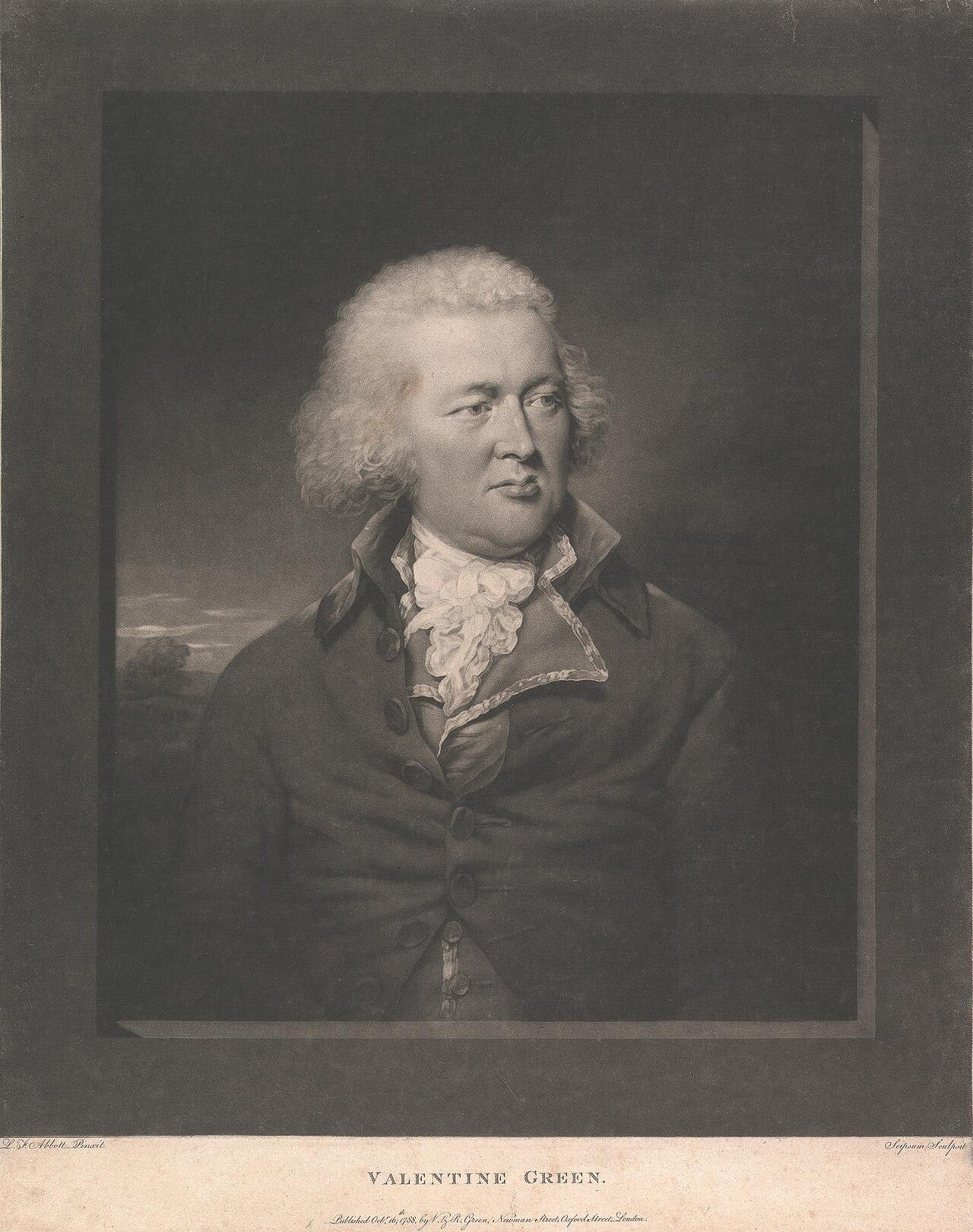
Mezzotint is an intaglio printmaking method that works backwards, from dark to light. The whole copper plate is first roughened so it would print solid black.
The artist then scrapes and burnishes that rough surface smooth where the light should fall. The picture emerges as the highlights are polished back.
Invented in the 1600s, mezzotint became an English specialty, the great machine for turning oil portraits into prints people could hang at home.
Its soft grays could reproduce the look of an oil painting more faithfully than any line engraving.
Mezzotint up close
What it is: an intaglio print made by working from black toward light.
The setup: the whole plate is roughened so it prints a deep, even black.
The work: you scrape and polish back the areas that should be bright.
The look: rich velvety blacks and soft, smoky tones, no hard lines.
The golden age: English portrait prints of the 1700s.
Keep learning art the fun way


The plate that starts black
Mezzotint flips the usual logic of printmaking.
The artist takes a tool called a rocker, a curved blade of fine teeth, and works it across the whole plate in every direction until the surface is covered in tiny burrs.
Inked and printed at that stage, the plate would give a flat, deep black, because the rough surface holds ink everywhere.
Then the real work begins. Wherever the picture needs light, the artist scrapes those burrs down or burnishes them flat, so that spot holds less ink and prints paler. Polish a patch fully smooth and it prints pure white.
You are not drawing the image. You are releasing it from the dark.
There is a price for that softness. The fine burr flattens under the press, so a single plate yields only a few dozen rich impressions before the blacks fade to grey, which is why early proofs are prized.
Tone without a single line
This backwards method gives mezzotint its unmistakable surface.
Because the image is built from millions of tiny points rather than lines, there are no hard edges anywhere. Skin, velvet, shadow and hair melt into one another in smooth gradations.
The French name says it, maniere noire, the black manner. The English word mezzotint comes from the Italian for half tint, the in between greys it does so well.
Where engraving gives you crisp line and aquatint gives you flat washes, mezzotint gives you velvet.
A prince with a strange hobby
Mezzotint has one of the oddest origin stories in art.
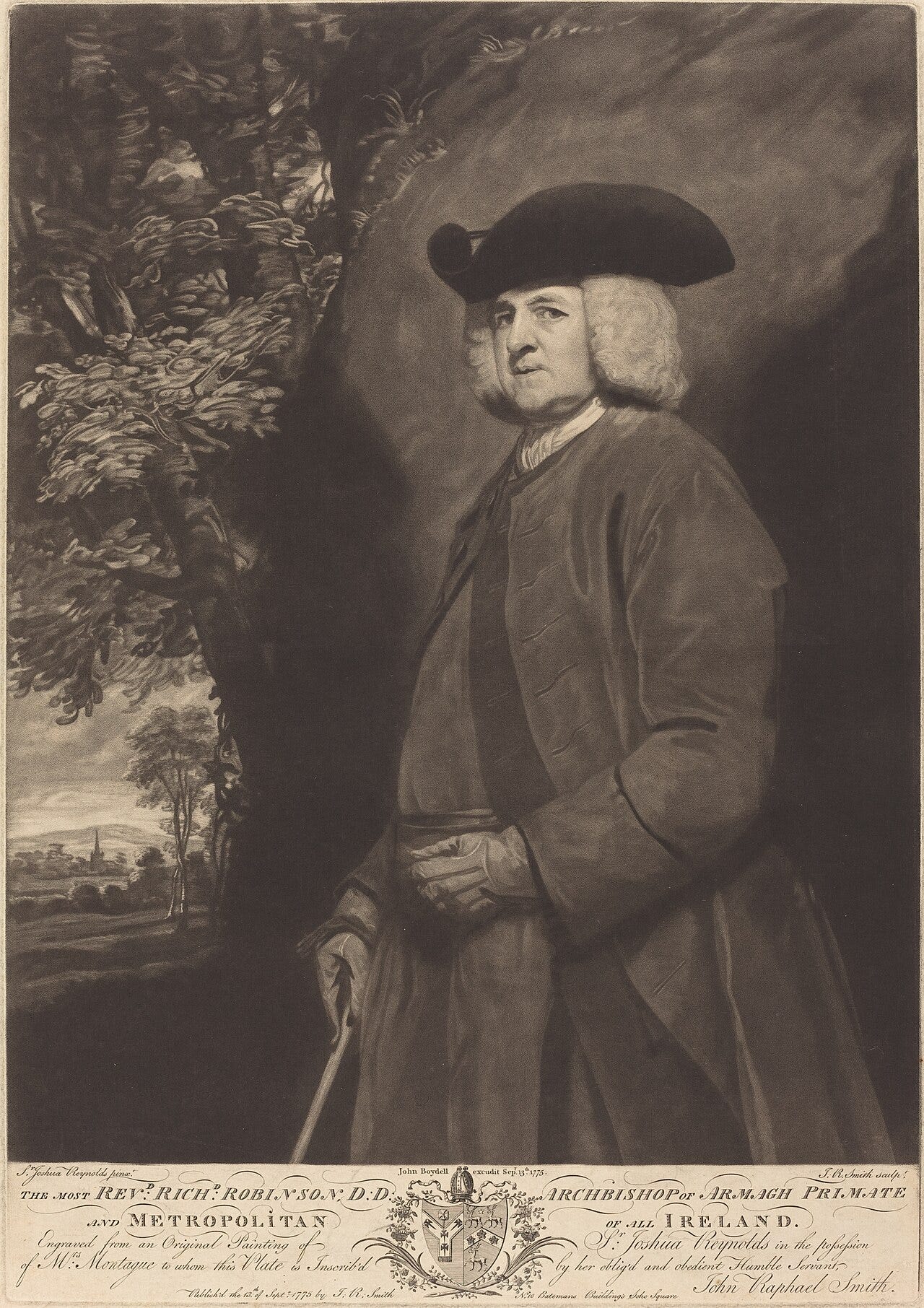
It was popularized in the mid 1600s by Prince Rupert of the Rhine, a dashing cavalry commander and nephew of an English king, who took up the technique between wars and helped bring it to England.
The legend, told later and probably embroidered, has him noticing a rusted, pitted gun barrel and wondering how to turn that all over roughness into a picture.
A soldier prince with an eye for ruined metal is not the inventor I would expect for the softest process in print.
The age before the camera
For a century, mezzotint was how the public saw great paintings, and to my eye those prints are underrated now.
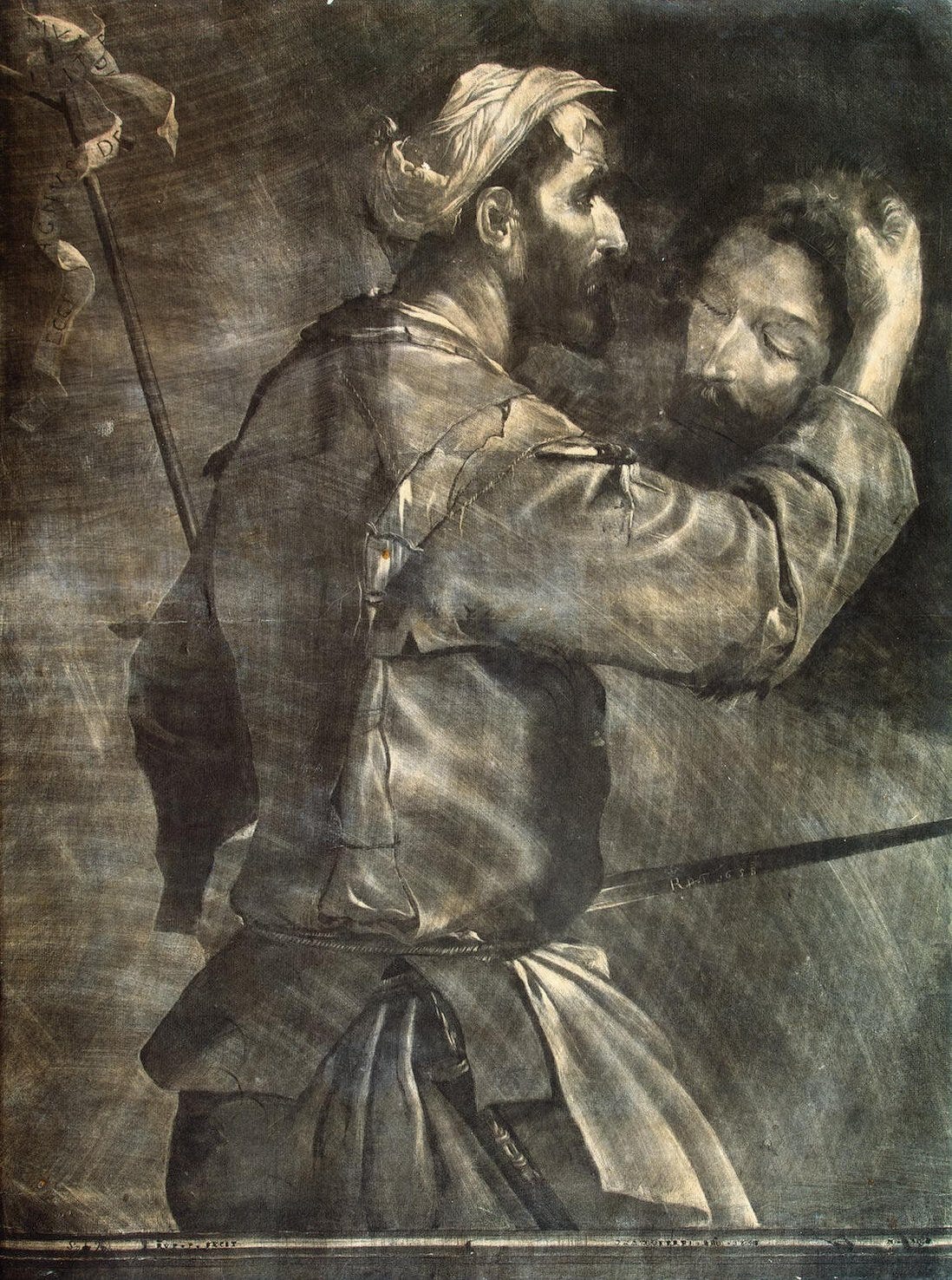
In 1700s Britain, printmakers turned the grand portraits of Joshua Reynolds and Thomas Gainsborough into mezzotints by the thousand.
Those soft toned prints carried a famous face or a fashionable beauty into homes across the country, decades before photography existed.
It was the reproduction technology of its day, and the English were so good at it that on the continent it was simply called la maniere anglaise, the English manner.
Photography later killed the trade, and mezzotint nearly vanished. It survived as an artists' medium, revived in the 1900s by printmakers like Yozo Hamaguchi and Mario Avati, who used its blacks for their own images rather than to copy paintings.
The painter made one canvas. The mezzotint made the painter famous.
You can still stand in front of them. Prince Rupert's Great Executioner of 1658 hangs at the Met, while the British Museum keeps a vast holding of reproductive prints.
It sits among the other intaglio methods, the bitten line of etching and the scratched burr of drypoint.
Mezzotint, the tone questions
What is mezzotint? A tonal intaglio print known for deep blacks and soft, smoky greys, made with no lines at all.
How is it different from engraving? Engraving cuts crisp lines. Mezzotint builds smooth, lineless tone instead.
Why are the blacks so rich? The fully roughened plate holds a dense, even layer of ink before any light is scraped out.
Who popularized it? Prince Rupert of the Rhine helped spread it from the 1650s.
What was it used for? Above all, reproducing famous portraits in 1700s Britain, before photography existed.
More secrets to unlock


The only print that starts in the dark
Almost every other picture begins on white and adds the shadows. Mezzotint does the reverse, starting from a plate that would print pure black and scraping a face out of it hour after hour.
I find it the most nocturnal way to make an image, and the most patient.
