
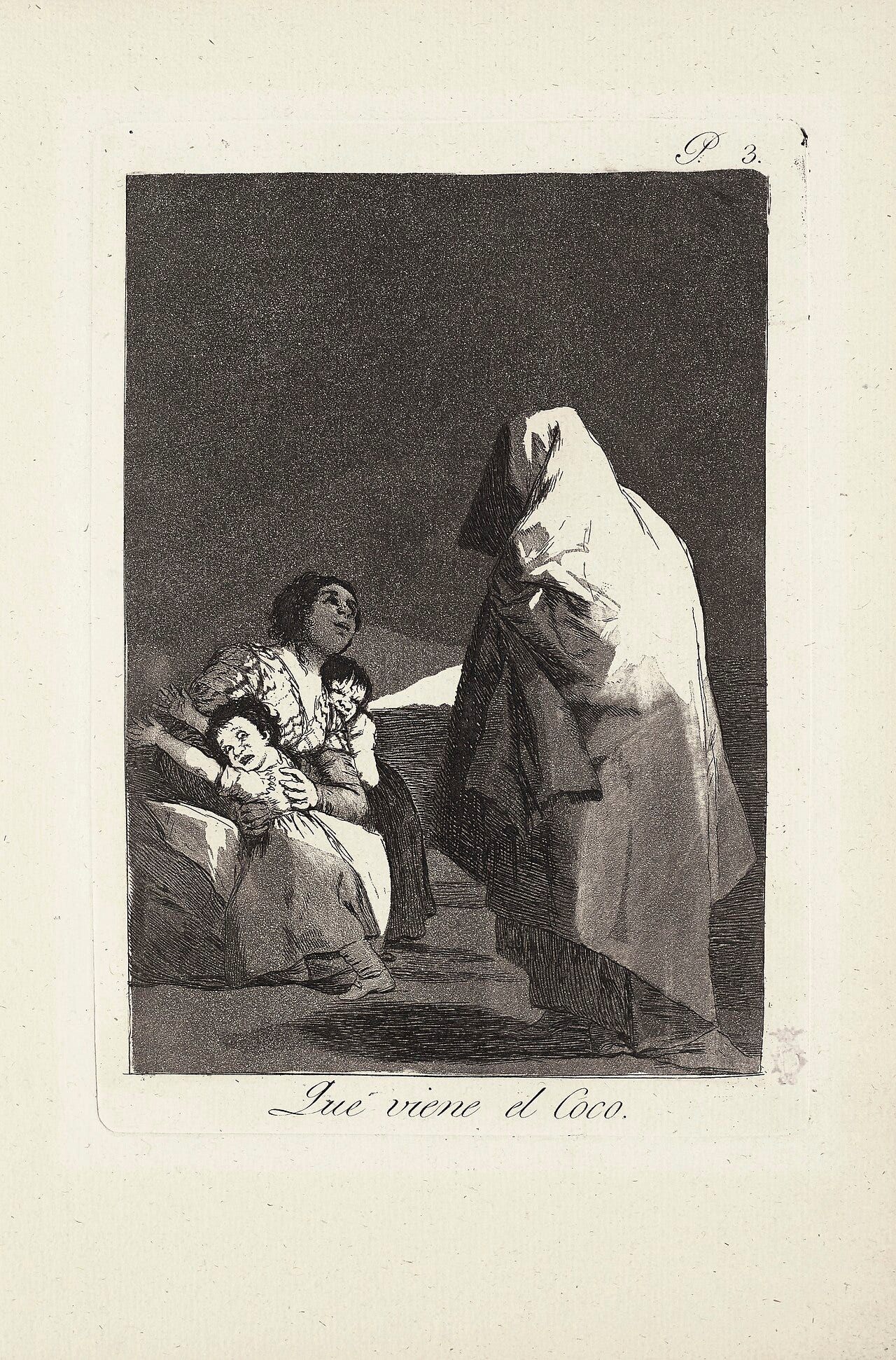
Aquatint is an intaglio printmaking technique for printing areas of tone rather than line.
The artist dusts a metal plate with powdered resin, heats it so the grains stick, then bathes the plate in acid. The acid bites around each tiny grain, leaving a pitted surface that holds ink as a soft, flat wash of grey or black.
Dust a plate with fine resin, warm it, and bathe it in acid, and you can print not lines but soft fields of grey.
Aquatint gives a print the look of an ink wash, and it is where Goya found his darkness.
Aquatint in sixty seconds
What it is: an intaglio method for printing flat areas of tone.
The trick: powdered resin on the plate, then acid bites around the grains.
The look: soft washes of grey and black, like watercolor or ink.
The master: Francisco Goya.
The partner: it is almost always combined with etched line.
Keep learning art the fun way


Tone, not line
Plain etching has one limit: it draws lines, but it cannot easily make a smooth grey.
Aquatint solves that. Instead of lines, the artist creates a field of microscopic dots. The plate is dusted with fine resin powder and warmed so the grains fuse to the metal.
In the acid bath, the metal between the grains gets bitten, while the grains protect tiny spots. The result is a pitted area that, when inked, prints as an even tone.
Stop the acid early for a pale grey. Leave it longer for a deep, velvety black. Cover finished areas with varnish and bite again, and you build a whole scale of greys.
How the grains make grey
The magic is in the grain.
A fine, even dusting of resin gives a smooth tone. A coarse one gives a grittier texture.
By masking and rebiting in stages, the artist builds light and shade the way a watercolorist layers washes. Unlike the hard cut lines of engraving, the tone is soft and continuous.
This is why aquatint pairs so naturally with etching. The etched line draws the shapes.
The aquatint floods them with shadow. One plate, two techniques, working together.
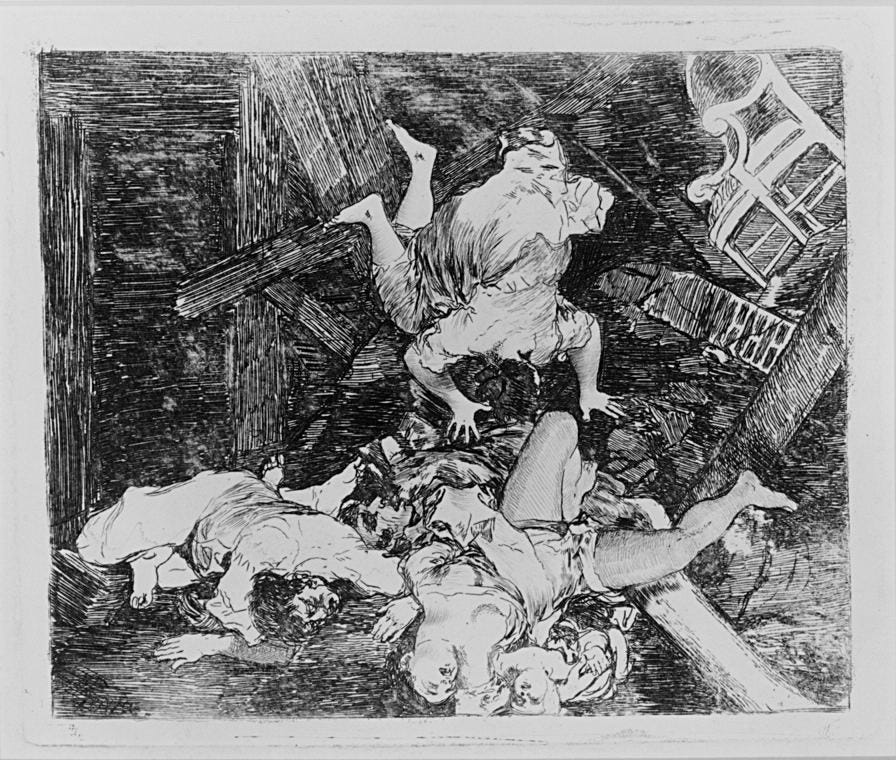
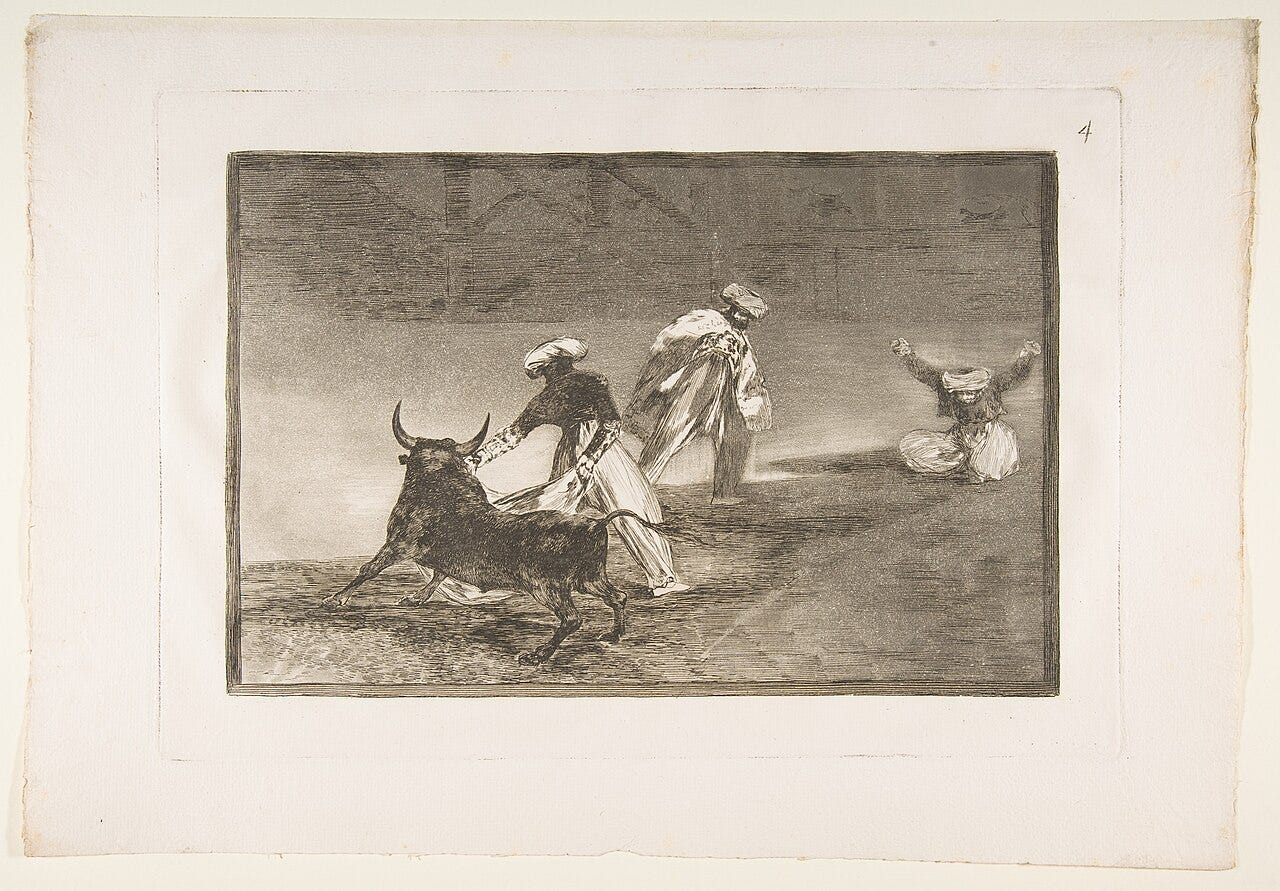
Goya's nightmares are made of it
Aquatint was a latecomer, perfected in the 1760s by the French printmaker Jean Baptiste Le Prince. Then Goya got hold of it, and no one has used it like him since.
The suffocating darkness of his print series, Los Caprichos and the Disasters of War, is aquatint. Those deep, grainy blacks that swallow a figure whole are bitten into the plate as tone, grain by grain.
The horror has a texture, and that texture is resin and acid.
Strip the aquatint away and Goya's monsters would be mere outlines. With it, they sit in real darkness, and to my eye that is the most frightening black in all of printmaking.
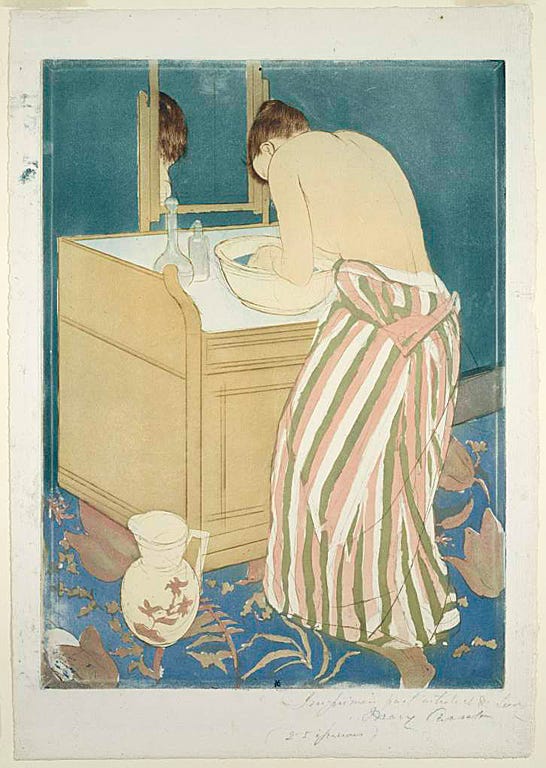
Color and the modern aquatint
Aquatint did not stay black and grey.
In the late 1800s, inspired by Japanese prints, Mary Cassatt made a series of color aquatints of women in quiet domestic moments, inking several plates in soft colors and printing them in register.
They have the flat elegance of a woodcut with the tonal softness only aquatint can give.
The technique that gave Goya his darkness gave Cassatt her light, and I find that swing the best argument for the medium.
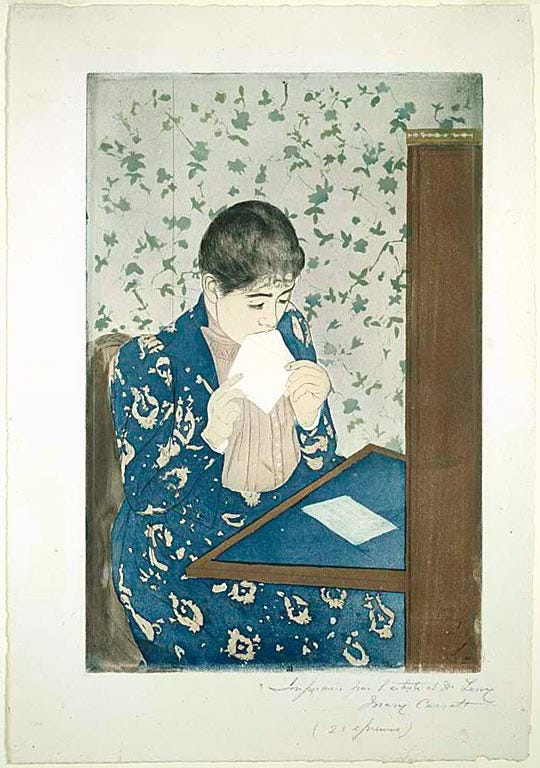
Among the tonal intaglio methods it stands beside mezzotint, and it often shares a plate with drypoint.
Aquatint, the questions worth asking
What is aquatint? An intaglio printmaking technique that prints areas of tone, made with powdered resin and acid.
How is it different from etching? Etching prints lines. Aquatint prints flat tone. They are usually used together.
How does it work? Resin grains protect tiny spots while acid bites around them, creating a surface that holds ink as a wash.
Who is the most famous user? Francisco Goya, especially in Los Caprichos and the Disasters of War.
Can aquatint be in color? Yes. Mary Cassatt and others made color aquatints from several inked plates.
More secrets to unlock


Shadow you can print
Most prints are made of lines. Aquatint is made of fog: thousands of acid bitten resin grains that read as a single soft tone.
That is why I always look for it in Goya. The horror in the Disasters of War, around 1810, lives in the shadow itself, a controlled cloud of acid locked into the plate.
