
Francisco Goya was a Spanish painter who began as a charming court portraitist and ended as the first truly modern artist, painting war, madness and nightmare with a raw honesty no one had dared before.
He is often called the last of the Old Masters and the first of the moderns. Across roughly six decades he moved from tapestry designs and glittering court portraits to the Disasters of War and the Black Paintings, and along the way he reinvented what a picture was allowed to say.
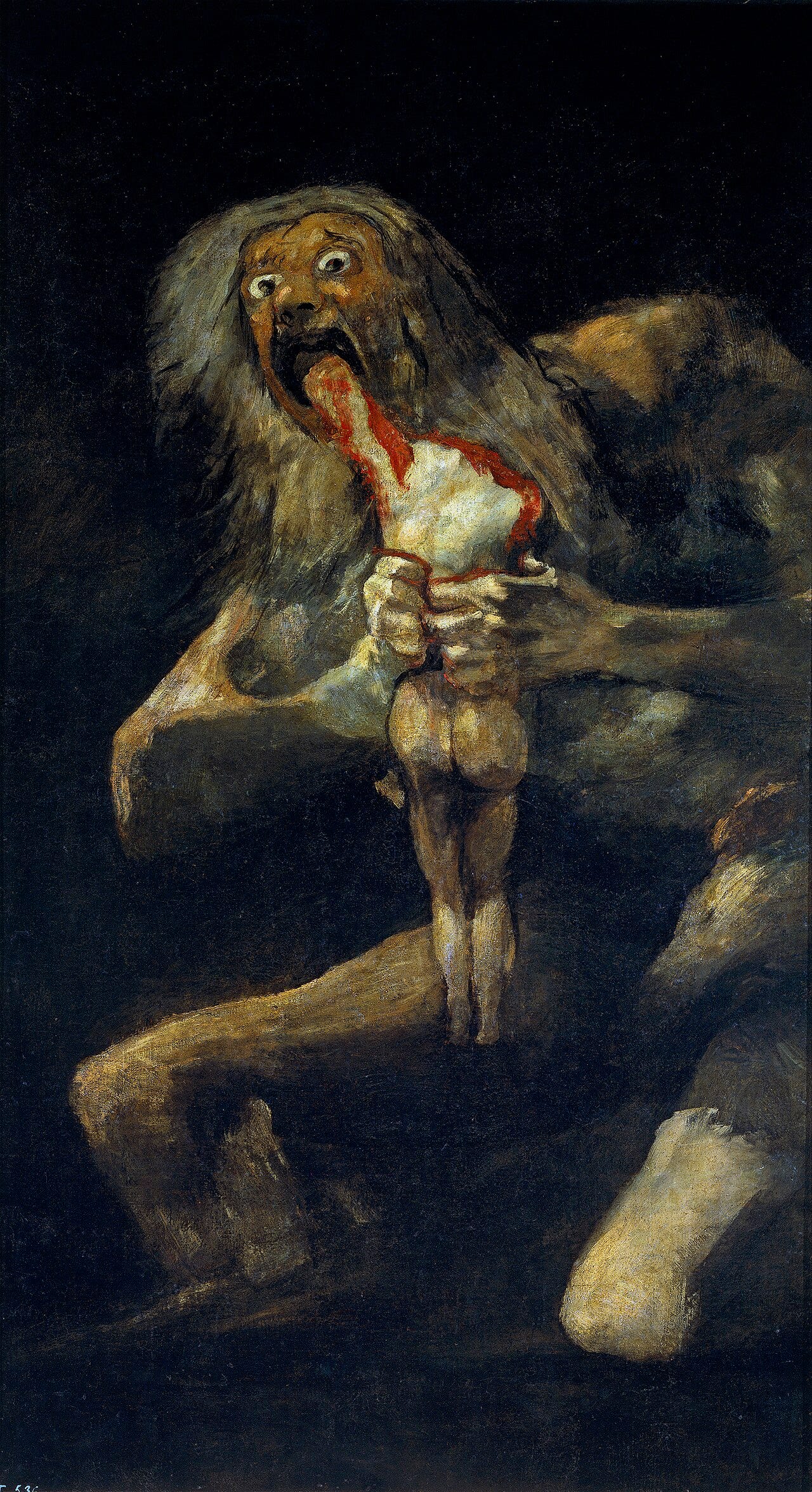
There are really two Goyas. One painted the Spanish royal family in silk and lace. The other, after an illness left him stone deaf, painted monsters on the walls of his own house. The same hand did both.
More incredible painter stories
If Francisco Goya pulled you in, you will love these too:


His life ran through revolution, war and exile, and his story even has a missing skull. Here is the whole thing.
Francisco Goya at a glance
1746. Born in Fuendetodos, a gilder’s son.
1793. An illness left him permanently deaf at 47.
1799. Published Los Caprichos and became First Court Painter in the same year.
1819. Bought the Quinta del Sordo and began the Black Paintings on its walls.
1828. Died in Bordeaux. When Spain repatriated the body, the skull was missing.
The hinge between old and modern
Goya is the hinge between old art and modern art. Before him, painting mostly showed power, faith and beauty. He turned it toward fear, cruelty, injustice and the dark corners of the mind.
He painted real war crimes, real superstition, real human ugliness, with sympathy for the victims. Artists from Manet to Picasso treated him as the father of everything that came next.
The deafness that changed everything
The turning point came in 1793, when Goya, in his mid forties, fell gravely ill. He survived, but the sickness left him completely deaf for the rest of his life.
Cut off in silence, his art darkened and deepened. The cheerful court painter gave way to a man obsessed with madness, violence and the irrational. Much of his greatest, bleakest work flows directly from that wall of silence.
Spotting a Goya, from silk to shadow
Goya changed so much over his life that he can look like several painters.
Early light. Sunny, pretty scenes and crisp royal portraits, made for tapestries and palaces.
The loosening hand. Over time his brushwork grew rough, fast and free, far ahead of his era.
The darkness. Blacks, browns and shadow take over, peopled with witches, monsters and the dying.
Sympathy for the victim. He paints suffering from the side of the powerless, not the powerful.
His mood pushes toward Romanticism, and in his prints he became a master of etching, using it to attack war and superstition.
His only three teachers
Goya was proud and a little blunt about his teachers. He said he had only three masters: Velazquez, Rembrandt and nature.
From Velazquez, the great Spanish court painter, he learned how to handle royalty and loose, living brushwork. From Rembrandt he took drama, shadow and deep humanity. And nature, he insisted, taught him the rest.
The court painter
For all his darkness, Goya climbed to the very top of the Spanish establishment, becoming First Court Painter to King Charles IV.
His huge group portrait, The Family of Charles IV, is famously unflattering. The royals look stiff, vain and a little dim, and historians still argue over how much Goya was quietly mocking the people who paid him.
The Black Paintings
Goya’s strangest works were never meant for anyone else to see. Late in life, deaf and bitter, he covered the walls of his house outside Madrid, nicknamed the House of the Deaf Man, with around 14 horrifying murals.
These Black Paintings include Saturn Devouring His Son, a god tearing apart his own child. He painted them straight onto the plaster, for himself alone. Only after his death were they cut from the walls and moved onto canvas.
Saturn Devouring His Son is one of twelve black paintings collected across art history, from Goya’s own walls to Rembrandt’s darkest self portrait.
War, and the birth of protest art
When Napoleon’s army occupied Spain, Goya recorded the horror. His painting The Third of May 1808 shows French soldiers executing helpless Spanish civilians, a faceless firing squad against a man with his arms flung wide.
It is often called the first modern history painting, because it takes the side of the ordinary victim rather than glorifying a hero. His print series The Disasters of War is even more unflinching.
The Majas and the Inquisition
Goya also courted scandal. He painted The Naked Maja, one of the first frank full length female nudes in Spanish art, alongside a clothed version of the same woman.
The nude was brazen enough that the Spanish Inquisition questioned him over it. He never named the model, and her identity is still debated.
Exile, death and the missing skull
Old, deaf and out of step with a repressive Spain, Goya went into self exile in Bordeaux, France, where he kept working almost to the end. He died there in 1828, at 82.
There is a final twist. When his body was later moved back to Spain, his skull was missing. For me that lost head is the most Goya ending imaginable: to this day, no one knows what became of it.
Where the darkness hangs
For the full arc, the Met also runs an essay on his life and the Spanish Enlightenment.
One museum towers above all others for Goya.
The Museo del Prado, Madrid. The essential stop, home to the Black Paintings, The Third of May 1808 and both Majas.
Major museums worldwide. The Met, the National Gallery in London and others hold key portraits and prints.
A gilder's son from Fuendetodos
Francisco de Goya was born on 30 March 1746, in Fuendetodos, a small village in the dry hills near Zaragoza in northern Spain.
The family was not wealthy. His father, Jose, was a gilder, a craftsman who applied gold leaf to altarpieces and picture frames. His mother, Gracia Lucientes, came from minor local gentry that had lost its money.
Goya was one of several children, and the household soon moved to Zaragoza, the regional capital, where there was more work. There was nothing about that beginning to promise a court career.
The gilding shop was his first classroom in how paint, gold and surfaces behave, long before he ever touched an easel.
Zaragoza, two rejections, and a trip to Italy
As a teenager in Zaragoza, Goya trained with the local painter Jose Luzan, learning to copy prints and religious pictures.
He was ambitious, and Madrid was where reputations were made. Twice he entered the drawing competitions at the Royal Academy of San Fernando in the capital, in 1763 and 1766. Twice the judges passed him over completely, without a single vote.
So he found another way. Around 1770 he paid for his own trip to Italy, the traditional finishing school for European painters. In 1771 he entered a competition run by the Academy of Parma and won an honorable mention.
He returned to Zaragoza with fresco commissions and, at last, momentum.
The marriage that opened the palace doors
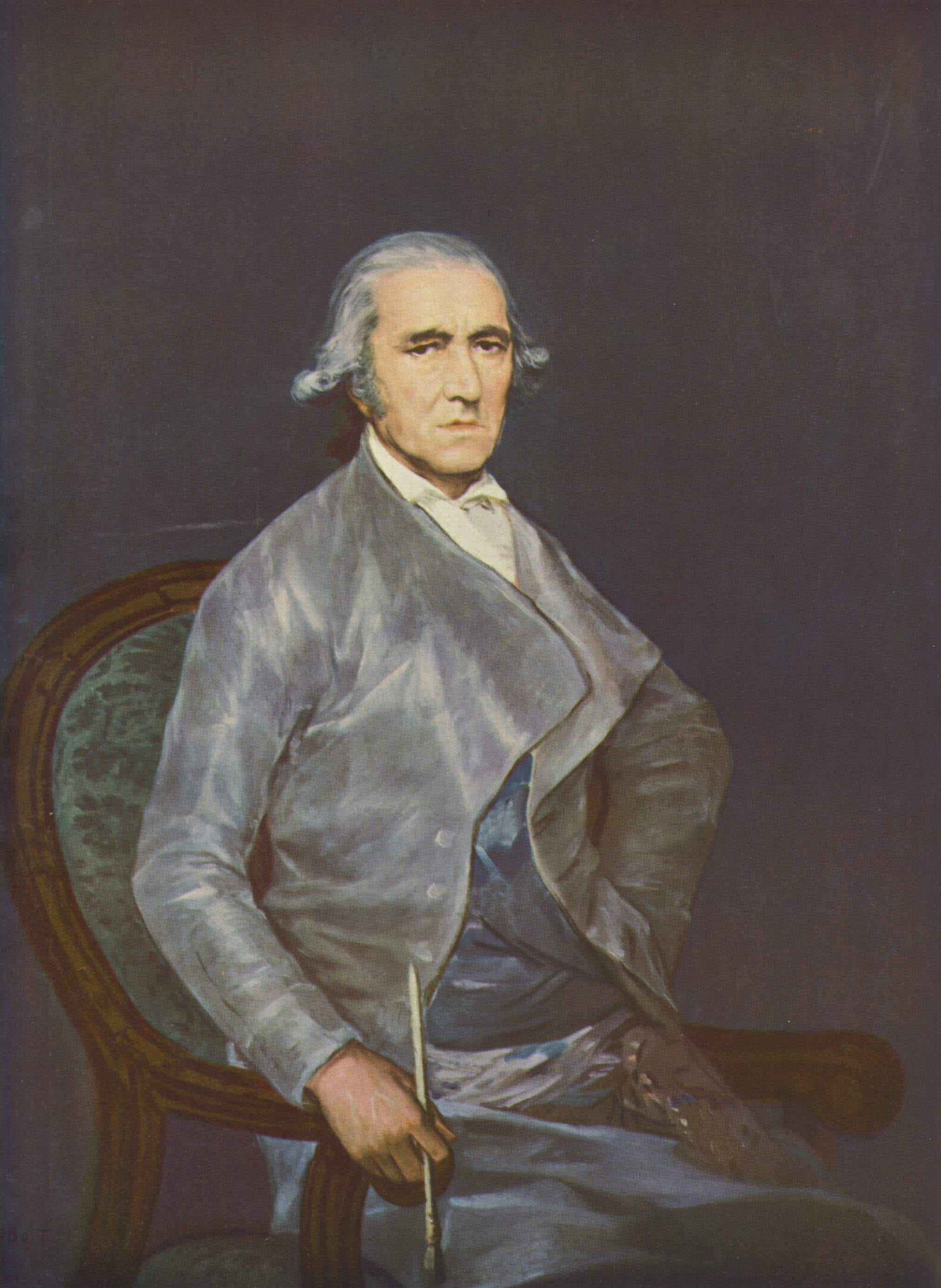
In 1773 Goya married Josefa Bayeu in Madrid. It was the connection that changed his life.
Josefa was the sister of Francisco Bayeu, an established court painter with real influence at the Spanish crown. Through that family tie, Goya was pulled into the circle of royal work.
In 1774 he was invited to Madrid to paint designs for the Royal Tapestry Factory, a job Francisco Bayeu helped arrange. The relationship between the two men was not always easy, since Bayeu was also his supervisor and Goya chafed under corrections.
But without that marriage and that brother in law, the village gilder's son might never have reached the court at all.
Many children, one survivor
Goya and Josefa had a large family, but they buried most of it. Records point to several pregnancies and births across the 1770s and early 1780s, and one child after another died young.
Only a single son lived to adulthood. Javier Goya, born in 1784, was the one who survived. That loss of children was common in the 1700s, even in comfortable homes, but it still marked the household.
Javier became the heir. He inherited his father's country house, and Goya later painted him as an elegant young man. The bond mattered to the old artist.
In his final years abroad, Goya's letters return again and again to Javier and to his grandson Mariano.
The Parasol and the sunlit tapestry years
Goya's first steady court work was not grand history painting. It was designs for tapestries.
Between the 1770s and around 1792 he produced more than sixty large paintings called cartoons. Weavers at the Royal Tapestry Factory copied them thread by thread to hang in royal dining rooms and antechambers.
The subjects are cheerful and everyday. Young people flirt at picnics, play games, dance and stroll. The Parasol, from 1777, shows a smiling woman shaded by a young man holding a green sunshade, all warm light and easy charm.
These scenes are the opposite of the later nightmares. They show a young painter who could make ordinary Spanish life look like a holiday.
The Family of Charles IV, an honest crown
In 1800 Goya painted the royal family together in one large group portrait, now in the Museo del Prado.
Thirteen members of the family of Charles IV stand in a row in their finest silks and medals. Goya placed himself in the shadows at the back, at his easel, echoing an old trick used by Velazquez.
What surprises many viewers is how plainly he painted his patrons. The faces are not flattered. The king looks heavy and vacant, the queen hard and aging.
Goya probably did not mean to mock them. He recorded them as they were, jewels and all. The result is one of the most frank portraits of royalty ever accepted by the royals themselves.
Los Caprichos and the sleep of reason

In 1799 Goya published a set of eighty etchings called Los Caprichos, meaning caprices or whims. He combined the etched line with aquatint, the tonal process that gives the set its soft grey shadow.
They were a public attack disguised as fantasy. The prints mock superstition, greedy priests, arranged marriages, quack doctors and human folly, filling the pages with witches, donkeys dressed as scholars and grotesque creatures.
The most famous plate shows a man slumped asleep at his desk while owls and bats swarm behind him. Its caption reads, the sleep of reason produces monsters.
The message was risky in a country ruled by church and crown. Goya put the set on sale, then quietly withdrew it after a short time, wary of the Inquisition.
The Disasters of War, drawn for no one
Goya lived through the French invasion of 1808 and the brutal war that followed. In private, he recorded it in a set of around eighty etchings now called The Disasters of War.
He worked on them roughly between 1810 and 1820. They show famine, mutilation, executions and cruelty, without heroes or glory on either side.
Here is the part that stuns people. Goya never published them. The plates were too damning of both the French and the restored Spanish crown to release safely.
The full series did not appear in print until 1863, thirty five years after his death. A body of protest art sat in silence for a generation before the world was allowed to see it.
The House of the Deaf Man, and a myth to correct
Around 1819 Goya bought a country house on the edge of Madrid. On its walls, between about 1820 and 1823, he painted the dark scenes now known as the Black Paintings.
The house was called the Quinta del Sordo, the House of the Deaf Man. It is easy to assume it was named for Goya, who had been deaf since an illness in the 1790s.
That is the myth. The name is a coincidence. The property was already known as the Deaf Man's House before Goya bought it, apparently after an earlier deaf owner.
Goya did not name it after himself. He simply moved into a house whose old nickname happened to fit the silent painter perfectly.
Bordeaux, bulls on stone and faces on ivory
In 1824 Goya, then in his late seventies, left Spain for the French city of Bordeaux. He feared the harsh absolutist rule of Ferdinand VII and asked leave to seek medical care abroad. He never came back.
His hand did not stop. In Bordeaux he took up lithography, then a young printing method, and produced a set of prints of the bullring known as The Bulls of Bordeaux in 1825.
He also made tiny pictures on small plates of ivory, dabbing and scraping the surface to pull out strange, glinting figures. Deaf, aging and in a foreign city, Goya kept experimenting with brand new materials until nearly the end.
He died in Bordeaux in April 1828.
The Francisco Goya questions that keep coming up
What are Goya's Black Paintings? The fourteen murals he painted directly on the walls of his farmhouse, the Quinta del Sordo, around 1820 23, Saturn devouring his son among them, never meant for any public. They were transferred to canvas and hang in the Prado.
Why did Goya go deaf? A violent illness in 1793, still undiagnosed, left him permanently deaf at 46. The silence coincides with the turn from tapestry brightness toward the visions and the Caprichos.
What is The Third of May 1808? His 1814 painting of Napoleonic executions in Madrid, the white shirted man facing the firing squad, the ancestor of Manet's and Picasso's protest paintings.
Are the Caprichos and Disasters of War different? Yes: the 80 Caprichos of 1799 satirize Spanish society, while the Disasters, etched during the war and too dangerous to publish in his lifetime, document atrocity without sides.
Why did Goya die in France? He left Ferdinand VII's repression for voluntary exile in Bordeaux in 1824, at 78, and died there in 1828, painting and lithographing to the end.
Where can I see Goya? The Prado above all, the Caprichos and Disasters in print rooms worldwide, the frescoes of San Antonio de la Florida in Madrid, and the two Majas side by side in the Prado.
How did Goya actually die? A stroke in Bordeaux in 1828, in exile and aged 82, and his skull went missing after his body was later exhumed. The stranger details of his death are laid out separately.
What is he known for? Dark, modern paintings of war, madness and royalty, and the Black Paintings.
Was Goya deaf? Yes. An illness in 1793 left him deaf for life, and his art darkened after it.
Where was he from? Fuendetodos, in Aragon, Spain.
How did he die? Of old age and ill health, in self exile in Bordeaux, France, in 1828.
What are the Black Paintings? Around 14 nightmarish murals he painted on his own walls late in life.
Where was Goya born? He was born in Fuendetodos, a village near Zaragoza in Spain, on 30 March 1746, into the modest family of a gilder. The household soon moved to the city of Zaragoza, where he began his training.
Did Goya study at an art academy? He tried. He failed the Madrid Royal Academy competition twice, in 1763 and 1766, then trained himself further by travelling to Italy around 1770, where he won an honorable mention at the Academy of Parma in 1771.


