
Drypoint is an intaglio print made by scratching the image straight into a metal plate with a needle, with no acid. The scratch raises a ragged ridge called the burr, and that burr traps ink to print a soft, dark, velvety line found in no other process.
Scratch a line straight into a metal plate with a sharp point, no acid, no waxy ground.
Whatever the needle raises wears away fast under the press, so only the first dozen prints come out rich and dark, which is why early drypoints are prized.
Drypoint at a glance
What it is: an intaglio print scratched straight into the plate, no acid.
The secret: the burr, a curl of raised metal beside each line.
The look: warm, soft, fuzzy lines, almost like a charcoal drawing.
The catch: the burr wears down fast, so good prints are very few.
The master: Rembrandt.
Keep learning art the fun way


A line that needs no acid
Drypoint is the most direct way to make an intaglio print.
There is no waxy ground, no acid bath, no waiting. The artist simply drags a hard steel or diamond point across the bare plate, the way an engraver drives a tool through metal, except here nothing is cleanly removed.
The harder you press, the deeper the line.
But the line itself is not where the magic lives. The magic is in what gets pushed aside.
The burr is the whole point
When the needle ploughs through the metal, it does not lift out a clean shaving. It shoves the metal up into a rough little ridge along the line. That ridge is the burr.
When the plate is inked and wiped, the burr catches and holds a surplus of ink. So the printed line is not crisp. It is soft and dark, with a velvety halo bleeding along its edge.
That warmth is the signature of drypoint, and it is why an etching line looks sharp while a drypoint line looks almost smudged.
Scrape the burr off and you lose the soul of the print.
The technique is old. The earliest known drypoints were made by an anonymous German artist called the Housebook Master around the 1470s, working the burr for its softness centuries before Rembrandt made it famous.
Beauty that destroys itself
Drypoint hides a cruel limit. The burr is fragile.
Every time the plate goes through the press, the heavy roller crushes that delicate ridge a little more. After a few dozen impressions the burr is flattened, the velvet is gone, and the line prints thin and hard.
The earliest prints, the ones pulled while the burr is fresh, are richer than anything that follows.
So a great drypoint exists in real numbers. The first impressions are treasures. The later ones are ghosts of themselves.
By the 1800s printers learned to steel face the plate, electroplating a hard skin over the burr so it could survive a longer run. I am with the purists, though: the early, unfaced impressions have a black nothing else touches.
Rembrandt and the velvet dark
No one understood drypoint like Rembrandt.
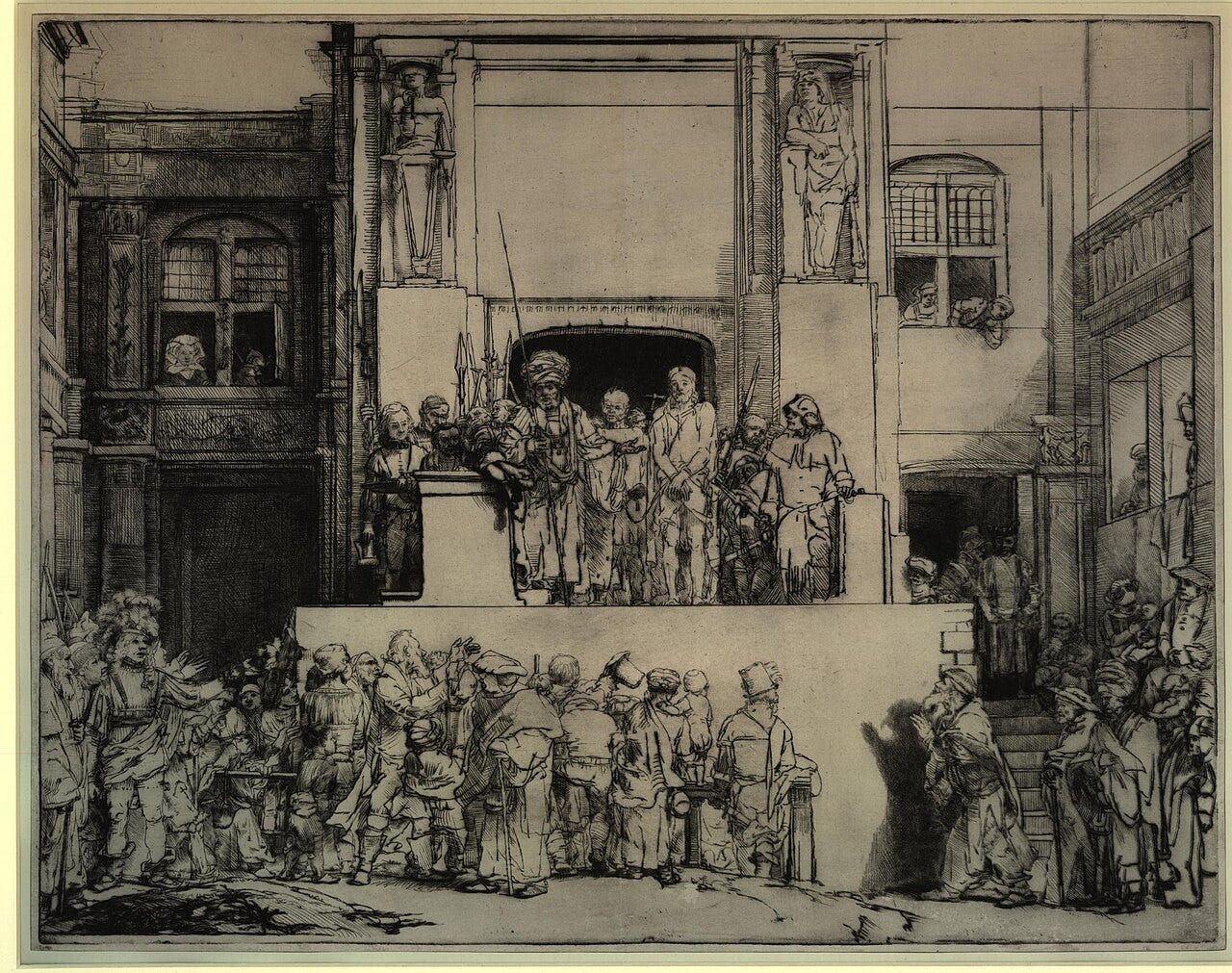
In prints such as his Ecce Homo and the great Three Crosses, he mixed etched line with passages of pure drypoint, using the burr to drown whole areas in soft, living shadow.
The darkness in those sheets does not feel scratched. It feels like night itself pressed into the paper. Collectors prize his earliest impressions precisely because the burr was still fresh.
He turned a technical flaw, a fast fading line, into what I think is the most expressive black in printmaking.
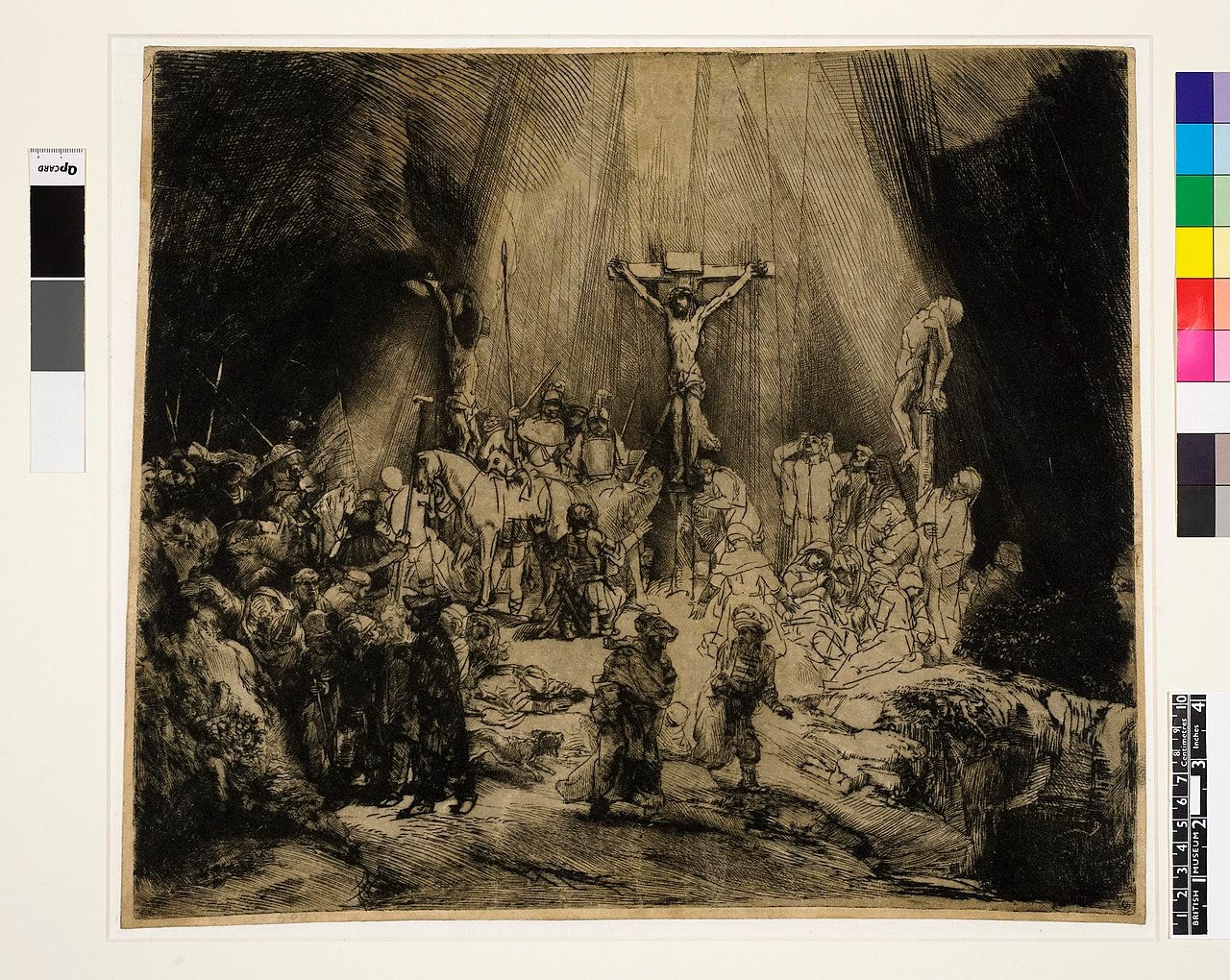
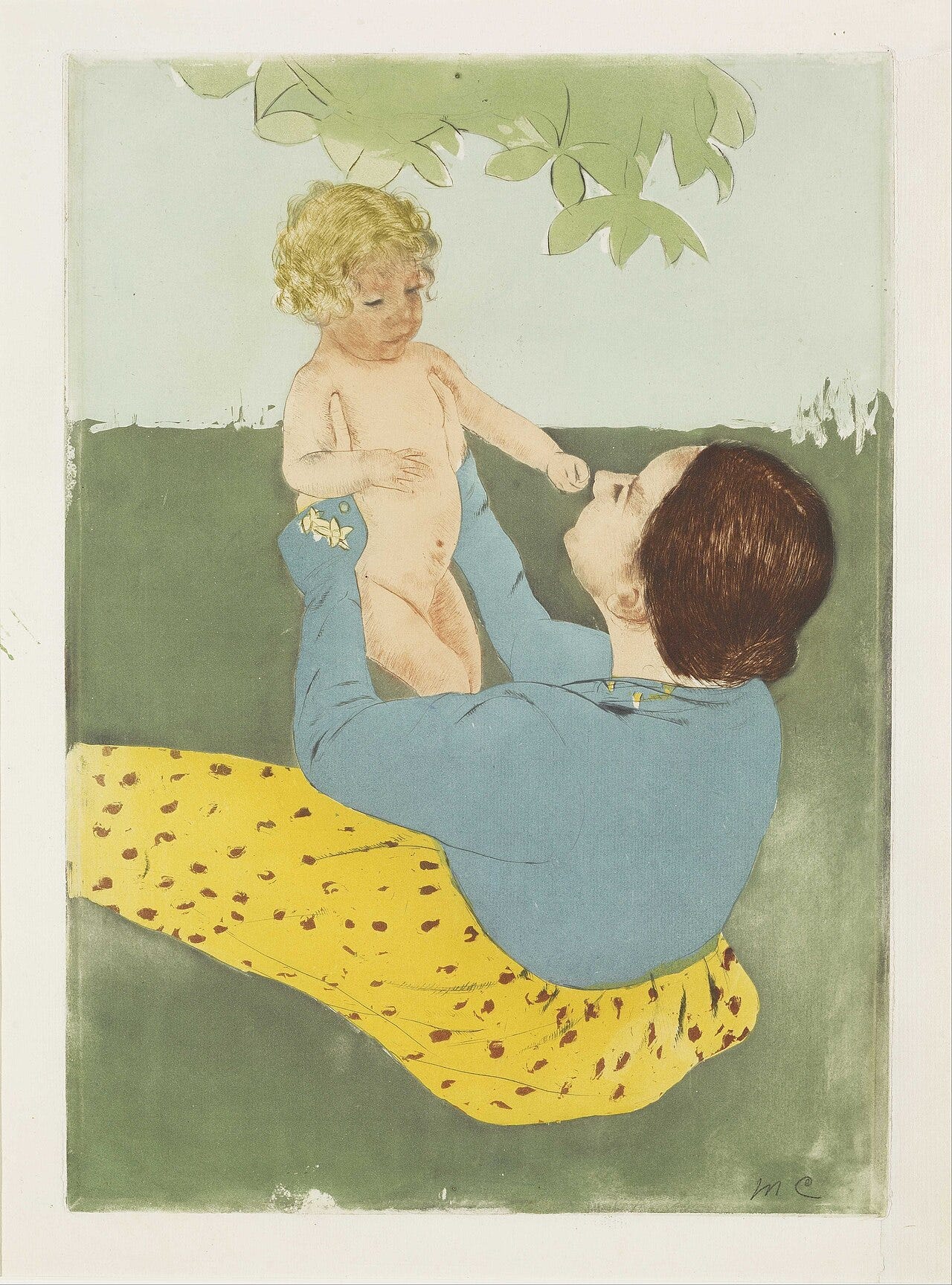
You can study it in person. Rembrandt’s Three Crosses is in the Rijksmuseum, and the Met holds Mary Cassatt’s drypoints.
Drypoint is one of several intaglio methods, alongside the tonal washes of aquatint and the velvet black of mezzotint.
Drypoint, the burr questions
What is drypoint? An intaglio print scratched directly into a metal plate with a needle, without acid.
What is the burr? The ragged ridge of metal pushed up beside each scratched line, which holds extra ink.
Why does drypoint look soft? The burr traps a surplus of ink, giving the line a dark, velvety halo.
Why are good drypoints so rare? The fragile burr is crushed by the press, so only the first impressions are rich.
Who is the most famous drypoint artist? Rembrandt, who combined it with etching for deep, glowing shadow.
More secrets to unlock


Best at the very first print
Most art gets better as the artist works. Drypoint is the one medium I know that peaks at the very first pull and fades with every print after. I find something moving in that: a beauty built to disappear, richest at the moment it is born.
