
What Is Fresco?
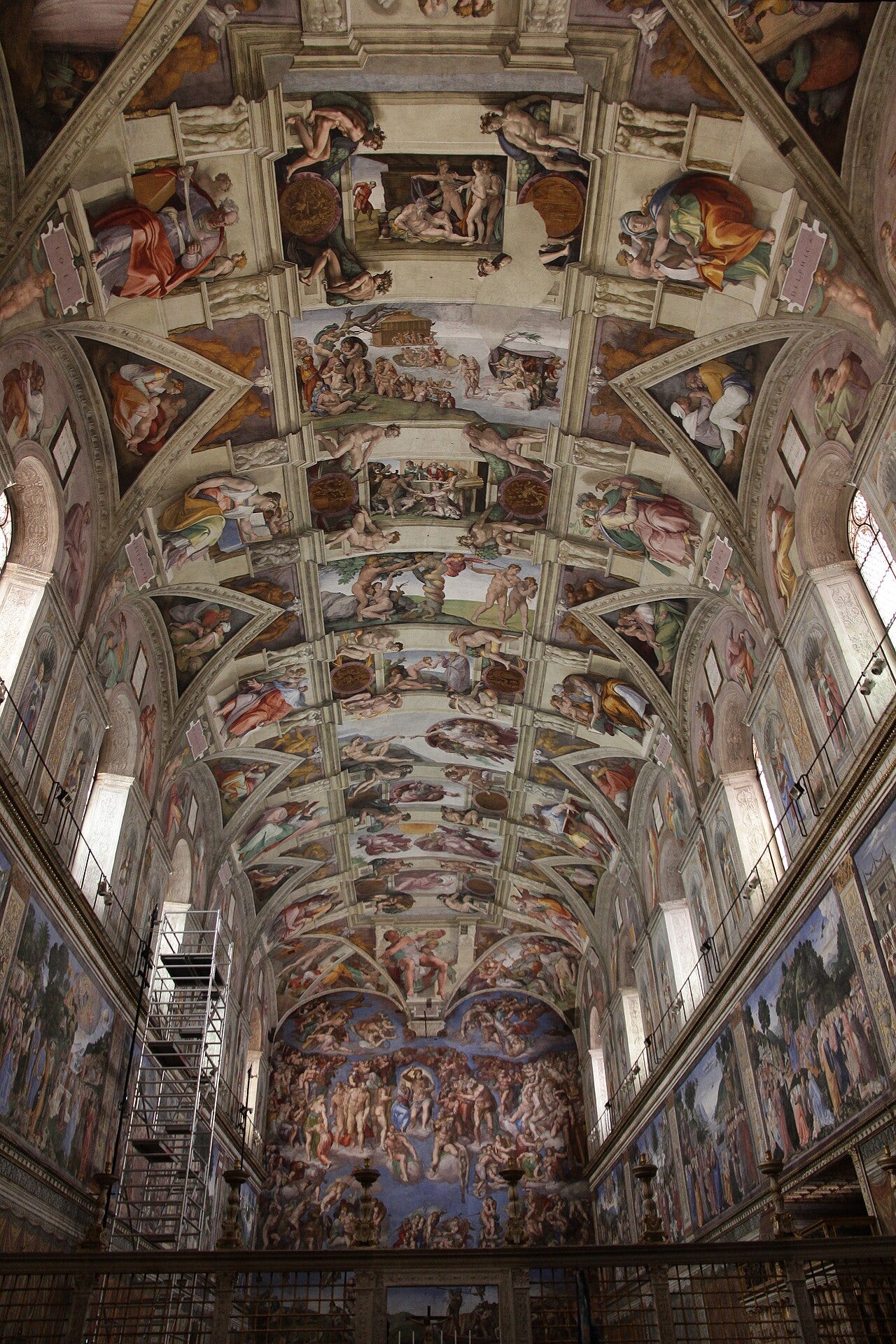
Fresco is the technique of painting directly onto fresh, wet plaster. The pigment soaks into the damp surface, and as the plaster dries it locks the color in, so the painting becomes part of the wall itself rather than a layer sitting on top. The word is Italian for fresh, and that is the whole secret.
It is the most permanent way to paint.
It is also the most unforgiving.
Fresco in one look
What it is: painting onto wet plaster so the color fuses with the wall.
The word: Italian for fresh, because the plaster must be wet.
The catch: you must finish each patch before it dries.
The reward: enormous, glowing wall paintings that last for centuries.
The peak: Michelangelo's Sistine Chapel ceiling.
Painting into the wall, not onto it
True fresco is a race against drying plaster.
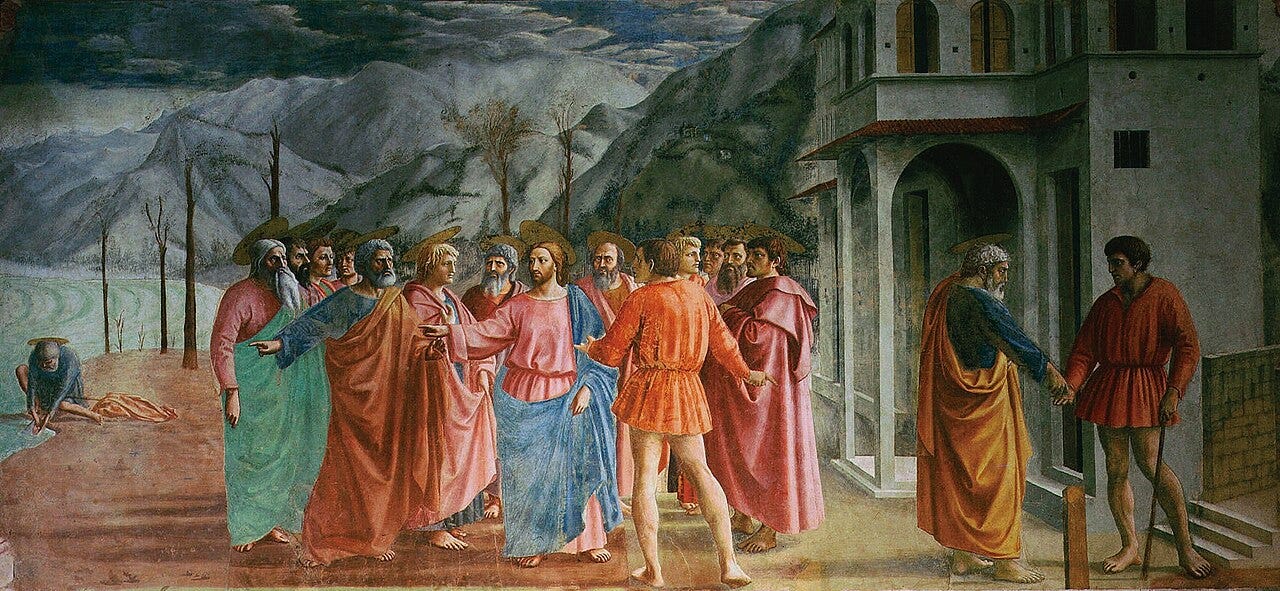
The painter spreads a layer of fresh lime plaster, then paints onto it while it is still wet. As the plaster dries, a chemical reaction turns the surface to hard calcium carbonate and seals the pigment inside. The color is no longer a coat of paint. It is part of the stone of the wall, which is why real frescoes survive for five hundred years and more.
You do not paint on the wall. You paint into it.
The day's work
Fresco runs on a brutal clock, and that clock shaped the whole craft.
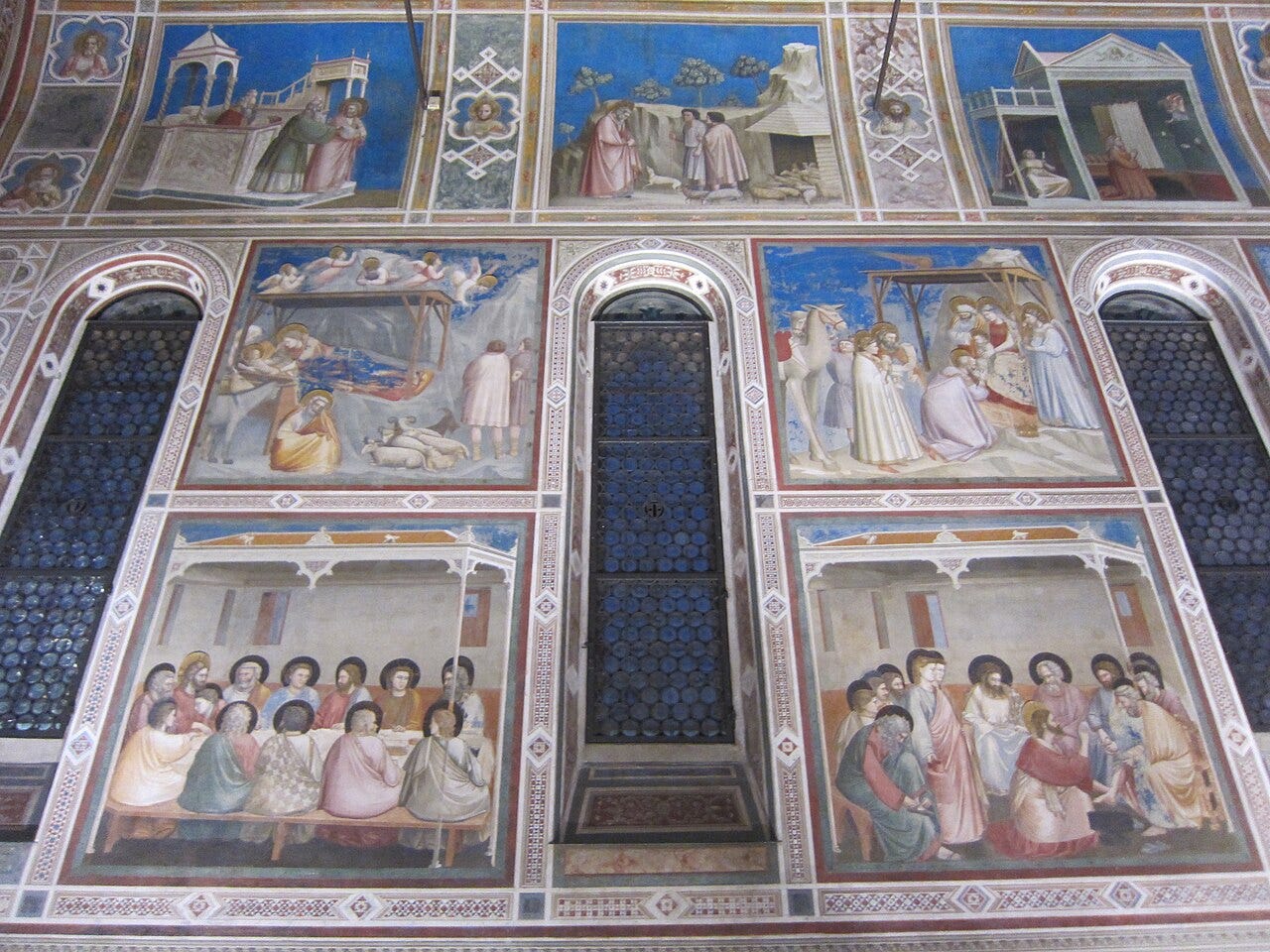
Plaster only stays workable for a day, so painters laid just as much fresh surface as they could finish before it set. That patch is called the giornata, the day's work. Look closely at a fresco and you can sometimes see the faint seams where one day's plaster meets the next. The artist could not stop, could not wait, and could barely correct. Every giornata had to be right.
A fresco is built one urgent day at a time.
The problem with second thoughts
Fresco punishes hesitation.
Once the plaster dries, you cannot simply paint over a mistake the way you can in oil. To fix an error you often had to chip out the dried patch and replaster. Some artists cheated by adding details on top of the dry wall afterward, a technique called a secco, painting dry. But a secco does not fuse with the wall, so it flakes off over time. Many lost details in old frescoes are exactly these dry touch ups that did not last.
The true fresco endures. The afterthoughts fall away.
The wall as a stage
Fresco made the wall into theatre.
Because it could cover huge surfaces and stay bright for centuries, fresco became the great medium of public storytelling, above all religious iconography painted across churches and chapels. Giotto filled the Arena Chapel with the life of Christ. Michelangelo turned the Sistine ceiling into the story of creation. It is the natural relative of other wall arts like sgraffito, and a cousin of panel methods like tempera.
Where there was a wall and a story to tell, there was fresco.
You have to go to the wall itself. Michelangelo’s Sistine Chapel ceiling is in the Vatican, and Giotto’s Scrovegni Chapel in Padua.
The cautionary tale is Leonardo’s Last Supper, which he painted on dry plaster rather than true fresco, and which started decaying within decades.
Common questions about fresco
What is fresco? Painting on fresh wet plaster so the color sinks in and becomes part of the wall.
Why is it so durable? As the plaster dries it chemically seals the pigment inside the wall.
What does the word mean? Fresco is Italian for fresh, because the plaster has to be wet.
What is a giornata? The patch of plaster an artist could paint in a single day before it dried.
What is the difference from secco? A secco is painting on dry plaster. It does not fuse with the wall and tends to flake off.
The art form that cannot be edited
We live in a world of undo buttons. Fresco is the opposite of that.
The plaster sets, the color locks in, and the decision is permanent. There is something almost heroic in painting the ceiling of the Sistine Chapel knowing every brushstroke is final the moment the wall dries. Fresco rewards the artist who can think clearly and commit completely, which may be why its greatest works still feel so certain, so unshakeable, half a millennium later.