
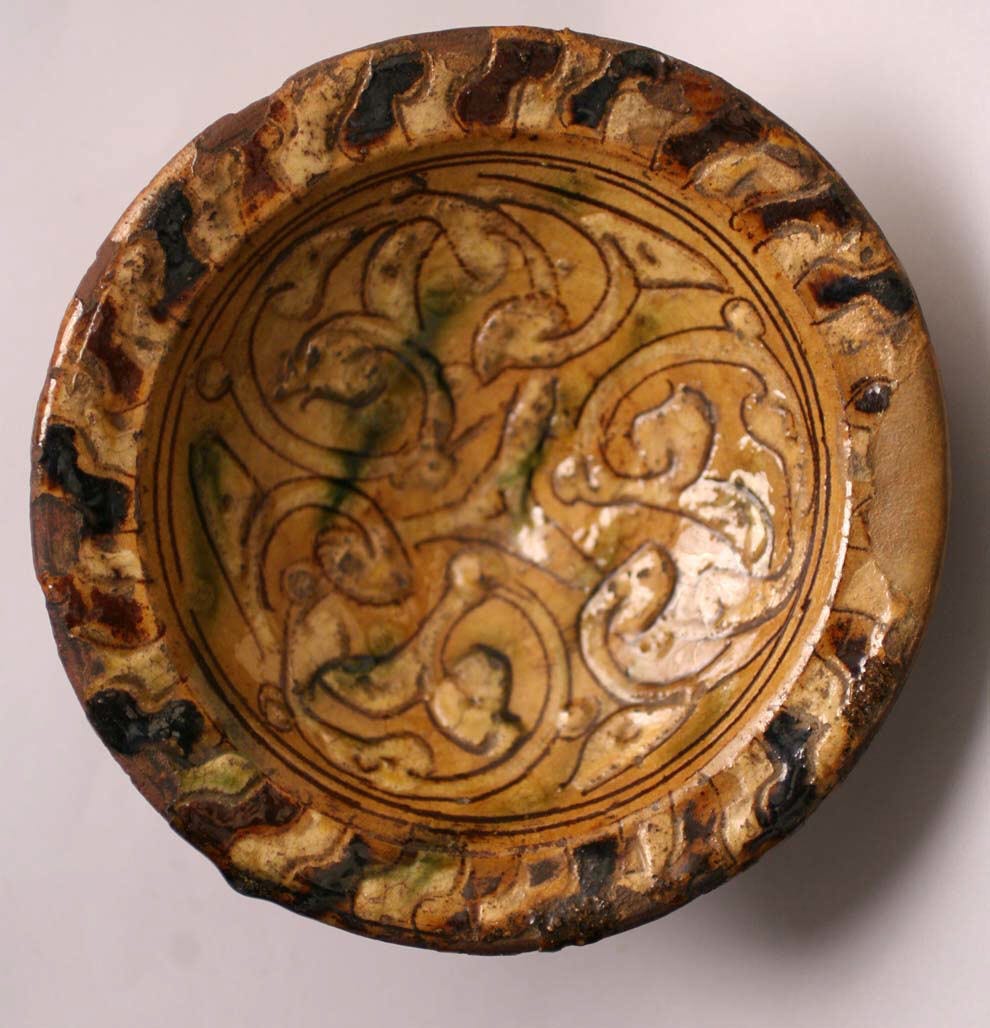
Sgraffito is decoration made by scratching: you lay one color over another, then cut your design through the top so the color beneath shows in every line. The same trick decorated medieval pots and whole Renaissance palace fronts.
What I find telling: sgraffito behaves more like engraving than like painting. Once a line is scratched it is there for good, with no second chance.
You find the trick on pottery, on plaster walls and on whole painted house fronts.
Sgraffito up close
What it is: scratching through a top layer to reveal a color beneath.
The principle: the design is cut away, not painted on.
The surfaces: building walls, plaster, and above all pottery.
The word: Italian for scratched, from graffiare, to scratch.
The cousin: the same root gives the word graffiti.
Keep learning art the fun way


Decoration by subtraction
The idea is beautifully simple.
Put down a dark base. Cover it with a pale layer. While that top layer is still workable, scratch your drawing through it with a point, and the dark base shows through every scratched line.
You end up with a crisp two tone image, light surface and dark design, made entirely by what you removed.
On the walls of Italy
Sgraffito had a golden age on the outside of buildings.
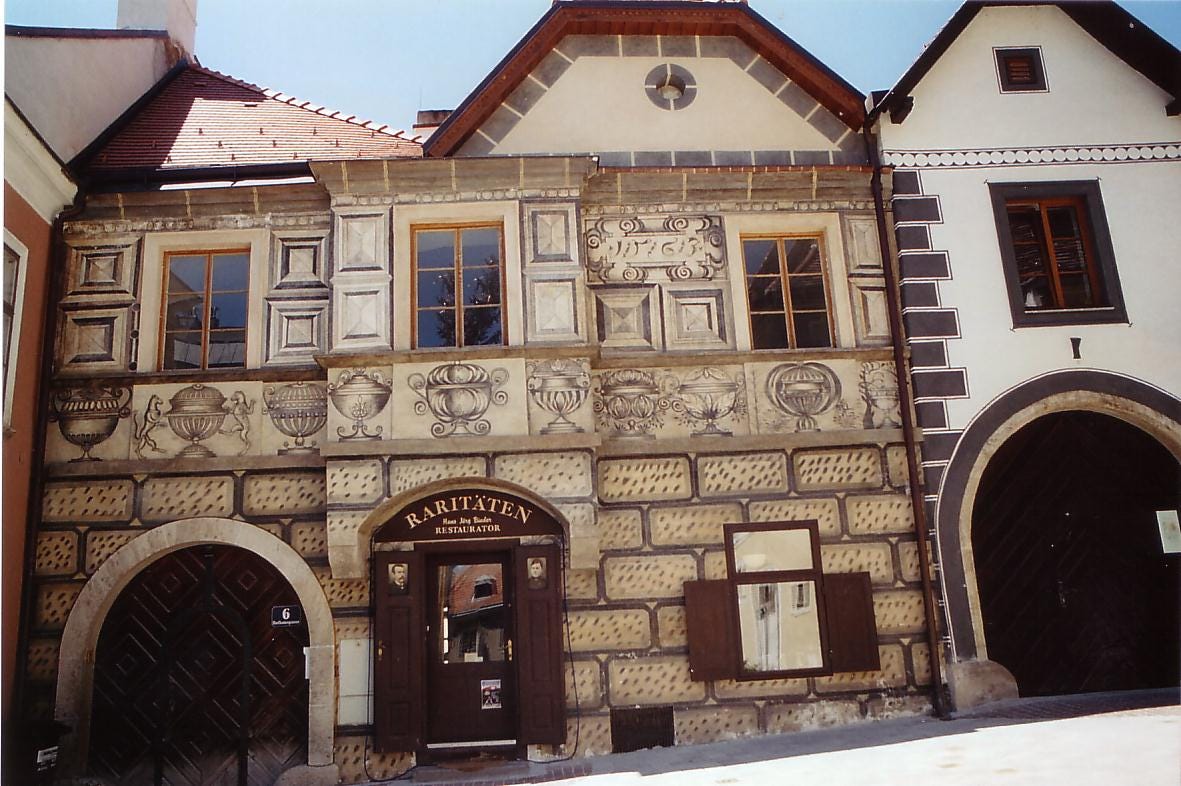
In Renaissance Italy, especially Florence and later across Central Europe, whole facades were coated in dark plaster, then a pale lime layer, then scratched with elaborate patterns, figures and fake architecture.
Done in lime plaster, it weathered far better than paint. The Schwarzenberg Palace in Prague, finished in 1567, still wears its scratched diamond pattern across an entire facade.
Like fresco, it is a wall technique that has to be worked while the surface is still fresh.
A building could wear a giant drawing, and the weather could not wash it off.
The potter's version
The other great home of sgraffito is ceramics.
A potter coats a clay pot in a layer of colored liquid clay, called slip, then scratches a design through it before firing, revealing the different clay color of the body beneath.
Medieval Islamic and Byzantine potters were scratching slip centuries before Florence scratched its walls, and it is still a staple of studio pottery today.
The crisp scratched line has something in common with engraving and the woodcut, arts built on a cut line.
One technique, two scales: a dinner plate and a palace wall.
Scratched, like graffiti
The word hides a small lesson in language.
Sgraffito, graffito and graffiti all come from the same Italian root, graffiare, to scratch. A graffito is a single scratched mark, and graffiti is the plural.
So the spray painted wall in your city and the scratched plaster palace in Florence are, linguistically, cousins.
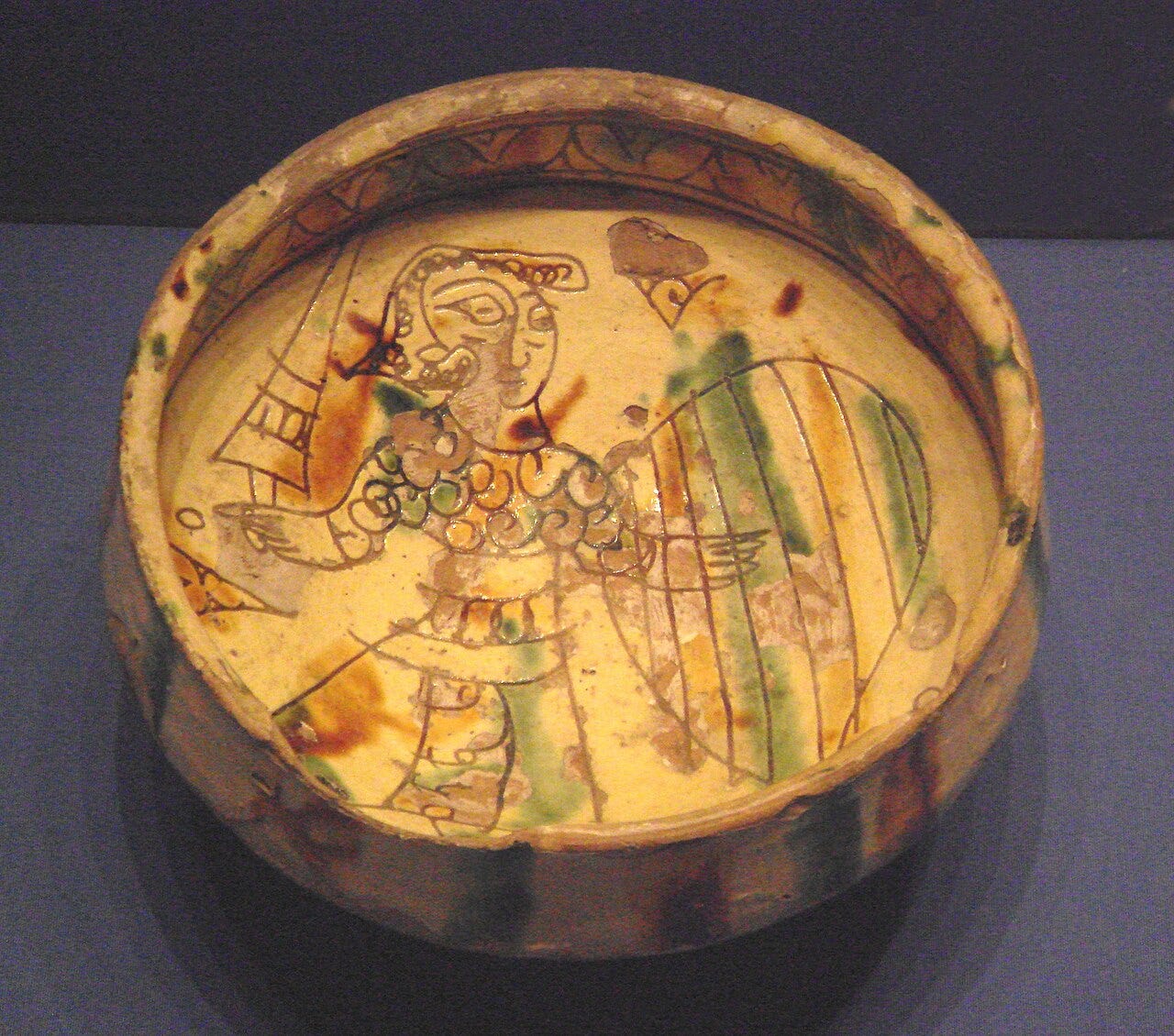
You can find scratched pots in the great collections: the Met holds a sgraffito ware bowl from the medieval Islamic world, and the British Museum keeps a sgraffito dish.
Scratching the surface: sgraffito questions
What is sgraffito? A technique of scratching through a top layer of color to reveal a different color underneath.
What does the word mean? It is Italian for scratched, from graffiare, to scratch.
Where is it used? On building facades, on plaster, and very widely on pottery.
How is it different from painting? The design is made by scratching away the top layer, not by adding paint.
Is it related to graffiti? Yes. Sgraffito, graffito and graffiti all share the same root meaning to scratch.
More secrets to unlock


The art of the confident scratch
Sgraffito rewards nerve more than almost any technique, and that is what I love about it. Once the line is scratched the dark base is showing and the mark is permanent, with no painting over a slip.
On a clay bowl or a four story Florentine wall, the maker has to commit, draw cleanly and trust the hand. That is why scratched facades from 1500s Florence and Prague still wear their drawings today, while painted ones flaked away long ago.
