
Egon Schiele was an Austrian painter who, in barely ten years of work, became one of the most provocative artists Europe had ever seen.
He painted the human body raw, twisted and exposed, and died at just 28. Trained by Klimt then jailed for his drawings, he turned his own body and the bodies of his lovers into the rawest self portraits of the twentieth century, and reshaped Expressionism before the 1918 flu killed him at 28.
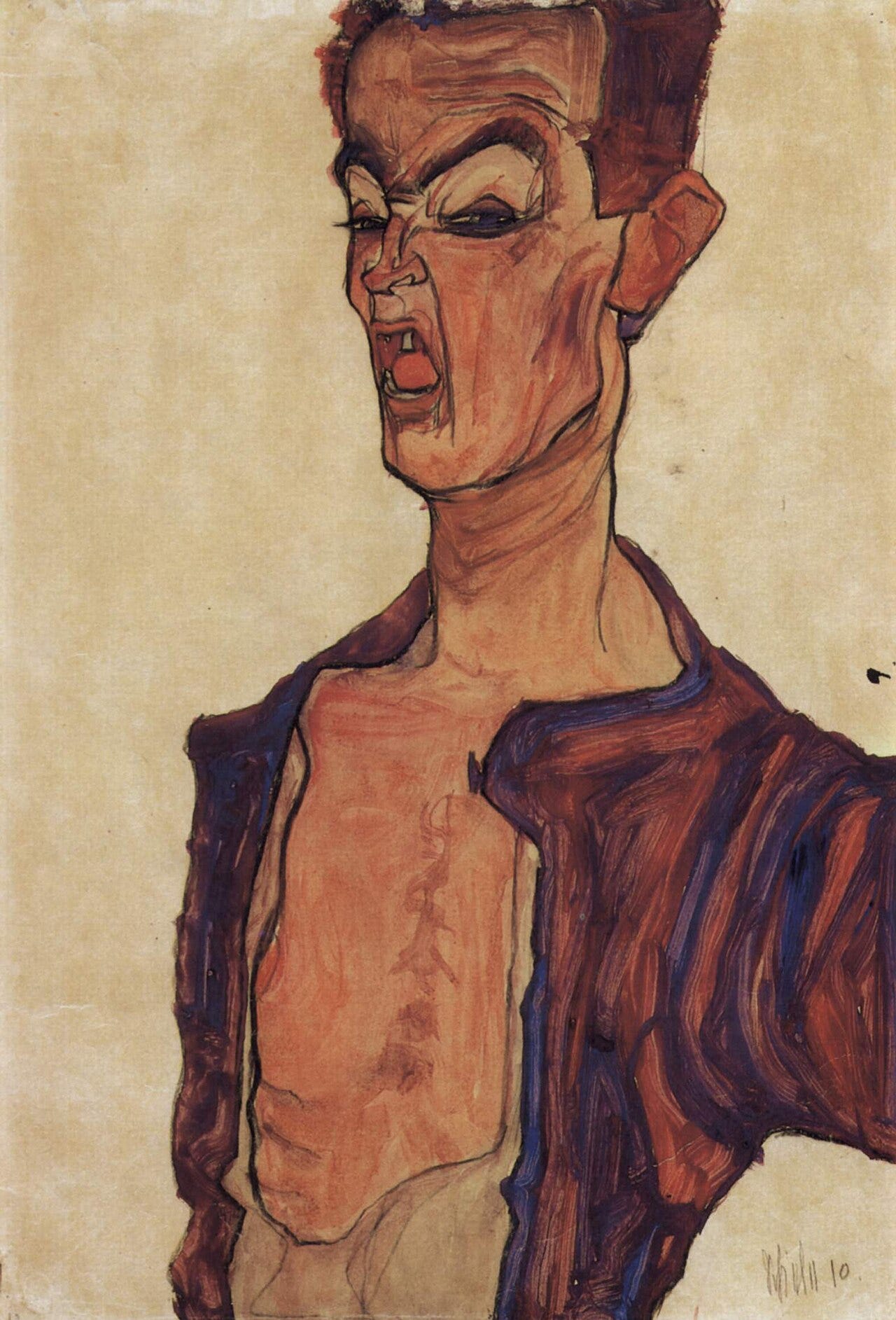
He was the favorite pupil of Gustav Klimt, the golden king of Vienna. But where Klimt wrapped his figures in gold and ornament, Schiele stripped his bare.
His people are thin, tense and unflinching, drawn with a sharp nervous line that looks like it could cut you.
His life was as intense as his art: a childhood haunted by death, a clash with his teachers, a love story he betrayed, a scandal that put him in jail, and an ending so cruel it feels invented. Here is the whole story, and why he still matters.
More incredible painter stories
If Egon Schiele pulled you in, you will love these too:


Egon Schiele at a glance
1890. Born in Tulln, son of a stationmaster.
1907. Sought out Klimt, who traded drawings with the sixteen year old.
1912. Jailed at Neulengbach. A judge burned one of his drawings over a candle.
1915. Married Edith Harms and was called up to the army three days later.
1918. Died of Spanish flu at 28, three days after Edith, six months after his breakthrough show.
The movement: Expressionism in a glittering, anxious Vienna
To understand Schiele, picture Vienna around 1910. It was one of the richest, most brilliant cities in the world, home to Freud, Mahler and Klimt, and also a place full of anxiety under the surface. The Academy of Fine Arts in that same city had rejected another applicant a few years earlier, in 1907: Adolf Hitler, turned away over his drawing test.
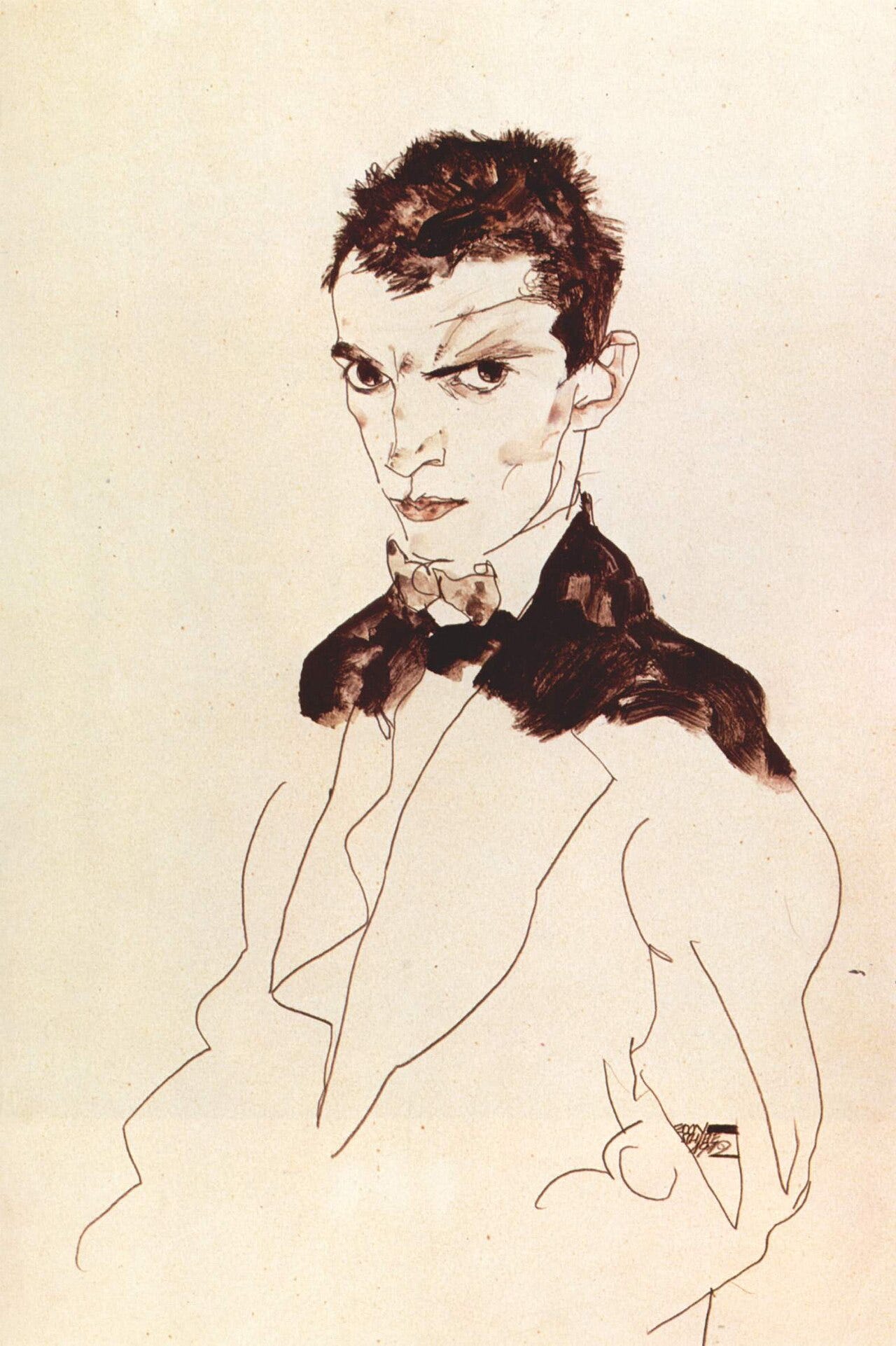
Schiele belongs to Expressionism, the movement that threw out pretty appearances and tried to paint raw inner feeling instead. Fear, desire and loneliness were the real subjects.
The older generation, led by Klimt and the Vienna Secession, had already broken from stiff academic art. Schiele took that freedom and pushed it somewhere darker and far more personal.
The nudes that refused to be polite
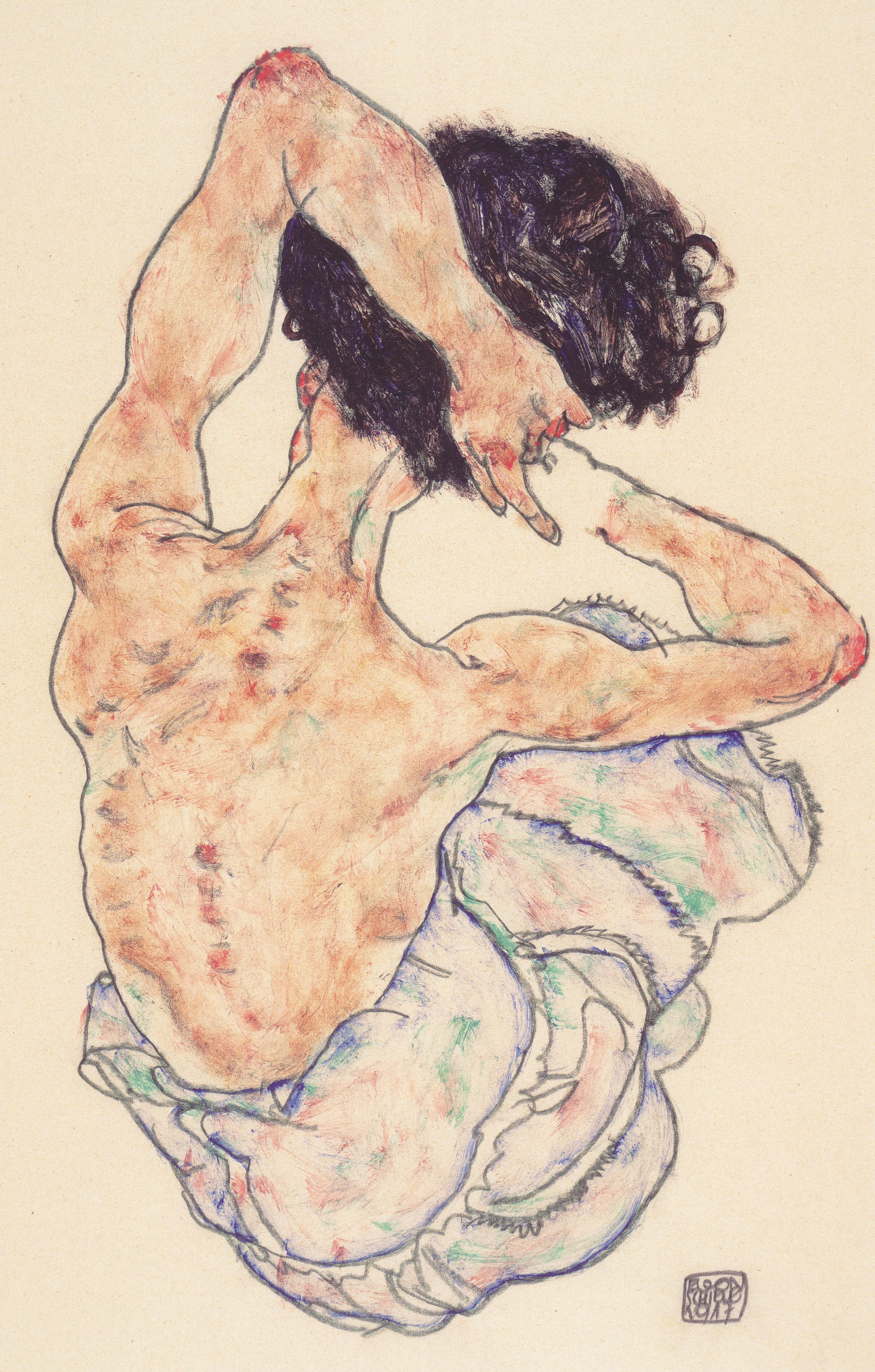
Plenty of artists painted the human body. Schiele is remembered because he made it uncomfortable on purpose.
His nudes are not soft or flattering. They are bony, contorted, sometimes raw with desire, sometimes close to pain. He refused to make the body polite.
That honesty shocked his own time and feels modern now. A century later his drawings still look shocking, which is exactly why he hangs in major museums and sells for tens of millions.
The scratchy line, the twisted hands: spotting a Schiele
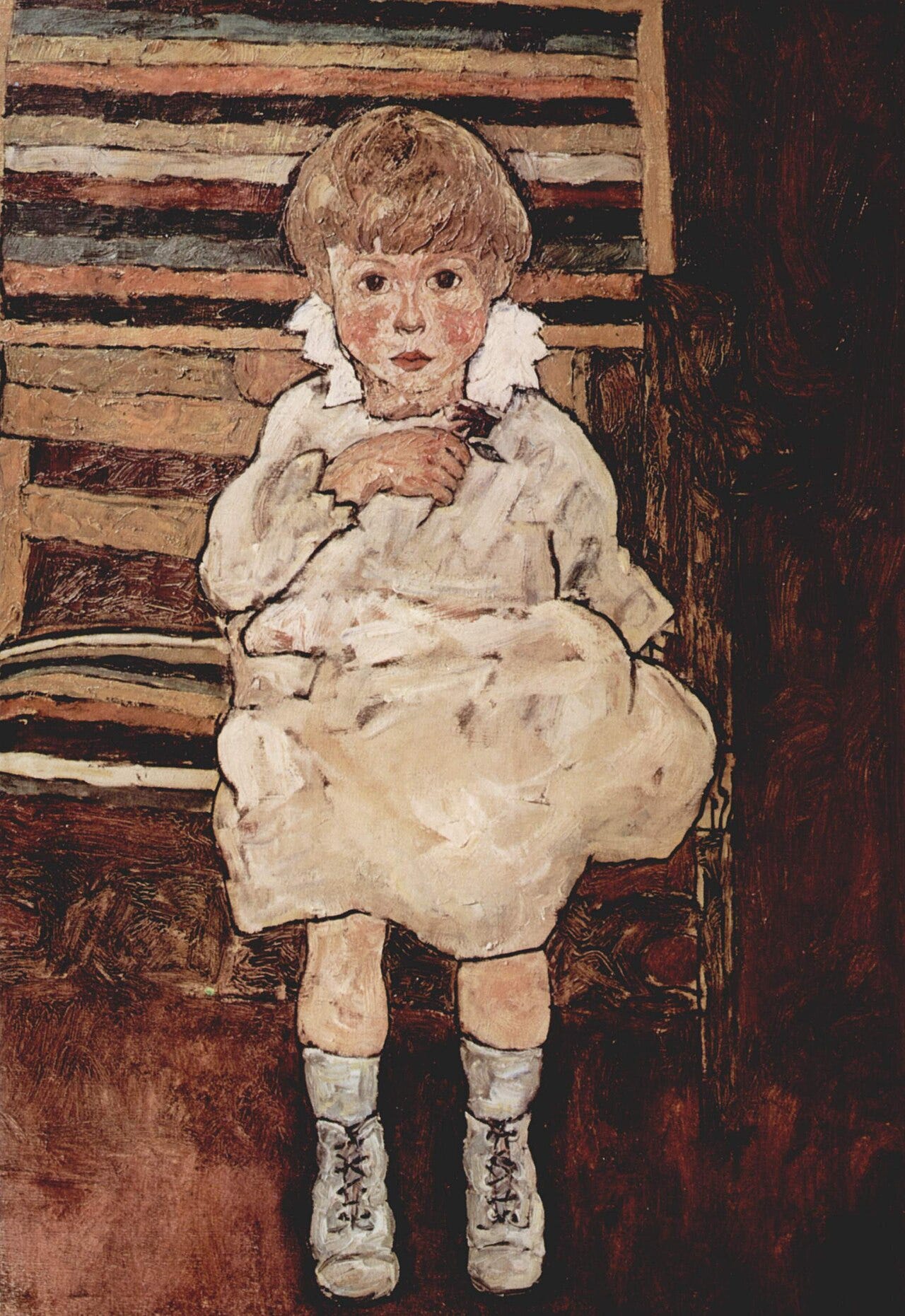
Once you know the signs, a Schiele is unmistakable. Four things give him away.
The line. A sharp, broken, almost scratchy outline that makes every body look angular and tense.
The hands. Long, splayed, twisted fingers held in strange gestures. Nobody draws hands like Schiele.
The empty space. His figures float on a blank background, with no room, no furniture, nothing to hide behind.
The gaze. Models stare straight out, wary and exposed, as if caught rather than posed.
He worked mostly in pencil, chalk and gouache on paper, fast and direct. Drawing, not oil, is the true heart of his art.
What he took from Klimt, Van Gogh and Japan
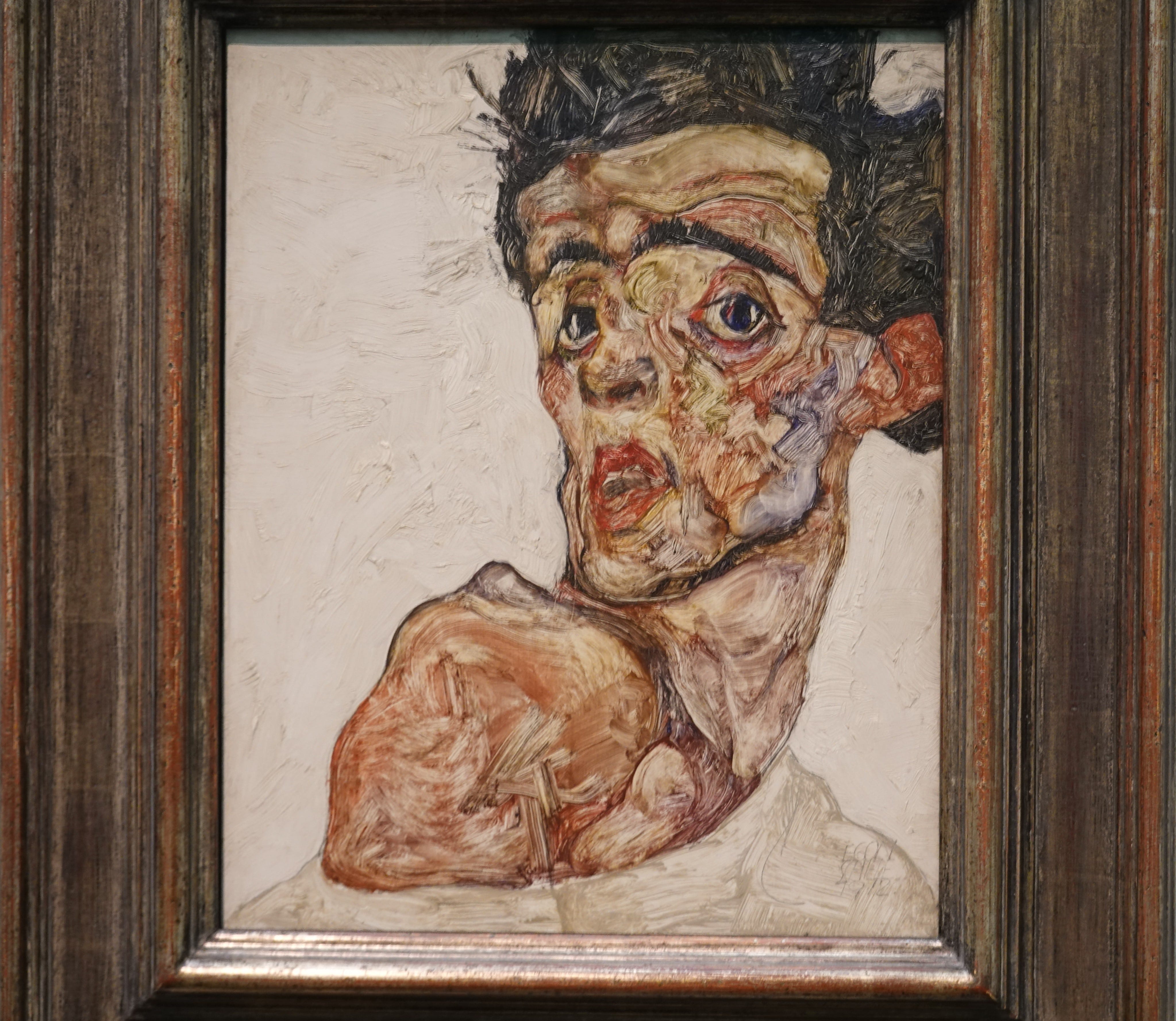
Schiele did not appear from nowhere. In 1909 Vienna hosted a huge international show where he saw the latest art from across Europe, and it hit him hard.
He absorbed all of it, then bent it into something no one mistakes for anyone else.
Klimt, Kokoschka and the sister who never left
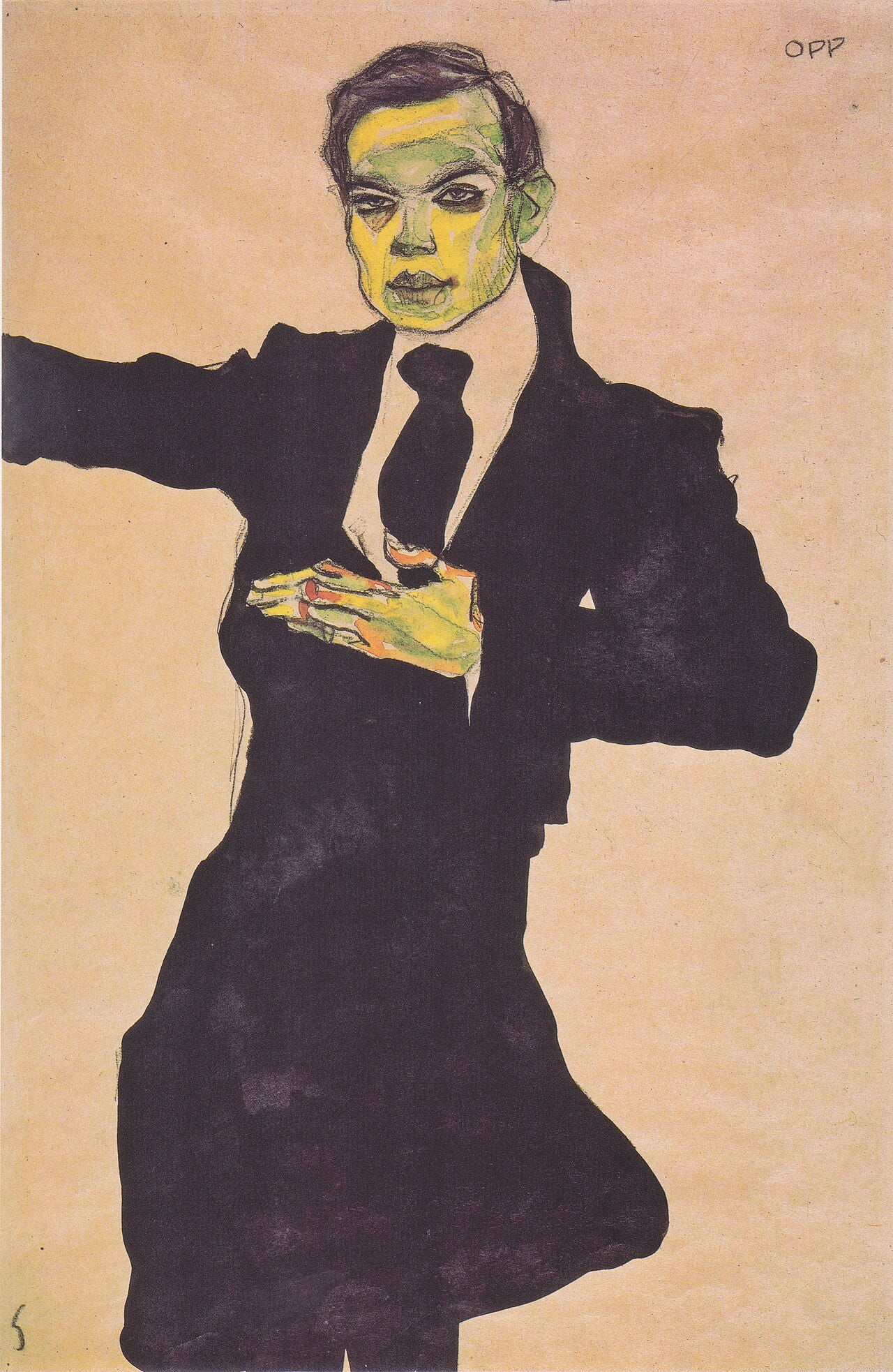
Schiele was not a hermit. He sat at the center of a small, intense circle.
Klimt was the father figure. Oskar Kokoschka was the rival, the other young Austrian wild man, the two of them treated as the enfants terribles of Vienna.
The critic Arthur Roessler championed Schiele early and bought his work, and the collector Heinrich Benesch kept faith when few others did.
Closest of all was his younger sister Gerti, who modeled for him as a teenager and stayed devoted to him for life.
Wally, Edith, and the father he lost to syphilis
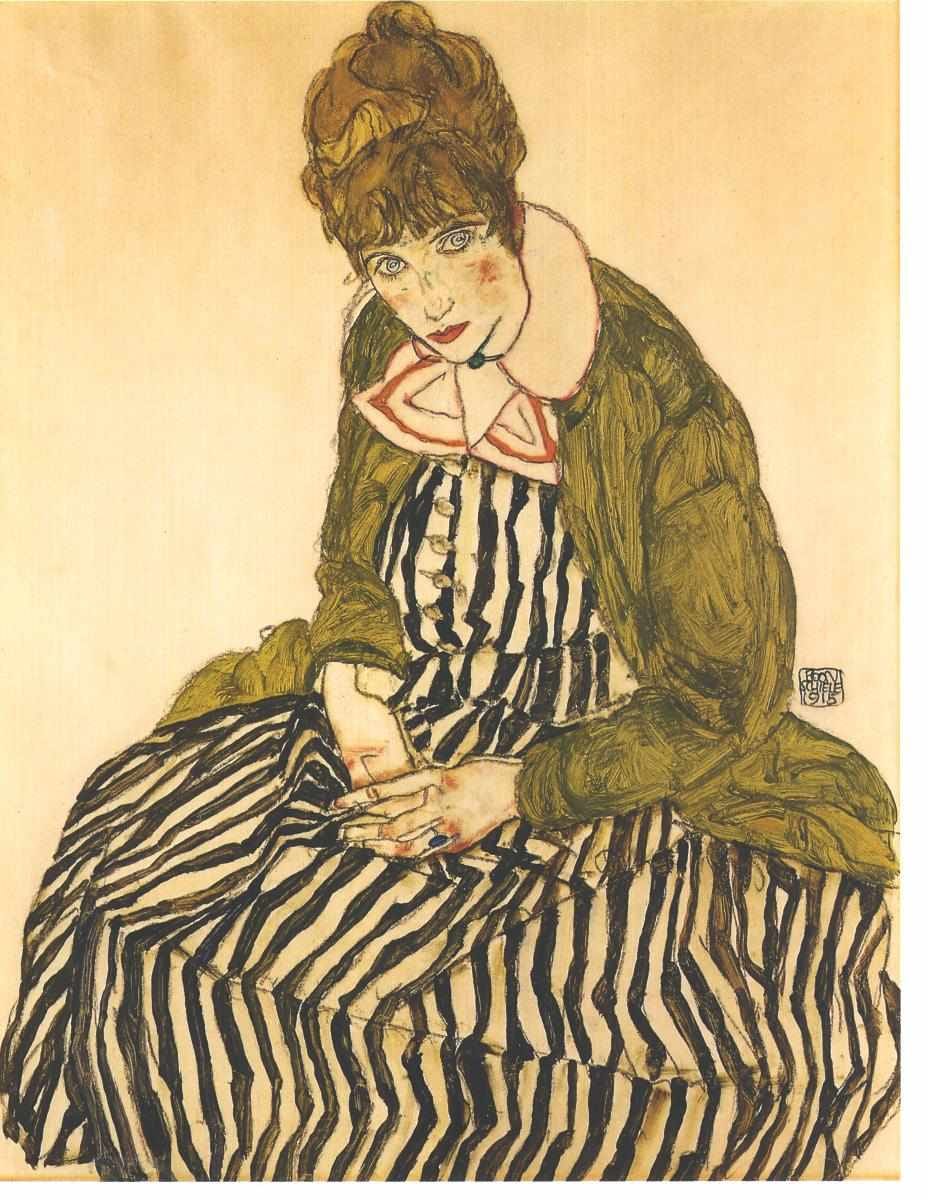
Schiele's private life ran straight into his art, often to his cost.
His father, a railway stationmaster, lost his mind and his life to syphilis when Egon was about 15. The boy never got over it, and death haunts his work from then on.
His relationship with his mother stayed cold, and he leaned instead on his sister Gerti.
Around 1911 he began living with Wally Neuzil, a young woman who had modeled for Klimt. She became his muse and the love of his early fame.
Then, in 1915, he left her to marry Edith Harms, a respectable middle class woman from across the street. He thought it would make him look serious.
It mostly makes him look ruthless.
Tulln to Krumau: the towns that marked him
Like Van Gogh, Schiele can be traced through a handful of towns that each marked his work.
Tulln, the small Danube town where he was born in 1890, beside the railway station his father ran.
Vienna, where he studied, rebelled, found Klimt and finally became the leading artist of the city.
Krumau, his mother's medieval hometown in Bohemia, now Cesky Krumlov, whose steep red roofs fill his eerie townscapes. Locals drove the unmarried couple out.
Neulengbach, the quiet country town where, in 1912, the scandal that nearly broke him exploded.
Physalis, Death and the Maiden, one bent knee
If you only look at three, start here. Each opens a different door into his world.
Self-Portrait with Physalis (1912). The face of Schiele most people picture, sharp and watchful, framed by an orange plant.
Death and the Maiden (1915). A man and woman clinging together as they are torn apart, painted as his farewell to Wally.
Seated Woman with Bent Knee (1917). A single twisted pose that shows everything his line and his hands could do.
Here, the point is simply knowing where to look first.
The scandal at Neulengbach
In 1912, in the country town of Neulengbach, the police arrested Schiele. They seized more than a hundred drawings they judged pornographic.
The gravest accusations, involving a young girl, were dropped. In the end he was convicted only of showing erotic drawings where children could see them. He spent 24 days locked up.
In the courtroom a judge burned one of his drawings over a candle flame. Schiele, shaken, painted his bare cell in a set of bleak little watercolors, and scrawled on one that hindering an artist is a crime, that it murders life in the bud.
How Egon Schiele died
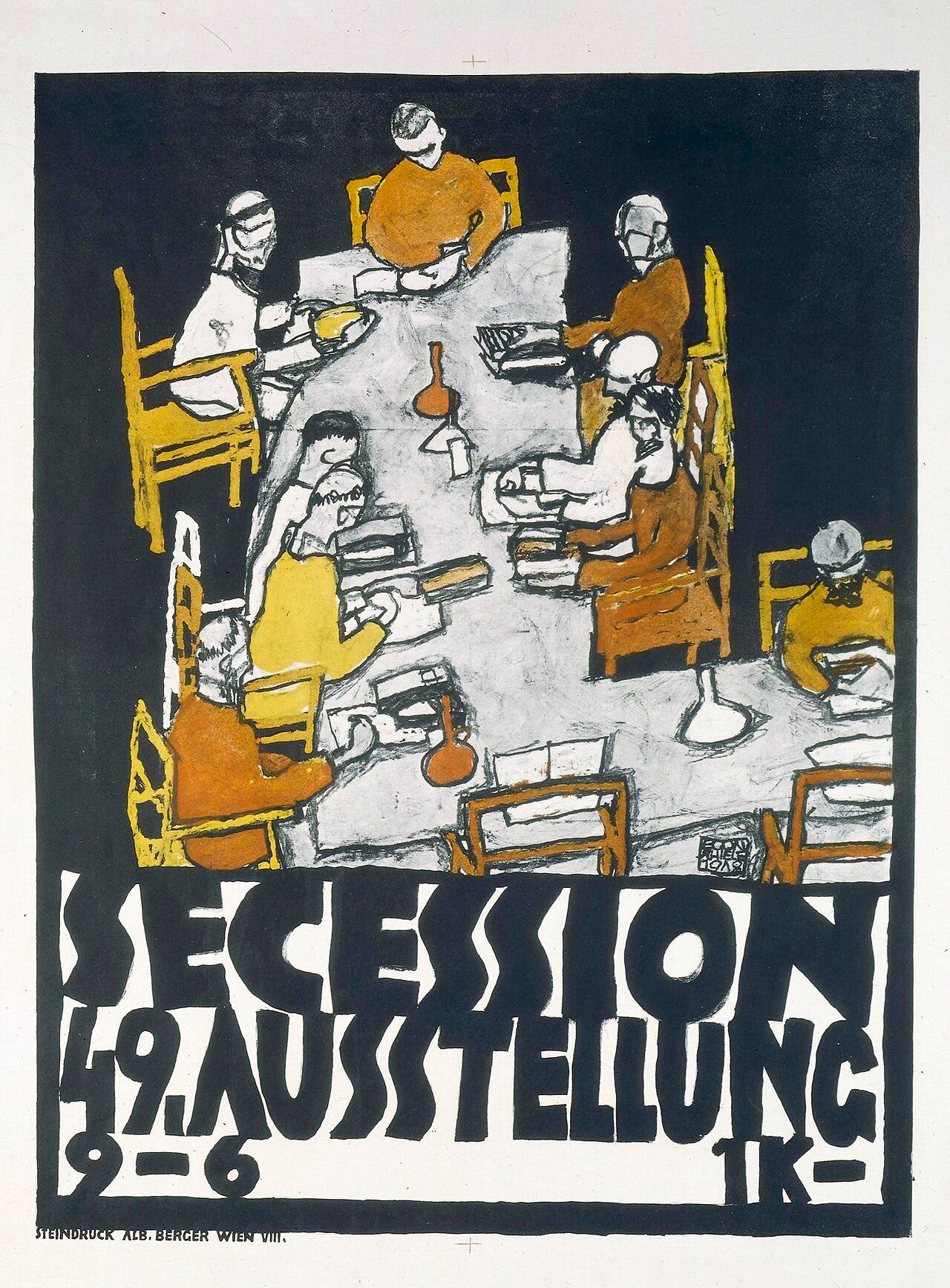
The ending came fast and cruel. In February 1918 Klimt died, and overnight Schiele became the leading artist in Vienna. That spring the Secession gave him a room of his own, he designed the poster, and the show was a triumph.
Then the Spanish flu reached the city. Edith, six months pregnant, fell ill and died on 28 October 1918. Schiele drew her as she lay dying.
Three days later, on 31 October, he died of the same flu, aged 28. The unborn child died with its mother. In a single year, Vienna lost both its greatest painters.
Forgotten, then resurrected
Schiele's work fell out of fashion for decades. A major drawing could be had for very little.
One Viennese doctor, Rudolf Leopold, quietly bought hundreds when almost nobody wanted them. Those works now fill a museum built around his collection, and a single Schiele can sell for tens of millions.
The artist his teacher tried to expel now defines a whole chapter of modern art.
Vienna keeps almost all of him
Almost all of his best work stays in Vienna. If you want to stand in front of the real thing, go here:
The Leopold Museum, Vienna. The essential stop, with the largest Schiele collection in the world, including Self-Portrait with Physalis.
The Belvedere, Vienna. Home to Death and the Maiden, in the same palace as Klimt's The Kiss.
Neue Galerie, New York. The best place to see Schiele and Klimt together outside Austria.
Two good homes online are the Leopold Museum and the Belvedere.
Schiele was one of several young Viennese painters whose work scandalized audiences at the 1908 Kunstschau, alongside Oskar Kokoschka, whose own story is told in Oskar Kokoschka, The Complete Story.
The Egon Schiele questions that keep coming up
Why was Egon Schiele controversial? His explicit drawings broke every Viennese convention, and in 1912 he spent 24 days in jail at Neulengbach, where a judge burned one of his drawings in court. The charge of seduction collapsed; the offense of exhibiting erotica to minors stuck.
What was Schiele's relationship to Klimt? Mentor and champion: Klimt traded drawings with the 17-year-old, sent him models and patrons, and Schiele drew the older man on his deathbed in February 1918. Both died that same year.
How did Schiele die? Of the Spanish flu on October 31, 1918, at 28, three days after his pregnant wife Edith. His last drawings are of her dying.
How much does a Schiele cost? Houses with Colorful Laundry brought 40.1 million dollars in 2011, and his drawings routinely make seven figures, when their ownership is clean.
Why are Schiele works in restitution disputes? Many passed through Jewish collections looted in the Nazi era, and cases over works once owned by Fritz Grünbaum and others continue to reshape museum holdings.
Where can I see Schiele? The Leopold Museum in Vienna holds the largest collection, with the Albertina and the Belvedere close by, and the Neue Galerie in New York.
More secrets to unlock


Schiele and the body, answered
What is Egon Schiele known for? Raw, angular nudes and intense self portraits, in an Expressionist style.
What movement did he belong to? Expressionism, growing out of the Vienna Secession.
Who was his mentor? Gustav Klimt, who promoted him from 1907.
Why was he arrested? In 1912, for showing erotic drawings where children could see them. He spent 24 days in jail.
Who did he marry? Edith Harms, in 1915, after leaving his muse Wally Neuzil.
How did he die? Of the 1918 Spanish flu, three days after his pregnant wife Edith. He was 28.
How do you say his name? Roughly AY-gon SHEE-luh.
