
Faith Ringgold was the American artist best known for her story quilts, paintings framed with sewn fabric and covered with handwritten text.
Her most famous, Tar Beach, shows a girl flying over 1939 Harlem. Across five decades she moved from mural scale civil rights paintings to the quilts, children's books and street protests that finally forced American museums to make room for Black women artists.

She trained as a painter, but found her own voice when she joined canvas to quilting, a craft handed down in her family since slavery. The result told Black American stories in a form the museum world had never taken seriously.
More incredible painter stories
If Faith Ringgold pulled you in, you will love these too:


She was also a tireless activist who helped force those same museums to open their doors. Here is the whole story.
Faith Ringgold at a glance
1930. Born in Harlem, in a family that sewed and told stories.
1967. Die, the unflinching mural of the American People Series.
1983. Her first story quilt, Who's Afraid of Aunt Jemima?
1991. Tar Beach became a children's book, soon a Caldecott Honor winner.
2024. Died at 93 in Englewood, New Jersey.
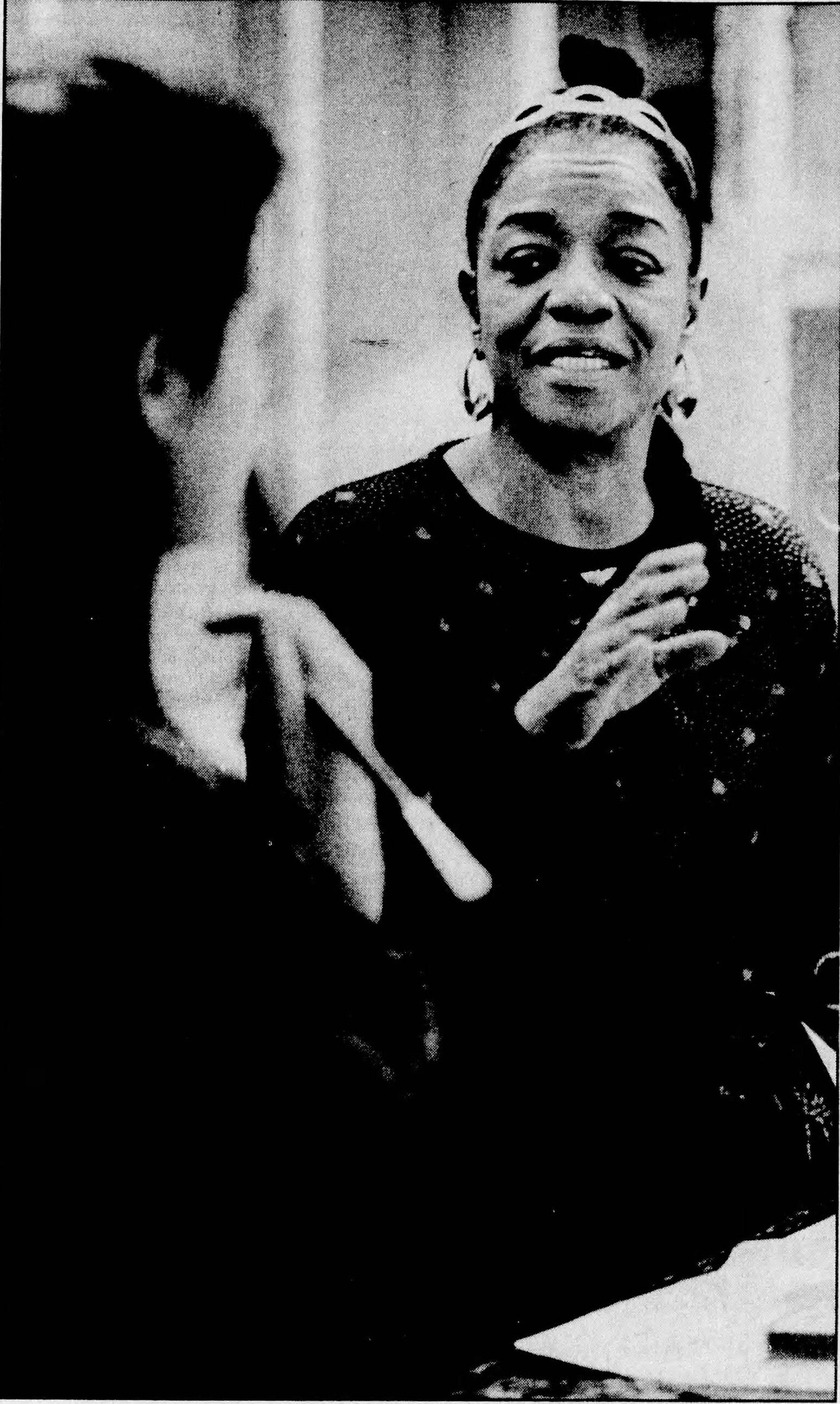
Two things she changed in American art
Ringgold did two things that changed American art.
First, she took quilting, dismissed as women's craft, and lifted it into serious fine art, telling Black and female stories that galleries had ignored.
Second, she fought, in person, to get museums to show Black artists and women at all. For me that second fight is the part people forget.
What a story quilt is
A story quilt is her own invention, and once you see one the idea is clear.
It is a painted scene surrounded by a border of stitched fabric, with a short story written directly onto the piece. You look at it and read it at the same time. Part painting, part quilt, part book, it refuses to sit in any one category.
She painted the central image in acrylic on canvas, then framed it in cloth, often with her mother, a Harlem fashion designer, helping sew.
Tar Beach and the girl who flies
Tar Beach, made in 1988, shows an eight year old girl named Cassie lying on a Harlem rooftop on a summer night, then soaring above the city as if she owns it.
It mixes a real childhood feeling, the rooftop as an escape from the heat, with a dream of total freedom. Ringgold turned it into a picture book that won major awards and is still read in schools today, making her story reach far beyond the gallery.
Who's Afraid of Aunt Jemima?
Her very first story quilt, from 1983, took on a painful stereotype head on.
Called Who's Afraid of Aunt Jemima?, it took the smiling mammy figure used to sell pancakes and rewrote her as Jemima Blakey, the heroine of a sprawling, proud family saga told in fabric and text.
Ringgold seized a racist cliché and turned it into a story of dignity and success.
The activist
Ringgold spent years pressing museums to show more women and Black artists.
She helped organize protests against major New York museums, and in 1970 she was arrested over an exhibition that used the American flag in protest.
She co founded groups to support Black women artists when almost no one else would. For Ringgold, making art and demanding a place for it were the same fight.
Where the quilts came from
Her signature form grew from a mix of family, travel and practicality.
Her mother taught her to sew, and the quilting tradition reached back to her enslaved great great grandmother. A trip that introduced her to Tibetan tankas, paintings framed in cloth, showed her how to combine fabric and image.
There was a plain advantage too: soft, foldable quilts were far easier to roll up and ship than heavy stretched canvases. A practical choice became her signature.
The asthmatic Harlem girl who became a professor
Faith Ringgold was born in Harlem in 1930, kept home as a child by asthma, where her mother surrounded her with fabric and sewing. She studied art at City College of New York and taught in city public schools for years before her career took off.
She went on to write and illustrate more than a dozen children's books, and became a professor at the University of California, San Diego. She kept making art into her nineties.
How Faith Ringgold died
Ringgold died in 2024 at her home in New Jersey. She was 93.
She lived long enough to see herself celebrated everywhere she had once been shut out, with major retrospectives in the museums she had picketed decades before.
The museums that shut her out now hang her
She is held in major American collections, and her books are everywhere.
The Museum of Modern Art, New York. Home of her early mural Die.
The Guggenheim and major museums. Her story quilts appear in leading collections and touring shows.
Any library. Her picture book Tar Beach is the easiest Ringgold to find.
Her story quilts and paintings are held by major American museums, including the Metropolitan Museum of Art in New York and MoMA.
The American People Series, and Die
Long before the quilts, Ringgold painted in oil. In the 1960s she made the American People Series, a group of canvases about race in the United States during the civil rights years.
The largest and hardest is Die, painted in 1967. It is a wide, mural sized scene of a street riot, men, women and children of both races caught screaming and bleeding across the picture.
Decades later the Museum of Modern Art in New York bought Die and hung it near Picasso's famous Demoiselles d'Avignon. The painting a young Black woman made in anger now holds a place at the center of modern art's story.
The mother who sewed beside her
Ringgold did not arrive at quilts alone. Her mother, Willi Posey, was a dress designer and maker in Harlem, and she taught her daughter the craft of fabric and thread.
For years the two worked together. Ringgold painted the central scenes, and her mother sewed the pieced fabric borders that frame each story quilt. It was a genuine partnership across two generations.
Willi Posey died in 1981, but the method they built together carried on. The quilt, a form long tied to women's domestic work, became the vehicle for Ringgold's most radical ideas, thanks in part to her mother's hands.
The children's book that won a medal
The story quilt called Tar Beach had a second life. In 1991 Ringgold turned it into a picture book for children, retelling the tale of a girl who lies on a Harlem rooftop and imagines herself flying over the city.
The book reached far more people than any gallery could. It won a Caldecott Honor for its illustrations and a Coretta Scott King Award, and it became a classroom favorite across the country.
Ringgold went on to write and illustrate many more children's books. For a whole generation of young readers, she was known first as an author, and only later as a painter and quilt maker.
The French Collection
In the 1990s Ringgold made an ambitious set of story quilts called The French Collection. Across a dozen panels she invented a character, a young Black American woman named Willia Marie Simone, who travels to Paris to become an artist.
In the quilts, Willia sits with Picasso, visits Matisse, and gathers famous Black women of history around a table. Ringgold rewrote the story of modern art to place a Black woman at its heart.
It was a pointed and playful act. The Paris that had welcomed white modern masters now belonged, in her hands, to a woman the real art world of that era would have ignored.
Anyone can fly
The idea of flight ran through Ringgold's whole life, and she made it a mission as well as an image. She founded the Anyone Can Fly Foundation to widen the study of African American art and to bring the names of Black modern masters into schools and museums.
She also told her own story in a memoir, We Flew Over the Bridge, published in the 1990s. In it she traced the long road from a Harlem girl kept home with asthma to a professor and a celebrated artist.
The title says it plainly. For Ringgold, flying was never just a picture of a girl on a rooftop. It stood for the freedom she chased for herself and tried to hand on to everyone who came after her.
The masks and soft sculpture
Painting and quilts were not her only tools. In the 1970s Ringgold made masks and soft sculptures, sewn and stuffed figures with painted faces, some worn in performances.
Groups of these figures stood for families, communities and generations of Black women. She staged them in events that mixed art, theatre and storytelling, well before such crossings were common.
This side of her work is less famous than Tar Beach, but it shows how restless she was. She kept reaching for new forms until she found ones that could carry her stories the way she wanted.
Kara Walker took a different craft the art world had dismissed, the cut paper silhouette, and used it to stage scenes of plantation violence across entire gallery walls.
More secrets to unlock


Faith Ringgold and her story quilts, answered
What is she known for? Story quilts, especially Tar Beach.
What is a story quilt? A painted scene framed in sewn fabric, with a written story on it.
What is Die? A large 1960s painting about racial violence, now at MoMA.
Is she still alive? No. She died in 2024, aged 93.
Where was she from? Harlem, New York.