
Famous Female Artists: 12 Painters Who Made History
The most famous female artists were long written out of the story, yet women were painting at the highest level for centuries before the history books caught up.
From a Renaissance prodigy to the woman who reached abstraction first, here are the painters worth knowing.
Most of these names were once as celebrated as any man's, then quietly dropped from the canon and rescued only lately. I have gathered twelve, all with work now in the public domain, whose paintings you can still stand in front of today.
Why they matter:
The pioneers. Women who ran workshops and served at courts when the field was closed to them.
The rediscovered. Painters misfiled under men's names for centuries.
The rule breakers. Trousers, male nudes, abstraction, firsts nobody expected.
The proof. Talent was never the thing women lacked, only the open door.
If this held your attention
These go past the caption and into what actually happened:
Ten women artists you need to know, the names the textbooks skipped
Twelve famous portraits and the real people, the faces behind the paintings
Was Monet really the first Impressionist, the painting that may have got there first
1. Sofonisba Anguissola, The Chess Game (1555)
Three sisters play chess in a garden while a servant watches, one girl grinning straight out at us as if sharing a joke. The painter was their sister, Sofonisba Anguissola, barely into her twenties and already the most talked about woman in Italian art.
She had turned a private family moment into something no man was painting yet.
Born into minor nobility in Cremona, she was coached by tutors when girls were almost never trained, and Michelangelo praised her drawings by letter.
She later served as a court painter to Philip the Second of Spain and lived to about ninety three, sketching to the end. Van Dyck visited the near blind old woman and called her the finest teacher he had met.
2. Lavinia Fontana, Self Portrait at the Clavichord (1577)
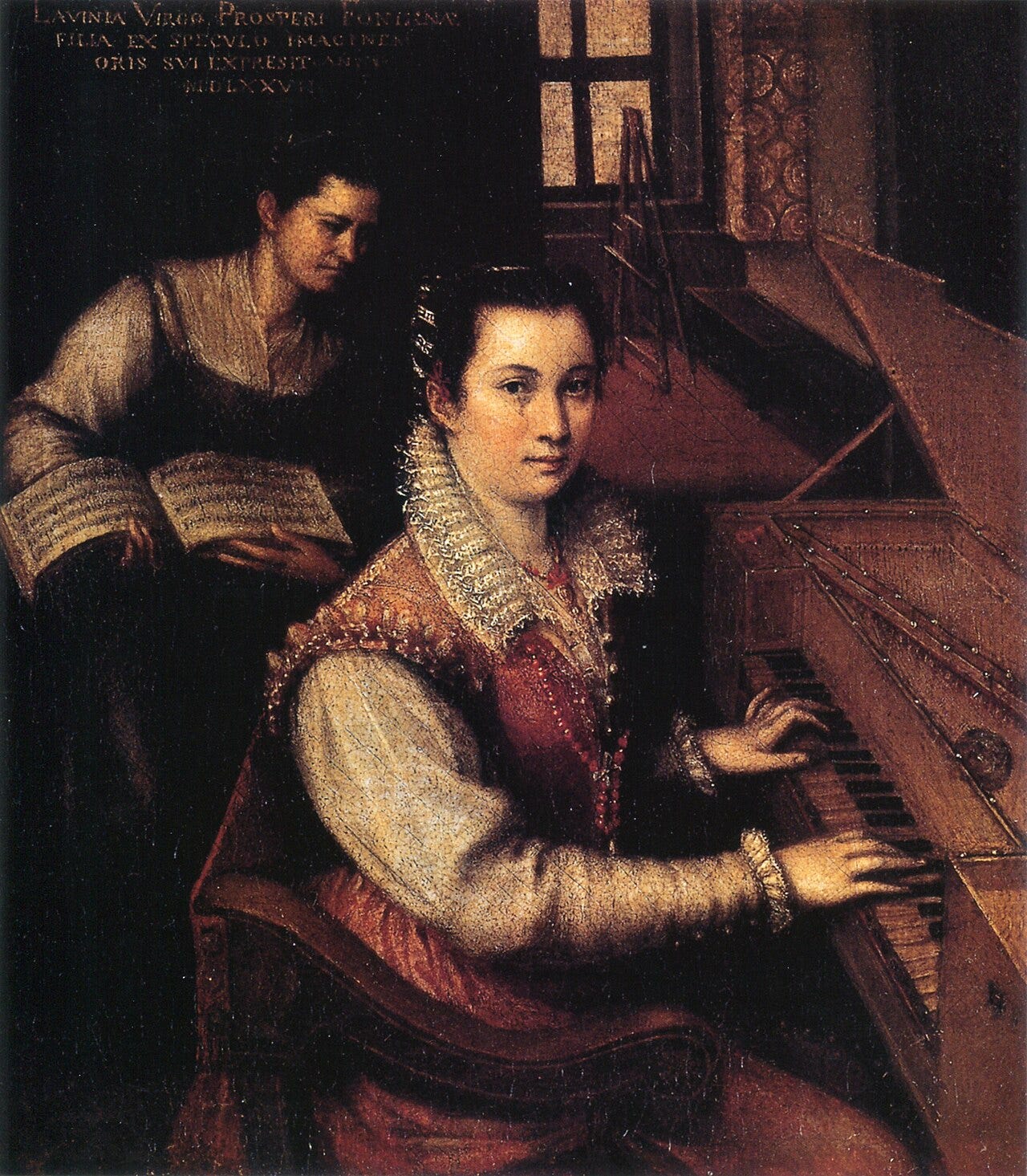
At twenty five, Lavinia Fontana painted herself seated at a keyboard, poised in an elaborate ruff, turning to meet your eye. It was a public announcement of a professional career at a time when that was almost unthinkable for a woman.
She ran a busy Bologna studio and kept the whole family afloat with her brush.
Fontana took commissions for large altarpieces and painted female nudes, a subject almost no woman was allowed to touch, all while raising eleven children.
Her husband gave up his own painting to manage her career and grind her colors. She is often called the first woman to earn a living as a professional artist on equal terms with men.
3. Artemisia Gentileschi, Judith Slaying Holofernes (about 1620)
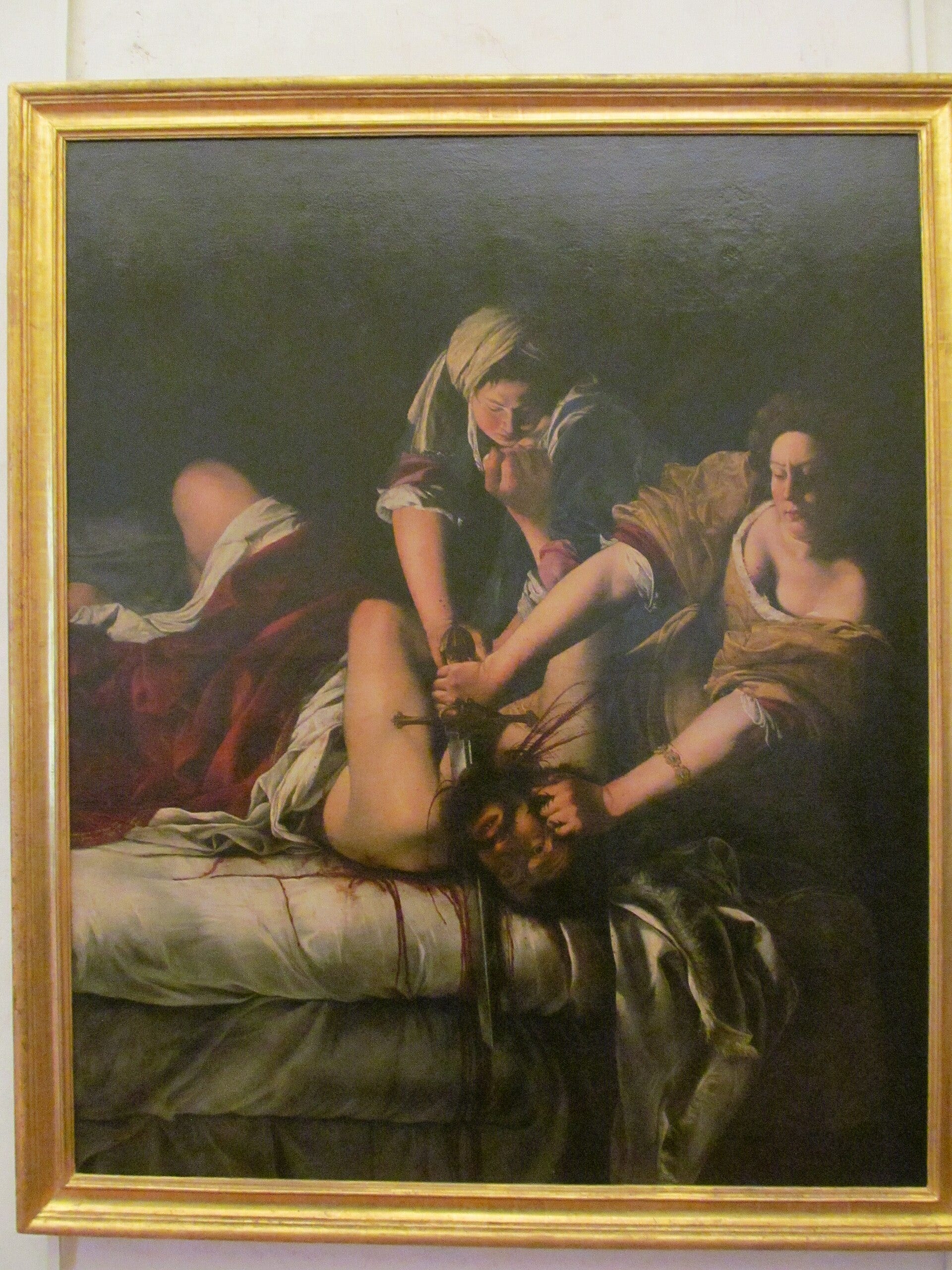
Two women pin a struggling man to a bed and drive a sword through his throat, the blood arcing across the sheets. Artemisia Gentileschi gave the old Bible story a fury no earlier version had, painting the killers as strong and unflinching.
It is one of the most physical images of violence in all of art.
As a teenager she was raped by a tutor and testified through a public trial, even under torture meant to test her word. She became the first woman admitted to Florence's academy of art and ran busy workshops across Italy.
Her Judith hangs in the Uffizi today, and in 2018 one of her self portraits entered London's National Gallery, the first Gentileschi the museum ever bought.
4. Judith Leyster, Self Portrait (about 1630)
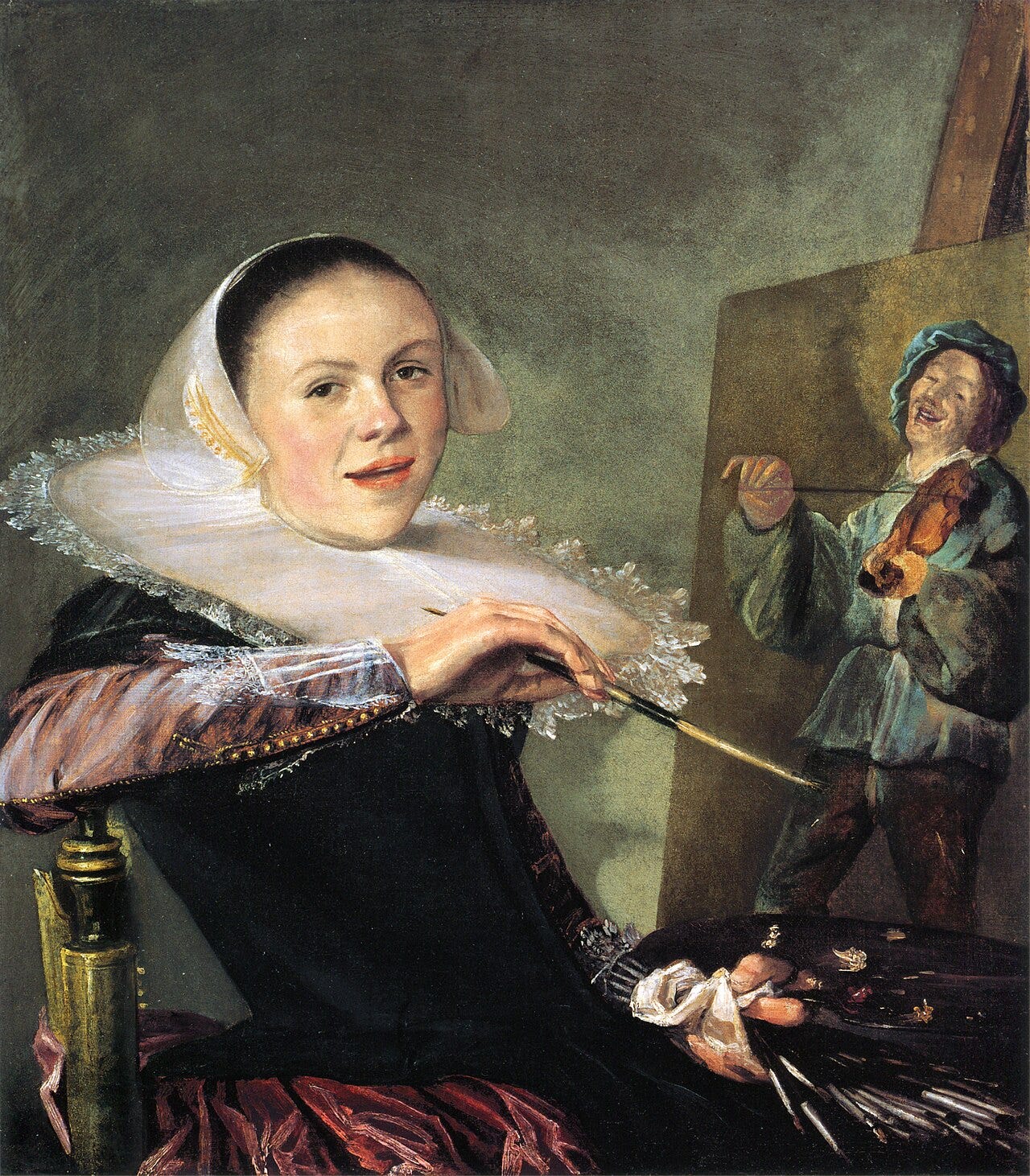
A confident young painter pauses at her easel, brush in hand, half smiling as if you have just walked into her studio. Judith Leyster made this self portrait around the age of twenty one, loose and lively in the manner of Frans Hals.
For centuries almost no one knew her name.
A leading talent of the Dutch Golden Age, she was forgotten after her death and her paintings quietly reassigned to Hals and other men.
Only in 1893 did a scholar spot her hidden monogram, a star with the letters JL, a pun on her name meaning lodestar.
The discovery pulled a whole body of work back out from under a man's signature.
5. Rachel Ruysch, Flower Still Life (about 1700)
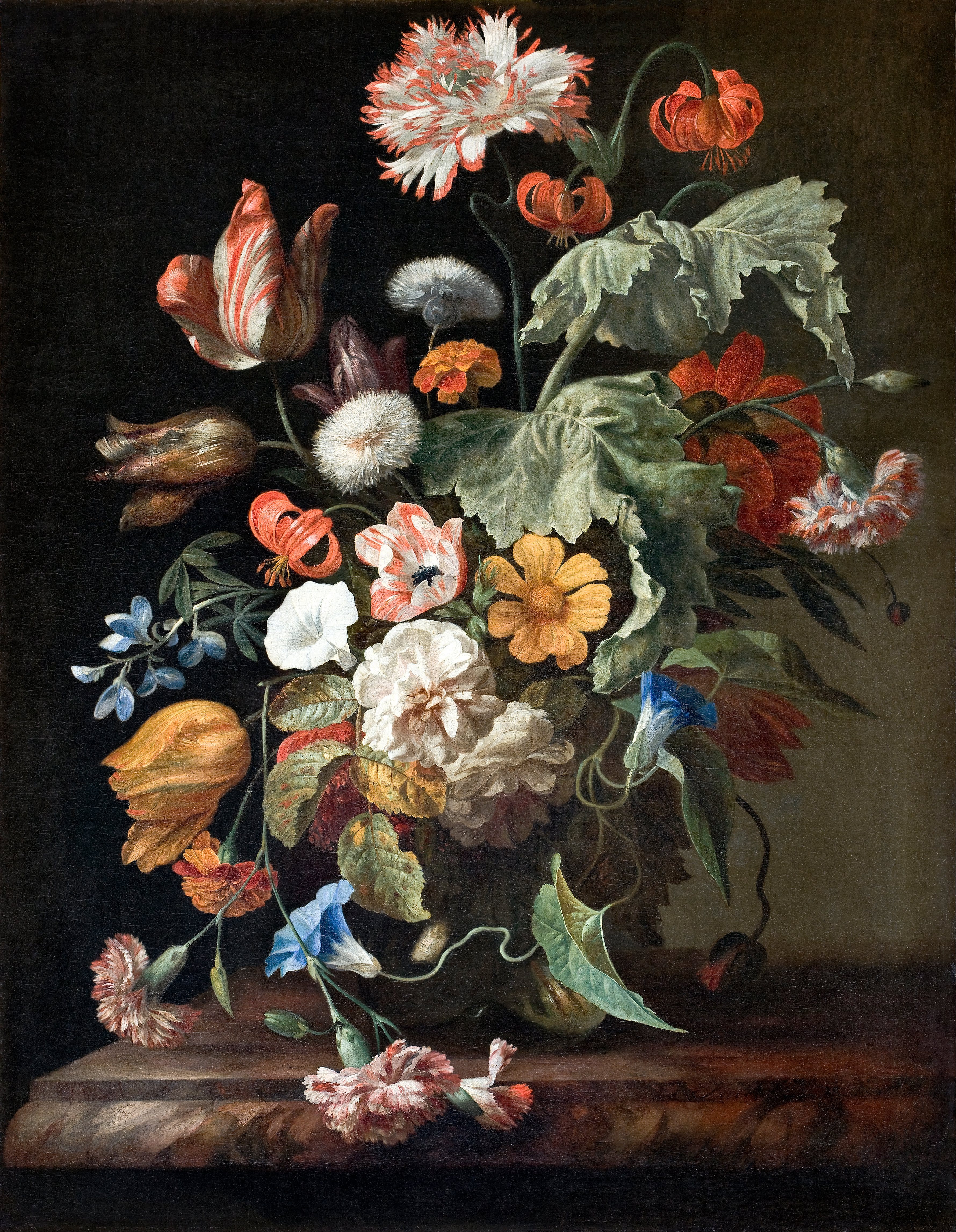
Rachel Ruysch became the most sought after flower painter in Europe, her canvases selling for more than Rembrandt's did in his lifetime.
Look at one and a dark ground erupts into a tumble of roses, poppies and insects so exact you could name each species.
She kept working past eighty, a queen of still life painting.
Trained in Amsterdam beside her father, a professor of anatomy, she tucked tiny lizards, caterpillars and dewdrops into every bouquet. She raised ten children across a sixty year career and once won a lottery jackpot late in life.
In 1708 she was named court painter to the Elector Palatine in Dusseldorf, one of the highest posts a painter could hold.
6. Rosalba Carriera, A Pastel Portrait (about 1720)
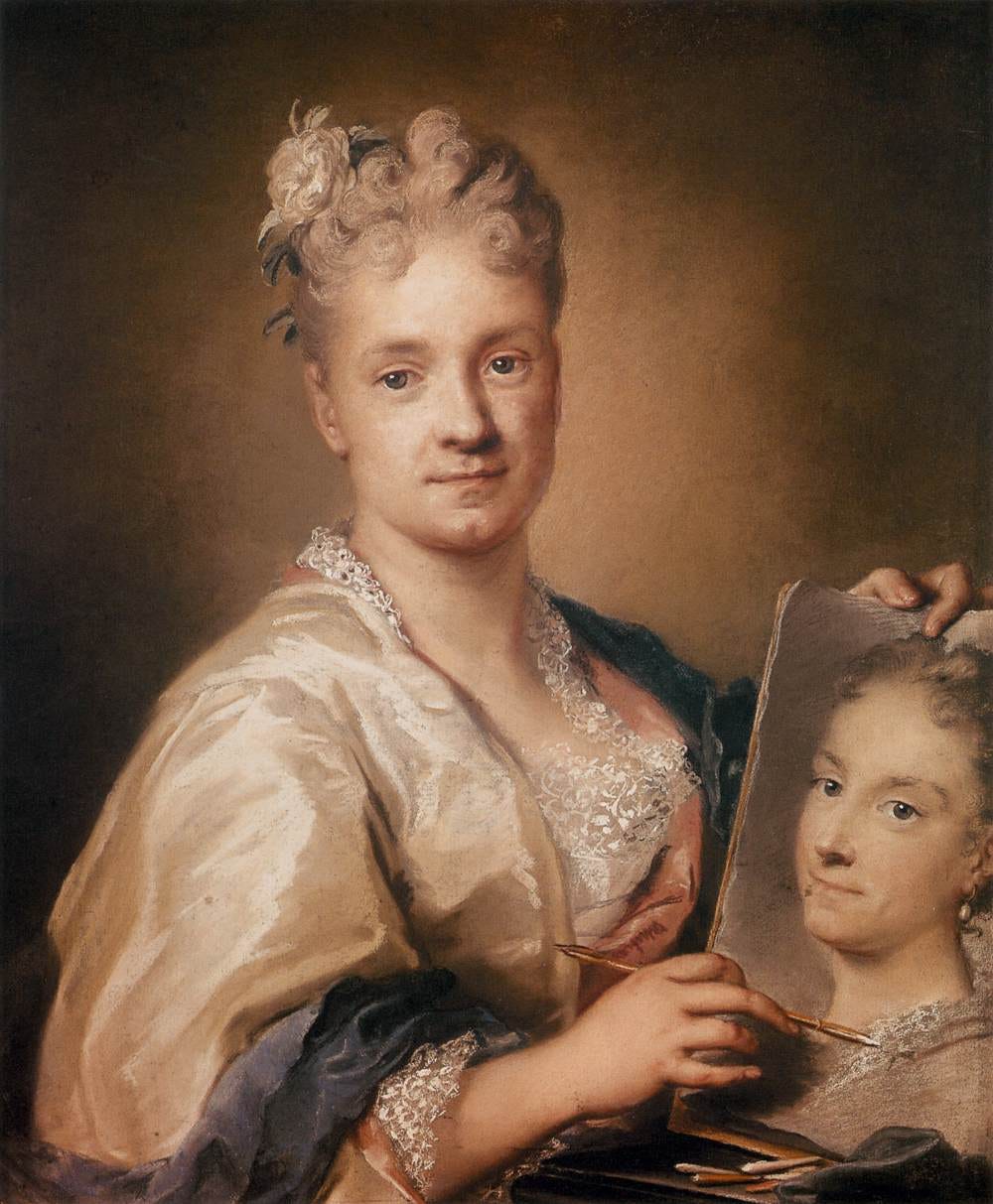
A powdered face emerges from soft clouds of chalk, delicate and alive, in a medium most artists dismissed as a toy. Rosalba Carriera turned pastel into a serious art form and made herself the most fashionable portraitist in Europe.
Kings and tourists lined up at her Venice studio.
Her visit to Paris in 1720 set off a craze for pastel that swept the continent for decades. Elected to the leading academies in Rome and Paris, she worked at a speed that astonished her sitters.
Blindness ended her career and darkened her last years, and she died in 1757 in the Venice where she had made pastel the height of European fashion.
7. Angelica Kauffman, Self Portrait (about 1780)
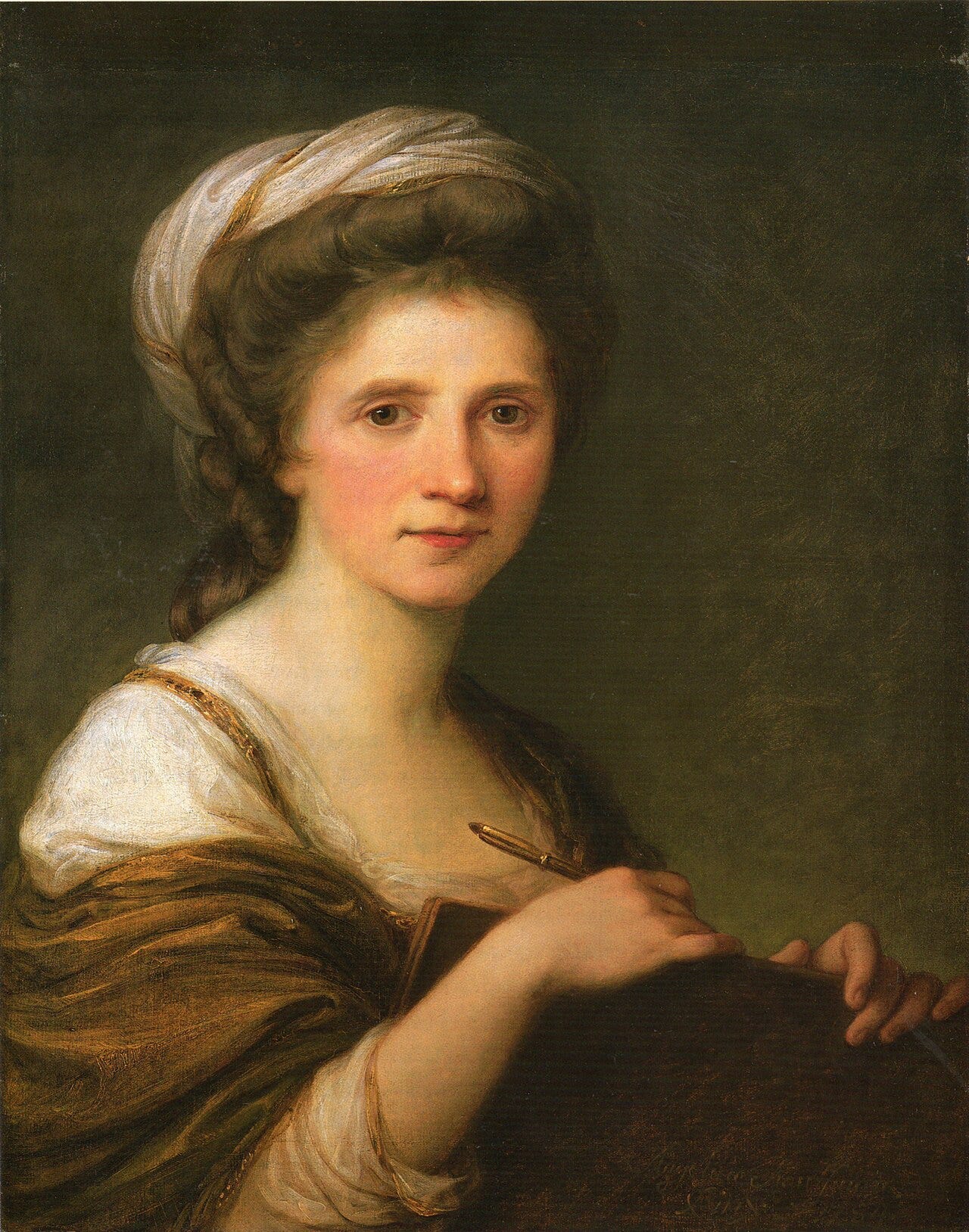
A calm woman in a plain white dress looks out with quiet authority, the tools of her trade in hand. Angelica Kauffman was a European celebrity, a history painter welcomed in London and Rome when that grand genre was thought too lofty for women.
She helped shape the taste of an entire age.
In 1768 she became one of only two women among the founders of London's Royal Academy, and no woman would be a full member again for more than a century and a half.
She painted heroic scenes from myth and history, not only the portraits women were expected to make. In a famous group picture of the academy, the two women could appear only as portraits hung on the wall.
8. Elisabeth Vigee Le Brun, Self Portrait with Her Daughter (1789)
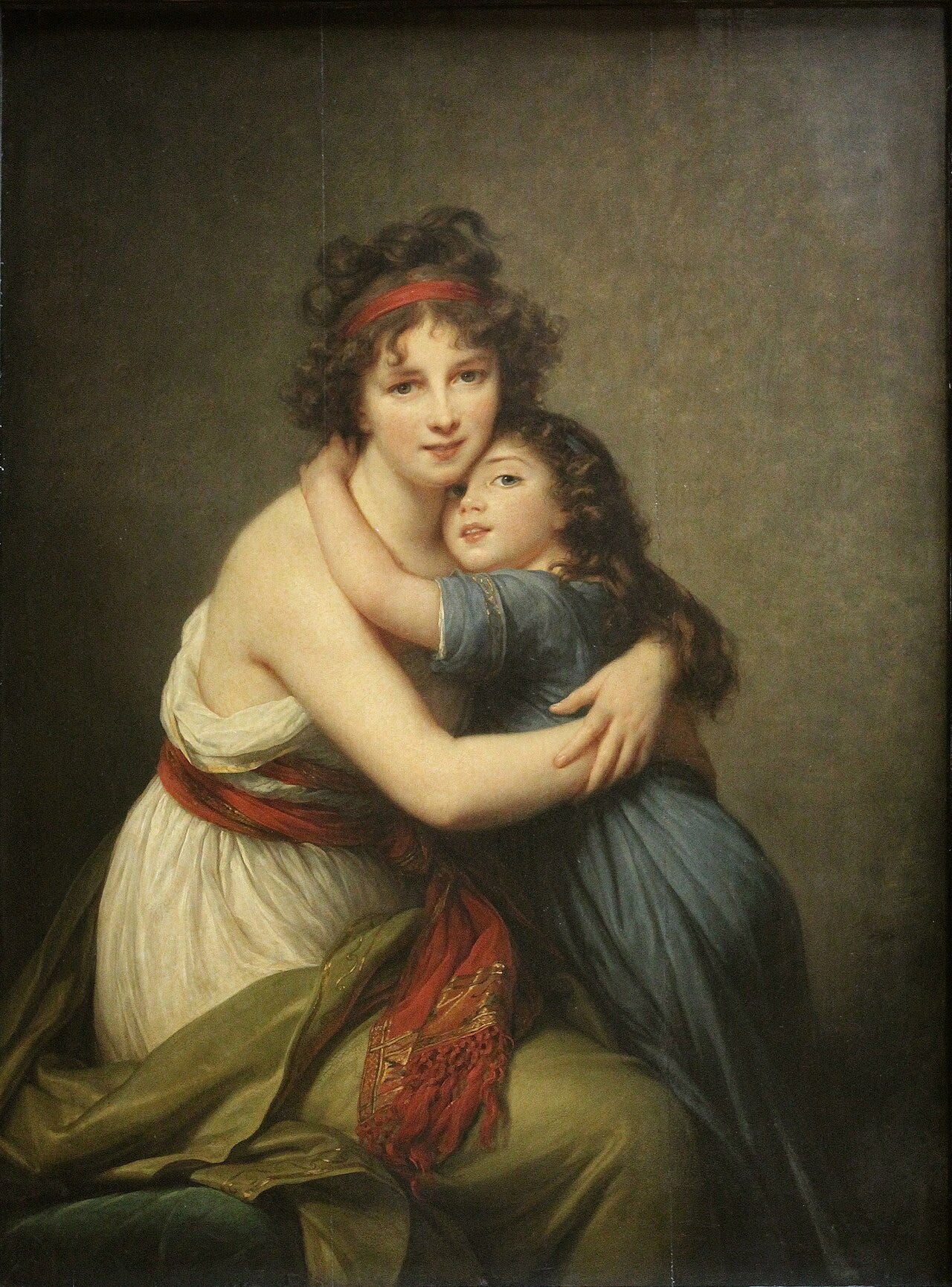
A mother wraps her arms around her small girl, both smiling openly, a warmth that felt new for a formal portrait. Elisabeth Vigee Le Brun showed herself this way at the height of her fame, the favorite portraitist of Marie Antoinette.
Within months her world would fall apart.
As the Revolution broke out in 1789 she fled France overnight with her daughter and spent twelve years painting royalty across Europe, from Naples to Saint Petersburg.
She left about six hundred and sixty portraits and a set of lively memoirs. A scandal once flared simply because she showed herself smiling with her teeth, thought improper for a lady.
9. Rosa Bonheur, The Horse Fair (1853)
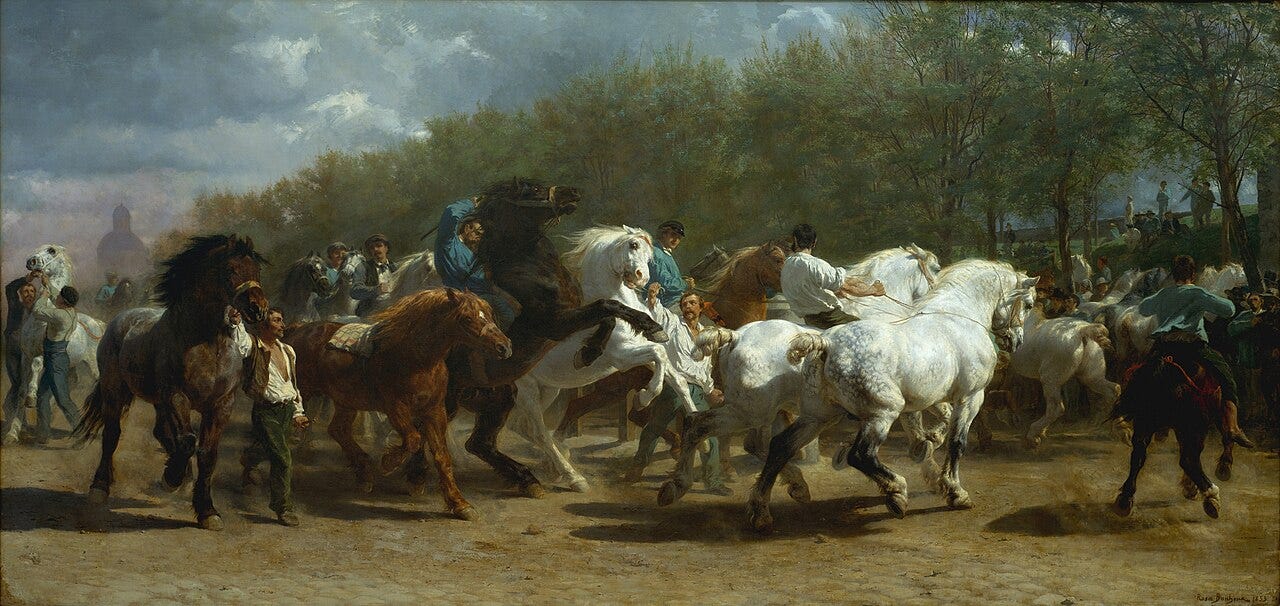
Rosa Bonheur became the most famous woman painter of the nineteenth century on the strength of pictures like The Horse Fair. Powerful draft horses rear and surge across the huge canvas, muscles straining, dust flying, every one studied from life.
To paint them she went where women were not supposed to go.
She got a police permit to wear trousers so she could sketch in the horse markets and slaughterhouses of Paris. She lived openly with women, kept a chateau full of pet lions, and in 1865 was the first woman artist given the cross of the Legion of Honour.
The Horse Fair hangs today in the Metropolitan Museum, still one of the largest paintings there.
10. Berthe Morisot, The Cradle (1872)
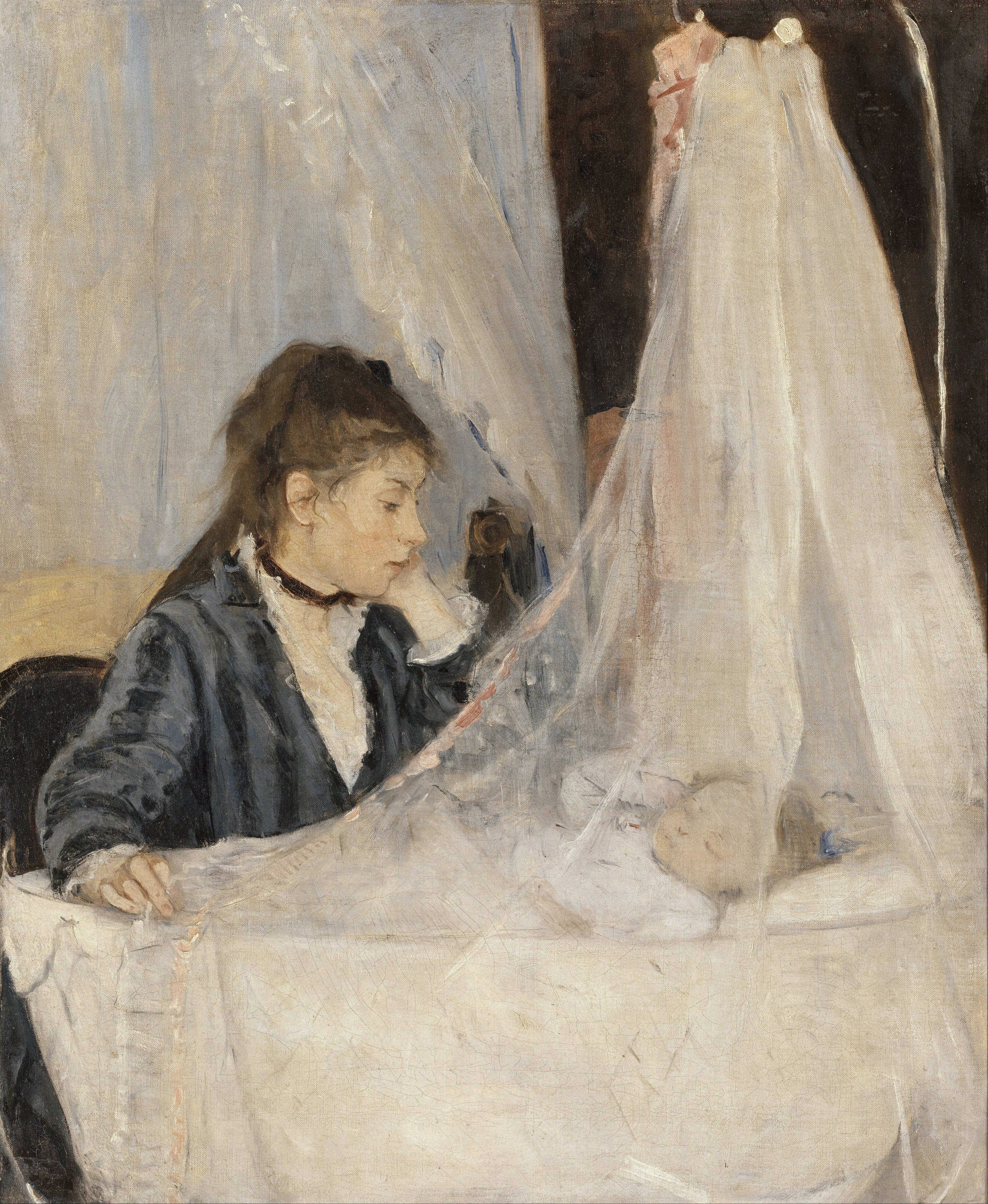
A young mother watches over a sleeping baby behind a veil of gauze, the whole scene dissolving into soft, quick strokes. Berthe Morisot was a founding member of the Impressionists, the only woman in their very first exhibition in 1874.
She showed in nearly every one that followed.
Barred from the cafes and life classes where the men traded ideas, she made the domestic world her subject and painted it with total freedom. She married Eugene Manet, brother of the painter Edouard, and hosted the group's dinners.
When she died her certificate listed no profession at all, though she had helped invent modern painting.
11. Mary Cassatt, The Child's Bath (1893)
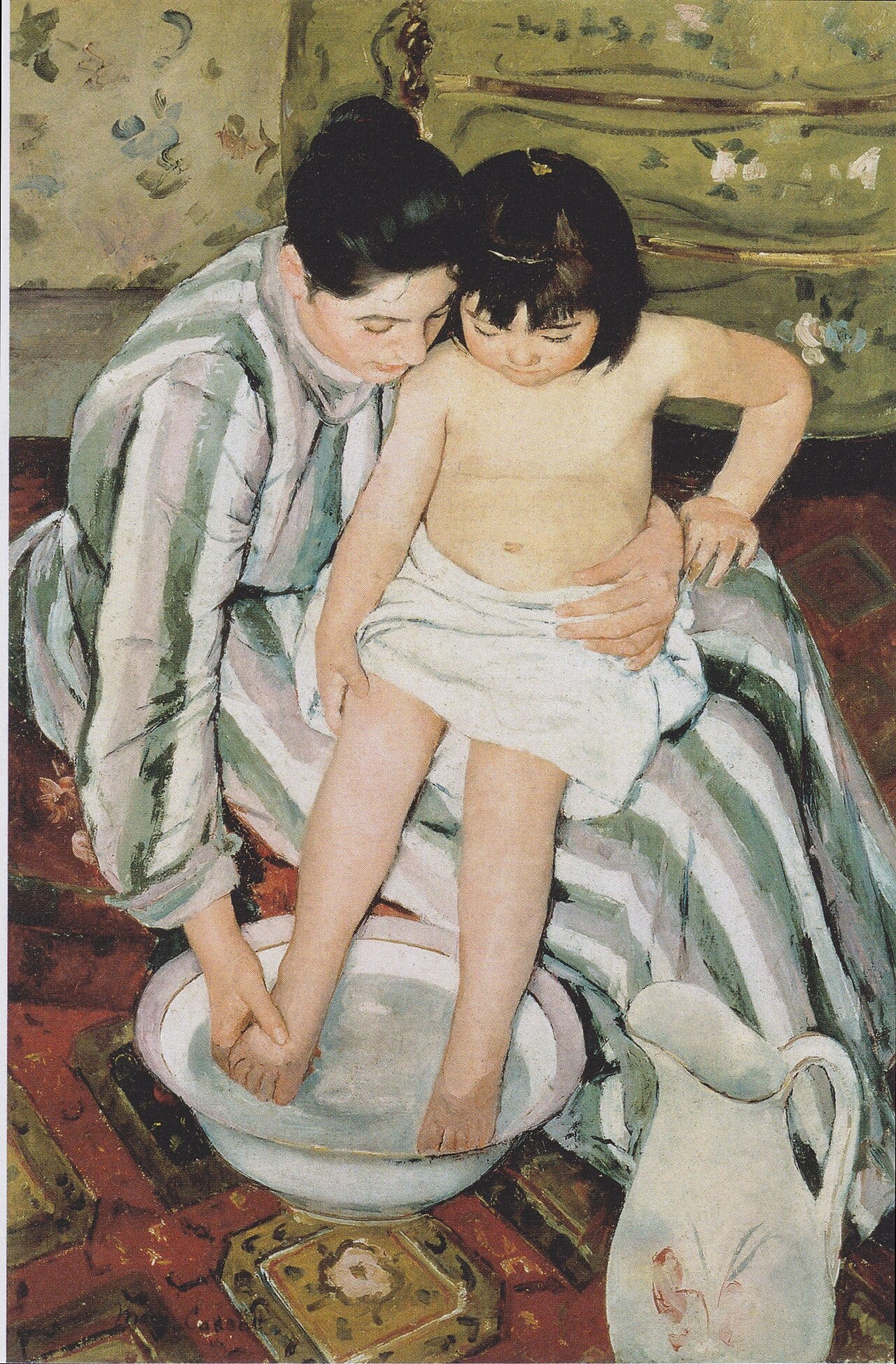
Mary Cassatt was the only American, and one of very few women, invited to show with the Impressionists in Paris. In The Child's Bath she looks down from above as a woman washes a drowsy child, the striped dress and patterned rug pressed flat like a Japanese print.
She made the bond between mothers and children her great subject without ever turning it sweet.
Degas spotted her talent and became a prickly friend and mentor, and she in turn steered wealthy American collectors toward the new French art. That is a large reason so many Impressionist paintings now hang in United States museums.
She never married, arguing a woman could not run both a household and a serious career.
12. Hilma af Klint, The Swan (1915)
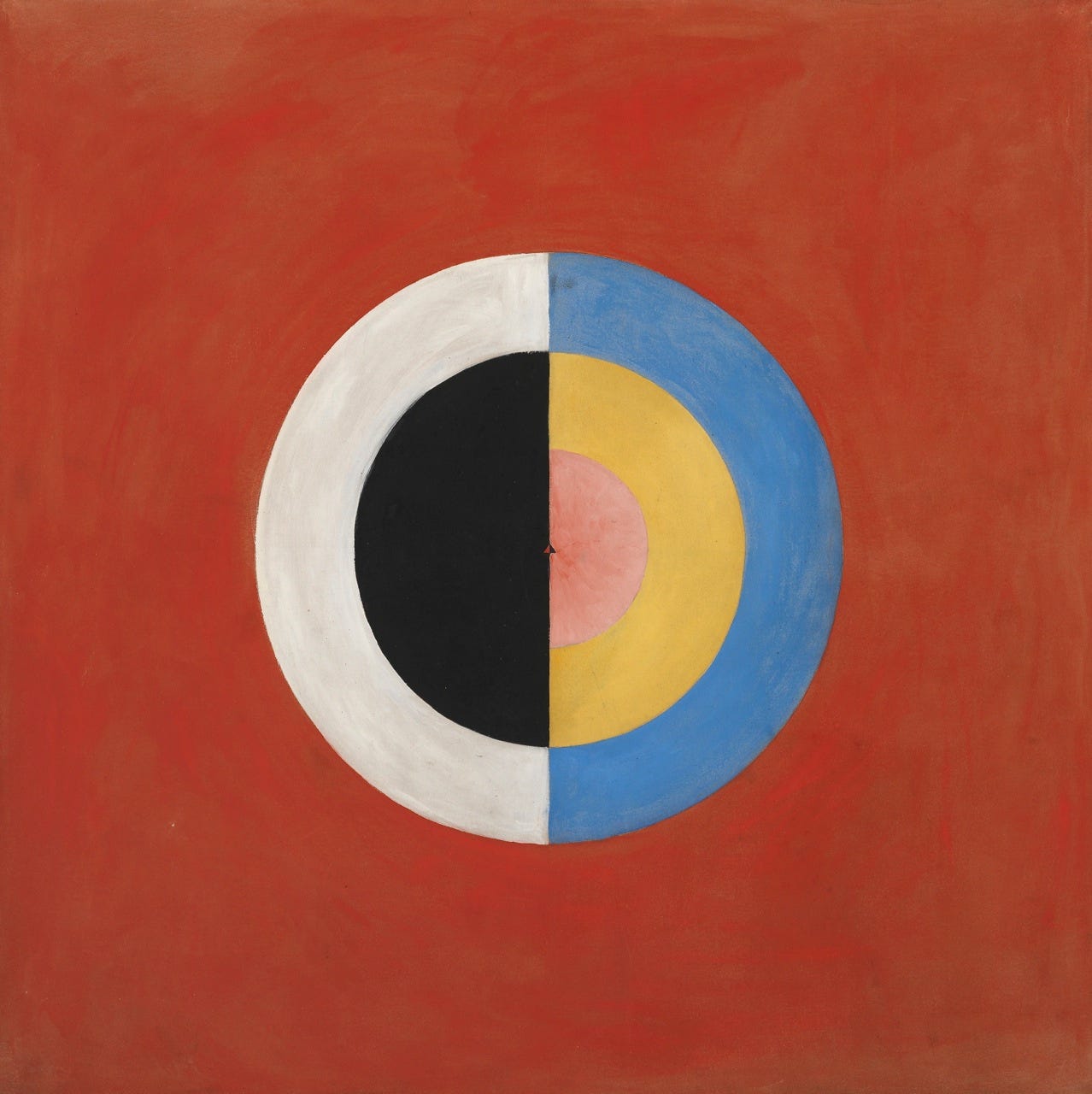
A circle split clean into black and white floats above a field of pale color, pure geometry with no object in sight. Hilma af Klint was making abstract paintings like this years before Kandinsky, Malevich or Mondrian, the men usually credited with inventing the style.
Almost no one knew, because she kept it secret.
A trained Swedish painter, she believed her abstractions were guided by spirits and left orders that they stay hidden for twenty years after her death.
They surfaced properly only in this century, and a 2018 show turned her into a sensation. The first abstract artist, it turns out, may well have been a woman the story left out.
Where their work hangs now
Sofonisba Anguissola, The Chess Game: the National Museum in Poznan, Poland.
Artemisia Gentileschi, Judith Slaying Holofernes: the Uffizi, Florence.
Rosa Bonheur, The Horse Fair, and Mary Cassatt: the Metropolitan Museum, New York.
Berthe Morisot, The Cradle: the Musee d'Orsay, Paris.
Hilma af Klint, her paintings: the Hilma af Klint Foundation, Stockholm.
If these painters pulled you in, keep going:
The Arnolfini Portrait, detail by detail, the mirror, the dog, and the question everyone asks
The secret behind Monet Magpie, one bird in the snow, and why it matters
Lady with an Ermine, detail by detail, why she is holding that animal
Famous female artists, a few quick questions
Who is the most famous female artist? Today it is probably Frida Kahlo or Georgia O'Keeffe, though their work is still under copyright, so we have focused on the equally great painters whose art is now free to show.
Who was the first famous woman painter? Sofonisba Anguissola, in the 1500s, was the first to win international fame, admired by Michelangelo and hired by the Spanish court.
Why are there so few famous women artists? Not for lack of talent. For centuries women were barred from training, academies and the life class, then dropped from the history books or filed under men's names.
What about Frida Kahlo and Georgia O'Keeffe? Both are giants of the twentieth century, along with Yayoi Kusama and Tamara de Lempicka, but their paintings remain under copyright and cannot be shown freely here.
Which museums show women artists? The Uffizi, the Metropolitan Museum, the Musee d'Orsay and the National Museum of Women in the Arts in Washington all hold important works.
The names the canon left out
Line these twelve up and one thing is clear. The problem was never that women could not paint. Anguissola was a court star, Ruysch outsold Rembrandt, Bonheur won the Legion of Honour, af Klint reached abstraction first.
They were famous in their own time, then trimmed out of the story as it hardened into a list of great men. Their rediscovery is not a favor, it is a correction.
The paintings were always this good.