
Moon Paintings: 12 Famous Works to Know
The most famous moon paintings turn night into feeling. Van Gogh made the moon roll and swirl over a sleeping town, Friedrich set two tiny men beneath it in silent awe, and one Renaissance painter drew the moon’s real craters through a telescope years before anyone else. Here are twelve to know, and where to see them.
Painting the moon is a strange challenge. It gives almost no light and no colour, yet it has carried more meaning than almost any other subject: loneliness, wonder, death, faith and dreams. The twelve below run from a 1609 telescope to a swirling asylum window.
Use this as a quick tour:
The visionaries: Van Gogh and Friedrich, the moon as pure emotion.
The night painters: Whistler, Grimshaw and Aivazovsky, masters of moonlight.
The pioneers: Elsheimer and Turner, who painted the real night sky first.
Where to see them: a museum list at the end, grouped by city.
Vincent van Gogh, The Starry Night
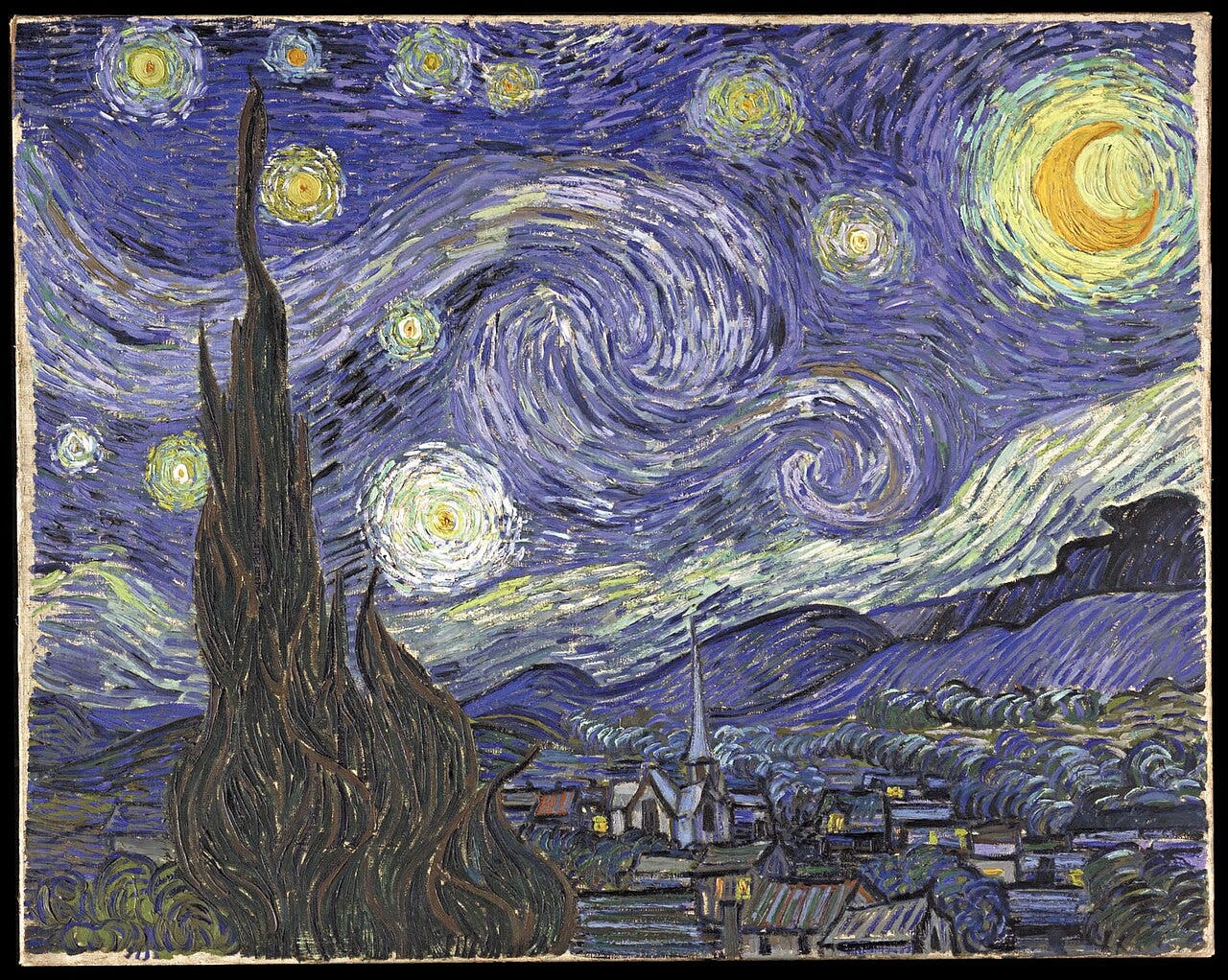
Vincent van Gogh painted The Starry Night in 1889 from the window of his room in the asylum at Saint Remy. A huge glowing crescent moon and swirling stars roll over a quiet village.
Van Gogh painted it from memory and imagination, not the real view, the sky churning with energy he felt more than saw. It is the most famous night landscape ever made.
It hangs at the Museum of Modern Art in New York. He thought it a failure. The world decided otherwise, and its moon now glows on more posters than any other in art.
Vincent van Gogh, Starry Night Over the Rhone
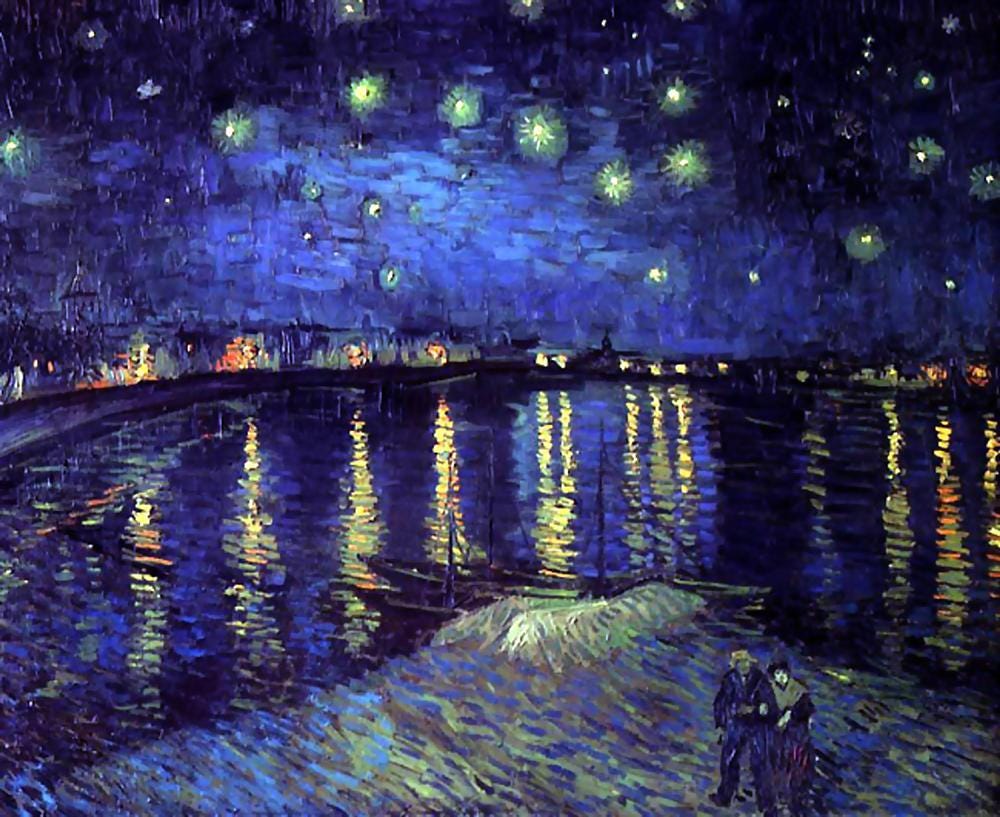
A year earlier, in 1888, Van Gogh painted Starry Night Over the Rhone at Arles, the gas lamps of the town and the stars of the Great Bear reflected in the dark river. A couple strolls the bank.
This one he painted on the spot at night, candles fixed to his hat brim so he could see the colours. It is calmer and truer to life than the famous swirling version.
It hangs at the Musee d’Orsay in Paris. Van Gogh wrote that he needed the night, and its blues and golds, more than he needed the day.
Caspar David Friedrich, Two Men Contemplating the Moon
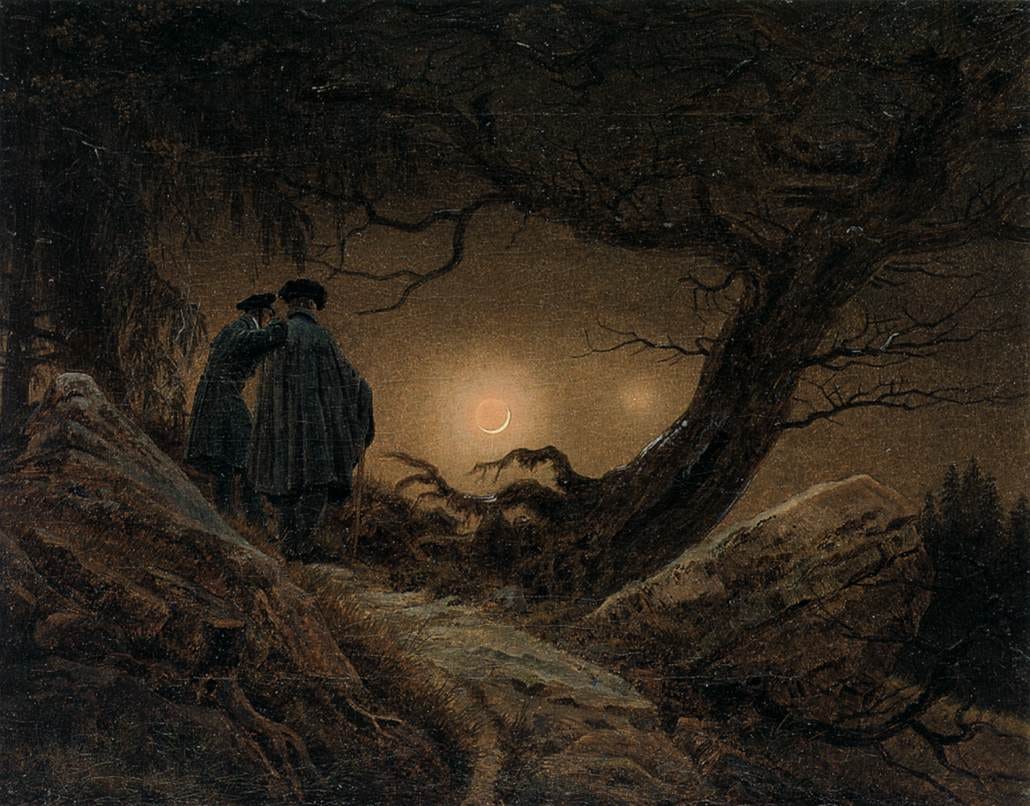
Caspar David Friedrich painted Two Men Contemplating the Moon around 1825, two tiny figures with their backs to us, standing among gnarled trees, gazing up at a low crescent moon. It is the heart of German Romanticism.
For Friedrich the moon was a religious sight, a door to the infinite. The men are dwarfed by it, lost in wonder, exactly as he wanted the viewer to be.
It hangs at the Galerie Neue Meister in Dresden and in other versions. Samuel Beckett said this painting was the source of his play Waiting for Godot.
James McNeill Whistler, Nocturne in Black and Gold
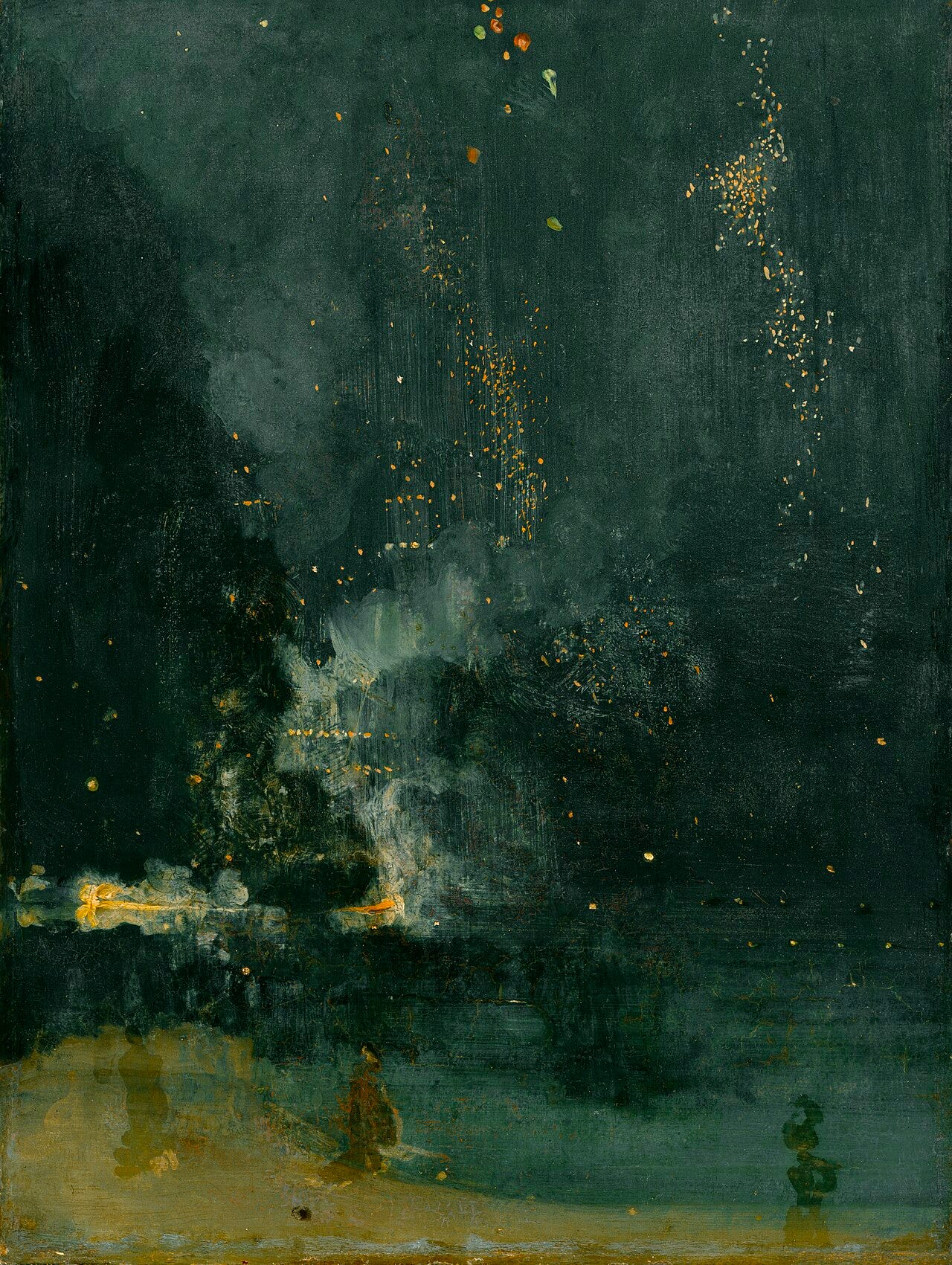
James McNeill Whistler painted this night scene around 1875, golden sparks from a firework drifting down through a dark misty sky over the Thames. He called such works nocturnes, borrowing the word from music. It is a pure nocturne.
The critic John Ruskin accused Whistler of flinging paint in the public’s face. Whistler sued him, won a single coin in damages, and the trial helped define art as its own reward.
It hangs at the Detroit Institute of Arts. Whistler cared only for the mood of the dark, not the detail, painting the feeling of a night sky.
Ivan Aivazovsky, Bay of Naples by Moonlight
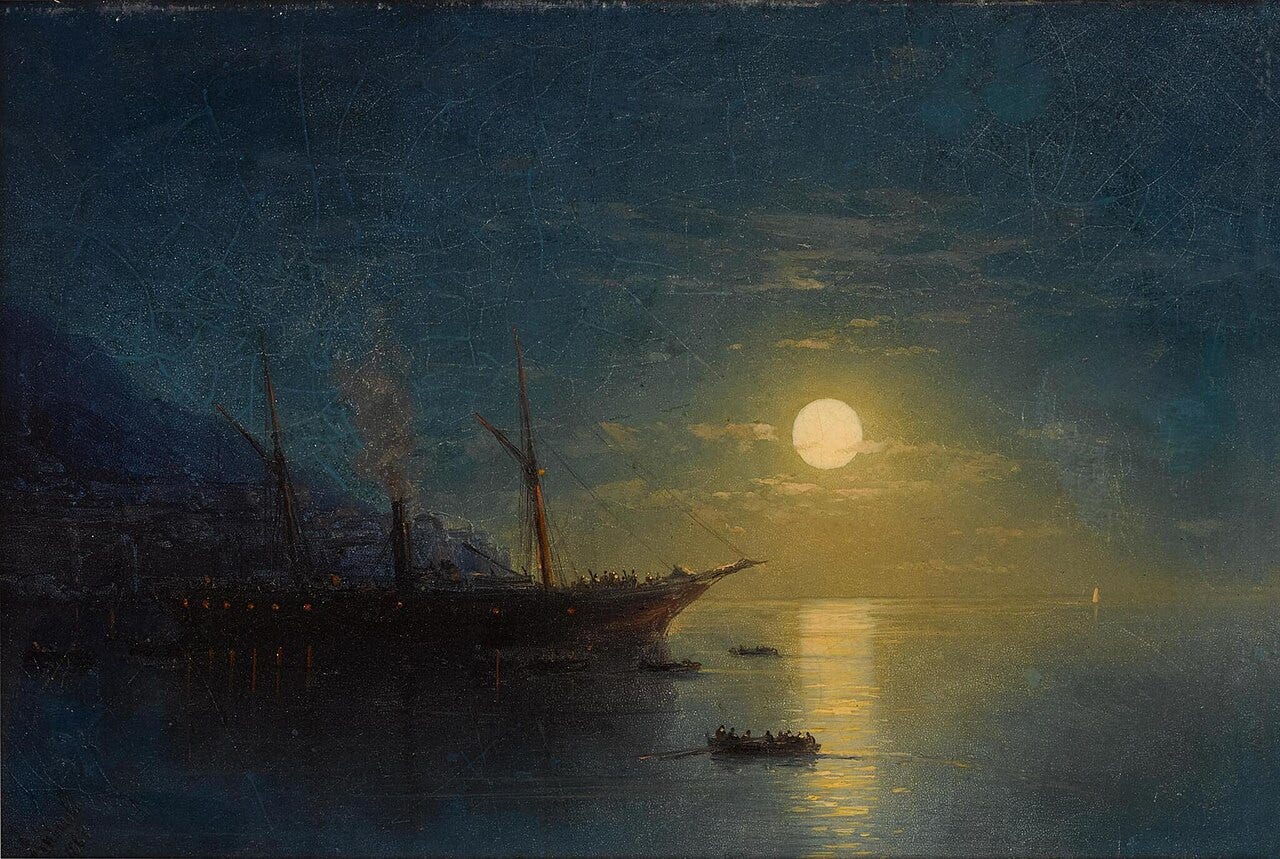
Ivan Aivazovsky, the great Russian painter of the sea, made moonlight his signature. Here the moon hangs over the Bay of Naples, laying a glowing silver path across the calm water.
Aivazovsky painted thousands of seascapes, and he could suggest glowing light with astonishing skill, the moon seeming to shine right through the canvas. Crowds gathered to watch him work.
His moonlit scenes hang in museums across Russia and beyond. Nobody has ever painted the moon on water more convincingly, a path of light you feel you could walk.
John Atkinson Grimshaw, Moonlight
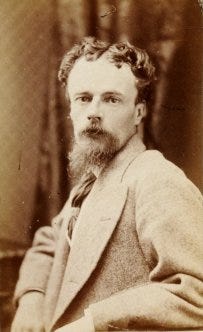
John Atkinson Grimshaw specialised in moonlit Victorian streets and docks, wet cobbles and bare trees glistening under a hazy full moon. He painted little else, and painted it superbly.
Grimshaw layered thin paint to get the exact damp glow of gaslight and moon on a rainy northern night. His shipyards and lanes feel like the England of ghost stories.
His moonlit scenes hang in British collections including Leeds. Almost forgotten for years, he is now loved as the great painter of the moonlit city.
Henri Rousseau, The Sleeping Gypsy
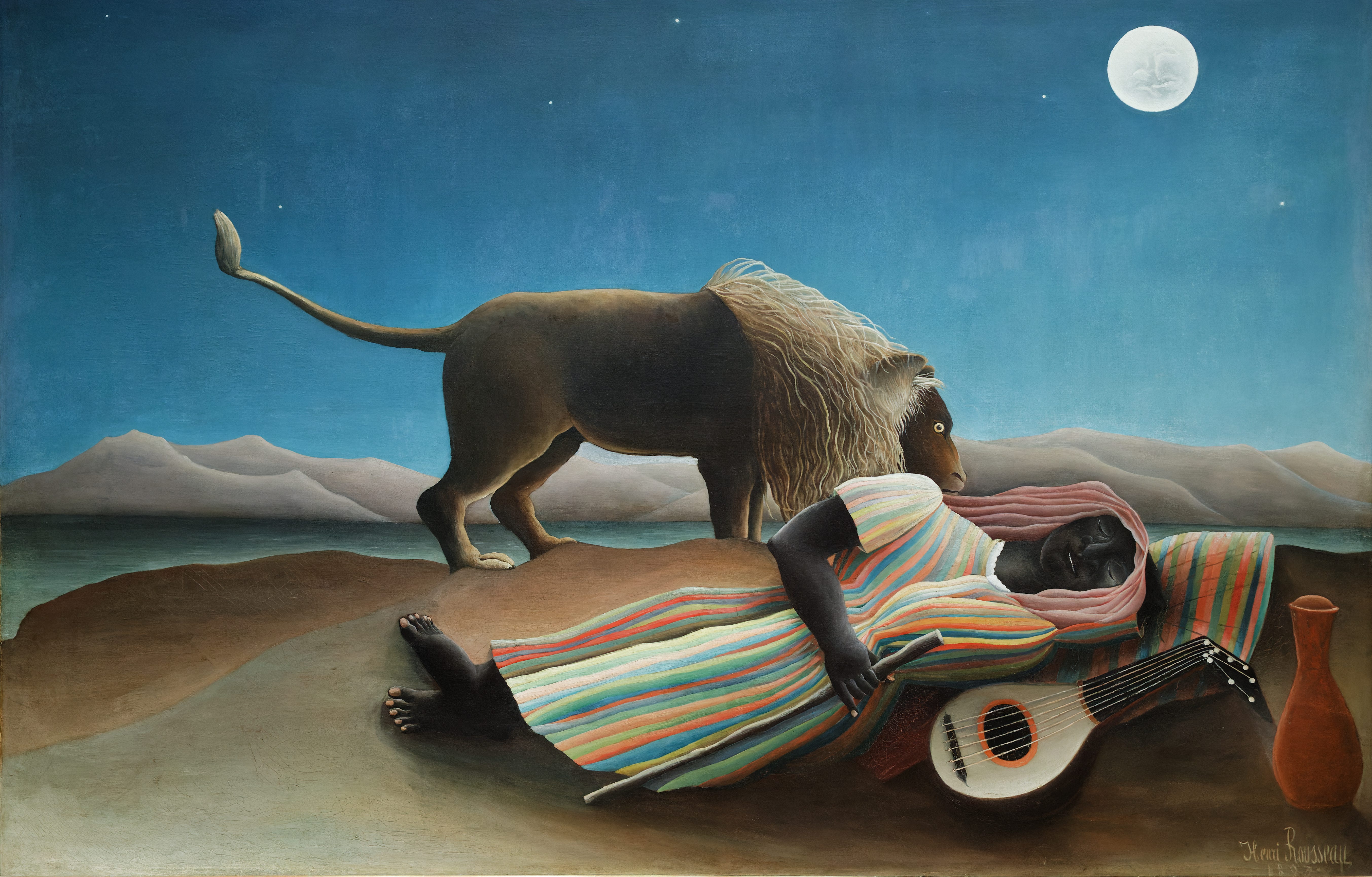
Henri Rousseau painted The Sleeping Gypsy in 1897, a lion standing over a sleeping traveller in a moonlit desert, a mandolin and jug beside her. A full moon hangs in a still sky.
Rousseau, a self taught customs clerk, built a dreamlike scene that feels frozen between danger and calm. The moon gives it the logic of a dream, where nothing quite makes sense.
It hangs at the Museum of Modern Art in New York. Ignored in his lifetime, it became one of the most loved and mysterious moonlit paintings of the modern age.
Caspar David Friedrich, Moonrise over the Sea
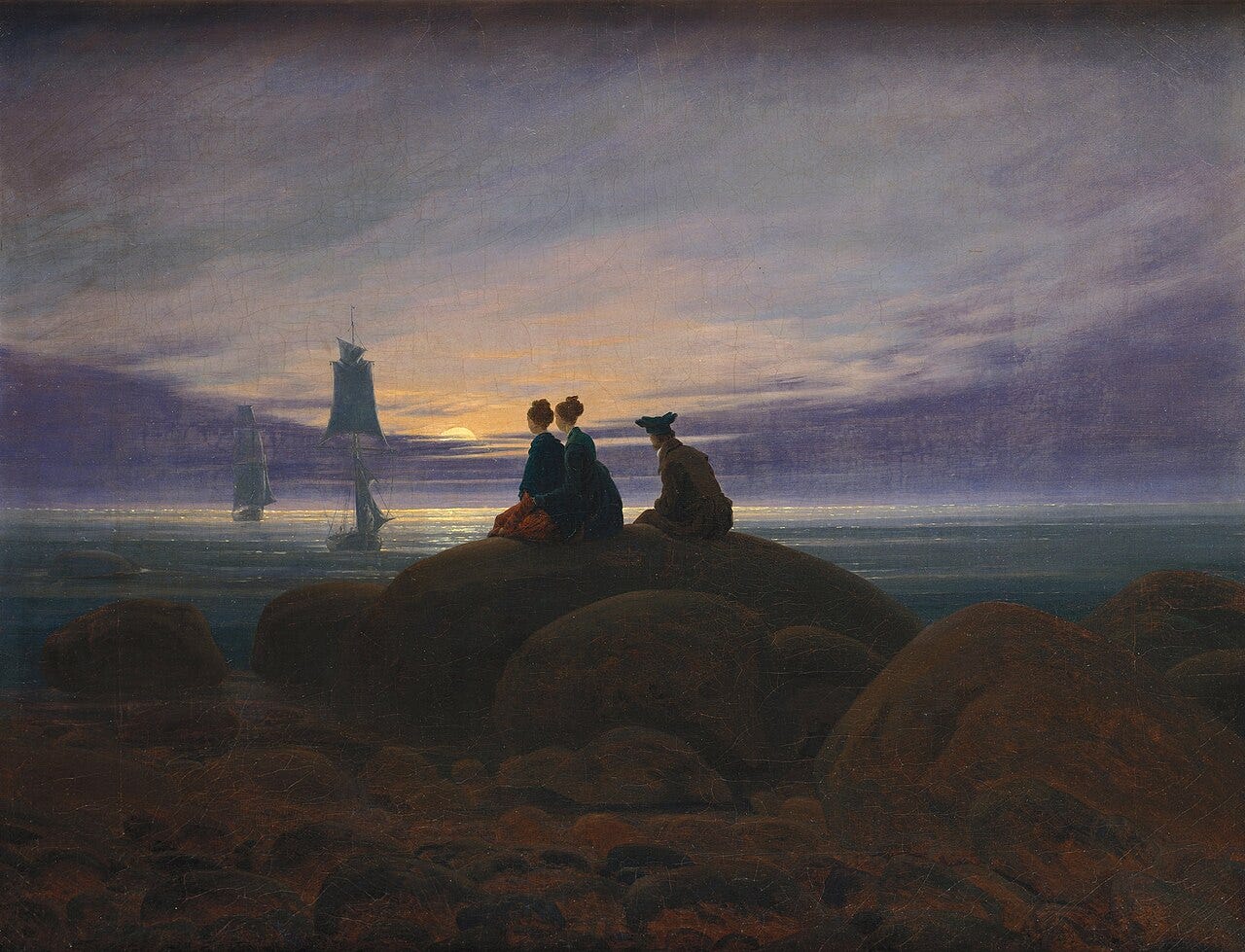
Caspar David Friedrich returns with Moonrise over the Sea of 1822, figures seated on rocks watching ships come home as a soft moon rises over a calm evening sea.
Again the people have their backs to us, drawn into the quiet glow. Friedrich makes the moonrise a moment of stillness and longing, the day’s work done.
It hangs at the Alte Nationalgalerie in Berlin. The waiting figures and the rising moon turn a seascape into a meditation on hope and return.
Jean-Francois Millet, Starry Night
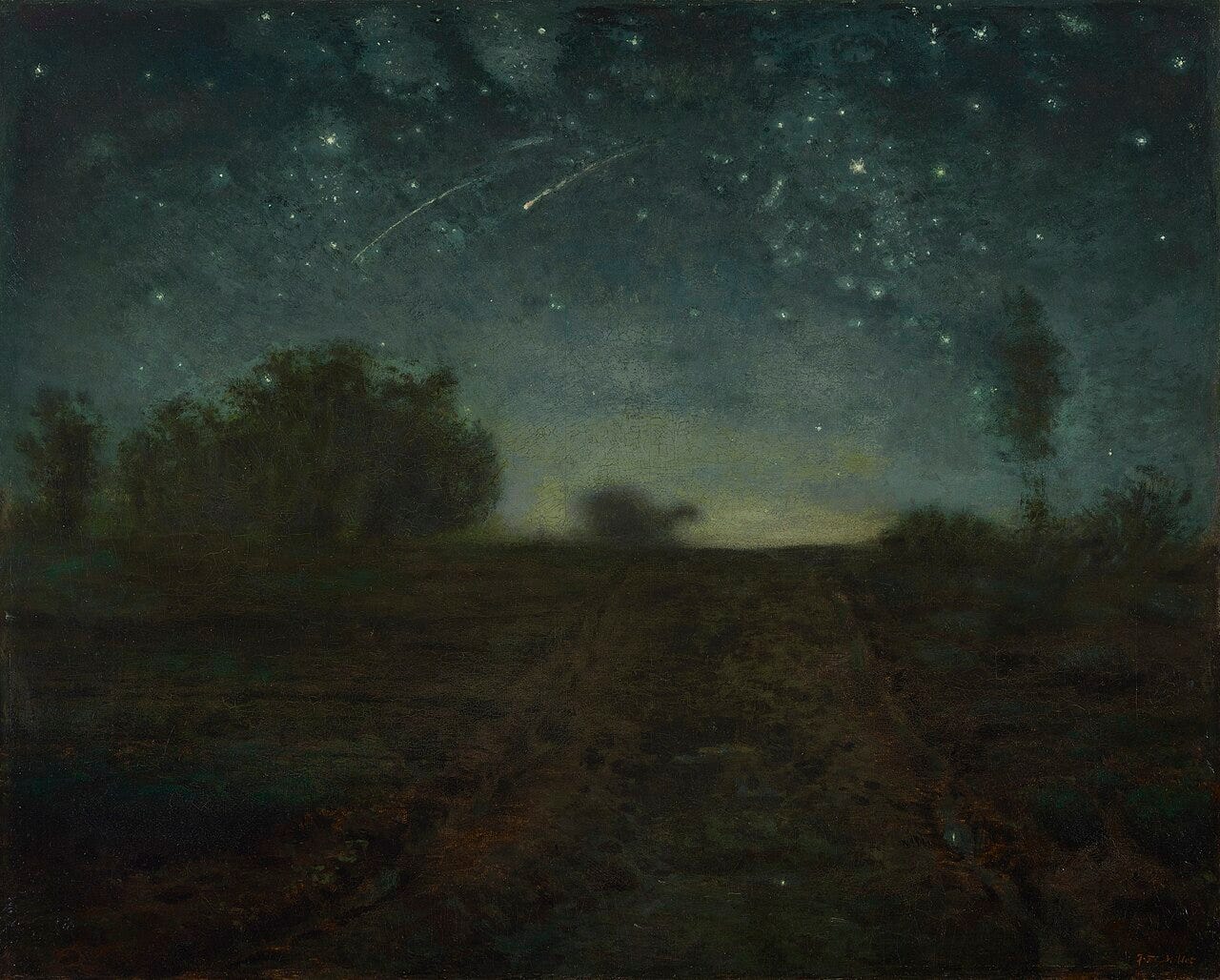
Jean-Francois Millet painted his own Starry Night around 1851, a dark peasant field under a deep sky scattered with stars and a streak of falling light. It came decades before Van Gogh’s.
Van Gogh deeply admired Millet and knew this kind of night scene. Millet, the painter of humble peasants, looked up from the fields to the enormous sky above them.
It hangs at the Yale University Art Gallery. Quiet and dark, it is a reminder that the great night skies of art did not begin, or end, with Van Gogh.
J.M.W. Turner, Fishermen at Sea
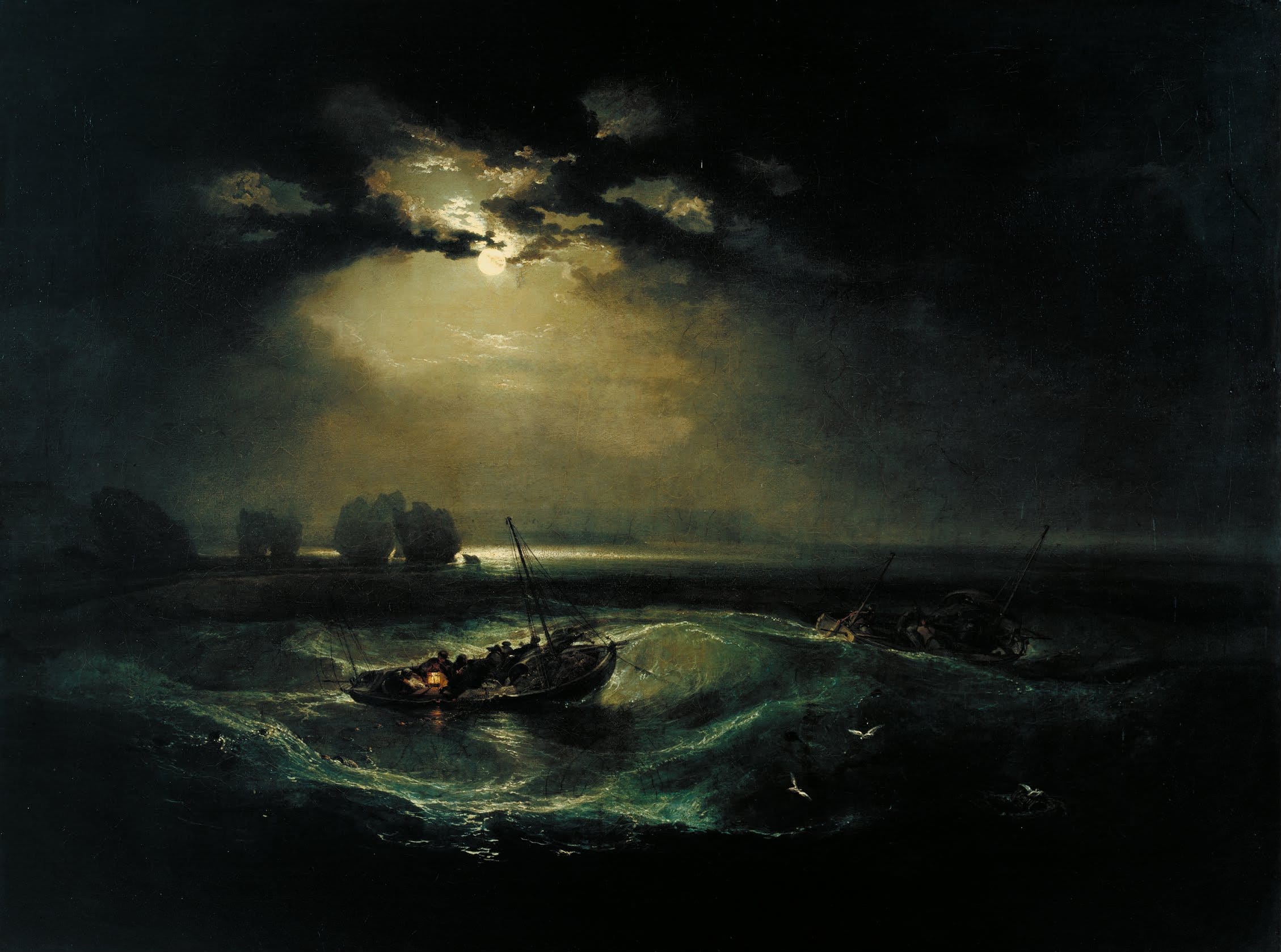
J.M.W. Turner exhibited Fishermen at Sea in 1796, his first oil painting shown in public, a small boat riding the swell under a pale full moon breaking through cloud.
Turner was only twenty one, and already he made the moonlight and the sea the real subject, the tiny boat at their mercy. The cold moon and the lantern are the only light.
It hangs at Tate Britain in London. It announced the arrival of the painter who would spend his life chasing light, starting here in the dark.
Adam Elsheimer, The Flight into Egypt
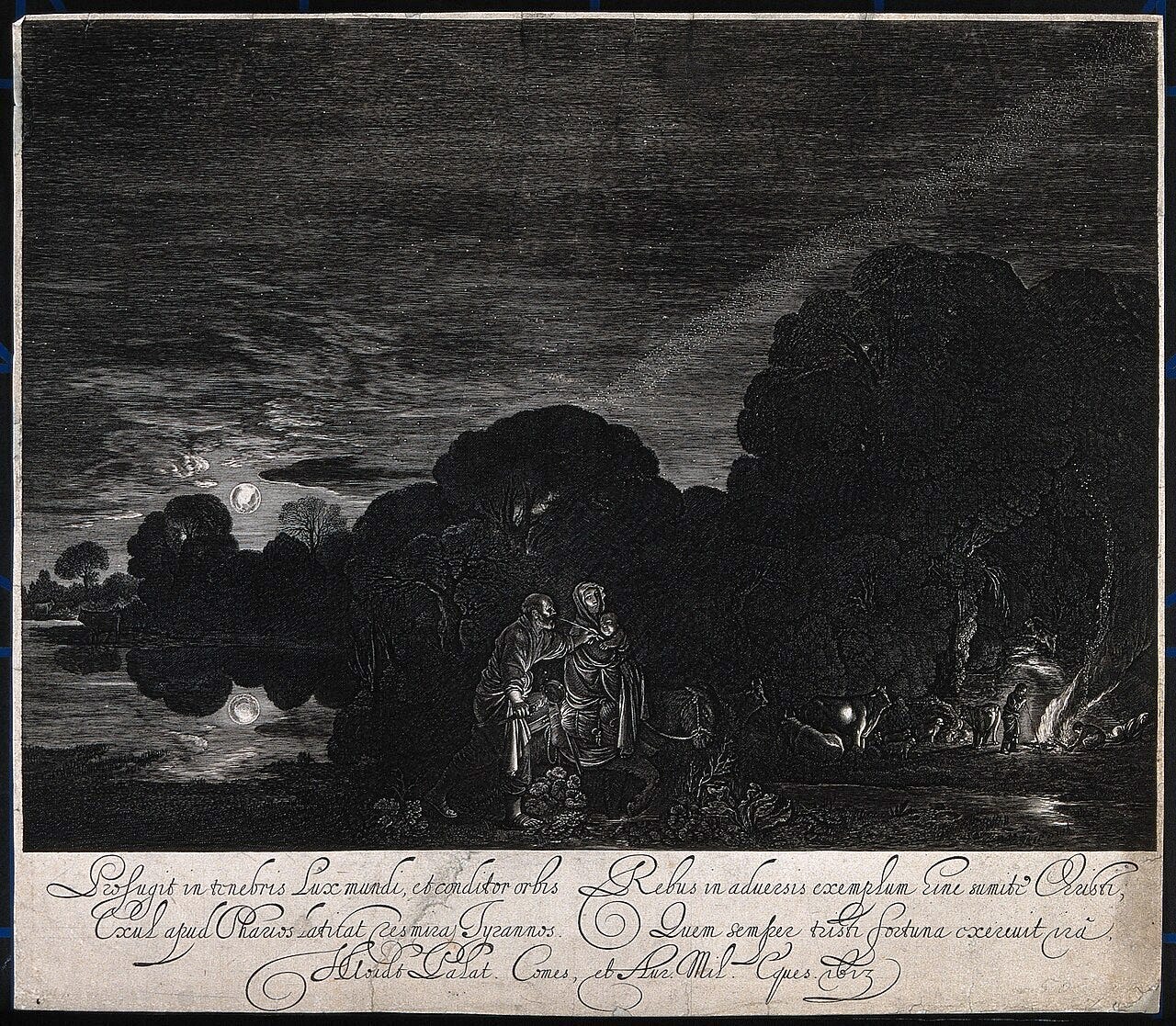
Adam Elsheimer painted The Flight into Egypt in 1609, a small night scene where the holy family travels by torchlight under an astonishingly real night sky. It shows the moon, the Milky Way and true constellations.
This is thought to be the first painting to show the moon with real craters and the Milky Way as countless stars, made the very year Galileo turned his telescope on the sky. Elsheimer may have looked through one too.
It hangs at the Alte Pinakothek in Munich. A tiny picture, it is a landmark, the moment art and the new science of the heavens first met.
Ivan Aivazovsky, Moonlit Seascape
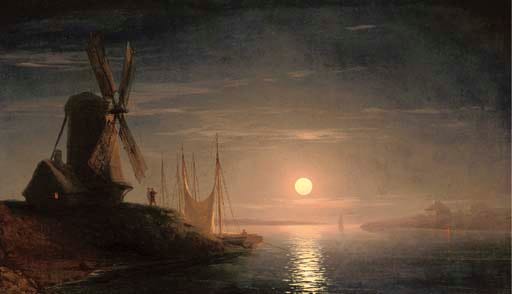
Ivan Aivazovsky returns with another moonlit sea, the moon breaking through cloud over dark restless water, a distant ship caught in its glow. He painted this effect all his life.
Aivazovsky often worked from memory, laying in the moon’s light last so it seemed to switch on the whole picture. Viewers swore the canvas itself was lit from behind.
His seascapes fill museums across the former Russian empire. He remains the painter who best caught the one thing hardest to paint, moonlight moving on the sea.
Questions people ask about moon paintings
What is the most famous moon painting? Van Gogh The Starry Night of 1889, with its huge swirling crescent moon, is the most famous night sky in all of art.
Did Van Gogh paint The Starry Night from life? No. He painted it from memory and imagination in the asylum at Saint Remy, so the swirling sky is feeling more than fact.
Which painting first showed the real moon? Adam Elsheimer The Flight into Egypt of 1609 is thought to be the first to show the moon’s craters and the Milky Way, the year of Galileo’s telescope.
Who was the great painter of moonlight on the sea? Ivan Aivazovsky, whose glowing moonlit seascapes look almost lit from within.
What is a nocturne in painting? A night scene, a word Whistler borrowed from music for his dark, moody views of the moonlit Thames.
Where to see them
Museum of Modern Art, New York: Van Gogh The Starry Night and Rousseau The Sleeping Gypsy.
Musee d’Orsay, Paris: Van Gogh Starry Night Over the Rhone.
Detroit Institute of Arts: Whistler Nocturne in Black and Gold.
Tate Britain, London: Turner Fishermen at Sea.
Alte Nationalgalerie, Berlin: Friedrich Moonrise over the Sea.
Keep exploring
If the night skies pulled you in, three more paths from here. Walk through the whole life behind The Starry Night in Vincent van Gogh, the complete story, learn to read the hidden clues in famous canvases in seven secrets hidden in famous paintings, or start with the basics of landscape painting.
One last thing. The moon gives a painter almost nothing to work with, no colour, barely any light. Which is exactly why the ones who master it feel like magicians. From Elsheimer’s telescope to Van Gogh’s swirling window, these twelve caught the night.