
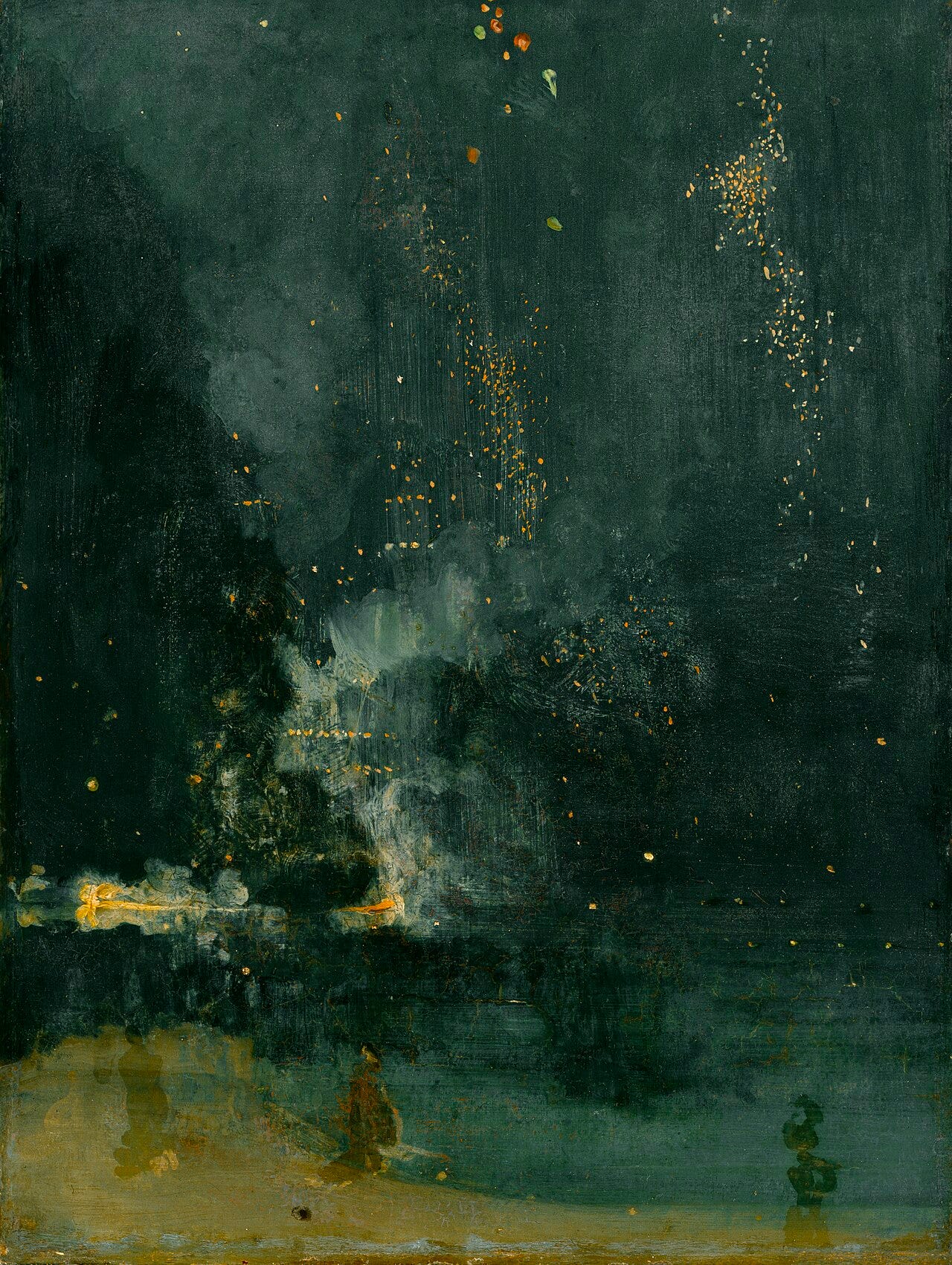
A nocturne is a painting of the night or the half light just after it: dusk, moonlight, fog, dark water, the glow of city lamps. It aims for mood over detail. James McNeill Whistler borrowed the name from music.
Dusk, moonlight, fog, dark water and the smear of a gas lamp, painted for mood rather than detail.
Whistler borrowed the word from music, the way Chopin wrote nocturnes, to signal these were studies in mood and harmony.
Nocturne in brief
What it is: a painting of night or twilight, built on mood.
The look: dark, soft, atmospheric, low on detail.
The name: borrowed from music, a piece evoking night.
The pioneer: James McNeill Whistler.
The drama: a nocturne triggered a famous art trial.
The stories behind the pictures


Painting the dark
Night is the hardest thing to paint, because there is so little to see.
A nocturne leans into that. Instead of crisp shapes, it offers veils of close, dark tones, a few points of light, a shape half guessed in the gloom.
Detail disappears and feeling takes over. It is the night side of the same instinct behind tenebrism, the love of deep shadow, turned soft and quiet rather than sharp and dramatic.
You do not read a nocturne. You sink into it, and I never tire of that.
A word borrowed from music
Whistler chose the name on purpose.
A nocturne in music is a short, dreamy piece that evokes the night, made famous by Chopin.
Whistler wanted exactly that for painting: no story, no moral, just a mood and an arrangement of tones, the way a piece of music is an arrangement of sound.
He even titled his works like compositions: Nocturne in Blue and Silver, Nocturne in Black and Gold.
He was telling you how to look, for a mood and an arrangement of tones rather than a subject.
The painting that went to court
One nocturne ended up in a courtroom.
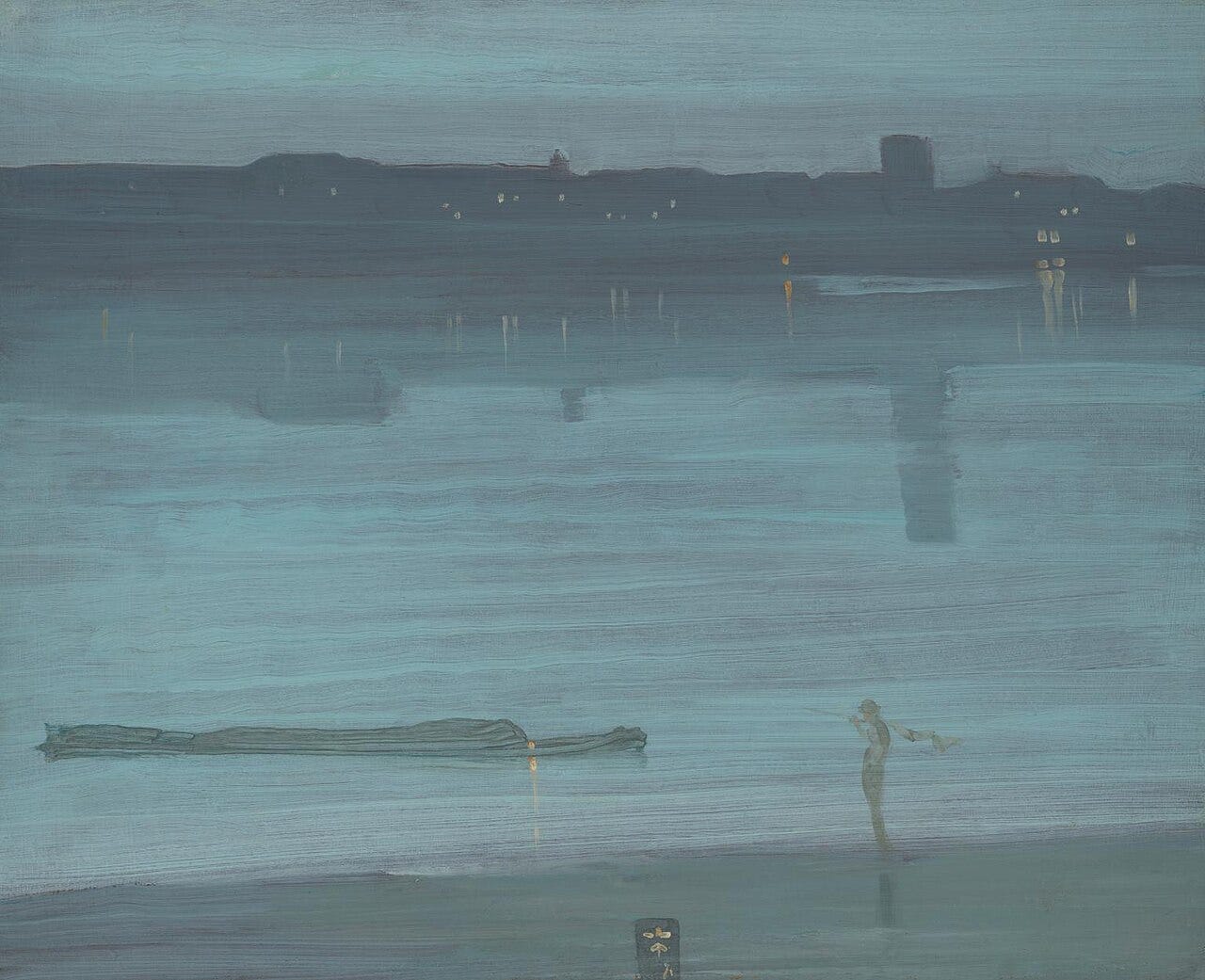
When Whistler showed Nocturne in Black and Gold, The Falling Rocket, a dark, splattered view of fireworks over the Thames, the critic John Ruskin was disgusted.
He accused Whistler of flinging a pot of paint in the public's face.
Whistler sued him for libel in 1878 and won, though the court awarded him a single farthing, the smallest coin, and the costs ruined him.
The trial became a landmark argument about what art is for: a record of things, or an arrangement of feeling.
Night air and gaslight
The nocturne fit its moment perfectly, and this is the part I find fascinating.
The painters of the 1800s were learning to work from real light and atmosphere, the spirit of en plein air and the modern landscape.
The nocturne pointed that same attention at the new night of the industrial city: gaslit streets, foggy rivers, the smoky glow over the water.
It is one of the first kinds of painting to find the modern city beautiful after dark.
The night stopped being a void to avoid and became a subject worth crossing town for.
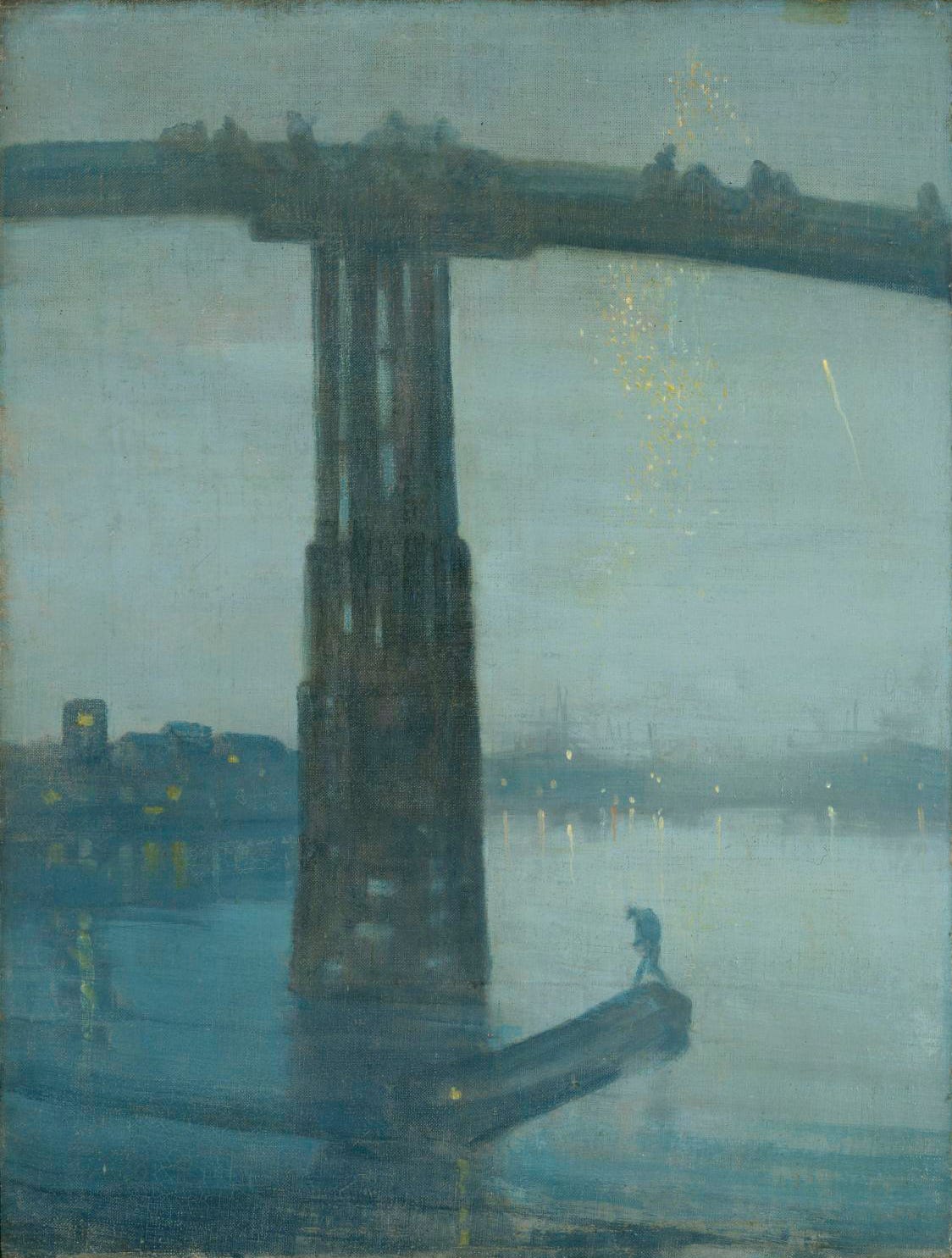
You can stand in the dark with them. The Chelsea nocturne is at Tate in London, and the National Gallery of Art in Washington holds another Whistler nocturne.
What readers write in to ask about nocturne
What is a nocturne in art? A painting of night or twilight that aims for mood and atmosphere over detail.
Who invented the term? James McNeill Whistler, who borrowed it from music.
Why is it called a nocturne? Because, like a nocturne in music, it evokes the night as a mood rather than telling a story.
What is the most famous nocturne? Whistler's Nocturne in Black and Gold, The Falling Rocket, the one Ruskin attacked.
What was the Whistler Ruskin trial? An 1878 libel case Whistler won after Ruskin mocked his nocturne. He was awarded one farthing.
The rest of the secrets


The beauty of almost nothing
To me, a nocturne is a dare: that a picture made almost entirely of darkness, with little clearly shown, can still hold you.
Whistler painted his from memory, walking the Thames at dusk until the shapes blurred, then setting them down in the studio with little more than fog and a few lamps.
