
Sea Paintings: 12 Famous Works to Know
The most famous sea paintings put you on the edge of drowning. Hokusai froze a wave the instant before it crashes over three boats, Turner painted the ocean swallowing a slave ship, and Aivazovsky lit a shipwreck at dawn with survivors clinging to a mast. Here are twelve to know, and where to see them.
The sea is the hardest thing a painter can attempt: always moving, half sky, and utterly indifferent to us. That is exactly why artists keep going back. The twelve below run from a Japanese woodblock to a Russian shipwreck, and almost every one is really about how small we are.
Use this as a quick tour:
The great waves: Hokusai, Aivazovsky and Courbet, the sea as pure force.
The dramas: Turner and Homer, shipwreck, slavery and survival.
The dreamers: Friedrich and Monet, the sea as feeling and light.
Where to see them: a museum list at the end, grouped by city.
Katsushika Hokusai, The Great Wave off Kanagawa
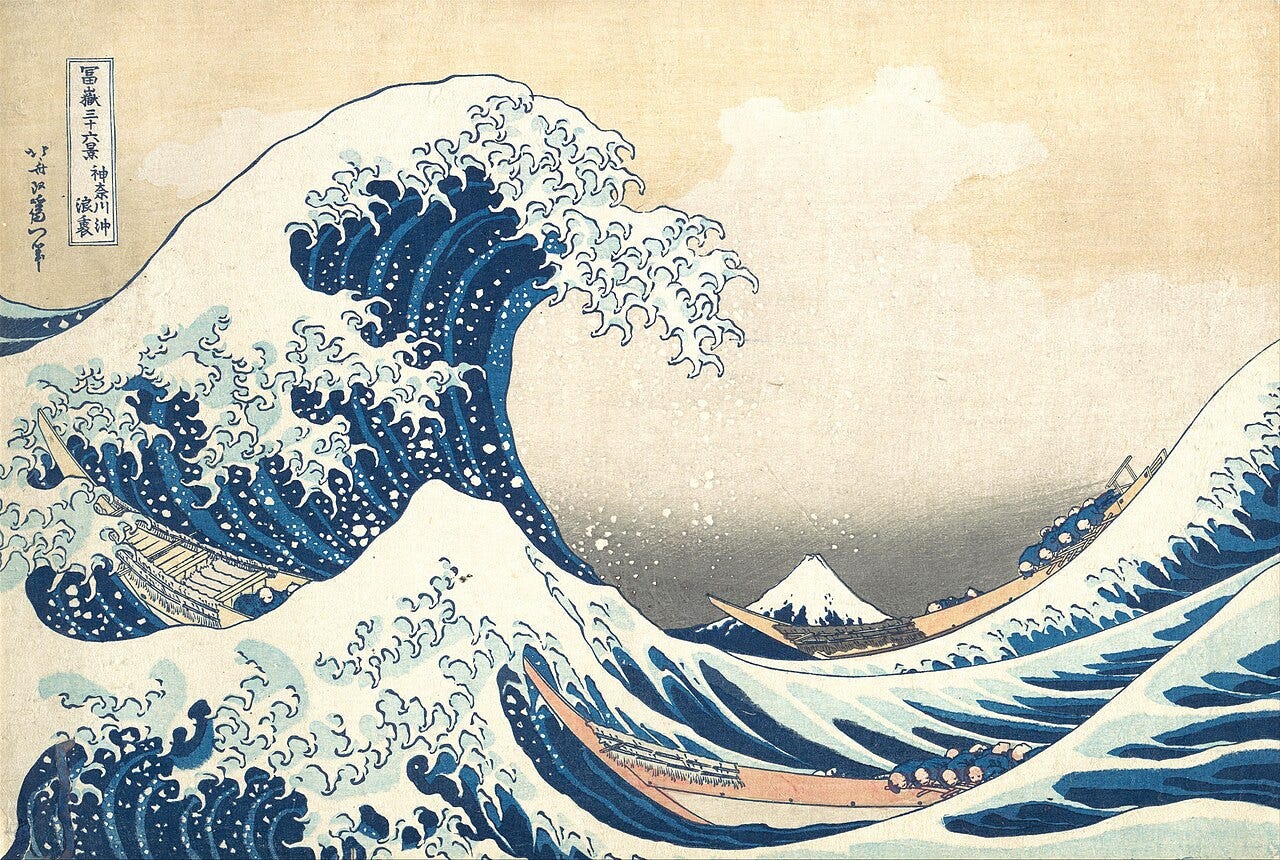
Katsushika Hokusai made The Great Wave around 1831, a giant clawed wave towering over three fishing boats, with Mount Fuji tiny and calm in the distance. It is the most famous woodblock print in the world.
Hokusai froze the wave the instant before it falls, its foam breaking into claws that reach for the men below. The mighty mountain is dwarfed by the water, a whole idea about nature in one image.
Impressions hang in the Metropolitan Museum, the British Museum and beyond. Made when Hokusai was past seventy, it became the single most reproduced image in the history of art.
Ivan Aivazovsky, The Ninth Wave
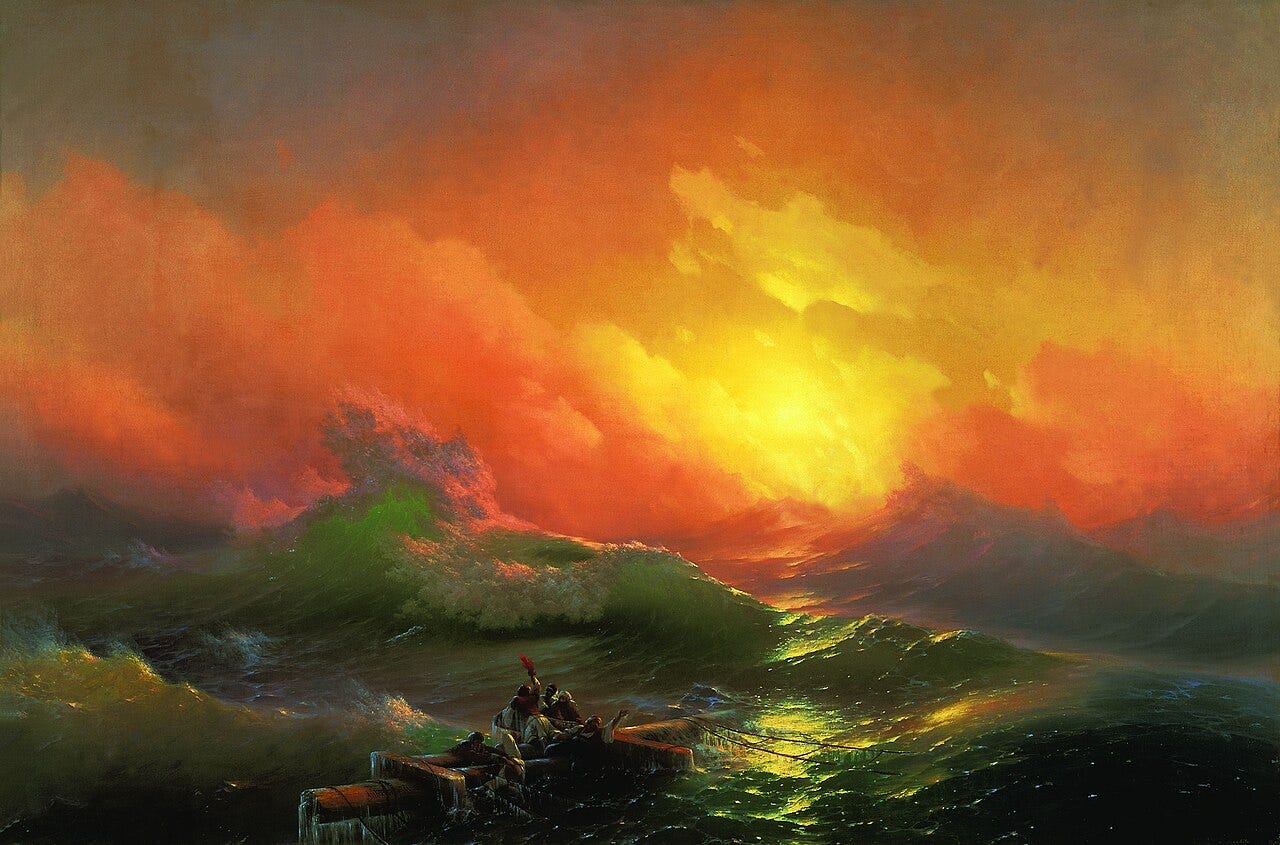
Ivan Aivazovsky painted The Ninth Wave in 1850, a handful of shipwreck survivors clinging to a broken mast at dawn as an enormous wave rises behind them. The sailors legend said the ninth wave was the biggest and deadliest of all.
Aivazovsky floods the scene with warm sunrise light, so terror and hope sit side by side. The survivors have made it through the night, but the great wave is still coming.
It hangs at the Russian Museum in St Petersburg. It is the most famous seascape in Russia, and one of the grandest images of the sea ever painted.
J.M.W. Turner, The Slave Ship
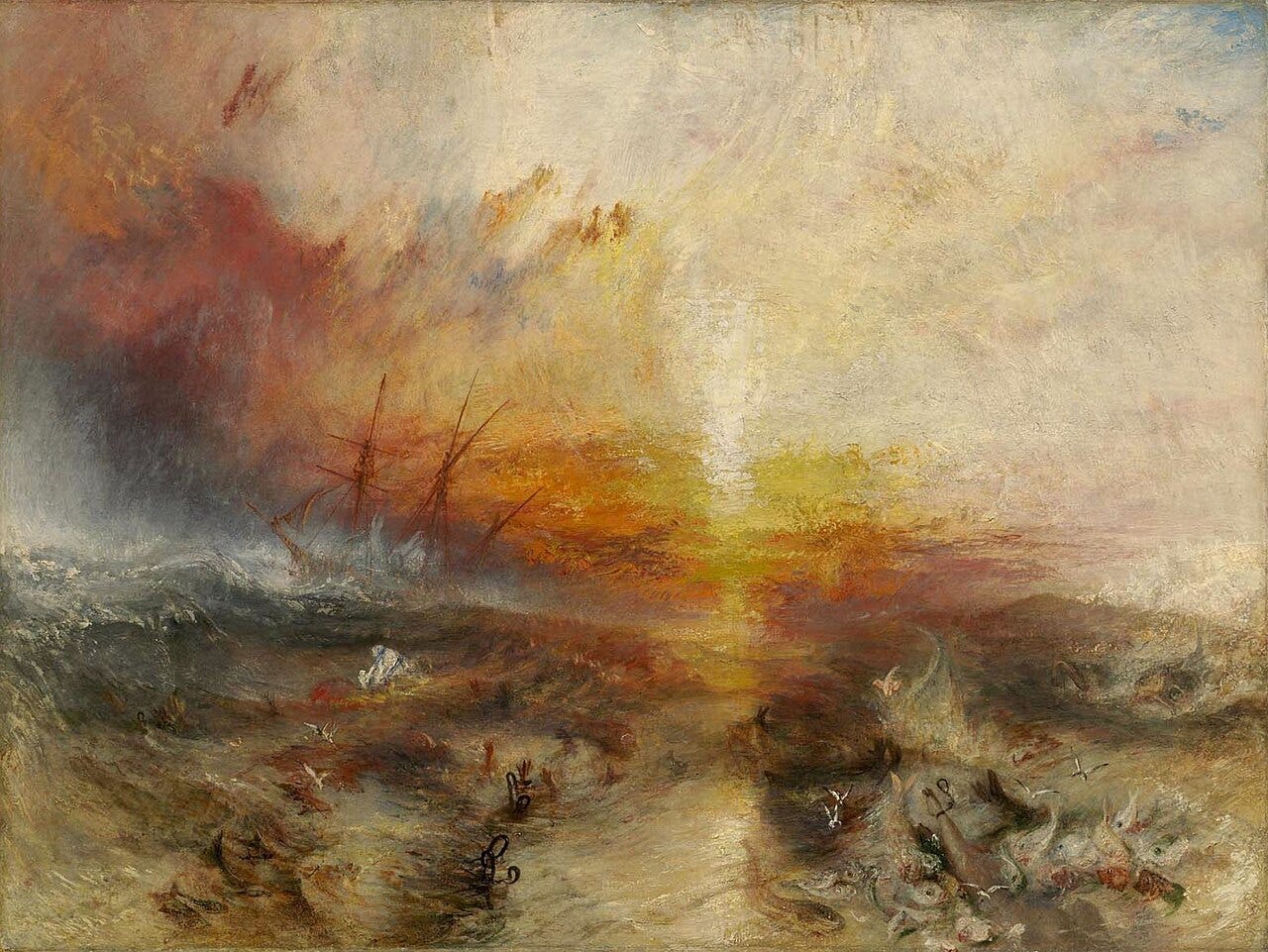
J.M.W. Turner painted The Slave Ship in 1840, a blazing red and gold sunset over a churning sea. Look closely at the water and you see drowning figures, chains and reaching hands among the fish.
It shows the true horror of captains throwing enslaved people overboard to claim insurance. Turner exhibited it as the slave trade was being fought, and the beauty of the sky only makes the crime more sickening.
It hangs at the Museum of Fine Arts in Boston. The critic John Ruskin owned it, then found he could not bear to keep it, so terrible was what the beautiful sea concealed.
Winslow Homer, The Gulf Stream
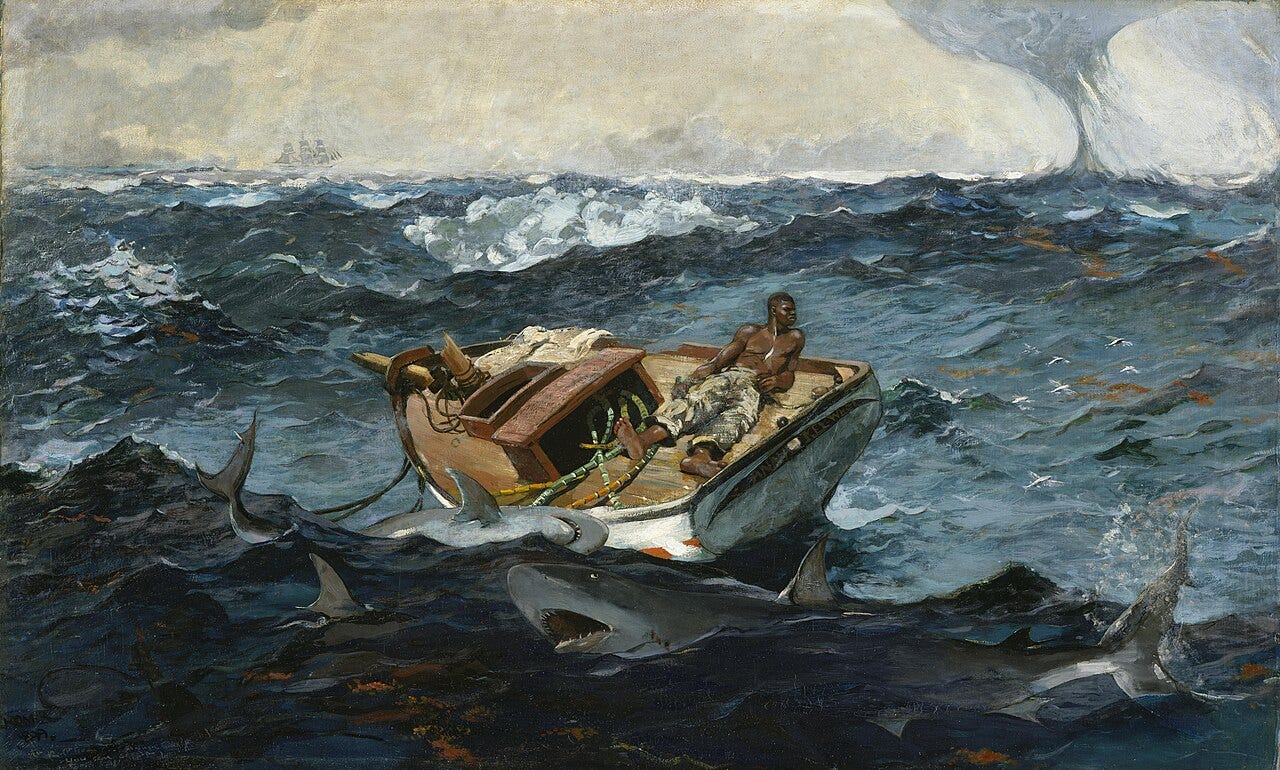
Winslow Homer painted The Gulf Stream in 1899, a lone Black sailor lying on the deck of a dismasted boat, surrounded by circling sharks in a heavy swell, a waterspout twisting on the horizon.
It is one of the most gripping survival scenes in art, and a heavy meditation on race, danger and fate. A faraway ship offers a sliver of hope, or none at all.
It hangs at the Metropolitan Museum in New York. When buyers found it too grim, Homer sarcastically told them the man would be rescued, so they need not worry.
Gustave Courbet, The Wave
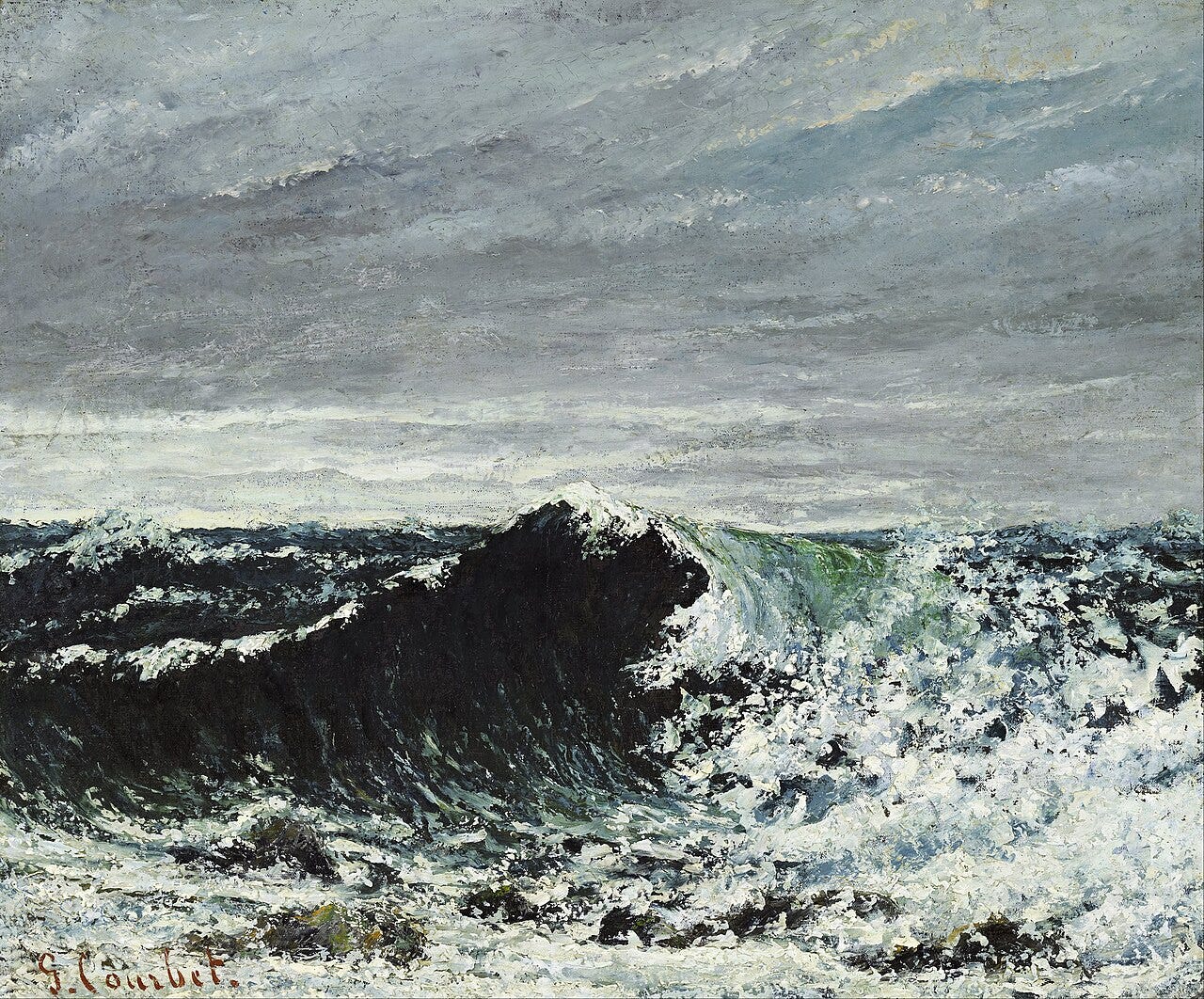
Gustave Courbet painted a series of waves around 1869, a single dark green swell cresting and breaking under a heavy sky on an empty shore. There are no boats, no people, just the water.
Courbet the realist built the wave with a palette knife, thick and physical, so you feel the weight of the water. It was radical to paint the sea with no story at all, only its raw force.
His waves hang in museums across the world. They pointed straight toward modern art, the sea as pure paint and power rather than a stage for human drama.
Caspar David Friedrich, The Monk by the Sea
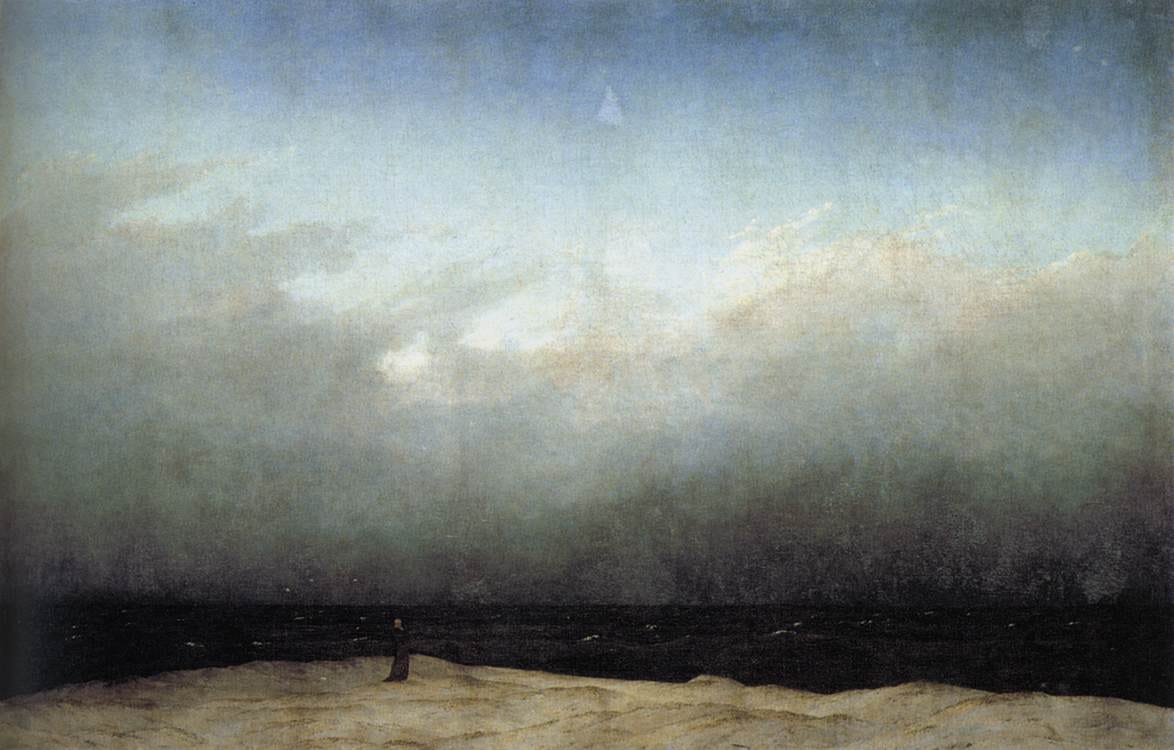
Caspar David Friedrich painted The Monk by the Sea around 1810, a tiny lone monk standing on a bare shore before an immense empty sea and a huge sky. Almost nothing else is there. It is the heart of German Romanticism.
Friedrich stripped away every prop, leaving one small human against the infinite. Viewers at the time found it almost unbearable, like standing at the edge of the world with your eyelids cut off.
It hangs at the Alte Nationalgalerie in Berlin. It may be the loneliest painting ever made, the sea as pure vastness and silence.
J.M.W. Turner, Snow Storm
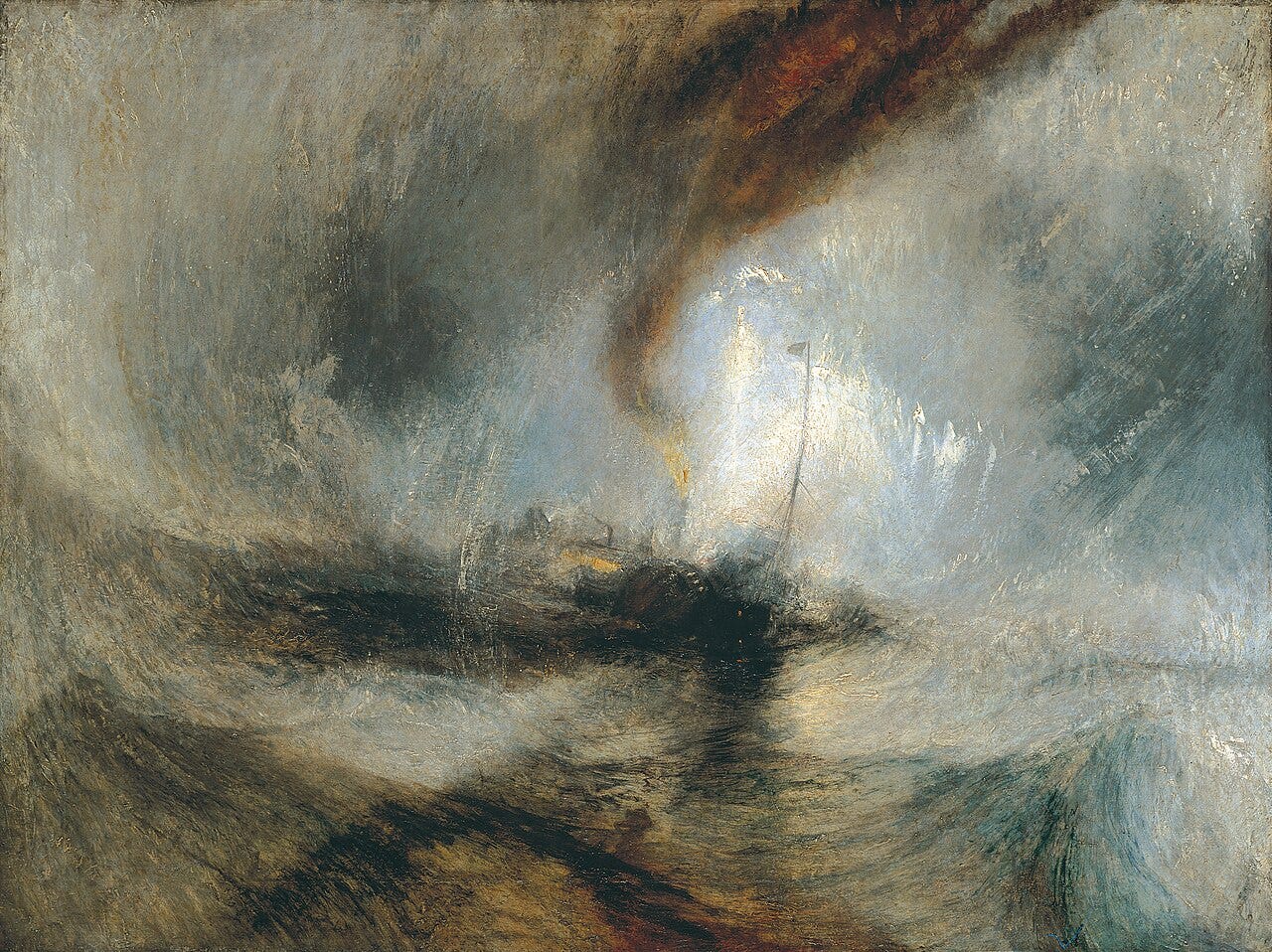
J.M.W. Turner returns with Snow Storm of 1842, a steamboat almost swallowed by a swirling vortex of snow, spray and black sea. The whole world dissolves into churning weather.
Turner claimed he had himself lashed to a ship’s mast for four hours to feel the storm before painting it. Whether or not that is true, the result puts you inside the chaos.
It hangs at Tate Britain in London. Critics called it soapsuds and whitewash. Today it looks like the future of painting, the sea as pure sensation.
Claude Monet, Impression, Sunrise
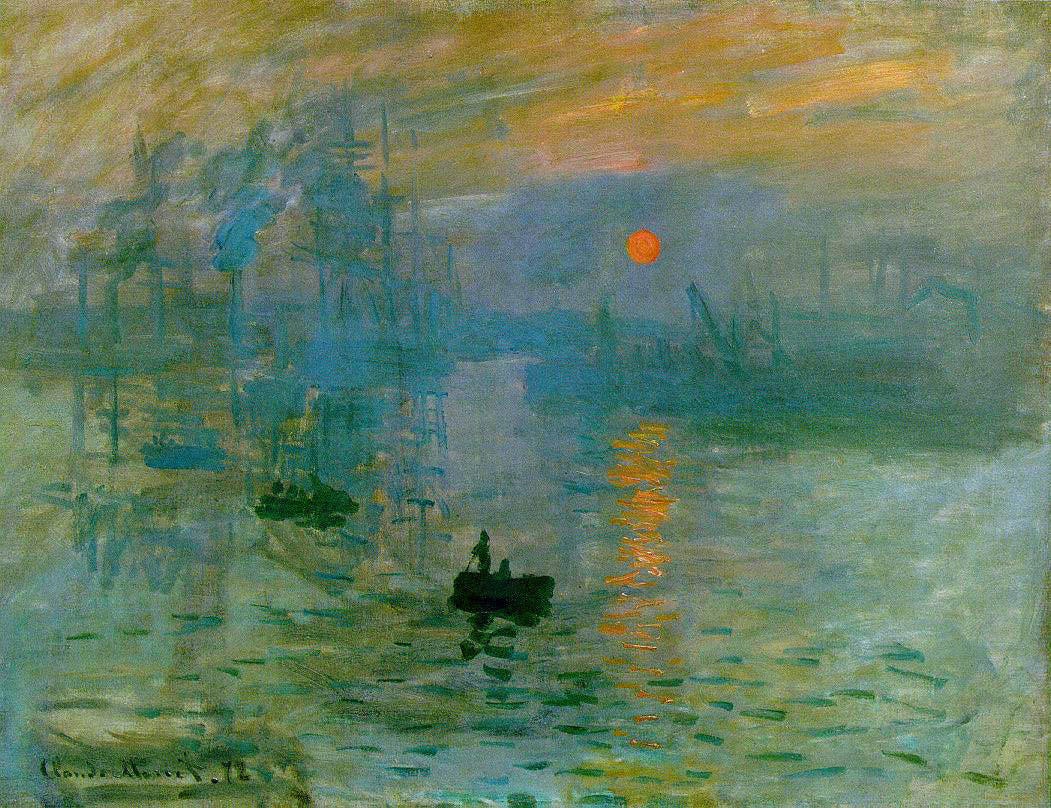
Claude Monet painted Impression, Sunrise in 1872, an orange sun rising through morning mist over the hazy harbour of Le Havre, small dark boats slipping across the water. This one painting named a whole movement, Impressionism.
A critic mocked the loose, unfinished look by calling the show after this title, and the name stuck. Monet was not painting the harbour so much as the exact feeling of light at dawn.
It hangs at the Musee Marmottan Monet in Paris. From this one misty sunrise, modern painting takes its name.
Willem van de Velde the Younger, Ships in a Gale
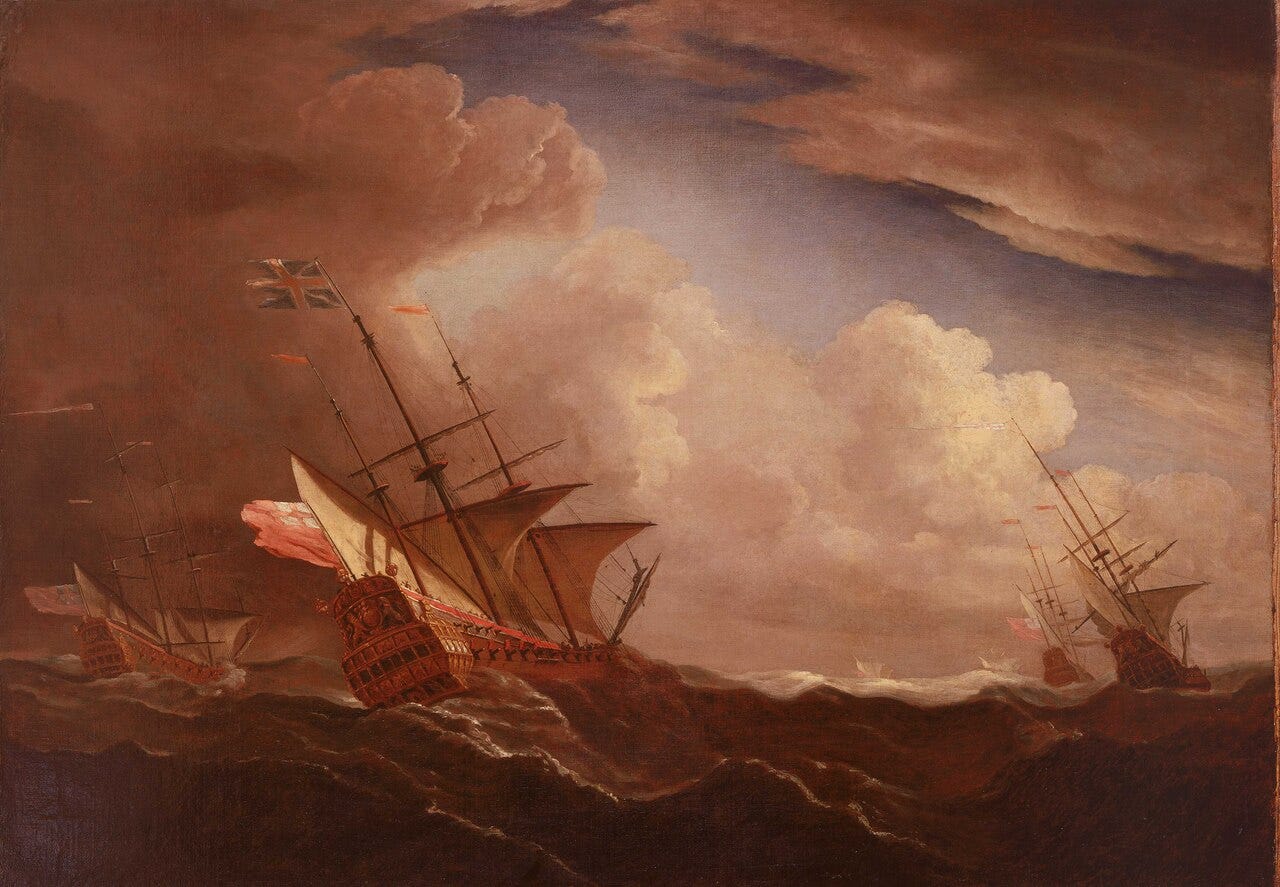
Willem van de Velde the Younger was the master of the Dutch sea painting in the 1600s, showing tall ships heeling over in a rough grey sea under a stormy sky, every rope and sail exact.
The Dutch lived by the sea, and van de Velde painted their ships with the precision of a naval engineer and the drama of a storyteller. He was so admired the English king hired him.
His seascapes hang in the National Maritime Museum in London and beyond. He set the standard for painting ships and weather for the next two centuries.
Winslow Homer, Northeaster
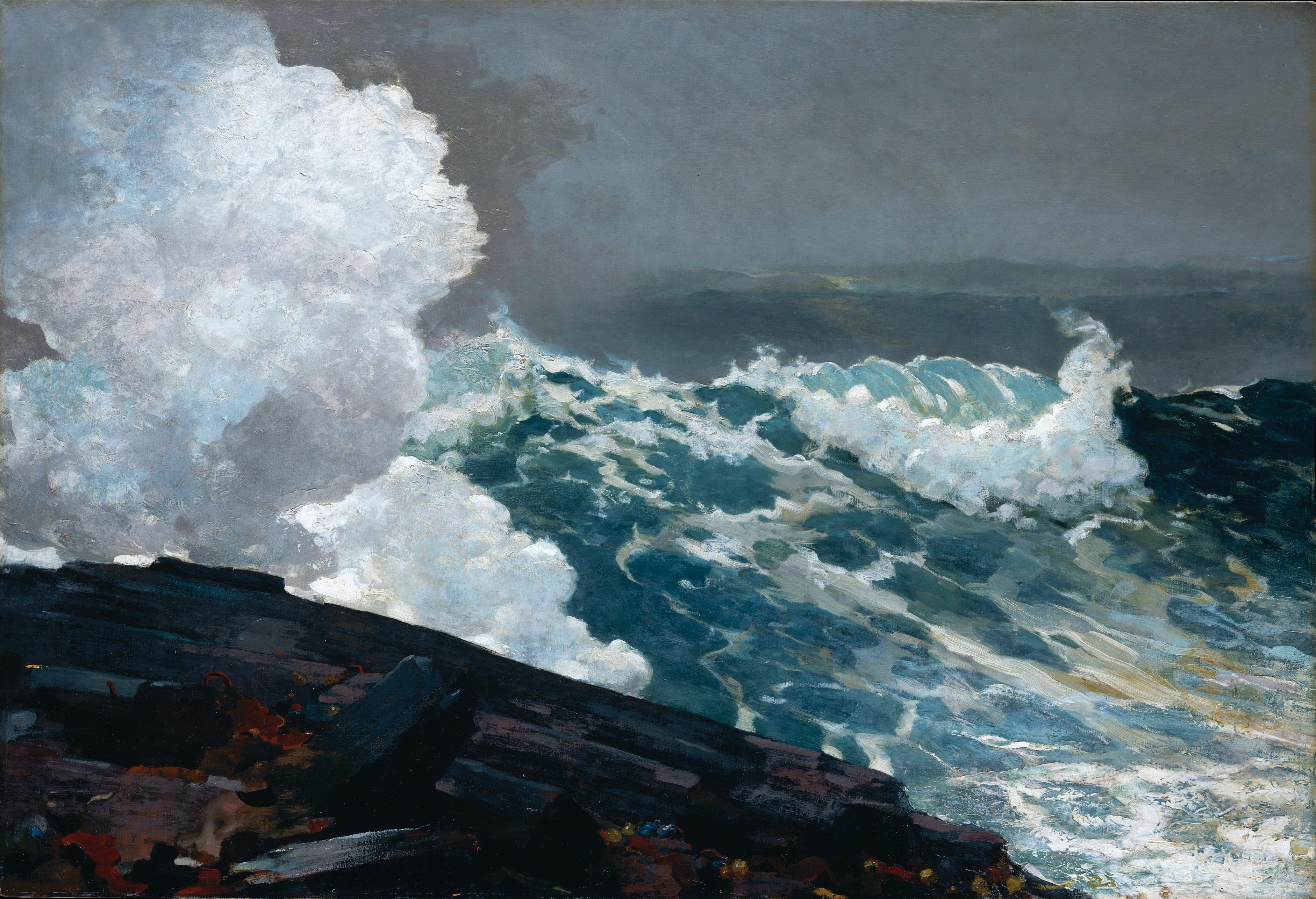
Winslow Homer returns with Northeaster of 1895, a huge wave exploding in white spray against the dark rocks of the Maine coast under a heavy sky. There is not a person in sight.
Homer spent his last years alone on that rocky shore, painting the sea hitting the rocks over and over. He even repainted this one to remove two small figures, leaving only the water and the stone.
It hangs at the Metropolitan Museum in New York. Stripped of people, it becomes the pure, thunderous meeting of sea and land.
Ludolf Bakhuizen, Ships in Distress
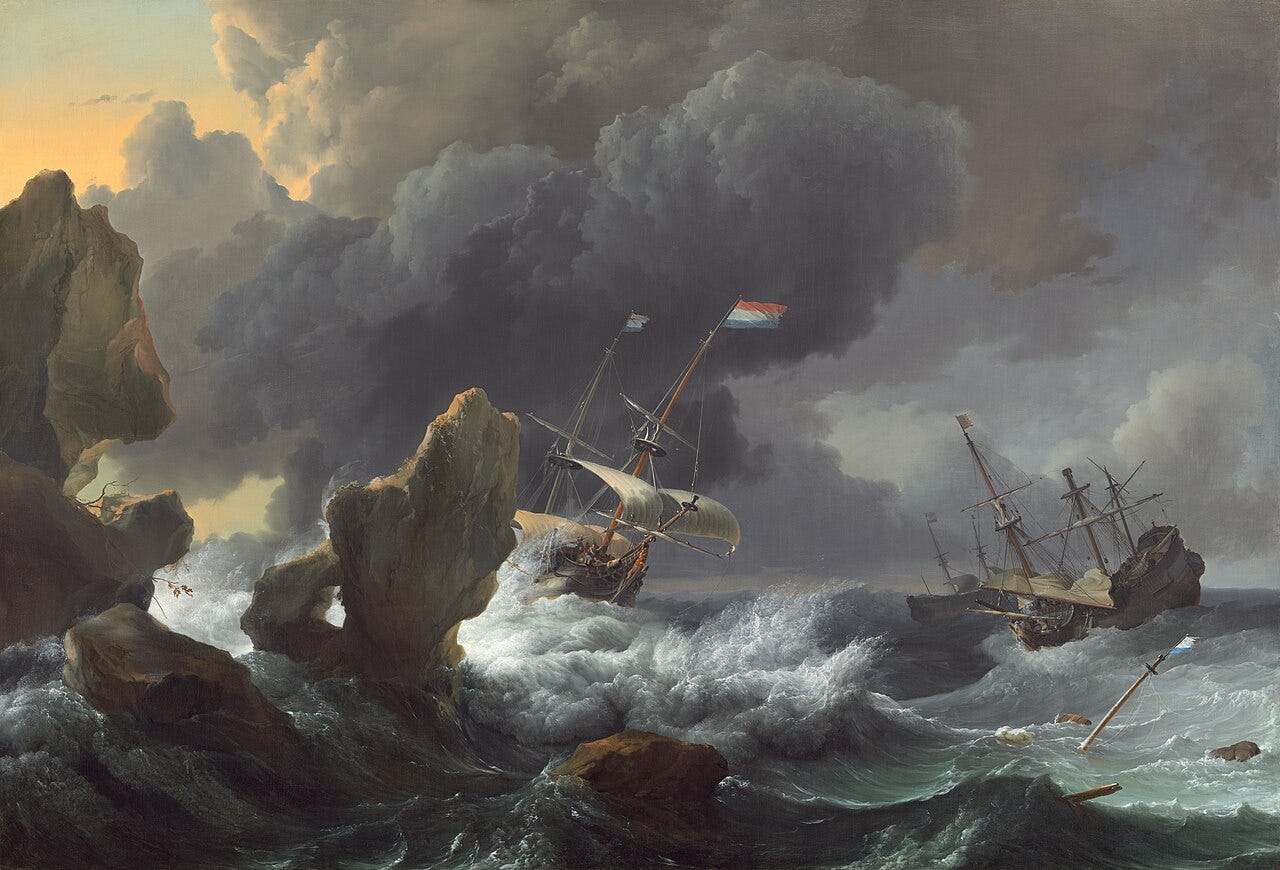
Ludolf Bakhuizen painted Ships in Distress off a Rocky Coast in 1667, sailing ships driven helplessly toward jagged rocks by violent waves under a torn, stormy sky.
Bakhuizen was known for rowing out into real storms in a small boat to study the waves, risking his life for accuracy. That first hand terror is all through the painting.
It hangs at the National Gallery of Art in Washington. It captures the exact moment before disaster, the sea about to win.
Ivan Aivazovsky, Storm at Sea
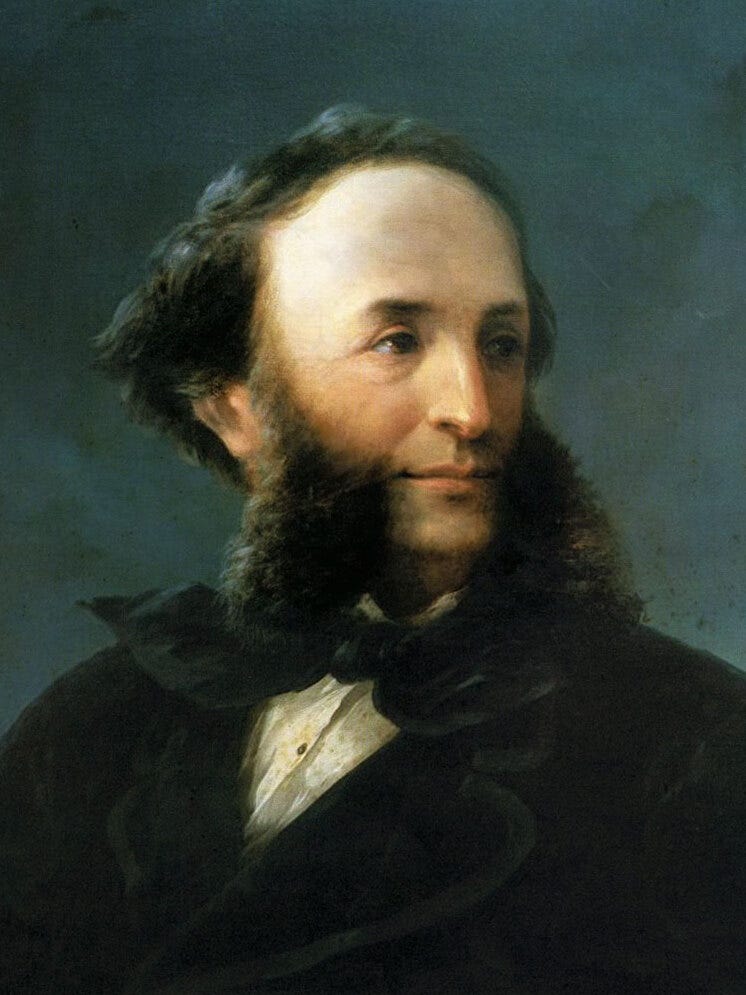
Ivan Aivazovsky returns with one of his many storm scenes, a ship pitching on towering waves as a storm breaks around it, the water glowing under a torn sky. He painted thousands of seascapes.
Aivazovsky worked from memory, laying in the glow of light on the water last so the whole canvas seemed to switch on. Viewers swore his seas were lit from behind.
His storms hang in museums across the former Russian empire. No painter ever made a wave glow the way he did, or made you feel the sea would win.
Questions people ask about sea paintings
What is the most famous sea painting? Hokusai The Great Wave off Kanagawa is the most famous in the world, with Aivazovsky The Ninth Wave and Turner The Slave Ship close behind.
What does The Great Wave actually show? Three fishing boats about to be overwhelmed by a giant wave, with Mount Fuji tiny in the distance, the sea dwarfing even the sacred mountain.
Why is Turner The Slave Ship so disturbing? The beautiful golden sea hides drowning enslaved people and chains, showing captains who threw them overboard to claim insurance.
Did Turner really tie himself to a mast? He claimed he was lashed to a ship’s mast for four hours in a storm before painting Snow Storm. It may be a legend, but the painting feels true.
Which sea painting named a whole movement? Monet Impression, Sunrise of 1872 gave Impressionism its name after a critic mocked the title.
Where to see them
Metropolitan Museum, New York: Homer The Gulf Stream and Northeaster, and Hokusai prints.
Russian Museum, St Petersburg: Aivazovsky The Ninth Wave.
Museum of Fine Arts, Boston: Turner The Slave Ship.
Tate Britain, London: Turner Snow Storm.
Musee Marmottan Monet, Paris: Monet Impression, Sunrise.
Keep exploring
If the sea pulled you in, three more paths from here. Dive into the print that conquered the world in the true story behind Hokusai and the Great Wave, learn to read the hidden clues in famous canvases in seven secrets hidden in famous paintings, or start with the basics of landscape painting.
One last thing. The sea does not care about us, and every great sea painting knows it. Whether it is one wave, one lost sailor or one lonely monk, the real subject is the same, how small we are against all that water. These twelve never let you forget it.