
Gerda Wegener, 1886 to 1940, was a Danish painter and Art Deco illustrator known for two things: her elegant, sensual portraits of women in 1920s Paris, and her marriage to Lili Elbe, one of the first known people to undergo gender confirmation surgery.
In her own day she was the bigger star of the two. The 2015 film The Danish Girl put her spouse centre stage, but in 1920s Paris Gerda was the celebrated name, and her story is worth telling on its own terms.
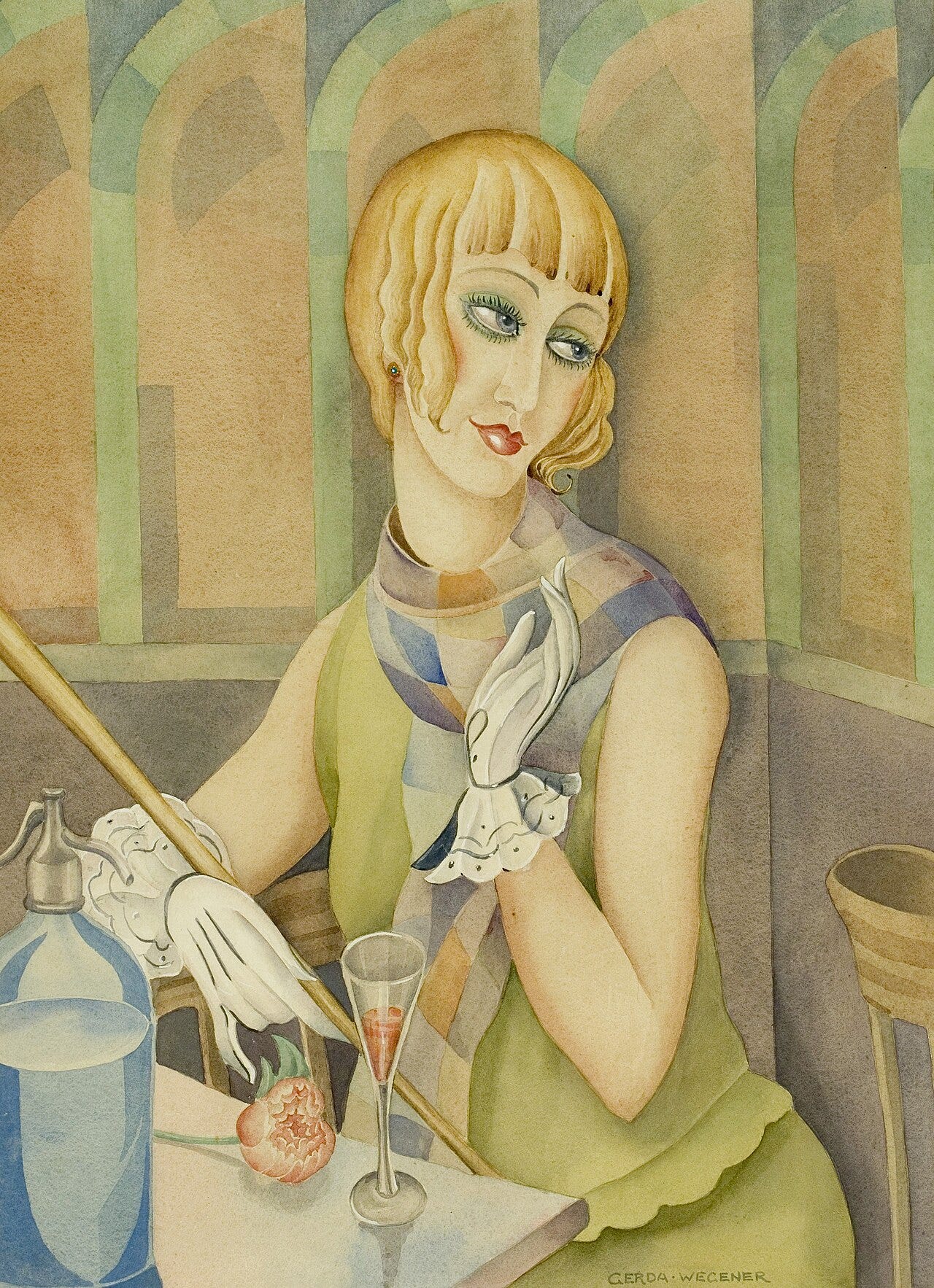
The 2015 film The Danish Girl made her a footnote to her spouse. The real Gerda was a celebrated artist who painted the woman she loved into being.
Cool Stories About Art is a newsletter to learn art the fun way.
Join 170,000+ readers and get:
10 new art stories / month
The entire archive of content (1,000+ articles)
Comment, ask questions, and chat with other readers
More incredible painter stories
If Gerda Wegener pulled you in, you will love these too:


Gerda Wegener at a glance
1886. Born a parson’s daughter in Jutland, Denmark.
1904. Married the painter Einar Wegener, later Lili Elbe.
1912. Moved to Paris, where the fashion magazines took her up.
1930. Lili’s surgeries in Germany. A Danish court dissolved the marriage the same year.
1940. Died in Copenhagen, poor and out of fashion, months before her rediscovery began decades later.
A star of Art Deco Paris
Gerda trained in Copenhagen and moved to Paris in 1912. There she thrived, selling fashion drawings to magazines like Vogue and La Vie Parisienne.
Her signature was the modern woman: sleek, witty, often sensual. She worked in oils but shone in watercolor, with the crisp elegance of Alphonse Mucha carried into the jazz age. Other painters pushed that same medium in very different directions, a spread covered in a set of twelve watercolor highlights.
By the 1920s she was a name in her own right, not a wife who painted on the side.
Her world of women
Gerda's art is full of women: lounging, dressing, gazing at each other. Many scenes read as openly desiring, decades before that was easy to publish.
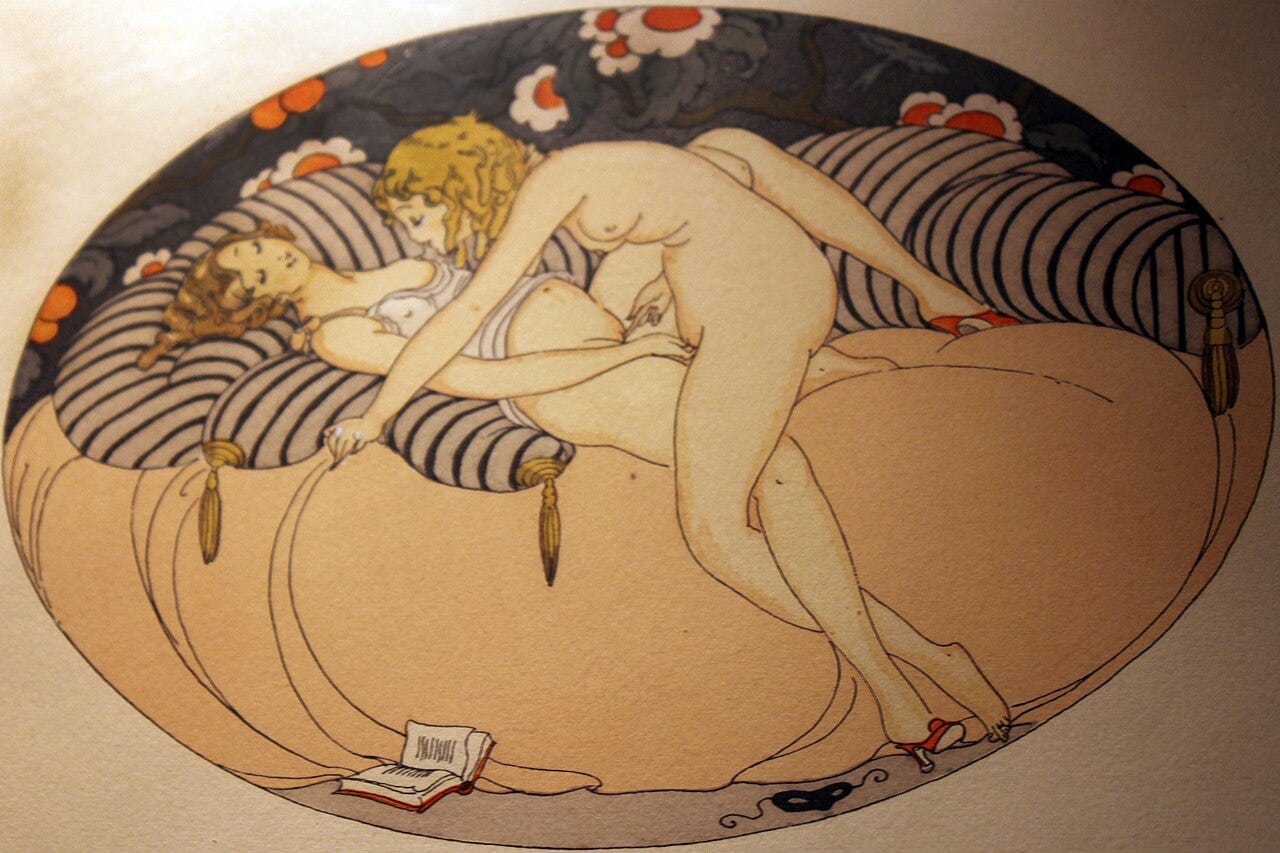
She also made erotic watercolors for private books in Paris, work adventurous enough that some of it was sold quietly. Her women are confident, never shamed.
It is one reason she fell out of fashion, and one reason she feels current again now.
The woman she painted into being
Gerda married the Danish painter Einar Wegener. Over years of work, Einar increasingly lived as Lili Elbe, and Gerda painted her again and again as her glamorous female model.
Many of Gerda's most admired portraits are of Lili. The art and the relationship grew together.
In 1930 Lili underwent a series of pioneering surgeries in Germany. When her change of legal sex was recognized, the Danish king annulled the marriage in 1930. Lili died in 1931 from complications.
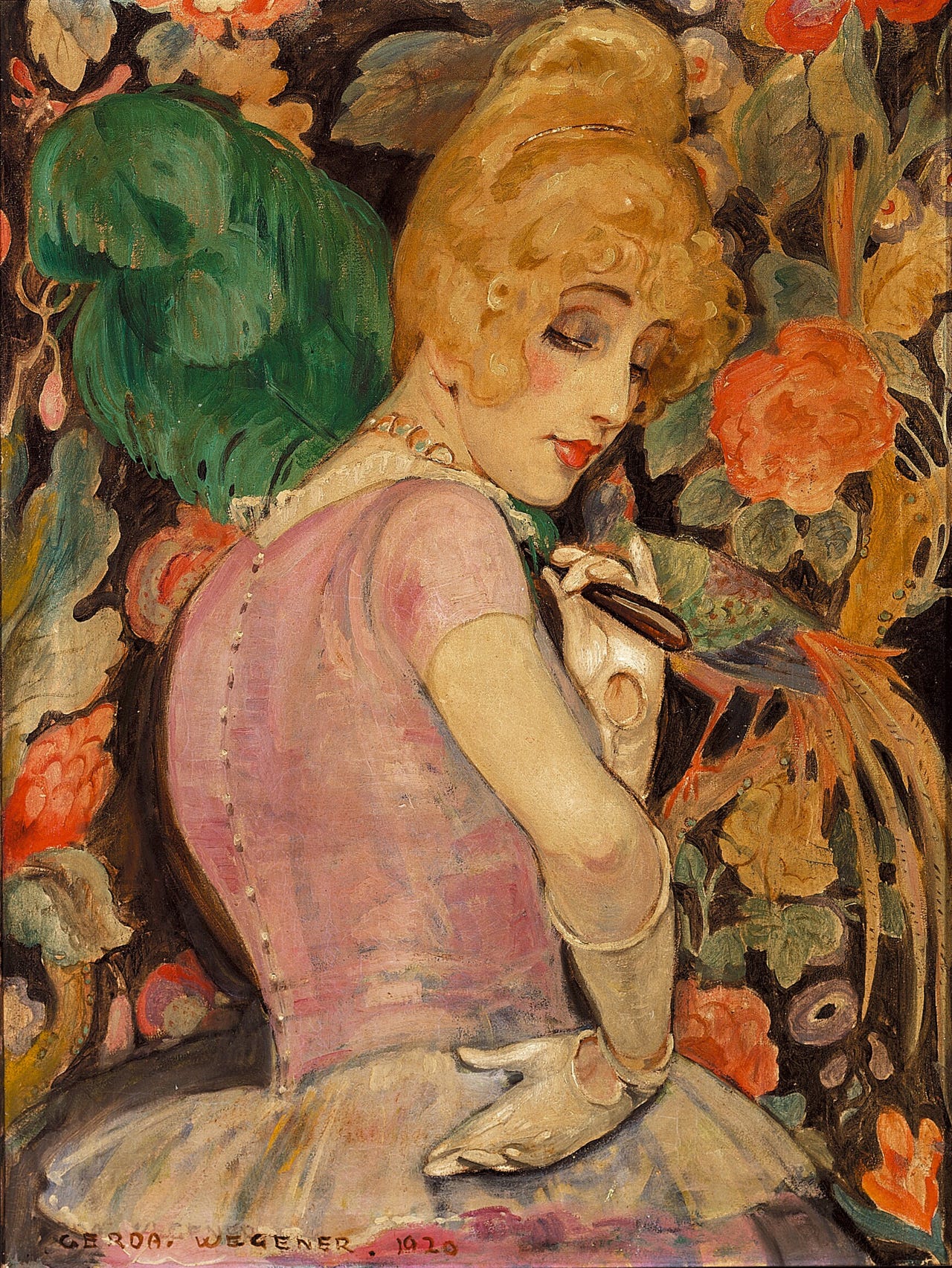
The stocking story, and what the film changed
A popular tale says Gerda discovered Einar's femininity by chance, asking him to stand in for a female model in stockings. It is a charming origin story, but it is not documented fact.
The film smooths the couple into a quiet tragedy. The real Gerda was bohemian, ambitious and openly drawn to sensual subjects, far from the shy wife on screen.
The three Wegeners that tell her story: Lili, the Riviera, the erotica
First, her portraits of Lili Elbe, where the model and the muse are the same beloved person.
Second, her sun bright scenes of Capri and the Riviera, all parasols, sea light and leisure.
Third, her erotic watercolor suites for Paris collectors, the work that made her a little scandalous and very modern.
Forgotten, then found again
After Lili's death Gerda married an Italian officer, Fernando Porta, and lived for a time in Morocco. The marriage failed, the Art Deco taste she embodied went out of style, and she returned to Denmark.
She died on 28 July 1940 in Frederiksberg, Denmark, at 54, poor and largely forgotten. No specific cause of death is documented. Her rediscovery came late, through David Ebershoff's 2000 novel and the film that followed.
Denmark, and the retrospective that revived her name
In Denmark, the ARKEN Museum of Modern Art mounted a major Gerda Wegener retrospective, which did much to restore her name. Her works also surface regularly at auction.
You can explore works by Gerda Wegener in the collection of the Metropolitan Museum of Art.
A parson's daughter from Jutland
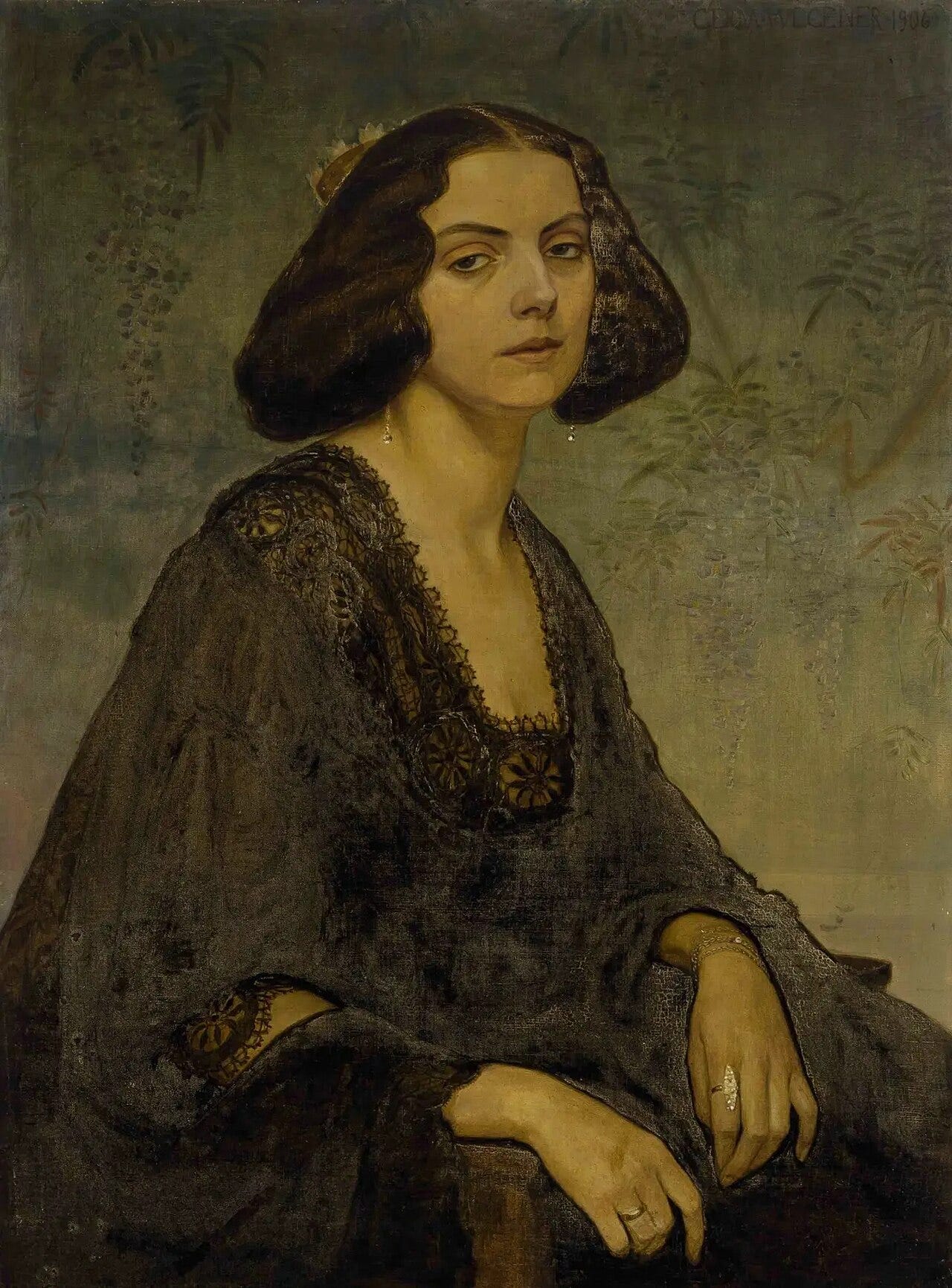
Gerda Wegener was born Gerda Gottlieb in 1886 in Jutland, in rural Denmark, the daughter of a Lutheran minister. It was a strict and modest home, far from the fashionable world she later drew.
She showed talent early and moved to Copenhagen to train at the Royal Danish Academy of Fine Arts, one of the few paths open to a young woman who wanted to paint.
The gap between the parsonage and her later life in Paris could hardly be wider. The woman who became known for sleek, sensual images of women began in a Danish country church.
The two young painters who married
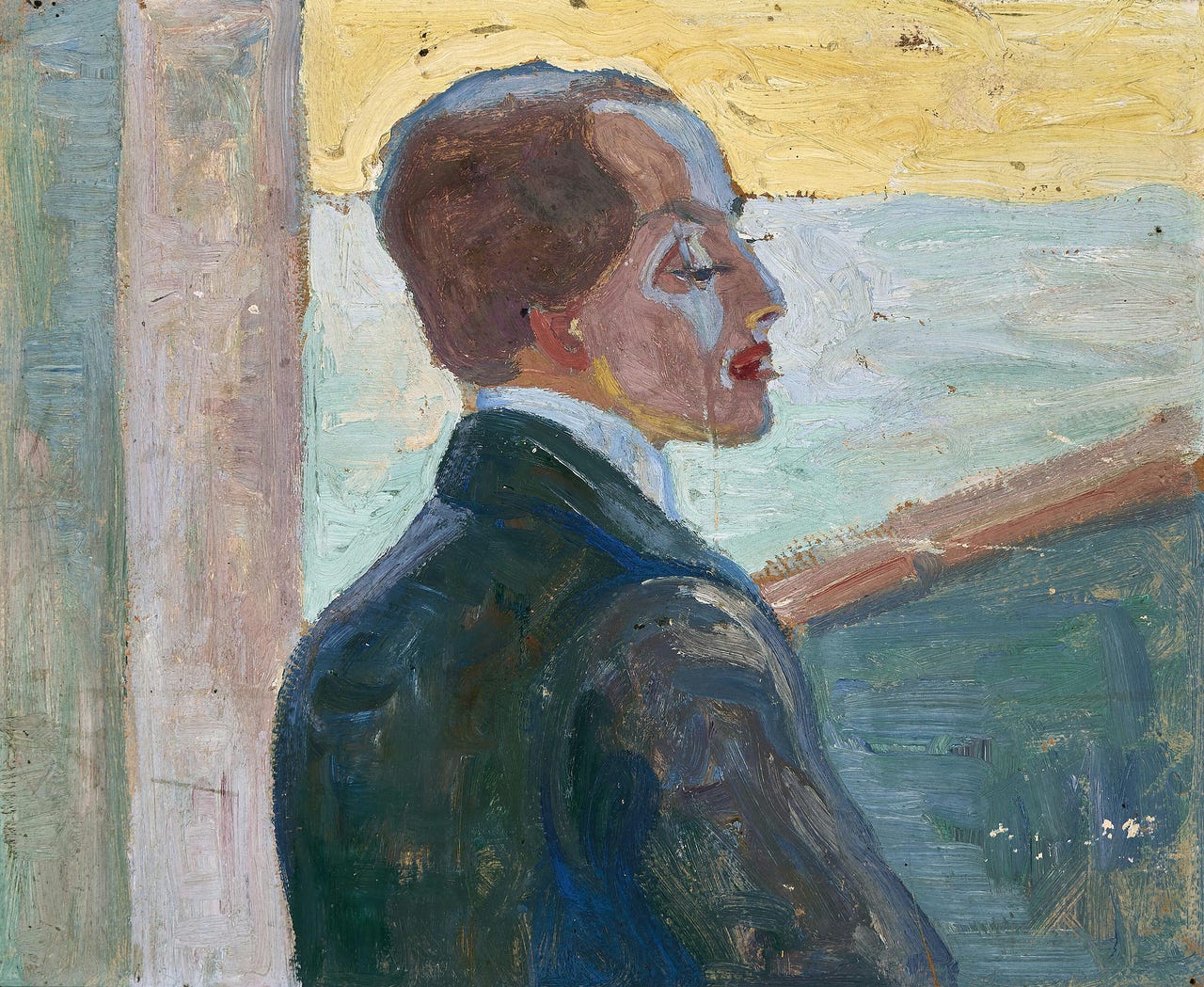
At the Academy she met a fellow student, a slight young painter from Jutland named Einar Wegener. The two married in 1904, when Gerda was in her teens and Einar a few years older.
They were a working couple of artists. Einar painted quiet landscapes, while Gerda leaned toward portraits and illustration and quickly outpaced him in commercial success.
Around 1912 they moved to Paris, then the center of the art world. There Gerda found her market, and there the couple began the strange and tender chapter that would define both their lives.
The fashion magazines that made her name
In Paris, Gerda became a sought after illustrator. Her drawings of chic, knowing women filled the pages of magazines such as La Vie Parisienne, Fantasio and Vogue.
Her style caught the mood of the moment exactly, all clean line, bright color and cool wit. She could sell a hat, a perfume or a fantasy with equal ease, and editors kept her busy.
This commercial work paid the bills and made her a name in her own right. It also let her paint, on the side, the frank and erotic watercolors that later shocked and delighted collectors.
The surgeries in Germany and the end of a marriage
The model Gerda painted again and again as an elegant woman was in fact her own spouse. Einar had begun sitting in women's dress, first out of need for a model, then as an expression of who she felt herself to be, taking the name Lili Elbe.
In 1930 Lili traveled to Germany for a series of pioneering operations, among the first attempts at what we now call gender confirming surgery, overseen by the doctor Kurt Warnekros.
The same year the King of Denmark annulled Gerda and Einar's marriage, since the law now saw them as two women.
Lili Elbe died in 1931 from complications of a later operation. Gerda had lost both a spouse and the model who had made much of her finest work.
Morocco, a second marriage, and a poor death
Soon after Lili's death, Gerda married an Italian officer and diplomat, and the couple moved to Morocco. She kept painting, but the market for her polished manner was fading as fashions changed.
The marriage did not last, and she returned to Denmark in the late 1930s. Her once glamorous style now looked dated, and she struggled to sell her work.
Gerda Wegener died in 1940, largely forgotten and close to poverty. Decades later a Danish museum retrospective and a Hollywood film would pull her name, and Lili's, back into the light.
The erotic albums signed in secret
Alongside her magazine work, Wegener made frankly erotic images of women, delicate watercolors that were radical for their day. Some appeared in illustrated books of erotic verse, at times under a pseudonym to keep her respectable name apart from them.
The pictures are playful rather than crude, drawn with the same clean elegance as her fashion plates. They treat female desire lightly and openly, which was rare for a woman artist of the time.
For years this side of her work was set aside or hidden. It is now one of the reasons collectors and curators find her so interesting, a woman drawing other women with candor and humor.
Man into Woman, a story the world was not ready for
Lili Elbe kept diaries through her transformation, and after her death in 1931 they were shaped into a book. Published in 1933 as Man into Woman, it is one of the earliest first person accounts of a gender transition.
The book, and the surgeries behind it, made Lili one of the first widely documented recipients of such medical care. For decades the story sat on the margins of history, known mostly to specialists.
Gerda's paintings are bound up in that story. Her tender images of Lili are among the few loving portraits of a trans woman made by someone who knew and cared for her, which is part of why both names have returned to public attention.
The retrospective that brought her back
For decades after her death, Gerda Wegener sat almost forgotten in the history of art. That began to change in the twenty first century.
A large retrospective at the Arken Museum of Modern Art in Denmark gathered her paintings for a new audience and made the case for her as a serious artist. Interest in Lili Elbe grew alongside it.
The two stories, hers and Lili’s, now travel together. A painter once written off as a maker of magazine pictures is studied again for both her art and the life it recorded.
More secrets to unlock


The Danish Girl earned Eddie Redmayne an Oscar nomination and turned Lili into the whole story. I think that trade cheapens both of them, because it erases the person who actually built a career, a market, and a body of work good enough to survive a century of neglect.
Call the stocking story what it is, a tidy anecdote invented to make a complicated marriage legible in ninety minutes. Gerda was not a startled bystander discovering her husband's secret. She was an ambitious painter who kept painting the woman in front of her, whoever that woman turned out to be.
Strip away the film's version and what is left is more interesting than tragedy: an artist who outsold her spouse for two decades and only got remembered once Hollywood needed a supporting role for her.
Of the three bodies of work, the Lili portraits hold up best. The Riviera scenes are pleasant decoration, and the erotica repeats the same joke of confident nudity picture after picture. The Lili paintings carry something neither of the other two needed, a real person Gerda kept looking at for years.
Her nearest contemporary is Tamara de Lempicka, another painter of confident women working in the same Art Deco Paris. Lempicka's portraits are harder edged and better remembered today, all polished curves built for a gallery wall. Wegener's work stays closer to illustration, and it took a museum retrospective rather than the market to get her ranked above a magazine artist.
The Gerda Wegener questions that keep coming up
Who was Gerda Wegener? A Danish painter and illustrator who conquered Paris fashion magazines in the 1910s and 20s with elegant, openly erotic Art Deco images of women.
Was The Danish Girl accurate? Loosely. The 2015 film dramatizes her marriage to Lili Elbe, who posed for many of Gerda's most famous portraits and underwent pioneering gender-affirming surgery in 1930, dying the following year.
Did Gerda know her model was Lili? Yes, the legend of ignorance is film convenience: Lili modeled openly for years, and Gerda defended and painted her through the transition.
Why was Gerda forgotten? Divorced, remarried unhappily, and out of fashion, she died nearly penniless in Copenhagen in 1940. The rediscovery came with feminist and queer art history, then the film.
How much does a Wegener cost? Prices climbed tenfold after 2015; major oils now bring six figures and the watercolors five.
Where can I see Gerda Wegener? Arken Museum near Copenhagen mounted the key retrospective and Danish collections hold the core; much remains in private hands.
What is Gerda Wegener famous for? Her Art Deco portraits of women, and her marriage to Lili Elbe.
When was Gerda Wegener born? In 1886 in Denmark, where she trained before making her name in Paris.
What did Gerda Wegener die from? She died in 1940 after years of declining health and finances, largely forgotten.
Was she more famous than Lili in her time? Yes. In 1920s Paris, Gerda was the established, celebrated artist.
Where are her paintings? In Danish collections, the ARKEN retrospective, and private hands and auctions.