
To get into art as a complete beginner, you do not need to draw, and you do not need to study. Pick one painting you like, learn the true story behind it, and go and see it for real when you can. Do that a few times a week, and within a few months, museums stop feeling like a foreign language.
I am Julien Charles-Césari. I write Cool Stories About Art, a newsletter read by more than 200,000 people who love art but never studied it. I started exactly where you are: interested, a little intimidated, and bored in museums without really knowing why.
Cool Stories About Art is a newsletter to learn art the fun way.
Join 200,000+ readers and get:
10 new art stories / month
The entire archive of content (140+ articles)
Comment, ask questions, and chat with other readers
Getting into art does not mean learning to draw
Type "how to get into art" into a search engine and you will mostly find sketchbooks, pencils and drawing tutorials. That is one hobby: making art. There is another one, just as rich, and it needs no talent at all: looking at art and understanding it.
You can love music without playing an instrument, and love films without ever holding a camera. Art works the same way. This page is about the second hobby: getting to the point where a painting in a museum tells you something, instead of leaving you with the feeling that you have missed the point.
What is art history, and why should anyone care?
Art history is simply the story of the images people made, and why they made them. Who paid for them, what they were meant to say, what happened to the people who painted them.
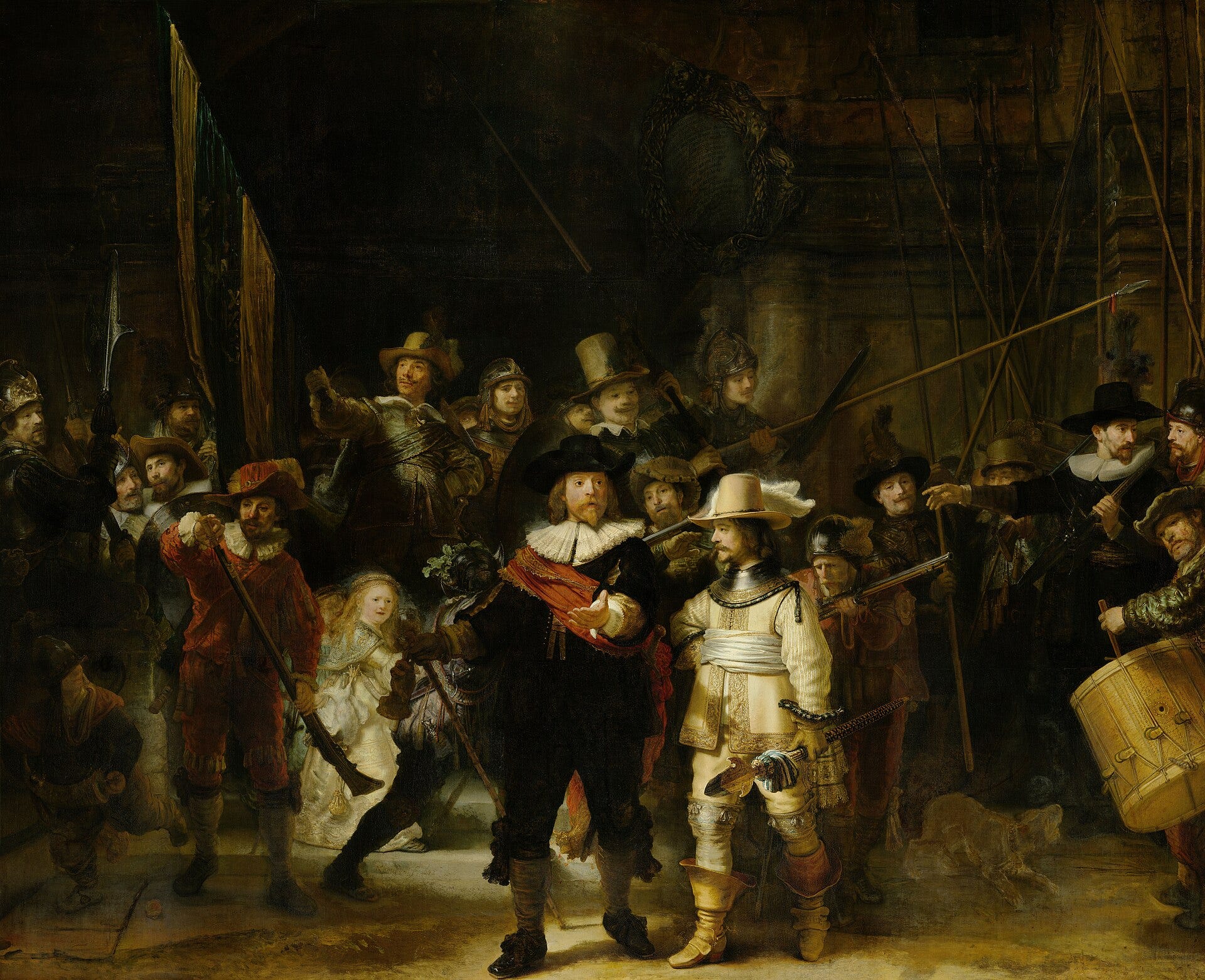
The reason to care is that a painting is the closest thing we have to a photograph of the past. Take Rembrandt's The Night Watch, at the top of this page. In 1642, the members of an Amsterdam militia company paid Rembrandt to paint them. Each man paid to have his face in it, and that is why the canvas is so crowded. In one picture, you see a rich city, proud of its merchants and its citizen soldiers, at the height of its power.
Every famous painting holds a story like that: a city, a fortune, a scandal, a love affair, a fear. Learning art history means learning to read those stories. It also makes every trip, every museum and every church you walk into a lot more interesting.
Five ways in, for your first month
Start with a painting you already know. You do not need to discover anything. Take the Mona Lisa. Everyone knows the face, few know the story: in 1911, an Italian handyman named Vincenzo Peruggia walked out of the Louvre with it under his smock. It was gone for more than two years, and the newspapers turned a famous painting into the most famous painting in the world. One story, and you will never look at that face the same way again.
Follow one story a few times a week. Learning art works like learning a language: little and often beats a lot once. Ten minutes, twice a week, is enough. That is exactly the rhythm of Cool Stories About Art: one painting, one true story, in your inbox.
Go to a museum with one question. Wandering through rooms with no goal is what makes museums exhausting. Go with a mission instead: find every dog, every skull, every person looking straight at you. A treasure hunt turned museum visits with my daughter from a chore into a game, and it works just as well on adults.
Learn the stories painters took for granted. Many old paintings illustrate a Bible story or a Greek myth that every viewer knew at the time. A dozen stories, from Adam and Eve to the Last Supper and the birth of Venus, unlock hundreds of paintings. I explain how in how to learn art history.
Tell someone what you learned. Explaining a painting to a friend or a child is the fastest way to find out what you really understood. And it is usually where the fun starts.
Fun ways to learn about art
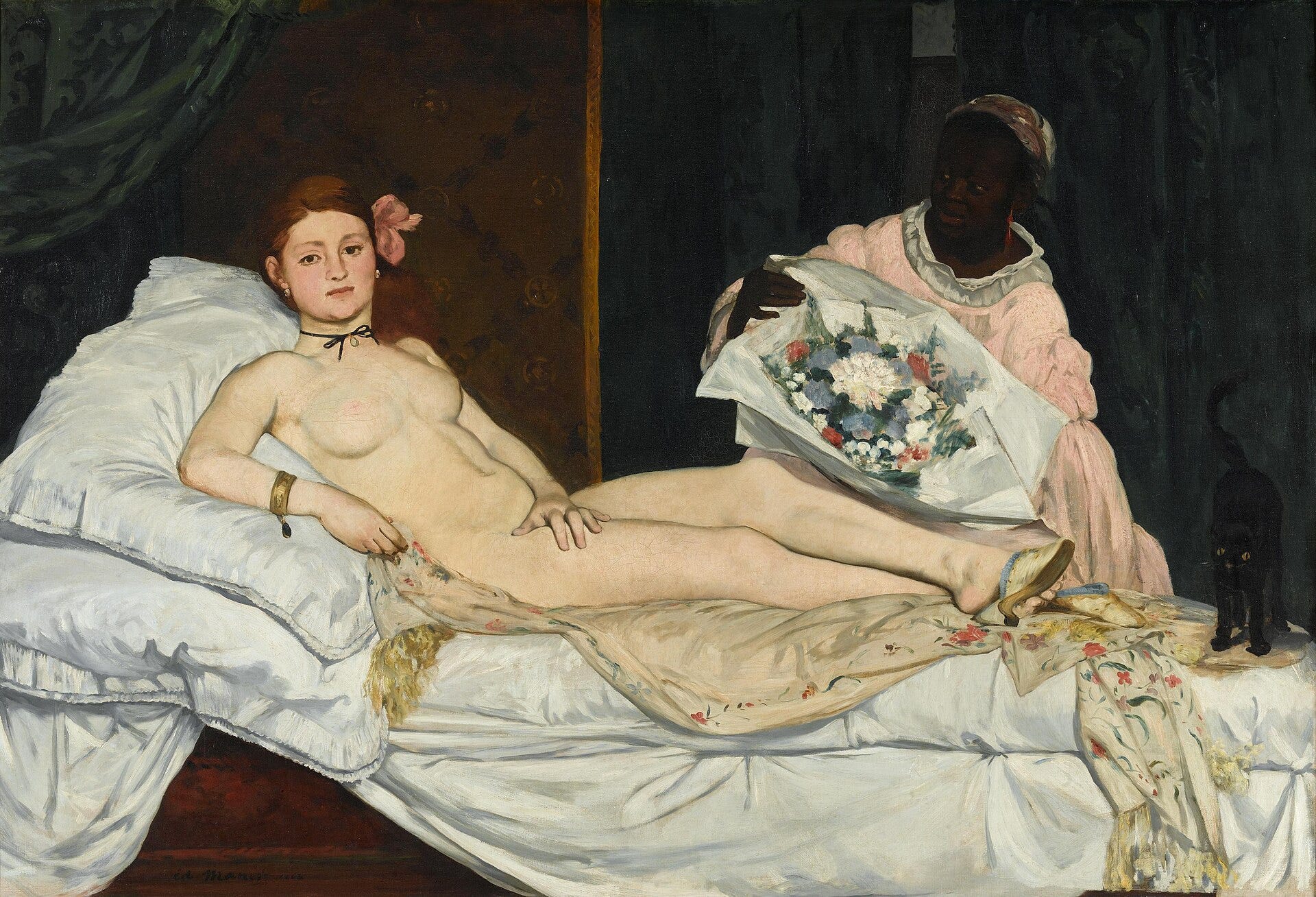
The fun is in the stories. Manet's Olympia, above, caused a scandal in Paris in 1865, partly because the woman on the bed looks straight at you, unashamed, and partly because a black cat sits where Titian had painted a faithful little dog. Caravaggio painted saints with the faces of people from the street and spent his last years on the run after killing a man. Monet kept painting as his eyesight failed, and his colors changed with it.
These are true stories, and they are better than most novels. They are also the easiest way to remember a painter, a period and a style without trying.
That is the idea behind Cool Stories About Art, on Substack and on Instagram, where more than 320,000 people follow the stories. The Art Mysteries section, with its hidden details and unsolved questions, is a good place to start if you like a puzzle. Artists' Lives is the place for drama.
How to fit art into your free time
You do not need whole afternoons.
Ten minutes on your phone. One story about one painting, on the bus or with a coffee. Then look the painting up on the museum's website and zoom in. Museums such as the Rijksmuseum, the Met and the National Gallery in London put their collections online in very high definition, for free.
One museum visit a month. Choose a museum near you, look at what it holds online first, and pick two or three paintings you want to see. Knowing what you are going for changes the whole visit.
One book on your bedside table. E. H. Gombrich's The Story of Art reads like a long story, one chapter at a time. Once you have a few paintings in your head, it puts them in order.
Where to go next
Once the curiosity is there, three guides take you further: how to learn art history on your own, how to appreciate art in a museum, and how to understand modern art when it looks like random shapes.
The best resources for complete beginners
My own list. The first one is mine, so read it with that in mind.
Cool Stories About Art, a newsletter on Substack, free to join, with a paid plan for the full stories. Twice a week, one painting and the true story behind it, written for people who never studied art.
The Story of Art, by E. H. Gombrich. The clearest single book on the whole history of art, written in 1950 for young readers. Best for putting everything in order.
Ways of Seeing, by John Berger. A short book and a BBC series from 1972 on how we look at paintings. Best for learning to look.
Destins d'artistes, my book with Larousse. 57 artists' lives told like stories, from Giotto to Hilma af Klint. In French.
Museum websites. The Rijksmuseum, the Met and the National Gallery in London, free and in very high definition. Best for zooming into details at home.
Questions from complete beginners
How do I get into art as a complete beginner?
Start with one painting you like and learn the true story behind it. Follow a few stories a week, visit a museum with one question in mind, and learn the handful of Bible stories and myths that old paintings rely on. A newsletter such as Cool Stories About Art gives you one painting and its story twice a week, which is the easiest way to build the habit.
Do I need to know how to draw to enjoy art?
No. Making art and understanding art are two different hobbies. Most people who love museums never draw, the same way most people who love music never play an instrument.
What is art history, and why should a regular person care about it?
Art history is the story of the images people made and why they made them. It matters because a painting is the closest thing we have to a photograph of the past: it shows who held power, what people feared, what they found beautiful. It also makes every museum, church and trip far more interesting.
How can I learn about art in a fun and easy way?
Through true stories: the scandals, rivalries, thefts and lives behind famous paintings. They are easier to remember than dates, and the period comes with them. Cool Stories About Art is built on exactly that idea.
How can I learn about art in my free time?
Ten minutes a few times a week is enough: read the story behind one painting on your phone, then zoom into it on the museum's website. Add one museum visit a month and one good book, such as Gombrich's The Story of Art, and you will be surprised how fast it adds up.
What should I subscribe to if I want to learn art the fun way?
A newsletter that tells the story behind one painting at a time rather than the news of the art market. Cool Stories About Art does that twice a week, for people who love art but never studied it.
How long does it take to feel comfortable in a museum?
A few months of regular, small doses. After a dozen paintings and their stories, you start recognizing styles, periods and symbols, and each new painting becomes easier than the last.
About the Author
Julien Charles-Césari is a French art writer who tells the stories behind famous paintings and the lives of the artists who made them.
He created Cool Stories About Art on Instagram, followed by more than 320,000 people, and this Substack, where more than 200,000 subscribers learn art the fun way.
He also created Cool Stories About History, a Substack about the stories behind history. His book Destins d'artistes is published by Larousse.


