
Raja Ravi Varma was the Indian painter who pictured Hindu gods and epic heroes in European oil painting. He is called the artist who gave India's gods their faces, because his images are still the ones most people picture today.
Born in 1848 in Kerala and tied to the royal house of Travancore, he set up a printing press near Bombay in 1894 that turned his gods into cheap prints for millions of homes, which is why he is now counted a founder of modern Indian art.
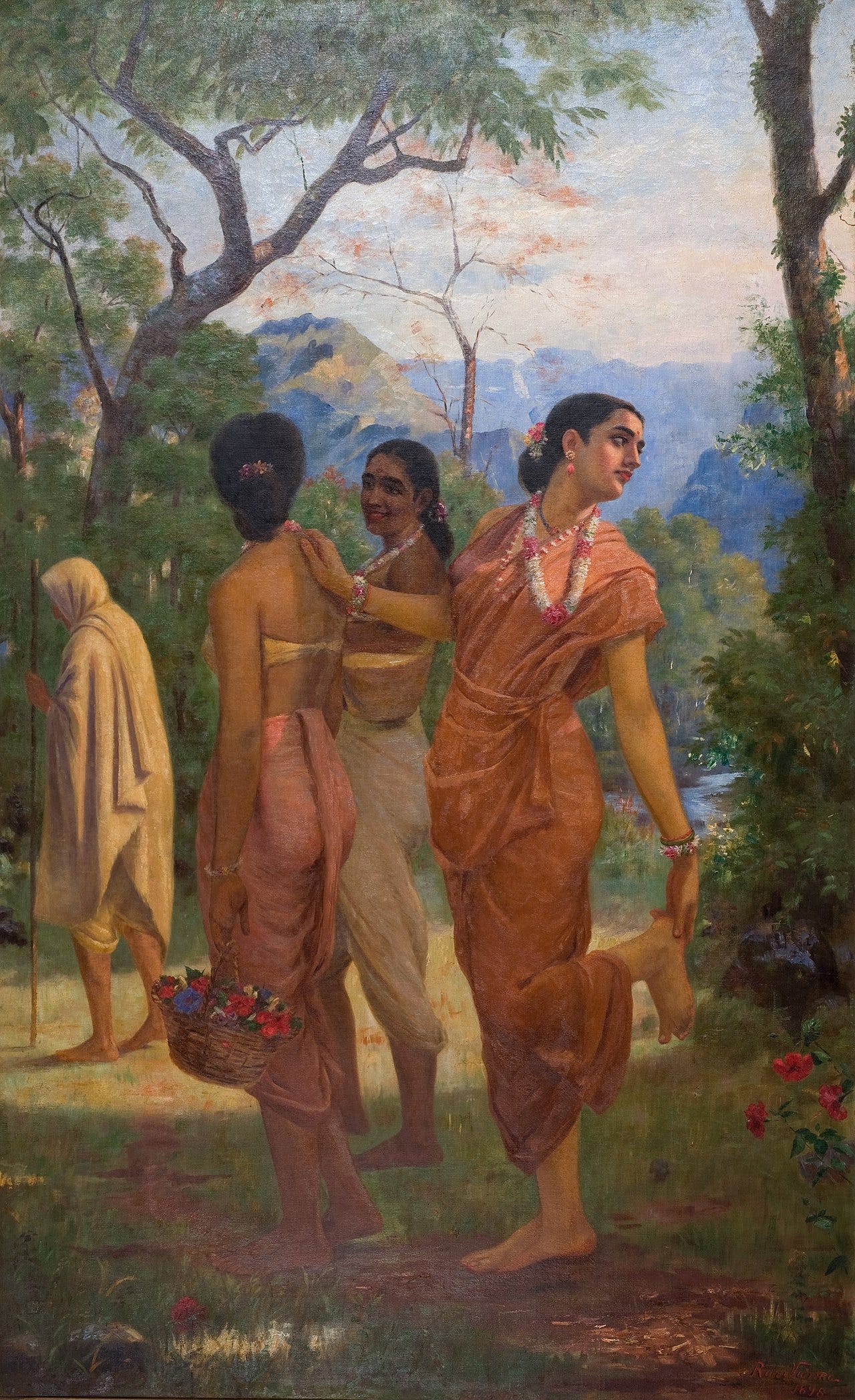
Working in the late 1800s, he fused Western realism with Indian subjects, then did something rare for a fine artist: he had his paintings mass printed, so they reached millions of ordinary homes across India.
Cool Stories About Art is a newsletter to learn art the fun way.
Join 170,000+ readers and get:
10 new art stories / month
The entire archive of content (1,000+ articles)
Comment, ask questions, and chat with other readers
More incredible painter stories
If Raja Ravi Varma pulled you in, you will love these too:


He was loved, then dismissed, then crowned a founder of modern Indian art. Here is the whole story.
Raja Ravi Varma at a glance
1848. Born at Kilimanoor palace, Travancore, in what is now Thiruvananthapuram district, Kerala, cousin to the royal house.
1873. First prize at the Madras exhibition, the start of an all India reputation.
1894. Opened his lithographic press near Bombay, putting gods on every wall.
1904. Awarded the Kaiser-i-Hind gold medal.
1906. Died at 58. A century later his canvases set Indian auction records.
Gods painted like real people
Ravi Varma's breakthrough was a fusion. He mastered the European tradition of oil painting, with its lifelike skin, deep shadow and convincing folds of cloth, and turned it onto Indian myth.
Goddesses, kings and scenes from the great epics, the Ramayana and the Mahabharata, suddenly appeared as real people standing in real space, lit like a European salon painting.
No Indian artist had shown the gods quite that way before, and it changed how a whole culture imagined them.
The press that changed everything
His biggest impact came not from a brush but from a printing press.
In 1894 Ravi Varma set up a press near Bombay to make cheap color prints, called oleographs, of his paintings of the gods. Now a family that could never dream of owning an original could pin a deity to the wall for a few coins.
His images flooded India, onto walls, calendars and matchboxes, and shaped how the entire country pictured its gods for generations. It is hard to overstate how deep that went.
What makes a Ravi Varma unmistakable
A Ravi Varma is easy to recognize once you know the mix.
Real bodies. Gods and heroes painted with lifelike skin, weight and shadow, like European portraits.
Indian dress and story. Saris, jewels and scenes from Hindu myth, rendered with loving detail.
Theatrical staging. Figures posed like actors on a stage, with dramatic light and gesture.
Sweet, polished finish. Smooth, idealized faces meant to be loved, not challenged.
His polished manner sat close to European academic art, the official salon style of the day.
Two traditions in one brush
Ravi Varma learned from two worlds.
From India he absorbed the older Tanjore tradition of painting gods, with its rich color and devotion.
From Europe he took the realism of academic oil painting, reportedly by watching a visiting Danish portrait painter at the Travancore court. He combined the sacred subjects of one with the lifelike method of the other.
A painter to princes
Born in 1848 into an aristocratic family tied to the royal house of Travancore, in what is now Kerala, Ravi Varma painted portraits of Indian royalty and British officials.
His fame spread fast. He won prizes at international exhibitions, including in Vienna, and the honorific Raja was attached to his name. He was the rare Indian artist celebrated by both Indian courts and the colonial rulers at once.
The brother who ran the studio
He rarely worked alone. His younger brother, C. Raja Raja Varma, painted many of the landscapes and backgrounds behind the figures and ran the business side, and their sister Mangala Bai painted too. It was a family workshop as much as a solo career.
Loved, then debated
For decades Ravi Varma was hugely popular. Later, some critics turned on him, calling his style too Western, too sweet, closer to calendar art than fine art.
Today the pendulum has swung back. He is widely seen as a founder of modern Indian painting, the man who pulled Indian art into the modern, mass media age.
For me he is the clearest case of an artist who reached more people through cheap prints than through any original. His life has even inspired films. He died in 1906.
The palaces and galleries that kept his canvases
His originals are spread across Indian museums and palaces.
Sri Chitra Art Gallery, Thiruvananthapuram. A major home for his work, in his native Kerala.
Salar Jung Museum, Hyderabad. Holds celebrated Ravi Varma canvases.
Palace collections, Baroda and Mysore. The royal patrons who commissioned him still hold many works.
The Victoria and Albert Museum, London, which holds his oil portraits of Indian women.
A prince's cousin from Travancore
Raja Ravi Varma was born in 1848 at the Kilimanoor palace, in the princely state of Travancore in what is now Kerala, southern India. His family was aristocratic and closely tied to the local royal house.
As a boy he covered the palace walls with charcoal drawings of animals and scenes from daily life. An uncle noticed the gift and brought him to the court at Travancore, where he could study art seriously.
His noble birth opened doors that would have stayed shut to most Indian painters. It gave him access to royal patrons, foreign visitors and the imported oil paints that shaped his whole career.
The lessons from a European brush
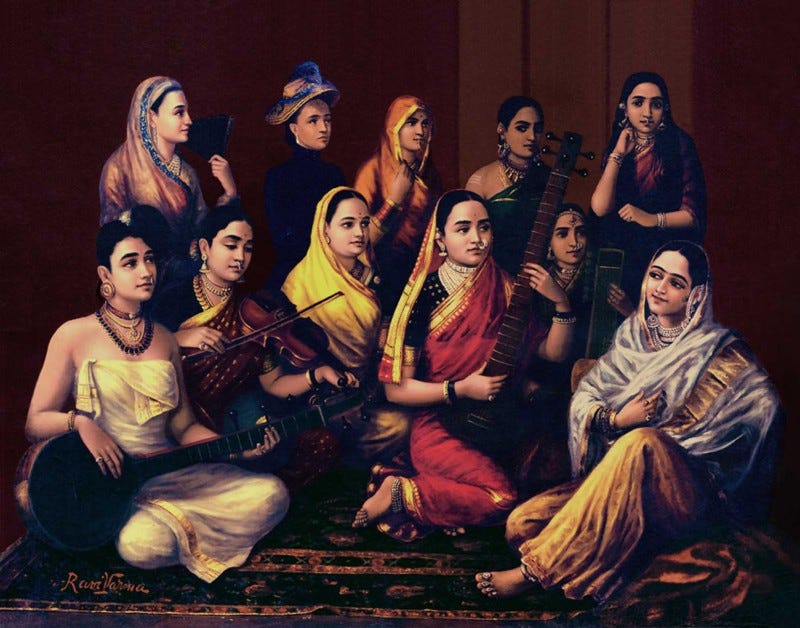
Ravi Varma first learned watercolor in the local tradition from a court painter named Rama Swamy Naidu. His ambitions soon outgrew it.
The turning point came when a European portraitist working for the Travancore court, the painter Theodore Jensen, arrived with oils and Western methods.
Ravi Varma studied his technique closely, sometimes against resistance, and taught himself much of the rest by watching and copying.
From this mix he built his own manner, joining European oil painting and modeling with Indian subjects and dress. It was a fusion no one had pulled off quite so completely before.
The heroines of the epics
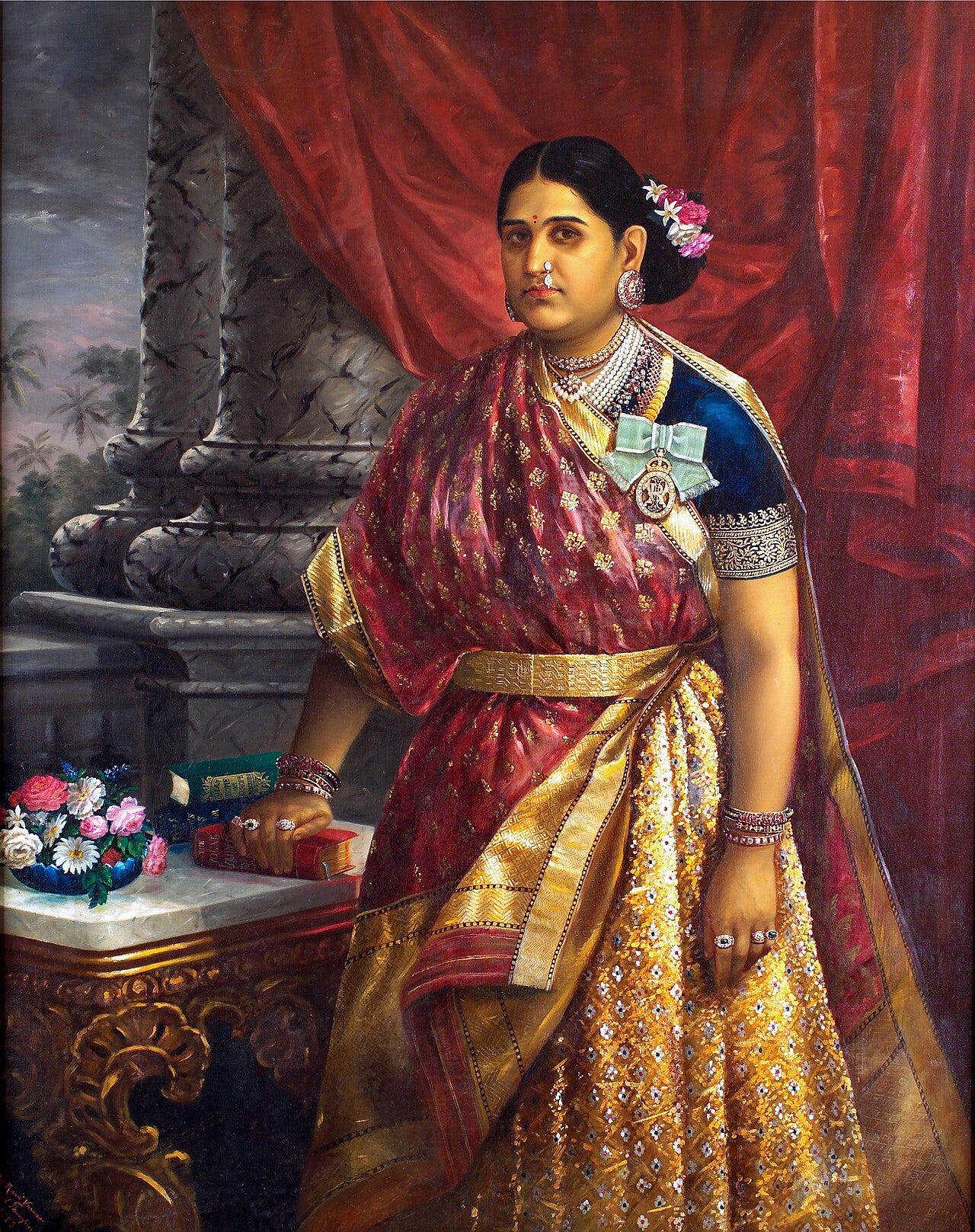
Ravi Varma is loved above all for bringing the old stories to life. He painted scenes from the Ramayana, the Mahabharata and the Puranas, giving their gods and heroines the faces of real women.
His Shakuntala pausing to look back, his sorrowing Damayanti, his serene goddesses Lakshmi and Saraswati became the standard images of these figures. Millions of Indians still picture the deities more or less as he painted them.
He often used ordinary women, including courtesans and models he met on his travels, as the faces of queens and goddesses. That mixing of the sacred and the everyday was part of his appeal, and part of what later critics argued about.
The prize that carried his name abroad
Ravi Varma's fame did not stay local for long. He won awards at exhibitions in Madras, and his reputation spread across British India as the painter who could make Indian subjects in the grand European manner.
His work traveled further still. A painting sent to an international exhibition in Vienna in 1873 brought him recognition beyond India, and he collected medals that marked him as a figure of note in the wider art world.
Commissions poured in from maharajas and British officials alike. With his brother he crisscrossed the country, painting the portraits of princes and the myths of the nation on the same long tours.
The court, the debates, and an early death
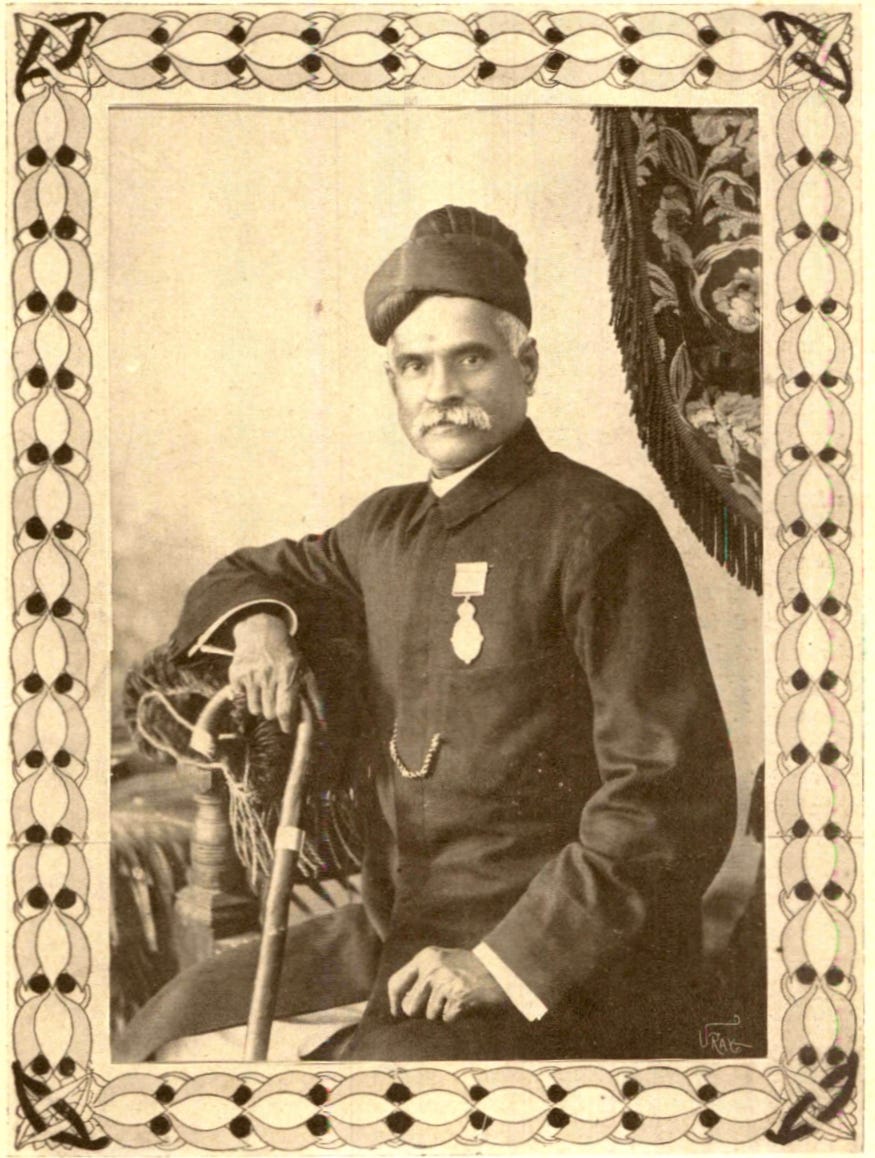
For all his success, Ravi Varma drew criticism. Some conservatives disliked seeing sacred deities rendered so fleshy and human, and one dispute over his prints reached the courts.
Later critics accused him of making Indian art look too European, dismissing the mass prints as mere calendar pictures.
He kept working through it all, painting and printing until his health failed. He died in 1906 at Kilimanoor, aged 58, weakened by diabetes.
The debate never fully settled, which is part of why he still matters. Loved by the public and questioned by critics, he remains the artist who taught modern India how to picture its own gods.
A revival a century later
For much of the twentieth century, serious critics kept Ravi Varma at arm's length, treating his oil paintings as too popular and too European to count as high art. The cheap prints only deepened that suspicion.
Taste has since turned. Scholars now read him as a pivotal figure who carried Indian art into the modern age, and museums and collectors chase his surviving originals.
At auction his paintings command some of the highest prices ever paid for Indian art, running into millions of dollars. The man once dismissed as a maker of calendar pictures is now among the most valued names his country has produced.
More secrets to unlock


The Raja Ravi Varma questions that keep coming up
What is he known for? Oil paintings of Hindu gods and epic scenes.
Why does he matter? Cheap prints of his work spread into millions of Indian homes.
What style did he use? European realism applied to Indian subjects.
Where was he from? Kilimanoor, in Kerala, India.
When did he live? Born in 1848, died in 1906.