Raoul Dufy (1877-1953) was the French painter of regattas, racecourses and Riviera light, dismissed for decades as a mere decorator, and the author of one of the largest paintings on Earth: the 600 square metre Electricity Fairy.
The joy in his pictures is real. So is the invention hiding under it.
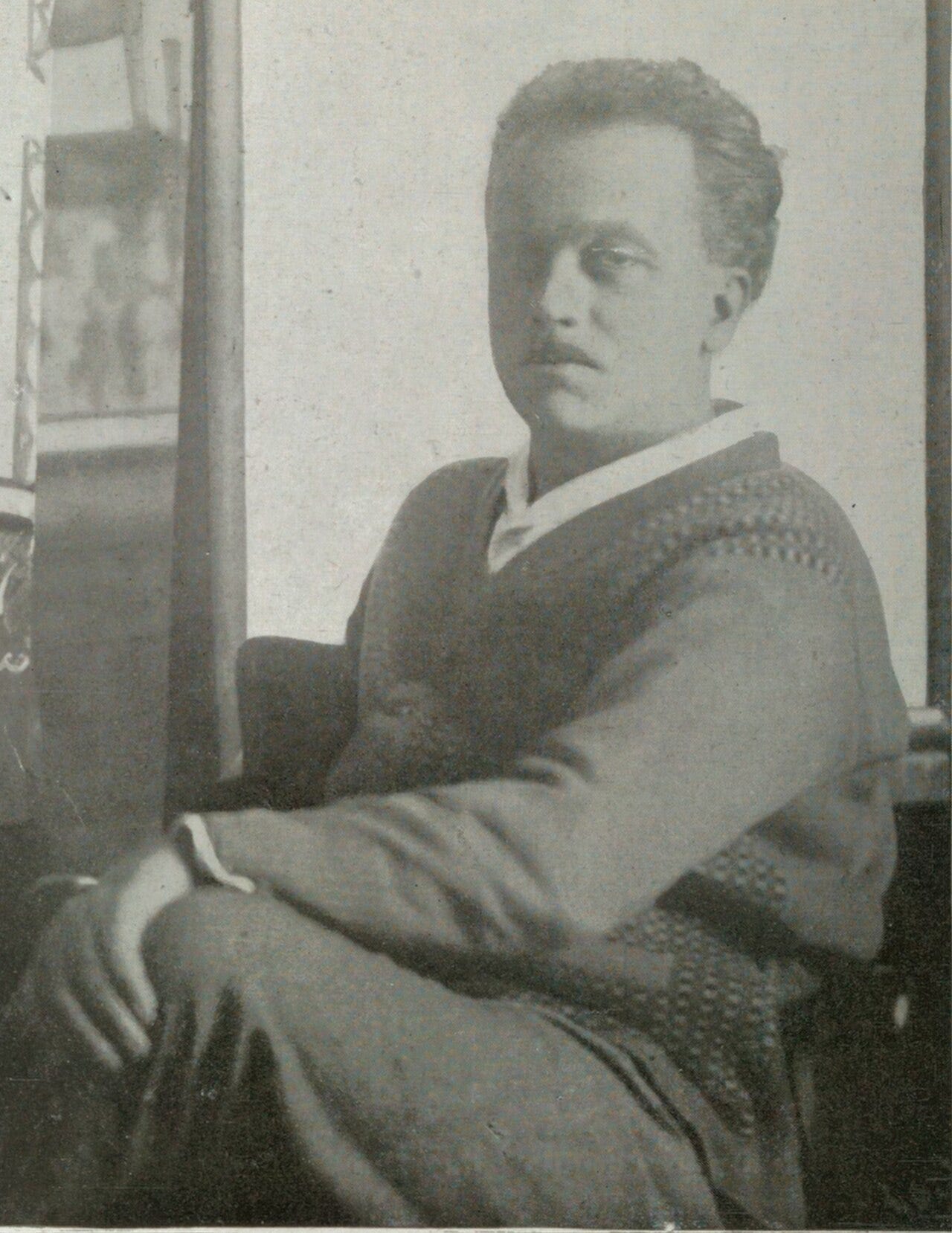
Raoul Dufy at a glance
1877. Born in Le Havre, one of nine children in a musical family.
1905. Saw Matisse’s Luxe, Calme et Volupté at the Salon and switched course on the spot.
1912. Began designing silks for the Lyon house Bianchini-Férier.
1937. La Fée Électricité, one of the largest paintings in the world, for the Paris Exposition.
1952. Won the painting Grand Prize at the Venice Biennale, a year before his death.
Struck by a Matisse
Born in Le Havre in 1877, one of nine children, Dufy was painting Normandy beaches in soft Impressionist tones until 1905, when Matisse's Luxe, Calme et Volupte stopped him cold at the Salon. He converted to Fauvism on the spot: from then on, colour would be light itself, not description.
The trick he discovered
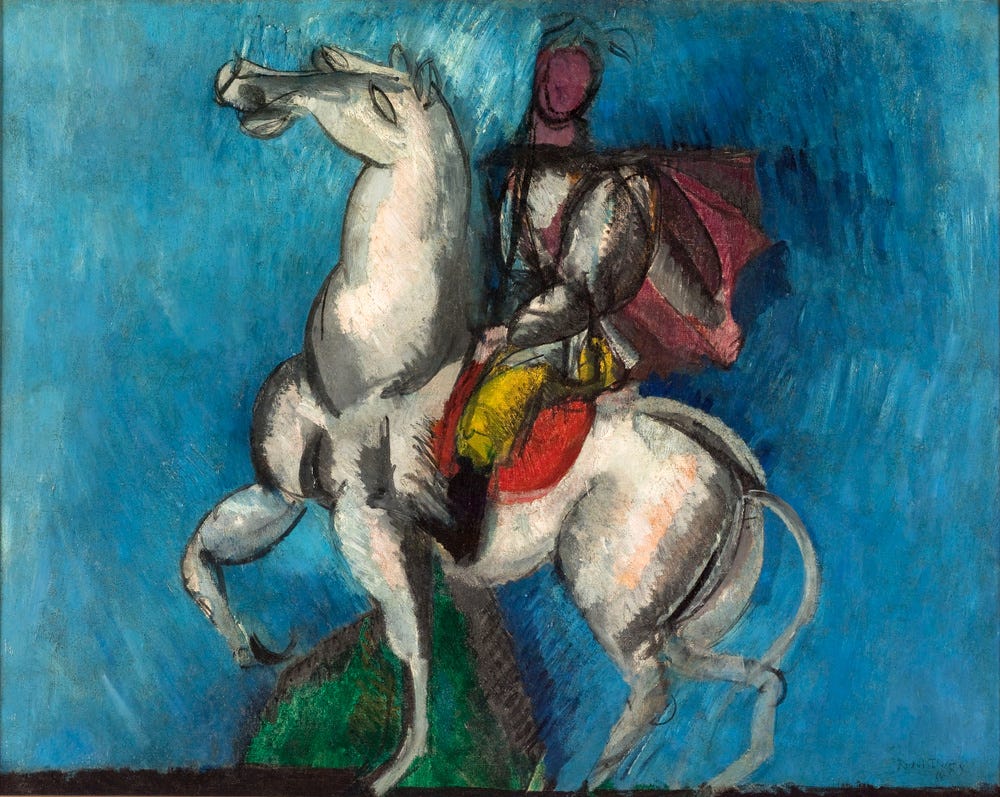
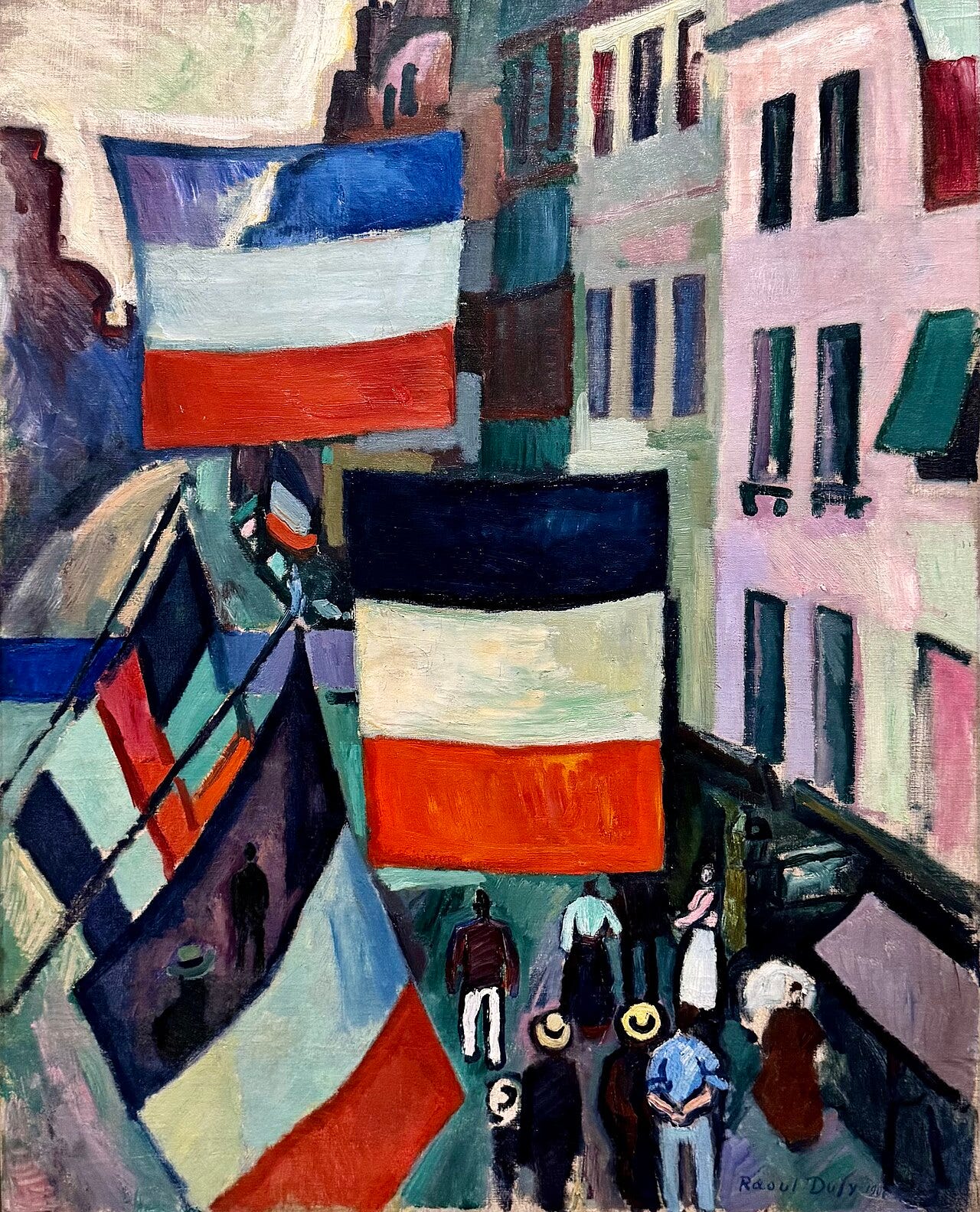
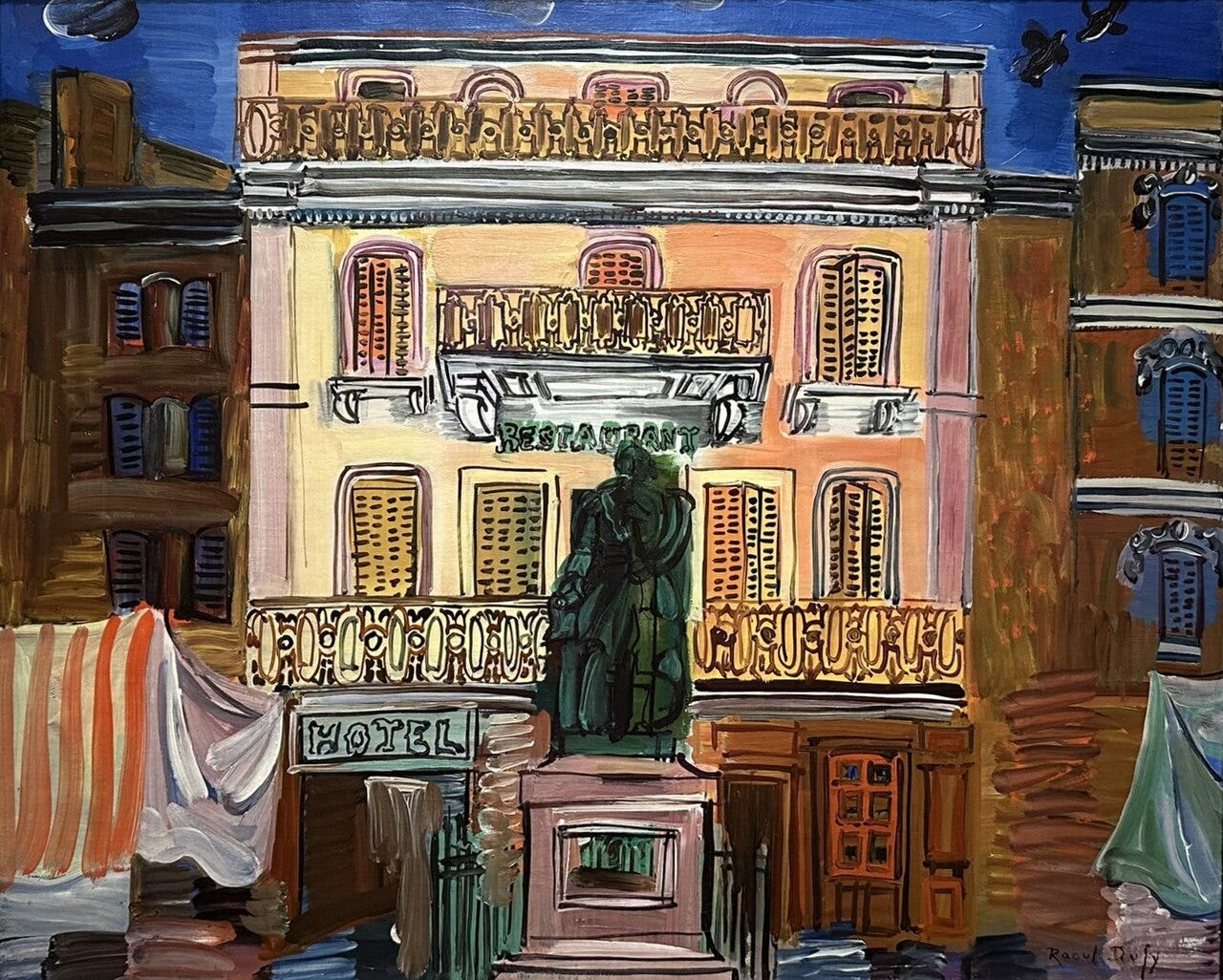
His mature signature is a quiet piece of engineering: colour and line travel separately. Broad washes of blue or pink lie down first, and the drawing skates over them, unattached, the way sound and image run on separate tracks.
It lets his scenes shimmer, because your eye reassembles them a beat late. Critics called it facile. Painters knew better.
More incredible painter stories
If Raoul Dufy pulled you in, you will love these too:


Fabric, and the fairy
He designed woodcuts for Apollinaire's Bestiaire in 1911, then years of textiles for the couturier Paul Poiret and the silk house Bianchini-Ferier, patterns still reissued today. And for the 1937 Paris Exposition he painted La Fee Electricite, the story of electricity from Zeus to the power station, across 600 square metres, among the largest paintings in the world.
The Le Havre class of friends
Dufy learned to paint in evening classes in Le Havre, in the same municipal school as Georges Braque and Othon Friesz.
Three boys from one port town ended up in three chapters of modern art.
Dufy and Braque later painted side by side at L’Estaque, before their roads split toward color and Cubism.
Regattas, racecourses, orchestras
Once he found his fast line, Dufy hunted moving subjects: regattas at Deauville, race days at Ascot, orchestras mid concert.
The line races ahead and the color arrives late, like sound after light.
He drew violins the way other painters drew models, by the dozen, from the front row.
Cortisone, and a last prize
Rheumatoid arthritis slowly bent his hands. By the late 1940s he painted with the brush strapped to his wrist.
In 1950 he crossed to Boston as one of the first artists treated with cortisone, and the brush moved again.
Venice gave him the Biennale’s painting Grand Prize in 1952. He died the next year and is buried in Cimiez, above Nice, near Matisse.
The myth to retire
Lightweight, the critics said, a decorator of pleasures.
But the pleasure was a discipline: Dufy painted through decades of crippling rheumatoid arthritis, travelled to Boston in 1950 for pioneering cortisone treatment, and went straight back to work.
In 1952 the Venice Biennale gave the light painter its grand prize for painting, a year before his death.
Where to see Dufy
La Fee Electricite fills its own curved room at the Musee d'Art Moderne de Paris. Nice's fine arts museum, rich from his widow's bequest, keeps a deep collection, and the Pompidou holds the modernist core.
The Raoul Dufy questions that keep coming up
What is Raoul Dufy famous for? Luminous scenes of regattas, races and the Riviera, and the giant Electricity Fairy mural.
What is La Fee Electricite? His 600 square metre 1937 mural on the history of electricity, now in Paris.
Was Dufy a Fauve? Yes, converted by a Matisse in 1905, and he kept the liberated colour for life.
Where can I see his work? The Musee d'Art Moderne de Paris, the fine arts museum in Nice, and the Pompidou.
Did Dufy know Braque? Since boyhood. Both grew up in Le Havre and studied in the same evening art class, later painting together at L’Estaque.
How did Dufy keep painting with arthritis? With the brush strapped to his wrist, then with cortisone: in 1950 he was among the first artists treated with it, in Boston, and painted to the end.
More secrets to unlock


A wall the length of a city block
At the 1937 Exposition his mural needed its own purpose-built pavilion. The painting outlived the fair, the pavilion and the century: it still takes a curved wall the length of a city block to hold it.