
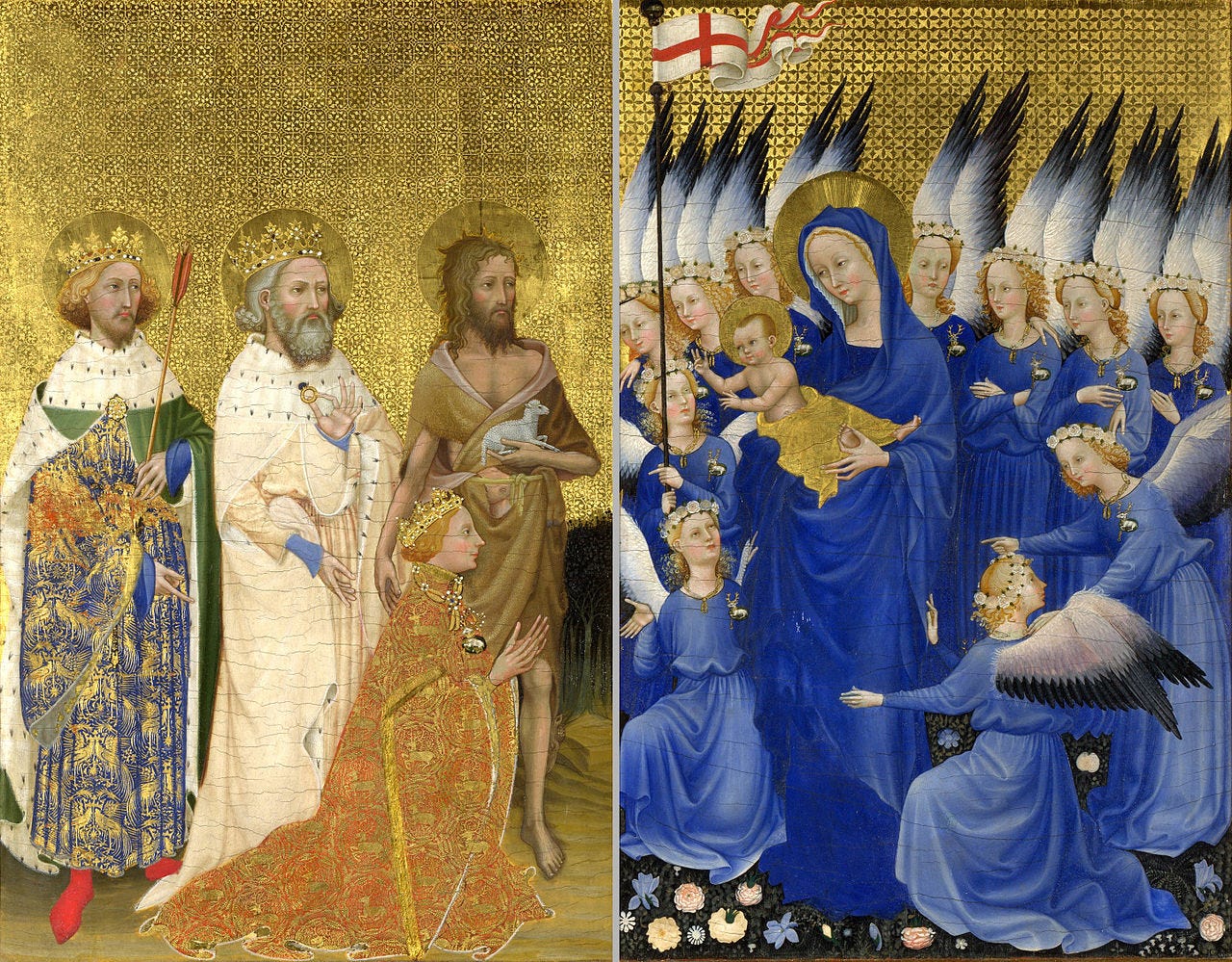
A diptych is a painting made of two panels, usually hinged so they fold together like a book. For centuries it was the portable altarpiece, a private object you could open for prayer and close to carry with you.
Two panels, joined by a hinge, that fold shut like a book and open to face one another.
That is a diptych, the smallest member of the altarpiece family, and often the most personal.
Diptych in brief
What it is: an artwork in two panels, often hinged to fold shut.
The word: from the Greek diptychos, meaning twice folded.
The use: private devotion, portable and personal.
The classic pairing: a kneeling donor on one side, the Virgin and Child on the other.
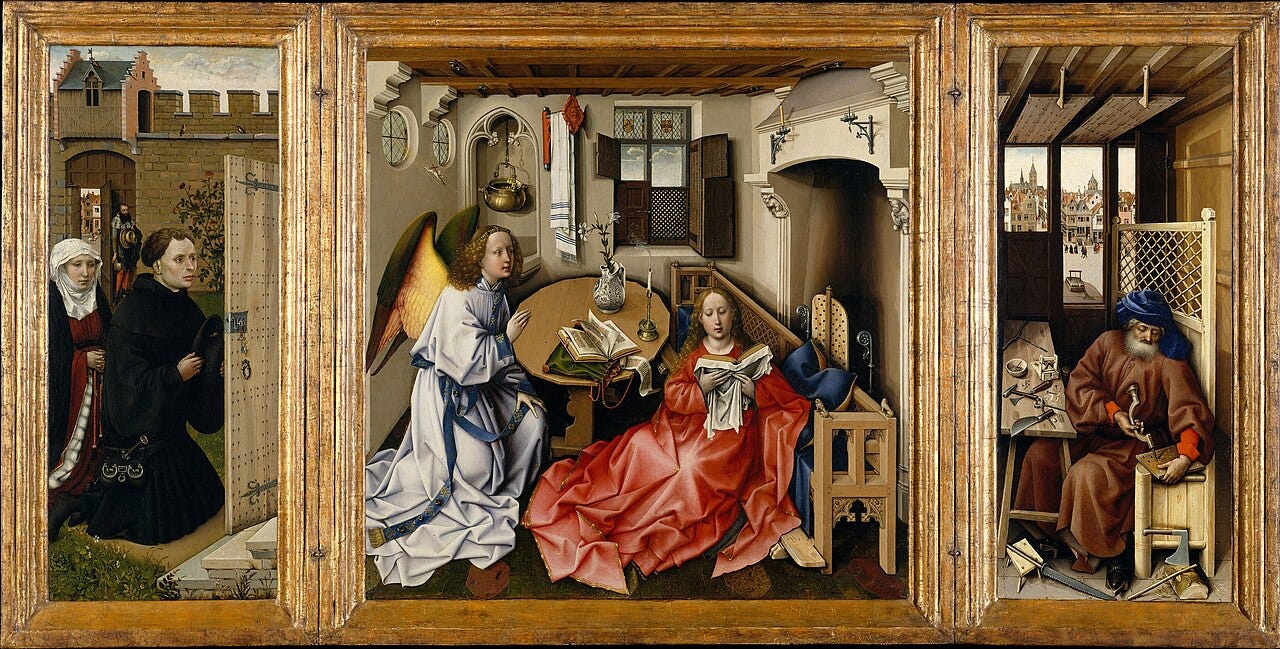
The family: two panels is a diptych, three a triptych, many a polyptych.
Keep learning art the fun way


Two panels, one idea
To me, a diptych is not just two paintings hung side by side. It is two halves of one object, joined at a hinge.
That hinge changes everything. The two scenes are meant to be read together, and the work can fold shut like a book to protect the painted surfaces inside.
Open, it is an altar. Closed, it is a thing you can slip into a bag. That contrast is what I love about the form.
A form borrowed from the office
The shape is older than Christian art.
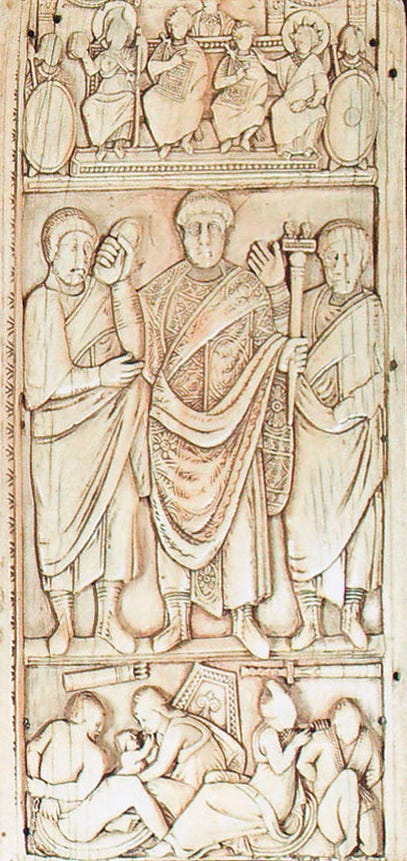
In ancient Rome a diptych was a pair of hinged wooden or ivory tablets, their inner faces coated in wax for writing. High officials sent luxury ivory versions to mark taking office.
The idea of two hinged panels was already familiar when sacred painting borrowed it.
A writing gadget became a vessel for the holy.
Portable devotion
In the Middle Ages and Renaissance, the small painted diptych became a private chapel you could carry.
A merchant or a noble could open it by the bed, pray, and close it again. Many were tiny, made to travel. They brought the altar out of the church and into the bedroom and the luggage.
This is religious art scaled to one person and one pair of hands.
Donor meets the divine
The most common diptych stages a meeting across the fold.
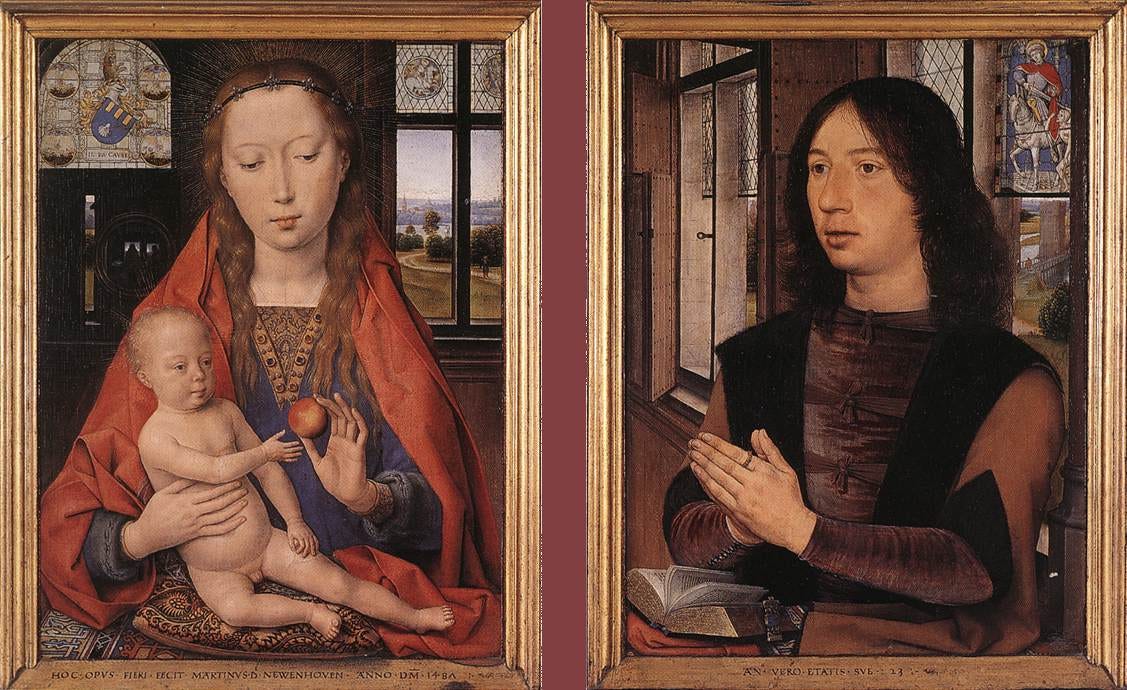
On one panel kneels the donor, the real person who paid for the work, hands pressed in prayer. On the other sits the Virgin and Child, turned toward them.
The hinge becomes the space between a human being and heaven, and the donor is shown forever in the presence of the holy.
It is also a portrait. Reading the symbols around the figures is pure iconography, and the donor's face is an early kind of portrait.
The Wilton Diptych
The most famous of all is small enough to hold in two hands.
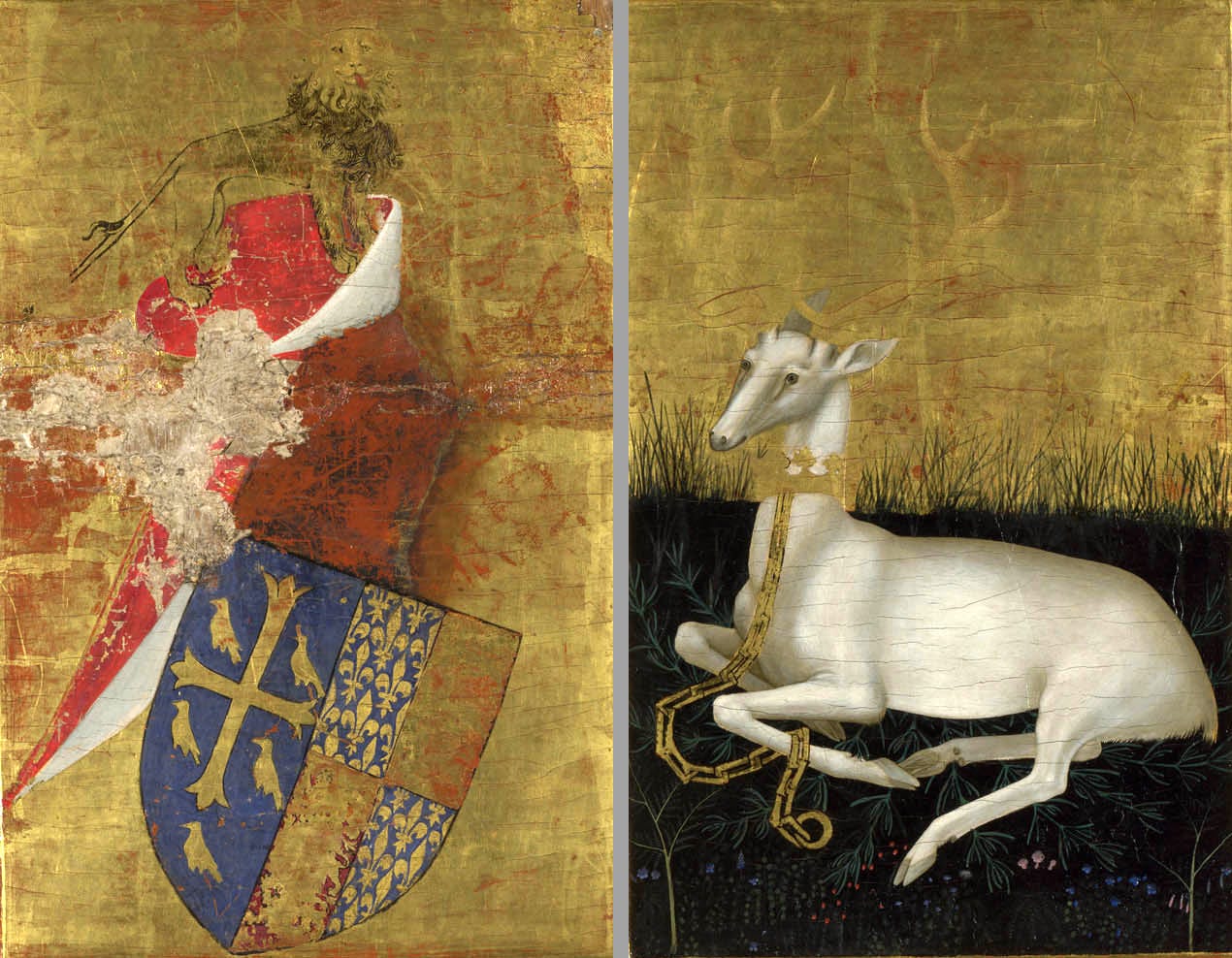
The Wilton Diptych, painted around 1395 for King Richard II of England, folds shut to the size of a book. Inside, the kneeling king is presented to the Virgin and Child by three saints, while eleven angels wear his personal badge, the white hart.
The blue is costly ultramarine, laid on like a jewel, in glowing tempera on panel.
A king could close it, pack it, and carry his own private heaven wherever he went.
Today the word has loosened. People call any two part work a diptych, including paired photographs and side by side images, long after the hinge and the prayer have gone.
Diptych, triptych, polyptych
The words simply count the panels.
Diptych, the two panel questions
What is a diptych? An artwork in two panels, usually hinged so it folds shut like a book.
Where does the word come from? From the Greek diptychos, twice folded. Romans first used diptychs as hinged writing tablets.
What were painted diptychs for? Mostly private devotion, portable enough to pray with anywhere.
What is the most famous diptych? The Wilton Diptych, made around 1395 for Richard II of England.
What is the difference between a diptych and a triptych? A diptych has two panels, a triptych three.
More secrets to unlock


The painting you could close and carry
Because it folds, a diptych shields its own surface and travels easily, which made it the portable altar of the wealthy, opened for private prayer and shut for the road.
The oldest diptychs were not sacred at all. Roman officials sent carved ivory pairs to mark taking office, and many were later recut into covers for Christian books, the hinge outliving the empire that made it.
