
Gothic art, in painting, is the glowing late medieval style of gold ground panels, jewel like manuscripts and graceful, elegant figures that bridged the stiff icons of Byzantium and the realism of the Renaissance. Twelve of the best examples of the style are gathered in Gothic and Medieval Paintings.
It is the moment European painting learned to feel.
It flowered from around 1200 to 1500, and it is far softer and more human than people expect.
Gothic painting is where the frozen sacred face thawed into a tender one.
For centuries, Byzantine art had shown holy figures stiff, frontal and unreachable, staring out of flat gold.
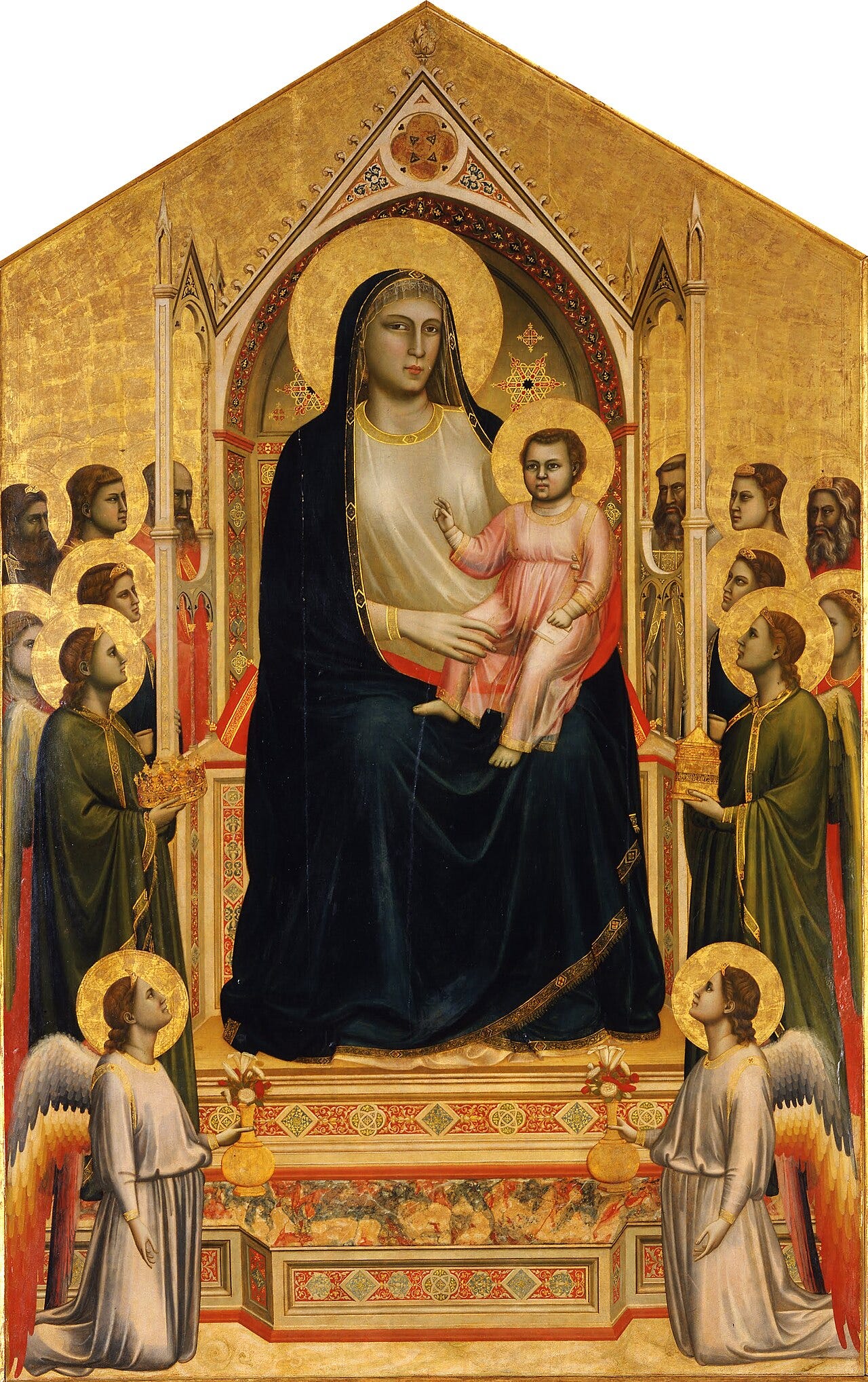
Gothic painters kept the gold, but did something quietly radical: they let the Virgin tilt her head toward her child, let bodies sway, let robes flow, let faces show love and grief. They made the divine gentle. That softening is the whole story.
Keep learning art the fun way


Where does the name Gothic come from?
It started as an insult, aimed at a whole age.
Renaissance writers, who worshipped the calm balance of ancient Greece and Rome, looked back at the art of the preceding centuries and sneered.
They named it after the Goths, the tribes blamed for sacking Rome. “Gothic” meant crude, barbaric, primitive.
It was unfair then and it is unfair now. The painters now called Gothic were among the most refined and elegant who ever lived. The insult simply stuck, used long after the contempt drained out of it.
The Gothic line: grace as a signature
Here is the single feature that gives Gothic painting away.
Look at the bodies. They are not solid and grounded like Renaissance figures.
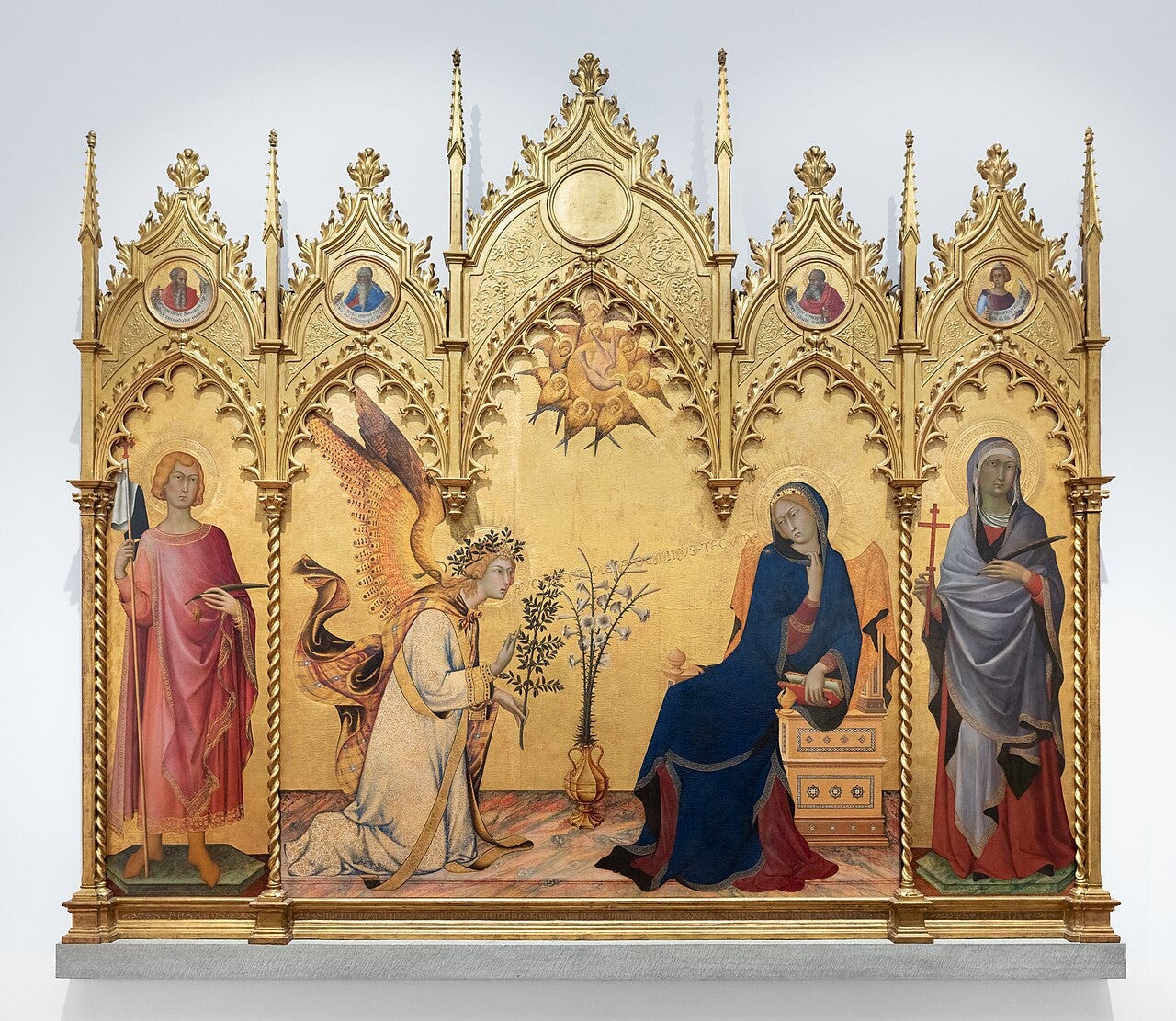
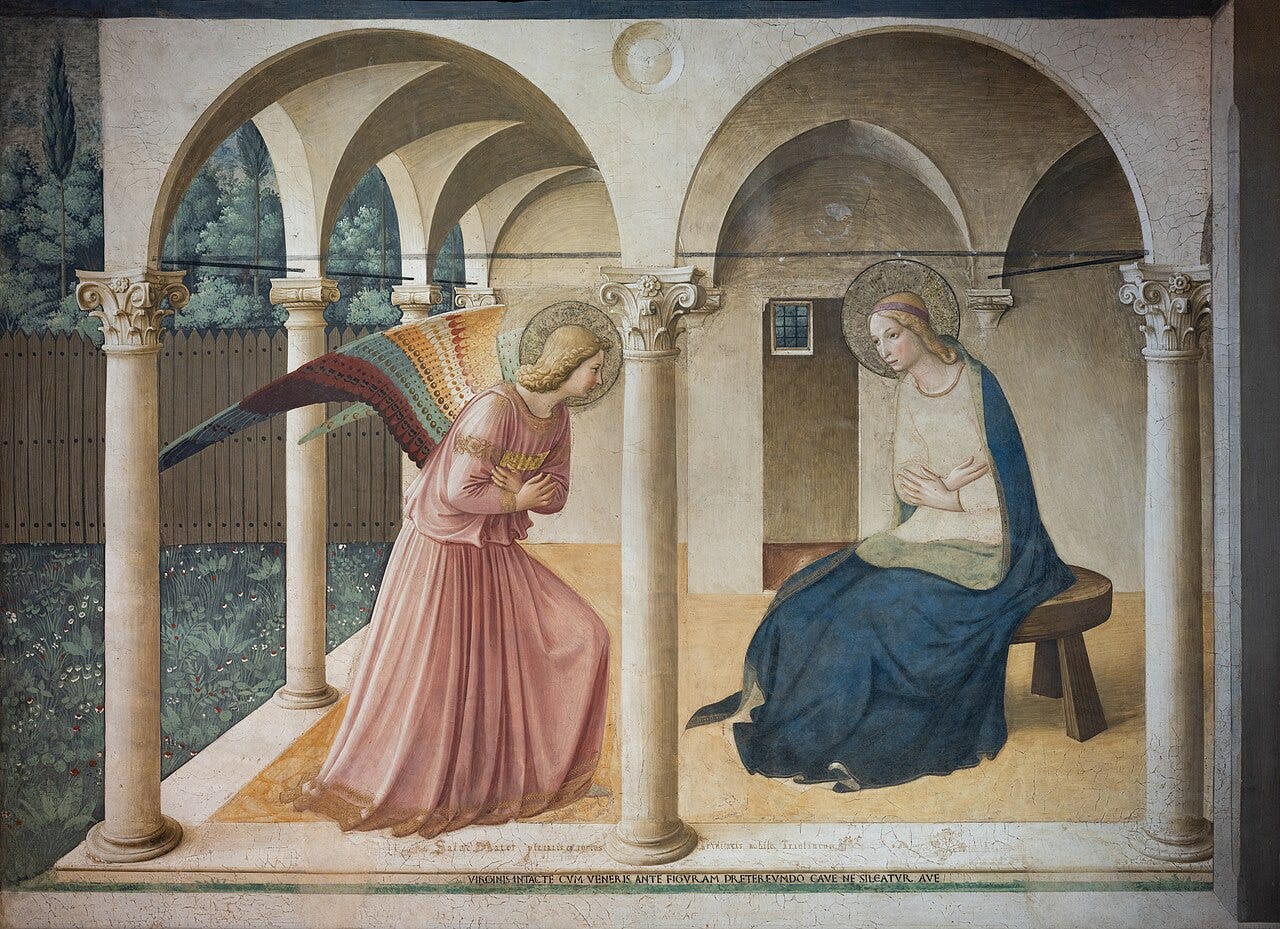
They are tall, slender and gently curved, leaning in a soft S shape often called the “Gothic sway.” Robes fall in long, rhythmic, looping folds. Everything flows.
This elegance is the point. Gothic painters were not chasing realism, the way the figure actually stands. They were chasing grace, beauty as a kind of music made of line.
A Gothic Madonna does not look like a real woman. She looks like the idea of tenderness, drawn in one flowing gesture, and I find that more moving than half the realism that followed.
Gothic vs Byzantine vs Renaissance
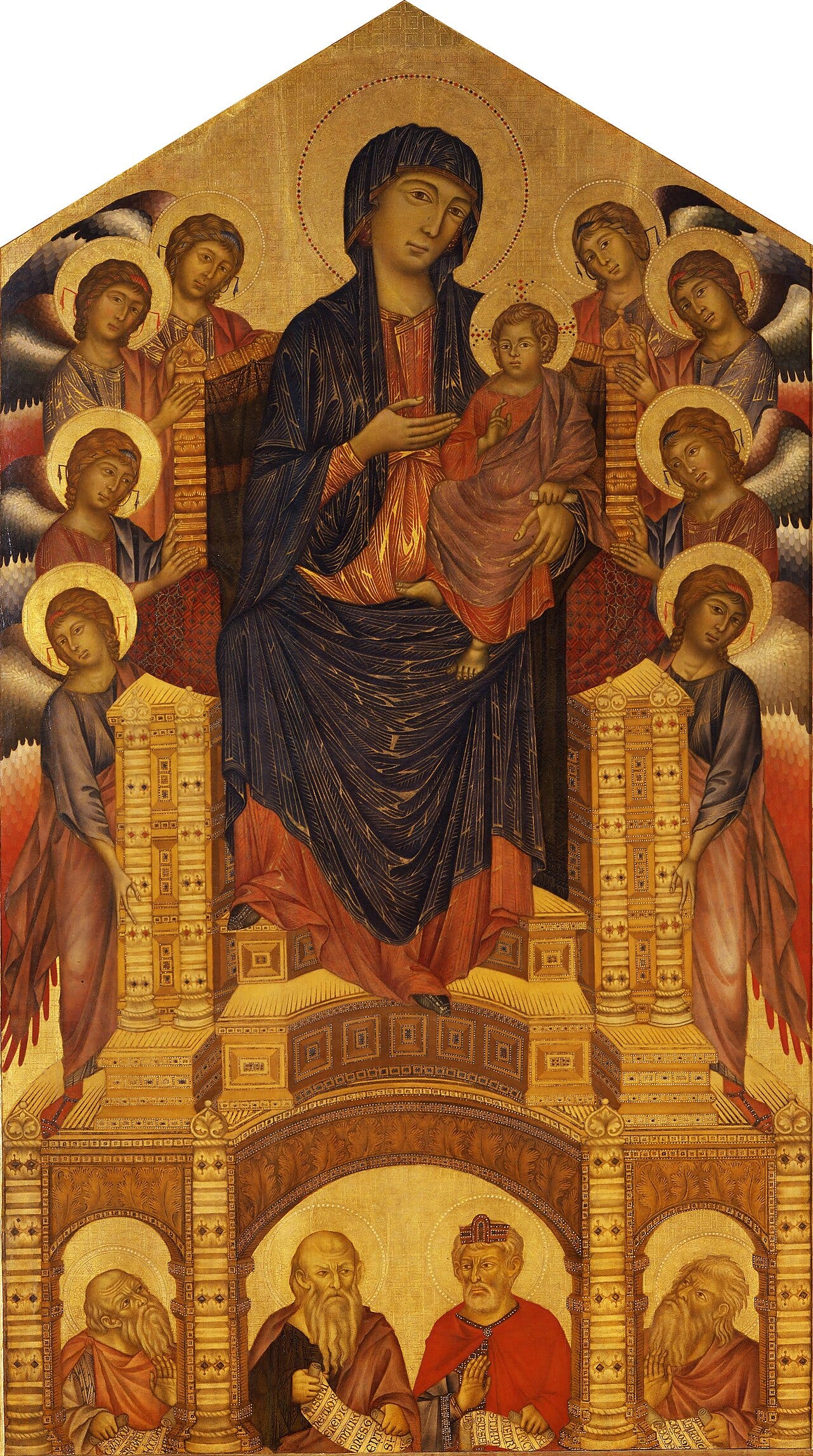
These three get blurred together. Here is the clean map, with Cimabue marking almost exactly the pivot point above.
Byzantine is stiff and eternal: frontal, flat, hieratic figures on gold, made to feel beyond the world.
Gothic is graceful and tender: the same gold, but figures now sway, curve and show real feeling.
Renaissance is solid and real: gold gives way to deep space, perspective, weight and shadow.
The sentence to keep: Byzantine freezes the figure, Gothic makes it graceful, the Renaissance makes it real.
The crown jewels: illuminated manuscripts
If one medium is the true heart of Gothic painting, it is the handmade book.
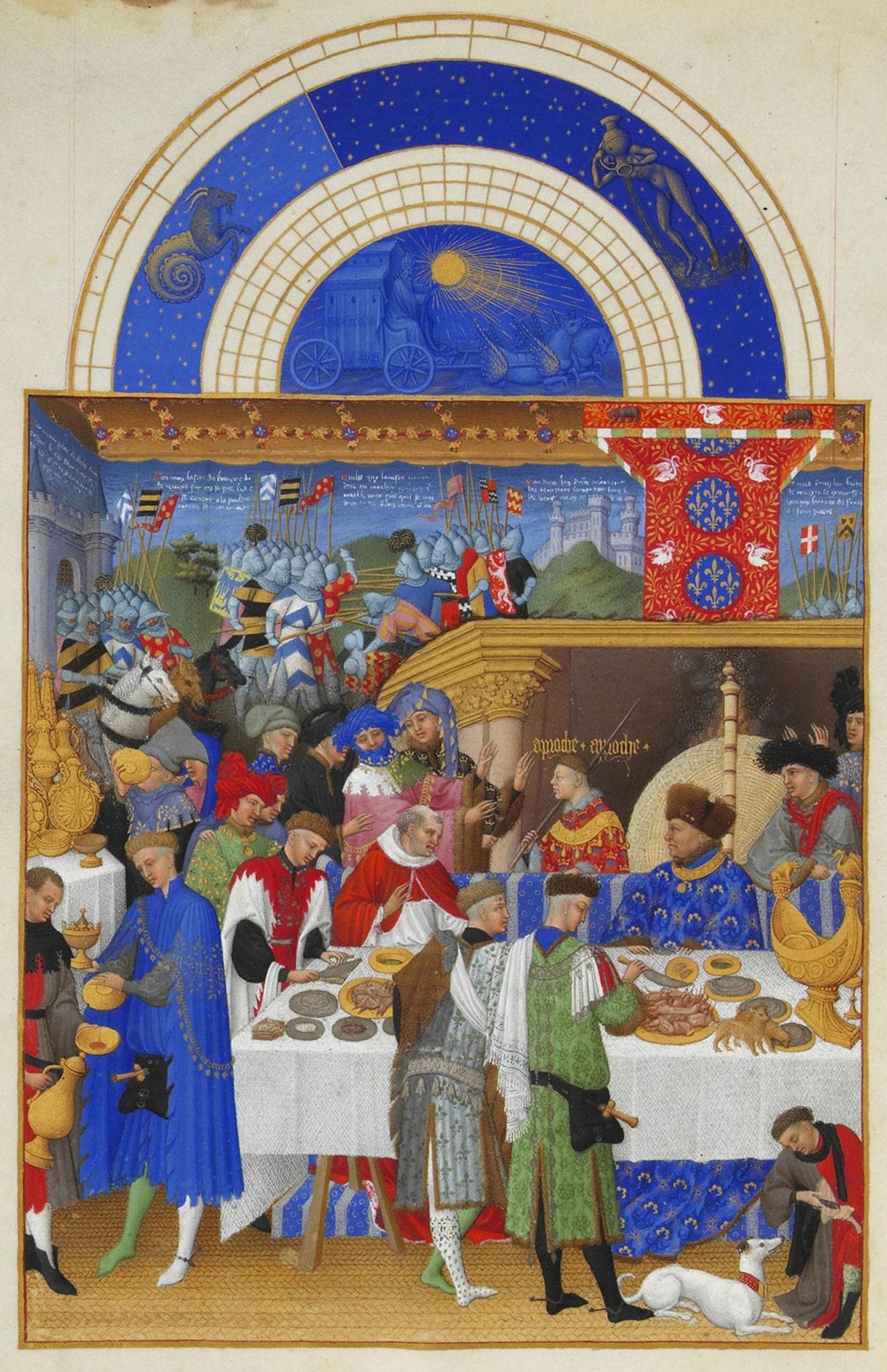
The richest patrons commissioned tiny, intricate paintings inside prayer books and Books of Hours, painted in pure pigment and gold by master illuminators over years.
The Limbourg Brothers' Très Riches Heures is the supreme example: glowing landscapes, fashionable courtiers and starry skies, each page a jewel.
These miniatures are where Gothic painters experimented most freely, with landscape, weather, daily life and depth, long before those ideas reached large panels. The future of painting was rehearsed at the size of a hand.
4 masters of Gothic painting
Here are the four who matter most to me, and why.
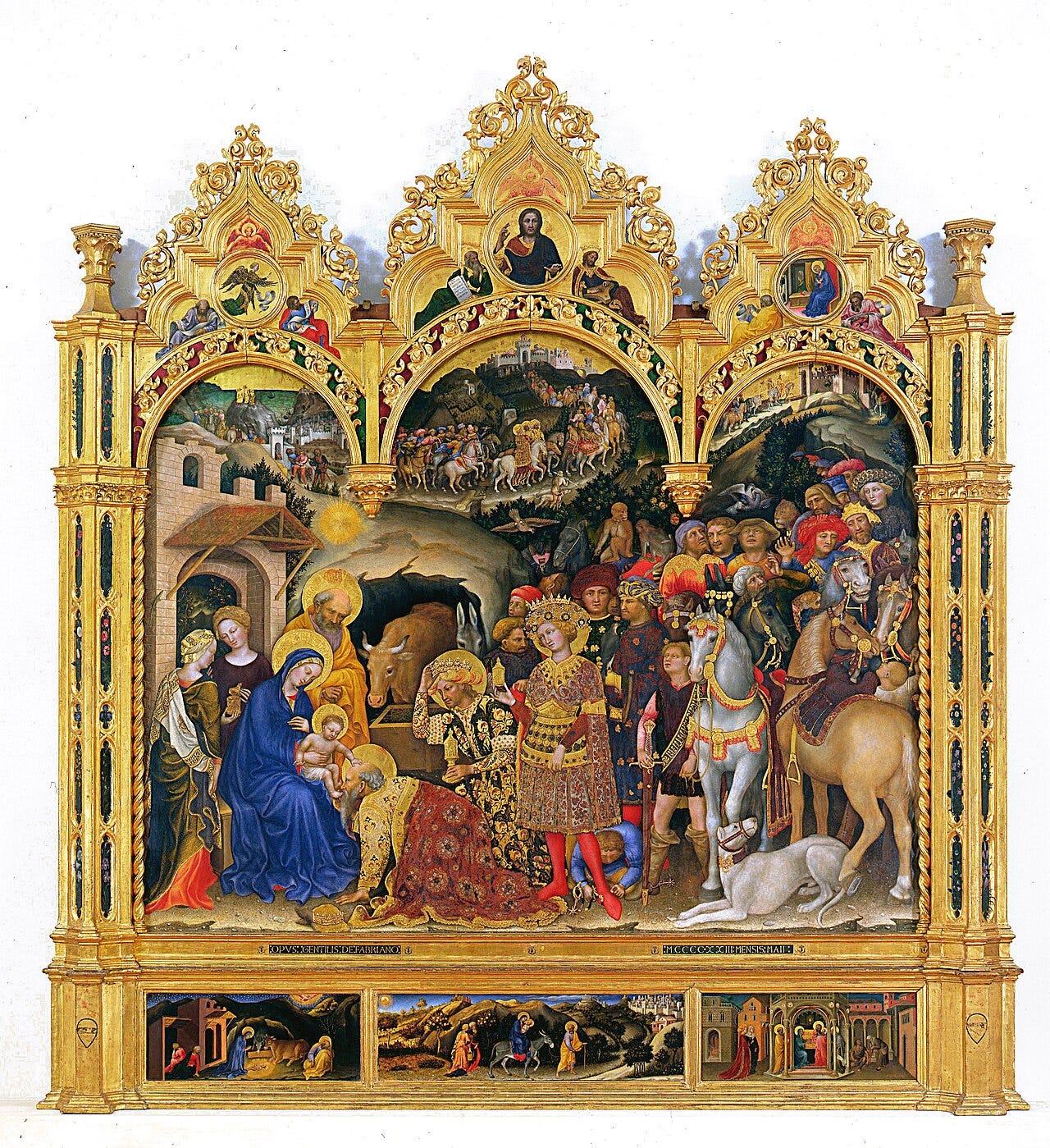
1. Duccio. The hinge.
In Siena around 1300, he took the rigid Byzantine manner and warmed it, softer faces, gentler color, the first breath of human feeling in the gold. Its base carried a predella of small narrative scenes, one of the most studied examples of the form.
2. Simone Martini. The poet of the line.
His Annunciation is Gothic grace at its absolute peak: an elongated, shrinking Virgin, a swirl of gold, pure elegant rhythm. No one drew a more beautiful curve.
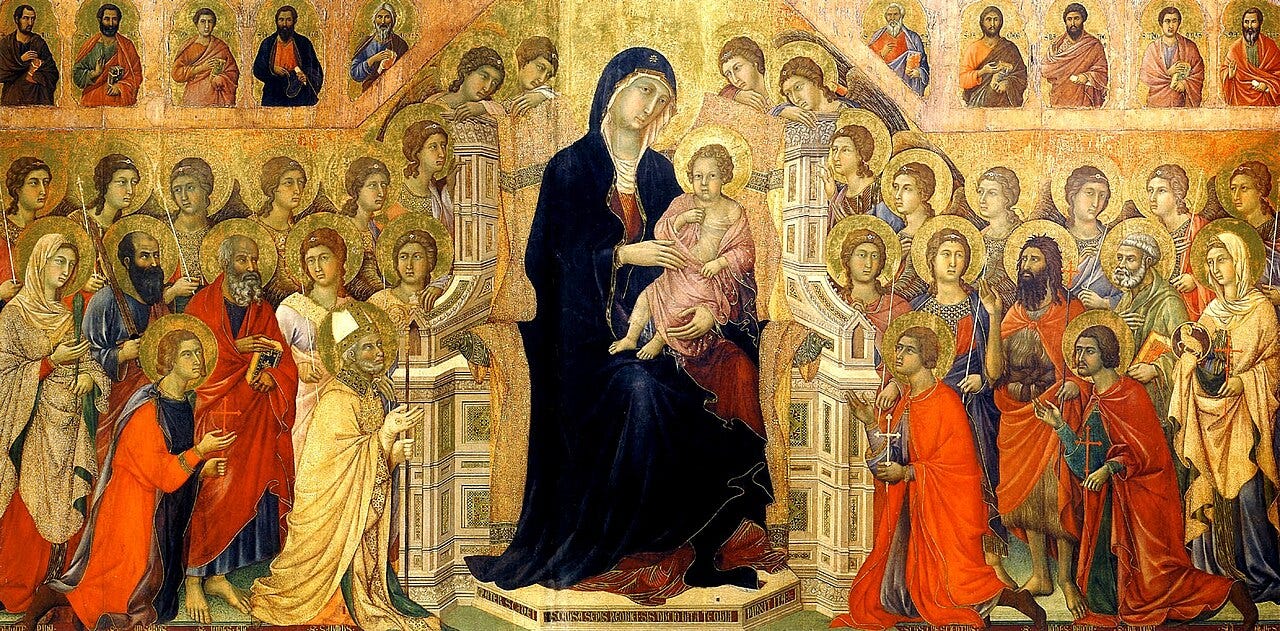
3. Gentile da Fabriano. The jewel maker.
His Adoration of the Magi is International Gothic at its most lavish: a glittering procession of silk, gold and exotic animals, painting as pure aristocratic splendor.
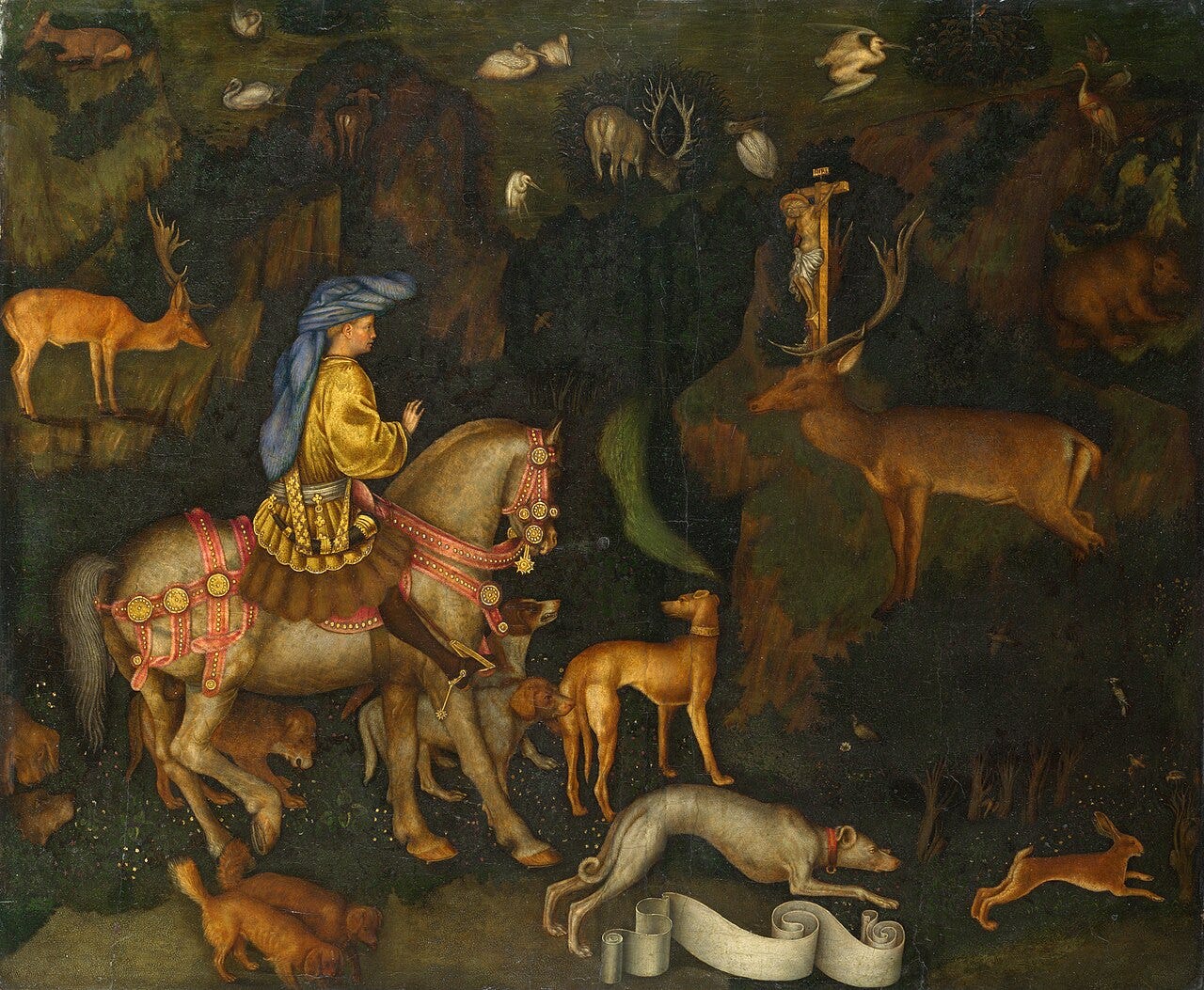
4. Pisanello. The watcher of nature.
In works like The Vision of Saint Eustace, he filled the courtly Gothic world with astonishingly lifelike animals, an obsessive eye for creatures.
One foot in fairytale, one in observation.
International Gothic: the last golden style
There is a phase most people never learn to name.
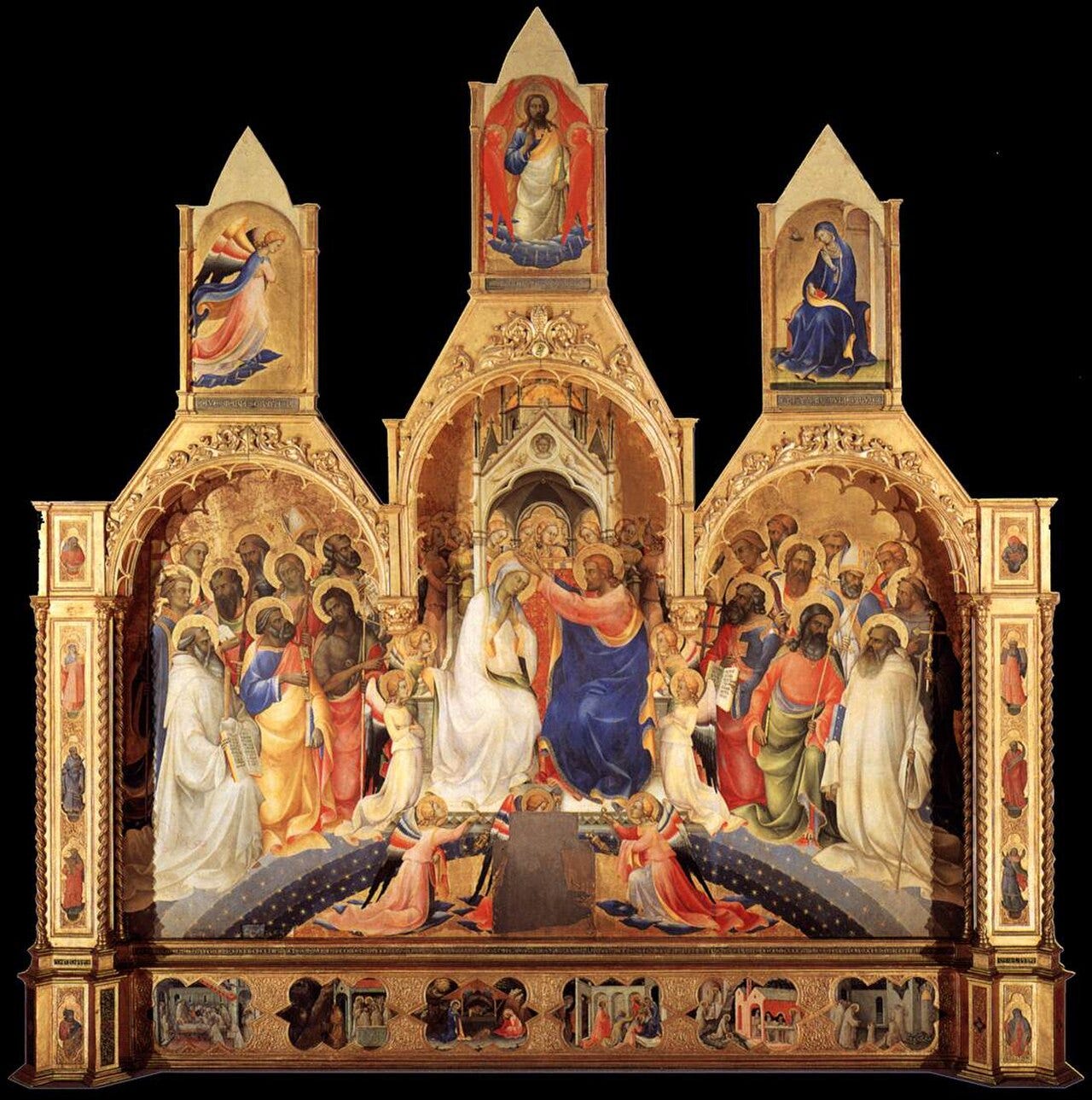
Around 1375 to 1425, a single elegant, courtly style spread across the royal courts of Europe, from Paris to Prague to Italy. This phase is called International Gothic.
It is the most luxurious painting ever made: slender figures, flowing fabrics, fairytale color, gold everywhere, and a love of charming detail, a dog, a falcon, a flower.
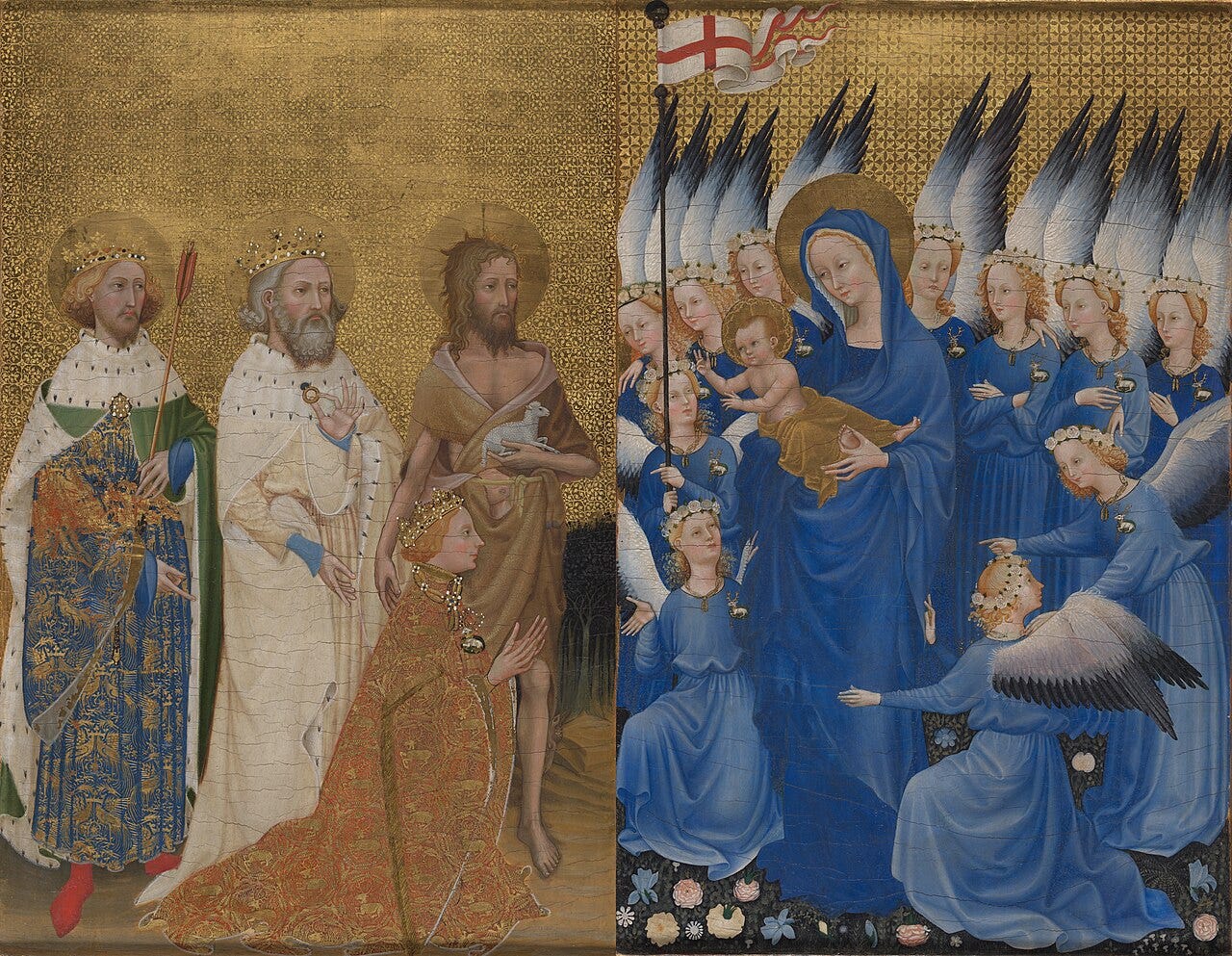
The high point of English Gothic painting, the Wilton Diptych, made for King Richard II around 1395, belongs to exactly this glittering moment.
It was the final flowering of the medieval gold ground world, just before the Renaissance swept it away.
Why fantasy art keeps stealing Gothic
The Gothic look is one of the most revived aesthetics on earth.
That blend of elegance, gold, flowing line and dreamlike unreality keeps coming back.
Fantasy illustration. Elongated elegant figures, gold, heraldry and storybook color are pure Gothic, recycled into every fantasy world.
Art Nouveau. The whiplash flowing line of 1900 design is the Gothic sway, reborn.
Tattoo and lettering. Blackletter type and ornate decorative line come straight from the Gothic manuscript.
So the “primitive” style the Renaissance mocked is one later ages keep reaching back for whenever they want beauty to feel enchanted.
Where to find the gold ground panels
Look in the early rooms, before the Renaissance galleries. Go.
The National Gallery, London. The Wilton Diptych and Pisanello, English and Italian Gothic side by side.
The Uffizi, Florence. Duccio, Simone Martini and Gentile da Fabriano, the Italian golden age.
The Musée Condé, Chantilly. Home of the Très Riches Heures.
The Cloisters, New York. Gothic panels and manuscripts without leaving America.
Gothic art, the questions from the cathedral
What is Gothic art in painting? The late medieval style of gold ground panels and illuminated manuscripts, marked by elegant flowing figures, rich color and a new tenderness, between Byzantine and Renaissance art.
What is the Gothic sway? The graceful S shaped curve of Gothic figures, who lean and bend for elegance rather than realism.
What is International Gothic? A luxurious, courtly painting style that spread across Europe around 1375 to 1425, full of gold, fine fabrics and charming detail.
How is Gothic painting different from Byzantine? Byzantine figures are stiff and frontal. Gothic figures keep the gold but become graceful, flowing and full of feeling.
When did Gothic art end? It faded through the 1400s as the Renaissance took hold in Italy, though in northern Europe Gothic forms lingered well into the 1500s.
More secrets to unlock


Why Gothic was never primitive
The Renaissance gets the credit for making painting real, and the gold ground art before it is dismissed as a primitive warm up.
But look at what the Gothic painters actually achieved. They took the unreachable, eternal faces of Byzantium and made them human, tender, graceful, full of feeling.
They did it without ever pretending to copy the real world, proving that painting could move you through pure beauty of line and color, before it ever learned the trick of realism.
That is not a failed Renaissance. It is a different, and arguably gentler, idea of what a picture is for.
Proof of how far it has risen: in 2004 the Metropolitan Museum bought a Duccio Madonna the size of a paperback for a reported 45 million dollars, then a record for the museum.
