
Neoclassicism is the painting style that revived the order, clarity and moral seriousness of ancient Greece and Rome, built on clean line, sculptural figures and heroic, high minded subjects. It is art as discipline, after an age of frivolity.
It ruled from around 1760 to 1850, and it was born as a rebellion.
What I love about Neoclassicism is that it was, at heart, a backlash against too much fun.
Just before it, the Rococo style had filled palaces with pink, fluffy, flirtatious pictures of nobles at play, all charm and no substance. A new generation found it shallow and decadent.
They wanted painting to mean something again, to teach virtue, courage and sacrifice. So they looked back to the noblest example they knew: the ancient world.
Neoclassicism in one minute:
The revival: the ideals of ancient Greece and Rome, reborn in paint.
The values: order, clarity, restraint, moral and civic seriousness.
The look: crisp line, sculptural figures, sober color, calm composition.
The enemy: the frivolity of Rococo, which it replaced.
The leaders: Jacques Louis David and Jean Auguste Dominique Ingres.
Keep learning art the fun way


Why ancient Rome, and why then?
The timing was no accident.
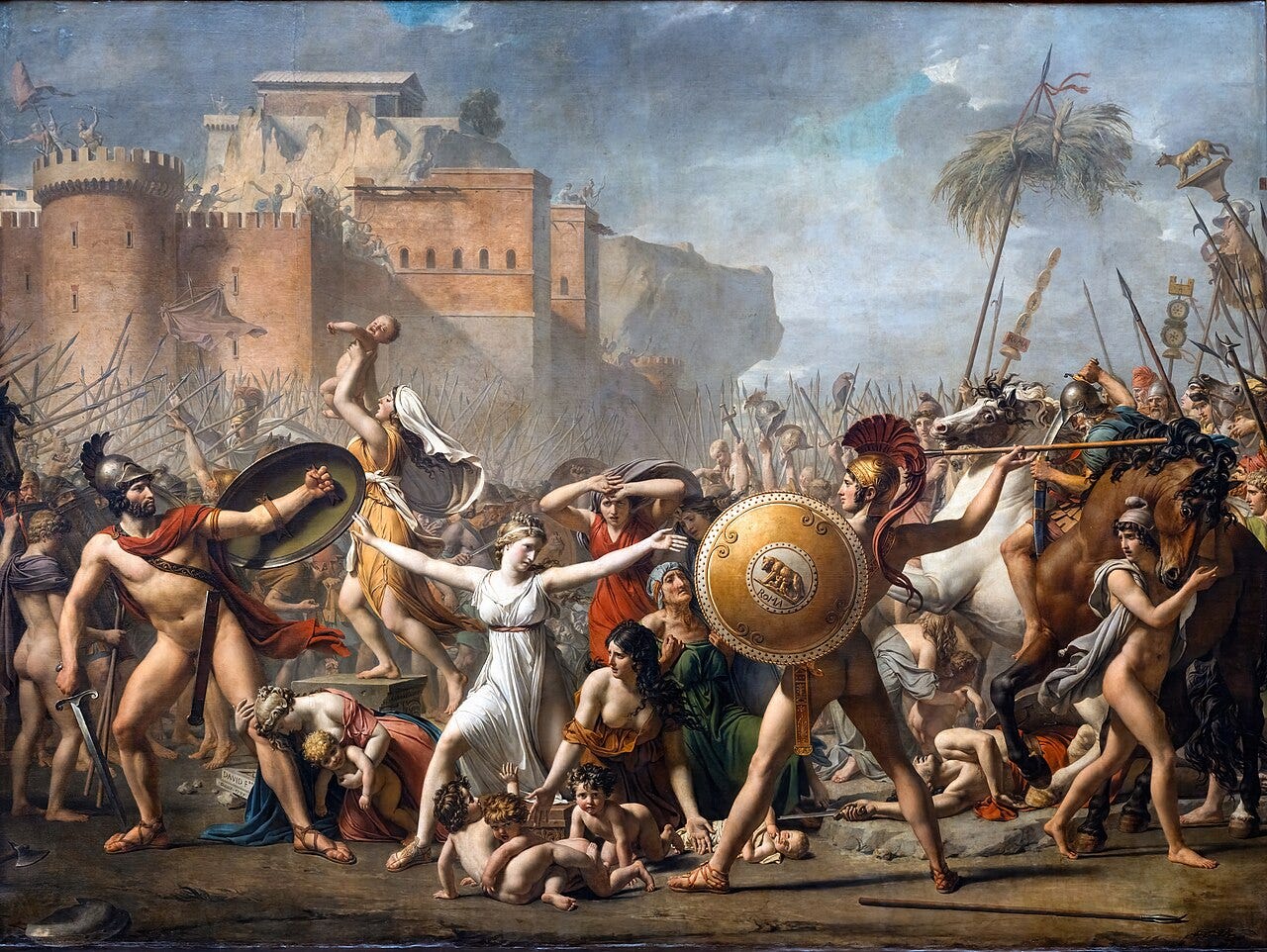
Two forces met in the mid 1700s. First, the Enlightenment, an age that prized reason, logic and civic virtue, exactly the qualities people admired in the Roman Republic.
Second, the excavations of Pompeii and Herculaneum, the buried Roman cities, flooded Europe with real, vivid images of the ancient world.
Suddenly antiquity felt present and thrilling. This revival of classical antiquity, fueled by new archaeology and Enlightenment ideals, gave painters a fresh subject.
Painting the heroes of Greece and Rome became a way to talk about virtue, duty and even revolution.
How to recognize a neoclassical painting
Once you know the markers, it is unmistakable. Look for:
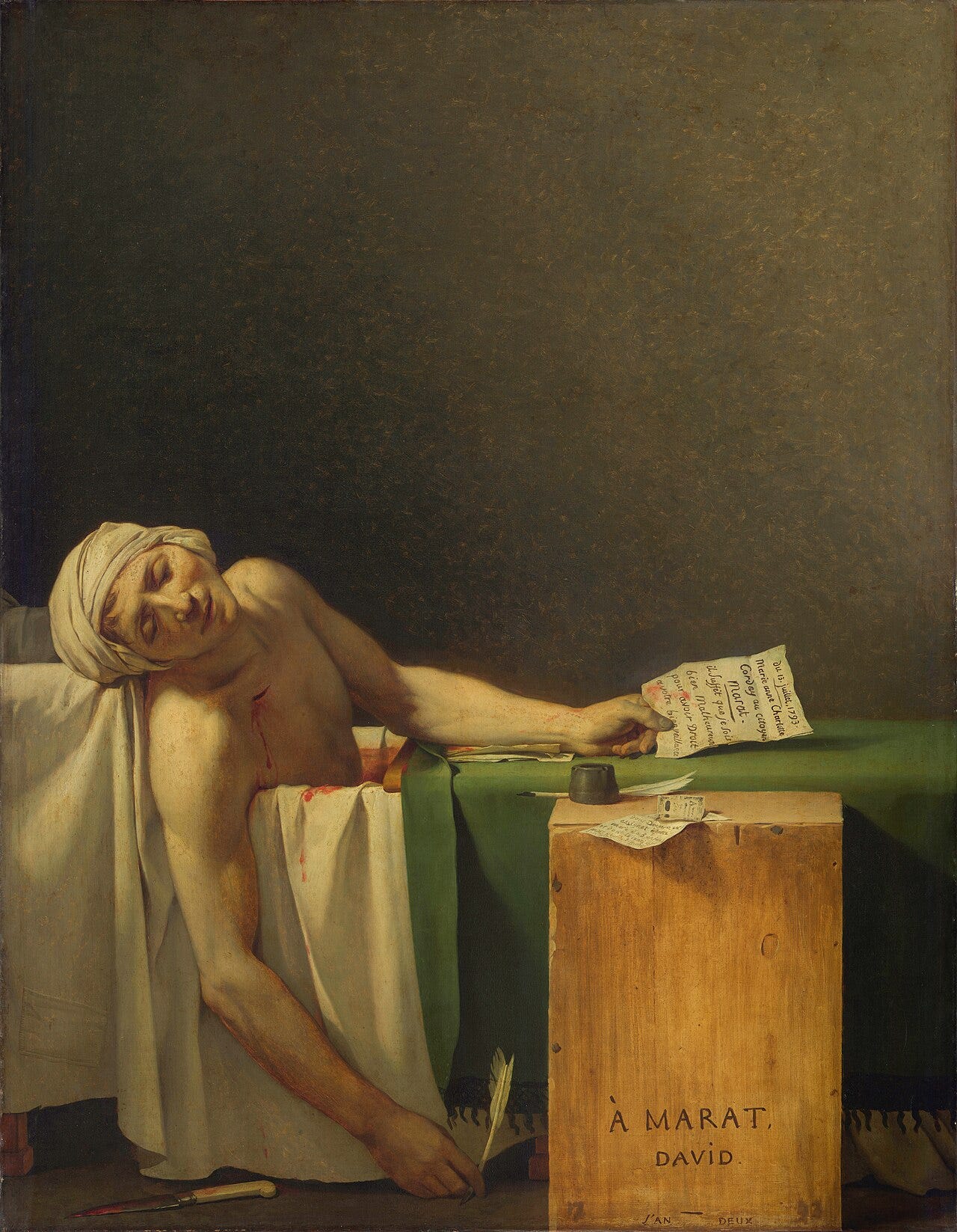
Crisp, dominant line. Edges are sharp and drawing rules. Form is defined by line, not loose brushwork.
Sculptural figures. Bodies look carved, smooth, statuesque, like Roman marble brought to life.
Sober, controlled color. No Rococo candy. Restrained, serious tones.
Calm, balanced composition. Ordered, stage like, often built on clean horizontals.
Noble subjects. Heroes, oaths, sacrifices, moments of duty and virtue.
Line vs color: the fight at the heart of it
Here is the deeper drama, and it defines the whole era.
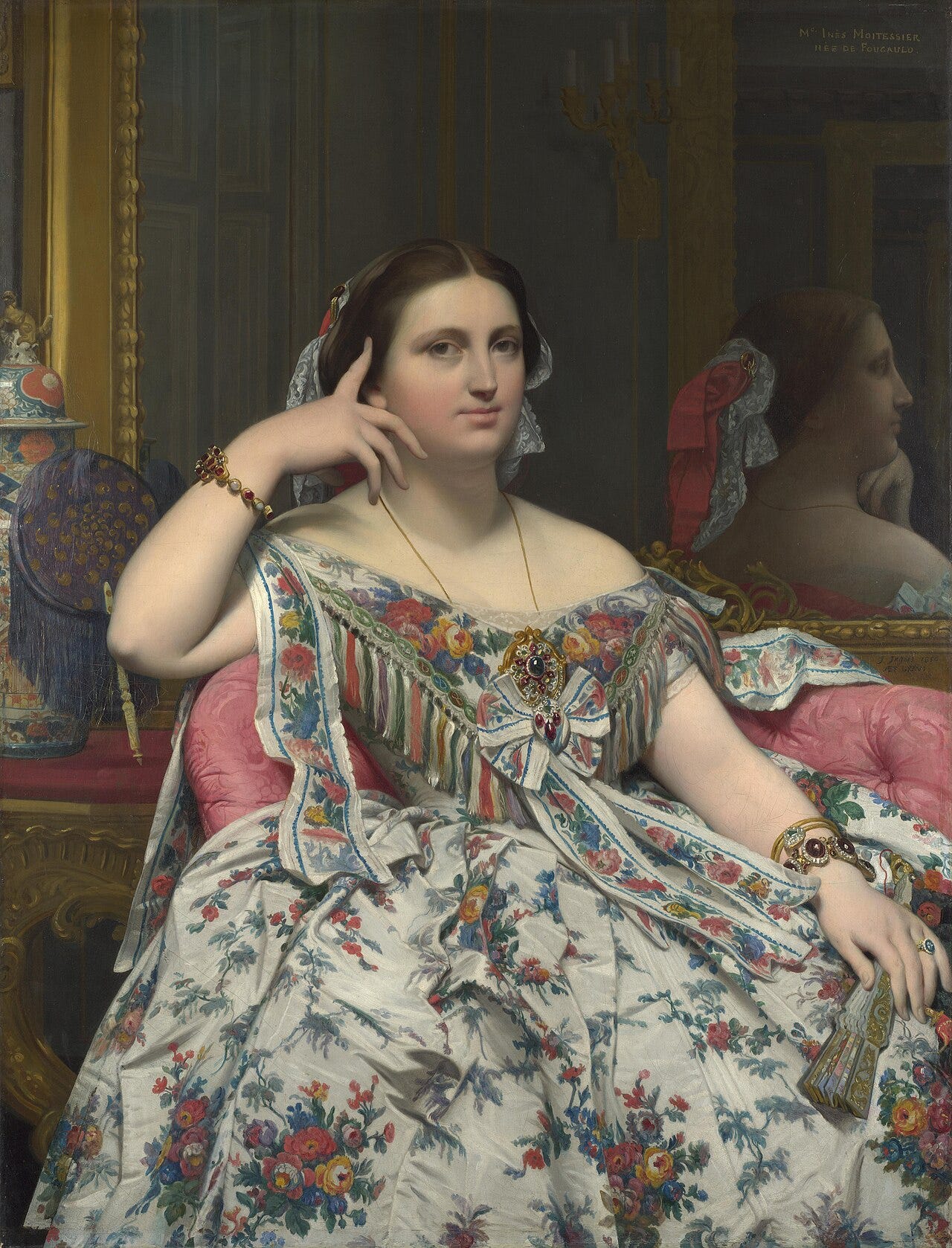
Neoclassicism believed in line, the clear, intellectual, rational edge. Drawing was thinking. This put it on a collision course with Romanticism, which believed in color, emotion and energy.
The rivalry became famous: cool, controlled David and Ingres on the side of line, against the hot, passionate Delacroix on the side of color. One camp said art should master emotion. The other said art should unleash it.
David, Ingres and Kauffman
Three painters carried it further than anyone. Here are the ones I would not skip, and why.
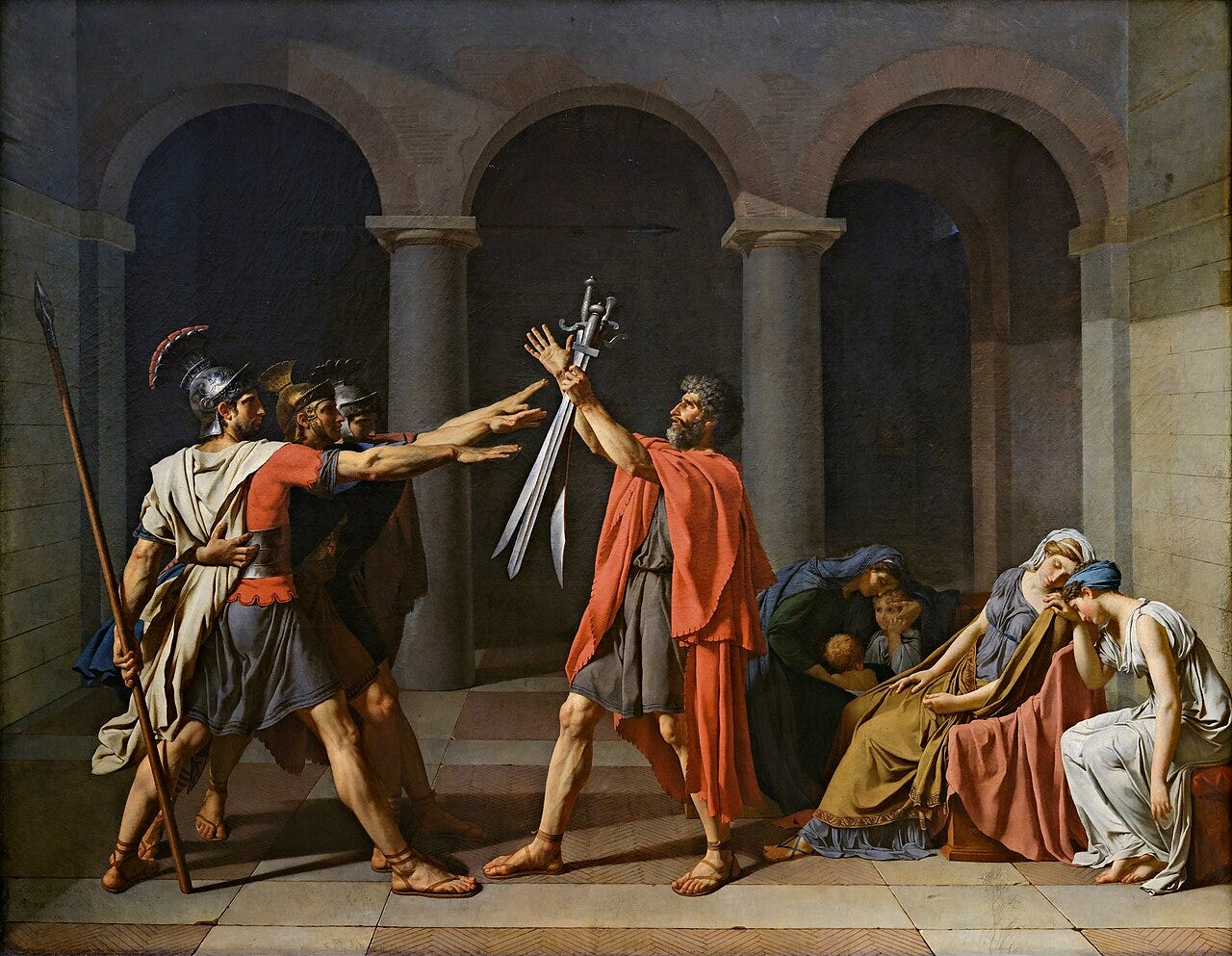
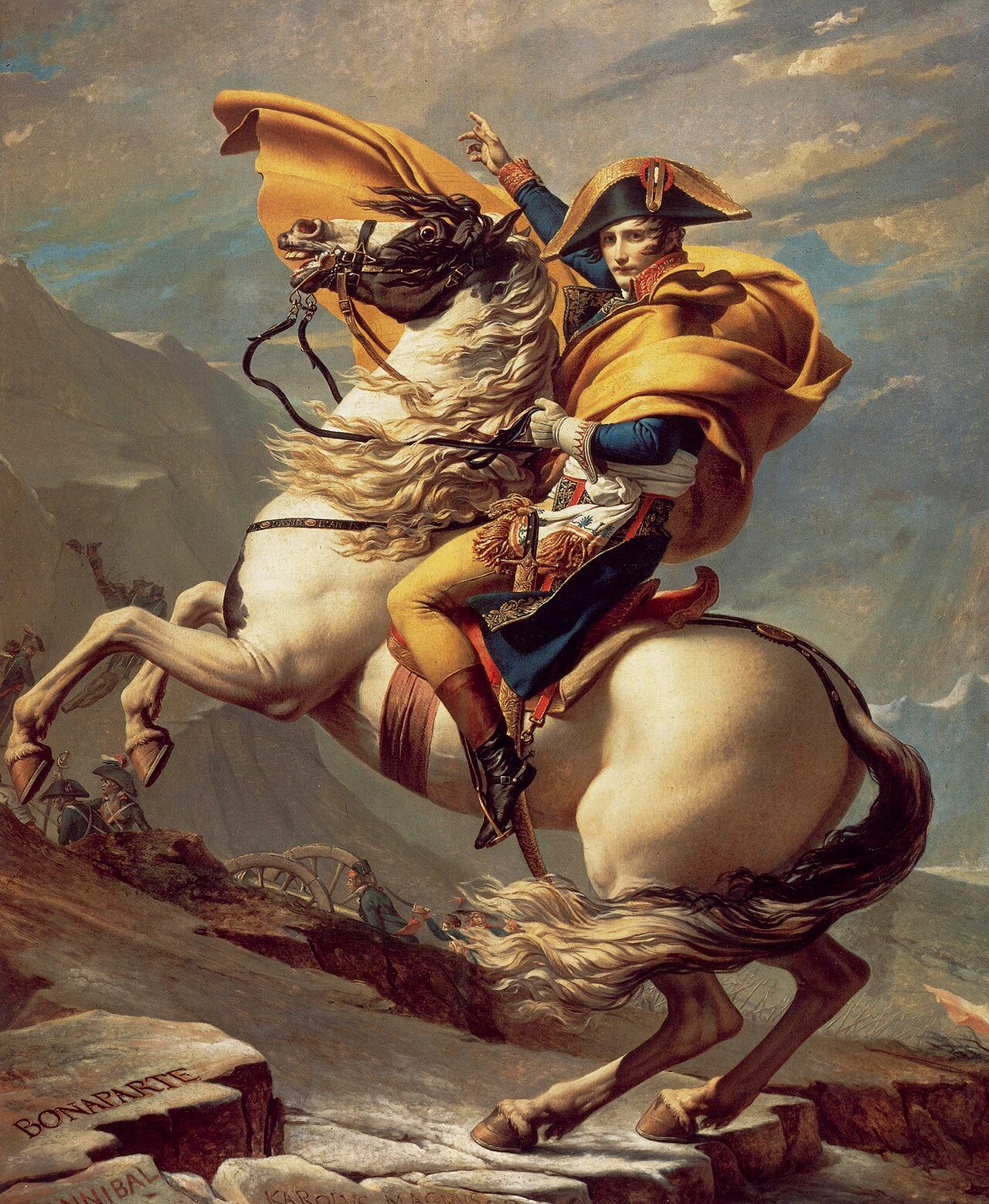
1. Jacques Louis David. The giant. His Oath of the Horatii of 1784, three brothers swearing to die for Rome, hit Paris like a thunderclap of duty and sacrifice, just before the French Revolution.
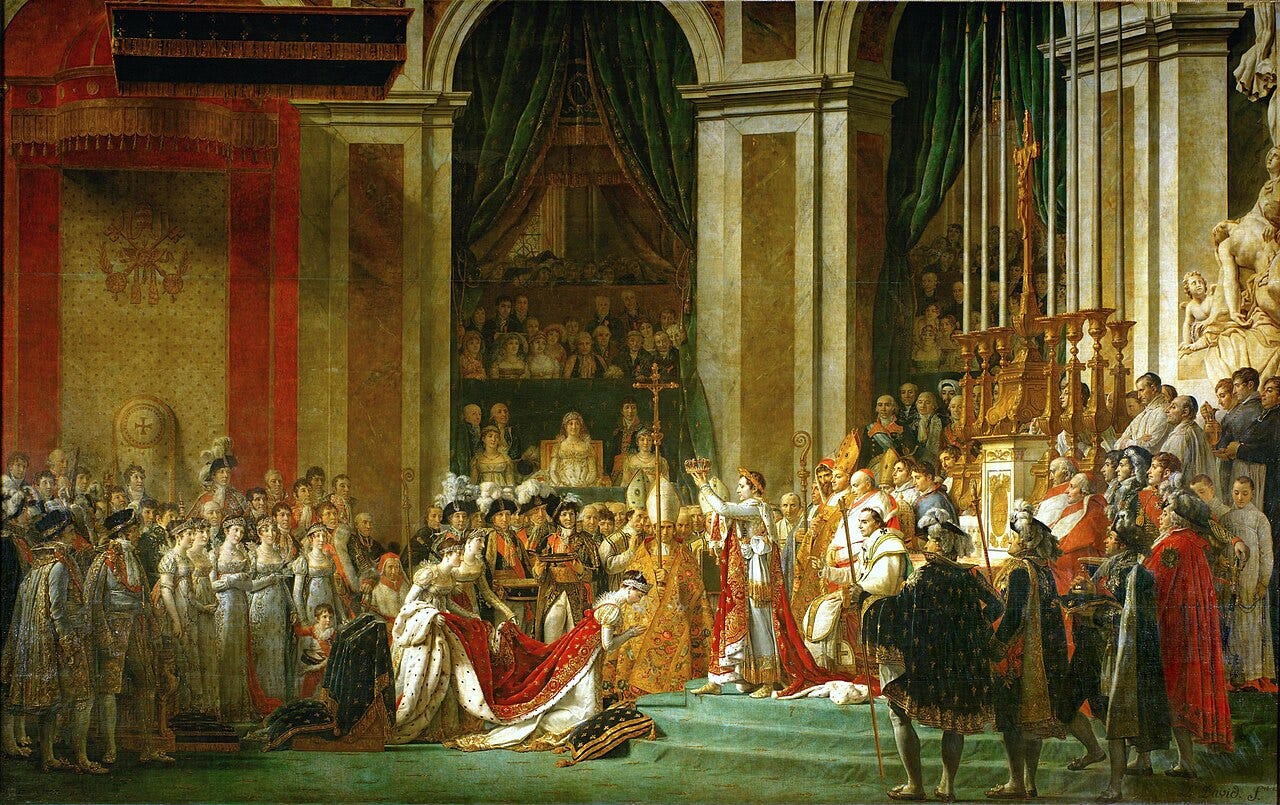
He became the painter of the Revolution and then of Napoleon, art as pure moral and political force.
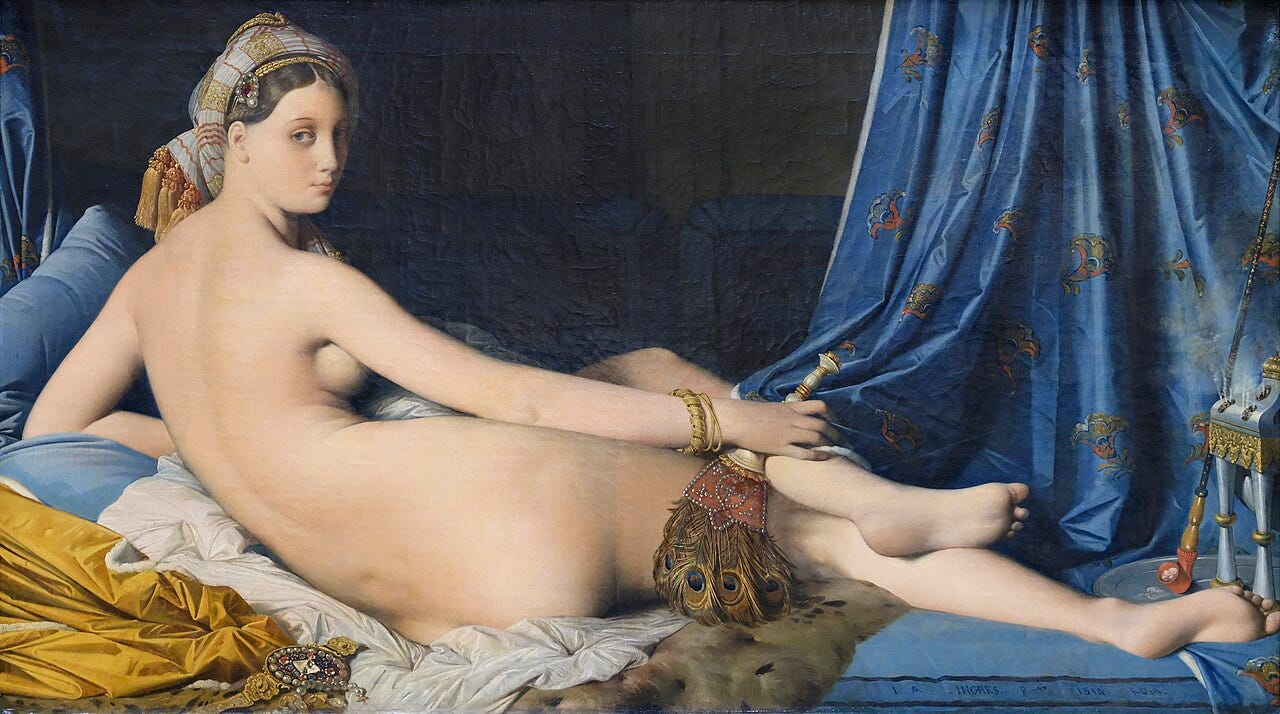
2. Jean Auguste Dominique Ingres. The master of line. David’s greatest pupil, he pushed clean, sinuous drawing to an almost unreal perfection, especially in portraits.
His Madame Moitessier shows that flawless, polished, sculptural surface at its peak.
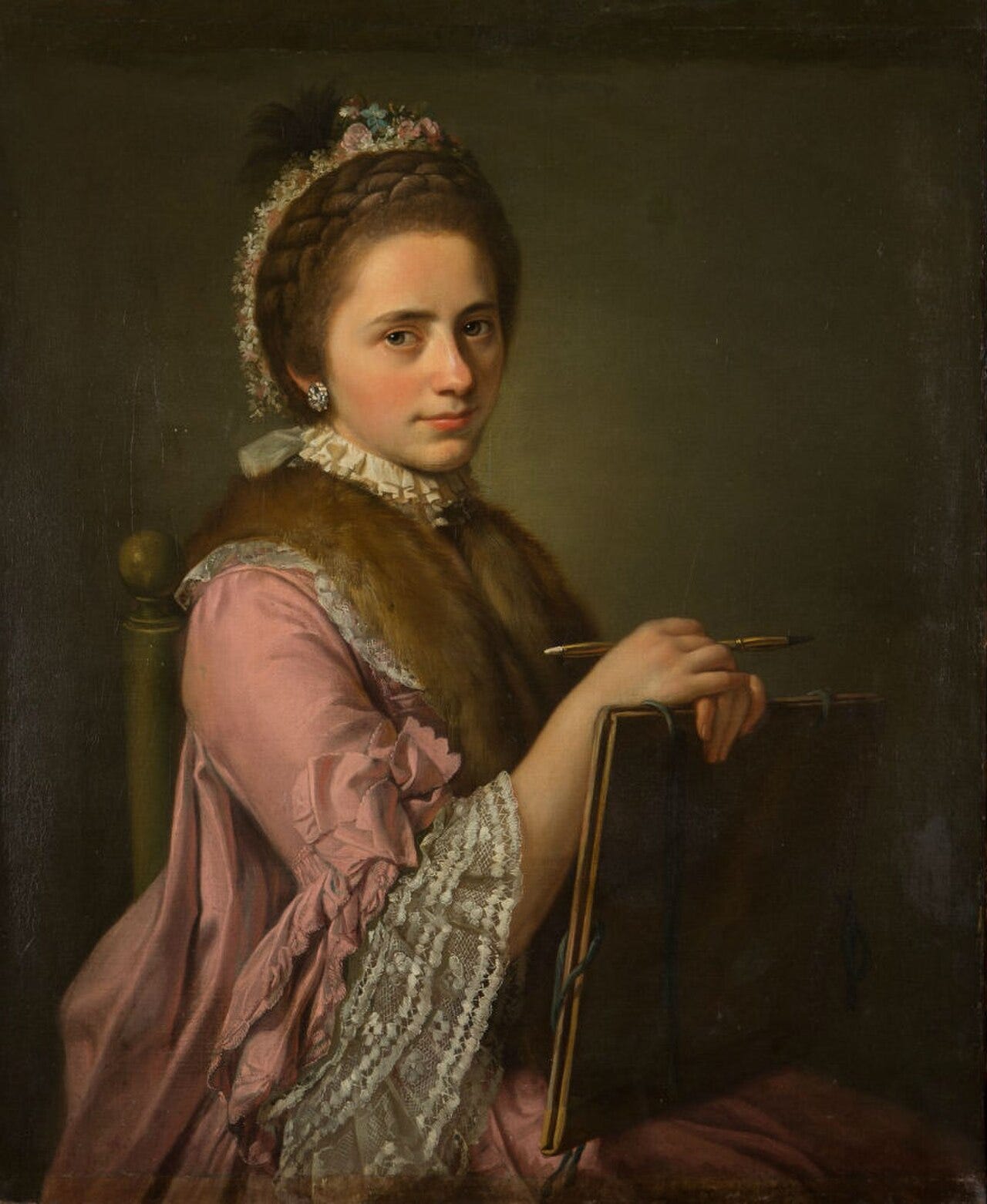
3. Angelica Kauffman. A rare and celebrated woman at the top of the movement, a founding member of Britain's Royal Academy, and living proof that the old masters were women too.
Neoclassicism between two worlds
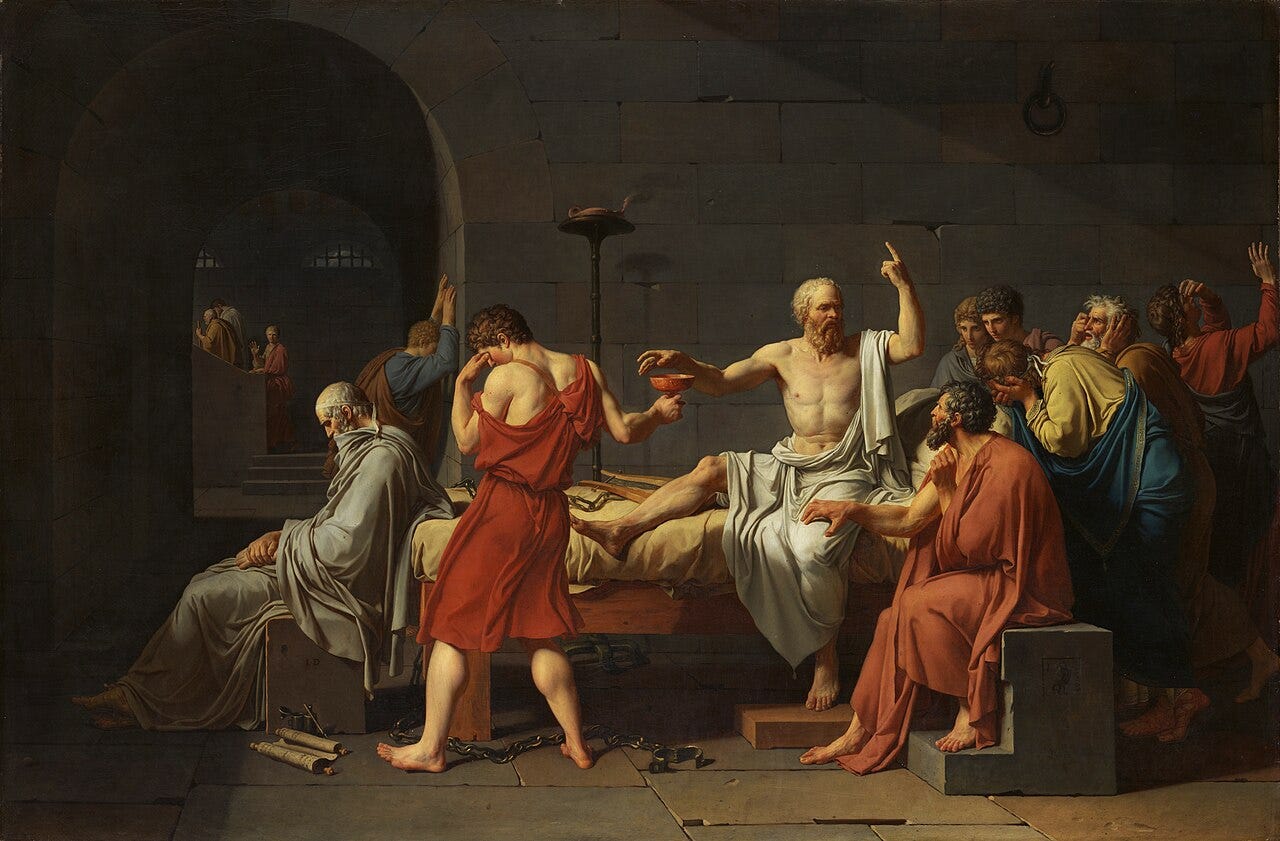
Neoclassicism is also a bridge between two eras.
It looks back to the balance and idealism of the Renaissance, which had itself revived antiquity. And it stands in pointed contrast to the drama and movement of the Baroque and the sweetness of Rococo that came between.
So neoclassicism is the second great return to the ancient world. Where the Renaissance discovered antiquity, neoclassicism deliberately enforced it, as a moral standard for a new, rational age.
Why banks and courthouses still look Roman
The style also became the official language of authority.
Government buildings. The clean, ordered, columned look of courts, banks and capitols is neoclassical taste, signalling stability and reason.
Money and stamps. Heroic profiles and classical figures still appear on currency, borrowing Rome’s gravity.
Brand identity for “serious” institutions. Whenever something wants to feel timeless, trustworthy and grand, it reaches for classical order.
So the style invented to make painting serious again still does the same job today, every time power wants to look legitimate.
Where to see neoclassicism in person
Go stand before the marble made paint.
The Louvre, Paris. David’s Oath of the Horatii and Coronation of Napoleon, the heart of the movement.
The National Gallery, London. Ingres’s polished, sculptural portraits.
The Prado, Madrid. Neoclassicism beside the era it argued with.
The Met, New York. Canova’s sculpture and neoclassical painting together.
Neoclassicism, the order and reason questions
What is neoclassicism in simple terms? A painting style from about 1760 to 1850 that revived the order, clear line and noble subjects of ancient Greece and Rome.
What inspired neoclassicism? Enlightenment ideals of reason and virtue, plus the exciting rediscovery of the buried Roman cities of Pompeii and Herculaneum.
How is neoclassicism different from Romanticism? Neoclassicism values line, order and reason. Romanticism values color, emotion and energy. They were direct rivals.
Who is the most famous neoclassical painter? Jacques Louis David, followed by his pupil Ingres.
What is the difference between Neoclassicism and Romanticism? Neoclassicism prizes order, clear line and calm reason, drawn from Greece and Rome. Romanticism, its rival, prizes emotion, drama and wild nature over rules.
More secrets to unlock


Why the restraint was the point
I used to find neoclassicism cold, all those calm marble bodies swearing solemn oaths. Where was the feeling?
In an age of revolution and upheaval, these painters used the ancient past as a mirror for the present.
When David painted Romans dying for their republic, every viewer in Paris understood he was talking about their own moment, their own duty, their own coming revolution.
The restraint was not emptiness. It was self control under enormous pressure.
Neoclassicism believed that beauty and virtue were the same thing, and that a calm, ordered, noble image could make people better.
Jacques Louis David, the movement's giant, died in exile in Brussels in 1825, still drawing Greek gods at 77.
His pupils, from Ingres to Gros, carried that clean line deep into the next century.
