
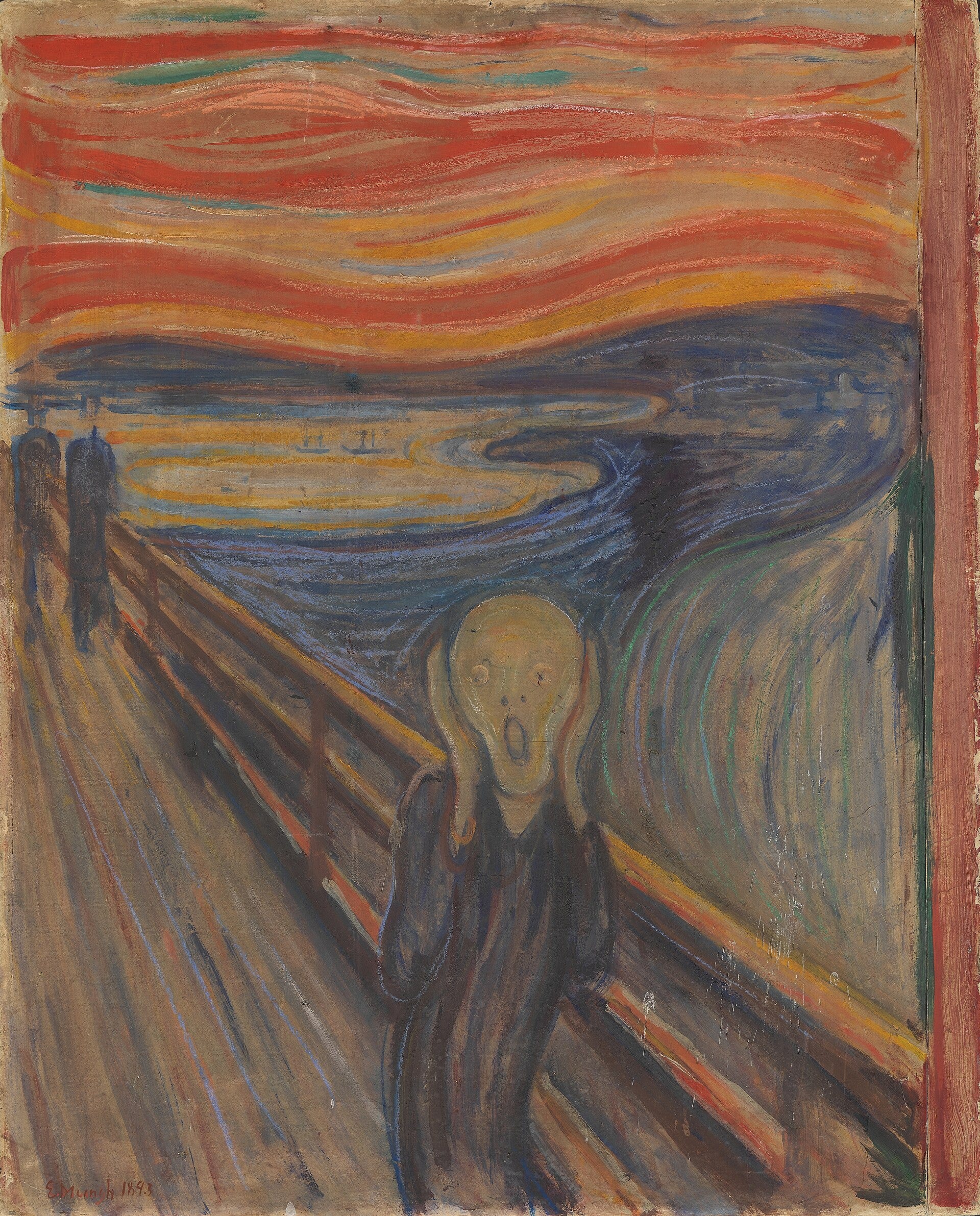
Edvard Munch, the Norwegian painter, made The Scream to record a feeling of dread, not a view. It grew from an evening walk above Kristiania, today's Oslo, when he felt, in his words, "a great, infinite scream through nature." It also grew from a promise he had made to himself in Paris a few years earlier.
Munch set the evening down in his diary on January 22, 1892, in Nice, on the French Riviera. The first painting of the scene, Despair, followed that same year.
Cool Stories About Art is a newsletter to learn art the fun way.
Join 200,000+ readers and get:
10 new art stories / month
The entire archive of content (140+ articles)
Comment, ask questions, and chat with other readers
In The Scream, a figure by a railing presses both hands to its face, mouth wide open. Above it, the sky is streaked with red and orange over a dark blue-green fjord, and two people walk away in the background.
The obvious reading is a moment of panic, caught on the spot. The dates tell another story. The walk took place years before Munch wrote it down in 1892, and The Scream came only in 1893.
Nothing forced Munch to return to that evening. He chose to, and he worked by a rule of his own: "I paint not what I see, but what I saw."
The promise Munch made in Paris
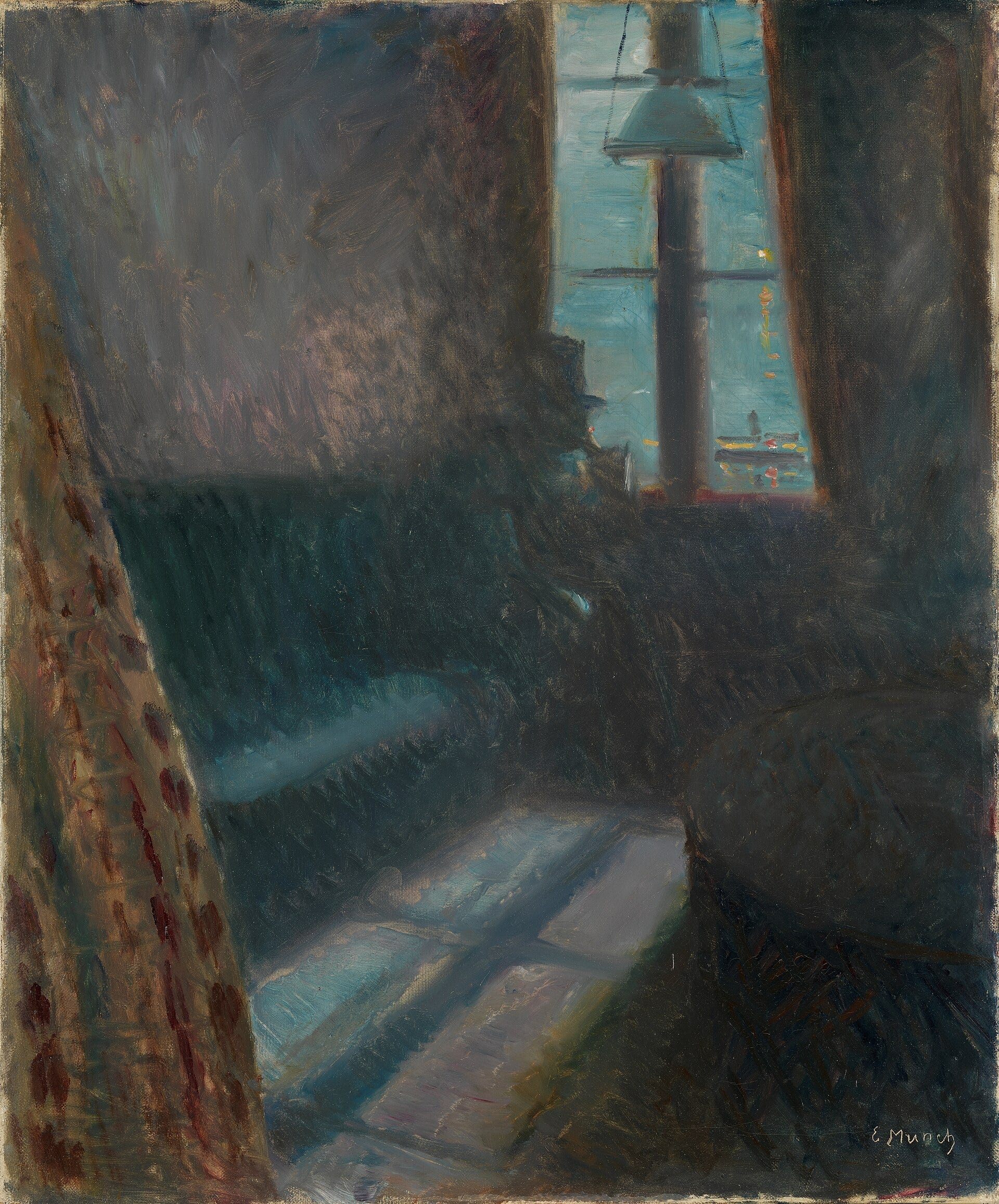
That rule goes back to 1889, when Munch arrived in Paris to study under Léon Bonnat, a renowned teacher who taught a naturalistic approach and openly opposed Impressionism…
What You'll Discover
Whose deathbed stayed with him all his life.
How the walk became a painting.
Why Berlin closed his show within a week.