
Because he spent far more than even his large income, above all on a grand house and an obsessive art collection, just as his commissions slowed and his debts came due.
In 1656 the most admired painter in Amsterdam filed for insolvency, and his house and treasures were auctioned off for a fraction of their worth.
It was not lack of talent or lack of work. It was a rich man living like a richer one.
The money ran out in a very particular way.
He earned a lot, and spent more
At his peak Rembrandt was one of the best paid painters in the Dutch Republic.
Portrait commissions from Amsterdam’s elite brought in serious money. The problem was the other side of the ledger. He lived large, dressed his sitters and himself in finery, and treated cash as something that would always keep arriving. It did not.
Keep learning art the fun way


The house he could not afford
The single biggest mistake had an address.
In 1639 Rembrandt bought a large, fashionable house on the Breestraat, taking on a heavy mortgage he kept failing to pay down. He wanted the home of a gentleman, in the smart part of town.
That building, ironically, survives today as the Rembrandt House Museum, a monument to the purchase that helped ruin him.
The collector who could not stop
Then there was the buying.
Rembrandt was a compulsive collector. He filled his house with paintings, prints, weapons, costumes, shells, busts and exotic curiosities, a private museum he raided for props and studied for ideas.
When the crash came, officials drew up an inventory of it all. He had, in effect, spent his fortune on a cabinet of wonders.
The work dried up at the wrong time
His spending might have survived a steady career. It did not get one.
By the 1650s, taste was shifting toward smoother, brighter, more elegant painting, and Rembrandt’s darker, rougher manner drew fewer of the big commissions.
A wider economic squeeze, including the strain of war with England, cooled the market. Less coming in, far too much going out.
The insolvency of 1656
In 1656 it collapsed.
Rembrandt applied for a cessio bonorum, a form of insolvency that let a debtor surrender his goods while avoiding outright disgrace and prison.
His house was sold, and his beloved collection was auctioned in 1657 and 1658, scattered for far less than it was worth. The painter who had owned a private treasure house walked away with almost nothing.
The clever workaround
He did not stop painting, and his family found a way to protect him.
His companion Hendrickje and his son Titus set up an art dealing business and formally employed Rembrandt as their worker.
That meant his new earnings legally belonged to the company, out of reach of his old creditors, and it sidestepped the painters guild rules. It was a quiet, ingenious shield that let him keep working through his last years.
What the ruin was, and what it wasn’t
He did not go broke because the work dried up; demand cooled, but the real engine of ruin was his own overspending.
And he did not die destitute in a gutter, whatever the legend prefers. He was insolvent, yes, but housed, working and respected to the end.
The inventory that became a treasure
When the court seized his goods, an official wrote down every object in the house.
That 1656 list runs to hundreds of items: armour, sea shells, plaster casts, weapons, and Mughal miniatures from India that he copied by hand.
It is the richest inventory of any artist's collection from the age, a private museum lost the moment it was catalogued.
Ruin did not touch the work
Here is the part that should change how you see the bankruptcy, and it is the part I always land on.
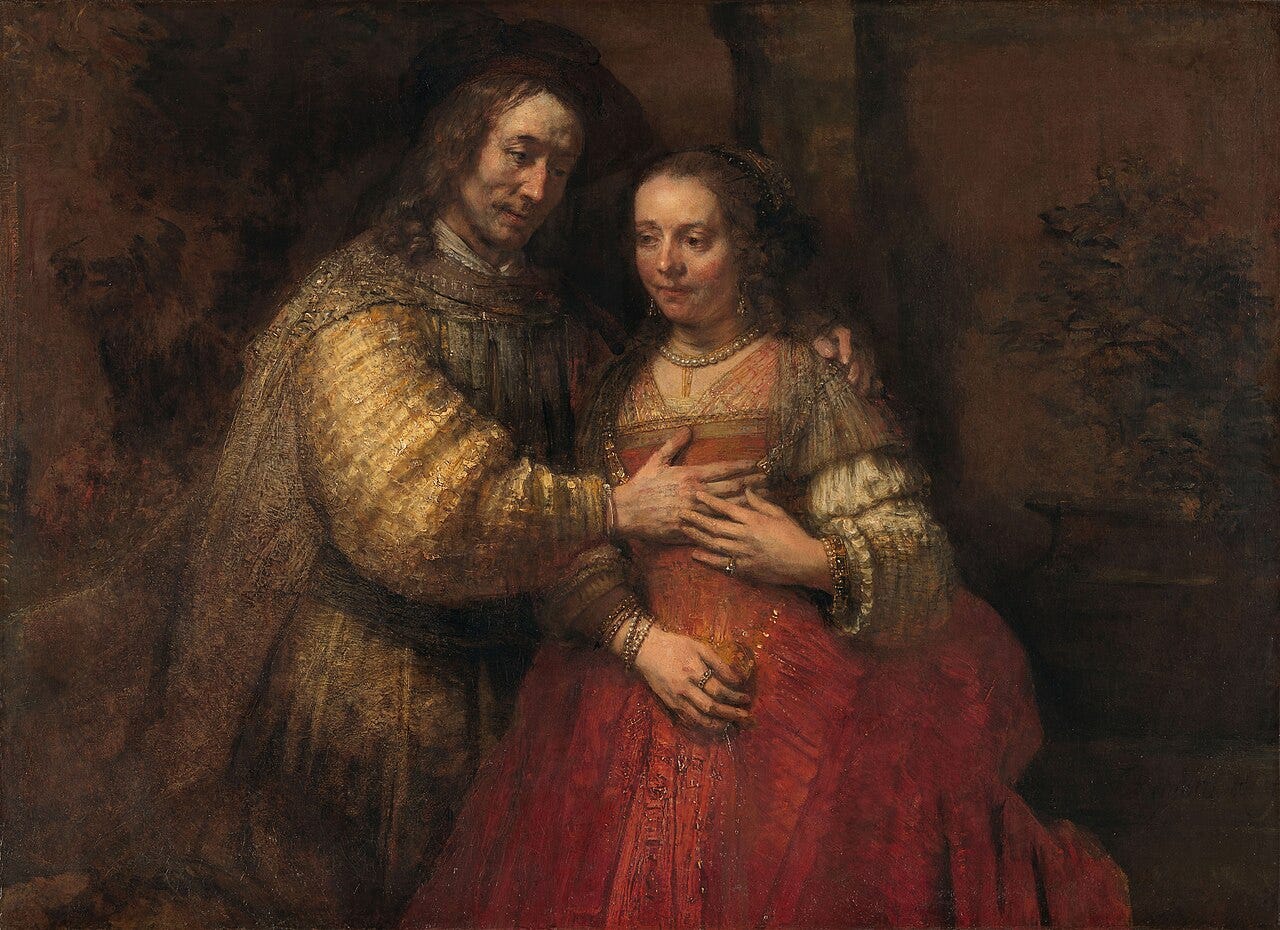
His greatest paintings came after it. The Jewish Bride and the Syndics, both now in the Rijksmuseum, date from these broke and grieving years.
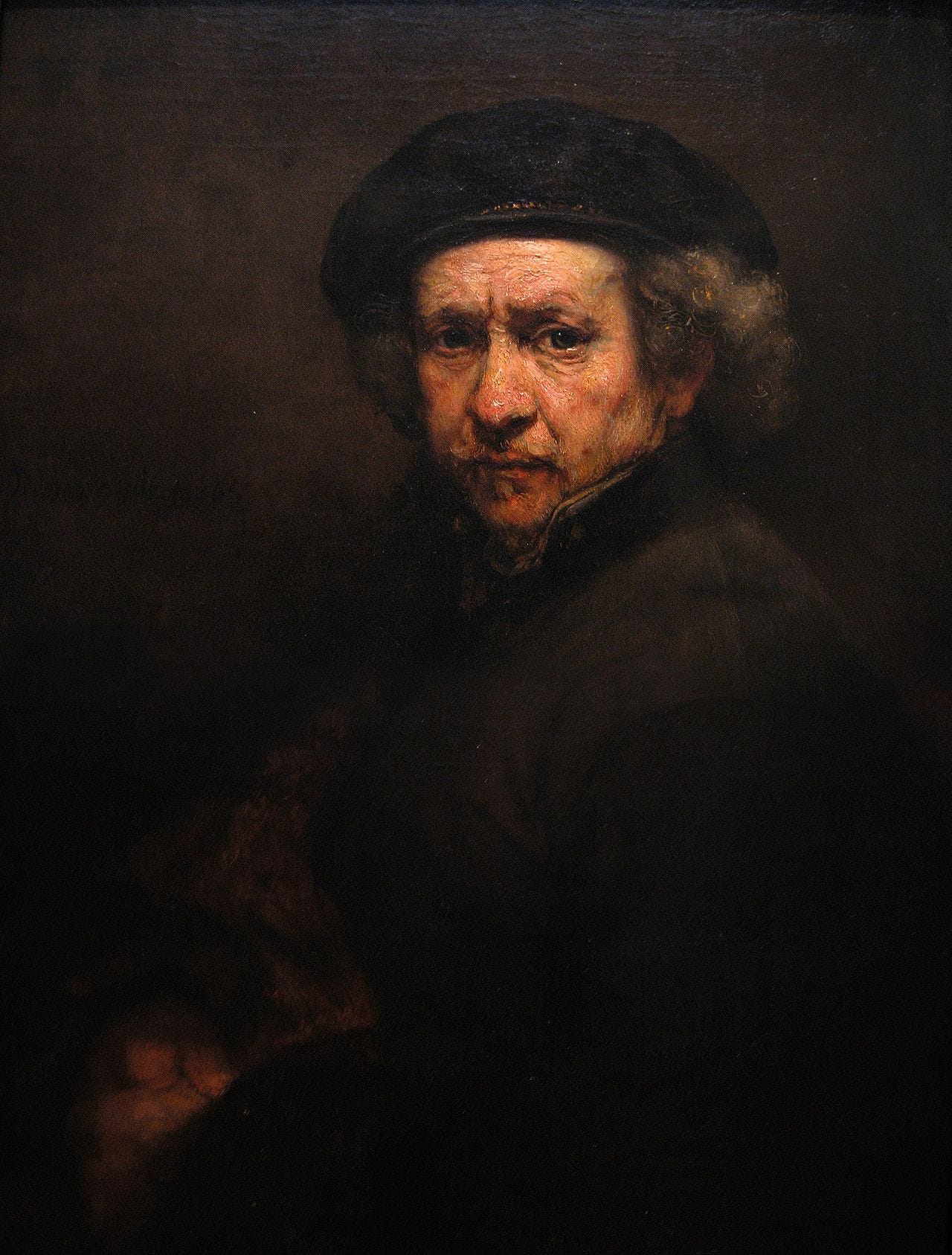
Set that against the relentless self portraits he kept making, and the ruin reads less as an ending than a strange furnace. The full arc is told here.
More secrets to unlock


The questions people ask about Rembrandt’s money
Why did Rembrandt go bankrupt? He overspent on a grand house and a huge art collection while commissions slowed.
When did it happen? He filed for insolvency in 1656, and his goods were auctioned in 1657 and 1658.
Did he lose his house? Yes. It survives today as the Rembrandt House Museum in Amsterdam.
Did he stop painting? No. His family employed him through a company so he could keep working.
Was he a bad painter by then? Not at all. His late work is now considered his greatest.
Rembrandt lost the house and the treasures, but never the eye. I follow the whole climb and fall in Rembrandt: The Complete Story.
