
Because his own face was at once his cheapest model, his private laboratory, his personal brand, and, in the end, his most honest subject.
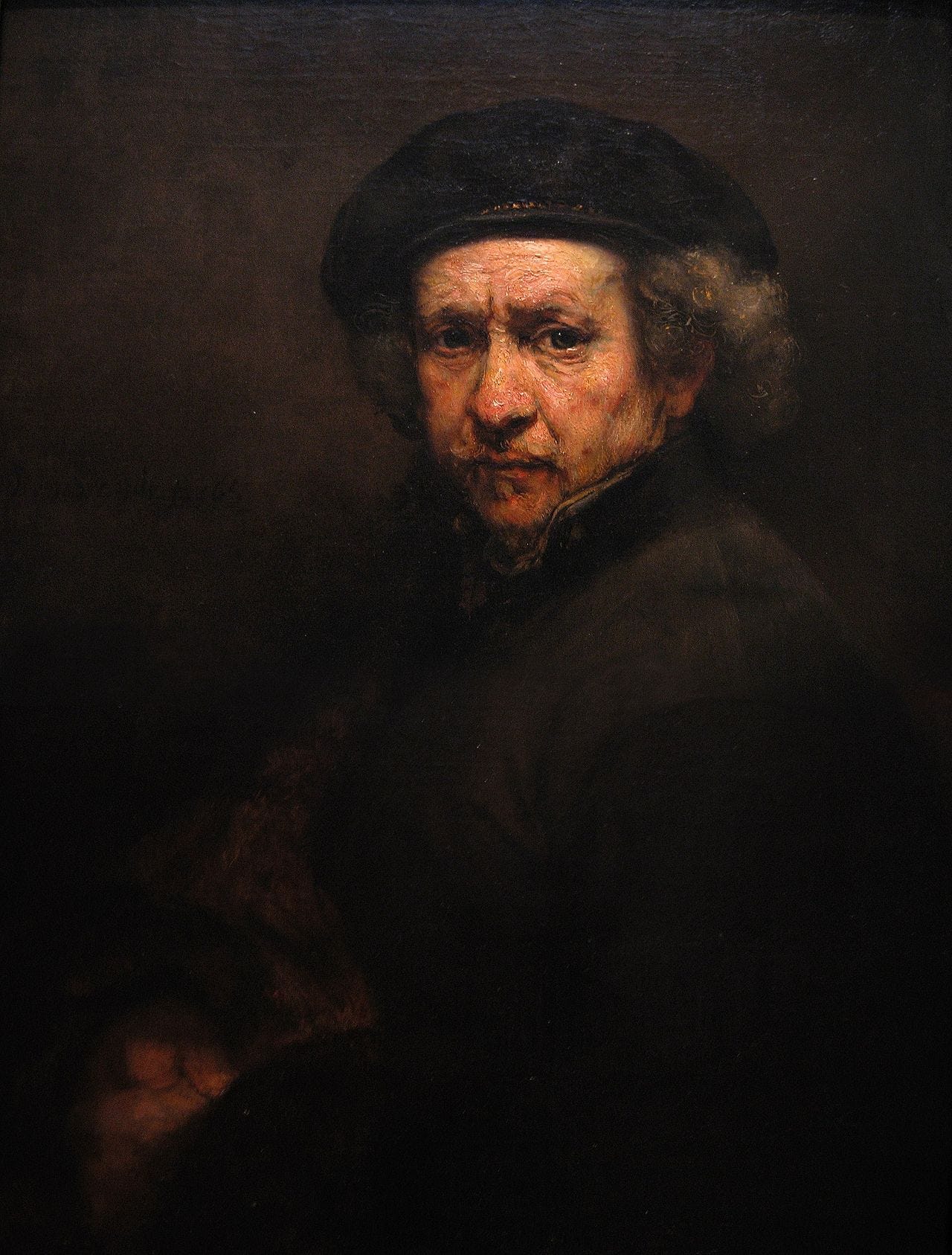
Across forty years Rembrandt made around 80 to 100 self portraits in paint, etching and drawing, far more than any artist before him. Together they form a record of a single human being aging that has no equal in art.
There is no one reason. There are four, and they overlap.
So let us take them one at a time.
A model who never said no
The simplest reason is the most practical.
A young painter needs faces to practice on, and models cost money and time. Rembrandt always had one to hand: himself.
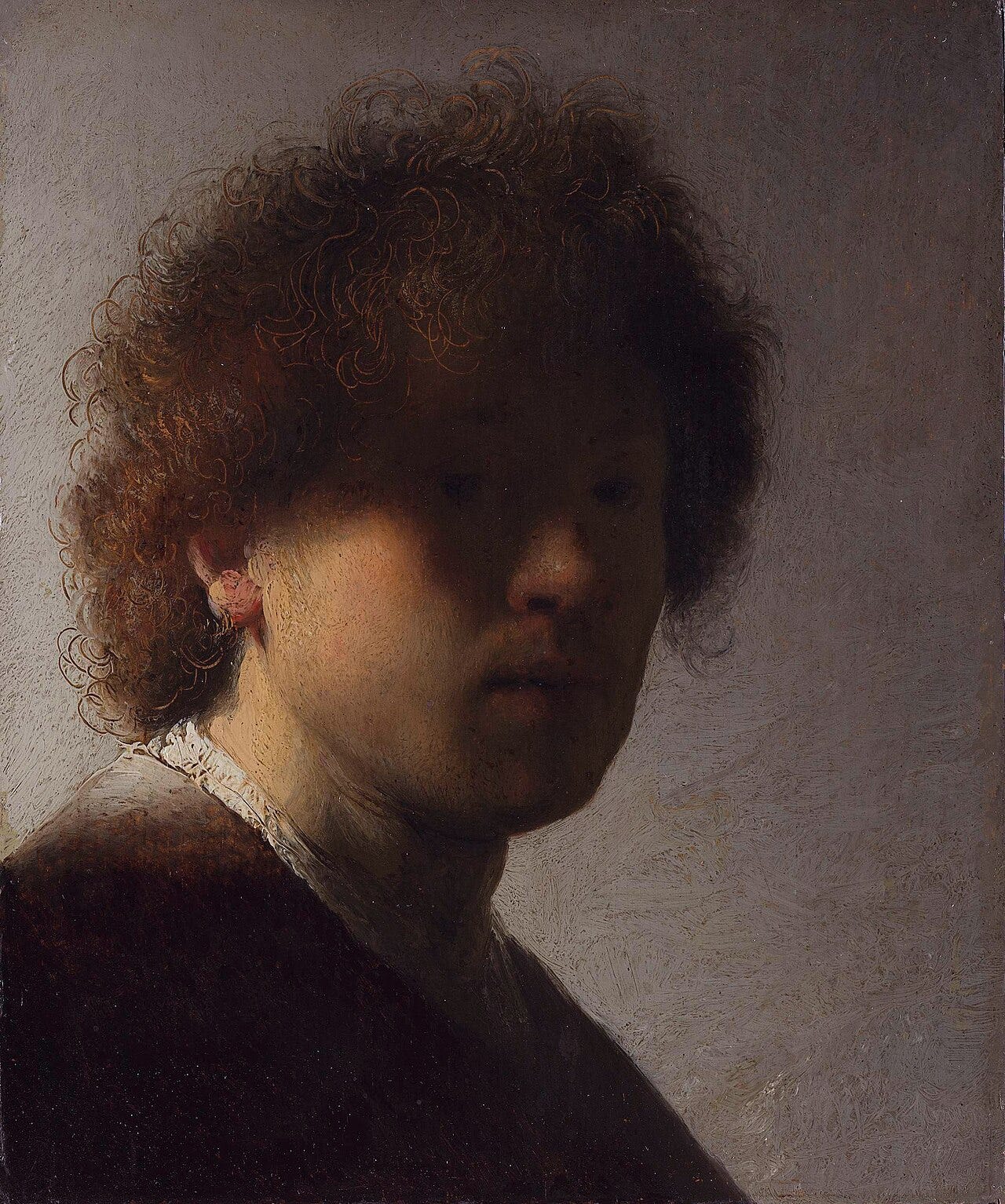
In a mirror he could study a frown, a laugh, a turn of the head, light raking across a cheek, for as long as he liked, for free. Many of his earliest self images are really exercises in expression and lighting that happen to wear his face.
Keep learning art the fun way


A private laboratory
Beyond practice, his own face became a place to experiment.
He tried on costumes and characters, soldiers, beggars, princes, posing as figures from history and the Bible. He pushed light to extremes, half the face in gold, half lost in shadow.
The mirror let him test ideas he might later use on paying sitters, without anyone looking over his shoulder.
The face in copper
Many of the self images are not paintings at all. They are tiny etched prints.
Early in his career Rembrandt scratched dozens of small self portraits onto copper plates, pulling faces: wide eyed, scowling, laughing, snarling.
They were quick studies in expression, and because prints could be made in numbers and sold cheaply, they spread his face and his name across the Dutch Republic. It was the closest a 17th century painter could get to going viral.
A face worth money
Then his career changed the math.
Once Rembrandt was famous, his face itself became desirable. Collectors wanted a self portrait by the great man, partly as a picture and partly as a kind of autograph.
A self portrait was both an advertisement for his skill and a product he could sell. Fame turned the mirror into a shop window.
A diary in paint
The deepest reason only becomes clear when you line them up in order.
The cocky young man with tumbling curls slowly becomes a prosperous gentleman, then a bankrupt, then an old man with a swollen nose, tired eyes and an unbreakable gaze. He never prettifies.
The late ones, painted after he had lost his wife, his money and his son, show every line and sag with total honesty. The face is the subject now, and what time does to a person is, to me, the bravest thing in all his work.
What people get wrong about them
It is tempting to file all this under vanity, but most of the self portraits began as something else: practice, experiment, or a product to sell.
Nor do they flatter him. The late ones are almost painful in their honesty, every sag and shadow left in. Seen together, they are not an ego trip but the most complete record of one human face any artist has ever left.
The two circles nobody can decode
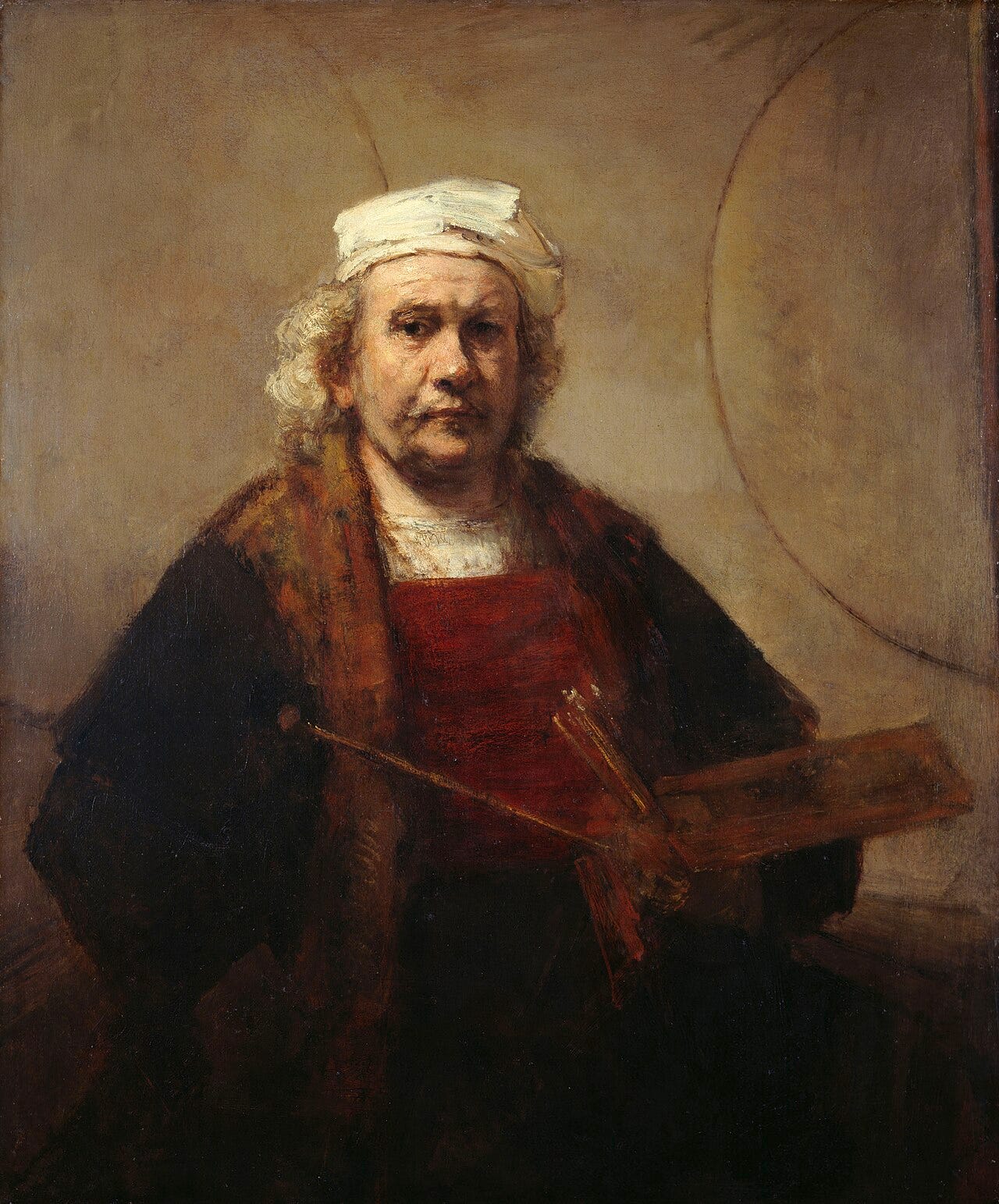
In a late self portrait now at Kenwood in London, two large arcs loom on the wall behind him, and no one is sure what they mean.
Some read them as a map of the world, others as a sign of complete command, a nod to the legend that Giotto could draw a perfect circle freehand. Rembrandt left no note. He stares out, brushes in hand, and lets the riddle stand. That Kenwood picture is not on its own. Look further and you will find twelve self portraits worth knowing across art history, a set that also covers Durer painting himself like Christ at twenty eight and Van Gogh's last look in the mirror.
How many of them are even real
For centuries the count of his self portraits kept climbing, until experts pushed back.
The Rembrandt Research Project re examined the lot and cut many loved faces from the list, exposing pupils who had painted him and later copies.
The honest number sits near forty in paint. Even his bankruptcy and his fame could not stop other hands from wearing his face. The whole rise and ruin is told here.
Rembrandt in the mirror, answered
How many self portraits did Rembrandt make? Around 80 to 100, counting paintings, etchings and drawings.
Why so many? They served as practice, experiment, a sellable brand, and a lifelong record of himself.
Did he flatter himself? No. He painted his aging face with unusual honesty, flaws and all.
Are they really all him? Some early “character” heads are debated, but the core group is firmly his own face.
Where can I see them? Across major museums, including the Rijksmuseum, the Met and the National Gallery of Art.
More secrets to unlock


The face that aged in public
In his final year Rembrandt painted himself again, old and worn, and in at least one version he appears to be almost laughing.
A broke, grieving man at the end of a hard life looked in the mirror and met his own eyes without fear or self pity. That, more than any single painting, is why we keep coming back to him.
I follow that face across his whole life in Rembrandt: The Complete Story.
