
Caravaggio’s art is so dark because he chose it to be. He pioneered tenebrism, drowning his scenes in near total black so that one hard beam of light could carry all the drama and aim your eye exactly where he wanted. That same near total black carries other painters' visions of the underworld in Hell in Painting: 12 Famous Visions.
It was a deliberate tool, not aging or dirt, and it matched his taste for raw, real, high stakes moments.
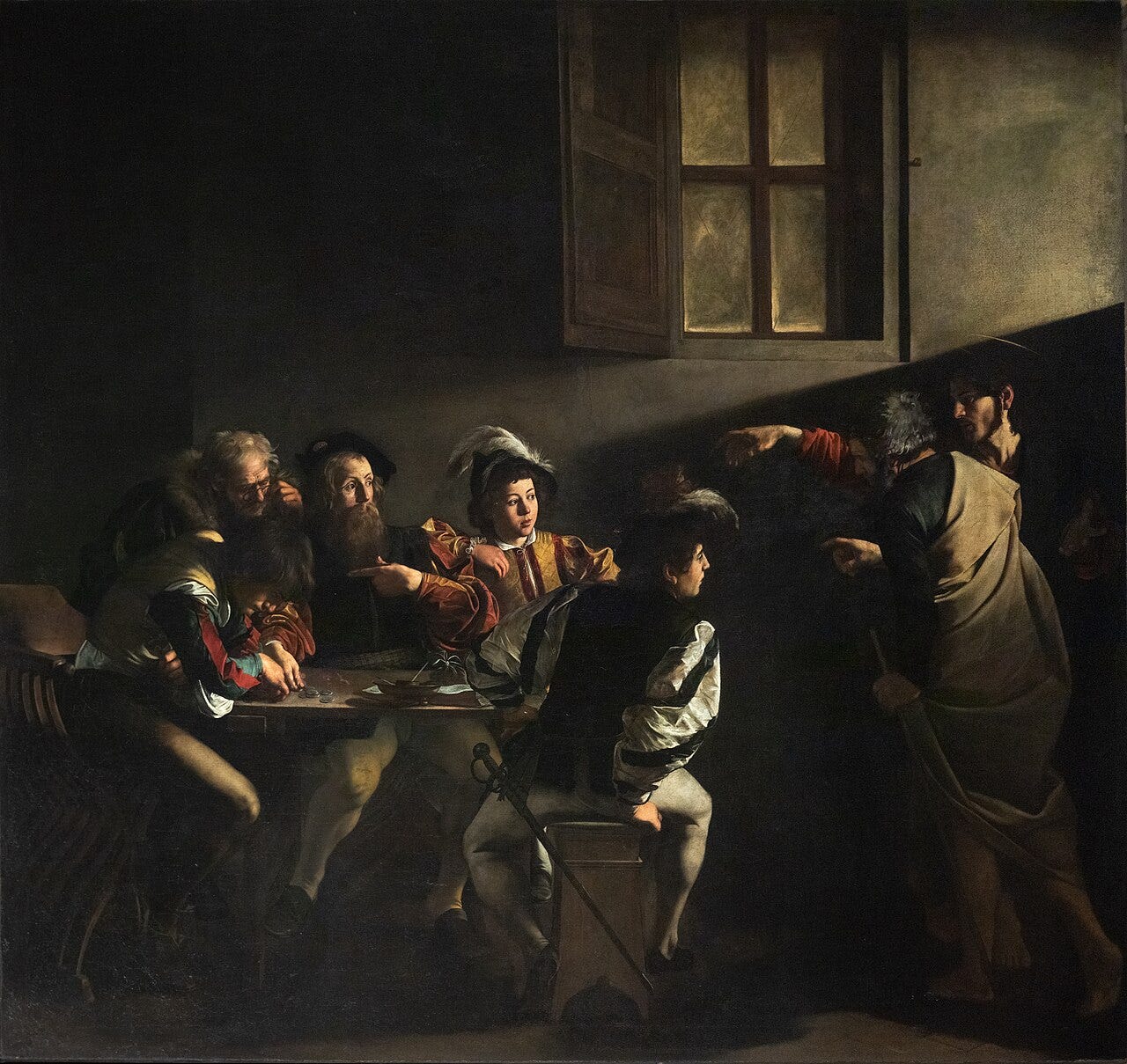
The darkness is the whole performance. Take it away and the magic dies.
This is why his world is lit like a crime scene.
The look you cannot mistake
Open any Caravaggio and the room drops into shadow.
Figures rise out of the black, lit on one side, while everything behind them dissolves into nothing. There is rarely a sky, a landscape, a sunny window. Just bodies, a few objects, and the dark.
That total commitment to shadow is what makes a Caravaggio recognizable across a crowded gallery.
How he actually did it
The effect came from how he worked, not from time darkening the paint.
He set his models in a darkened studio and lit them from a single high source, like a lamp near the ceiling. Then he painted exactly what that one light did, the sharp highlights, the fast fall into blackness, the deep shadow swallowing the rest.
Everything the light did not touch, he let disappear. He edited the world down to what mattered.
Why so dark: drama and focus
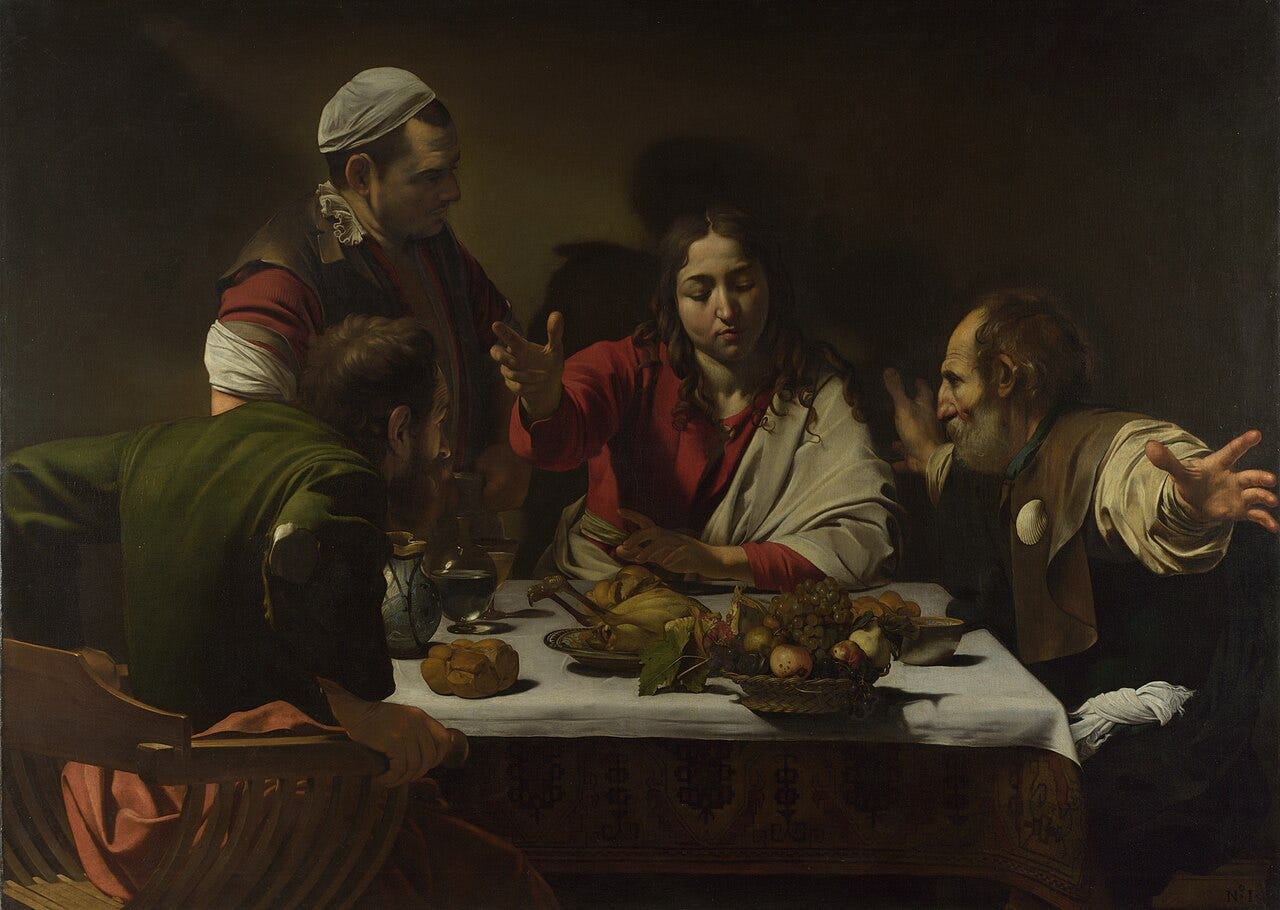
The first reason is pure theater.
A single beam in a black room works like a spotlight on a stage. It freezes the most important second of a story, the pointing hand, the raised blade, the face of recognition, and throws everything else away. Your eye has nowhere else to go.
Look at his Conversion of Saint Paul. Almost the entire canvas is black. A man lies flung on the ground, arms thrown up, while a huge horse fills the space above him, a hoof lifted over his body.
There is no sky, no road, no crowd. The darkness makes the moment feel like it is happening inside Paul’s own blinded head.
This style of harsh light and shadow grew out of an older idea: What Is Chiaroscuro? The Art Lover’s Guide. Caravaggio pushed it to its limit, and that limit got its own name: What Is Tenebrism? The Art Lover’s Guide.
Why so dark: realism
The second reason is truth.
The world he painted, taverns, back rooms, prison cells, was genuinely dark, lit by a candle or a single window. By refusing to flood his scenes with even, flattering light, he made sacred stories feel like things happening in a real, dim room next door.
His holy figures live in the same shadows as the poor people who modeled for them.
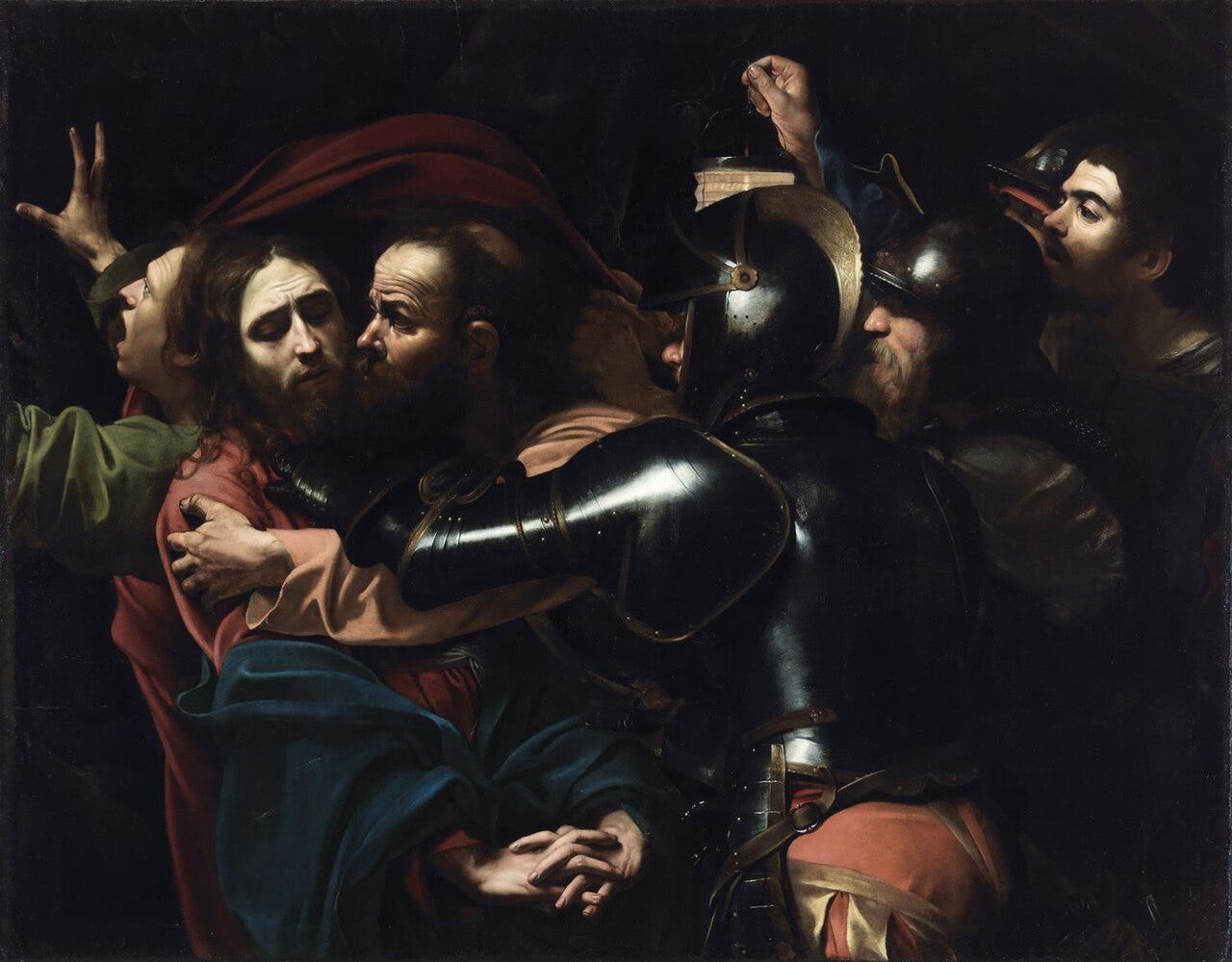
Why so dark: the man himself
The third reason is harder to prove, but hard to ignore.
His life ran on violence, guilt and flight. After he killed a man in 1606 and went on the run, his paintings grew even darker and barer, the color draining away, the black widening around the figures.
The mood of the work follows the life. The deeper into trouble he fell, the deeper the shadow closed in.
The style that took over Europe
Other painters saw what the darkness could do and copied it fast.
They were called the Caravaggisti, and within a decade his black backgrounds and single hard light had spread from Rome to Naples, Spain, France and the Netherlands.
Artists like Artemisia Gentileschi, Jusepe de Ribera and Georges de La Tour built careers in his shadow. Even Rembrandt learned from the idea.
Clearing up the dark
Not aging: the blackness was intentional, there from the first day, not yellowed varnish.
Not a secret trick: just one strong light, a dark room, and the nerve to cut everything else.
A real shift: his work grew darker as his life got worse, especially after 1606.
Keep learning art the fun way


More secrets to unlock


The models came from the street
Part of the darkness is moral, not just optical.
Caravaggio used real, unidealized people, beggars, laborers, prostitutes, as his saints and his Virgin. The church recoiled. His Death of the Virgin was refused, the rumor being he had used a drowned woman as the model.
He pulled the sacred down into the gutter and lit it like a crime scene.
What the shadow was really doing
Why is Caravaggio’s art so dark? He used tenebrism, near total shadow lit by one hard beam, to force drama, focus and realism.
What is the dark style called? Tenebrism, an extreme form of chiaroscuro, the play of light and shade.
How did Caravaggio make it so dark? He lit single models with one high light in a dark studio and painted only what that light revealed.
Did his paintings get darker over time? Yes, but by his own hand. His late works are barer and blacker, especially after 1606.
Who copied his dark style? The Caravaggisti, including Artemisia Gentileschi, Ribera and Georges de La Tour.
The light that answers the sun
In The Calling of Saint Matthew, the light enters from the right like a searchlight, falling across the dark room to pick out one man.
It lands almost along the same line as the real window above the chapel where the painting hangs. Caravaggio built his painted light to answer the real one, so that when the sun moves across Rome, his beam still feels true.
The darkness was never an accident. It was the most controlled thing in the room.
The darkness tracked his whole life, right down to the severed head he gave his own face in David with the Head of Goliath, painted around 1610 while he waited on a papal pardon that came too late. I follow that arc in Caravaggio: The Complete Story, and a secret hidden in his work in the Caravaggio Code.
