
Katsushika Hokusai: The Complete Story
Katsushika Hokusai was the Japanese printmaker behind The Great Wave, the most recognized image in all of Japanese art. He changed his name about thirty times, moved house over ninety times, and chased perfection into his late eighties.
Working as an ordinary craftsman selling prints to the people of Edo, he produced some thirty thousand images across seventy years, and his Thirty Six Views of Mount Fuji made him the artist who later taught Europe how to see.
The quick version of a very long life
Born poor in Edo, the city we now call Tokyo, in 1760.
Spent seventy years reinventing himself and his name.
Made The Great Wave in his early seventies, not his youth.
His daughter Oei was a gifted painter who worked at his side.
Died at about 88, wishing out loud for more years to improve.
He was born poor in old Edo
Hokusai was born in 1760 in a working district of Edo. He was not from a painting dynasty. As a boy he worked in a bookshop and a wood carving workshop before joining a print studio in his late teens.
That low start matters. He spent his whole life as a working craftsman selling prints to ordinary people, not as a court painter to lords.
The man who changed his name thirty times
Most artists keep one name. Hokusai used around thirty across his career, switching each time his style entered a new phase and often selling the old name to a student.
The name we use, Hokusai, was just one of them, adopted around 1798. Late in life he signed himself the old man mad about painting.
He moved house more than ninety times
By tradition he changed homes over ninety times. One story says he simply hated cleaning, so when a place got too messy he moved instead.
He cared about almost nothing except the next picture. He drew every single day, convinced he was still getting better. For me that daily obsession is the whole secret.
He found his greatest work at seventy
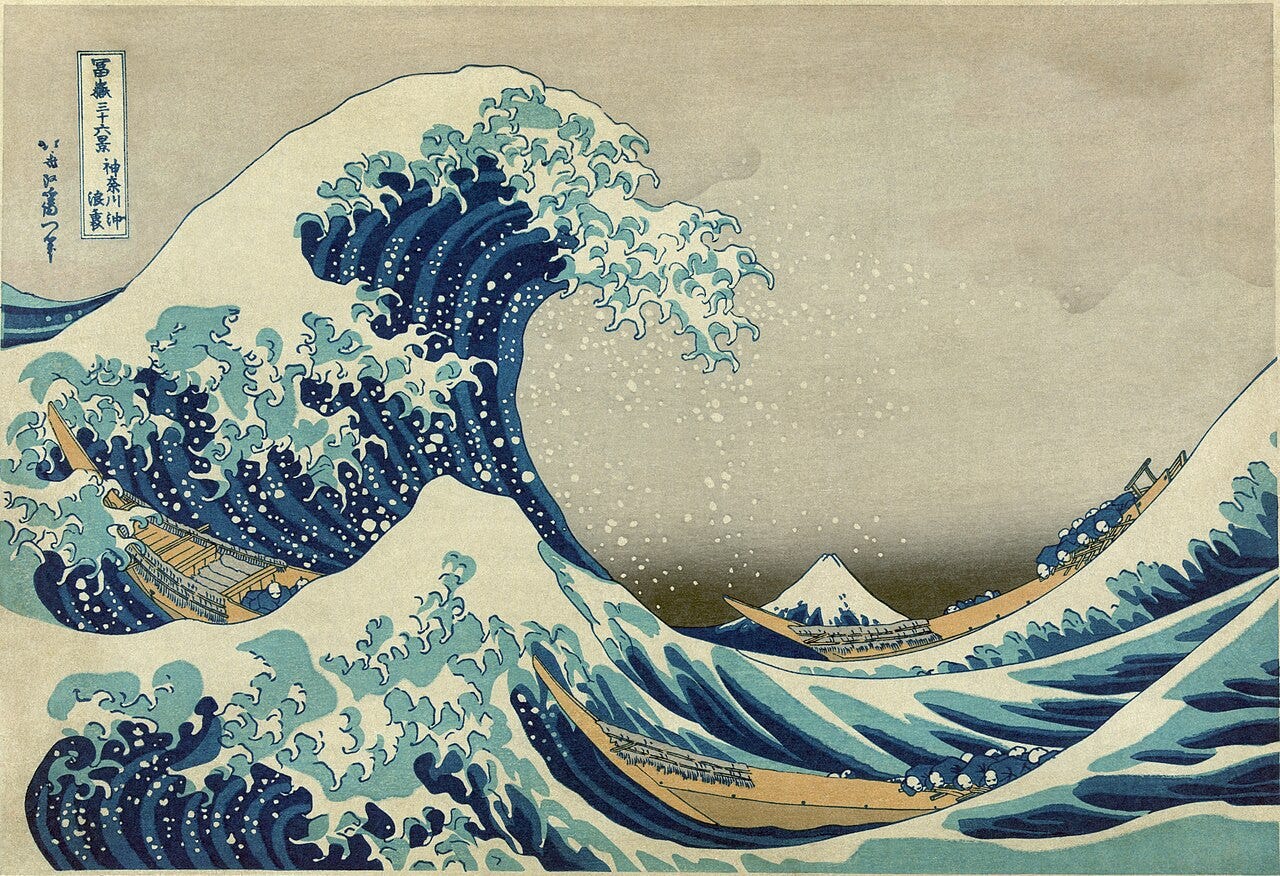
Around 1831, in his early seventies, he made the series Thirty Six Views of Mount Fuji. One print in it, The Great Wave off Kanagawa, became the most famous image Japan ever produced.
It is built with woodblock printing, carved and printed by hand in layers. The full story of that single wave is in the true story behind Hokusai's Great Wave.
His daughter was his working partner
His daughter, Katsushika Oei, was a fine painter in her own right. She lived with him, ran his studio, and almost certainly had a hand in works that carry only his name, especially the night scenes with their careful light.
For years she was nearly forgotten. Today she is recognized as one of the most talented women artists of old Japan.
He taught the West how to see
When Japan opened to trade, his prints flooded into Europe and floored a young generation of painters. Claude Monet hung Hokusai on his walls, and Vincent van Gogh copied Japanese prints by hand.
That wave of influence has a name, japonisme, and Hokusai was at the center of it.
The old man mad about painting
He wrote that nothing he made before seventy was worth counting, and that only at seventy three did he begin to grasp how nature truly worked. He expected to become a real artist somewhere past a hundred.
On his deathbed in 1849 he asked for just five or ten more years, sure that with a little more time he could finally paint something alive.
The apprentice who was thrown out
Hokusai learned his trade the hard way. Around 1778 he entered the studio of Katsukawa Shunsho, a leading maker of prints of kabuki actors, and began turning out theatre images under his master's name.
After Shunsho died, Hokusai kept studying, reaching into rival schools and Western prints for new ideas. That restlessness got him expelled from the Katsukawa studio.
He later called the expulsion one of the best things that happened to him. Cut loose from a single school, he was free to borrow from everywhere, and that mix became the root of his own manner.
Thirty six views of Mount Fuji
Hokusai was in his seventies when he began the series that made him immortal. Between about 1831 and 1833 he issued Thirty six Views of Mount Fuji, a set of landscape prints that circle the sacred mountain from every side.
The mountain appears large and small, near and far, in sun and storm, behind carpenters, travelers and fishermen. It was so popular that the publisher added ten more designs, so the thirty six actually number forty six.
Landscape had been a minor subject in Japanese prints. Hokusai made it the main event, and in doing so he reshaped what the whole art form could be.
The Great Wave, up close
The most famous print in the series, and perhaps the most famous image in all of Japanese art, is the Great Wave off Kanagawa. A towering wall of water curls its clawed foam over three slender boats, while tiny Mount Fuji sits calm in the distance.
Look closely and the drama sharpens. The rowers crouch low, the wave seems about to fall, and the whole scene balances on a single held moment.
Hokusai used a newly imported deep blue, a synthetic pigment from Europe, to give the water its cold force.
The image traveled the world. Decades later the composer Claude Debussy put it on the cover of his orchestral work about the sea. Few pictures have been copied and quoted so often.
The books of sketches he called Manga
Alongside the grand prints, Hokusai poured his eye into cheap, crowded sketchbooks. Beginning in 1814 he published the Hokusai Manga, which grew to fifteen volumes packed with thousands of small drawings.
Nothing was too humble for them. Wrestlers, blades of grass, gods, ghosts, laborers, animals and the way a body moves all filled the pages, a whole encyclopedia of the visible world.
The books were meant as models for students, but they became beloved in their own right. The word manga later attached itself to Japanese comics, and people still trace the term back to these teeming sheets.
Waterfalls, bridges and ghosts
The Fuji series was only part of a late burst of work. Hokusai went on to print A Tour of the Waterfalls of the Provinces, a set of remarkable bridges, and studies of birds and flowers at large scale.
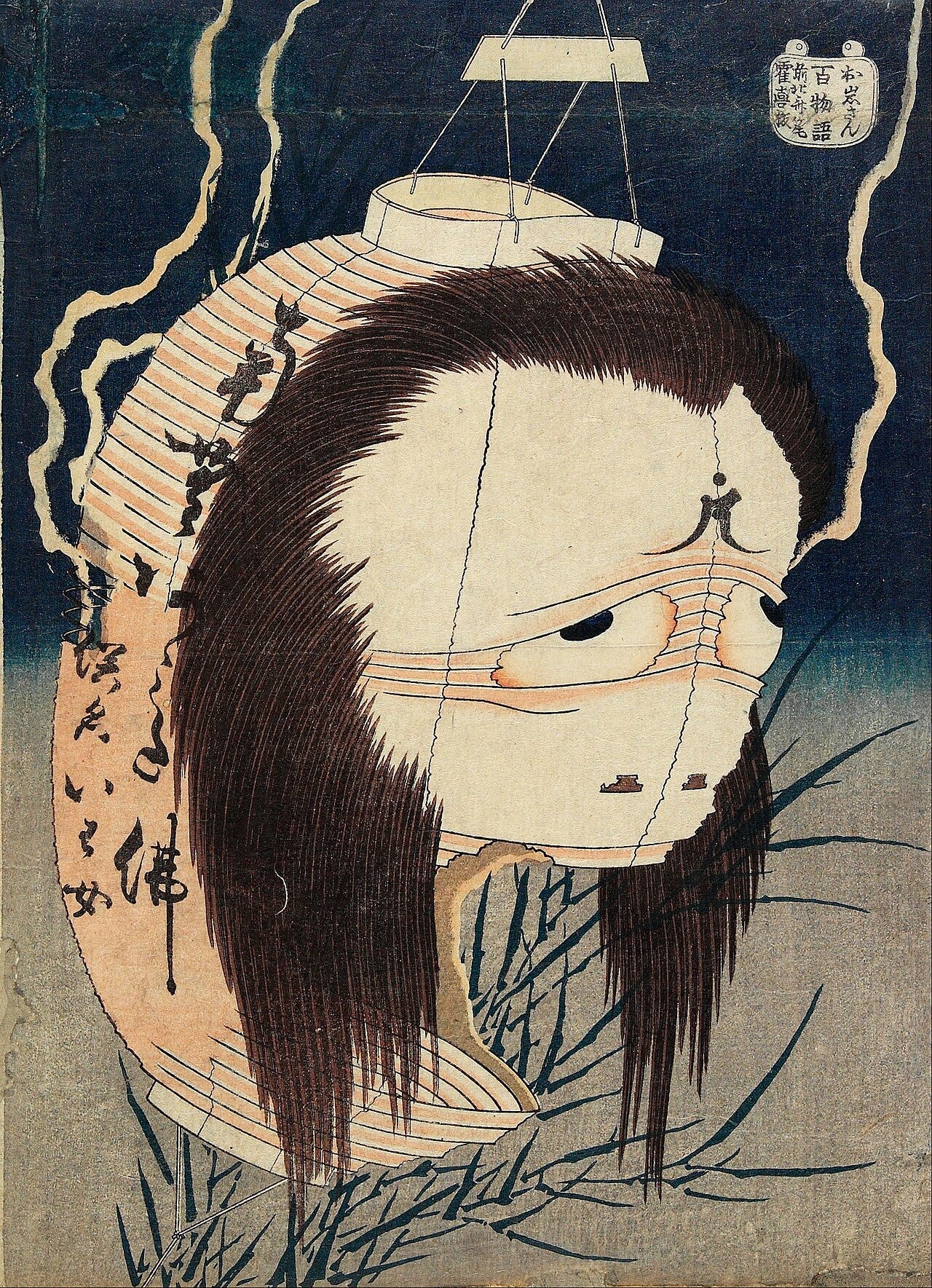
He also loved the strange. In One Hundred Ghost Stories he set out to picture a hundred spirits, and though he finished only a handful, the surviving designs are among the eeriest images in the art.
Across all of it runs a restless curiosity about how the world is put together. Water, wind, stone, feather and phantom each got the same close, delighted attention.
Red Fuji, the wave's twin
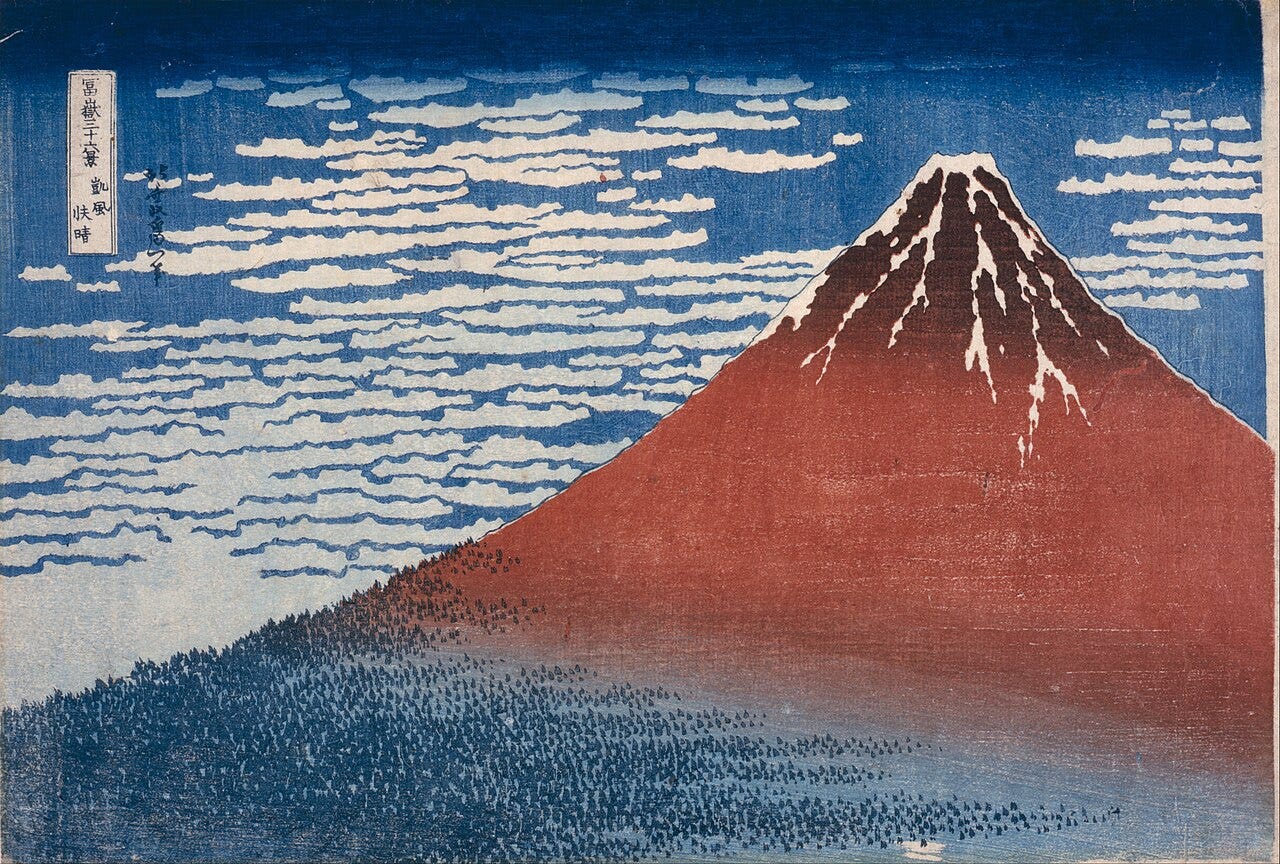
The Great Wave has a quieter companion in the same series. It is usually called Fine Wind, Clear Morning, though many people know it simply as Red Fuji.
There is almost nothing in it, just the bare cone of the mountain turning warm red in the early light, a few streaks of cloud and a dark band of forest at the base. No people, no story, only Fuji and the sky.
Where the Wave is all motion, Red Fuji is all stillness. Between the two prints, Hokusai showed he could make an image roar or hold its breath, using the same mountain each time.
Prussian blue and the look of a new era
Part of what makes the Fuji prints feel so fresh is a single color. Hokusai reached for a deep, cold blue that had recently arrived from Europe, a synthetic pigment first made in Germany.
Japanese printers had long relied on plant based blues that faded. The new blue held its strength and gave water and sky a clarity they had never had on the page. Publishers seized on it as a selling point.
So the most Japanese of all images owes part of its power to a foreign chemistry set. The exchange ran both ways, long before the West fell in love with the print.
What everyone asks about Hokusai
Who was Hokusai? A Japanese printmaker and painter, the most famous artist of the ukiyo e tradition of woodblock prints.
When and where was he born? In 1760 in Edo, the city now called Tokyo.
How did he die, and how old was he? Of natural causes in 1849, at about 88, after a life of constant work.
What is he most famous for? The Great Wave off Kanagawa, part of his Thirty Six Views of Mount Fuji.
Did Hokusai marry his daughter? No, a search engine mix up. His daughter Oei lived and worked alongside him as a painter.
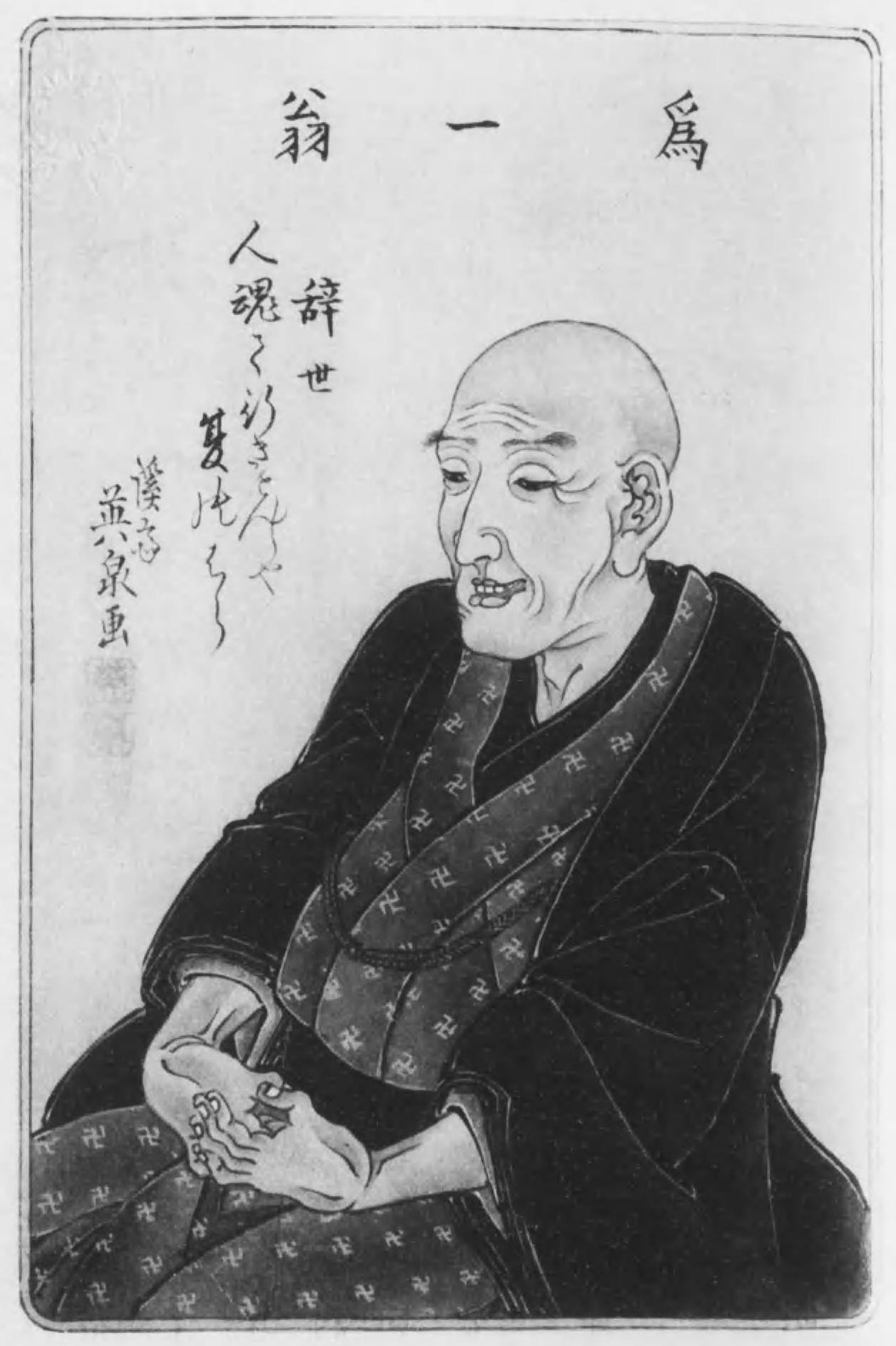
What did he look like? He left a few self portraits as a lean, sharp eyed old man, drawn with gentle humor.
Where can you see his work? In museums worldwide, and at the Sumida Hokusai Museum in Tokyo, near where he was born.
One last number
Across his life he is thought to have made some thirty thousand images. And still, dying at 88, he believed a few more years would have been enough to finally get it right.
Curious about the man himself? See interesting facts about Hokusai.
If The Great Wave pulled you in, keep going:
The darker truth about Gauguin, the part of the Tahiti story that never makes the wall label
Vermeer, Woman Holding a Balance, what is actually on those scales
Inside Monet house at Giverny, room by room, including his own bedroom